Commercial comfort depends on steady airflow, controlled humidity, and properly maintained refrigerant systems. In Niceville and across Okaloosa County, Florida heat, high humidity, and salt air can stress HVAC equipment quickly. When repair needs show up, they are often symptoms of a deeper issue that affects reliability, energy use, and indoor air quality.
This guide explains common causes behind commercial HVAC repair problems near Niceville, FL, what homeowners and property managers should look for, and how to support better airflow and system performance with preventive HVAC maintenance from A Superior Mechanical.
Why Niceville commercial HVAC systems struggle more in Florida weather
Niceville businesses operate in a climate that is hard on air conditioning and heat pump systems. Warm temperatures are only part of the story. Florida humidity pushes indoor moisture levels higher, and that moisture can increase condensation risk, encourage microbial growth, and strain cooling performance. Salt air from the Gulf can also accelerate corrosion on metal components and outdoor units.
When these environmental factors combine with everyday building use, the result is often reduced airflow, clogged or poorly flowing ductwork, and refrigerant system stress. Even “small” issues can cascade into emergency cooling concerns when the system cannot keep up with peak demand.
Airflow problems that trigger commercial HVAC repair
Many commercial HVAC repair calls trace back to airflow. If air cannot move through the system the way it should, cooling and heating performance suffers, and components can work harder than designed.
Dirty or restricted air filters
Filters that are clogged or the wrong size can reduce airflow across the evaporator coil and through the air handling unit. In a humid climate, restricted airflow also increases the likelihood of coil freeze risk in some cases and poor dehumidification in others. Either way, comfort drops and energy use rises.
If your business uses HVAC maintenance schedules that do not match actual occupancy and dust load, filters may not be replaced often enough.
Blocked or leaking ductwork
Ductwork that is partially blocked, damaged, or leaking can pull conditioned air away from where it is needed. Leaks can also allow unconditioned air to enter, which can raise indoor humidity and make temperature control unpredictable.
Homeowners and property managers sometimes notice hot spots, cold spots, or rooms that never feel right. If you are also searching for duct inspection or duct repair near me options, start by looking for visible duct damage, unusual airflow noise, and inconsistent supply register performance.
Blocked condensate drainage and drainage pan issues
Cooling in Florida produces condensate. If condensate drainage systems become clogged, condensate can back up and overflow, dampen nearby components, or cause water to collect in the air handler. That moisture can contribute to indoor air quality problems and corrosion.
Signs to watch for include musty odors, water staining near air handlers, and recurring nuisance shutdowns during high humidity periods. Condensate-related issues can also lead to equipment reliability problems that show up as frequent callbacks.
Incorrect fan speed or airflow settings
Some commercial systems run with variable speed blowers or staged airflow. If settings drift over time, airflow may fall below what the system needs for proper heat transfer. The result can be weak cooling, poor humidity control, and higher energy use.
This is one reason HVAC service should include more than a quick temperature check. A licensed HVAC contractor should evaluate airflow performance, static pressure, and system operation under real conditions.
Humidity and indoor air quality issues that lead to repairs
In Niceville, humidity is not just uncomfortable. It affects how cooling coils behave, how condensate drainage performs, and how indoor air quality develops. When indoor humidity runs high, building occupants may experience sticky air, lingering odors, and increased dust or allergen presence.
Coil performance problems caused by buildup
Evaporator coils can collect dirt and dust over time. When coil surfaces are coated, heat transfer drops. Cooling capacity decreases, and the system may struggle to remove moisture. That can drive the system to run longer, raising energy use and accelerating wear.
Because coil cleaning and inspection are part of preventive HVAC maintenance, skipping routine service can turn a manageable issue into a larger commercial AC repair need.
Airborne contaminants and ventilation imbalances
Businesses with high occupant density, frequent door openings, or ongoing dust generation can see indoor air quality decline. If ventilation settings and economizer operation are not aligned with current conditions, comfort and humidity control can suffer.
For homeowners and managers concerned about air quality, consider Indoor Air Quality Testing to identify whether the problem is airflow related, moisture related, or both.
Thermostat settings and controls that do not match the building
Thermostats and building control systems influence how often equipment cycles, how long it runs, and how it handles humidity. If thermostat setpoints are unrealistic for the building layout or if control logic is misconfigured, the HVAC system may overwork or short cycle.
That can lead to comfort complaints, higher energy use, and premature component wear. If you need thermostat installation or control upgrades, look for a licensed HVAC contractor near me who understands commercial zoning and humidity control goals.
Refrigerant system stress and why it can show up as “mystery” cooling failures
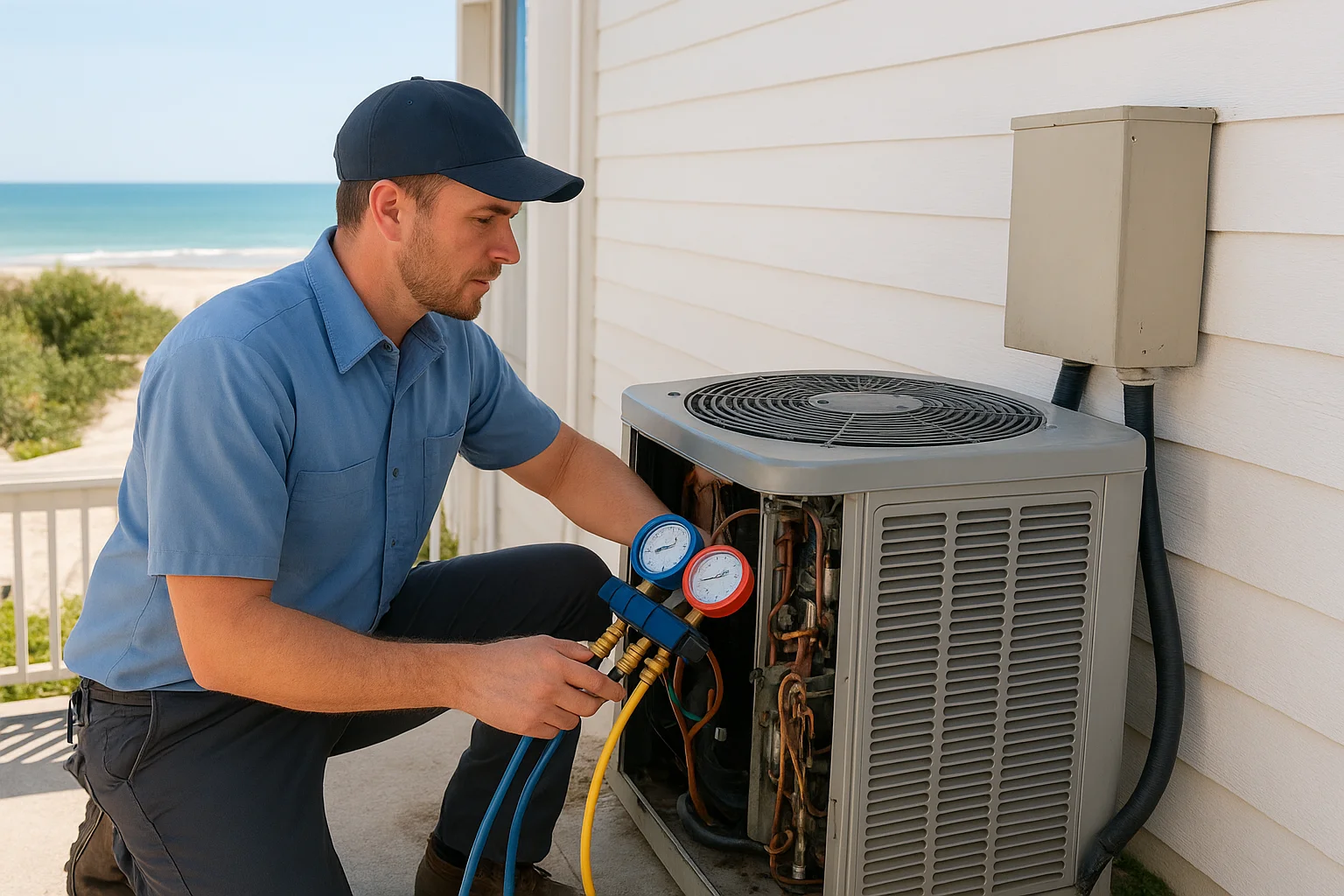
Refrigerant systems are designed to move heat reliably. Problems can cause inconsistent temperature performance, reduced cooling capacity, or equipment that runs continuously without achieving comfort targets. Because refrigerant systems involve safety and specialized handling, it should not be diagnosed remotely or without an in-person evaluation.
If your business experiences repeated cooling failures, prolonged run times, or unusual operational behavior, a professional technician can evaluate system performance and determine the most appropriate repair approach.
Refrigerant system issues linked to airflow and coil performance
It is easy to assume a refrigerant system problem is always the root cause. In reality, airflow restrictions can change heat transfer conditions and make it harder for the system to operate within expected ranges. That is why airflow checks and coil inspection often belong alongside refrigerant-related troubleshooting.
In Florida humidity, reduced airflow can also worsen coil and condensate behavior, creating a chain reaction that leads to more frequent repairs.
Salt air corrosion and outdoor unit performance
Outdoor components can corrode faster in coastal regions. Corrosion can affect electrical connections, coil surfaces, and metal parts exposed to salt-laden air. Over time, that can lead to reliability issues, performance loss, and increased repair frequency.
Routine inspection helps catch early signs before they become emergency cooling concerns during the hottest weeks.
Thermostats, scheduling, and controls that can quietly undermine reliability
Commercial buildings often use schedules and zoning to match comfort to business hours. That is a smart strategy, but it only works when controls are configured correctly and sensors are functioning as intended.
Short cycling from oversized or mismanaged operation
If equipment runs in very short cycles, it can reduce dehumidification and increase wear on mechanical components. Short cycling can be caused by control logic, thermostat placement, or operational setpoints that do not reflect the building load.
Zoning problems and inconsistent comfort
Zoning helps tailor comfort, but it also introduces more dampers, sensors, and control interactions. If dampers stick, sensors drift, or airflow balance changes, some zones can become too warm while others feel over-conditioned. That often results in repeated service calls unless the underlying airflow and control strategy is corrected.
Ductwork and airflow balance: the foundation of steady comfort
Even when equipment is maintained, ductwork performance can limit airflow. In commercial spaces, duct systems can be complex, and they may include multiple branches, return pathways, and rooftop air handling units.
If you are trying to address airflow and reliability, ductwork inspection can be a practical starting point. A technician can evaluate airflow pathways, check for leaks, and look for obstructions that affect supply and return air movement. For buildings with recurring comfort issues, duct evaluation is often more effective than repeatedly adjusting thermostats.
If your building has duct-related symptoms, review whether you need Duct Inspection as part of your HVAC maintenance near me strategy.
Common “small” issues that turn into bigger commercial HVAC repair problems
Below are examples of how minor concerns can escalate in a Florida climate. These are not diagnoses, but they are common patterns technicians see when troubleshooting commercial AC repair near Niceville.
Recurring filter changes with no improvement
If airflow remains weak even after filters are replaced, the restriction may be elsewhere in the system, such as ductwork, coil buildup, or fan performance.
Musty smells that return after service
Odors can be linked to moisture, condensate drainage issues, or microbial growth. If the odor returns soon after a visit, the source may not have been fully addressed.
Unusual noises during cooling cycles
Bearing wear, airflow turbulence, or duct vibration can create sounds that change over time. Noise is a reliability warning, especially during peak summer demand.
Temperature swings that do not match occupancy patterns
If comfort changes unpredictably, it can point to control issues, airflow problems, or coil performance concerns. A professional evaluation can help determine whether the issue is localized to certain zones.
Preventive HVAC maintenance that improves airflow and reliability
Preventive maintenance is how businesses reduce downtime risk and protect indoor air quality. In Niceville, a good plan accounts for Florida heat, humidity, and salt air exposure.
Seasonal inspections focused on cooling performance
A Superior Mechanical can help businesses plan maintenance that prioritizes cooling reliability before the hottest conditions. That typically includes inspecting airflow pathways, verifying thermostat and control operation, and checking condensate drainage performance.
For property owners who want a broader view of commercial HVAC upkeep, you can also review Commercial HVAC Services to understand how maintenance, repair, and system support may fit together.
Air filter and airflow verification
Maintenance should include confirming filter condition and verifying airflow performance. When airflow is correct, cooling and dehumidification work together instead of competing.
Coil inspection and cleaning as needed
Coil inspection helps identify buildup that reduces heat transfer and moisture removal. In humid climates, proper coil performance supports better humidity control and occupant comfort.
Condensate drainage checks
Condensate drainage must clear properly during cooling cycles. Preventive service should include checking drainage paths and ensuring the system manages condensate without overflow or backup.
Indoor air quality and ventilation attention
If your building has concerns about odors, dust, or humidity, consider aligning HVAC maintenance with indoor air quality goals. Testing can help when you need clarity on what is driving the problem.
How to choose a professional commercial HVAC repair partner in Niceville
Commercial HVAC repair requires more than general troubleshooting. It requires knowledge of airflow, refrigerant systems, condensate drainage, and commercial control strategies. A licensed HVAC contractor near me should also understand how local climate affects performance.
When you contact A Superior Mechanical, you can discuss symptoms, maintenance history, and comfort complaints. That context helps technicians focus the evaluation on the factors most likely to impact airflow, humidity control, and reliability.
For additional local context on how weather and building conditions affect repairs, you may find these reads helpful: How Local Weather Affects Commercial HVAC Repair in Destin, FL and Commercial HVAC Repair in Fort Walton Beach: What Property Owners Should Pay Attention To Before Small Problems Grow.
Energy use and emergency cooling concerns: why reliability matters
When airflow is restricted or humidity control is off, systems often run longer. That increases energy use and can strain components. Over time, the building may experience more frequent service calls, and the risk of emergency cooling concerns rises during the hottest stretches of the Florida summer.
Reliable commercial HVAC helps protect business operations, employee comfort, and product or equipment environments where temperature and humidity matter. It also supports steadier indoor air quality by managing moisture and airflow more consistently.
When system replacement becomes a conversation, not a guess
Some businesses eventually face system replacement due to age, repeated repairs, or changing load requirements. However, replacement is not a decision that should be made from a brief observation. A professional evaluation should consider actual performance, airflow capacity, ductwork condition, refrigerant system behavior, and the building’s comfort needs.
If your team is exploring options for HVAC replacement near me, ask about how technicians will evaluate the system and what factors they will use to recommend next steps. For new or expanding facilities, you can also review New Construction Air Conditioning to understand how design decisions impact long-term reliability.
Practical steps property managers can take right now
While professional HVAC maintenance is essential, there are a few practical actions you can take to reduce risk and improve airflow performance.
- Track comfort complaints by zone. Note which areas are warm, which are cold, and when symptoms occur. This helps technicians evaluate airflow balance and controls.
- Review filter schedules. If filters are replaced on a fixed date without regard to dust load, adjust based on actual conditions.
- Watch condensate drainage. Look for water staining, leaks, or recurring musty odors after cooling cycles.
- Keep outdoor units clear. Remove debris around the outdoor unit area and ensure airflow to coils is not blocked by vegetation or construction materials.
- Document thermostat and schedule changes. If comfort issues started after a schedule update, share that information with your HVAC service provider.
Related local reading for Niceville and nearby areas
If you manage multiple locations or you are comparing issues across coastal communities, these articles can provide more detail on repair patterns and reliability priorities: Why Commercial HVAC Repair Matters to Home Comfort in Miramar Beach and How Better Commercial HVAC Repair Helps Seagrove Beach Homes Stay Protected.
For more information about service coverage across the region, you can also explore Niceville and Okaloosa County service areas.
If you are searching for HVAC repair near me because your commercial system is struggling with airflow, humidity, or inconsistent cooling, reach out to A Superior Mechanical for an in-person evaluation focused on reliability and comfort.
Find Commercial HVAC Repair in Niceville, FL
If you need Commercial HVAC Repair in Niceville, FL, visit our local service page or contact A Superior Mechanical today.
Map of Niceville, FL
Frequently Asked Questions
What are the most common causes of commercial AC repair problems in Niceville?
In Niceville, many commercial AC repair issues start with restricted airflow (dirty filters, blocked ductwork, or poor airflow balance), moisture and condensate drainage concerns, and humidity-related coil performance problems. Salt air exposure can also contribute to corrosion and outdoor unit reliability issues.
How can I tell if the issue is airflow or the refrigerant system?
Comfort symptoms can overlap. Weak cooling, poor dehumidification, and temperature inconsistencies often involve airflow and coil performance. Refrigerant system problems require an in-person professional evaluation for safety and accuracy. A technician should assess airflow, coil conditions, and system operation together rather than guessing.
Can high humidity cause my commercial HVAC to need repairs more often?
Yes. Florida humidity increases condensate production. If condensate drainage is restricted or if coils are not performing well due to buildup or airflow limits, moisture can lead to indoor air quality concerns and reliability problems that show up as repeated repairs.
What should be included in preventive HVAC maintenance for a business?
Preventive maintenance typically includes inspecting airflow pathways, checking filters, evaluating coil performance, confirming condensate drainage clears properly, and reviewing thermostat and control operation. The goal is to reduce downtime risk and improve airflow and humidity control before peak summer conditions.
When should a business consider emergency cooling support?
If the system cannot maintain safe comfort levels during peak heat, if there is water overflow or repeated shutdown behavior, or if cooling stops unexpectedly, it is time to contact a commercial HVAC repair professional. Emergency cooling concerns are especially important during high humidity and very hot days.
Related Articles
- Why Commercial HVAC Repair Matters to Home Comfort in Miramar Beach
- Commercial HVAC Repair in Fort Walton Beach: What Property Owners Should Pay Attention To Before Small Problems Grow
- How Local Weather Affects Commercial HVAC Repair in Destin, FL
- How Better Commercial HVAC Repair Helps Seagrove Beach Homes Stay Protected
Photo Gallery