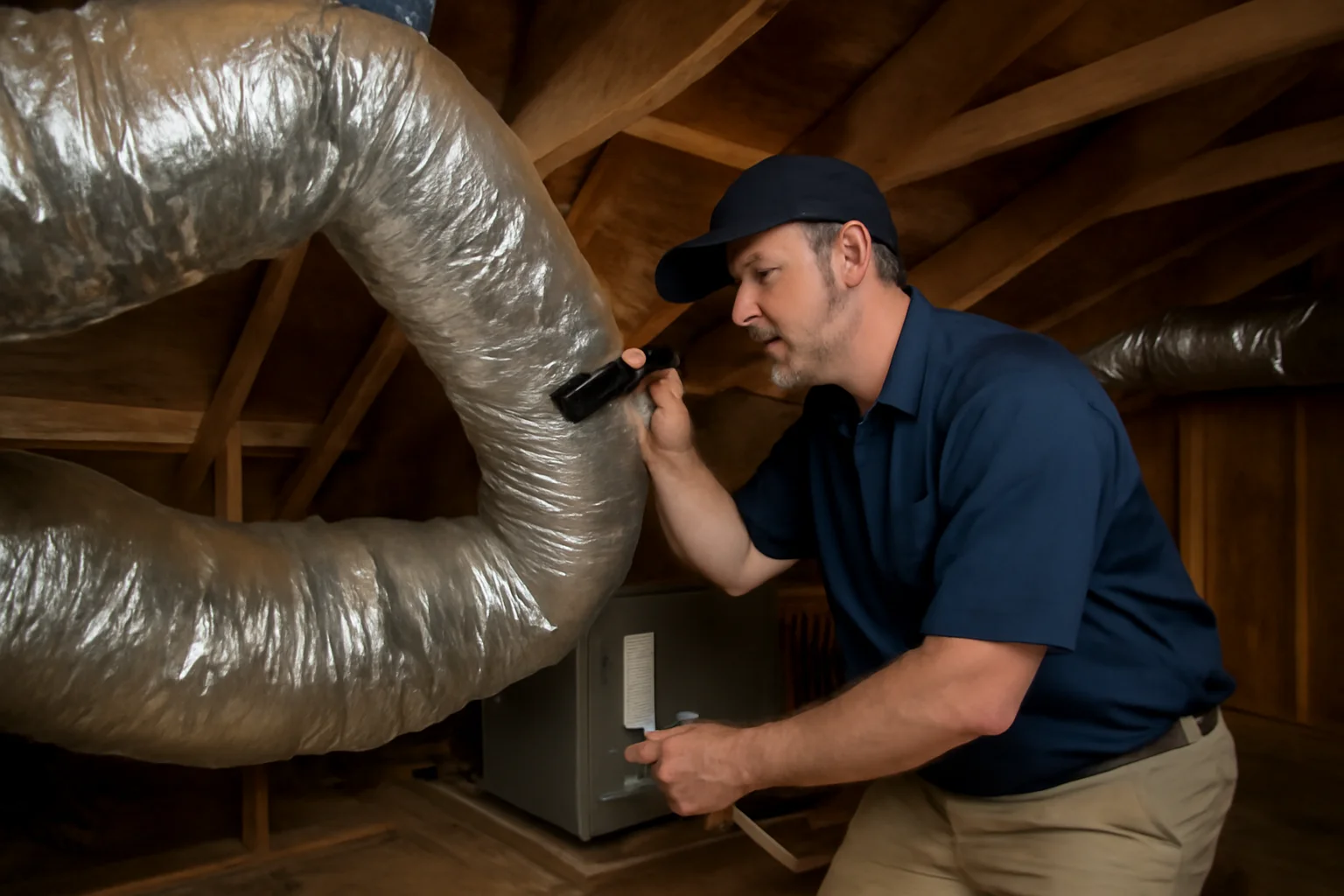
Mary Esther homes feel the weather quickly. When the air turns hot and humid, your air conditioner or heat pump has to work harder to keep indoor comfort steady. But sometimes the HVAC problem is not only the equipment. Ductwork issues can quietly shorten the life of HVAC systems by restricting airflow, trapping moisture, and forcing refrigerant systems to work outside their intended conditions.
This guide focuses on HVAC warning signs that connect directly to duct inspection in Mary Esther, FL. It also covers what to look for, why Florida heat, humidity, and salt air matter, and how preventive HVAC maintenance and duct inspection near you can help avoid costly breakdowns and emergency cooling concerns.
Why ducts can turn “normal wear” into early HVAC failure
Your HVAC system depends on consistent airflow through the indoor coil and across the supply vents. When ducts are damaged, poorly sealed, undersized, or blocked by debris, the system may still run, but it often cannot move the conditioned air the way it should. That mismatch can increase stress across the HVAC system, including the refrigerant system, the blower, and the condensate drainage path.
In Mary Esther and nearby Okaloosa County neighborhoods, duct problems can be more common because homes may have older duct layouts, mixed insulation quality, or ductwork that was not sealed for the humidity swings typical of the Florida Gulf Coast. Salt air can also contribute to corrosion over time, especially around metal duct seams, registers, and HVAC cabinet areas.
When duct inspection near me leads to the root cause, repairs and maintenance can focus on the airflow pathway, not just the thermostat setting or the equipment fan cycle.
HVAC warning signs that often trace back to ductwork
Below are common HVAC warning signs homeowners in Mary Esther report. Many of these issues are not solved by simply turning the thermostat down or replacing a filter. Duct inspection helps confirm whether airflow and duct sealing are part of the problem.
1) Uneven cooling or hot and cold rooms
If one room stays warm while another feels chilly, the system may be delivering the wrong airflow distribution. Leaky supply ducts, disconnected sections, or duct runs that are crushed or poorly routed can reduce airflow to certain areas. Over time, the HVAC blower may run longer to compensate, increasing energy use and wear.
Uneven airflow is especially noticeable in Florida summers when indoor humidity rises. Rooms that do not receive enough conditioned air can retain moisture, which affects comfort and indoor air quality.
2) Air feels weak at vents or higher static pressure symptoms
When airflow at registers seems low, ducts may be restricted by debris, poorly designed duct sizing, or internal buildup. Even with a clean filter, restriction can force the blower to work harder. A duct inspection can check for blockage points, improper duct sizing, and air leaks that reduce effective airflow.
If you are searching for air conditioner service near me because the vents do not “push” air like they used to, ask whether a duct inspection is included in the evaluation. It is often a key step before assuming the system is failing.
3) Frequent cycling, long run times, or “short cycling”
Short cycling can happen when the system reaches temperature targets too quickly, sometimes because airflow is not consistent across the indoor coil. Long run times can happen when the system cannot deliver enough conditioned air due to duct leakage or restriction. Either pattern can increase system stress and shorten HVAC life.
Because these symptoms can overlap with refrigerant system issues or thermostat behavior, professional evaluation is important. A technician should verify airflow, duct conditions, and system operation together rather than guessing.
4) Humidity that never seems to drop
Florida heat and humidity can overwhelm comfort when the system cannot move air and remove moisture effectively. Duct leaks can pull in humid air from attics, crawlspaces, or duct chases, especially if ducts run through less conditioned spaces. Condensation can also occur when airflow patterns are off or when duct insulation is compromised.
During duct inspection, technicians can look for signs of air leakage, insulation gaps, and moisture-related issues that connect directly to indoor humidity and condensate drainage performance.
5) Musty odors or visible dust near vents
Dust and odor complaints can be linked to duct contamination, air leaks that draw in dirt from surrounding spaces, or airflow that stirs up debris. While duct cleaning is not always the first step, duct inspection can determine whether the issue is from ductwork leakage, buildup, or another indoor air quality concern.
Homeowners asking about indoor air quality services near me often need a duct-focused assessment first, especially when symptoms rise during seasonal system use.
6) Ice on coils or unusual condensation around the system
Ice formation or abnormal condensation can be a sign of airflow problems. If airflow is restricted, the indoor coil may not be able to absorb heat and humidity properly. Duct inspection can help confirm whether supply or return airflow is compromised.
Because ice and condensation can also relate to other system factors, any inspection should be performed by a qualified HVAC contractor who can evaluate the full system in person.
How duct problems strain refrigerant systems and airflow balance
It is tempting to think ducts are “just channels” for air, but they influence how the entire HVAC system operates. Airflow affects coil performance and the way heat transfer occurs. When airflow is restricted or uneven, the refrigerant system may not behave as expected. That can lead to inefficient operation, higher energy use, and greater wear on components.
Duct inspection helps confirm whether the system is receiving the right amount of return air and distributing supply air correctly. It also checks whether ductwork is sealed and insulated appropriately, which matters in Mary Esther where humidity levels can climb and indoor comfort targets can be harder to maintain.
Condensate drainage issues you can connect to duct leakage and airflow
Many homeowners do not realize that moisture management is a team effort between the HVAC equipment and the duct system. When ducts leak, humid air can be pulled into areas where it should not be. That can increase condensation risk on surfaces and create more load on the condensate drainage path.
During duct inspection, technicians often look for moisture signs around air handler areas, duct connections, and insulation. If condensate drainage is not clear or if airflow patterns contribute to condensation where it should not happen, the system can develop recurring comfort problems and potential moisture damage concerns.
If you see water near the air handler, notice dripping, or smell damp odors, treat it as a comfort and indoor air quality issue, not just a “dry it off” problem.
Thermostat behavior can mask ductwork problems
Modern thermostats can display schedules, humidity readings, and system status. However, thermostat settings do not fix airflow restrictions. If a thermostat is calling for cooling but rooms remain humid or temperatures do not stabilize, the root cause may still be ductwork leakage, poor return airflow, or blocked airflow pathways.
Some homeowners try adjusting thermostat settings repeatedly, but that can lead to higher energy use without solving the underlying issue. A duct inspection in Mary Esther can help determine whether the system is actually delivering conditioned air to the right places.
If you are considering HVAC replacement near me because the thermostat seems “wrong,” start with an HVAC contractor evaluation that includes ductwork and airflow checks. Equipment replacement may not be necessary if duct sealing, airflow balancing, or duct repairs address the cause.
How salt air and coastal conditions affect ductwork and HVAC longevity
Mary Esther sits near the Gulf, and coastal conditions can accelerate corrosion on metal components. Even when the air conditioner service call seems to focus on the outdoor unit, ductwork condition matters. Corroded seams, aging metal duct sections, and deteriorating insulation can contribute to air leaks and reduced performance.
Humidity also affects how ducts and insulation behave. When duct insulation is compromised, condensation can form on duct surfaces in cooling mode. Over time, moisture issues can contribute to indoor air quality concerns and discomfort that returns every summer.
What a duct inspection in Mary Esther should check
Not every duct inspection is the same. A thorough evaluation should focus on the airflow pathway and the condition of the duct system. Homeowners can ask what the inspection includes and how results connect to system performance.
Airflow pathways and distribution
Technicians typically assess whether supply and return airflow are balanced enough to support proper coil performance. That can include checking for disconnected runs, blocked sections, collapsed ductwork, and improper routing.
Sealing and insulation quality
Duct sealing affects how much conditioned air reaches living spaces. It also affects whether unwanted humid air gets pulled into the system. Insulation issues can create condensation risk, especially during Florida cooling cycles.
Signs of contamination and moisture
Inspection may include looking for dust accumulation patterns, odor sources, and moisture indicators. If indoor air quality is a concern, duct inspection helps determine whether ductwork is contributing and whether ductwork repairs or targeted cleaning are appropriate.
System operation connection
A quality HVAC contractor will connect duct findings to equipment operation. That means evaluating airflow and comfort symptoms together rather than treating ducts and the HVAC system as separate problems.
If you are searching for duct inspection near me, choose a local HVAC contractor who treats duct inspection as part of a complete comfort diagnosis, not an isolated add-on.
Prevention: HVAC maintenance steps that protect airflow and comfort
Preventive HVAC maintenance near me should include more than filter swaps. Filters help, but they are only one piece of the airflow equation. Ductwork condition, sealing, and insulation still matter, especially in humid climates.
Keep filters appropriate and changed on schedule
Use the filter type and size your system requires. A clogged filter can restrict airflow and contribute to coil and condensate drainage issues. When filters are changed too late, the system may run longer and struggle to maintain comfort.
Watch for airflow changes early
If vent airflow weakens, rooms start running warm, or humidity stays high, address it early. Small duct leaks or partial restrictions can turn into bigger comfort problems as the cooling season progresses.
Schedule seasonal inspections before peak heat
In Mary Esther, planning ahead for hot, humid stretches can reduce emergency cooling concerns. A duct-focused inspection as part of HVAC maintenance helps you identify issues before they show up during the hottest weeks.
Address condensate drainage and moisture control
Moisture issues can worsen indoor air quality and comfort. Make sure condensate drainage is functioning properly and that duct insulation is in good shape where ducts pass through less conditioned areas.
Consider duct upgrades when the system cannot keep up
Some homes have ductwork that was never designed for today’s comfort needs. If duct inspection shows persistent airflow problems, duct replacement near me or ductwork improvements may be part of a long-term solution. This should be evaluated based on your home’s layout, duct size, and airflow requirements, not guesswork.
If you are exploring a different system approach, homeowners sometimes compare ductwork-based systems with ductless options. If that fits your home, you can review Ductless Mini-Splits for an alternative path to comfort.
When to call a professional HVAC contractor in Mary Esther
Call a local HVAC contractor when you notice warning signs that connect to airflow and humidity, especially during peak summer. Professional duct inspection can clarify whether the problem is restricted airflow, duct leakage, moisture-related issues, or a system performance concern that needs in-person evaluation.
Reach out if you experience:
- Repeated uneven cooling that does not improve with thermostat adjustments
- Persistent high indoor humidity during cooling season
- Weak airflow at vents or sudden changes in airflow
- Musty odors or recurring dust complaints
- Water or condensation where it should not be
A Superior Mechanical offers professional duct inspection in Mary Esther, FL. You can learn more about the service here: duct inspection in Mary Esther, FL. If you want to browse the service area coverage, visit Mary Esther service options or explore Okaloosa County HVAC services.
Related HVAC care topics for Mary Esther homeowners
If you manage a rental or property portfolio, ductwork and routine maintenance can make comfort more consistent across units. See Keeping Mary Esther Properties Comfortable: A Practical Guide to HVAC Care for Managed Homes and Rentals for practical steps.
For buildings with different layouts and airflow needs, duct design and moisture control matter. This guide may help you understand how airflow choices affect comfort and dryness: Commercial HVAC design that keeps Mary Esther buildings comfortable, dry, and efficient.
For homeowners who already know ductwork is on the table, this post connects upgrades to duct cleaning and comfort: Practical HVAC Upgrades Built Around Duct Cleaning in Mary Esther, FL.
And if you are comparing duct inspection practices across the region, this article explains why preventive HVAC service supports duct inspection outcomes: Why Preventive HVAC Service Matters for Duct Inspection in Miramar Beach Homes.
How duct inspection fits with air conditioning, heat pumps, and system planning
Duct inspection is useful across cooling systems, including central air conditioning and heat pump operation. In Mary Esther, where summers are hot and humid, proper airflow helps air conditioners remove moisture and helps heat pumps maintain comfort without excessive run time.
If your home uses a heat pump and you are dealing with comfort issues, look for an evaluation that considers ductwork and airflow. For homeowners planning heating and cooling service, you can also explore local options like Heating Services and Air Conditioning Services.
When duct inspection reveals airflow restrictions or leakage that affects system performance, it can influence how you plan for longer-term solutions, including whether additional ductwork work is needed before making decisions about HVAC replacement.
If you are dealing with emergency cooling concerns, prioritize air conditioning inspection and HVAC repair evaluation from a qualified contractor. Ductwork issues can contribute to comfort failure, and a professional assessment can help you avoid repeated breakdown cycles.
For duct-related comfort improvements, the goal is simple: deliver the right amount of conditioned air to the right places, manage humidity effectively, and reduce unnecessary stress on your HVAC system. That is where duct inspection earns its place in preventive HVAC maintenance and reliable air conditioning service in Mary Esther.
Find Duct Inspection in Mary Esther, FL
If you need Duct Inspection in Mary Esther, FL, visit our local service page or contact A Superior Mechanical today.
Map of Mary Esther, FL
Frequently Asked Questions
What HVAC warning signs are most commonly connected to ductwork problems?
Uneven cooling, weak airflow at vents, persistent humidity, musty odors, and frequent cycling can all connect to duct leakage or airflow restriction. A duct inspection helps confirm whether the duct system is contributing to the comfort issue.
Can duct issues shorten the life of my air conditioner or heat pump?
Yes. When airflow is restricted or uneven, the system often runs longer or cycles in ways that increase wear. That can add stress to the indoor blower, coil performance, and the refrigerant system. Duct inspection helps identify the airflow pathway problem.
How does Florida humidity and salt air affect ducts in Mary Esther?
High humidity and coastal conditions can worsen insulation performance and contribute to condensation risk when duct insulation is damaged. Salt air can also accelerate corrosion on metal duct components and seams, leading to more leakage over time.
Should I clean ducts before I get a duct inspection?
Not always. Duct cleaning can be appropriate in some cases, but duct inspection is the better first step because it identifies whether the main issue is leakage, blockage, moisture, or another indoor air quality contributor. An in-person evaluation is important.
Is duct inspection part of regular HVAC maintenance?
It can be. Preventive HVAC maintenance often includes checking airflow and comfort performance. In Mary Esther, adding a duct inspection when symptoms appear or before peak cooling season can help catch duct-related problems early.
Related Articles
- Keeping Mary Esther Properties Comfortable: A Practical Guide to HVAC Care for Managed Homes and Rentals
- Commercial HVAC design that keeps Mary Esther buildings comfortable, dry, and efficient
- Practical HVAC Upgrades Built Around Duct Cleaning in Mary Esther, FL
- Why Preventive HVAC Service Matters for Duct Inspection in Miramar Beach Homes
Photo Gallery