30A summers can feel relentless. Even when your thermostat says the house should be cool, coastal heat, high humidity, and salt air can push your heat pump system beyond what it can handle when something is not quite right. The good news is that many HVAC warning signs show up early. When you connect those signs to heat pump services, you can protect cooling performance, indoor air quality, and comfort before an emergency cooling concern turns into a full breakdown.
If you are searching for heat pump services in 30A, FL, this guide helps you recognize what to watch for and what to ask about. It also explains how airflow, refrigerant systems, condensate drainage, thermostats, and ductwork can all play a role in better cooling.
Why heat pumps on 30A can struggle with cooling and humidity
Heat pumps are designed to move heat instead of generating it the way traditional systems do. In cooling mode, they pull heat out of your home and reject it outside while also managing moisture. In 30A’s warm, humid air, that moisture management is not optional. If the system cannot remove humidity effectively, you feel it immediately as clamminess, sticky air, and that “cool but uncomfortable” feeling.
Coastal conditions add extra stress. Salt air can accelerate corrosion on outdoor components. Florida heat can increase run time, raising the chance that airflow restrictions, refrigerant system imbalances, or condensate drainage problems will show up. Many 30A homes also have ductwork that has to balance comfort across rooms, and duct leakage or poor duct design can make the heat pump work harder than it should.
For homeowners, the key is to treat cooling issues as a system problem, not a single symptom.
Cooling performance warning signs that often point to heat pump service needs
Below are common HVAC warning signs homeowners notice in Walton County. Each one can connect to heat pump repair, heat pump maintenance, ductwork attention, or thermostat adjustments. None of these should be ignored, especially during the hottest stretches of the year.
1) The house cools slowly or never reaches the set temperature
When the thermostat is set to a reasonable temperature but the home never quite gets there, the cause is often related to airflow, heat transfer, or moisture removal. In a heat pump, inadequate airflow can reduce cooling capacity. Dirty filters, blocked returns, or restricted supply airflow can also prevent the indoor coil from absorbing heat efficiently.
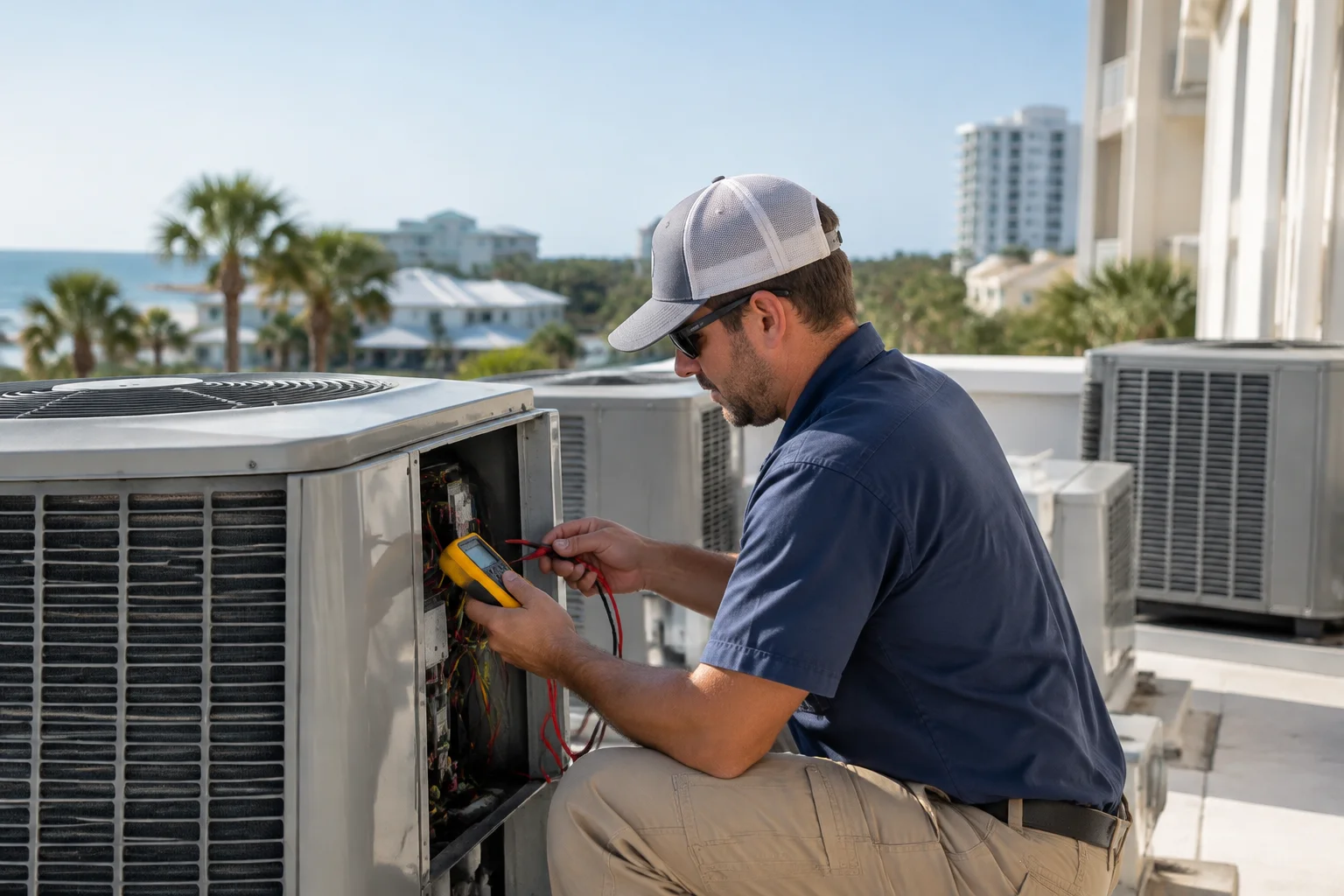
Outdoor airflow matters too. If the outdoor unit is partially blocked by landscaping, debris, or seasonal growth, the system may not reject heat properly. In coastal areas, salt and sand can contribute to buildup on outdoor components.
This is a common reason homeowners searching for HVAC repair near me end up needing more than a quick fix. A professional evaluation looks at system airflow and indoor comfort performance together.
2) Airflow feels weak from vents, especially on certain rooms
Weak airflow can be a ductwork issue, a blower issue, or a combination. In 30A homes, ductwork can be affected by age, installation differences, and air leakage. If some rooms receive less air, the heat pump may run longer to compensate, which increases energy use and can worsen humidity control.
Airflow problems can also be connected to indoor air quality concerns. When airflow is low, your system may not cycle properly or may not distribute conditioned air as intended. That can contribute to stale air, dust buildup, and uneven comfort.
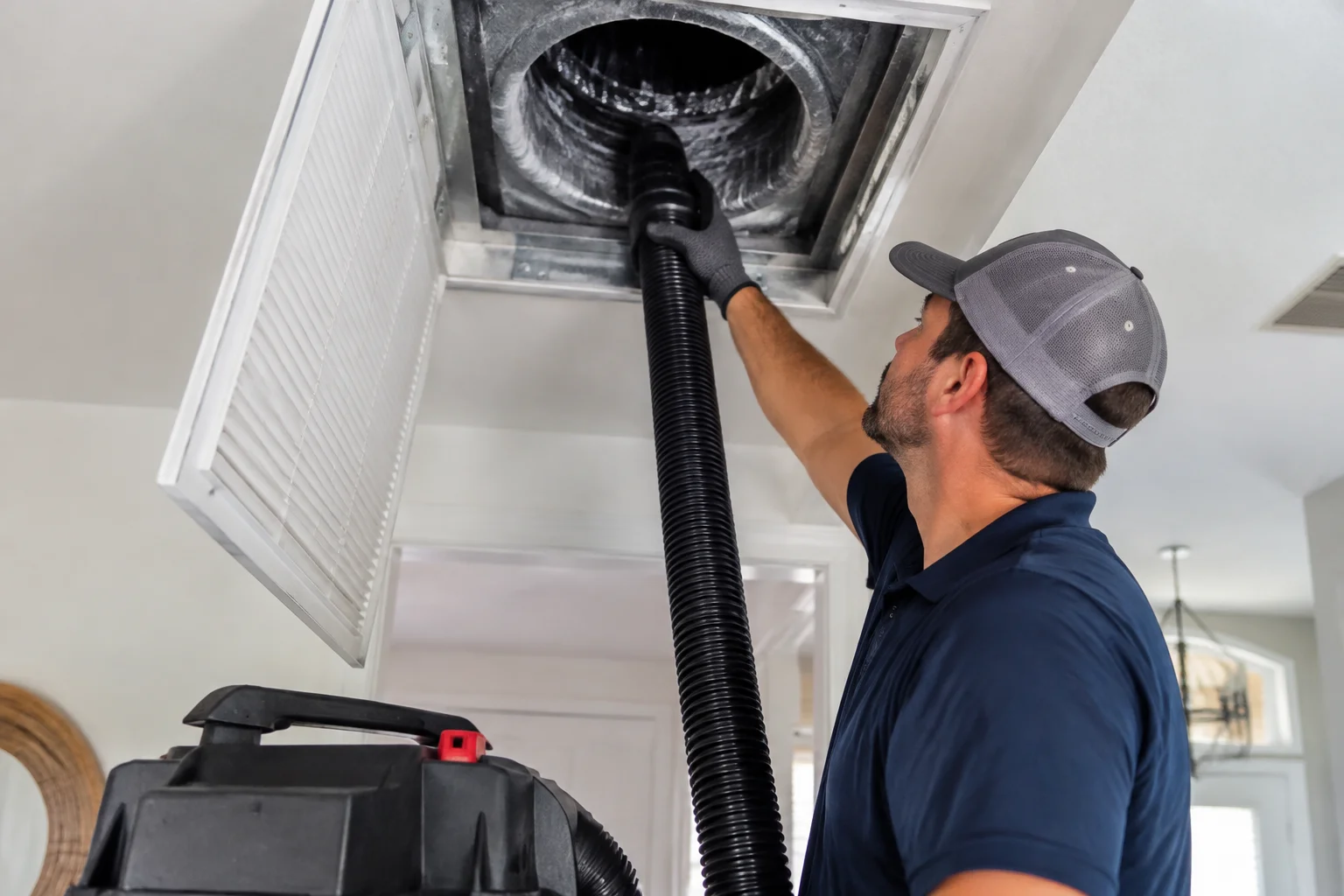
If you suspect ductwork is part of the issue, consider scheduling ductwork services such as duct inspection near me or duct repair near me. A proper inspection can help identify restrictions, leaks, and areas where airflow is being lost.
3) Humidity stays high even when the temperature looks “right”
High indoor humidity is one of the most telling warning signs in Florida. If your home feels sticky or you see condensation on windows, the heat pump may not be removing moisture effectively. That can happen when airflow is too high or too low for proper coil performance, when condensate drainage is not working, or when the system is not operating as intended.
Heat pumps cool by condensing moisture on the indoor coil and draining it through the condensate drainage pathway. If drainage is blocked, the drain pan cannot do its job, and humidity control suffers. Even if you do not notice water, a drainage problem can still reduce comfort and create conditions that affect indoor air quality.
Because humidity control is tied to cooling performance, humidity complaints should be treated as heat pump service concerns, not just “a fact of Florida.”
4) Short cycling or frequent on and off cycles
Short cycling is when the system turns on and off quickly. It can reduce comfort and increase wear. A heat pump can short cycle due to airflow problems, thermostat settings or programming issues, or system operating conditions that prevent the equipment from staying in the correct range.
Some homeowners notice this as a pattern: the system starts, runs briefly, then stops, even though the home is not fully cooled. The result is often uneven temperatures and inconsistent humidity control.
Thermostats also play a role. If the thermostat is misconfigured or not reading conditions correctly, the heat pump may not run long enough to remove moisture. That is why thermostat installation near me or thermostat evaluation can be part of a comfort fix, depending on what is found in person.
5) Strange noises, unusual vibrations, or “hissing” during operation
Some sounds are normal, but new noises can indicate a problem. Humming, rattling, or abnormal airflow sounds can point to fan or blower issues. Hissing or other unusual sounds can be associated with refrigerant system operation, refrigerant flow, or airflow disruptions.
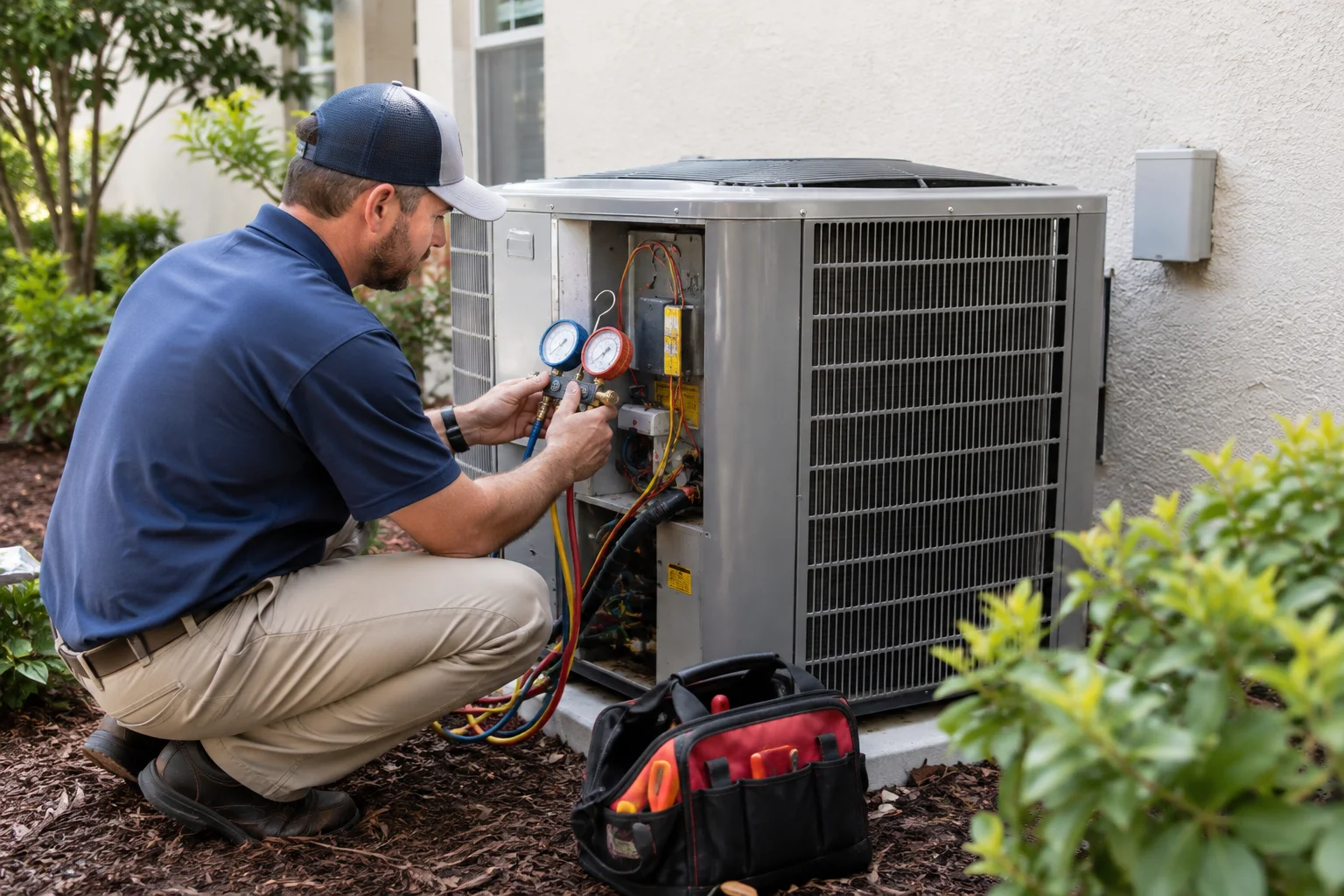
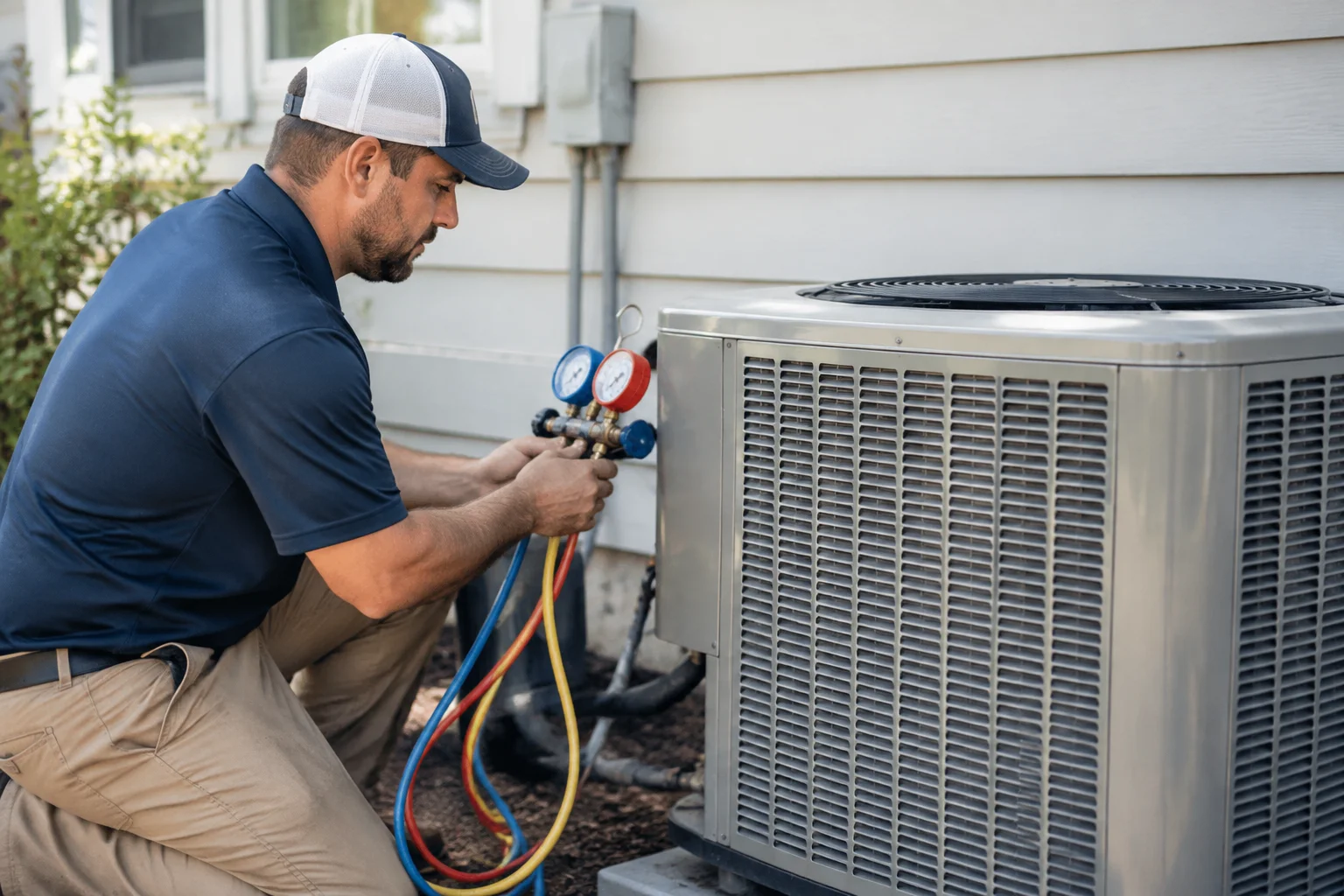
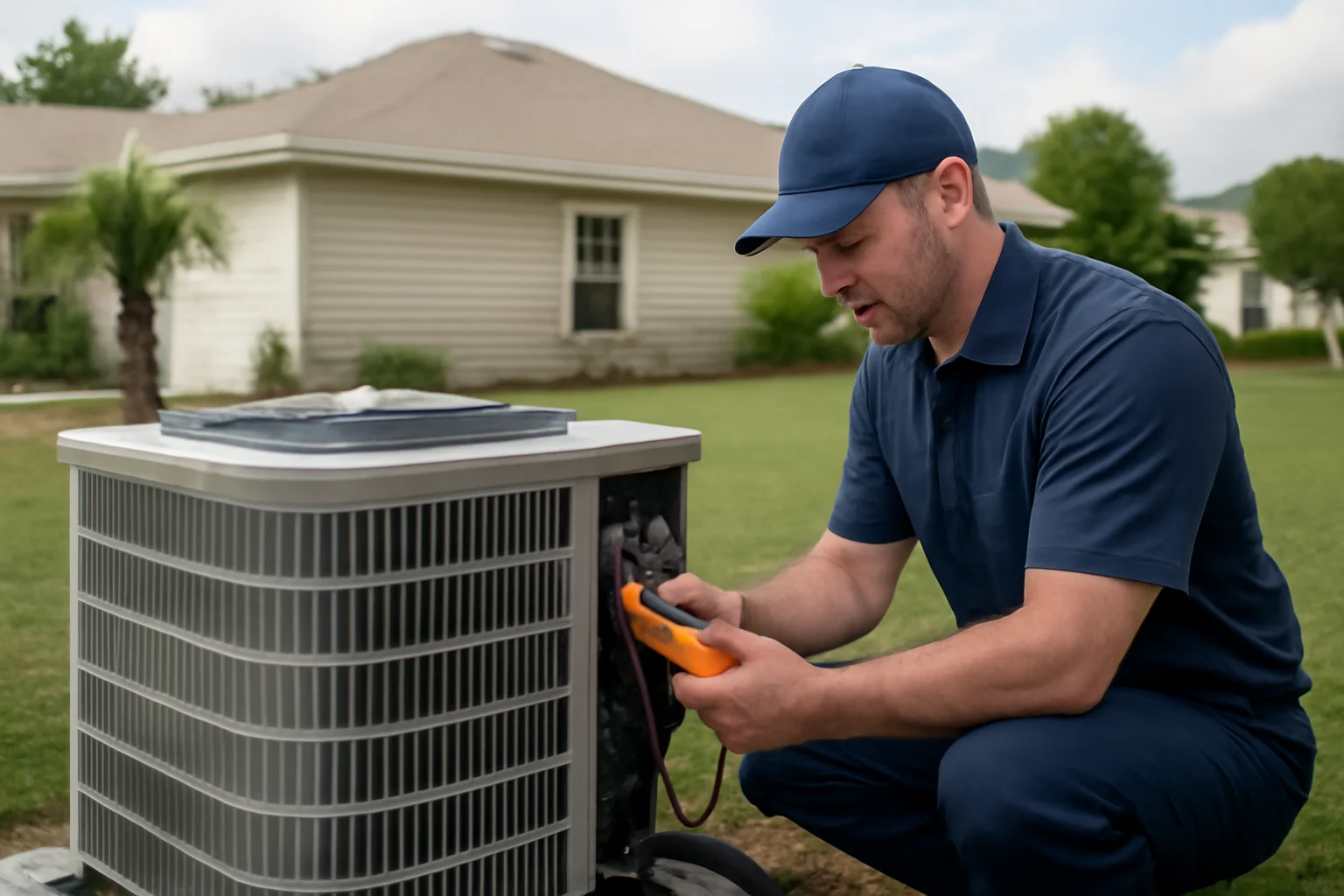
Refrigerant systems are not a DIY area. If a homeowner hears concerning noises, the safest path is to schedule a professional inspection. An HVAC contractor near me can check airflow, verify operating conditions, and confirm what the noise indicates without guessing.
6) Condensate issues: water around the indoor unit, musty smells, or drainage that seems “off”
In cooling mode, your heat pump should manage condensate as it removes humidity. If you notice water near the air handler or smell a musty odor, it can signal condensate drainage problems or a drainage pathway that is not carrying water away properly.
Florida humidity can make these issues more noticeable, and clogged drain lines can lead to ongoing moisture in areas where it should not be. That can also affect indoor air quality.
Condensate drainage concerns are a strong reason to arrange heat pump repair near me service sooner rather than later.
How airflow, refrigerant systems, and ductwork connect to cooling comfort
Heat pump performance in 30A depends on coordinated airflow and heat transfer. Even when the outdoor unit seems to run, poor airflow inside the home can reduce cooling capacity and humidity removal.
Airflow and the indoor coil
Airflow across the indoor coil determines how effectively the system absorbs heat and condenses moisture. If filters are clogged, return paths are blocked, or ductwork is restricted, the coil may not operate in its intended range. That can lead to weak cooling and poor humidity control.
Refrigerant systems and heat transfer
Cooling depends on how the refrigerant system moves refrigerant through the indoor and outdoor sections. When refrigerant flow is not operating within normal conditions, cooling performance can drop and the system can behave inconsistently. Because refrigerant systems require proper testing and handling, a professional evaluation is necessary before any conclusions are made.
Ductwork and distribution
Ductwork affects how quickly rooms cool and how evenly they stay comfortable. In 30A homes, duct leakage and poor airflow balance can make the heat pump feel unreliable. If some rooms never feel cool while others get too cold, duct inspection near me can reveal where airflow is going.
If you are considering improvements, options like duct sealing & Aeroseal services may help address leakage and airflow loss, depending on what your ducts need.
Thermostats, schedules, and humidity comfort in Florida
Thermostats influence how long your heat pump runs and how it cycles. In humid Florida weather, short run times can prevent the system from removing enough moisture. If your thermostat is set for rapid temperature recovery without considering humidity comfort, you may end up with cool air that still feels damp.
Some homeowners also rely on vacation rental schedules or frequent thermostat changes. Those patterns can contribute to comfort swings if the system is not configured properly.
Professional guidance can help you choose thermostat settings that support both cooling performance and humidity control. If needed, a local HVAC team in 30A can also evaluate whether thermostat installation near me support is appropriate for your system.
Salt air, Florida humidity, and common 30A heat pump issues
30A is unique. Many neighborhoods are close to coastal air, and that salt-laden environment can accelerate wear on outdoor units. Over time, corrosion and buildup can impact airflow and heat rejection. Florida humidity can also intensify condensate drainage issues and make indoor comfort problems more obvious.
Common patterns homeowners report include:
- Outdoor units that seem to run longer during hot, humid afternoons
- Reduced cooling comfort after seasonal transitions
- Visible condensation or recurring musty odors during cooling season
- Uneven airflow between rooms, especially in larger or multi-zone layouts
Because these issues connect to multiple parts of the system, professional heat pump maintenance near me is often the most efficient way to catch problems before they affect comfort.
Prevention that helps heat pumps deliver better cooling performance
Preventive HVAC maintenance is not just about avoiding breakdowns. In 30A’s climate, it is also about keeping airflow steady, humidity control reliable, and indoor air quality supported.
Replace or service filters and confirm airflow paths
Filters that are overdue can reduce airflow and make the heat pump work harder. Make sure return and supply vents are not blocked by furniture, curtains, or seasonal items.
Address condensate drainage early
During cooling season, pay attention to drainage. If you ever notice water where it should not be, or if you suspect the drain is slow, schedule service. Condensate drainage issues can affect comfort and indoor air quality.
Keep outdoor airflow clear and protect from coastal buildup
Trim landscaping so the outdoor unit has airflow clearance. In coastal areas, routine cleaning and inspection can help reduce the impact of salt air and debris. A professional can also check for signs of corrosion and performance changes.
Support indoor air quality with filtration and airflow quality
Humidity and comfort are closely linked to indoor air quality. If you are dealing with dust, allergies, or stale air, consider air filtration and purifiers as part of a broader comfort plan. The right approach depends on your system and ductwork condition.
Plan maintenance around seasonal stress
Many 30A homeowners feel the biggest strain during peak summer heat. If you want a practical approach to staying ahead of problems, see How 30A Homes Can Stay Ahead of HVAC Emergencies During Seasonal Stress.
When to call a professional for heat pump repair or HVAC replacement
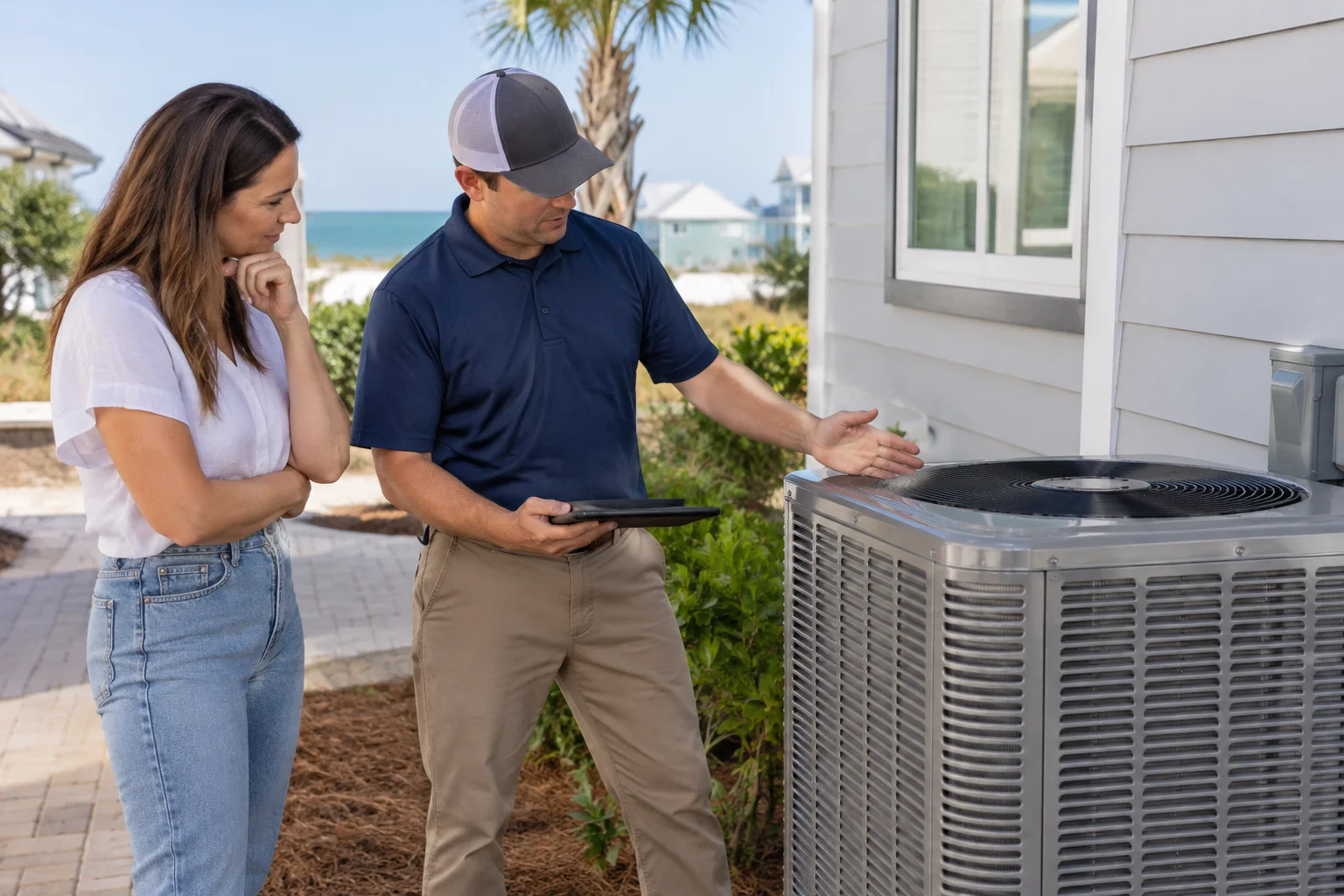
Some issues are minor, but certain warning signs deserve prompt attention. If you notice consistent poor cooling, persistent humidity problems, repeated short cycling, water related concerns, or unusual noises, it is time for an in-person evaluation. A licensed HVAC contractor near me can assess system operation, airflow, refrigerant system performance, thermostat behavior, and drainage.
It is also important to avoid guessing about refrigerant or electrical components. A professional can confirm what is happening and recommend the right next step, whether that is heat pump repair, ductwork attention, thermostat adjustments, or a broader system replacement discussion.
Homeowners also ask about HVAC replacement near me when systems age or when repairs start stacking up. Those decisions depend on the condition of the full system and how well it can meet cooling and humidity needs in a coastal climate. For more on how planning can reduce stress, read Why Preventive HVAC Service Pays Off for Air Conditioning Repair in 30A, FL.
How A Superior Mechanical supports 30A heat pump performance
A Superior Mechanical provides professional heat pump services in 30A, FL for efficient heating, cooling, and humidity control in homes, vacation rentals, and commercial properties. When homeowners call about cooling and airflow concerns, the goal is to connect the symptoms to the right part of the system.
That can include:
- Reviewing airflow and comfort performance across rooms and seasons
- Checking condensate drainage pathways and related comfort impacts
- Assessing thermostat behavior and settings that influence cooling run time
- Evaluating ductwork needs that affect distribution and energy use
- Planning next steps for heat pump repair or replacement when appropriate after inspection
If you are ready to address cooling performance, you can explore heat pump services for 30A or learn more about service options across Walton County. For homes that need duct support, the team can also help with ductwork services and comfort improvements tied to airflow.
Related comfort upgrades homeowners often consider in 30A
Sometimes the best solution is a combination of repairs and performance upgrades. Depending on your home, ductwork condition, and comfort goals, you may also benefit from:
- New construction air conditioning planning if you are building or upgrading a property
- Air filtration and purifiers for indoor air quality support
- Targeted duct sealing approaches like Duct Sealing & Aeroseal Services to reduce airflow loss
For homeowners with different comfort needs across zones, ductless mini split installation near me may also be considered in some layouts, but it should be evaluated based on your home’s specific heat load and distribution requirements.
Emergency cooling concerns: what to do if your heat pump stops working during peak heat
When the heat pump fails during an extreme heat day, the priority is safety and comfort. If your system stops cooling, do not keep resetting the thermostat repeatedly. Instead, check basic items like the thermostat mode and any air filter access you can safely reach.
Because emergency cooling concerns can involve airflow, thermostat behavior, or other system conditions, the next step should be a professional HVAC repair. For homeowners planning ahead, the guidance in How 30A Homes Can Stay Ahead of HVAC Emergencies During Seasonal Stress can help you reduce last-minute surprises.
If you are dealing with cooling that is weak, airflow that feels off, or humidity that will not settle down, those warning signs are often connected. The fastest path to better cooling performance is a thorough, in-person inspection that looks at the system as a whole.
Find Heat Pump Services in 30A, FL
If you need Heat Pump Services in 30A, FL, visit our local service page or contact A Superior Mechanical today.
Map of 30A, FL
Frequently Asked Questions
Why does my heat pump cool the house but humidity stays high in 30A?
High humidity despite cooling often points to airflow issues, condensate drainage problems, or thermostat settings that prevent proper moisture removal. A technician can inspect indoor coil performance, drainage pathways, and system operation to confirm what is limiting humidity control.
What HVAC warning signs are most likely related to heat pump service needs?
Common warning signs include weak cooling, weak airflow from vents, short cycling, musty odors or water near the indoor unit, and unusual noises during operation. These symptoms can connect to airflow, refrigerant system performance, condensate drainage, or thermostat behavior.
Can ductwork problems make my heat pump run longer and use more energy?
Yes. Leaky or restricted ductwork can reduce airflow and distribution, which makes the heat pump run longer to reach the thermostat setting. That can also affect humidity control and indoor air quality.
Is it safe for me to check refrigerant or try to fix the system myself?
No. Refrigerant systems require proper testing and handling. If you suspect refrigerant-related performance problems, schedule an in-person evaluation by a licensed HVAC contractor.
How can preventive maintenance help with cooling performance in Florida’s humidity and salt air?
Preventive maintenance helps keep airflow steady, supports proper condensate drainage, and allows an HVAC technician to inspect components affected by Florida humidity and coastal salt air. It is one of the best ways to reduce the chance of mid-summer breakdowns.
Related Articles
Photo Gallery