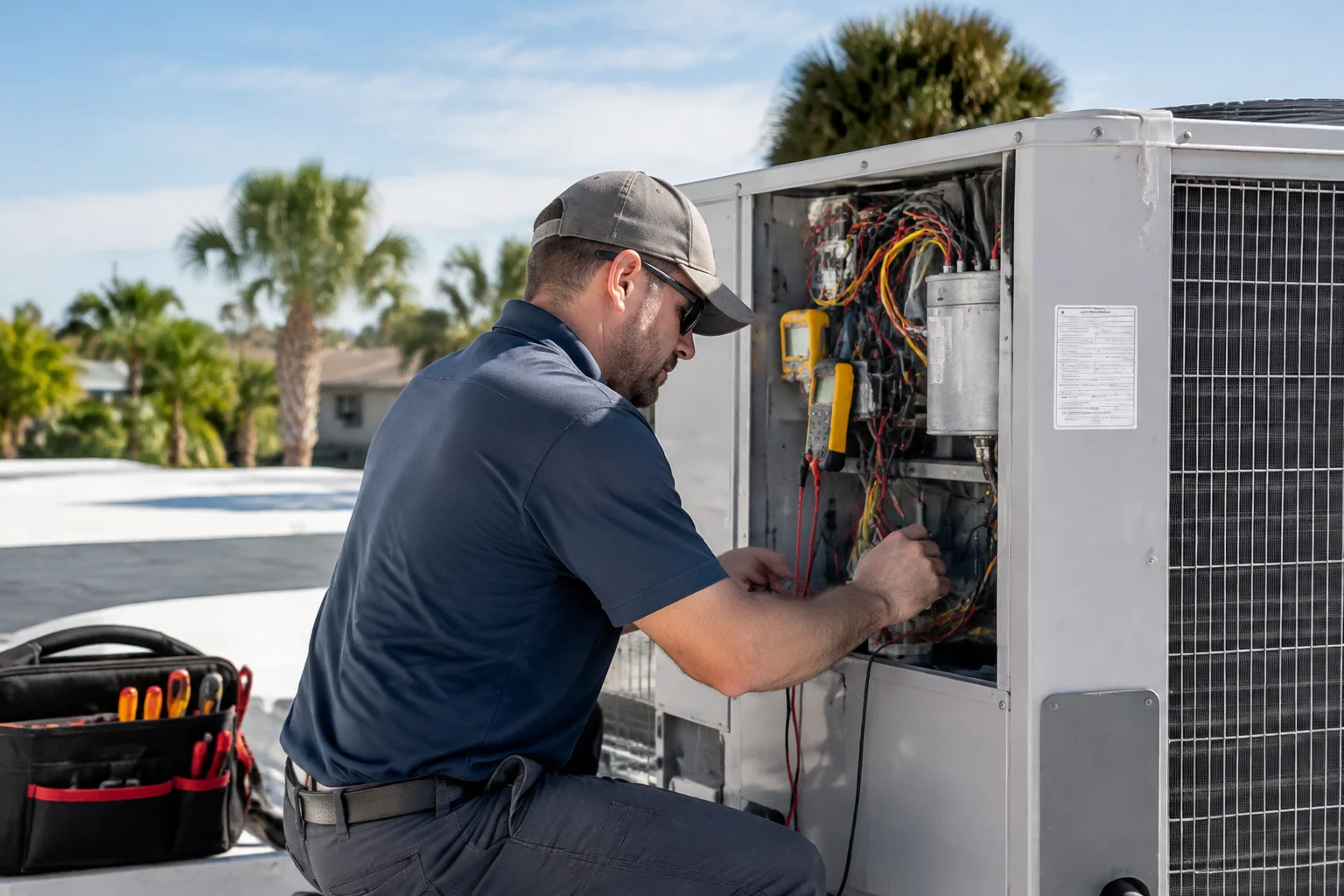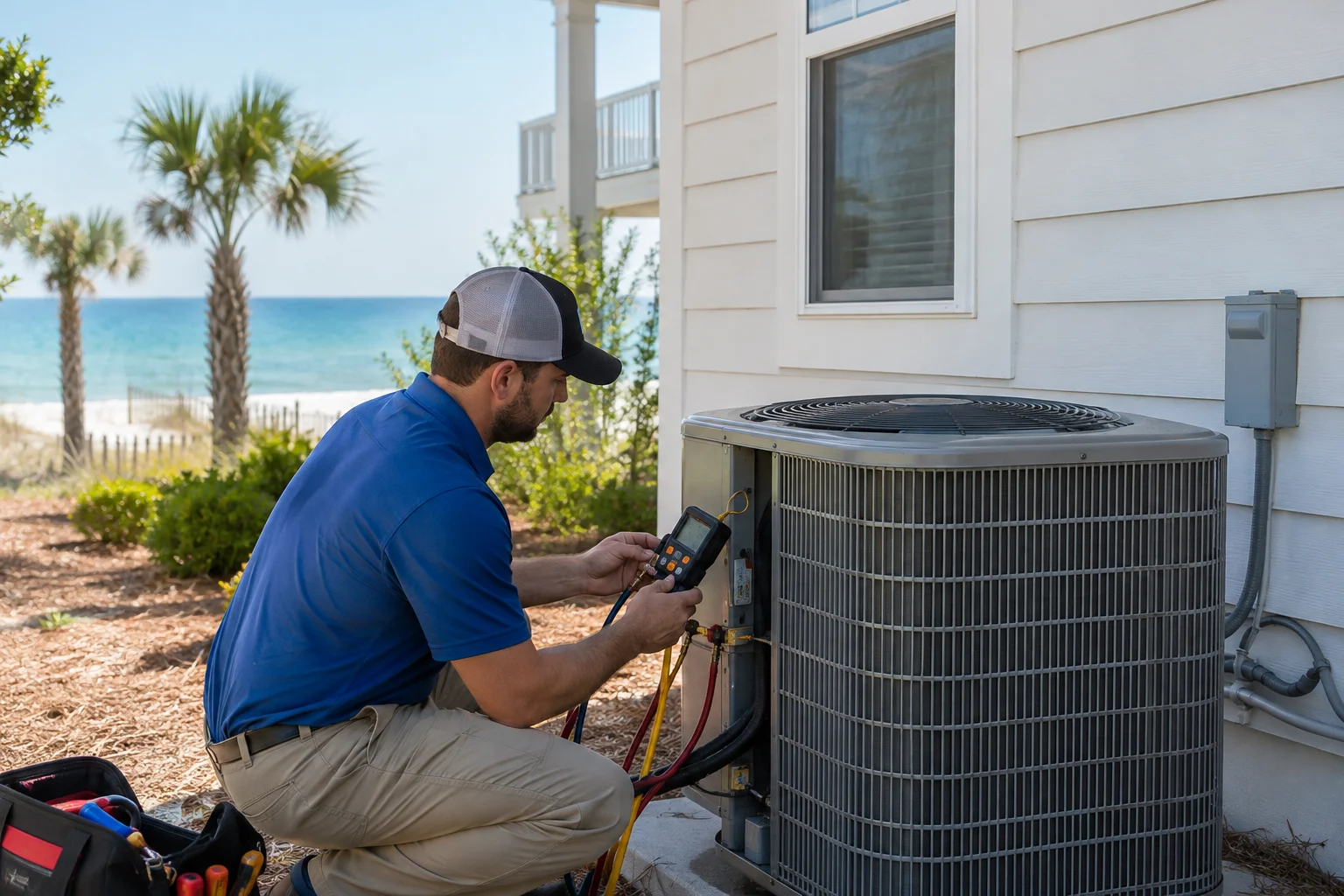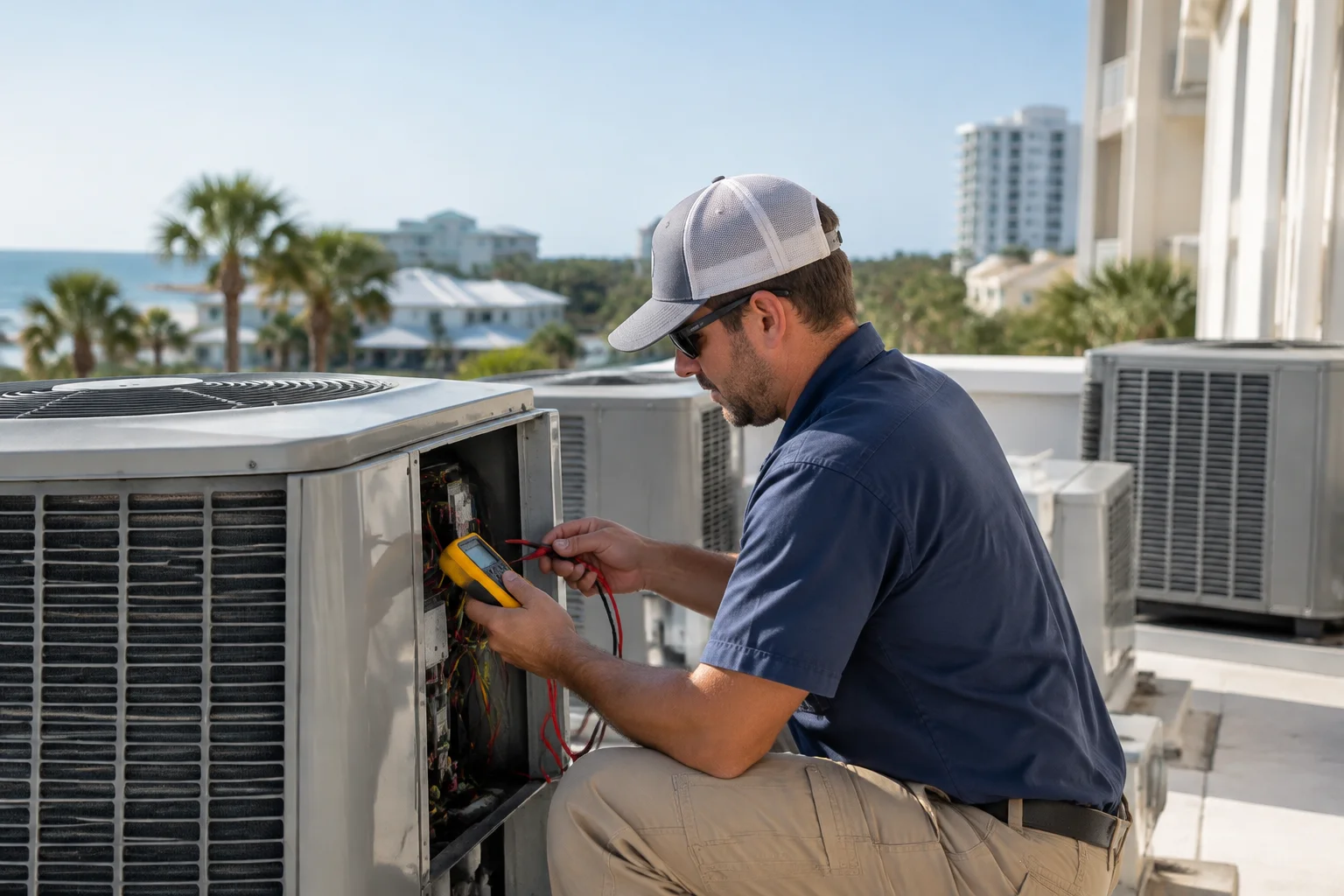
WaterColor, FL is beautiful, but the air is demanding. Warm temperatures, frequent humidity, and coastal salt exposure can push HVAC systems and indoor air quality equipment beyond what owners expect, especially as systems age. When HVAC wear and tear ramps up, it often shows up where homeowners feel it most: stale air, uneven cooling, lingering moisture, and filtration that no longer performs the way it should.
This article explains how aging HVAC components affect air filtration and dehumidifiers for WaterColor homes, whether you have a newer system or an older one that has been running through many humid seasons. You will also find practical maintenance steps you can take now, and clear signs for scheduling HVAC repair or an indoor air quality services near me.
Why WaterColor humidity puts extra strain on filtration and dehumidifiers
In WaterColor and across Walton County, the climate is a mix of heat and moisture. Even when temperatures are comfortable, humidity can remain high enough to make homes feel clammy. That matters because your HVAC system does more than cool. A properly operating air conditioner and heat pump help manage indoor humidity by moving air over cooling coils and removing moisture through condensate drainage.
Air filtration and dehumidifiers depend on consistent airflow and reliable coil performance. When airflow slows or moisture removal changes, filtration can become less effective and dehumidifiers can struggle to keep up. Coastal conditions add another layer: salt air can accelerate corrosion on metal parts, and the system may be exposed to more airborne contaminants like sand and salt-laden moisture.
What HVAC wear and tear does to airflow, and why airflow drives filtration performance
Air filtration is only as good as the air that passes through it. Over time, HVAC systems can develop issues that reduce airflow, including:
- Dirty or aging filters that are not replaced on schedule
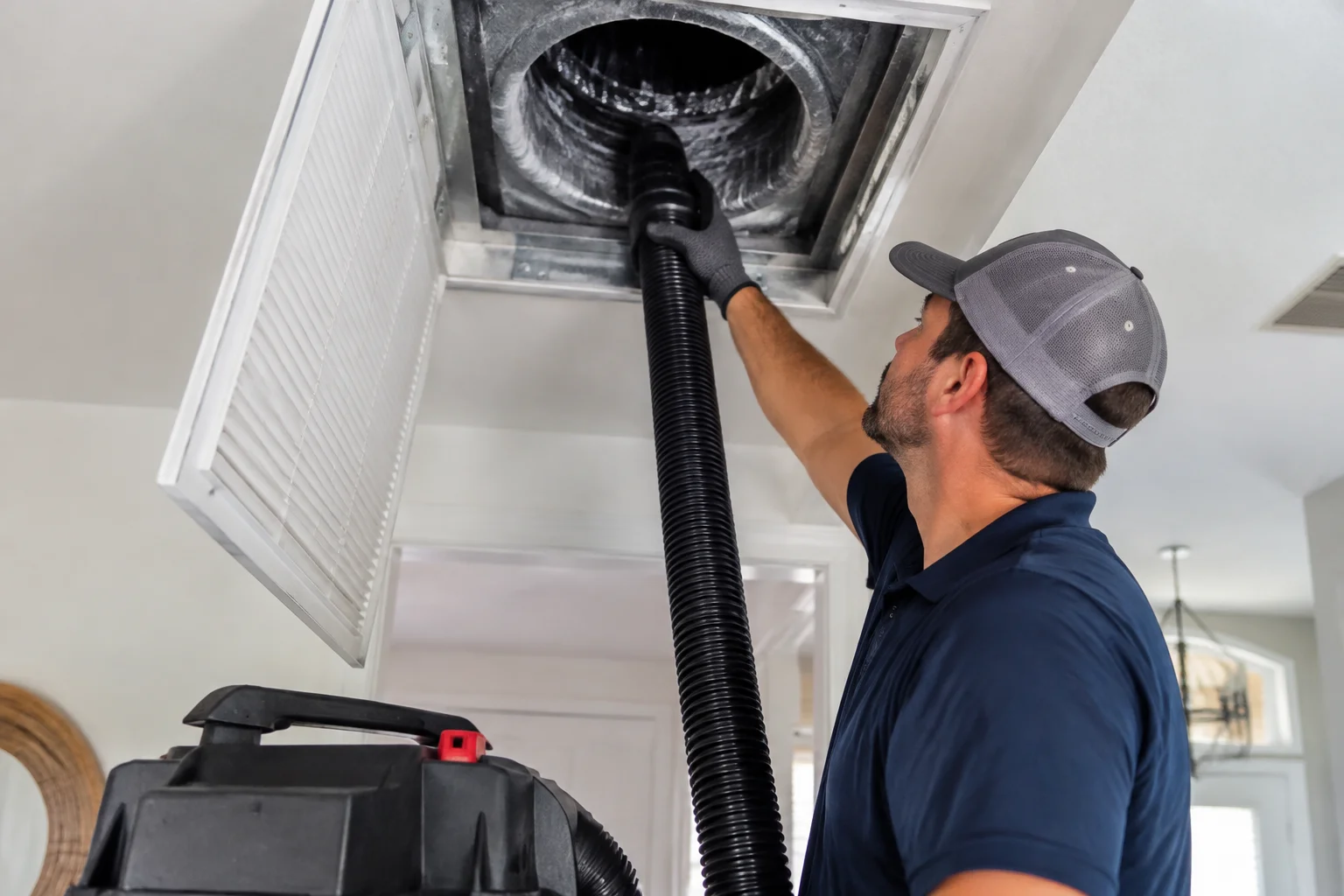
- Dust buildup on blower components and inside air handlers
- Worn blower motors or failing capacitors that reduce fan speed
- Leaky or poorly sealed ductwork that wastes conditioned air
- Restrictions from duct debris or partially collapsed duct sections
When airflow drops, the system can run longer to reach the thermostat setpoint. Longer runtime can sound helpful, but it can also lead to higher indoor moisture levels if the coil and condensate drainage are not removing water efficiently. It can also mean air spends more time moving through a system that is not filtering the way it should.
Homeowners often notice it as “the AC runs but the air still feels damp.” That is one reason many local homeowners search for duct sealing and Aeroseal services alongside air filtration and dehumidifier support. Improving airflow pathways can help both comfort and indoor air quality.
How coil aging affects moisture removal and dehumidifier workload
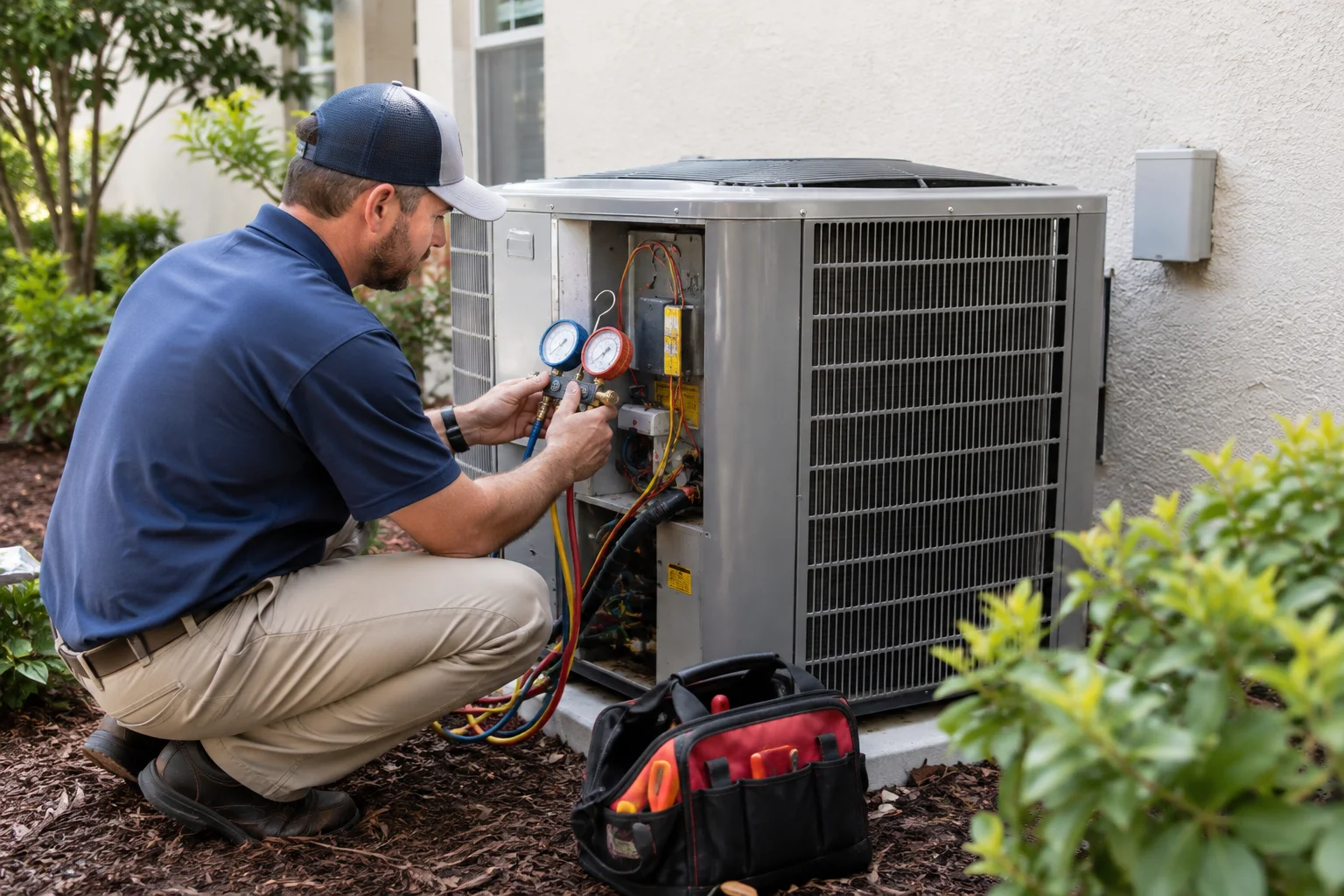
Inside an air conditioner or heat pump, refrigerant systems move through components that absorb and release heat. During cooling, indoor air passes over the evaporator coil. The coil surface temperature drops, moisture condenses, and water drains away through the condensate drainage system.
Wear and tear can interfere with this process in several ways:
- Coil fouling from dust and airborne particles can reduce heat transfer
- Corrosion from coastal salt exposure can affect coil performance and longevity
- Refrigerant system imbalance due to issues that need professional evaluation can alter coil temperatures and moisture removal patterns
- Drain line problems such as clogs or improper slope can create water backup risks
When the air conditioner or heat pump is not removing moisture as effectively, the dehumidifier (whole-home or supplemental) often has to work harder. That can lead to a cycle where humidity control feels inconsistent, even if the homeowner is running equipment and changing filters regularly.
If you suspect refrigerant-related performance issues, it is important to have a licensed HVAC contractor evaluate the system in person. A professional can check airflow, coil conditions, and system operation before concluding what is happening with the refrigerant system.
Older homes vs newer homes: why the symptoms can look different
WaterColor includes both newer builds and older coastal-adjacent structures, including homes used as rentals. HVAC wear and tear can affect each type of home differently due to duct design, insulation, and how the system was installed and maintained over the years.
Older homes: moisture, airflow, and duct challenges
In older WaterColor homes, common issues include aging ductwork, less efficient insulation, and HVAC components that have been repaired over time. Duct leaks or poor airflow balance can cause rooms to feel humid even when the thermostat says the temperature is on track. Homeowners may also experience:
- More frequent temperature swings
- Hot spots and cold spots that complicate humidity control
- Greater dust buildup that loads filters faster
- Condensate drainage concerns after long humid seasons
Newer homes: still vulnerable to humidity and coastal exposure
Newer systems can be more efficient, but they are not immune. If a home has tight building envelopes, humidity can still build if airflow is restricted or if condensate drainage is not functioning properly. Newer homes also often include smart thermostats and variable-speed equipment, which can change how humidity is managed. If the thermostat settings do not match the home’s humidity needs, or if the system is not operating as intended, moisture control can lag.
Whether your home is newer or older, the goal is the same: maintain airflow, keep coils clean, ensure condensate drains correctly, and align filtration and dehumidification with the way your system actually performs.
How filtration can degrade over time, even if you change the filter
Homeowners often assume that swapping a filter is the only step needed for indoor air quality. In reality, HVAC wear and tear can reduce filtration effectiveness in ways a simple filter change cannot fix.
Consider these scenarios:
- Air bypass happens when filters do not fit tightly or when air leaks around the filter frame.
- Restricted airflow can cause the blower to compensate, leading to uneven distribution across rooms.
- System dirt can coat internal components, shifting where dust accumulates and how air moves.
- Humidity-related issues can increase dust and microbial growth risk if moisture is not controlled.
That is why air filtration and dehumidifiers in WaterColor are often best approached as a system. For example, if your home has high humidity and you add filtration without addressing airflow and moisture, the HVAC may still struggle to keep indoor conditions stable.
If you are searching for indoor air quality services near me, look for an HVAC contractor that can evaluate your filtration setup, ductwork airflow, and humidity control strategy together.
Dehumidifier performance issues tied to HVAC operation
Dehumidifiers can be standalone units or integrated into the HVAC system. Either way, they rely on stable airflow and consistent moisture removal. HVAC wear and tear can show up as:
- Dehumidifier running frequently but humidity not dropping as expected
- Condensate drainage problems such as slow drains, clogs, or improper routing
- Air distribution problems where some rooms stay damp
- Inconsistent comfort where temperature feels fine but the air remains sticky
Salt air and coastal conditions can also contribute to corrosion and buildup on components. Over time, that can change how the system handles moisture. If you notice musty odors, lingering dampness, or visible condensation near vents, it is worth having an HVAC professional inspect the system and the dehumidification setup.
Thermostats and settings: small changes that affect humidity
Modern thermostats can improve comfort and reduce energy use, but they can also create confusion when humidity control is not configured correctly. In humid Florida weather, the thermostat may focus on temperature first, while humidity needs attention too. If your thermostat installation or settings were not tuned to your home, you may see:
- Short cycles that do not remove enough moisture
- Long run times without the expected drop in humidity
- Misalignment between fan operation and humidity control strategy
If you are considering heat pump service or AC repairs and want your humidity control to improve, ask about how thermostat settings, fan behavior, and system operation interact. When homeowners search for air conditioning service near me or new AC installation near me, it is reasonable to request a comfort-and-humidity conversation, not just a temperature check.
Ductwork and whole-home comfort: the hidden link to indoor air quality
Ductwork is the pathway for both filtration and dehumidification. Even a well maintained air conditioner can struggle if airflow is uneven or ducts leak. In WaterColor homes, duct issues can be amplified by coastal humidity and the way air moves through the building.
Common duct-related wear and tear problems include:
- Gaps and leaks at joints
- Disconnected duct sections
- Rough duct surfaces that collect dust
- Insulation degradation in humid conditions
If you have experienced persistent humidity, dust accumulation, or rooms that feel damp compared to others, ductwork inspection and repair can be part of the solution. Many homeowners also explore duct sealing and Aeroseal care because it targets airflow loss and can improve how air reaches the spaces you live in.
Energy use and comfort: why humidity control issues often cost more
When HVAC components wear out, the system may run longer, cycle more often, or fail to maintain stable airflow. That can increase energy use and still leave the home uncomfortable. In a place like WaterColor where humidity is part of everyday life, the cost of comfort problems is not only higher utility bills. It is also the stress of running equipment more frequently and the risk of indoor air quality slipping over time.
Professional HVAC maintenance near me is not just about preventing breakdowns. It is about keeping the airflow and moisture removal processes working together so your filtration and dehumidifiers can do their job.
Practical prevention steps homeowners can take now
You cannot stop coastal air from affecting your HVAC system, but you can reduce the wear and tear that makes filtration and dehumidifiers less effective.
1) Keep up with filter changes and use the right fit
Replace filters on schedule and ensure the filter is seated correctly. A filter that is the wrong size or installed loosely can allow air bypass. If you are unsure, ask an HVAC contractor to check the filter housing and airflow setup during an air conditioning inspection near me or an indoor air quality visit.
2) Watch condensate drainage
During humid months, check that condensate drainage is flowing properly and that there are no signs of leaks or standing water. If you notice slow drainage, gurgling, or dampness around the equipment, schedule an inspection.
3) Keep air vents clear and maintain consistent airflow
Do not block supply or return vents with furniture, rugs, or storage. Ensure return grilles are not covered. Better airflow helps filtration and dehumidifiers work as intended.
4) Schedule preventive HVAC maintenance before the hottest stretches
Humidity peaks in summer, and that is when worn parts are most likely to show up. Preventive maintenance helps catch issues like buildup, airflow restrictions, and component wear before they turn into emergency cooling concerns.
If you want a seasonal plan tailored to WaterColor conditions, ask an HVAC contractor about residential HVAC service near me that includes airflow checks, coil inspection, drainage verification, and indoor air quality considerations.
When to call a professional HVAC contractor in WaterColor
Some issues are safe to monitor, but others should be handled promptly. Call a licensed HVAC contractor for air conditioning repair near me or HVAC repair near me if you notice:
- Humidity stays high even when the thermostat is set correctly
- Musty odors, damp air, or condensation around vents
- Filters look dirty unusually fast
- Rooms feel uneven, especially with noticeable dampness
- The system cycles frequently or runs continuously without relief
- Any signs of condensate drainage problems
It is also smart to schedule service if you are planning an HVAC upgrade. For example, if you are considering air conditioning replacement or heat pump installation near me, ask how the new system will coordinate with air filtration and dehumidification. A properly designed approach helps protect indoor air quality and reduces the chance of “new equipment, same humidity problem.”
Homeowners searching for a HVAC contractor near me should prioritize experience with coastal Florida homes. Coastal environments can impact corrosion and airflow pathways, and that experience matters when you are trying to avoid repeated repairs.
How A Superior Mechanical supports cleaner indoor air in WaterColor
A Superior Mechanical focuses on air filtration and dehumidifier solutions for cleaner, healthier indoor air in WaterColor. Because humidity and airflow are connected, the best results come from treating filtration and moisture control as part of your overall HVAC system performance.
If you are dealing with sticky air, persistent dampness, or filtration that does not seem to keep up, start by scheduling an evaluation through air filtration and dehumidifiers for WaterColor, FL. You can also review broader guidance on comfort and system planning in nearby areas like Rosemary Beach, and for homeowners dealing with reliability pressures, see Keeping WaterColor homes comfortable without the emergency call.
If your home is commercial or you manage a rental with frequent occupant turnover, you may also find helpful context in Why commercial HVAC systems struggle in WaterColor homes and how to stay ahead of it.
For more about the area A Superior Mechanical serves, visit Walton County HVAC service areas.
Common homeowner questions about HVAC wear and humidity control
Homeowners often wonder whether a new filter will solve humidity problems or whether a dehumidifier alone can fix indoor air quality. In many WaterColor homes, the answer is more nuanced. If airflow is restricted, coils are dirty, condensate drainage is not working correctly, or the thermostat and system operation are not aligned with humidity control goals, filtration and dehumidification will struggle even when individual components seem to be “working.”
That is why an in-person evaluation matters. A licensed HVAC contractor can assess airflow, ductwork conditions, condensate drainage, and how your refrigerant systems and comfort controls are performing. From there, you can decide on the right next step for air filtration, dehumidifiers, and HVAC maintenance that fits your home.
Find Air Filtration & Dehumidifiers in WaterColor, FL
If you need Air Filtration & Dehumidifiers in WaterColor, FL, visit our local service page or contact A Superior Mechanical today.
Map of WaterColor, FL
Frequently Asked Questions
Can HVAC wear and tear make my dehumidifier less effective?
Yes. If the air conditioner or heat pump is not removing moisture efficiently due to airflow issues, coil buildup, or condensate drainage problems, the dehumidifier has to work harder. Over time, that can lead to inconsistent humidity control.
Why does my home feel humid even when the AC seems to run?
Humidity can remain high if airflow is restricted, ducts leak, coils are dirty, or condensate drainage is not working as intended. A professional HVAC inspection can connect the comfort symptoms to the system’s actual operation.
Should I replace my filter more often in WaterColor’s coastal climate?
Often, yes. Coastal air can bring more airborne particles and moisture, which can load filters faster. The right schedule depends on your system and indoor conditions, so it is smart to confirm during HVAC service.
Do I need air filtration and a dehumidifier, or one or the other?
Many WaterColor homes benefit from both because filtration improves indoor air quality while moisture control supports comfort and helps reduce conditions that can worsen indoor air quality. The best approach depends on airflow, humidity levels, and how your HVAC system operates.
What is the safest next step if I suspect a refrigerant system issue?
Do not try to diagnose or repair refrigerant-related problems yourself. Schedule an in-person evaluation with a licensed HVAC contractor so they can check system performance, airflow, and coil conditions before making recommendations.
Related Articles
- Why Commercial HVAC Systems Struggle in WaterColor Homes and How to Stay Ahead of It
- Why WaterColor Homes Benefit from Better Duct Sealing and Aeroseal Care
- Keeping WaterColor Homes Comfortable Without the Emergency Call
- Smart HVAC Planning for Rosemary Beach Homes: Comfort, Airflow, and Coastal Protection
Photo Gallery