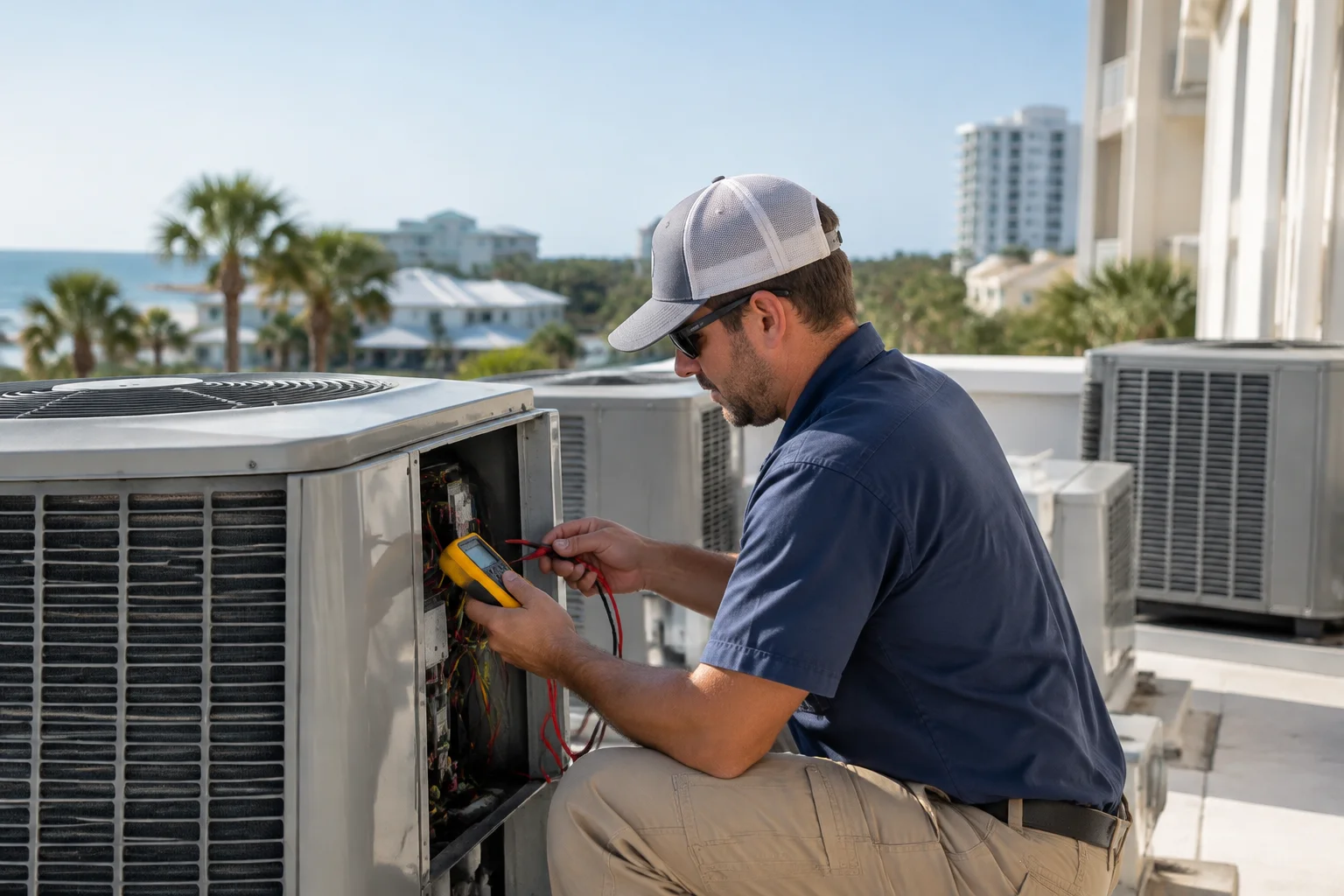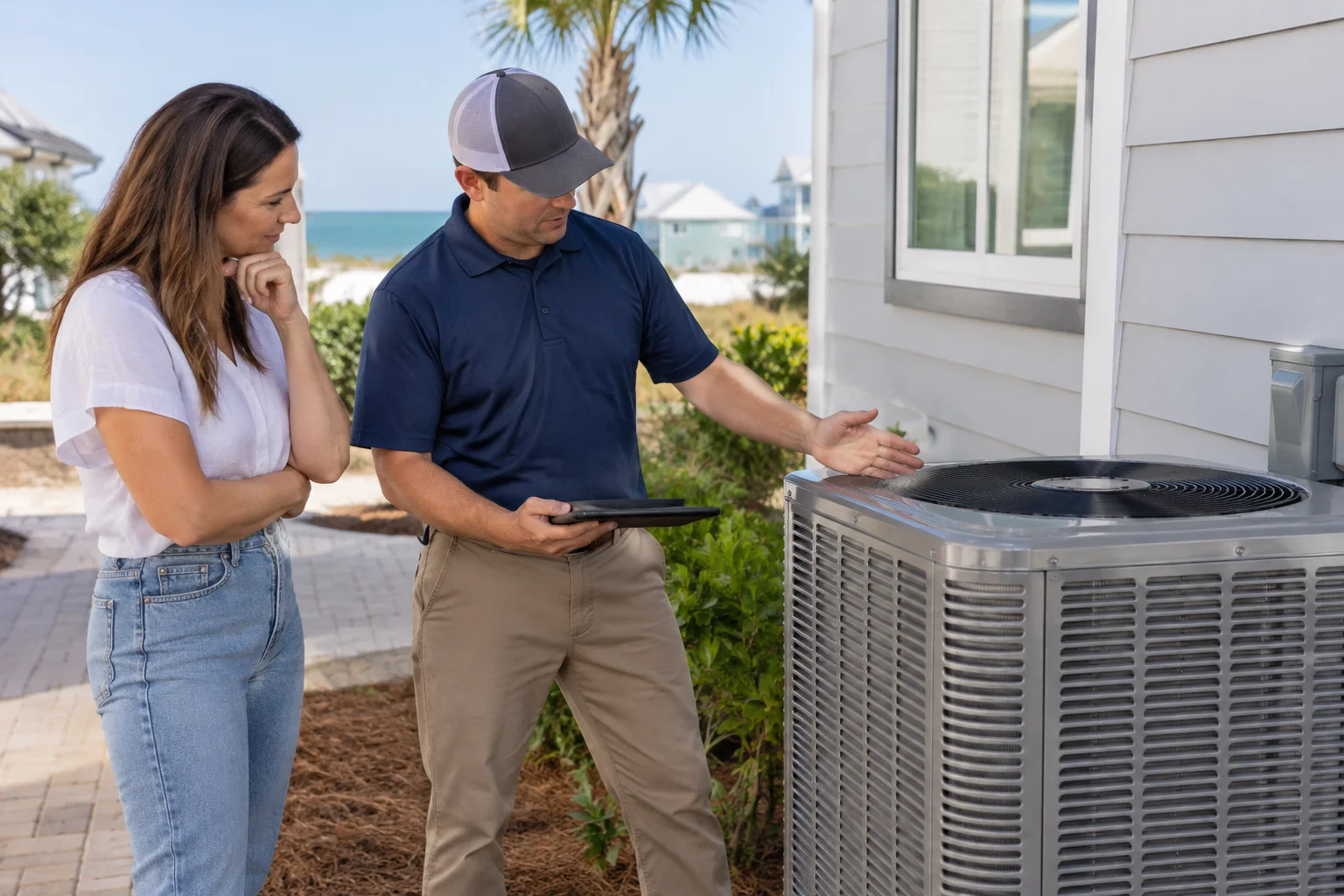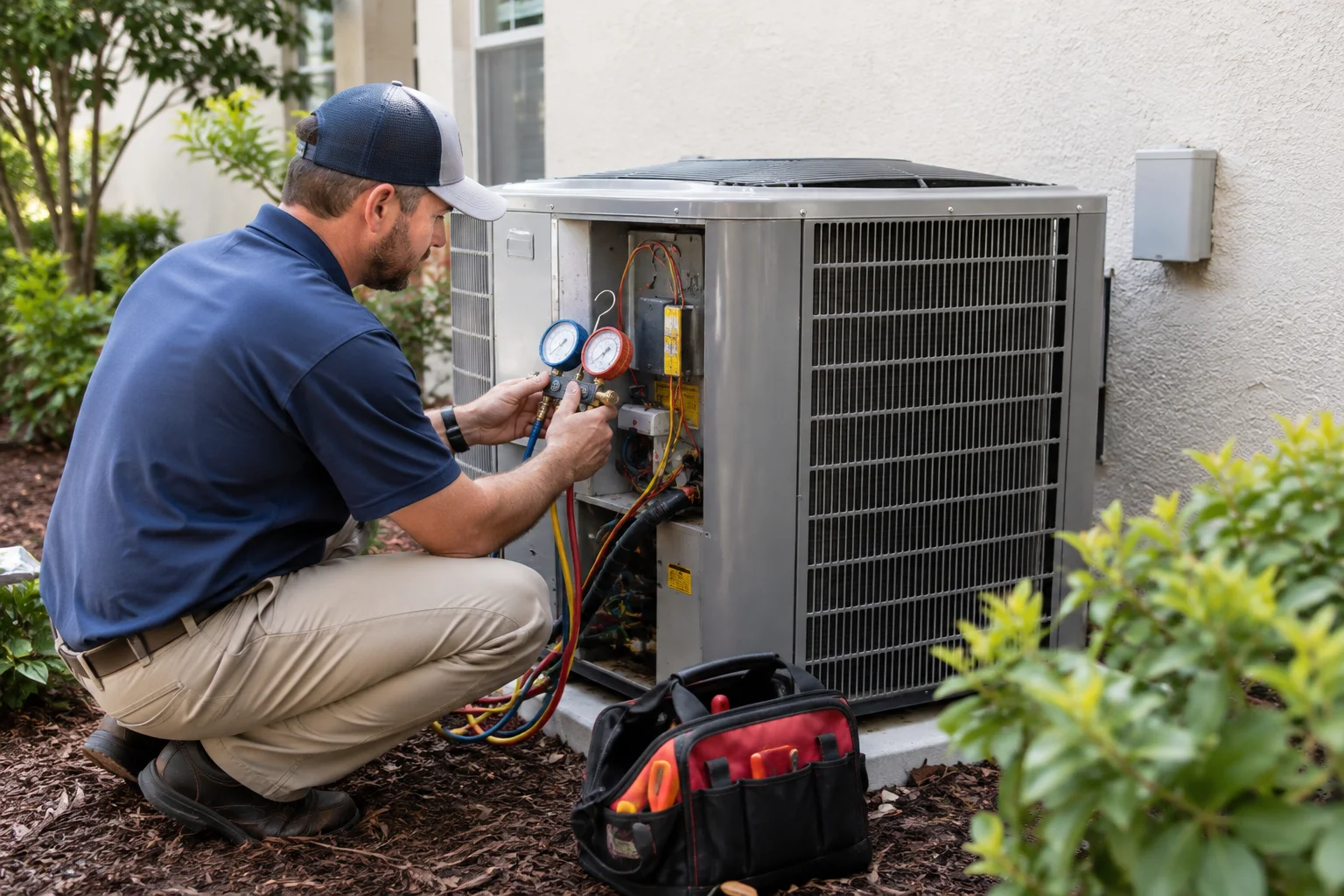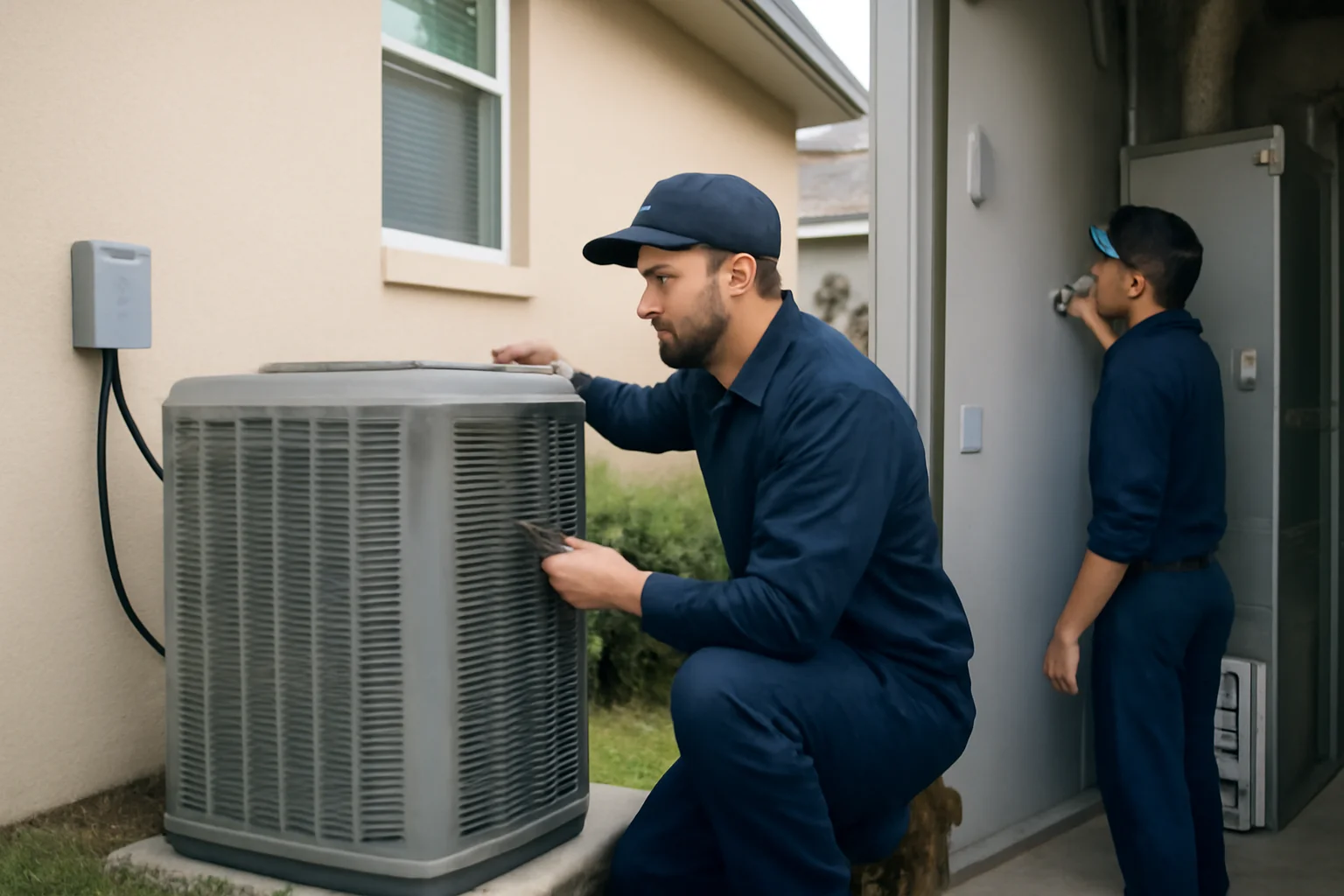
Valparaiso businesses rely on steady cooling through Florida heat and humidity. When an installation is done on the wrong assumptions, normal wear and tear can accelerate into comfort problems and emergency cooling concerns. For property owners and managers, understanding how aging components and operating conditions affect commercial HVAC installation helps you plan smarter, reduce unexpected downtime, and protect indoor air quality.
If you are planning an commercial HVAC installation in Valparaiso, FL, it is worth thinking beyond the day the system is mounted. Wear patterns, airflow behavior, condensate drainage, refrigerant system stress, and controls all influence how reliably the equipment performs months and years later.
Why “wear and tear” starts affecting the installation long before the system fails
Commercial HVAC systems do not wear out in isolation. They are installed into existing ductwork, electrical and mechanical layouts, and operating schedules. In Valparaiso, those real-world factors matter because the region experiences long cooling seasons, frequent humidity, and coastal influences from salt air in the broader Okaloosa County area.
When installers treat a building like a blank slate, they can miss how the site will load the system. That is where wear and tear becomes a problem. A system can look like it is working initially, then degrade faster than expected because airflow is off, drainage paths do not handle moisture correctly, or controls do not match how the building actually runs.
Florida humidity and airflow issues that show up after installation
Humidity is not just uncomfortable. It directly affects coils, condensate drainage, and indoor air quality. In a commercial setting, even small airflow restrictions can cause a chain reaction:
Lower airflow can reduce heat transfer efficiency, increasing the workload on cooling components.
Coils may not dehumidify as intended, leaving more moisture in the air stream.
Extra moisture increases the risk of microbial growth in ductwork or on internal surfaces if condensate drainage is not managed properly.
Persistent moisture can contribute to corrosion and shorten component service life, especially in environments with salt air exposure.
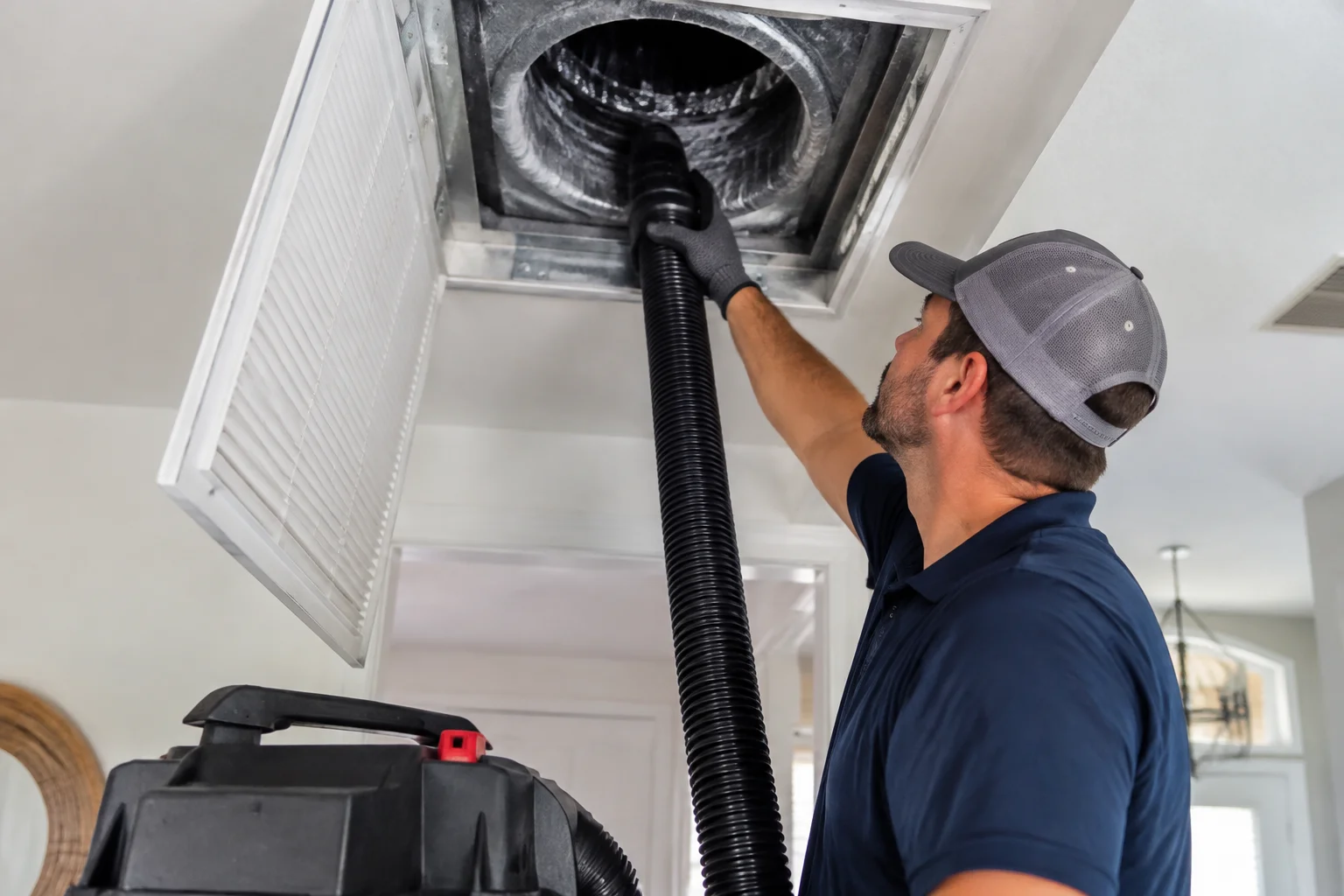
That is why ductwork matters during commercial HVAC installation. Airflow should be evaluated, not guessed. A duct system that is underperforming can make the refrigeration system work harder than it should, and that increased stress can lead to more frequent service calls over time.
Homeowners and business managers often search for duct inspection near me or duct repair near me after comfort complaints begin. Addressing ductwork performance at installation is often the difference between a system that stays stable and one that creates recurring issues.
Condensate drainage: the quiet wear factor that can turn into an emergency cooling problem
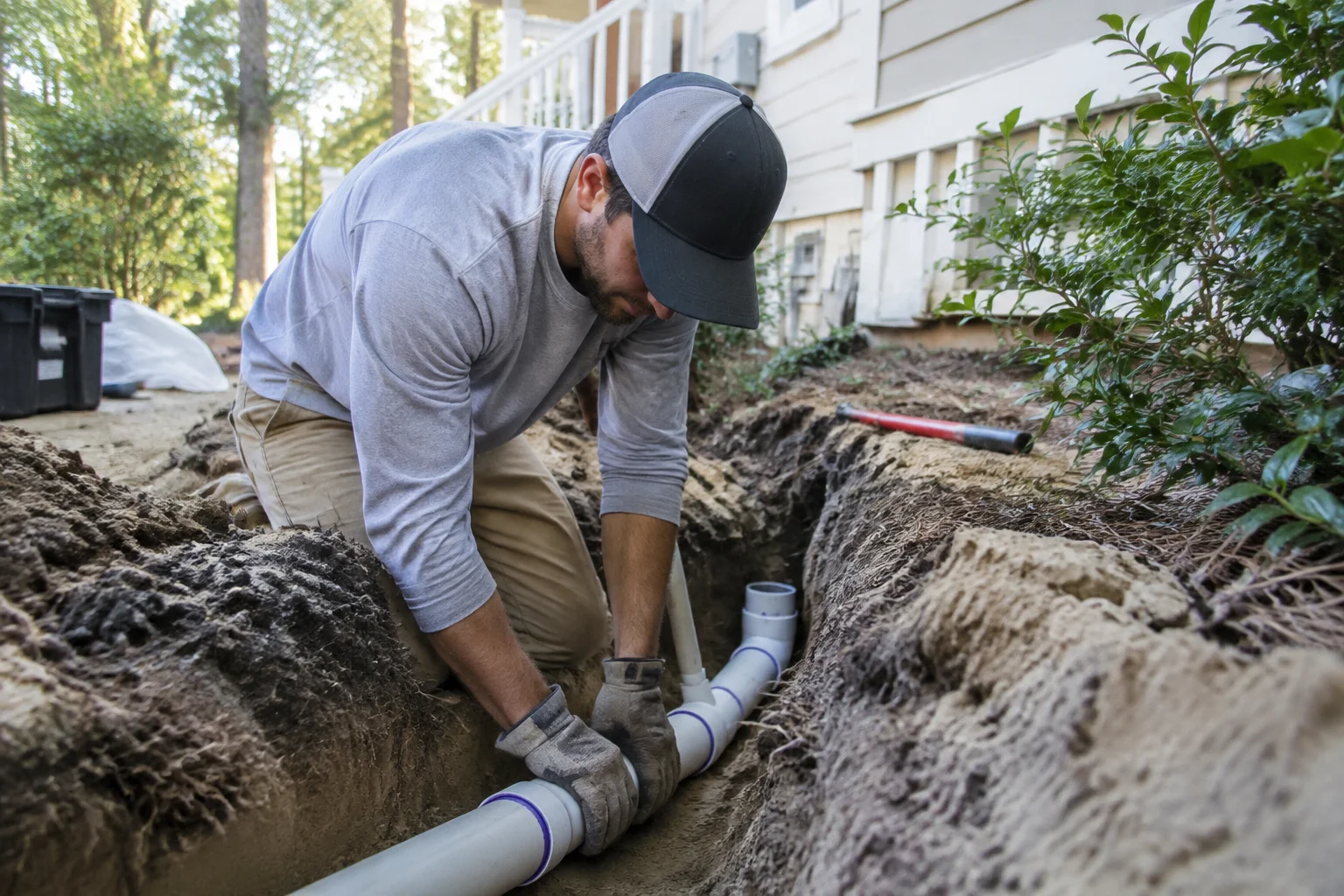
When cooling runs, indoor humidity condenses on evaporator coils. That condensate must drain properly. In commercial buildings, drainage issues can develop gradually, then escalate when temperatures swing or when humidity stays high for extended periods.
Common drainage-related wear and tear patterns include:
Condensate line restrictions that allow water to back up into areas it should not reach.
Drain pan and trap problems that cause slow drainage or intermittent overflow.
Improper slope or poor routing that makes the drainage path sensitive to debris and seasonal humidity changes.
Maintenance gaps that allow algae-like buildup in drain lines, which can become a recurring problem.
Once drainage fails, you can see symptoms like musty odors, wet spots, or cooling performance that seems to drop during the hottest weeks. In severe cases, equipment can cycle unexpectedly, and that is where emergency cooling concerns begin to rise.
During a commercial installation, drainage design and verification should be treated as essential, not optional. For help with moisture control and indoor air concerns, pairing the right airflow and filtration approach can support better indoor air quality.
Refrigerant systems and how installation choices affect long-term reliability
Refrigerant systems are designed to operate within specific conditions. Wear and tear can increase when the system runs outside its intended operating envelope. In practical terms, that means:
Low or restricted airflow can increase coil temperatures and pressure behavior, which can stress components over time.
Installation practices that do not account for site conditions can contribute to uneven performance.
Repeated cycling during high humidity or poor control strategy can raise wear on parts that are sensitive to frequent start-stop operation.
Because refrigerant systems are safety and compliance sensitive, refrigerant diagnosis and adjustments should be handled by a professional after an in-person evaluation. Homeowners searching for AC repair near me after repeated cooling issues should expect that a licensed HVAC contractor will verify airflow, controls operation, and system performance before making any service decisions.
For a new system, the goal is to install for stability. That includes proper matching of equipment to building load, ensuring ductwork supports airflow needs, and confirming that controls are set up to manage comfort in a humid climate.
Salt air and corrosion: why coastal conditions matter for commercial equipment
Okaloosa County businesses can be affected by salt air and coastal humidity, even when buildings are not directly on the shoreline. Over time, that environment can contribute to corrosion on metal components and affect the outdoor section of the system.
Wear and tear is often faster when corrosion is combined with:
Accumulated debris on coil surfaces
Condensing moisture that does not drain or evaporate as expected
Restricted airflow across outdoor coils
Long cooling seasons with heavy runtime
During commercial HVAC installation, protecting the outdoor equipment from unnecessary exposure and ensuring proper airflow around the unit can reduce how quickly corrosion-related problems develop. This is also a reason why preventive HVAC maintenance near me searches can be practical. Routine inspections can catch early signs before they turn into shutdowns that disrupt business operations.
Thermostats and controls: small mismatches can cause big wear
Commercial comfort depends on more than cooling capacity. It depends on controls. Thermostats, building automation interfaces, scheduling, and zoning all influence how often the system cycles and how consistently it maintains comfort.
Wear and tear patterns commonly linked to control issues include:
Short cycling due to oversensitive setpoints or poor staging logic
Temperature and humidity swings that increase coil strain
Inconsistent operation across zones because ductwork airflow does not match control strategy
Thermostat placement problems, such as sensors affected by direct sun, drafts, or supply air
In Valparaiso, where humidity can remain high even when temperatures are moderate, controls need to be configured for both comfort and moisture management. A licensed HVAC contractor near me can evaluate how the system responds during real operating conditions, not just during an initial start-up.
If you are comparing HVAC installation near me options, ask how the contractor will verify airflow, condensate drainage, and controls operation as part of commissioning. That process is where many “future wear” issues can be prevented.
Indoor air quality: how installation wear shows up as comfort and health complaints
Indoor air quality is often the first thing occupants notice. When HVAC wear and tear accelerates, you might see:
Stale or musty odors
More dust movement
Allergy or respiratory complaints that worsen during peak humidity
Uneven comfort across rooms due to airflow imbalance
Some of these symptoms can be related to ductwork, filtration, or condensate drainage. That is why ductwork performance and moisture control are tied to indoor air quality.
If your building has persistent dust or odors, consider whether duct inspection near me or duct cleaning could be relevant. For some commercial properties, upgrading air cleaning strategies can also be helpful. You can explore options like Air Scrubber Installation for businesses focused on indoor air quality improvements.
Energy use and operating costs: wear and tear increases runtime and stress
When an installed system is not performing as intended, it often compensates by running longer or cycling more frequently. That increases energy use and can raise the likelihood of component failures.
In Valparaiso, where the cooling season can be demanding, small inefficiencies become noticeable. Wear and tear can increase energy use through:
Restricted airflow that forces the system to work harder
Coils that accumulate dirt and reduce heat transfer
Controls that keep the system from operating at stable comfort targets
Moisture management problems that lead to performance drops during humid periods
While no one wants to guess at savings, it is reasonable to expect that a properly installed and maintained system will manage comfort with less unnecessary strain. If you want to deepen your maintenance strategy, these guides can help: Keeping Valparaiso Comfortable Starts With Smarter Commercial HVAC Maintenance and Why Better HVAC Maintenance Pays Off for Valparaiso Air Conditioning Systems.
Common commercial installation oversights that create “future problems”
Some installation oversights do not cause immediate breakdowns. They create conditions where wear and tear accumulates faster. Owners in Valparaiso often ask why a newer system seems to develop issues sooner than expected. While every building is different, these are frequent causes:
Not verifying airflow and ductwork balance during commissioning
Skipping detailed condensate drainage verification
Improper thermostat placement or mismatched control settings for the building’s humidity load
Failing to account for airflow changes caused by filters, access panels, or return air limitations
Neglecting the outdoor environment, including airflow around the unit and debris management
If you are comparing installation approaches in nearby markets, you may find similar issues described in The Details That Get Missed in Commercial HVAC Installation in Freeport, FL and Commercial HVAC Installation in Laguna Beach, FL: The Issues Local Property Owners Should Not Overlook. While those locations differ, the underlying physics of airflow, moisture, and controls still apply.
How preventive HVAC maintenance reduces emergencies for Valparaiso businesses
Wear and tear is normal. The difference is whether it is monitored and managed before it becomes a shutdown. Preventive maintenance helps by catching the early stages of problems that are harder to fix in the middle of peak cooling demand.
A practical commercial maintenance plan typically includes:
Coil and airflow checks to support proper cooling and dehumidification
Inspection of condensate drainage components to confirm moisture management
Verification of thermostat operation and control behavior
Filter and duct-related checks that influence airflow and indoor air quality
Review of operating patterns, including how often the system cycles
When an HVAC maintenance near me search is used strategically, it can prevent a mid-summer breakdown. Instead of waiting for an emergency AC repair near me situation, routine attention can reduce the odds of sudden failures and comfort interruptions.
If your business is considering system replacement, maintenance history and performance data can also guide decision-making. For many owners, pairing installation planning with an ongoing maintenance schedule is the most reliable way to protect comfort and reduce service emergencies.
What homeowners can do now if they manage a commercial property
You do not need to be an HVAC technician to make a difference. Here are homeowner and property manager actions that support a smoother installation and fewer emergencies:
Track cooling complaints by date and conditions, such as humidity, temperature, and time of day. That helps professionals identify patterns without guessing.
Request that contractors evaluate airflow, ductwork condition, and condensate drainage as part of installation commissioning.
Make sure thermostats are located away from direct sun, drafts, and supply air streams that can skew readings.
Plan maintenance before peak season instead of after the first major breakdown.
Consider indoor air quality goals, especially if occupants have allergies, asthma triggers, or persistent odors.
For additional guidance on control strategies, you can explore Heating Control Systems. If your property is exploring alternative approaches for long-term energy planning, Geothermal Energy Services may be relevant depending on site conditions.
When to call a professional HVAC contractor in Valparaiso
Some issues are best handled early, before they become an emergency. Call a licensed HVAC contractor near me if you notice:
Cooling performance drops during the hottest or most humid hours
Frequent cycling or uneven comfort across spaces
Musty odors, visible moisture, or concerns about condensate drainage
Rising energy use that does not match occupancy changes
Unusual thermostat behavior, scheduling problems, or inconsistent temperature control
And if you are facing an active comfort interruption, ask about emergency AC repair near me. Even then, the best outcomes usually come from professionals who can verify airflow, drainage, controls, and refrigerant system performance in person. Avoid decisions based on online guesswork, especially for refrigerant systems and electrical-related components.
Choosing local expertise matters in Okaloosa County
Commercial HVAC installation is not only about equipment. It is about matching the system to Valparaiso conditions: long cooling seasons, humidity management needs, airflow realities, condensate drainage behavior, and the corrosive effects that salt air can bring. That is why working with a company that understands the local climate and common commercial challenges can reduce the odds of recurring emergencies.
A Superior Mechanical serves businesses in Valparaiso and across Okaloosa County. If you are planning a new installation or replacement, start with the right scope and commissioning process for fewer surprises later. You can review the service focus here: commercial HVAC installation in Valparaiso, FL and learn more about local service coverage on the Valparaiso service area page.
Find Commercial HVAC Installation in Valparaiso, FL
If you need Commercial HVAC Installation in Valparaiso, FL, visit our local service page or contact A Superior Mechanical today.
Map of Valparaiso, FL
Frequently Asked Questions
How does humidity in Valparaiso affect a commercial HVAC installation?
Humidity increases the load on cooling and dehumidification. It also makes condensate drainage and airflow performance more important. If airflow or drainage is off, moisture can build up and contribute to indoor air quality issues and faster component wear.
What installation details most often lead to problems months later?
Common issues include not verifying airflow and ductwork performance, skipping condensate drainage checks, and setting controls that do not match the building’s humidity and operating schedule. These can cause higher runtime, uneven comfort, and more frequent service needs.
Can wear and tear cause higher energy use in a commercial building?
Yes. When airflow is restricted, coils get dirty faster, controls cause frequent cycling, or moisture management is failing, the system often runs longer or works harder, which can increase energy use during peak cooling months.
Should I try to diagnose refrigerant problems myself?
No. Refrigerant system issues require an in-person professional evaluation. A licensed HVAC contractor should verify performance conditions, airflow, and controls before making any refrigerant-related decisions.
What maintenance helps prevent emergency cooling concerns?
Preventive maintenance that includes coil and airflow checks, condensate drainage inspection, and thermostat or control verification can catch early problems. This reduces the chance of sudden shutdowns during Florida heat and humidity.
Related Articles
- Keeping Valparaiso Comfortable Starts With Smarter Commercial HVAC Maintenance
- Why Better HVAC Maintenance Pays Off for Valparaiso Air Conditioning Systems
- The Details That Get Missed in Commercial HVAC Installation in Freeport, FL
- Commercial HVAC Installation in Laguna Beach, FL: The Issues Local Property Owners Should Not Overlook
Photo Gallery