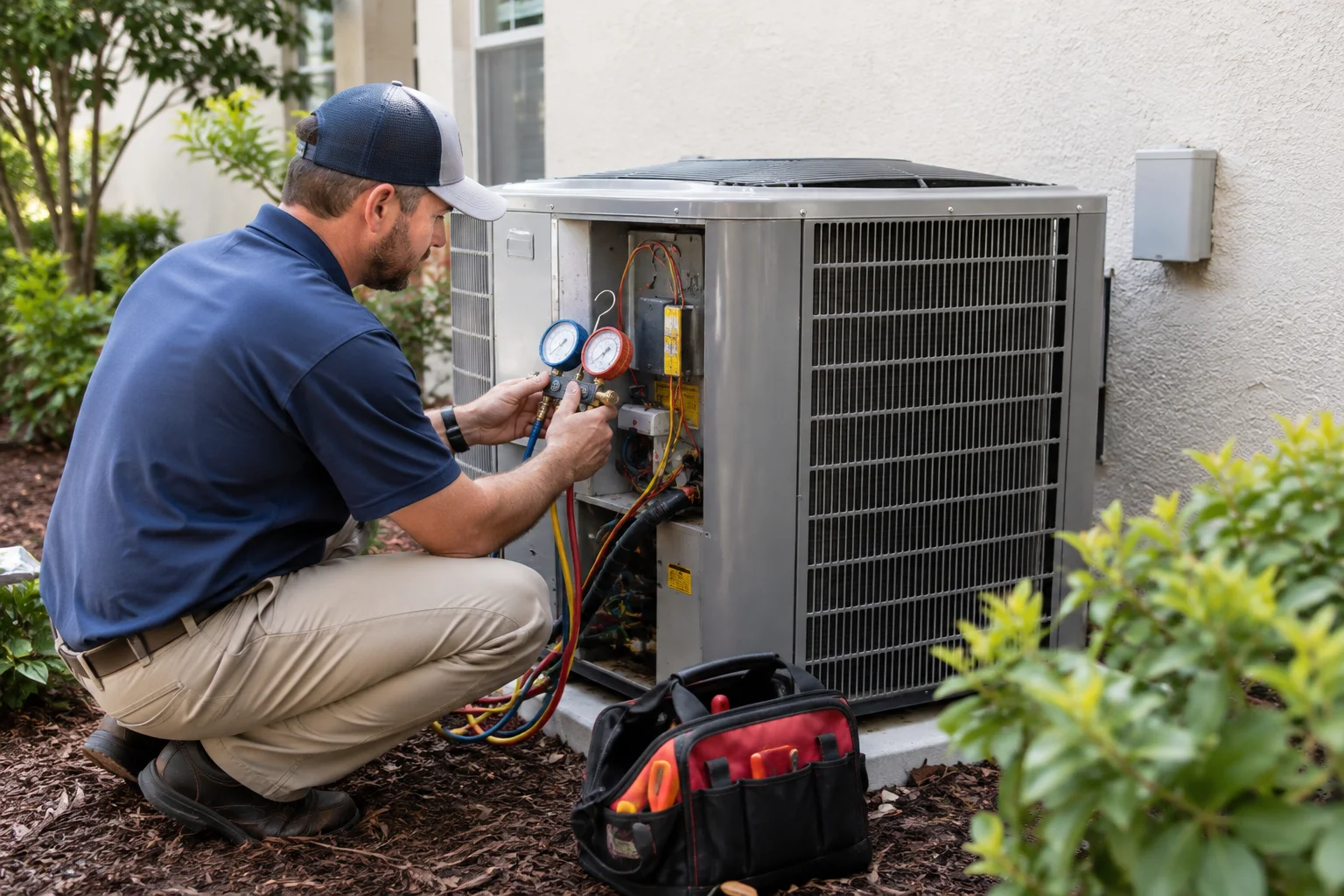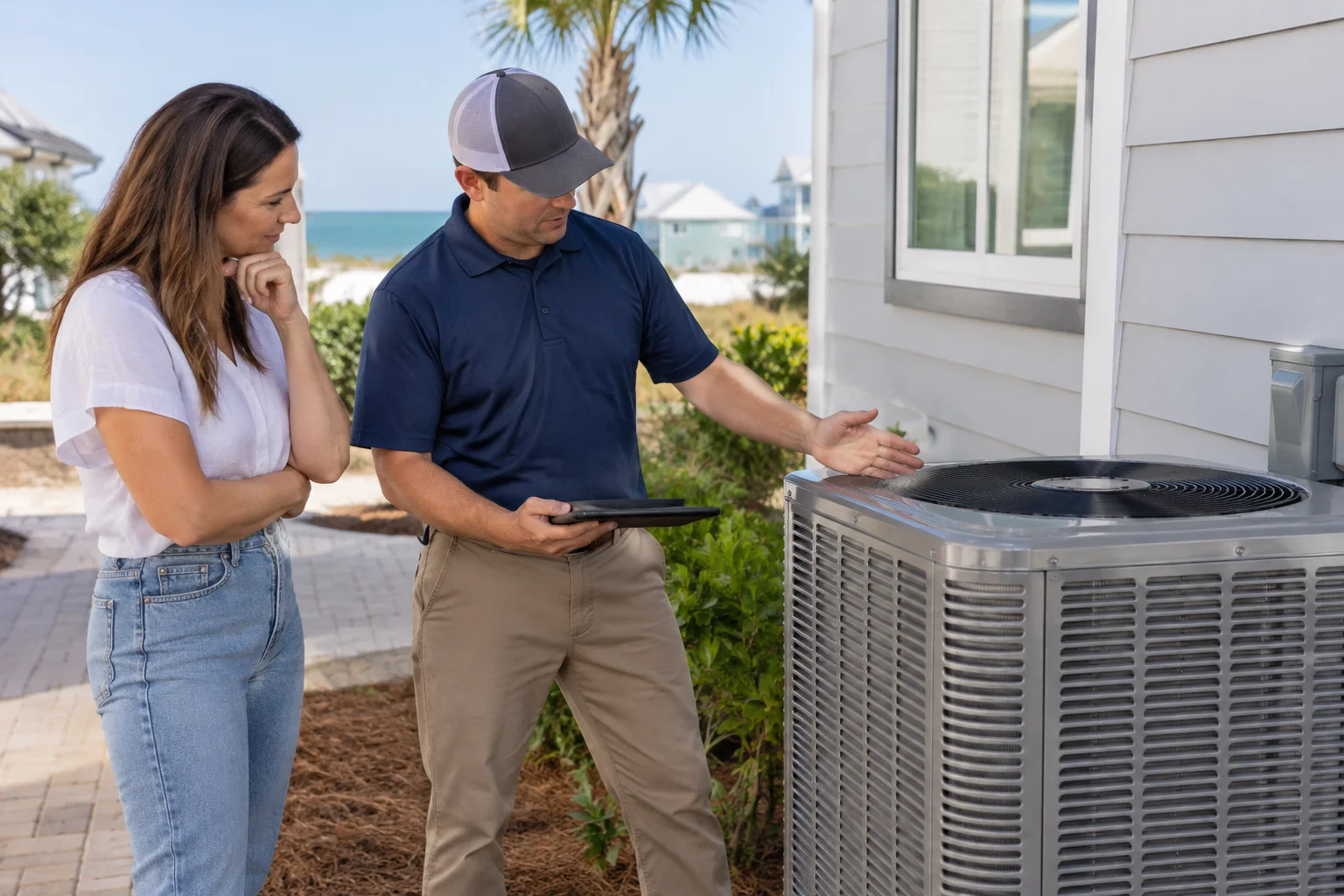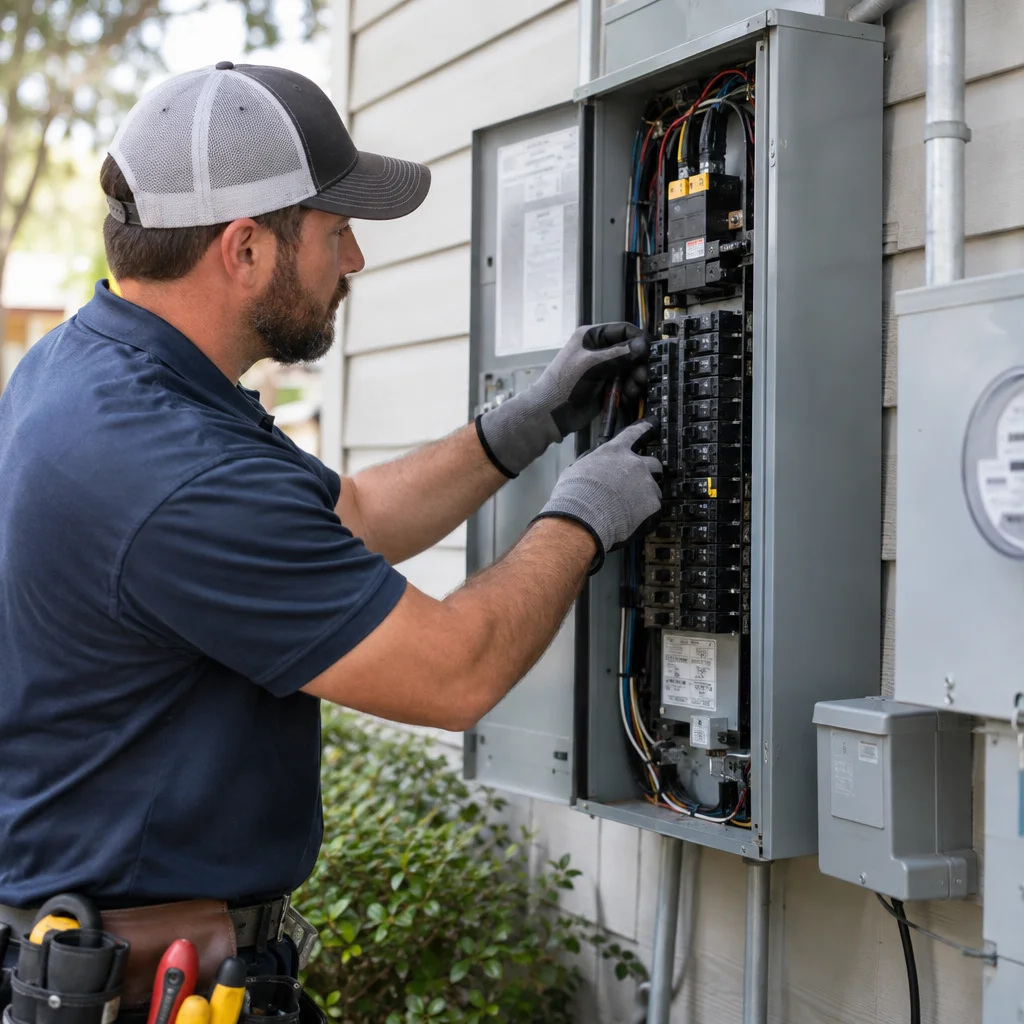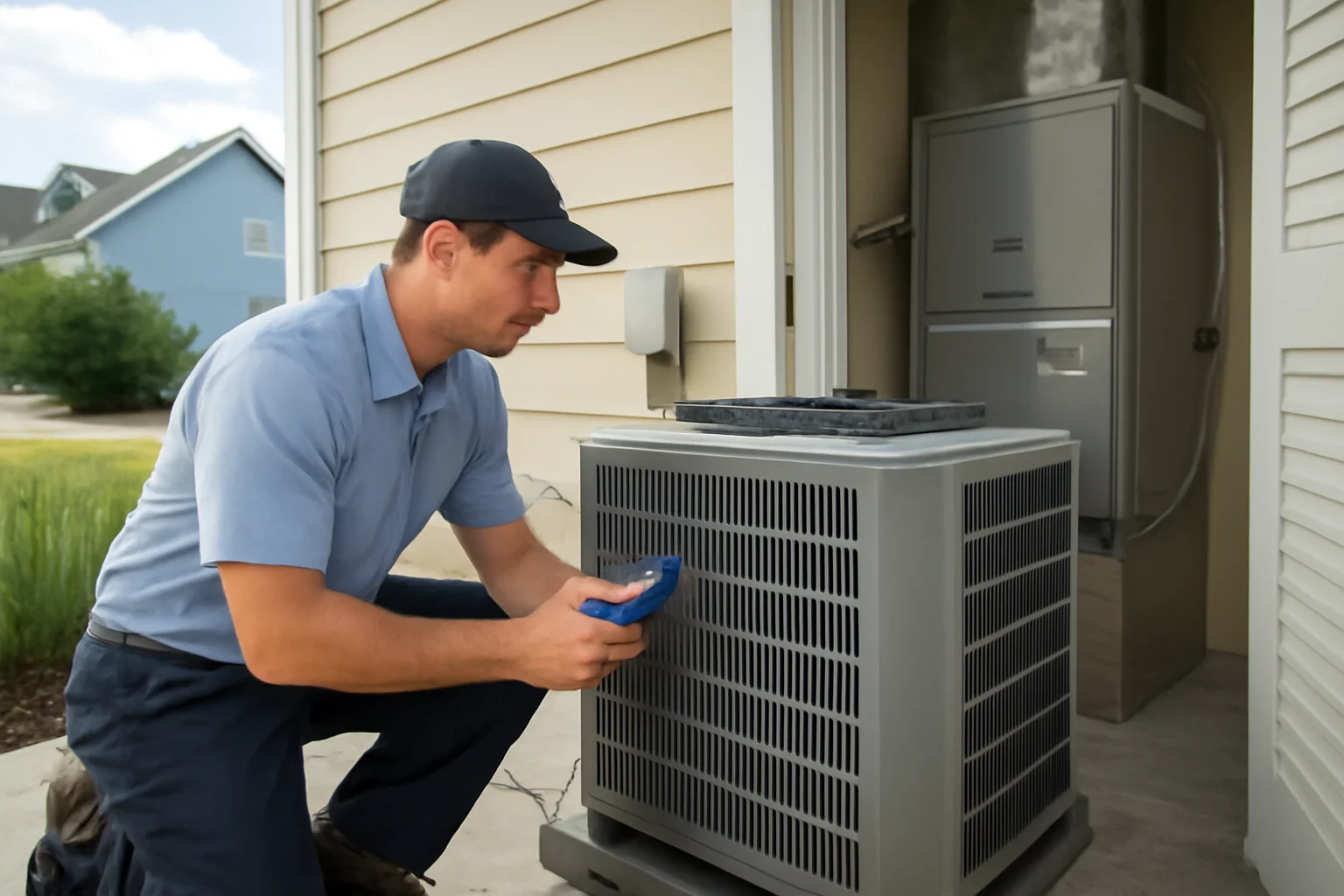
Seaside, Florida is beautiful, but the air can be tough on HVAC systems. Coastal salt air, high humidity, and frequent temperature swings can push comfort and indoor air quality to their limits. When your heating and cooling equipment struggles, you often notice it first through the air you breathe: musty odors, uneven rooms, more dust, or allergy-like symptoms that seem worse at home.
This guide covers what can cause problems with indoor air quality services in Seaside, FL, how HVAC issues connect to cleaner air, and how to catch early warning signs before they turn into emergency cooling concerns.
Indoor air quality and HVAC: they rise and fall together
Indoor air quality is not just about an air purifier. It is tied to how your HVAC system moves air, how it manages moisture, and how well it filters and treats airborne particles. In Seaside homes, the same factors that affect comfort also affect air quality:
- Airflow from supply and return ducts
- Humidity control during humid Florida weather
- Filtration and whether particles are captured or recirculated
- Condensate drainage from indoor cooling components
- Refrigerant systems that must operate correctly to remove heat and manage moisture
- Thermostat behavior and how your system cycles
When any one of these parts underperforms, indoor air quality can degrade even if the system still seems to “run.”
Common coastal causes of indoor air quality problems in Seaside
Local conditions matter. Seaside homes often face a mix of salt air, strong summer humidity, and coastal airflow patterns that can impact how systems perform. Here are the most common causes homeowners see.
1) High humidity overwhelms moisture control
Florida humidity is one of the biggest indoor air quality threats. During cooling season, the air conditioner’s job is not only to cool but to remove moisture. If humidity stays high, you can develop musty smells, condensation on surfaces, and a more welcoming environment for mold and mildew. Even if you do not see growth right away, indoor humidity can make airborne particles feel “heavier” and harder to filter.
Problems often trace back to airflow restrictions, an issue with condensate drainage, or refrigerant system performance that affects latent cooling. If your home feels damp even when the thermostat is set correctly, indoor air quality is often already taking a hit.
2) Ductwork problems reduce airflow and spread contaminants
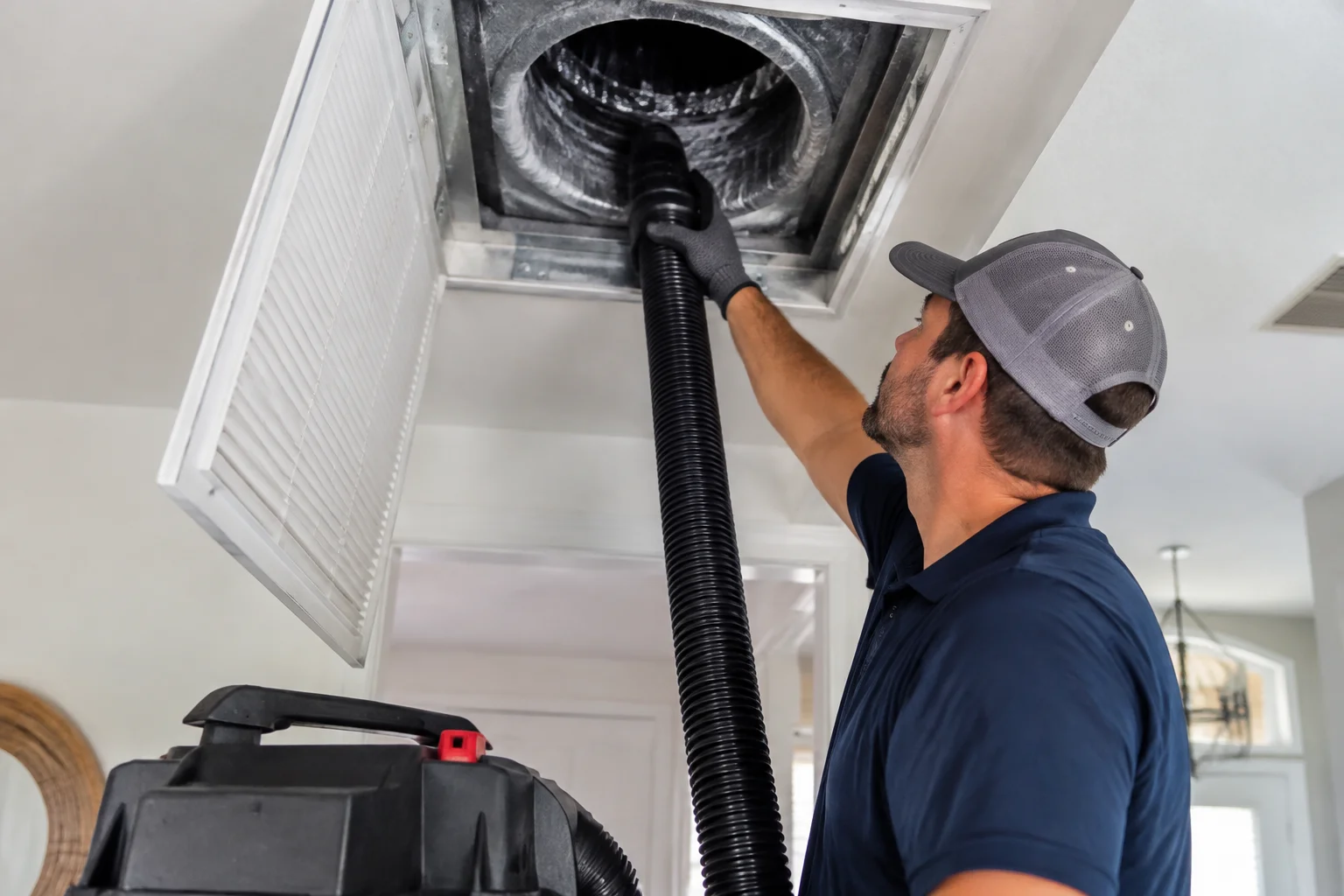
Ductwork is the highway for conditioned air. In many Seaside homes, ductwork may have age-related issues, gaps, or sections that do not deliver air the way they should. When airflow is weak, the system can run longer, humidity control can suffer, and filtration may not work as effectively because the air is not moving through the intended pathways.
Restricted or leaky ductwork can also move dust and debris through the home. If you are searching for duct inspection near me, it is often because uneven temperatures, dusty vents, or persistent odors are pointing to airflow imbalance.
If you want to address this directly, start with a professional evaluation. For duct-focused help, explore Duct Inspection.
3) Dirty or mismatched filtration for your home’s needs
Filters capture particles like dust, pollen, and some allergens, but they only work when the system can push air through them. Coastal homes can accumulate debris faster, and vacation rentals can experience spikes in occupancy and airflow demands. If filters are too restrictive or not changed often enough, the system may struggle, run longer, and still fail to keep air quality stable.
Many homeowners also consider air treatment upgrades like whole-home filtration or air scrubbers. These solutions can help, but the HVAC system still needs proper airflow and moisture control to make the biggest difference.
If you are looking for air scrubber installation near me or whole home air purifier near me, a local indoor air quality assessment helps match the approach to your ducting, comfort issues, and humidity levels.
4) Condensate drainage issues allow moisture to linger
During AC operation, condensate drains must carry away moisture from indoor cooling components. If drainage is restricted, improperly routed, or partially blocked, water can back up or remain in places where it should not. The result can be persistent dampness, odors, and a higher risk of microbial growth.
Condensate drainage problems can be subtle because you might only notice them during high humidity stretches. Still, the indoor air quality effects can show up as respiratory irritation, stale smells, or visible moisture near air handlers.
5) Refrigerant system problems can reduce dehumidification
Refrigerant systems are designed to remove heat and manage moisture during cooling. When refrigerant performance is off, the system may cool but not dehumidify as effectively. That is a key indoor air quality connection in South Walton County, where summer humidity is relentless.
It is important not to try to “self-diagnose” refrigerant issues. Homeowners can notice symptoms like poor cooling, higher humidity, or short cycling, but a refrigerant diagnosis requires an in-person professional evaluation.
If you are noticing air conditioning repair near me symptoms that seem tied to humidity and comfort, it is worth asking your HVAC company to evaluate the cooling process as part of an indoor air quality troubleshooting approach.
6) Thermostat settings and behavior can worsen indoor air quality
Thermostats influence how often and how long your system runs. Simple issues like incorrect settings, poorly placed thermostats, or programming that does not match real occupancy can lead to comfort swings. When the system cycles too quickly or runs in a way that does not effectively remove humidity, indoor air quality can be affected.
For example, if the thermostat is set to reach temperature targets quickly, the system may satisfy the thermostat before moisture is removed. The home can feel cold but still feel damp, which is not ideal for air quality.
7) Salt air and coastal corrosion can strain components
Salt air is part of coastal life, and HVAC components outside the home are exposed to it. Over time, corrosion can affect outdoor unit performance and airflow. When outdoor performance declines, the system may work harder to maintain comfort, which can increase energy use and contribute to indoor comfort and air quality issues.
This is one reason preventive HVAC maintenance near me searches are so common in Seaside and neighboring coastal communities. Keeping systems clean and operating correctly helps reduce the chance that indoor air quality problems start with outdoor-side performance issues.
Early warning signs: what to watch for before air quality declines
Indoor air quality problems rarely arrive all at once. They usually build through small changes in comfort and airflow. Here are signs Seaside homeowners can catch early.
Odors that feel “stale” or musty, especially after cooling cycles
Musty smells can point to moisture issues, condensate drainage problems, or microbial growth risk. If the odor shows up after the system has run for a while, it is often tied to humidity control and airflow across cooling components.
More dust on surfaces or dustier vents than usual
Dust can increase when filtration is not capturing particles, when ductwork leaks or restrictions spread debris, or when airflow changes stir up settled particles. A duct and airflow evaluation can be as important as filter changes.
Rooms that never feel the same temperature or humidity
Uneven comfort can reflect airflow imbalance. If some areas feel muggy while others feel cooler, the system may not be distributing conditioned air properly, which can reduce overall indoor air quality.
If you are dealing with uneven rooms, it is also a good time to consider smart HVAC planning for coastal homes, since airflow and humidity control often go together.
Frequent cycling or the system running longer than expected
Short cycling can reduce effective dehumidification. Long run times can increase humidity and energy use if the system is not operating efficiently. Either situation can contribute to air quality decline.
Higher indoor humidity even when you think cooling is “working”
If you have a hygrometer and notice humidity staying high during the hottest months, that is a major indicator. In Florida, humidity is not a minor annoyance. It affects comfort, filtration efficiency, and the risk of microbial growth.
Whole home dehumidifiers can help in some situations, but they still require correct system operation and good duct airflow. Learn more in Why Better HVAC Maintenance Matters for Whole Home Dehumidifiers in Sandestin.
Sudden allergy flare-ups that line up with HVAC changes
If symptoms worsen after a filter change, after a storm, or after seasonal start-up, the timing can reveal what is happening. It may be a filtration mismatch, airflow restriction, or moisture issue that increases airborne particles.
What professionals check during indoor air quality-focused HVAC service
Homeowners can spot symptoms, but the service should identify the cause. A reputable HVAC company will typically look at the system as a whole, not just the filter or one component.
During indoor air quality troubleshooting in Seaside, a professional evaluation may include:
- Airflow checks to confirm supply and return air movement
- Ductwork assessment for leaks, restrictions, and airflow distribution
- Humidity and comfort evaluation to confirm moisture removal during cooling
- Condensate drainage inspection for proper drainage and signs of moisture problems
- Thermostat review to confirm settings align with comfort and humidity goals
- Filter and air treatment evaluation including whether air scrubber installation or whole-home filtration makes sense for your setup
When you are considering HVAC replacement near me or major upgrades, it is especially important to start with a proper diagnosis. Indoor air quality issues can sometimes be resolved through maintenance, airflow correction, or filtration and air treatment improvements, depending on what is actually happening in your home.
Prevention that works in Seaside: maintenance habits and seasonal planning
Preventive HVAC maintenance near me is not just about avoiding breakdowns. In coastal climates, maintenance helps keep humidity control consistent and supports clean airflow. Here are practical steps homeowners can take, along with the professional services that make a difference.
Stay ahead of filter and airflow issues
Filters should be checked and replaced on a schedule that fits your household. In homes with pets, frequent visitors, or higher dust loads, filter needs can be different than in a low-traffic residence. The goal is clean air without starving the system of airflow.
If you are planning to add whole-home filtration or an air scrubber, your HVAC contractor should confirm the system can deliver the airflow required for the setup to work properly.
Schedule seasonal HVAC maintenance before the hottest weeks
Florida summers can stress equipment quickly. Preventive maintenance before peak cooling season can reduce the chance of emergency cooling concerns when temperatures climb. It also helps catch early issues like airflow restrictions, condensate drainage problems, and components that are starting to show wear.
For additional emergency readiness guidance, read Keeping Seaside Homes Ready for HVAC Emergencies.
Plan for coastal exposure on both indoor and outdoor sides
Salt air can contribute to corrosion on outdoor equipment and can increase the buildup of debris around the system. Keeping outdoor airflow pathways clear and having the system inspected regularly supports more stable operation and can help reduce energy use by improving efficiency.
Consider duct inspection if comfort or air quality feels inconsistent
If you have hotspots, cold rooms, or recurring dust, duct inspection may reveal the root causes. For homeowners in Seaside who want to focus on ductwork and airflow, start with Duct Inspection. If you are also exploring different system types for coastal homes, you can compare options by reviewing Ductless Mini-Splits and how they may change airflow and comfort patterns.
When indoor air quality problems point to bigger HVAC repair needs
Sometimes air quality issues are not just about filtration. They can signal that the cooling process is not working correctly, or that airflow and moisture control are failing.
Call for AC repair when humidity stays high or cooling feels weak
If your home stays humid, rooms feel damp, or the system runs continuously without improving comfort, you should schedule AC repair near me or contact your local HVAC company for an indoor air quality-focused evaluation. A professional can assess whether the problem is related to airflow, condensate drainage, or refrigerant system performance. Homeowners should not attempt refrigerant diagnosis themselves.
Consider heat pump service if you rely on a heat pump for comfort
In some Seaside homes, heat pumps provide cooling and heating. Humidity control and airflow still matter. If your heat pump seems to struggle with comfort or indoor air quality, you may need heat pump repair near me support as part of a broader comfort and humidity troubleshooting plan.
Think about system replacement only after diagnosis
It can be tempting to jump straight to HVAC replacement near me, especially when a system is old. But indoor air quality issues can sometimes be improved with ductwork corrections, improved filtration, air scrubber installation, dehumidification upgrades, or targeted repairs. An in-person professional evaluation is the right starting point before any recommendation about replacement.
Choosing the right local HVAC company for indoor air quality in Seaside
Indoor air quality services are most effective when the HVAC contractor understands how Seaside homes function in coastal humidity and salt air conditions. When you are comparing options, look for a licensed HVAC contractor approach that treats indoor air quality as part of the whole system.
Homeowners searching for HVAC company near me should ask whether the company can evaluate airflow, ductwork, condensate drainage, thermostat behavior, and how filtration or air scrubbing fits your specific setup. You can also ask how they coordinate indoor air quality improvements with routine HVAC maintenance near me so the system stays stable over time.
If you are ready to focus on cleaner air, comfort, and stronger HVAC performance, explore Indoor Air Quality Services in Seaside, FL from A Superior Mechanical. You can also review the broader service coverage on the Seaside area page and Walton County.
How new construction can set up better indoor air quality
If you are building or upgrading a home in Seaside, indoor air quality starts with design and installation choices. Duct layout, equipment selection, humidity strategy, and airflow balancing all influence how the home performs once it is lived in.
For homeowners planning a new build, New Construction Air Conditioning can be a helpful starting point, especially when paired with an indoor air quality strategy for coastal conditions.
FAQ: HVAC and indoor air quality in Seaside, FL
If you are dealing with indoor air quality issues, these questions often come up. Professional evaluation is important because multiple causes can produce similar symptoms.
Find Indoor Air Quality Services in Seaside, FL
If you need Indoor Air Quality Services in Seaside, FL, visit our local service page or contact A Superior Mechanical today.
Map of Seaside, FL
Frequently Asked Questions
Why does my Seaside home feel damp even when the AC is running?
High humidity can mean the system is not removing moisture effectively. That can happen due to airflow restrictions, condensate drainage issues, or refrigerant system performance problems. A professional indoor air quality and HVAC evaluation can identify the cause.
Can ductwork issues really affect indoor air quality?
Yes. Leaky or restricted ductwork can reduce airflow, stir up dust, and distribute contaminants unevenly through the home. A duct inspection and airflow assessment can help determine whether ductwork is contributing.
Should I install an air scrubber or a whole-home air purifier before fixing HVAC problems?
It depends. Air treatment can help, but it works best when your HVAC system is moving air correctly and controlling humidity. An indoor air quality services visit can confirm whether filtration upgrades are the right step or whether airflow and moisture control need attention first.
What are early signs that I need AC repair for indoor air quality concerns?
Look for musty odors after cooling cycles, persistently high humidity, uneven room comfort, increased dust, or the system running longer than expected. These signs often point to airflow, condensate drainage, or cooling performance issues that should be checked in person.
How does a thermostat affect humidity and air quality?
Thermostat settings and cycling patterns influence how long the system runs and whether it removes moisture effectively. If the system satisfies temperature too quickly, humidity can remain high. A technician can review settings and system behavior during an evaluation.
Related Articles
- Keeping Seaside Homes Ready for HVAC Emergencies
- Why Seaside Homes Benefit From Indoor Air Quality Testing Before Comfort Issues Spread
- Smart HVAC Planning for Rosemary Beach Homes: Comfort, Airflow, and Coastal Protection
- Why Better HVAC Maintenance Matters for Whole Home Dehumidifiers in Sandestin
Photo Gallery