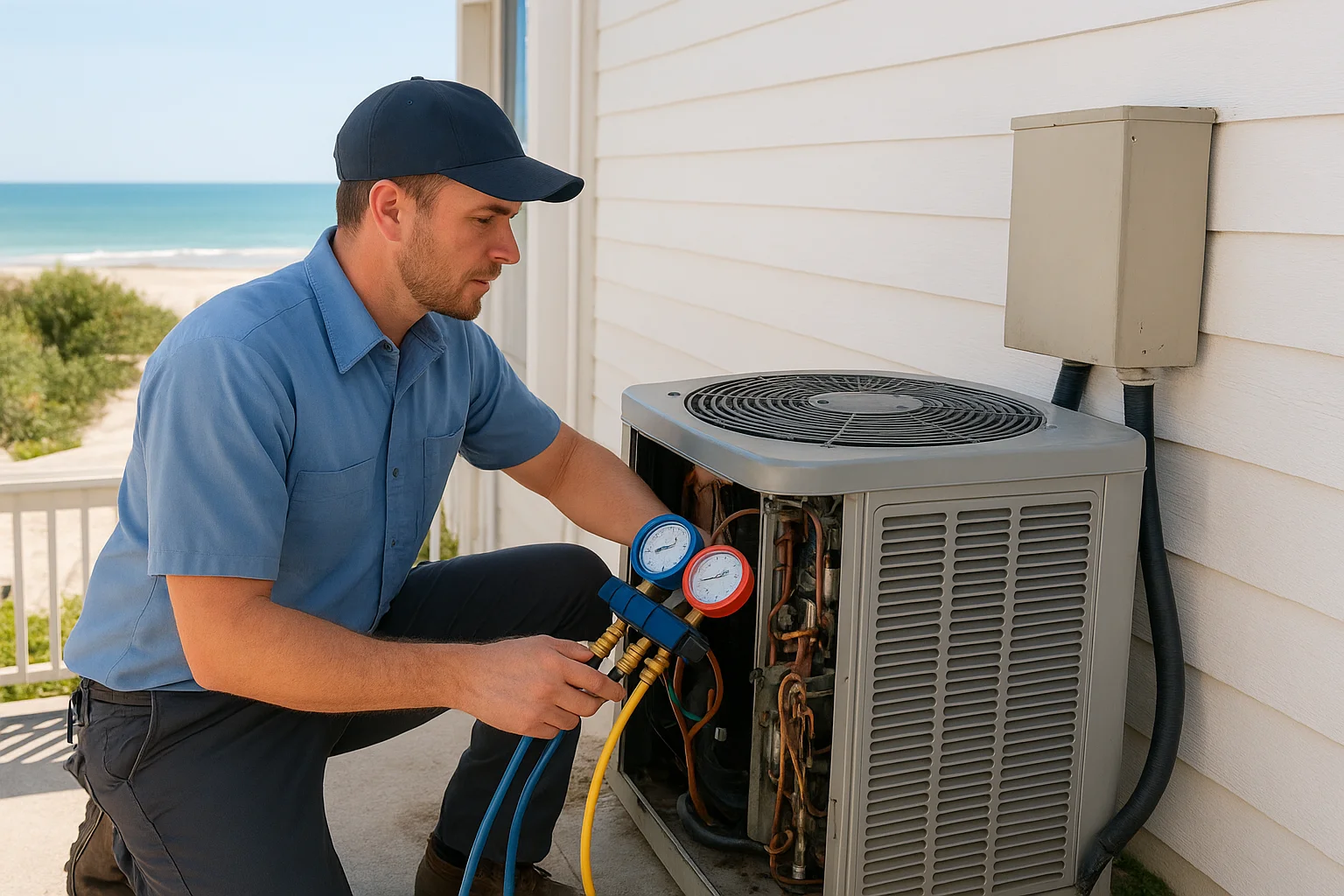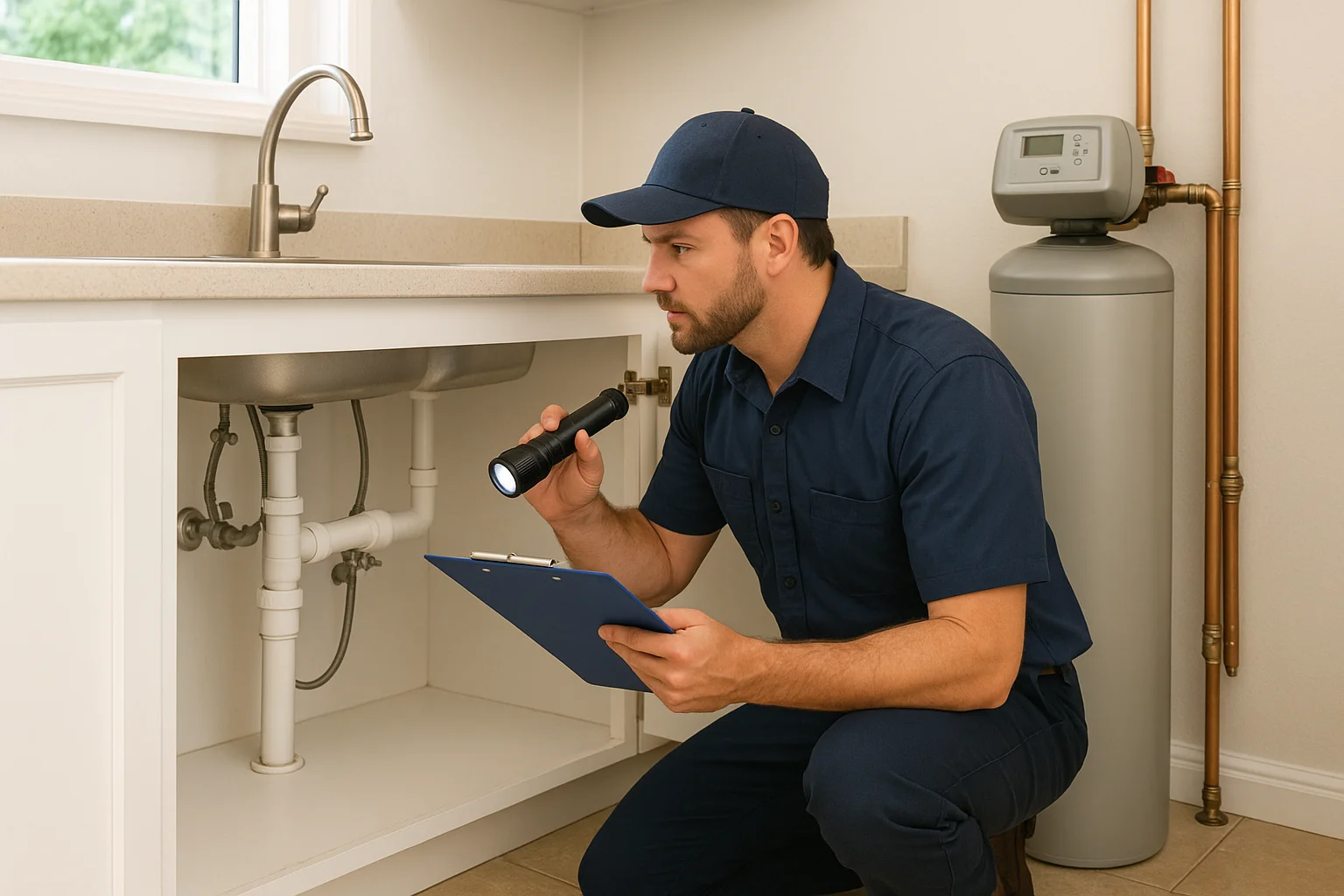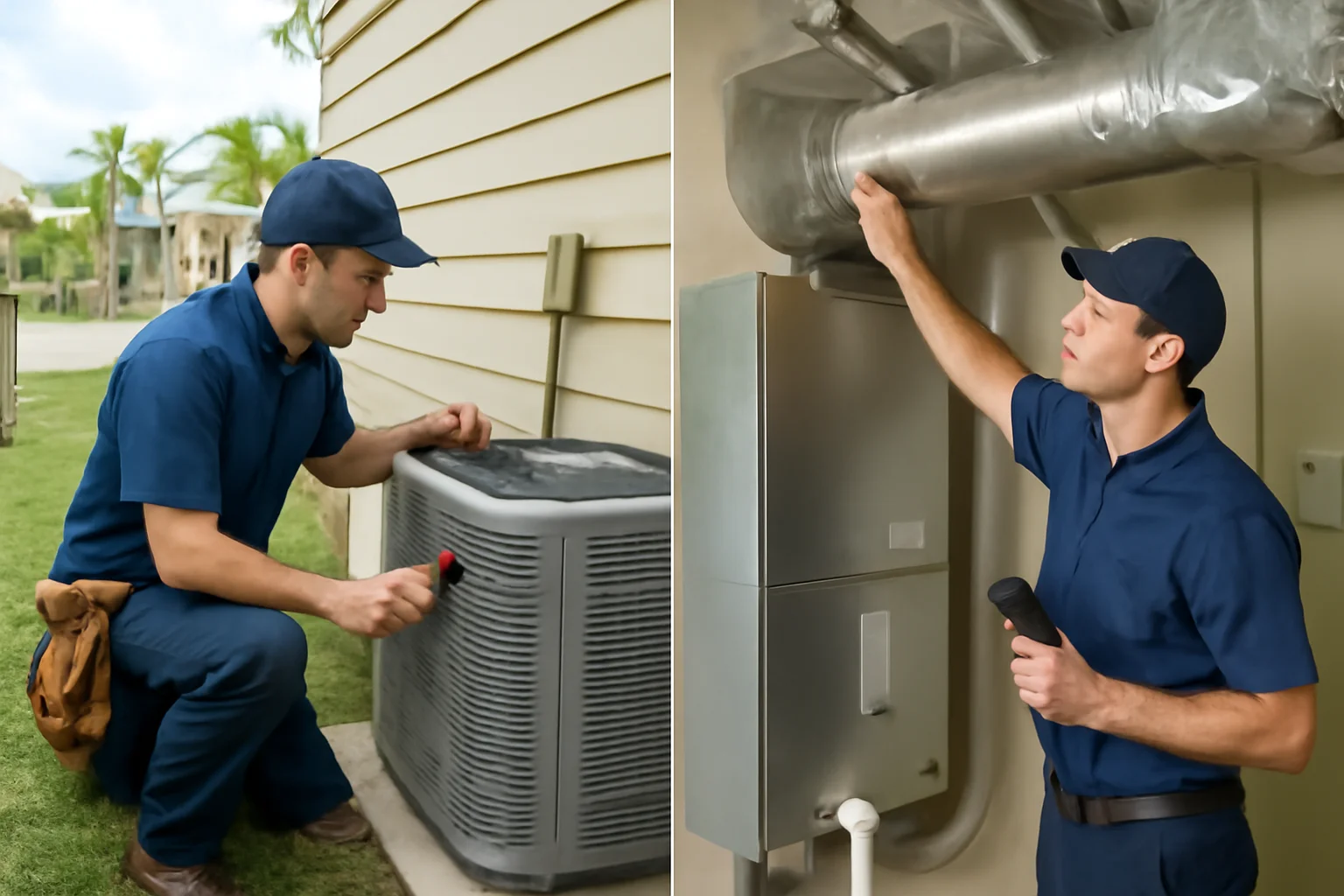
New homes in Seaside, FL can feel cool and comfortable from day one, but coastal conditions do not stay gentle for long. Florida heat and humidity, salt air, and the way a new home is sealed and ventilated all affect how an air conditioning system runs over time. That is why homeowners should pay attention to early HVAC warning signs connected to new construction air conditioning. Some of these issues are small at first, yet they can quietly shorten HVAC system life, increase energy use, and create emergency cooling concerns during peak summer.
If your property is new construction or recently upgraded, this guide focuses on the most common warning signs tied to new AC installation, ductwork, airflow, condensate drainage, thermostats, refrigerant systems, and indoor air quality. For homeowners searching for new construction air conditioning in Seaside, the goal is simple: catch problems early and keep the system operating as it was designed.
Why Seaside coastal conditions make early HVAC warning signs matter
Seaside sits in a climate where summer can feel relentless. High humidity affects comfort and also affects HVAC performance. Salt air can contribute to corrosion on outdoor components. New construction homes are also built tighter than older homes, which changes airflow patterns inside and can influence how the system handles moisture.
In a properly designed system, the refrigerant cycle, airflow, and condensate drainage work together. When one link is weak, the rest of the system compensates. That compensation often shows up as warning signs homeowners can spot, like uneven cooling, frequent cycling, or indoor humidity that refuses to drop.
These are the kinds of issues that a homeowner might describe as “the AC seems fine,” until the strain builds. Over time, added wear can reduce efficiency, increase repairs, and in some cases lead to a system that fails at the worst possible moment. During Florida heat waves, that can become a true emergency cooling concern.
HVAC warning signs connected to new construction AC that can shorten system life
1) Uneven cooling from room to room, even when the thermostat says the temperature is right
Uneven comfort is one of the most common complaints in new construction air conditioning. A thermostat can read “setpoint achieved” while other rooms run hot. That mismatch often points to airflow issues, ductwork restrictions, poorly balanced supply registers, or dampers not set correctly.
When airflow is restricted, the evaporator coil may not transfer heat efficiently. The refrigerant system then has to work harder to maintain cooling, which can lead to higher stress on components. Homeowners may notice:
- Hot spots near certain supply vents
- Rooms that never feel as cool
- Long run times with limited temperature changes
For help with ductwork services, start with an air conditioning inspection that evaluates airflow, supply and return balance, and duct condition. If you are searching for an air conditioning inspection near me, look for a contractor that checks more than just the thermostat settings.
2) Indoor humidity that stays high or feels “clammy”
In Seaside, humidity is not a side issue. High indoor moisture can make rooms feel warmer than the thermostat indicates. It can also affect indoor air quality, encourage mold growth, and increase the load on the cooling system.
Humidity problems in a new build can come from several places:
- Airflow that is too high for the system to dehumidify effectively
- Improper condensate drainage, causing moisture to remain near equipment
- Oversized equipment or incorrect system sizing for the home’s real conditions
When humidity is not controlled, the system can run longer, and components can experience extra wear. This is also where homeowners benefit from indoor air quality testing, especially if you notice musty odors or persistent dampness.
3) Condensate drainage issues: water where it should not be
Most air handlers and indoor units produce condensate as they remove moisture from indoor air. New construction air conditioning should include condensate drainage paths that are installed correctly and maintained.
Warning signs include:
- Water pooling near the air handler or in the drain pan area
- Slow drainage or gurgling sounds from drain lines
- Visible moisture around the unit
Condensate drainage problems can create immediate comfort issues and longer-term damage. Moisture near equipment can contribute to corrosion and can also impact indoor air quality. If you suspect condensate drainage trouble, do not keep running the system without an evaluation. A professional HVAC company near me can inspect the drain line routing, check for blockages, and verify the system is managing moisture as designed.
4) Short cycling, where the AC starts and stops frequently
Short cycling is not just annoying. It increases wear and can reduce dehumidification performance. In new construction homes, short cycling may be related to sizing, thermostat settings, airflow balance, or refrigerant cycle performance.
Homeowners may notice:
- Frequent “clicking” and quick temperature drops followed by immediate stops
- Rooms that cool quickly but do not stay comfortable
- Higher energy use because the system is repeatedly starting
Short cycling can also be a sign that airflow is not matching the system’s design. If you are looking for AC tune up near me or air conditioner service near me, choose a contractor that evaluates airflow and operating conditions, not just cleaning and basic checks.
5) Weak airflow from vents or a noticeably different fan behavior after installation
In new builds, ductwork installation quality and air handler setup matter. If filters are installed incorrectly, duct runs are restricted, or supply and return paths do not match the design, airflow can become weak.
Warning signs include:
- Vents that feel cool but do not move much air
- Noticeably low fan speed or inconsistent airflow
- More dust buildup in some rooms due to poor circulation
Weak airflow can reduce comfort, strain the refrigerant system, and make it harder to manage humidity. If you are searching for duct inspection near me or duct cleaning near me, be sure the contractor starts with an assessment. In many cases, airflow and duct balance issues are not solved by cleaning alone.
6) Frost, unusual sweating, or coil icing on the indoor unit
Coil icing can happen when the system is not operating with the correct airflow or when moisture and refrigerant cycle conditions are out of balance. Homeowners might see:
- White frost on the air handler coil area
- Moisture around the unit that looks excessive
- Cooling that stops or becomes inconsistent
Because refrigerant systems are involved, do not attempt to troubleshoot or adjust refrigerant components yourself. A professional evaluation is needed to determine why the coil is icing. If you are experiencing symptoms like this, treat it as a priority HVAC issue, not a “wait and see” situation.
7) Thermostat behavior that does not match comfort
Thermostats are the control center for temperature and, in many systems, humidity-related operation. In new construction, thermostat placement, wiring, and configuration can be off. Homeowners may notice:
- Short cycling triggered by rapid temperature swings
- Incorrect temperature readings because the thermostat is exposed to direct sun or drafts
- Fan settings that do not support proper dehumidification
Before assuming the system is failing, verify thermostat location and settings. A local HVAC contractor can also confirm the thermostat is configured correctly for the system type and operating mode.
8) Outdoor unit issues: airflow blockage, excessive grime, or persistent corrosion
Salt air and coastal winds can accelerate corrosion on outdoor equipment. Outdoor units also need clear airflow. If landscaping, debris, or construction residue blocks airflow around the condenser, the system can lose efficiency and run hotter.
Warning signs include:
- Reduced cooling performance on hot days
- Visible debris buildup around the outdoor unit
- Rusted areas that seem to spread over time
Outdoor maintenance matters, but it should be done safely and properly. For coastal homes, professional service often includes cleaning and assessing how the unit is exposed to salt-laden air. If you are choosing an HVAC contractor near me, ask about how they approach coastal conditions and airflow around the outdoor unit.
Common causes behind these warning signs in new construction homes
When homeowners connect warning signs to new construction air conditioning, the cause is often not one single factor. It is usually a chain reaction involving airflow, moisture management, and proper system setup.
Load calculation and system sizing that does not match real home conditions
New construction can be energy-efficient, but it can also have unusual comfort challenges based on orientation, windows, insulation details, and ventilation. If the cooling capacity is not sized correctly, the system may run too short to dehumidify or too long to maintain stable comfort.
That is why many homeowners benefit from a contractor who performs load calculations and verifies airflow design rather than relying on “rule of thumb” sizing.
Ductwork installation and balancing problems
Ductwork is a major factor in how long an HVAC system lasts. Poor duct sealing, crushed duct sections, leaky connections, or improper supply and return placement can create pressure issues and airflow imbalance. That imbalance can lead to higher energy use and increased wear on components.
If you suspect ductwork problems, consider professional evaluation through a service that includes airflow assessment and duct inspection. You can also explore ductwork services for options tailored to your home.
Refrigerant cycle issues related to installation setup
Refrigerant systems must be set up correctly for the specific equipment and the installation. When the refrigerant cycle is not operating as designed, the system may not cool effectively, may cycle incorrectly, or may develop icing or moisture issues. Because refrigerant work requires training and proper tools, homeowners should not attempt DIY refrigerant adjustments.
If you notice symptoms like icing, persistent performance problems, or repeated shutdowns, schedule an in-person evaluation. A technician can determine whether airflow, moisture, or refrigerant cycle operation is the root cause.
Condensate drainage routing and moisture management oversights
New construction can include drain line routing that is vulnerable to blockage, improper slope, or incorrect termination. Even a small condensate drainage issue can affect comfort and equipment longevity by keeping moisture where it should not be.
Filters, airflow path restrictions, and indoor air quality strain
Filters are designed to protect the system and improve indoor air quality. But if a filter is too restrictive, installed incorrectly, or not replaced on schedule, airflow can drop. That can contribute to cooling failures, higher humidity, and more frequent service needs.
If you are noticing comfort issues that come with odors, dust, or allergy-like symptoms, it may be time to consider indoor air quality testing to understand what is driving the problem.
How to respond to HVAC warning signs without making them worse
If you spot any of the warning signs above, the best approach is to reduce risk and gather useful details for your HVAC contractor.
Document what you see and when it happens
- Note whether the issue happens on the first call for cooling, only during peak afternoon heat, or all day
- Track thermostat settings and indoor temperature changes
- Take photos of any water near the air handler or visible frost on the coil
Avoid repeated “reset and hope” cycles
Turning the thermostat on and off repeatedly can worsen short cycling and delay proper troubleshooting. If the system is acting abnormally, it is often better to schedule service and let a technician evaluate the system under real operating conditions.
Check basic items safely
Homeowners can handle safe checks like confirming the filter is installed correctly and is not clogged. If you find water pooling or strong odors, stop running the system and get professional assistance.
Preventive maintenance that protects new construction AC in Seaside
Preventive HVAC maintenance is one of the most effective ways to protect a newer system from early wear. Coastal homes face additional challenges, so maintenance should focus on airflow, moisture control, and equipment condition.
Schedule seasonal tune ups and airflow checks
During a tune up, a qualified technician can inspect components, verify airflow, and check that the system is operating within expected parameters. This is also a good time to confirm that the thermostat and control settings align with comfort goals.
Keep ductwork and airflow paths in mind
Some homeowners focus only on outdoor unit cleaning. In reality, ductwork and airflow balance often play a bigger role in comfort and system life. If you have uneven rooms or persistent humidity, ask about duct inspection and air balancing.
Manage humidity and indoor air quality
In Seaside, humidity control affects comfort, mold risk, and how hard the system must work. Preventive maintenance should include verifying condensate drainage and checking indoor air quality factors such as filtration and airflow.
Plan for emergency cooling concerns
Even well-maintained systems can fail. New construction homes are not immune to surprise issues, especially during extreme heat. If you manage a vacation rental, a property management team may need a maintenance plan designed to reduce downtime.
For property owners who want a coordinated approach, explore Property Management HVAC Services for help keeping systems ready during peak season.
Why professional Seaside HVAC service matters more for new builds
New construction air conditioning is not just equipment installed in a home. It is a system that depends on correct design, proper ductwork installation, correct airflow, and moisture management. A professional HVAC company near you brings the tools and training to evaluate how the system performs as a whole.
For homeowners who are searching for air conditioning repair near me after noticing warning signs, the best results come from troubleshooting that respects the full cooling process. That means evaluating airflow, condensate drainage, thermostat behavior, ductwork, and refrigerant system operation under real conditions.
If your home also has heating needs, it can help to consider how the overall HVAC setup supports year-round comfort. You can review Heating Services if you are planning a full system approach, especially if your new construction includes a heat pump.
Related reading for homeowners planning or maintaining new AC
Homeowners often find it useful to compare experiences across nearby Florida communities. If you want more context on new construction comfort and system setup, these posts can help:
- What to Expect From New Construction Air Conditioning in Freeport, FL
- Planning New Construction Air Conditioning for a Laguna Beach Home That Stays Comfortable Year After Year
When to call for help with new construction AC warning signs
Some issues are minor and can be corrected quickly. Others can become more expensive if ignored. Call a local HVAC contractor for an in-person evaluation if you notice:
- Persistent uneven cooling or hot rooms that never level out
- High humidity that makes the home feel clammy or encourages musty odors
- Water near the air handler or signs of condensate drainage trouble
- Short cycling or sudden performance changes after installation
- Coil icing, frosting, or repeated shutdowns
If you are considering Air Conditioning Systems service or HVAC replacement near me conversations, it is still best to start with diagnostics and airflow and moisture evaluation. Replacement decisions should be based on what an in-person professional finds during service, not on guesswork.
For homeowners in Seaside who want custom new construction air conditioning and system setup that accounts for coastal comfort, you can review A Superior Mechanical’s service area focus at new construction air conditioning in Seaside and learn more about the wider coverage at the Seaside service area and Walton County.
Find New Construction Air Conditioning in Seaside, FL
If you need New Construction Air Conditioning in Seaside, FL, visit our local service page or contact A Superior Mechanical today.
Map of Seaside, FL
Frequently Asked Questions
Are HVAC warning signs in a new construction air conditioning system more serious than problems in an older home?
They can be, because new systems rely on correct installation and design. Issues like airflow imbalance, condensate drainage problems, or thermostat setup can cause extra strain and shorten system life if they are not corrected early.
What is the most common cause of uneven cooling in Seaside new builds?
Uneven cooling often comes from ductwork and airflow issues, such as poor balance between supply and return, restricted duct sections, or vents that do not deliver air where it is needed. A professional air conditioning inspection can verify airflow rather than guessing.
How can high humidity affect a cooling system’s lifespan in Florida coastal homes?
When humidity stays high, the system may run longer to reach comfort goals, and moisture can remain where it should not. That can increase wear and contribute to indoor air quality problems. Proper moisture removal depends on airflow, condensate drainage, and correct system operation.
Should I try to fix a condensate drainage issue myself?
If you see water pooling or suspect a clogged drain line, it is safer to stop and schedule service. A technician can inspect the drainage path and confirm the system is managing moisture correctly without risking damage to the equipment or indoor areas.
What should I ask an HVAC contractor about new construction air conditioning diagnostics?
Ask about airflow balance, ductwork evaluation, condensate drainage inspection, thermostat configuration, and how they verify refrigerant system operation through proper testing. Choose a contractor who performs in-person evaluation rather than relying on remote guesses.
Related Articles
- Keeping Seaside Homes Ready for HVAC Emergencies
- Why Seaside Homes Benefit From Indoor Air Quality Testing Before Comfort Issues Spread
- What to Expect From New Construction Air Conditioning in Freeport, FL
- Planning New Construction Air Conditioning for a Laguna Beach Home That Stays Comfortable Year After Year
Photo Gallery