Smart thermostats can do more than show indoor temperature and let you adjust settings from your phone. When they are installed and configured correctly, they can support healthier airflow, steadier temperature control, and more efficient energy use. In Fort Walton Beach, where summer heat, humidity, and salt air can stress heating and cooling equipment, those details matter. Below are practical, homeowner friendly smart HVAC tips focused on smart thermostat use, along with the common causes that shorten HVAC system life and how to prevent them with professional help.
If you are searching for smart thermostat installation in Fort Walton Beach, start with the basics: the thermostat should match your HVAC system type, your ductwork and airflow conditions should support the settings you choose, and your maintenance schedule should keep refrigerant systems and condensate drainage working as intended.
Why Fort Walton Beach conditions can shorten HVAC life
Fort Walton Beach sits in a coastal climate where humidity stays high for much of the year. That humidity affects comfort, but it also affects HVAC wear in several ways:
- More run time during hot, humid stretches: Air conditioners and heat pumps often work longer to remove moisture and maintain set temperatures.
- Airflow strain: Dirty filters, restricted ductwork, and poor return air can force the system to push harder.
- Corrosion risk from salt air: Coastal air can accelerate wear on components exposed to the outdoors, especially when landscaping, fencing, or nearby construction traps moisture.
- Condensate drainage load: High humidity increases condensate production. If condensate drainage is slow or partially blocked, moisture can back up and contribute to indoor air quality issues.
A smart thermostat cannot fix airflow problems or a drainage issue. What it can do is help you avoid thermostat behaviors that increase cycling, reduce efficiency, or mask underlying comfort problems that deserve an air conditioning service or HVAC repair visit.
Short cycles kill HVAC efficiency and can shorten life
One of the most common ways homeowners accidentally shorten HVAC lifespan is by using thermostat settings that cause frequent start and stop cycles. Short cycling can happen when:
- The temperature swing is set too tight, so the system turns on and off rapidly.
- The thermostat is installed with wiring or configuration that does not match the HVAC system setup.
- Airflow is restricted, so the system reaches temperature quickly at the thermostat but not through the ductwork.
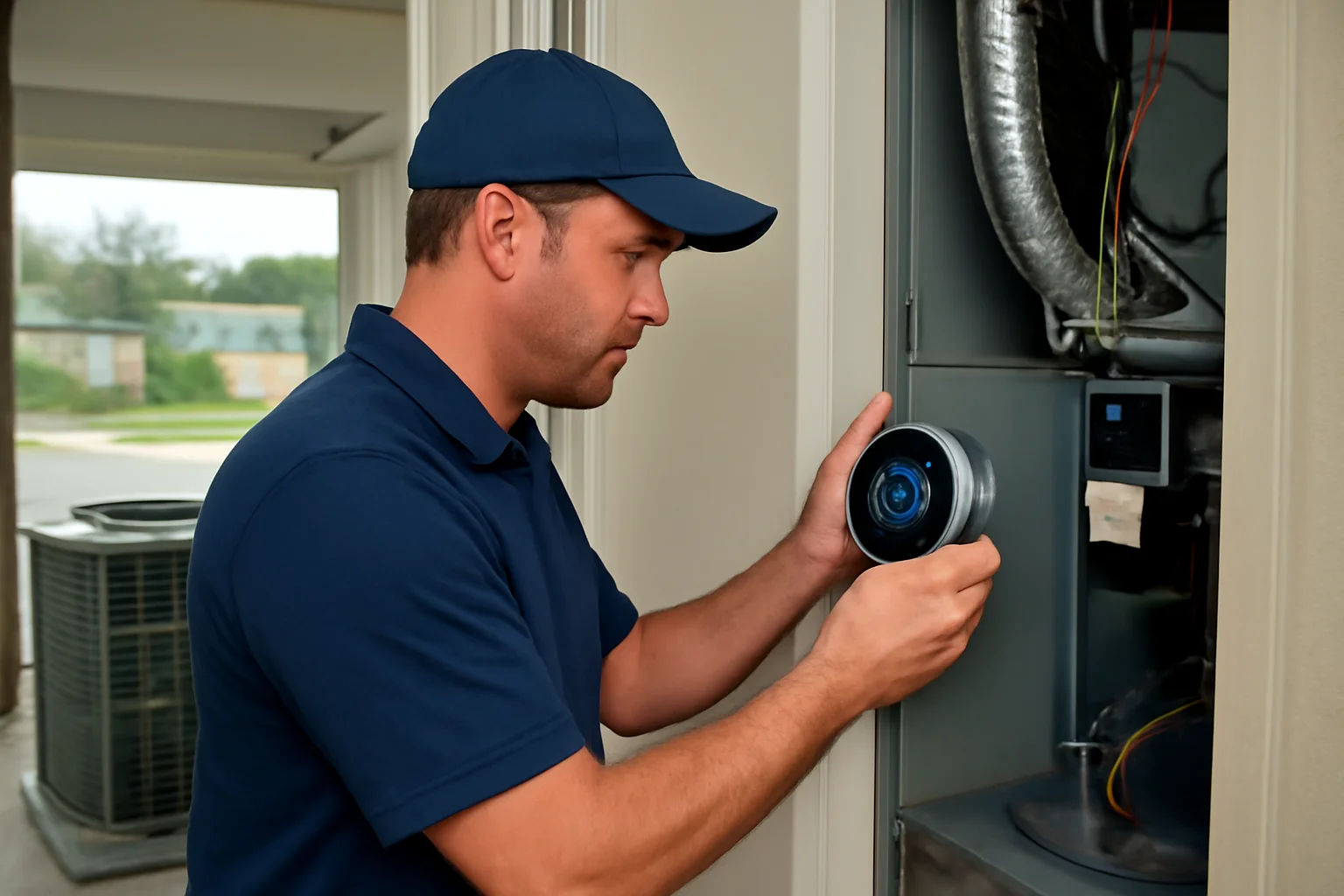
Smart thermostats often include features like “auto” schedules, adaptive recovery, and occupancy modes. Those can be helpful, but they should be tuned for your home. A professional smart thermostat replacement and setup ensures the control logic matches your system and that alerts are interpreted correctly.
Practical setting tips that reduce cycling
Instead of aiming for aggressive temperature swings, try settings that encourage steady operation:
- Use realistic temperature setbacks: Large drops or rises can increase recovery time and system cycling when you return.
- Allow the system time to stabilize: After changing schedules, watch how the system behaves over several cooling cycles.
- Check fan settings: “Fan on” can improve air mixing, but it can also increase indoor humidity movement if the system is not dehumidifying effectively. Your HVAC contractor can recommend a fan strategy based on your ductwork and comfort goals.
If you notice frequent on and off cycles, comfort inconsistency, or sudden changes in humidity, treat it as a signal. You may need duct inspection, an AC tune up, or other HVAC service. Smart thermostat data is useful, but it is not a substitute for an in-person evaluation.
Humidity control: the smart thermostat feature that matters most in Florida
In Fort Walton Beach, humidity is not just about comfort. When indoor humidity stays too high, it can make the air feel warmer than the thermostat reads. That can lead to longer cooling run time and can increase moisture in places where it should not be.
Many smart thermostats focus on temperature, but some models also support humidity readings or work with whole-home humidity control strategies. Regardless of the thermostat brand, you want to support proper dehumidification by making sure the AC or heat pump can remove moisture effectively.
How humidity problems shorten HVAC life
- Higher condensate production: More moisture can overwhelm condensate drainage if the drain line is partially blocked or the pan is not draining.
- Coil performance issues: When coils are not clearing properly due to airflow limits, humidity removal suffers and the system works harder.
- Indoor air quality impacts: Excess moisture can contribute to musty odors and can worsen airborne comfort issues.
Smart thermostat scheduling can help you avoid overcooling and undercooling, but condensate drainage and airflow are physical realities. If you have recurring signs like water in or around the indoor unit, persistent damp odors, or warm air that should feel cooler, contact a local HVAC contractor for service.
Airflow and ductwork: the hidden factor behind “smart” comfort
Smart thermostats can only measure what the indoor sensor senses. If airflow through your home is uneven, the thermostat may reach set temperature while other rooms remain uncomfortable. That mismatch can cause the system to cycle more than necessary.
Common airflow and ductwork issues in coastal Florida homes include:
- Leaky or undersized ductwork: Air may not reach rooms as intended.
- Dirty returns and supply vents: Reduced airflow can strain the refrigerant system.
- Blocked registers from furniture or window treatments: This is surprisingly common in living rooms and bedrooms.
For homeowners searching for residential HVAC service near me because rooms never feel right, duct inspection is often the missing step. When airflow improves, smart thermostat schedules tend to work more predictably.
A thermostat cannot replace duct inspection near me
It is tempting to troubleshoot comfort only at the thermostat screen. But if ductwork restricts airflow, the system may not dehumidify correctly, and the refrigerant system can operate outside its intended comfort conditions. A professional technician can evaluate airflow, check for duct restrictions, and address issues that a smart thermostat cannot “learn away.”
Refrigerant systems and what thermostat alerts can and cannot tell you
Modern smart thermostats may display system status messages like “cooling,” “heating,” or “run time exceeded,” and some can send notifications when something seems off. These alerts can be helpful for homeowners, but they are not a refrigerant diagnosis.
Refrigerant systems depend on proper airflow, correct charge levels, and clean coil operation. If your system is low on refrigerant, has a restriction, or has another refrigerant related problem, the thermostat cannot confirm the cause. Attempting to interpret alerts without an in-person evaluation can delay necessary air conditioning service or heat pump repair.
If you notice:
- Cooling that feels weak even when the thermostat calls for cooling
- Short cycles that keep repeating
- Repeated system faults or unusual run patterns
That is the time to schedule HVAC repair. If you are looking for heat pump services in Fort Walton Beach, a qualified technician can evaluate the system safely and accurately.
Condensate drainage: keep it flowing so moisture does not become a system problem
Condensate drainage is one of the most overlooked contributors to HVAC wear. In humid coastal conditions, condensate production increases. If drainage is slow, blocked, or improperly routed, moisture can collect around components and contribute to indoor air quality problems.
Smart thermostat alerts about “system not draining” are uncommon, and even when you have notifications, you still need a technician to inspect the condensate drainage path. A smart thermostat can help you monitor temperature and run time, but it cannot clear a drain line or verify the condensate pan condition.
Homeowners can take simple steps:
- Check for water near the indoor unit or overflow areas after heavy humidity periods.
- Keep the area around the indoor unit clear of stored items and debris.
- Replace filters on schedule to support airflow and coil performance.
If you suspect condensate drainage problems, schedule service promptly. This is especially important in Florida when emergency cooling concerns can become urgent during extreme heat and humidity.
Energy use: smart schedules help, but only with correct setup
Smart thermostats can reduce energy waste by coordinating heating and cooling with occupancy. However, energy use is also tied to how your HVAC system runs. If the system is struggling due to airflow restrictions, dirty coils, or duct leakage, the thermostat may run the system more often than expected.
To support efficient operation:
- Use schedules that match how your home is actually lived in, not an idealized routine.
- Avoid constant manual changes. Frequent overrides can lead to more recovery cycles.
- Use “hold” modes sparingly. If you need a hold often, it can indicate a comfort or performance issue.
For many homeowners, the best path is pairing smart thermostat control with preventive HVAC maintenance. When an HVAC contractor checks airflow, refrigerant system performance, and condensate drainage, the thermostat can do its job without fighting underlying problems.
Preventive maintenance that pairs well with smart thermostats
Smart thermostats are a control upgrade. Preventive maintenance is what keeps the equipment healthy. In Fort Walton Beach, routine service matters because salt air, humidity, and dust load can affect outdoor units, coil surfaces, and airflow.
Look for an HVAC maintenance visit that addresses:
- Filter and airflow checks: Confirm airflow is adequate for consistent temperature control.
- Indoor coil and outdoor coil inspection: Coastal dust and humidity can affect performance.
- Condensate drainage inspection: Make sure moisture can exit safely.
- Thermostat operation verification: Confirm the thermostat is correctly configured for your HVAC setup.
If you are looking for HVAC maintenance near me, choose a local HVAC contractor that understands how coastal climates affect equipment and how to tune thermostat settings based on real comfort performance.
Thermostat installation and setup mistakes to avoid
A smart thermostat can be installed correctly or incorrectly. The difference can show up as comfort problems, short cycling, or poor humidity control. When homeowners search for thermostat installation near me, they should expect more than mounting the device on the wall.
Common setup issues include:
- Wrong system type configuration: Heat pump versus conventional systems require different control behavior.
- Fan mode misunderstandings: Fan settings can change humidity comfort outcomes.
- Schedule conflicts: Multiple modes like geofencing, occupancy sensors, and manual schedules can fight each other.
A Superior Mechanical can help ensure your smart thermostat is matched to your HVAC system and that your home’s comfort goals are reflected in the settings.
Heat pump and AC considerations for smart thermostat control
In Fort Walton Beach, many homes use air conditioning, while others use heat pump systems. Smart thermostat control can work for both, but homeowners should understand how the system type affects comfort.
Heat pump homes
Heat pumps use reversing valve operation and have different behavior in cooling versus heating. If your thermostat is configured incorrectly, you may see odd run patterns or discomfort. If you are dealing with comfort issues and searching for heat pump repair near me, ask the technician to verify thermostat configuration and system operation together.
Air conditioning homes
With central AC, dehumidification depends on airflow and coil performance. A smart thermostat that holds temperatures too aggressively can sometimes reduce humidity removal, especially if airflow is restricted. If you notice persistent humidity or a “cool but damp” feel, it is worth scheduling an air conditioning inspection near me.
When to call for emergency cooling help
Fort Walton Beach summers can swing quickly from hot to dangerously hot, and humidity can make indoor air feel unbearable. If your system stops cooling or you cannot get the temperature under control, treat it as a priority.
Contact emergency AC repair near me when:
- The system will not start after a thermostat call for cooling
- Cooling stops mid-cycle and does not resume
- You see signs of refrigerant system or electrical related faults displayed by the thermostat or HVAC control
Because refrigerant and electrical components require safe, in-person checks, avoid DIY troubleshooting beyond basic thermostat resets or filter changes. A professional HVAC contractor can evaluate the system safely and recommend next steps.
Smart thermostat upgrades that support long term HVAC health
If you are considering a smart thermostat upgrade, focus on compatibility and whole-home comfort. A smart thermostat installation should consider:
- System compatibility: Make sure the thermostat supports your HVAC configuration.
- Indoor air quality goals: Comfort includes filtration and humidity management. If you are also thinking about indoor air quality services near me, ask how your HVAC airflow supports filtration and moisture control.
- Air distribution: If you have hot or cold rooms, duct inspection can improve performance and reduce unnecessary cycling.
For homeowners comparing options, it helps to review how maintenance and airflow affect performance. You can also read how commercial maintenance habits translate to homes: What Fort Walton Beach Homes Can Learn From Commercial HVAC Maintenance. And if you are dealing with performance issues that seem small but keep recurring, this guide can help: Commercial HVAC Repair in Fort Walton Beach: What Property Owners Should Pay Attention To Before Small Problems Grow.
How to spot problems before your HVAC needs replacement
Smart thermostat data can help you notice patterns, but it cannot replace HVAC inspection. Still, you can watch for warning signs that often lead to bigger repairs or, in some cases, HVAC replacement near me decisions later.
Common red flags include:
- Comfort drift: The system runs longer to reach set temperature.
- Humidity complaints: The house feels damp even when the thermostat says the temperature is correct.
- Long recovery after schedule changes: The system struggles when the thermostat calls for action.
- Frequent cycling: Rapid on and off behavior that seems out of proportion.
When you see these patterns, it is a good time to schedule HVAC repair or preventive HVAC maintenance. If you are unsure what is happening, this article can help you prioritize: Fort Walton Beach Homeowners and the HVAC Problems That Can’t Wait.
Local support matters in Okaloosa County
Fort Walton Beach homes face a blend of heat, humidity, and coastal conditions that can wear systems faster than people expect. A smart thermostat can improve control, but it needs the right configuration and it performs best when ductwork, condensate drainage, and airflow are in good shape.
For homeowners looking for a HVAC contractor near me who understands local conditions, A Superior Mechanical provides smart thermostat installation, replacement, and setup across Okaloosa County. If your comfort issues are tied to airflow, ductwork, or system performance, ask about duct inspection, AC tune ups, and heat pump services. If your system is aging, you can also explore Air Conditioning Replacement and the role smart control can play in the new setup.
To get started, connect your thermostat upgrade to the system health behind it. That is the difference between “set it and forget it” control and a smart thermostat that helps your HVAC last longer in Fort Walton Beach.
Find Smart Thermostats in Fort Walton Beach, FL
If you need Smart Thermostats in Fort Walton Beach, FL, visit our local service page or contact A Superior Mechanical today.
Map of Fort Walton Beach, FL
Frequently Asked Questions
Can a smart thermostat make my HVAC last longer?
A smart thermostat can help by supporting steadier temperature control and smarter scheduling. However, it cannot fix underlying problems like restricted ductwork, poor airflow, condensate drainage issues, or refrigerant system problems. Longer HVAC life comes from pairing smart control with preventive HVAC maintenance and timely HVAC repair.
Why does my system short cycle even though I set the thermostat correctly?
Short cycling can be caused by airflow restrictions, dirty filters, ductwork issues, or thermostat setup that does not match your HVAC system type. In humid Fort Walton Beach homes, comfort and dehumidification depend heavily on airflow and coil performance. A technician can evaluate the system in person.
What thermostat settings help with Florida humidity?
Humidity comfort usually improves when the HVAC system can dehumidify effectively, which depends on airflow and coil performance. Instead of extreme temperature swings, use realistic schedules and avoid frequent overrides. If humidity remains high, you may need indoor air quality services, duct inspection, or condensate drainage inspection.
Do thermostat notifications mean I have a refrigerant problem?
Not necessarily. Smart thermostat alerts can indicate issues like abnormal run time or system faults, but they do not confirm refrigerant system diagnoses. Refrigerant diagnosis requires a safe in-person evaluation by a licensed HVAC technician.
When should I call for emergency AC repair in Fort Walton Beach?
Call for emergency AC repair if your system will not cool when the thermostat calls for cooling, cooling stops mid-cycle, or the situation creates urgent comfort concerns during extreme heat and humidity. Avoid DIY troubleshooting beyond basic steps like checking the thermostat and replacing a filter.
Related Articles
- What Fort Walton Beach Homes Can Learn From Commercial HVAC Maintenance
- Commercial HVAC Repair in Fort Walton Beach: What Property Owners Should Pay Attention To Before Small Problems Grow
- Fort Walton Beach Homeowners and the HVAC Problems That Can’t Wait
- How Fort Walton Beach Weather and Daily Wear Shape Commercial HVAC Repairs Over Time
Photo Gallery