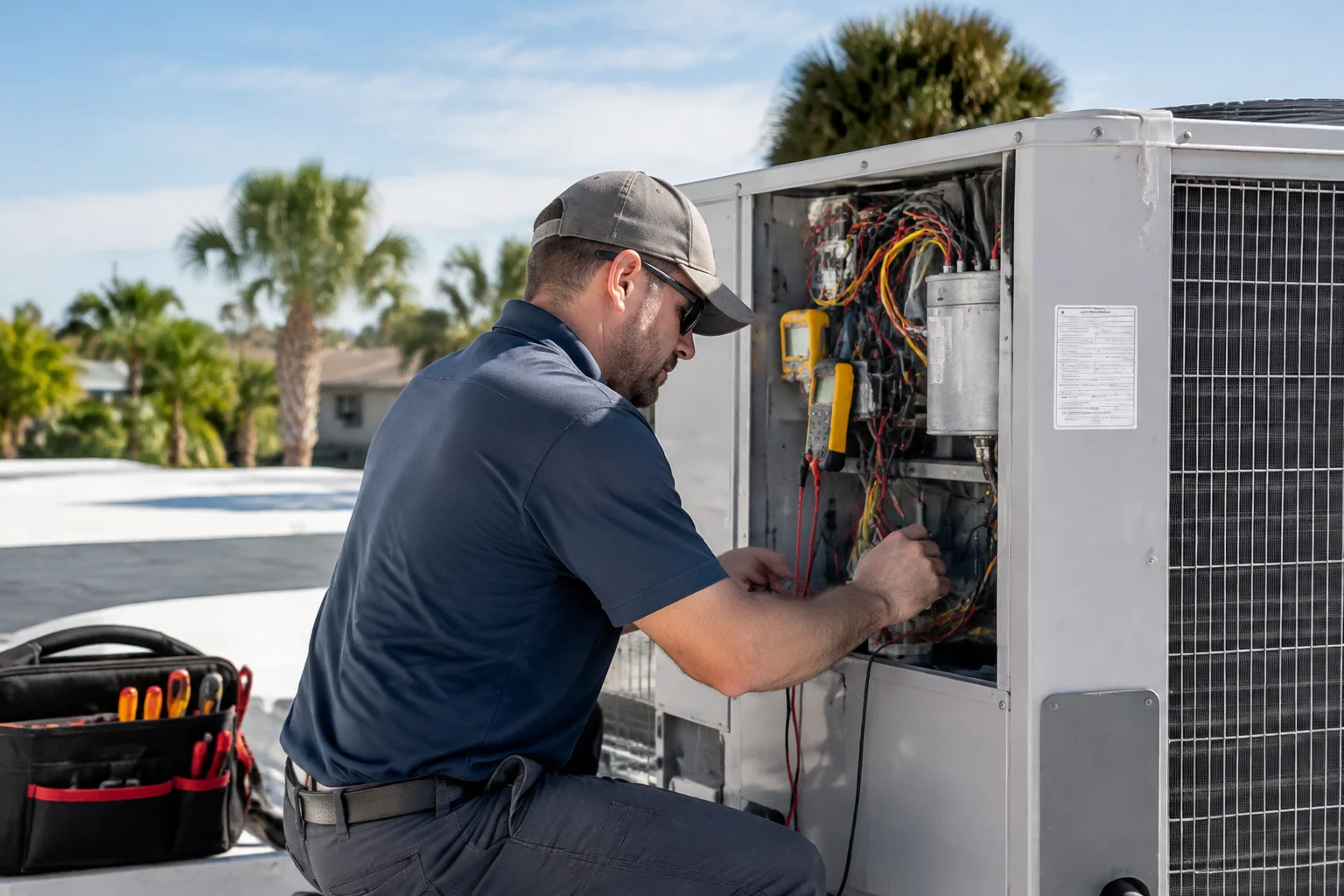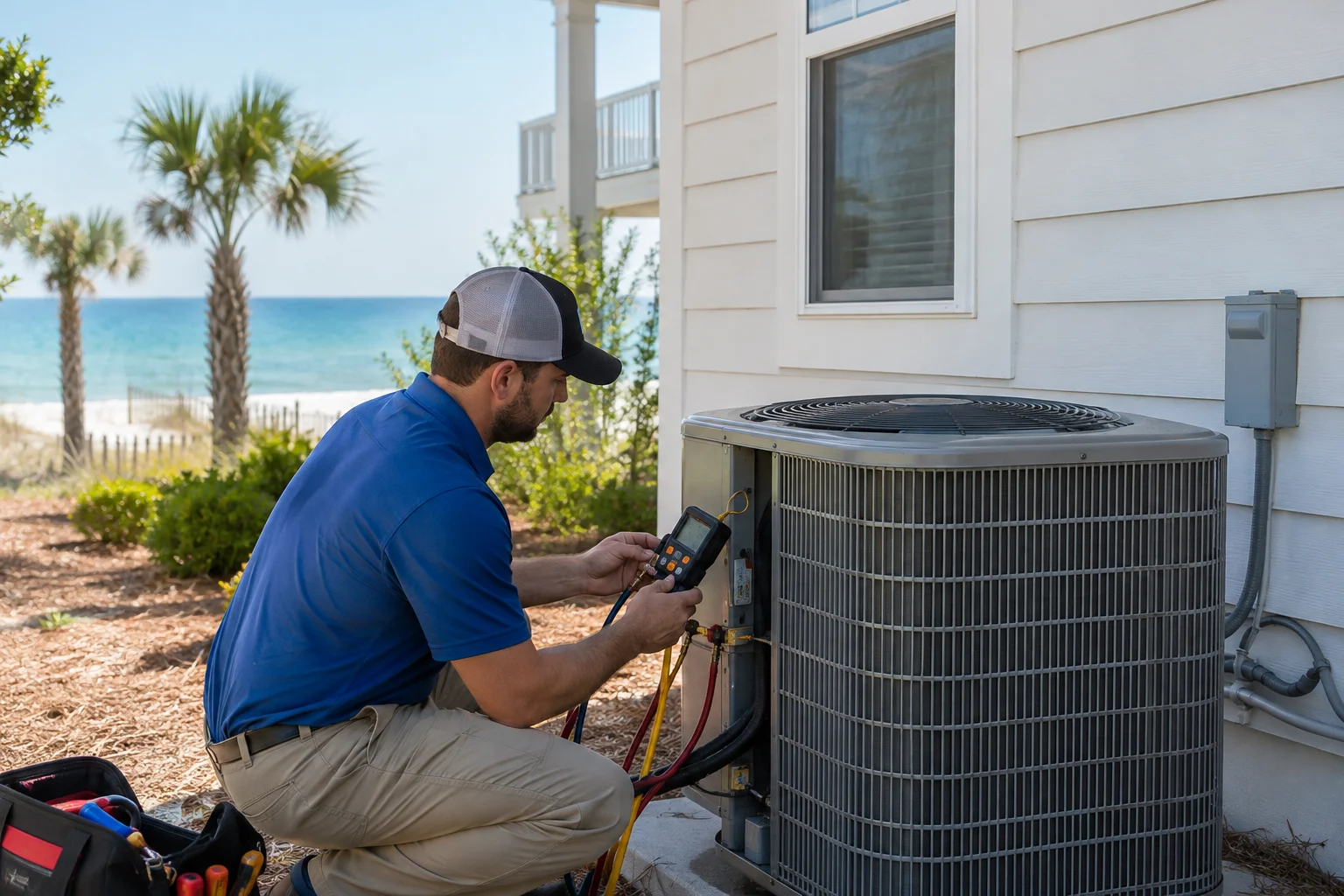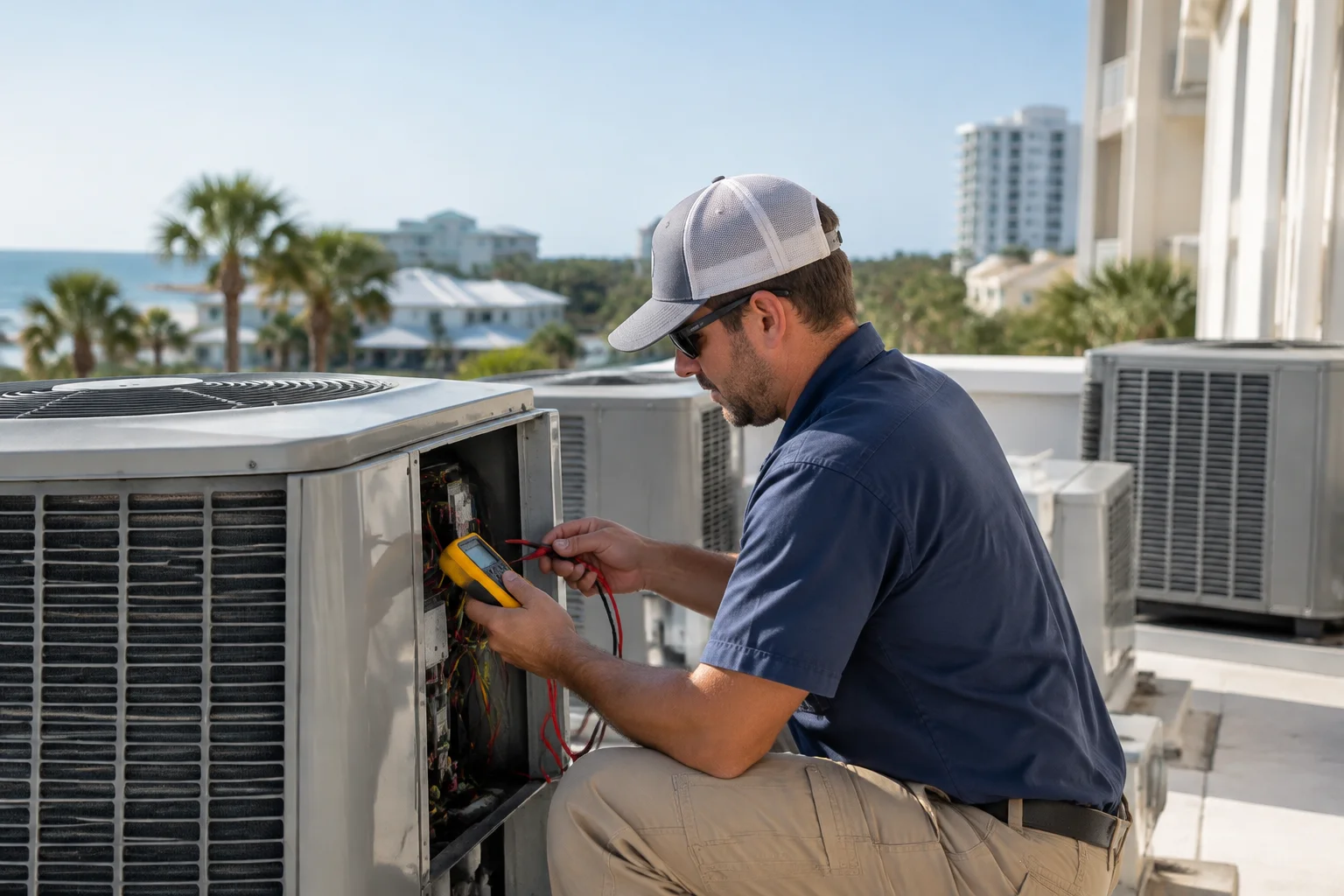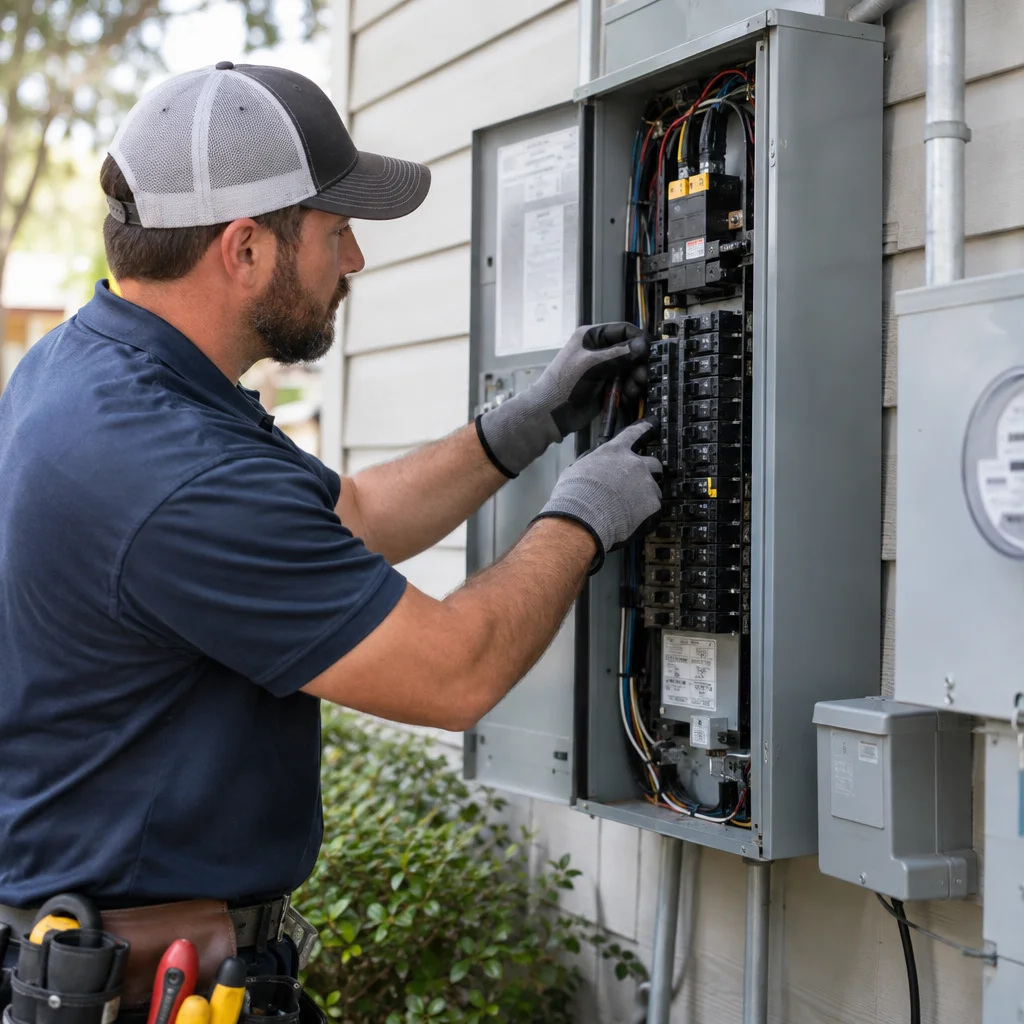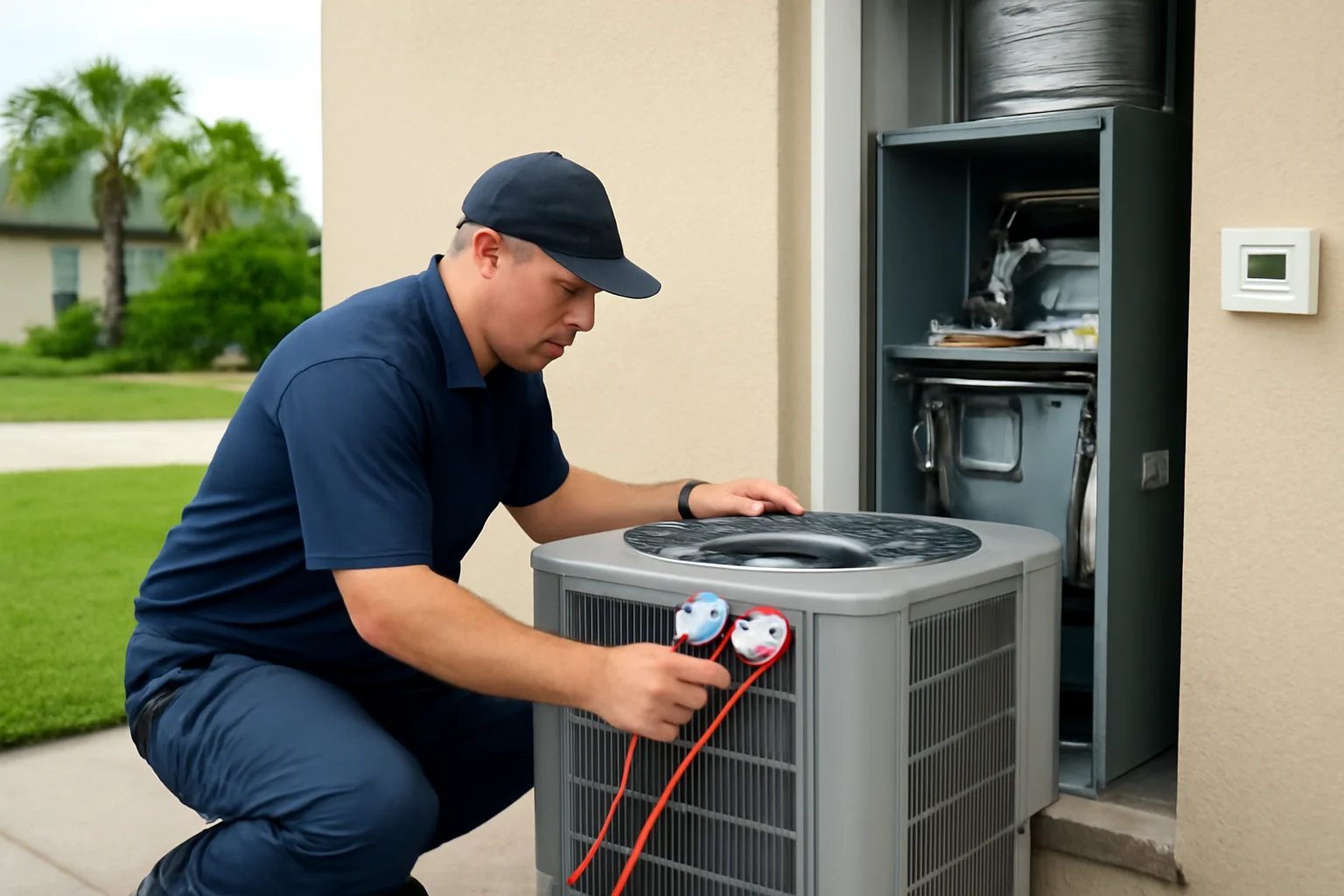
Fort Walton Beach feels like a long summer. Humidity hangs around, salt air can work its way into outdoor units, and afternoon heat can turn a small equipment issue into an all-out cooling emergency. The good news is that many “emergency HVAC calls” after an air conditioning installation in Fort Walton Beach are preventable. The key is getting the right system, installing it correctly, and setting up the details that affect comfort and reliability.
This guide walks through the most common causes of sudden AC problems in Okaloosa County homes and what you can do before the first heat wave hits.
Why emergency AC calls spike in Fort Walton Beach
In Fort Walton Beach, your AC runs hard during hot, humid stretches. When the weather swings quickly or the indoor load rises faster than the system can keep up, issues show up fast. Emergency cooling concerns often come from:
- Airflow problems that make the indoor coil struggle and increase strain on the refrigerant system.
- Improper system sizing that leads to short cycling, poor humidity control, and faster wear.
- Leaky or poorly designed ductwork that reduces airflow and causes uneven cooling.
- Condensate drainage issues that create water around the equipment, which can lead to shutdowns or water damage.
- Thermostat and control settings that do not match the new equipment and comfort goals.
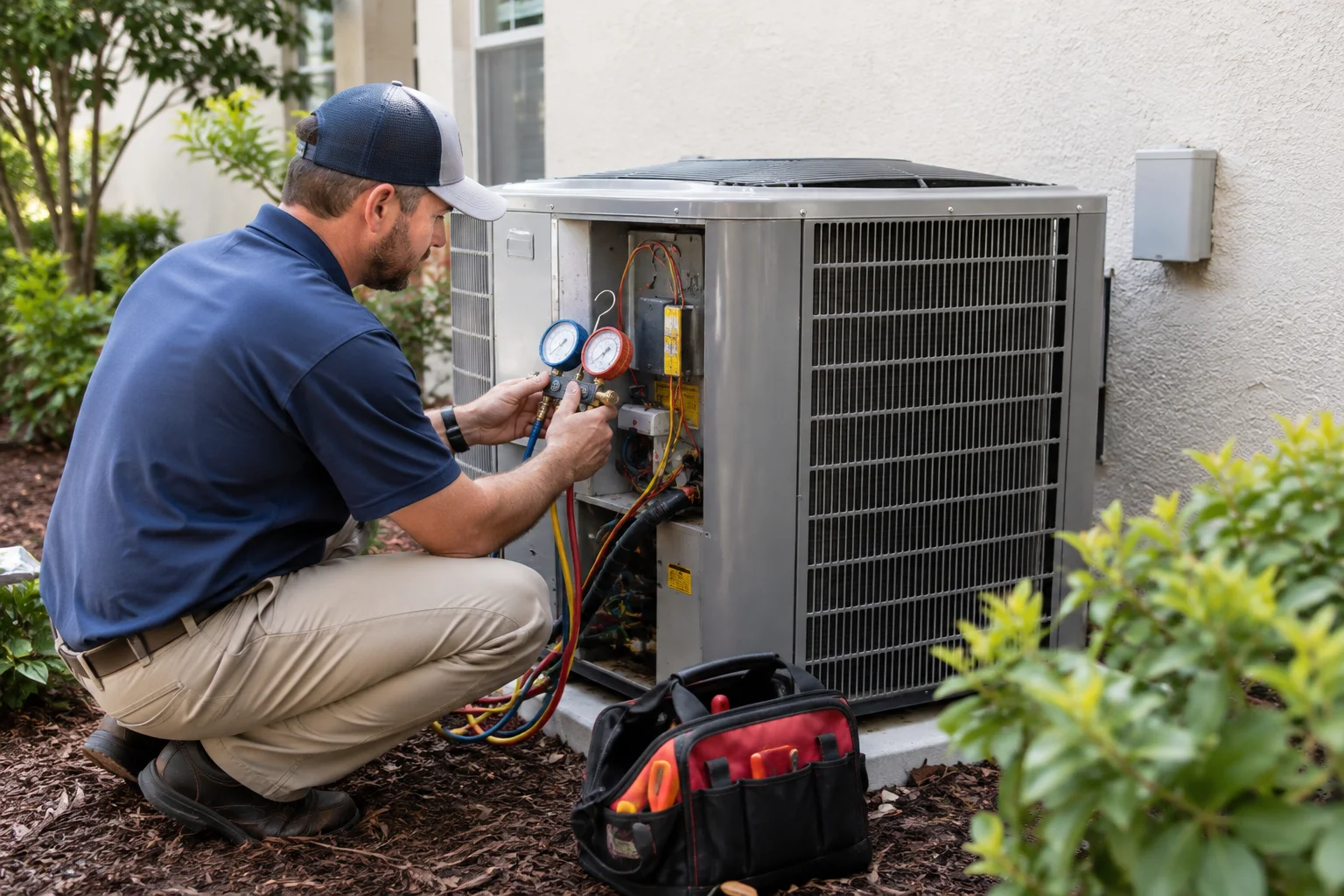
- Refrigerant system installation errors that can cause performance and safety issues. These need an in-person professional evaluation if anything seems off.
After installation, homeowners expect steady comfort. A properly planned job reduces the odds that a minor installation detail becomes a mid-summer breakdown.
Start with the right match: sizing and load calculations
One of the biggest drivers of HVAC replacement emergencies is buying a system that is not truly matched to the home. When an AC is oversized, it can cool the air quickly but fail to remove humidity. That can leave rooms feeling clammy and can increase cycling. When an AC is undersized, it may run constantly, struggling to keep up with Florida heat and raising wear on internal components.
A reliable installation should begin with a real assessment of your home, not just a guess based on square footage. That includes:
- Home insulation and air leakage patterns
- Window area and solar exposure
- Local climate realities in Fort Walton Beach, including humidity and temperature swings
- Existing ductwork condition and airflow paths
- Indoor comfort goals, including humidity control and air quality
If you are comparing options and searching for HVAC replacement near me or an air conditioner replacement near me estimate, remember that the “right” system is the one designed for the specific home and duct layout, not a one-size-fits-all swap.
Airflow is not optional. It is the foundation of stable cooling
In humid, salty coastal air, your system has to handle both comfort and moisture removal. Airflow affects both. If airflow is too low, the indoor coil can get stressed and temperatures can shift in ways that lead to poor performance and potential shutdowns.
After installation, pay attention to these airflow related red flags:
- Weak or uneven airflow from supply vents
- Rooms that never reach the set temperature
- Frequent cycling that feels more like “on and off” than steady cooling
- Audible airflow noise that seems new after the installation
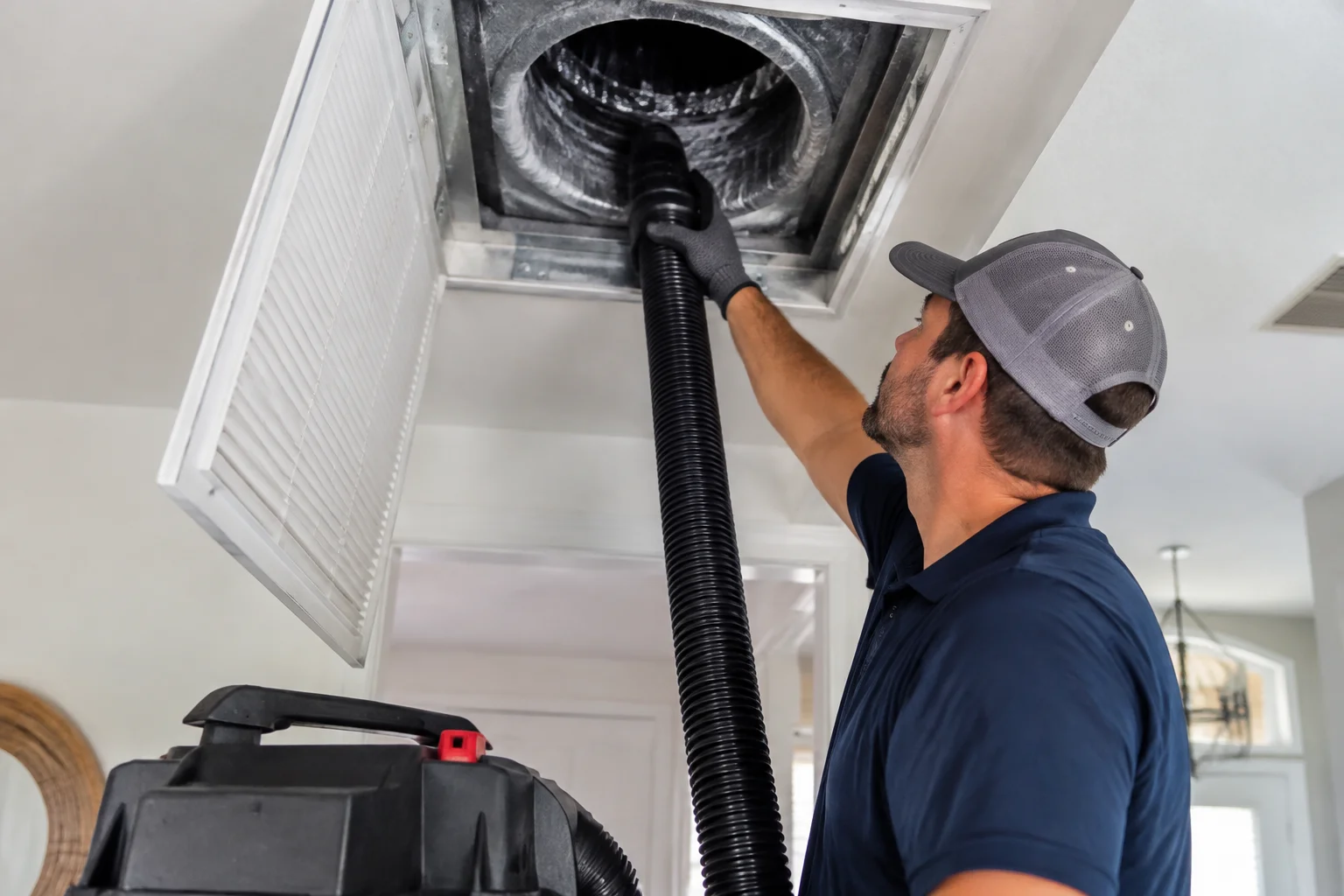
Good installations include airflow checks and proper duct connection. If you are unsure whether your system is moving air correctly, an air conditioning inspection can help verify airflow, operating conditions, and comfort performance before an emergency happens.
Ductwork and duct sealing: the hidden cause of many HVAC repair calls
Fort Walton Beach homes can vary widely in construction style, age, and duct layout. Older systems may have ducts with leaks, poor connections, or duct runs that do not support balanced airflow. Even a high-efficiency AC can struggle if the ductwork cannot deliver the air where it needs to go.
Common ductwork issues that lead to emergency cooling concerns include:
- Disconnected or poorly sealed duct joints
- Ducts located in hot attics or crawl spaces without proper insulation
- Restricted ducts that reduce airflow
- Registers that are blocked by furniture, curtains, or landscaping barriers near outdoor components
If you are searching for duct inspection near me or HVAC company near me because your home cools unevenly, ductwork is often a key part of the conversation. Addressing ductwork during installation or soon after can prevent the “it worked for a week” problem that sometimes leads to emergency AC repair.
Humidity control matters as much as temperature
Florida humidity is a comfort issue and a system reliability issue. When humidity levels stay high, the home can feel sticky even when the thermostat says the temperature is correct. That can lead to longer run times and higher energy use.
During installation, your system should be configured for proper moisture removal. That depends on airflow, correct operation of the refrigerant system, and correct condensate drainage. If you notice:
- Persistent dampness around the indoor unit
- Musty odors that appear after cooling starts
- Condensate line issues or visible water
- Rooms that feel clammy even at a lower thermostat setting
These symptoms can point to installation details that should be checked by a professional. Homeowners should not try to diagnose refrigerant or electrical components themselves. Instead, schedule an evaluation so the team can inspect airflow, drainage, thermostat settings, and system operation in person.
Condensate drainage: protect your equipment and your home
Air conditioning removes moisture from indoor air. That moisture needs a reliable path to drain. If condensate drainage is incorrect, you can see water where it should not be, and it can contribute to shutdowns or water damage.
During and after installation, ask whether condensate drainage was set up correctly and whether the drain line has been routed and secured properly. Look for signs like:
- Water pooling near the indoor unit
- Drain line gurgling sounds during operation
- Repeated safety trips or unusual system behavior
- Wet drywall, ceiling stains, or dampness in nearby areas
Because condensate drainage touches safety and comfort, it is one of the areas where an in-person HVAC technician inspection is the right move.
Thermostat setup and control settings can prevent “mystery” failures
A thermostat is the command center. After an installation, mismatched settings or an improperly configured thermostat can lead to comfort issues that feel like equipment problems. In Fort Walton Beach, where the AC runs frequently, small configuration errors become obvious quickly.
Consider these thermostat related prevention points:
- Confirm the thermostat is set up for the new equipment type and system mode
- Verify scheduling and temperature setpoints reflect how you use the home
- If you use smart thermostats, ensure the system compatibility settings are correct
- Check that fan settings do not create unintended continuous fan operation
If you are upgrading controls, explore Smart Thermostats and ask your installer to confirm the configuration during the commissioning process.
Refrigerant systems: when performance issues show up, get a professional check
Refrigerant systems are central to cooling. After installation, homeowners sometimes notice symptoms that worry them, such as reduced cooling, unusual noises, or ice-like buildup on components. While it is tempting to troubleshoot at home, refrigerant-related concerns require an in-person professional evaluation.
What you can do is watch for patterns and document them:
- When the issue starts, especially during high humidity or peak afternoon heat
- Any visible frost or abnormal condensation on indoor components
- Whether the issue happens only in certain rooms or across the whole home
- Any error codes or thermostat messages
Then contact a local HVAC company. Searching for HVAC repair near me is reasonable, but make sure the technician can inspect airflow, condensate drainage, thermostat settings, and system operation. Do not attempt refrigerant diagnosis or adjustments on your own.
Salt air and outdoor unit care: reduce corrosion and performance loss
Fort Walton Beach’s salt air can be tough on outdoor equipment. Corrosion does not always show up immediately, but it can affect airflow, heat exchange, and the long-term reliability of the outdoor unit.
Preventive steps homeowners can take:
- Keep plants trimmed away from outdoor unit airflow paths
- Clear debris from around the unit while avoiding damage to fins
- Watch for repeated performance drops after storms or heavy rain
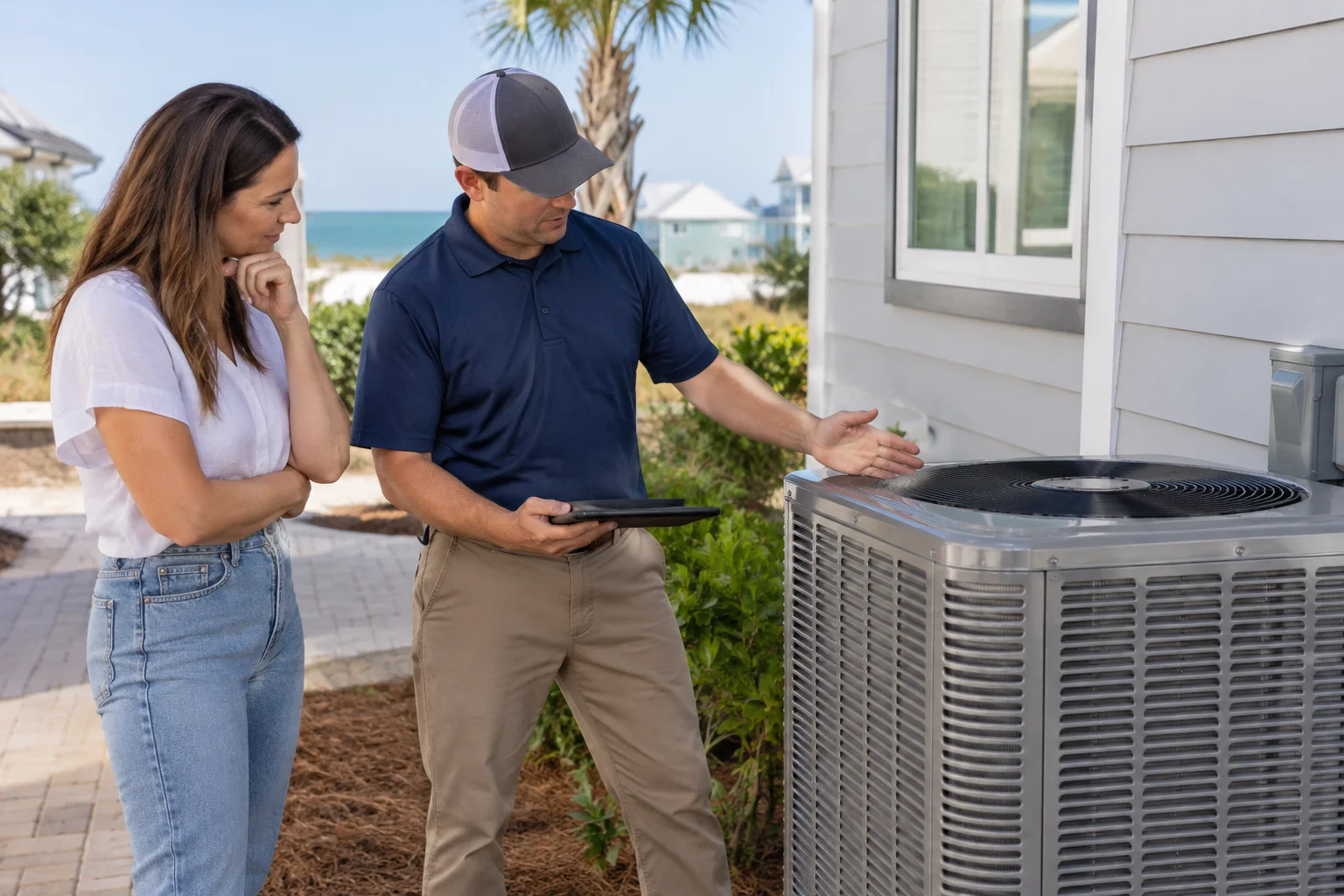
- Schedule regular tune ups so the system can be inspected for early wear
For homeowners searching for AC tune up near me or HVAC maintenance near me, seasonal maintenance is where small outdoor unit issues are more likely to be caught before they turn into emergency cooling concerns.
Preventive maintenance that actually reduces emergencies
In Florida humidity, preventive HVAC maintenance is not just about efficiency. It is about stability. When components are clean, airflow is correct, and controls are verified, the system is less likely to trip into safety shutdown or struggle during peak cooling demand.
A good maintenance plan typically includes:
- Inspection of indoor and outdoor components
- Airflow and performance checks tied to comfort
- Verification of condensate drainage and moisture removal
- Filter and indoor air quality related checks
- Review of thermostat settings and operating behavior
If you want a deeper look at how installations connect to long-term upkeep, read A Practical Look at Air Conditioning Installation for Smarter Maintenance in Fort Walton Beach. For homeowners who want to compare residential and commercial maintenance approaches, What Fort Walton Beach Homes Can Learn From Commercial HVAC Maintenance is also helpful.
Energy use is a clue. So is comfort that drifts
Emergency cooling problems often start as performance drift. You might notice:
- Higher energy use without a clear reason
- Longer run times to reach temperature
- Rooms that feel cooler or warmer than expected
- Humidity changes, like sudden stickiness indoors
In Fort Walton Beach, energy use can rise naturally during peak summer. The difference is whether the comfort changes too. If comfort is drifting after installation or after a season, it is worth scheduling an inspection rather than waiting for a complete failure.
Small problems that should not wait
Even when you have a newer system, some issues should be addressed quickly. Homeowners searching for emergency AC repair near me often wish they had handled the early warning signs.
Consider calling for service sooner if you see:
- Water around the indoor unit or signs of condensate drainage problems
- Repeated short cycling or sudden loss of cooling
- Unusual odors that appear after the system runs
- Significant airflow reduction from vents
- Thermostat behavior that seems inconsistent with the actual cooling output
For guidance on issues that cannot wait, see Fort Walton Beach Homeowners and the HVAC Problems That Can’t Wait. If you manage a rental, condo, or commercial space, Commercial HVAC Repair in Fort Walton Beach: What Property Owners Should Pay Attention To Before Small Problems Grow covers common escalation patterns.
What a professional air conditioning installation should include
If you are planning installation now, use these items as a checklist for a quality job. The goal is fewer HVAC emergencies later.
1) Custom system design and correct sizing
Every home has different airflow needs and humidity targets. A professional should design around your home and ductwork, not just a basic rule of thumb.
2) Ductwork evaluation and airflow planning
Proper airflow is the difference between steady comfort and emergency breakdown risk. Your technician should understand how air moves through your home.
3) Condensate drainage verification
Moisture removal must be handled correctly to protect indoor air quality and prevent water issues.
4) Thermostat commissioning and control checks
Confirm thermostat operation and settings that match the installed equipment.
5) Refrigerant system checks performed by qualified professionals
Refrigerant systems must be installed and verified by trained technicians. If performance seems off, the right next step is a professional inspection.
Choosing A Superior Mechanical for AC installation in Okaloosa County
When homeowners look for an HVAC company near me, what they need is more than a quick swap. They need dependable cooling that holds up through Florida humidity, salt air exposure, and the kind of peak heat that can turn a small issue into an emergency.
A Superior Mechanical provides professional air conditioning installation in Fort Walton Beach with system design that considers comfort, airflow, and the details that affect reliability. If you are evaluating options, it also helps to review the broader service area coverage on our Fort Walton Beach page and Okaloosa County HVAC services.
If you are also considering other system types for your property, ask about heat pump service and related maintenance. Heat pumps operate in humid conditions differently than traditional systems, and correct installation and airflow planning still matter. For homeowners searching for heat pump repair near me in the off season, preventive maintenance can reduce emergency cooling concerns later.
Get ahead of the next heat wave
Emergency cooling calls are usually the end of a chain. In Fort Walton Beach, that chain often starts with overlooked installation details like airflow, ductwork, condensate drainage, thermostat setup, and refrigerant system verification. When those pieces are handled correctly, your AC is more likely to deliver steady comfort through the hottest weeks.
If you want to review your current system setup or you are planning a new installation, scheduling an air conditioning inspection can be a practical step before problems escalate.
Find Air Conditioning Installation in Fort Walton Beach, FL
If you need Air Conditioning Installation in Fort Walton Beach, FL, visit our local service page or contact A Superior Mechanical today.
Map of Fort Walton Beach, FL
Frequently Asked Questions
What is the biggest cause of emergency AC problems after installation?
Many emergencies trace back to airflow and comfort setup issues. If ductwork, airflow balance, or thermostat configuration is off, the system can struggle during Florida heat and humidity, leading to shutdowns or fast performance decline.
How can I tell if my new AC is installed correctly?
Look for steady cooling, consistent airflow from vents, and proper moisture removal. If you notice weak airflow, persistent clammy humidity, or water around the indoor unit, schedule a professional inspection rather than waiting for a complete failure.
Can poor ductwork make my AC fail completely?
It can contribute to repeated problems. Restricted or leaky ductwork can reduce airflow, increase system strain, and worsen humidity control. A technician can evaluate ductwork performance and recommend the right fixes based on your home.
Should I try to adjust refrigerant or troubleshoot cooling issues myself?
No. Refrigerant system concerns require qualified, in-person evaluation. If cooling is weak, temperatures seem abnormal, or you see unusual frost or condensation patterns, contact an HVAC professional to inspect system operation safely.
What maintenance helps prevent emergency HVAC calls in Fort Walton Beach?
Seasonal preventive HVAC maintenance that includes airflow checks, condensate drainage verification, indoor air quality related checks, and thermostat and control review can reduce the odds of mid-summer breakdowns in humid, coastal conditions.
Related Articles
- A Practical Look at Air Conditioning Installation for Smarter Maintenance in Fort Walton Beach
- What Fort Walton Beach Homes Can Learn From Commercial HVAC Maintenance
- Commercial HVAC Repair in Fort Walton Beach: What Property Owners Should Pay Attention To Before Small Problems Grow
- Fort Walton Beach Homeowners and the HVAC Problems That Can’t Wait
Photo Gallery