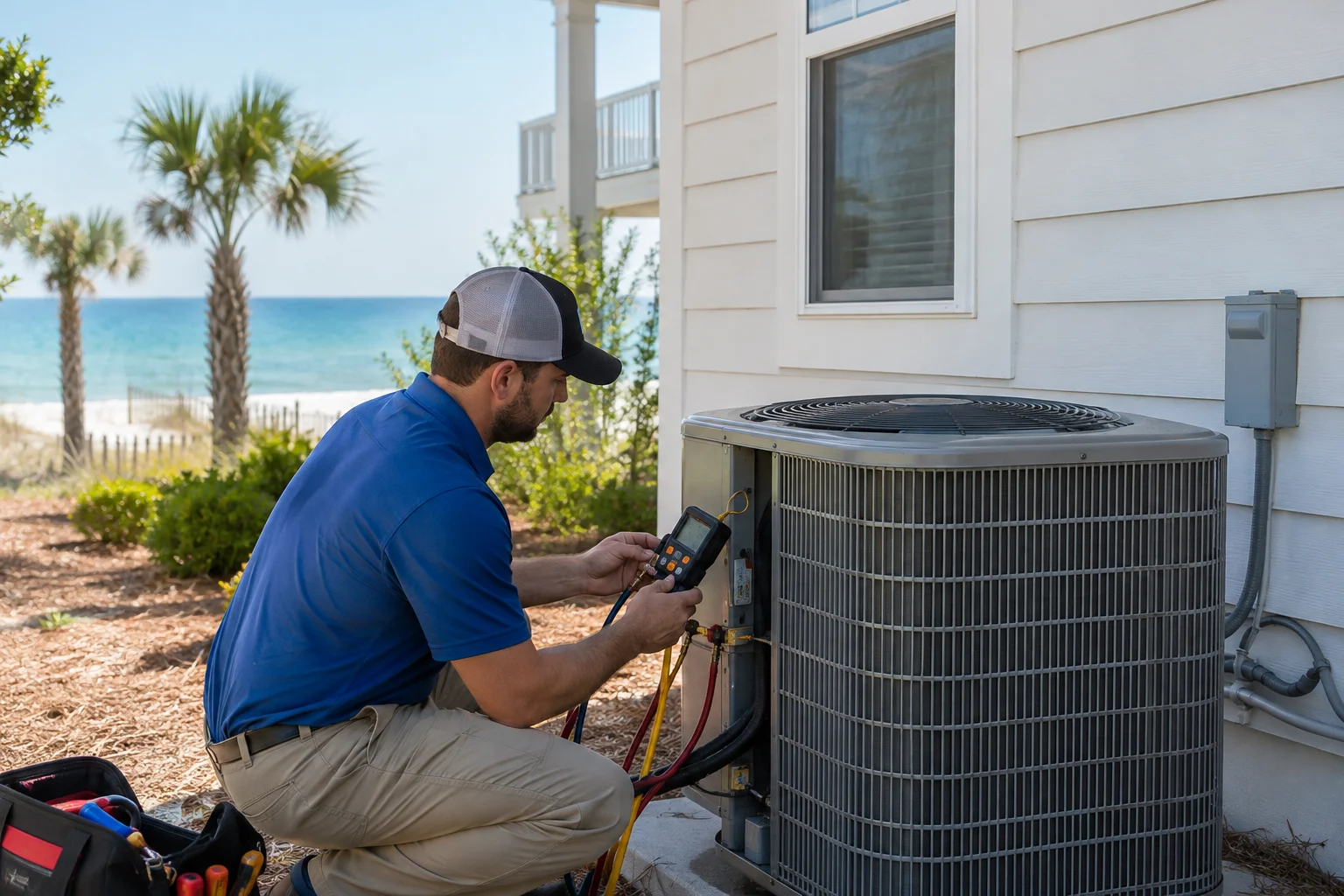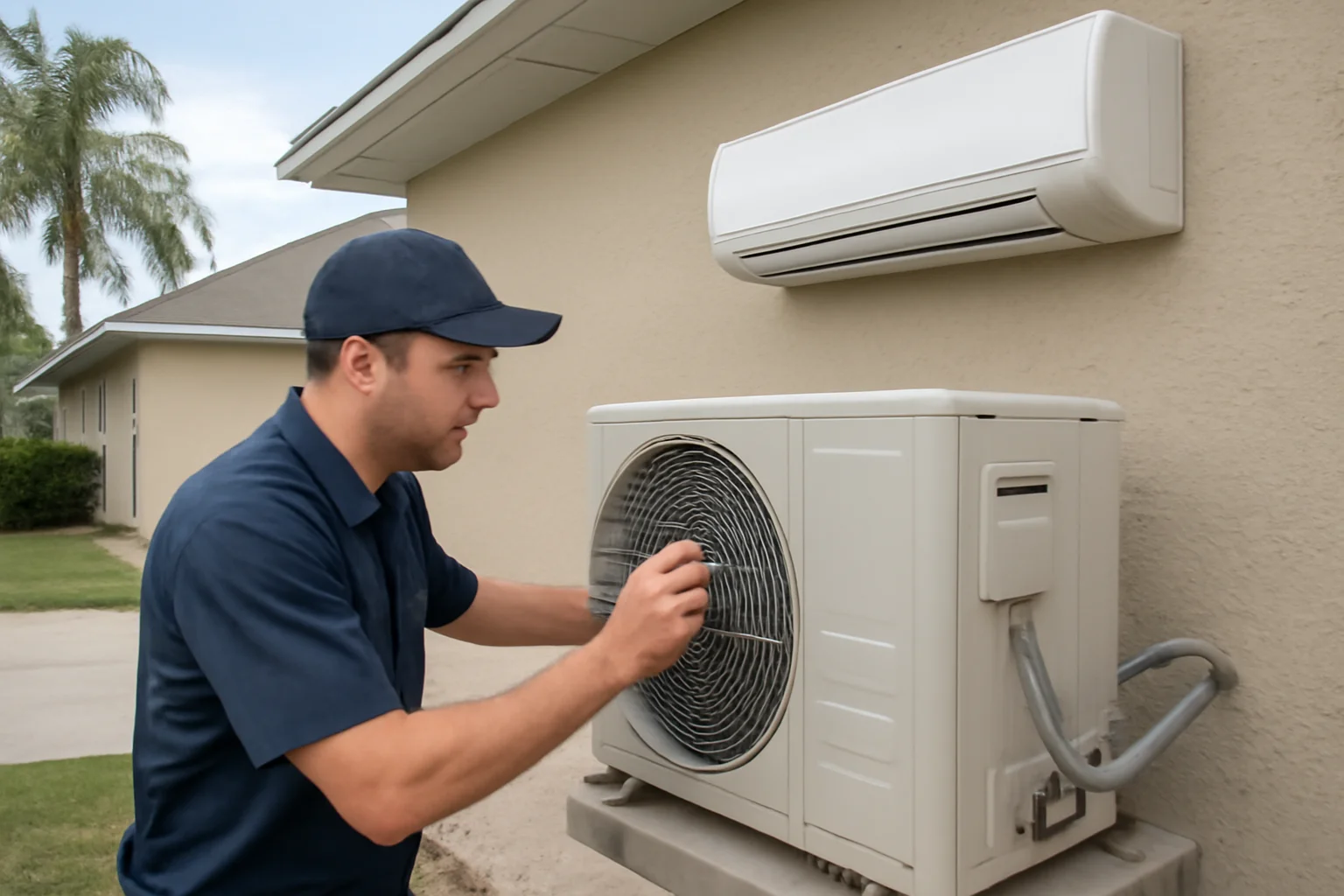
Upper Grand Lagoon homes rely on ductless mini-splits for steady comfort, room by room zoning, and efficient cooling without ductwork. But like any HVAC system, mini-splits take a daily beating from Florida heat, moisture in the air, and the way coastal conditions can affect equipment over time. When wear and tear builds up, it often shows up as reduced airflow, weaker cooling, higher energy use, or indoor air quality issues that homeowners notice before the system fully fails.
A Superior Mechanical helps local homeowners and property managers keep ductless mini-splits performing in Bay County’s humid climate. If you are searching for ductless mini-split service in Upper Grand Lagoon, this guide explains how wear and tear affects mini-splits, what causes common problems, and what you can do to prevent emergency cooling concerns during peak summer.
Why Upper Grand Lagoon’s climate stresses ductless mini-splits
Ductless mini-splits are designed for efficient cooling and targeted comfort. In Upper Grand Lagoon, that efficiency still depends on airflow, clean heat exchanger surfaces, proper condensate drainage, and a healthy refrigerant system operating as intended. The local environment adds pressure to each of those factors.
Heat, humidity, and constant run time
During Florida’s warm months, many homes run their mini-splits for long stretches. Over time, that steady operation increases wear on fan motors, filters, and moving components. Humidity also matters because mini-splits remove moisture from indoor air as part of cooling. If airflow or drainage paths get restricted, the system can struggle to manage condensation.
Coastal conditions and salt air exposure
Upper Grand Lagoon is in Bay County, and coastal air can be rough on outdoor equipment. Salt air and wind driven moisture can contribute to corrosion on outdoor unit components. Even when the system is functioning, corrosion can reduce heat transfer efficiency. That can lead to more frequent cycling, higher energy use, and faster accumulation of grime on coil surfaces.
Indoor air quality expectations in real homes
Homeowners often choose ductless mini-splits because they can improve comfort in specific rooms. But mini-splits also influence indoor air quality through filtration and the cleanliness of the indoor unit. When filters, drain lines, or coil surfaces accumulate buildup, the system may circulate more dust, allergens, or musty odors. That matters for anyone looking for indoor air quality services in Upper Grand Lagoon.
How wear and tear changes performance: the most common homeowner notices
Wear and tear rarely announces itself with a single dramatic event. More often, homeowners see gradual changes that become obvious after a few weeks of hot weather.
Weak airflow or uneven cooling between rooms
One of the first signs of mini-split wear is airflow that feels reduced. Dirty filters, clogged coil surfaces, and failing fan components can all limit air movement. If one room stays warmer than others, the issue may be localized to that indoor unit, including restricted intake grilles or buildup on the heat exchanger.
Reduced airflow affects comfort and also makes the system work harder to reach the thermostat setpoint. That can increase energy use and accelerate wear on the refrigerant system and fans.
Longer run times to reach the thermostat setting
When the system cycles less efficiently, it may run longer to cool the same area. Homeowners may notice that the mini-split does not “catch up” like it used to, especially during peak afternoon heat.
Sometimes the cause is airflow related, like clogged filters or restricted outdoor airflow. Other times it relates to the refrigerant system performance. It is important to have a licensed HVAC contractor evaluate the situation in person rather than trying to guess the cause.
Musty odors or damp smells coming from the indoor unit
Because mini-splits handle humidity, condensate drainage is critical. Over time, condensate drainage paths can become partially blocked by algae growth, debris, or slime. When drainage is not clearing properly, moisture can linger, leading to odors and potential indoor humidity problems.
Homeowners should treat persistent damp smells as an HVAC maintenance issue, not a “wait and see” concern. It can affect indoor air quality and comfort even if the system still cools.
Water on the wall, near the indoor unit, or dripping at startup
Visible water is a clear warning sign. Condensate drainage issues can happen when the drain line has buildup, the line has improper slope, or the indoor unit drain pan is not draining as it should. In humid Florida weather, minor drainage problems can become noticeable quickly.
If you see water where it should not be, schedule service. This is also a good time to review whether your condensate drainage setup is appropriate for your installation and local conditions.
More frequent cycling or unusual noises during operation
Wear and tear can change how the system sounds. Dust on fan blades, worn bearings, or loose panels can create rattling or grinding. Frequent cycling can also occur when components are struggling to transfer heat efficiently.
Noise and cycling patterns are often clues. A professional can inspect the indoor and outdoor units, check airflow performance, and evaluate overall system operation.
Where mini-split wear typically starts: key parts homeowners should understand
Mini-splits are made up of an indoor air handler and an outdoor condenser, connected by refrigerant lines. The system also relies on thermostats for demand and control. Wear and tear can show up across multiple areas.
Indoor unit filters and heat exchanger surfaces
Filters trap dust and debris. Over time, clogged filters reduce airflow and increase strain. Coil surfaces can collect grime as well. When heat transfer drops, the system may not remove moisture effectively, which can lead to comfort issues and humidity concerns.
Some homeowners do filter cleaning themselves. That can help, but it does not replace professional cleaning of coils, drain areas, and full system checks.
Condensate drainage and drain pan condition
In Florida humidity, condensate drainage is a major part of how mini-splits manage indoor comfort. Drain lines can collect buildup and restrict flow. Drain pans can also collect debris. If drainage is compromised, the system may develop odors, and the indoor unit may not handle humidity as effectively.
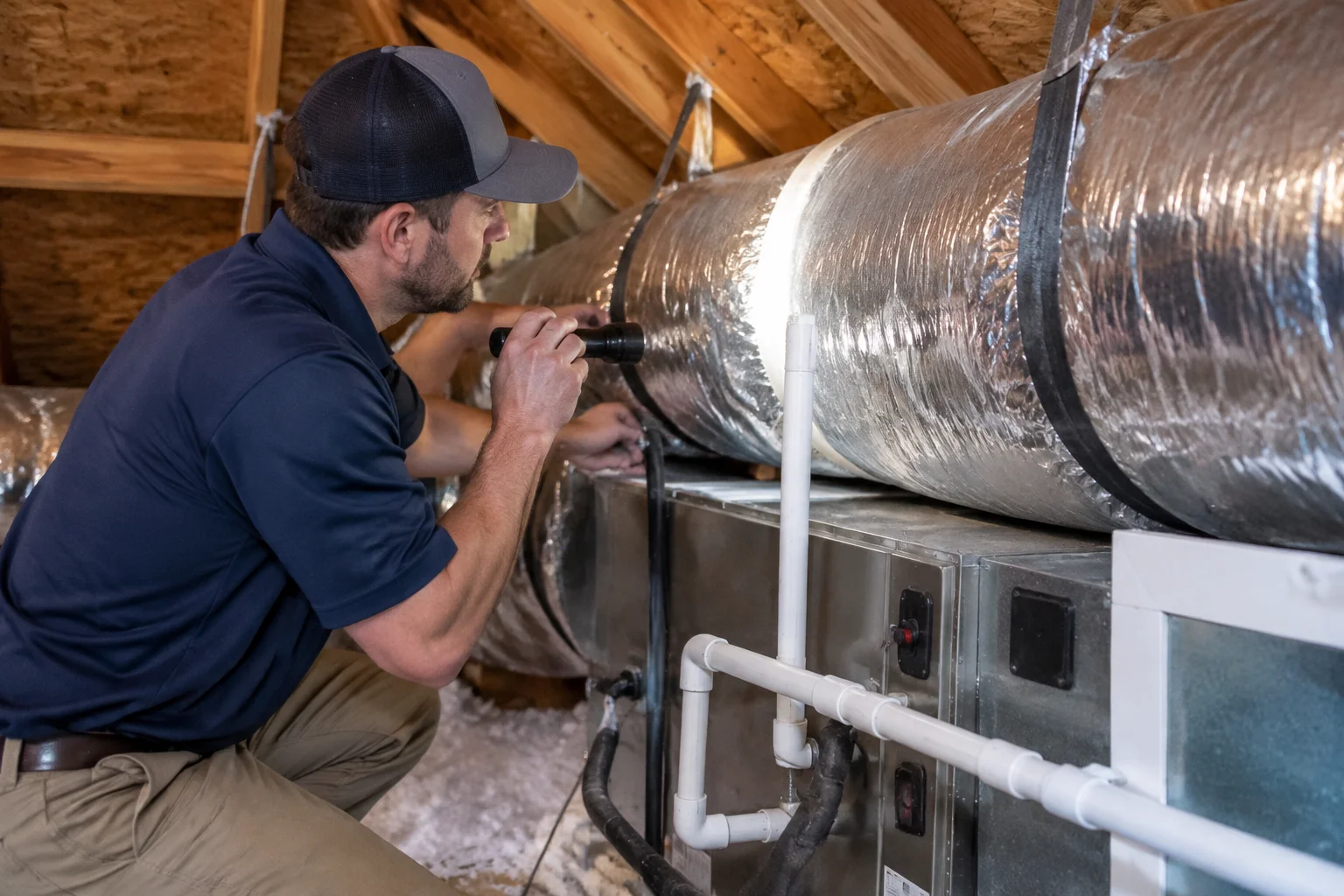
Professional HVAC service includes inspection of drainage performance and cleaning where appropriate. If you are also dealing with general ductwork concerns in your home, it can be helpful to coordinate whole-home airflow planning with your HVAC contractor.
Outdoor unit airflow, coil cleanliness, and corrosion
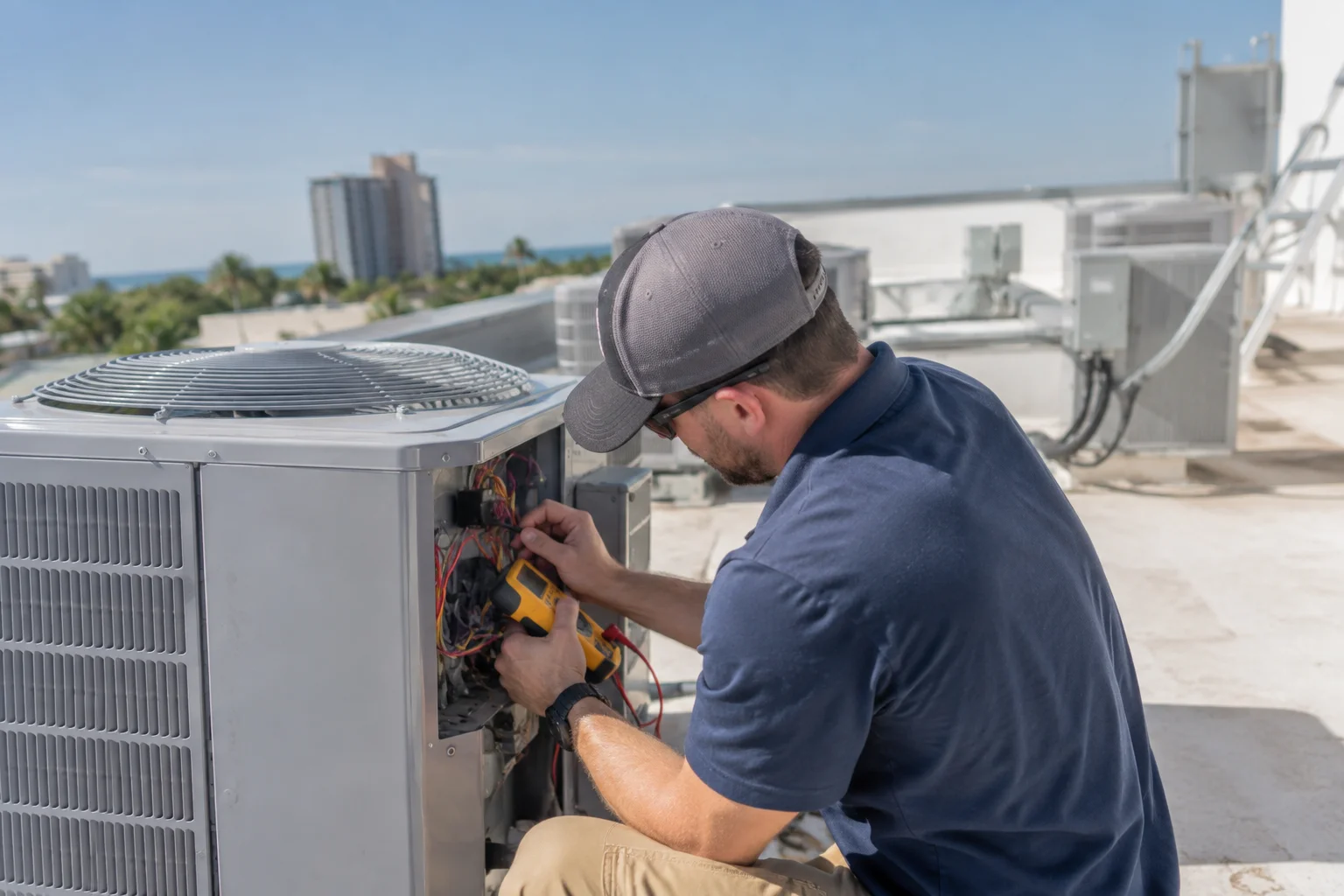
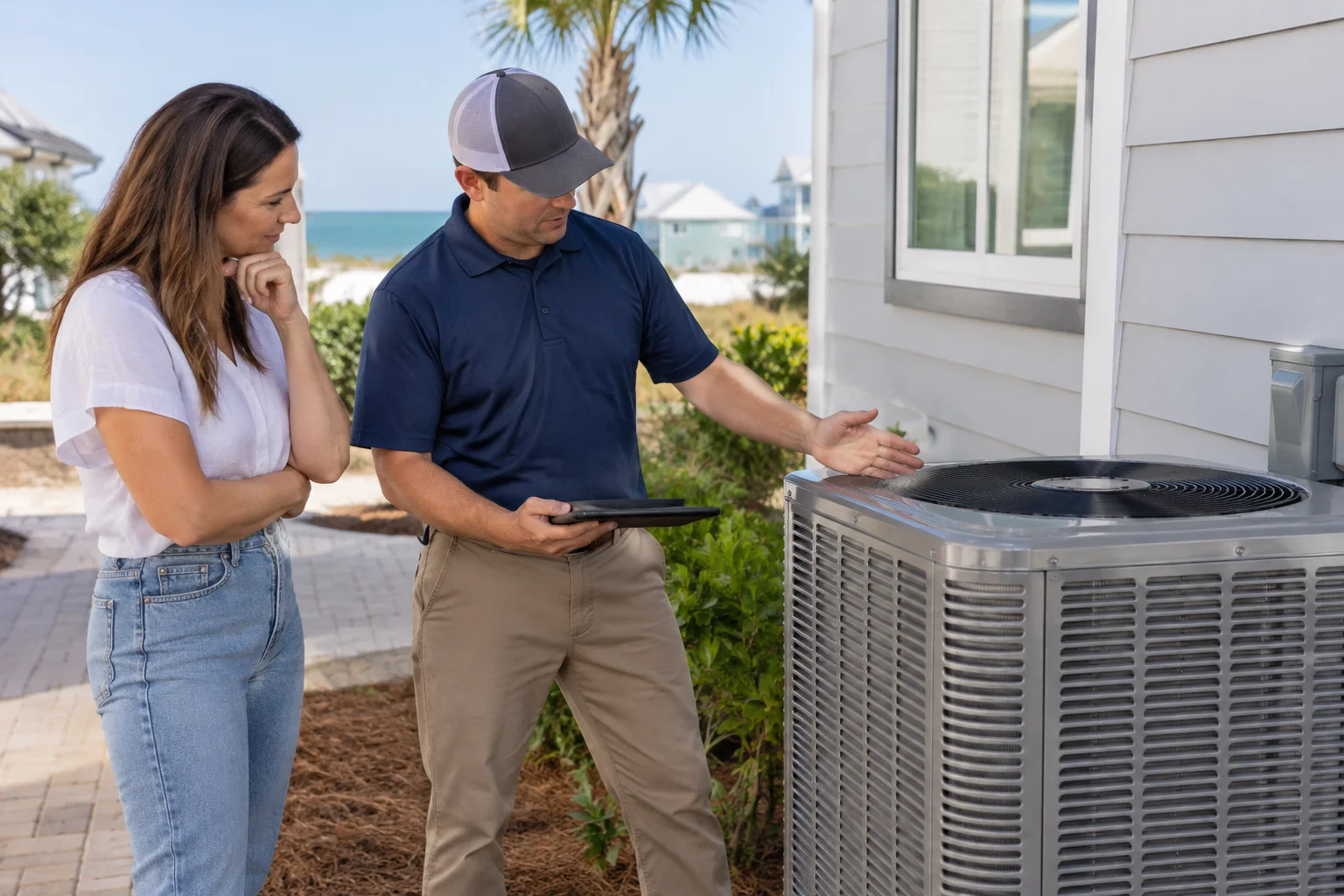
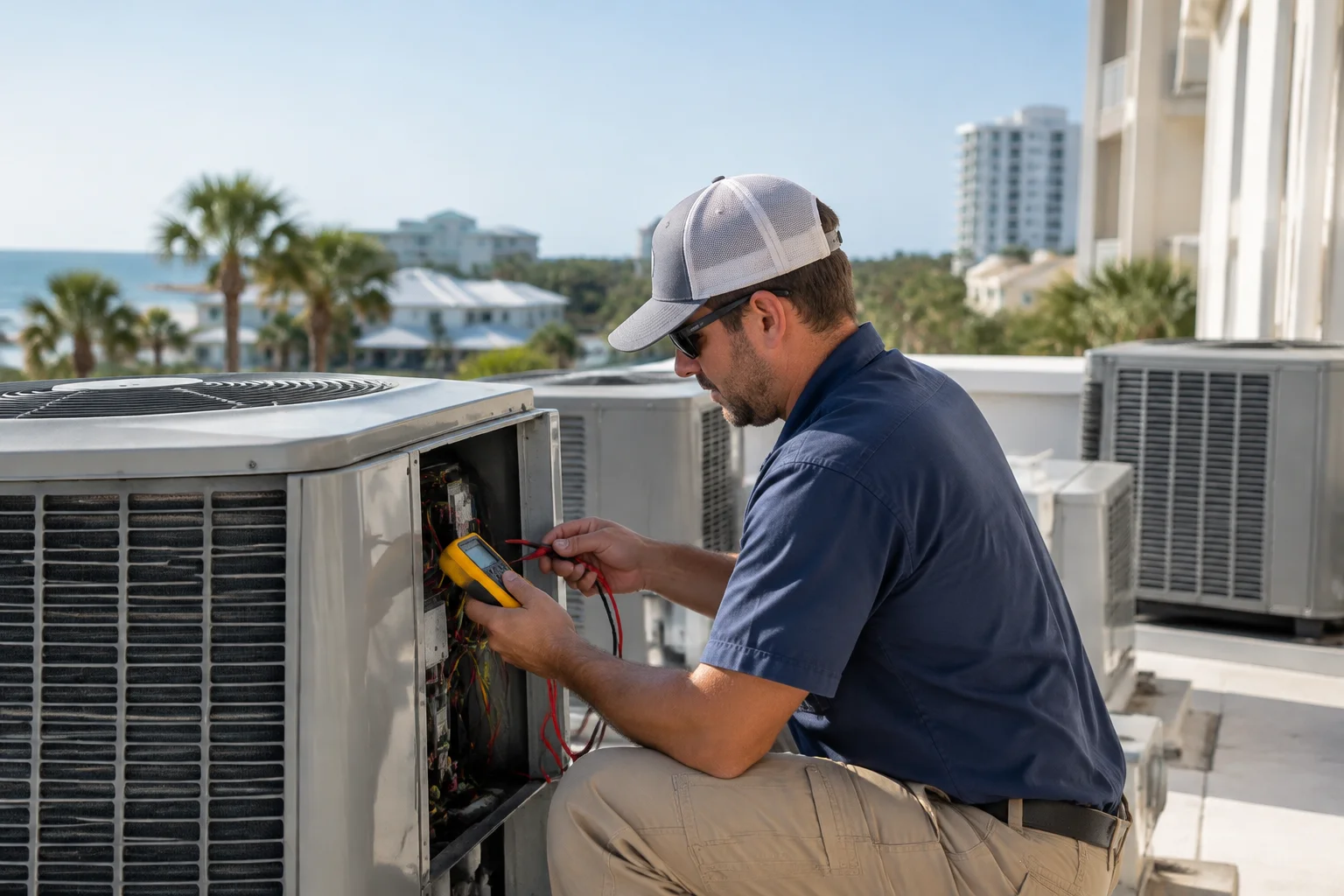
Outdoor units need clear airflow to transfer heat outdoors. Leaves, debris, and coastal moisture can contribute to coil buildup and corrosion. When outdoor airflow is restricted, the system may struggle to cool efficiently.
Cleaning and inspection are part of preventive maintenance. Homeowners often ask about duct inspection near me or duct repair near me, but ductless systems still depend on outdoor airflow clearance and clean coil performance.
Refrigerant system performance and control behavior
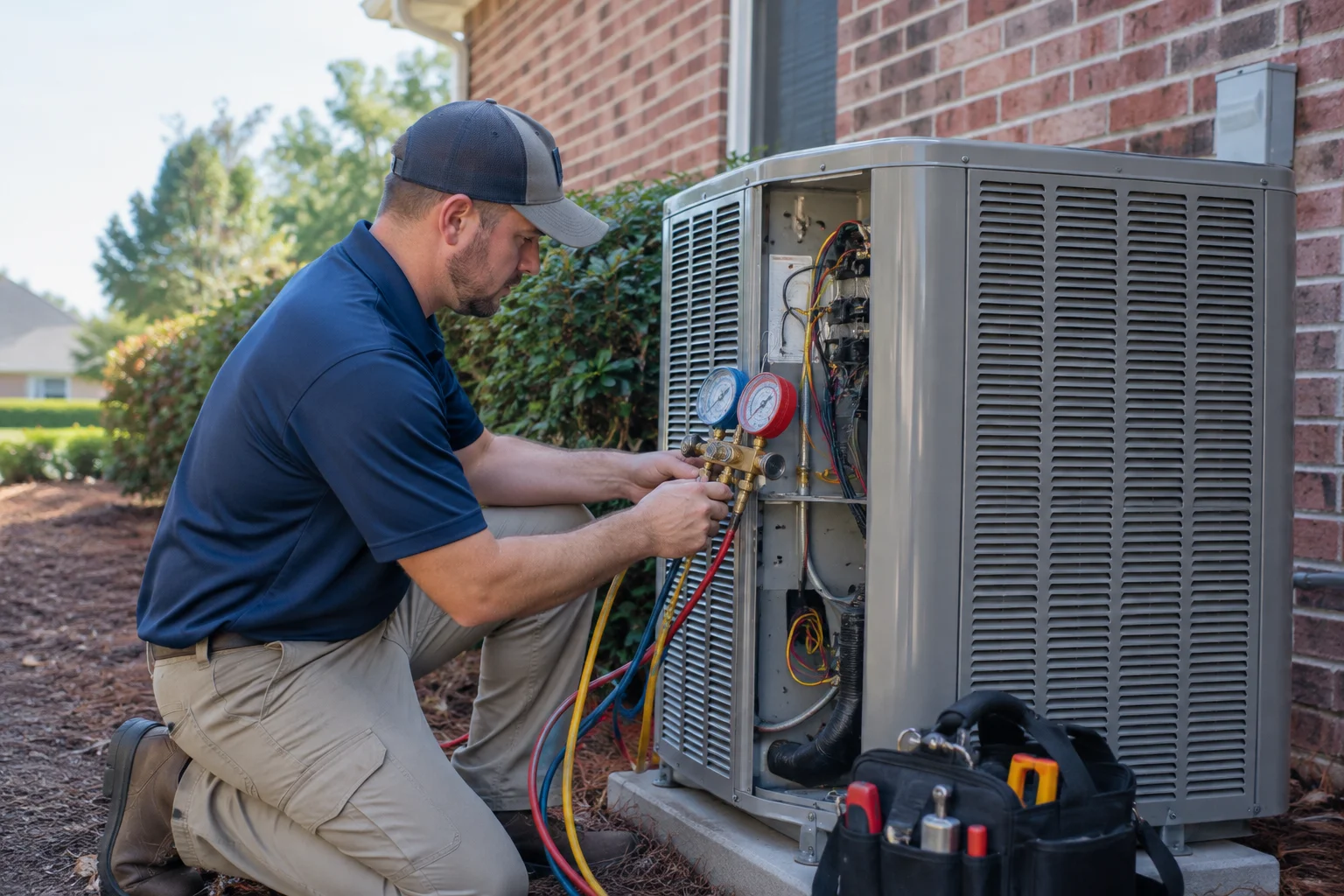
Ductless mini-splits use a refrigerant system to move heat. Wear and tear can affect how the system performs, but refrigerant-related issues are not something homeowners should attempt to diagnose or repair on their own. Refrigerant diagnosis requires proper tools and an in-person evaluation.
If your mini-split runs but does not cool properly, or if it behaves unpredictably, a licensed HVAC contractor should evaluate the system safely and accurately.
Thermostats, sensors, and control settings
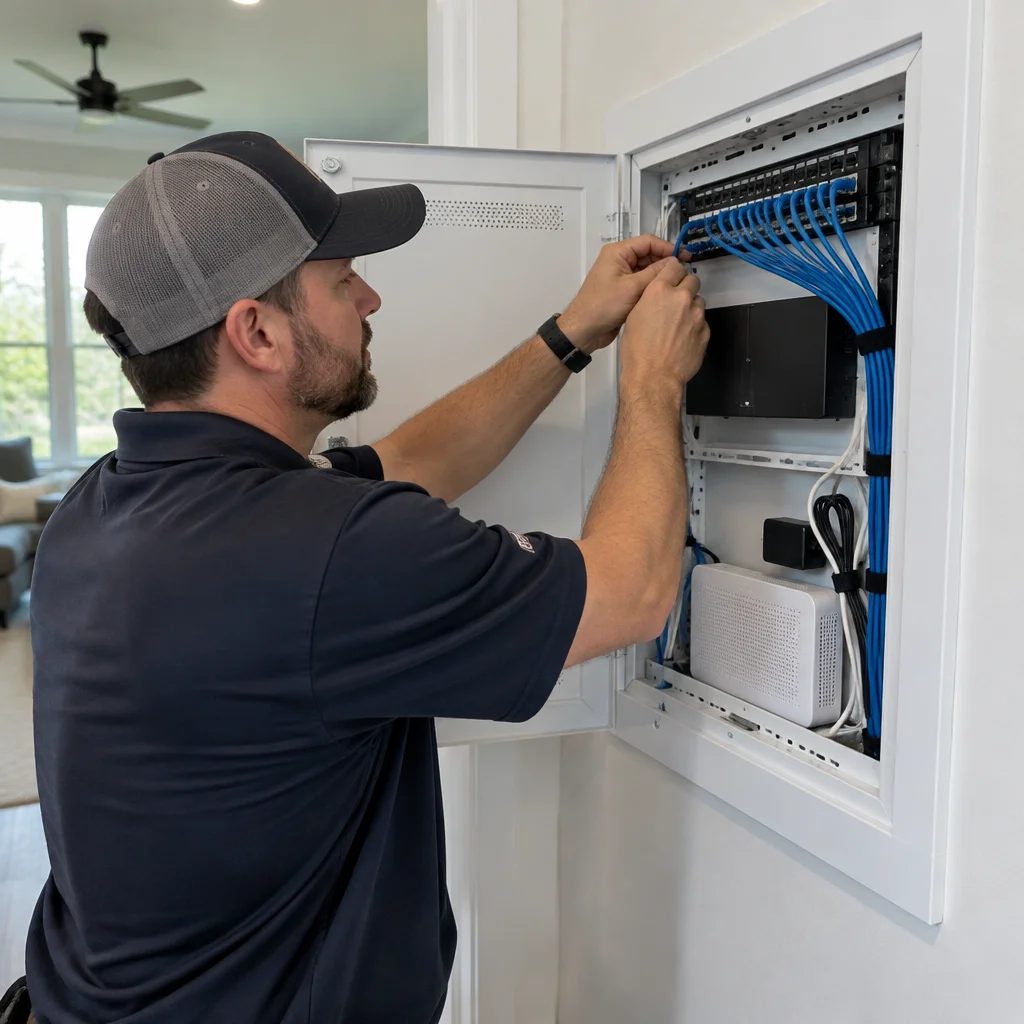
Sometimes the problem is not the mini-split hardware itself. Thermostat settings, sensor placement, or control behavior can create comfort problems that feel like equipment wear. If your system seems to be “fighting you,” professional troubleshooting can help confirm whether the issue is control related, airflow related, or something else.
If you are considering thermostat installation near me or thermostat upgrades, ensure the solution matches your mini-split configuration and comfort goals, especially if you use zoned cooling in multiple rooms.
Energy use and comfort: how wear affects your monthly bills
Wear and tear often increases energy use even before the system fully fails. When airflow is reduced or coils are less efficient, the system may run longer to achieve the same temperature. That means more electricity use during hot, humid days.
Homeowners sometimes interpret higher energy bills as a “Florida problem,” but the trend can be tied to HVAC performance. If you notice rising energy use along with reduced comfort, it is worth scheduling air conditioning repair near me or a full air conditioning inspection near me for your mini-split.
Preventive maintenance that actually protects ductless performance
Preventive HVAC maintenance is how you reduce wear and catch small issues before they become emergency cooling concerns. For ductless mini-splits in Upper Grand Lagoon, maintenance should focus on airflow, humidity control, condensate drainage, and outdoor unit performance.
Seasonal inspections before peak cooling
Scheduling service ahead of the hottest weeks helps prevent mid-summer breakdowns. A professional inspection can identify clogged filters, coil buildup, drainage concerns, and airflow restrictions.
If you also have other HVAC equipment in your home, coordinating checks can help. Some homeowners search for HVAC service near me because they want one contractor who understands the full system picture, not just one unit.
Cleaning the indoor unit for airflow and indoor air quality
Cleaning involves more than a quick filter rinse. Coil surfaces, fan components, and drainage areas can accumulate buildup that affects performance and indoor air quality. Keeping these areas clean supports better airflow and improved humidity control.
For homeowners focused on indoor air quality, it may also be worth exploring supplemental indoor air quality services alongside mini-split maintenance.
Checking condensate drainage during humid weather
Condensate drainage should be checked regularly, especially in Florida’s humidity. A professional can confirm the drain line is clearing properly and that the drain pan is not collecting debris.
When drainage is working correctly, the system removes moisture from the air without creating damp conditions indoors.
Inspecting outdoor unit clearance and coil condition
Outdoor coils need airflow. Coastal conditions can speed up corrosion and buildup. Maintenance should include inspecting the outdoor unit for debris, checking coil condition, and ensuring airflow pathways are not blocked.
Many homeowners also consider ductwork as part of comfort. Even though mini-splits are ductless, improving whole-home airflow balance can still help rooms that share openings, hallways, or return paths.
What homeowners can do between professional visits
Home maintenance matters. It does not replace professional ductless mini-split service, but it can reduce the rate of wear and help the system run cleaner.
Keep filters clean and airflow paths unobstructed
Check filters at least monthly during heavy use. If your system has washable filters, follow the manufacturer guidance for cleaning. Also make sure furniture, curtains, or storage items are not blocking airflow at the indoor unit.
Watch for changes in humidity and odors
If the home feels more humid than usual, or you notice musty smells when the unit starts, treat it as a maintenance signal. In a humid climate, small drainage or cleanliness issues can turn into bigger comfort problems quickly.
Keep thermostat schedules realistic for Upper Grand Lagoon summers
Short, frequent temperature changes can lead to more cycling. Set schedules that match how your household actually uses each room. If you are troubleshooting comfort issues, you can also document when problems occur, which helps a technician evaluate patterns during service.
When wear and tear becomes a repair or replacement conversation
Mini-splits can last a long time with proper care, but wear and tear eventually reaches the point where repairs may not restore performance. Homeowners often search for mini split replacement near me when comfort drops and repeated repairs do not fully solve the issue.
It is also common for homeowners to compare ductless mini-splits with other systems, especially if they are adding a room, converting a space, or updating a rental. If you are planning an addition, you may want to review how the new space will be zoned and how humidity control will be handled.
How to tell a repair issue from a broader system problem
Some issues are localized, like a dirty indoor unit or a clogged drain. Others may involve system performance across the refrigerant circuit or outdoor unit heat transfer. Only an in-person evaluation can determine what is happening.
A licensed HVAC contractor can inspect airflow, drainage, and system operation, and then recommend the most appropriate next step, whether that is cleaning, repair, or a replacement plan.
Emergency cooling concerns: what to do when your mini-split stops working
In South Georgia and Florida style heat, “no cooling” can become urgent quickly. If your ductless mini-split stops cooling, trips a protection mode, or will not start during a heat wave, treat it as an emergency cooling concern.
While you should always follow the system’s manual and safety guidance, the fastest path to relief is to contact an experienced local HVAC team for emergency AC repair near me. A technician can check system operation, confirm what is preventing cooling, and address the problem safely.
If you also have a whole-home system or other equipment, a broader HVAC evaluation can help ensure you are not losing comfort in other areas while waiting on repairs.
Why local service matters in Upper Grand Lagoon
Upper Grand Lagoon homes face a specific mix of heat, humidity, and coastal air exposure. A contractor who services the area regularly understands how those conditions impact ductless mini-splits. That local experience helps them focus on the issues that show up most often in Bay County, from drainage problems and airflow restrictions to corrosion and coil buildup.
A Superior Mechanical provides ductless mini-split installation, replacement, and service in Upper Grand Lagoon. If your home needs residential HVAC service near me for cooling comfort, humidity control, or system performance, the best results come from professional inspection and preventive maintenance.
If you manage rentals or multiple units, you may also want to explore property management HVAC services for consistent upkeep. For homes and spaces that need additional comfort systems, pairing ductless service with commercial HVAC installation can help when light commercial spaces share the same climate challenges.
You can also read more about ductless performance in local conditions at Ductless Mini-Splits in Upper Grand Lagoon: Efficiency That Holds Up in Bay County Heat and Ductless Mini-Splits and Everyday Comfort in Upper Grand Lagoon Homes. If you manage more than one type of space, these guides can be helpful too: Keeping Commercial HVAC Trouble Small in Upper Grand Lagoon, FL and Why Commercial HVAC Maintenance Matters More Than Most Upper Grand Lagoon Homeowners Realize.
For more information about service options across the area, visit Upper Grand Lagoon HVAC services or contact A Superior Mechanical to schedule an inspection for your ductless mini-split.
Find Ductless Mini-Splits in Upper Grand Lagoon, FL
If you need Ductless Mini-Splits in Upper Grand Lagoon, FL, visit our local service page or contact A Superior Mechanical today.
Map of Upper Grand Lagoon, FL
Frequently Asked Questions
How do I know if my ductless mini-split wear and tear is affecting indoor air quality?
If you notice more dust, musty odors, or the air feels less fresh even when cooling, it can be related to dirty filters, coil buildup, or condensate drainage issues. A professional inspection can confirm what is driving the change.
Can humidity in Upper Grand Lagoon cause ductless mini-splits to develop drainage problems?
Yes. Ductless systems remove moisture as they cool. In humid Florida weather, condensate drainage lines and drain pans can accumulate buildup, leading to odors, dampness, or water near the indoor unit. Regular maintenance helps prevent this.
Should I try to diagnose refrigerant problems myself if my mini-split is not cooling?
No. Refrigerant diagnosis requires proper tools and safe testing. If your system is not cooling correctly, contact a licensed HVAC contractor for an in-person evaluation rather than attempting DIY troubleshooting.
What maintenance helps ductless mini-splits last longer in coastal Bay County conditions?
Seasonal inspections, indoor and outdoor cleaning, filter care, condensate drainage checks, and ensuring outdoor airflow clearance are key. Coastal salt air can contribute to corrosion and coil buildup, so professional inspections are especially valuable.
Related Articles
- Ductless Mini-Splits in Upper Grand Lagoon: Efficiency That Holds Up in Bay County Heat
- Ductless Mini-Splits and Everyday Comfort in Upper Grand Lagoon Homes
- Keeping Commercial HVAC Trouble Small in Upper Grand Lagoon, FL
- Why Commercial HVAC Maintenance Matters More Than Most Upper Grand Lagoon Homeowners Realize
Photo Gallery