Callaway, FL is beautiful, but the climate is relentless. Warm air plus coastal moisture and salt air can push indoor humidity higher than your AC system can handle comfortably. When humidity runs high, it does not just feel sticky. It can strain your cooling equipment, worsen indoor air quality, and create the kind of “why is my system acting up?” emergencies homeowners do not want during peak summer.
Whole home dehumidifiers are designed to address moisture at the source, working with your HVAC system and airflow rather than fighting against it. Below are smart, homeowner friendly tips focused on whole home dehumidifiers in Callaway, FL, with practical guidance on cooling performance, airflow, condensate drainage, thermostats, ductwork, and prevention.
Why Callaway humidity turns small HVAC problems into emergencies
In Bay County, humidity can swing day to day, but the overall trend in summer is higher moisture in the air. When indoor humidity climbs, several things happen:
Your AC may run longer to cool the space. Even if the temperature feels “mostly fine,” high humidity can keep surfaces and fabrics feeling damp.
Airflow can become less effective. If ducts are restricted, filters are undersized, or registers are blocked, the system cannot move properly conditioned air through the home.
Condensation risk increases. Excess moisture can lead to condensate drainage problems in areas where moisture collects, including near air handlers and evaporator sections.
Indoor air quality suffers. Higher humidity supports mold and mildew growth, and it can make allergies and asthma symptoms worse.
Smart humidity control helps prevent the “emergency cooling concerns” that often show up during the hottest weeks, when the system is already operating near its limits.
Whole home dehumidifiers: how they fit with cooling and airflow
A whole home dehumidifier is meant to remove moisture from the air throughout the home, not just in one room. Most systems coordinate with your HVAC operation and ductwork so that conditioned air circulates with improved humidity control.
Homeowners often assume their AC alone will handle humidity. In many Callaway homes, that assumption breaks down during high humidity stretches. A whole home dehumidifier can reduce the moisture load, which can help your refrigerant system cycle more efficiently and keep comfort steadier.
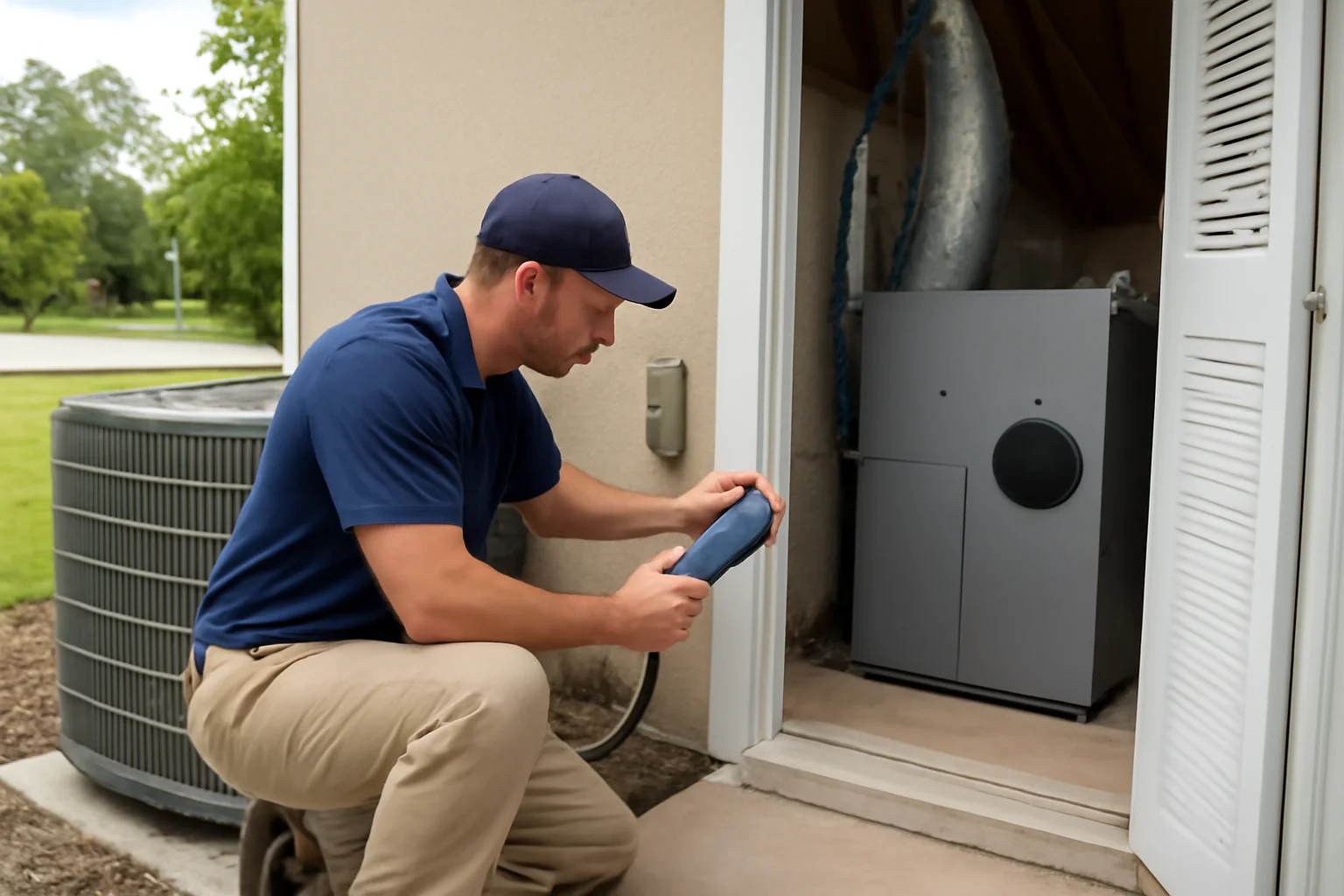
If you are exploring whole home dehumidifiers in Callaway, FL, a professional evaluation matters because the right setup depends on your home size, insulation, ductwork design, and how your existing AC or heat pump system manages airflow and condensate drainage.
Cooling performance tip: match humidity targets to real comfort, not just temperature
Temperature alone can be misleading. You can have a home that feels cool but still feels clammy. A smart approach is to focus on humidity levels that make the air feel comfortable and discourage moisture buildup.
Practical homeowner steps:
Use your thermostat settings intentionally. Try not to run extreme temperature swings. Sudden changes can cause short cycles that do not always remove moisture effectively.
Set humidity control priorities. If your thermostat or dehumidifier control uses relative humidity settings, use them to keep humidity in a comfortable range that aligns with your comfort goals.
Track patterns after storms. After heavy rain or humid coastal air events, humidity may spike faster than the HVAC can recover.
For homeowners searching for AC repair near me because the house never feels dry, it is often worth discussing humidity control as part of the troubleshooting conversation, not just the temperature.
Airflow tip: protect the paths that carry dehumidified air
Whole home dehumidification is only as effective as the airflow that distributes it. In Callaway homes, ductwork can be stressed by seasonal use, renovations, or age-related wear. When airflow is restricted, the dehumidifier can remove moisture but the home may not distribute it evenly.
Look for homeowner level indicators:
Rooms feel wetter than others. If one side of the home stays clammy, you may have duct balancing issues or register restrictions.
Weak airflow from vents. This can be caused by dirty filters, blocked returns, or duct restrictions.
Unexpected temperature differences. Humidity control can be thrown off when air distribution is inconsistent.
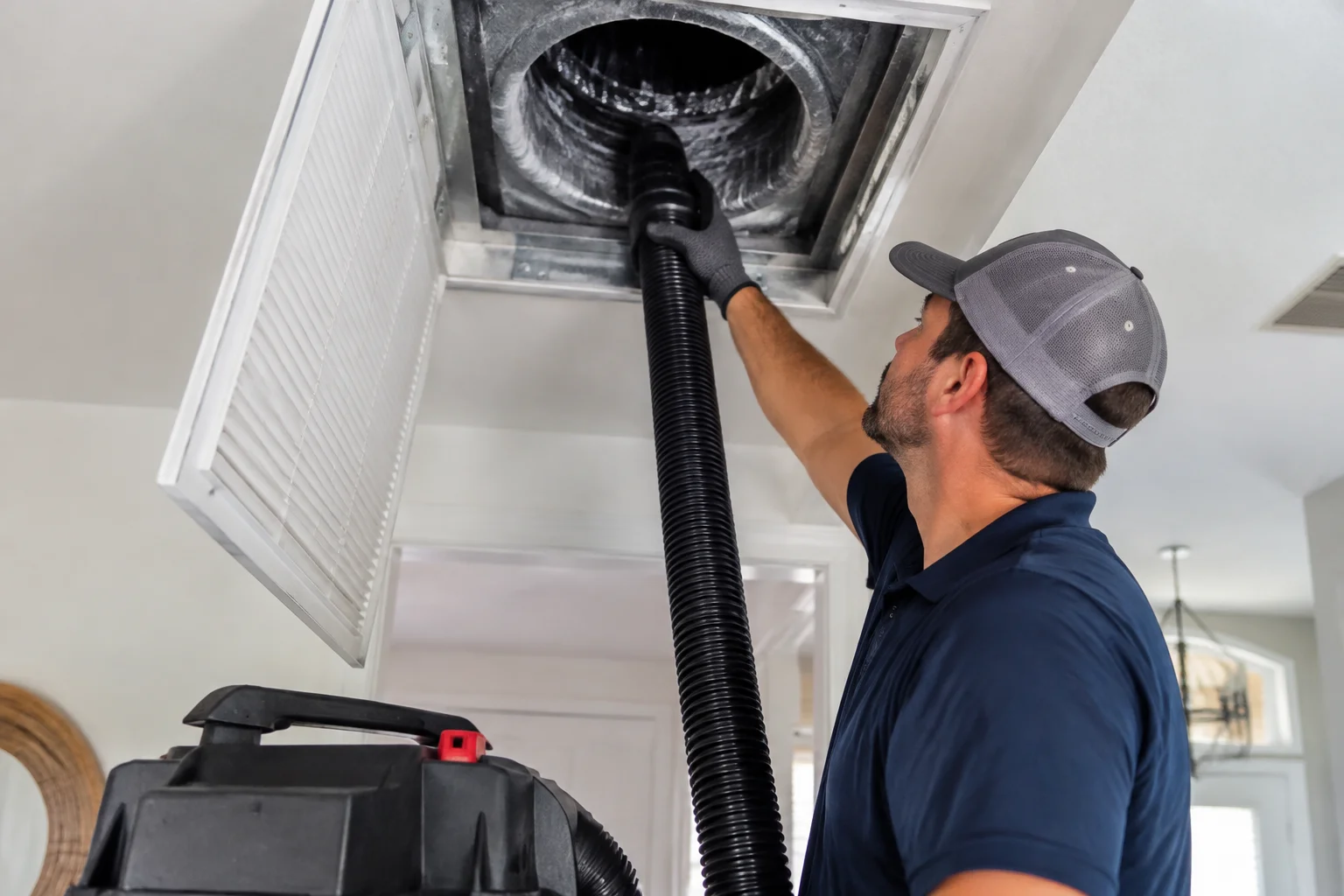
For moisture and comfort problems that overlap with airflow, duct inspection is a smart first step. If you are looking for duct inspection near me type guidance, start by asking whether your returns and supply ducts are sized and sealed correctly for your system and dehumidifier setup.
In some cases, duct repair near me conversations come up when homeowners notice persistent hot spots, musty odors, or poor circulation. Sealing leaks and addressing restrictions can support better humidity control and reduce system stress.
Condensate drainage tip: keep moisture moving safely
When humidity is controlled, your system still has to manage condensate drainage. Whole home dehumidifiers and cooling coils can produce condensate during operation. If drainage is slow, blocked, or improperly routed, moisture can back up and create indoor comfort issues.
Homeowner checks that are safe and useful:
Confirm condensate lines are unobstructed. If you notice water around the dehumidifier area, near an air handler, or in a utility space, stop and call for service.
Watch for overflow warnings. Some systems use float switches or safety controls. If you see alerts, do not ignore them.
Inspect for recurring dampness. Persistent moisture can point to drainage issues, blocked drains, or installation problems.
Because condensate drainage involves wet components and system controls, it is best handled by a licensed HVAC contractor near me who can check the full setup in person.
Thermostat and controls tip: reduce short cycling and improve consistency
Smart humidity control is not only about the dehumidifier. Thermostats and controls affect how often your HVAC runs and how it balances cooling and moisture removal.
Common control related issues homeowners notice:
Frequent on off cycling. Short cycles can prevent adequate moisture removal and can increase wear.
Conflicting settings. If thermostat humidity settings and dehumidifier settings fight each other, you may see inconsistent comfort.
Fan settings that disrupt balance. Running the fan continuously can sometimes change humidity behavior, depending on your system design and ductwork.
If you are considering whole home dehumidifiers as part of a broader comfort upgrade, ask about how your thermostat and HVAC control sequence should work with your refrigerant system and airflow strategy. A professional can help ensure the controls are configured correctly for your specific home.
Refrigerant system strain: how humidity control supports the cooling cycle
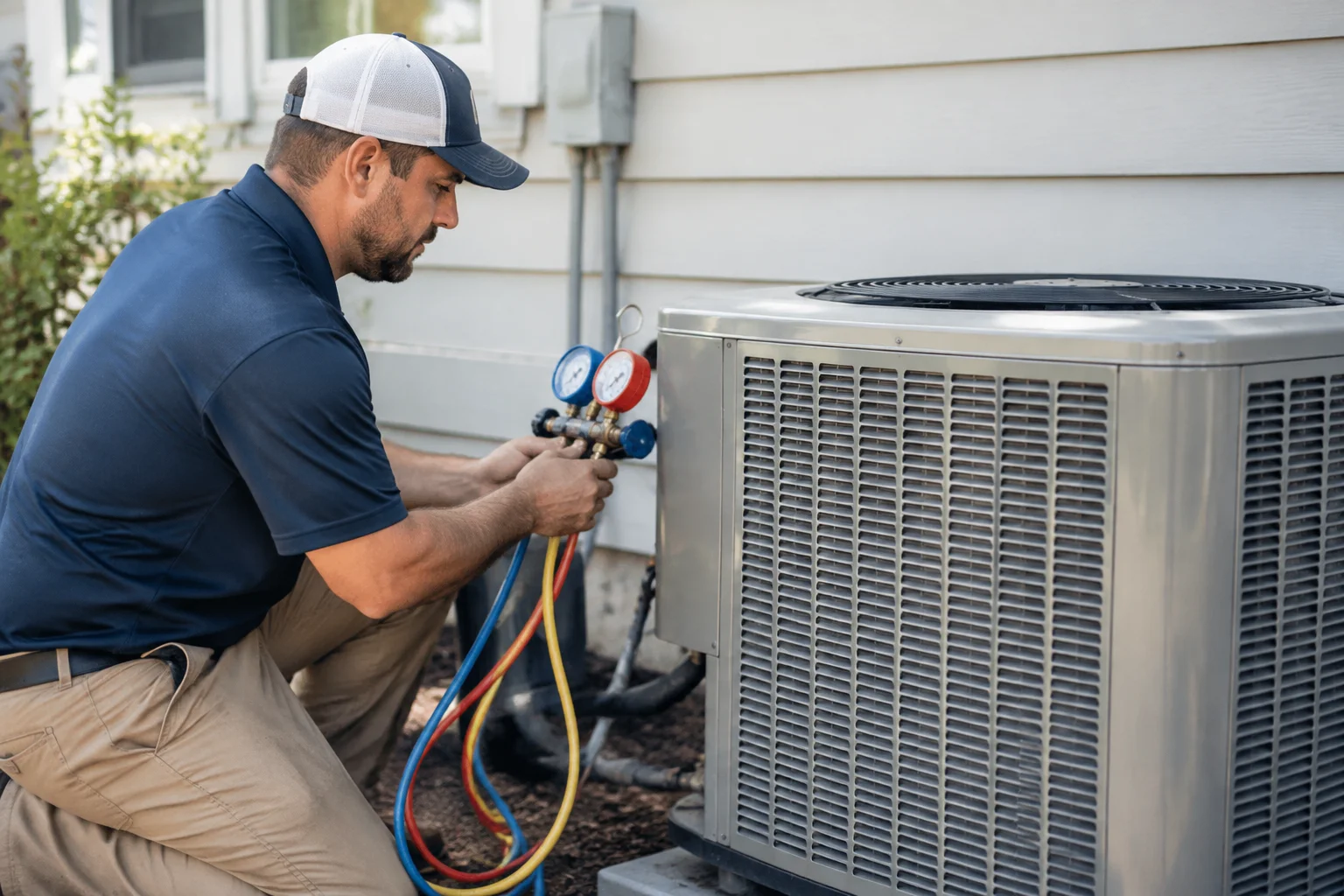
Your AC or heat pump uses a refrigerant system to move heat out of the home. When humidity is high, the system often needs to run longer to achieve the same perceived comfort. Over time, that can increase wear and make small issues more noticeable.
While homeowners should not attempt refrigerant diagnosis, there are indirect signs that moisture and airflow problems may be pushing the system harder:
Long run times without meaningful comfort improvement
Higher than usual indoor dampness despite cooling
Noticeable temperature swings as the system cycles
Whole home dehumidifiers can help reduce the moisture load, which may help your cooling equipment run more predictably. For any refrigerant system concerns, rely on an in person evaluation by a qualified HVAC technician.
Indoor air quality tip: humidity control works with filtration and ventilation
High humidity can make indoor air quality worse. It can contribute to mold growth and make dust and allergens more likely to linger. Whole home dehumidifiers support healthier air by keeping moisture from creating the conditions mold needs.
Humidity control pairs well with other indoor air quality steps:
Air filtration & purifiers. Clean filtration helps with particles, while humidity control helps with moisture related issues. If you are balancing both, review options with Air Filtration & Purifiers.
Indoor air quality testing. If you have persistent odors, allergy flare ups, or visible moisture concerns, consider Indoor Air Quality Testing to understand what is driving the problem.
For homeowners searching for residential HVAC service near me because of comfort and air quality complaints, humidity control is often a missing piece of the puzzle.
Energy use tip: steadier humidity control can reduce wasted runtime
Energy use is a real concern in Florida. When humidity is high, your cooling system can run longer than necessary, especially when airflow is restricted or condensate drainage is not performing as it should.
Smart energy related habits that support whole home dehumidification include:
Keep filters clean. Dirty filters reduce airflow and increase system effort.
Keep returns unobstructed. Furniture and storage can block airflow paths.
Close the loop after maintenance. After an AC tune up near me style service visit, ask the technician to confirm airflow and humidity control settings are performing as intended.
Whole home dehumidifiers are not a substitute for proper HVAC maintenance, but they can help reduce the humidity driven workload that makes peak summer feel even harder.
Common Callaway home issues that make dehumidifiers work harder
Whole home dehumidifiers can dramatically improve comfort, but local home conditions still matter. In Callaway, homeowners often run into these challenges:
Older ductwork or duct leaks. Leaky ducts can move conditioned air where you do not want it, reducing humidity control performance.
Seasonal HVAC stress. Systems that have to handle long cooling seasons can accumulate performance drift.
Salt air and coastal moisture exposure. This can increase the overall moisture load in the home, especially during humid stretches.
Uneven air distribution. Humidity may concentrate in certain areas if airflow is not balanced.
If you want to understand how ductwork affects seasonal performance, read Why Duct Inspection Matters More in Callaway Homes Facing Seasonal HVAC Stress.
How to prevent emergency AC repair calls with a maintenance rhythm
Preventive maintenance is where smart humidity control becomes practical. Instead of waiting for a breakdown during a heat wave, you can reduce risk with a consistent plan.
A homeowner friendly maintenance rhythm for humidity control includes:
Schedule an AC or heat pump inspection before peak summer. Ask the technician to review airflow, condensate drainage, and control settings.
Verify ductwork condition. If you suspect restrictions or leaks, request duct inspection near me type service and discuss whether duct repair near me is needed.
Review thermostat and dehumidifier settings. Make sure the control strategy supports comfort, not just temperature.
Check indoor air quality goals. If humidity control is part of your plan, pair it with filtration or testing if you have symptoms.
For homeowners who also manage commercial spaces, the same theme applies. If you want more context on humidity and equipment workload, see Keeping Commercial HVAC Systems steady in Callaway’s heat and humidity.
When it is time to call A Superior Mechanical for whole home dehumidifiers
Some humidity problems are simple and seasonal. Others point to drainage issues, airflow constraints, or control conflicts that can snowball into emergency cooling concerns. Call a licensed HVAC contractor near me when you notice:
Humidity stays high even with the AC running. Comfort never stabilizes, and the home feels sticky.
Musty odors or visible moisture. Mold and mildew risks rise quickly in humid Florida air.
Water pooling near the dehumidifier, air handler, or utility areas. This can signal condensate drainage trouble.
Uneven comfort across rooms. Some areas feel damp while others feel dry.
Short cycling or frequent system cycling. Your equipment may be struggling with load or airflow.
If you are weighing Heating Control Systems or upgrading how your home manages comfort, it is smart to coordinate humidity control with your overall heating and cooling strategy. And if the HVAC system is nearing the point where Air Conditioning Services or HVAC replacement near me conversations are on the horizon, humidity control still plays a role in how effectively the new system will feel.
For whole home dehumidifier installation and service in Callaway, homeowners can start with A Superior Mechanical’s whole home dehumidifiers page. For broader service area context, visit the Callaway service area, and for county wide coverage information, see Bay County.
Smart upgrades to consider alongside humidity control
Whole home dehumidifiers can be a major comfort improvement, but they often perform best when paired with the right HVAC support.
1) Airflow tuning and ductwork evaluation
If your home has persistent hot spots, poor circulation, or uneven humidity, ductwork may be part of the story. A professional can recommend next steps such as duct repair or balancing based on what is actually happening in your system.
2) Filtration and ventilation aligned with your goals
Humidity control helps prevent moisture related problems, while filtration helps reduce airborne particles. If you are targeting indoor air quality, consider Air Filtration & Purifiers and discuss whether additional steps make sense for your household.
3) Heat pump readiness for year round comfort
Many Bay County homes use heat pumps for heating and cooling. Humidity control can support comfort during the cooling season and help your equipment run more predictably. If you are exploring heat pump installation near me or heat pump repair near me, include humidity goals in the discussion so the system is configured for how your home actually feels.
Quick checklist for homeowners before the next humid stretch
Check that return vents are clear and registers are not blocked.
Replace or clean filters on schedule to protect airflow.
Notice any water around condensate drainage areas and address it quickly.
Review thermostat and humidity settings so comfort goals are consistent.
If humidity is still high, schedule a professional evaluation focused on airflow, ductwork, and dehumidifier performance.
Smart whole home dehumidifier management helps prevent moisture from overwhelming your cooling system. In a place like Callaway where humidity is a daily reality, that is one of the most practical ways to reduce the odds of a mid summer emergency cooling situation.
Find Whole Home Dehumidifiers in Callaway, FL
If you need Whole Home Dehumidifiers in Callaway, FL, visit our local service page or contact A Superior Mechanical today.
Map of Callaway, FL
Frequently Asked Questions
How do I know if my Callaway home needs a whole home dehumidifier instead of relying on the AC?
If your home feels sticky or clammy even when the temperature is comfortable, humidity tends to stay high, or you notice musty odors, whole home dehumidification is often worth evaluating. A technician can also check airflow and condensate drainage performance to confirm what is driving the moisture load.
Can a whole home dehumidifier help prevent mold and indoor air quality issues in Bay County?
Yes. By reducing indoor humidity, it helps remove the conditions that support mold and mildew growth. For the best results, humidity control is typically paired with clean filtration and, when needed, indoor air quality testing.
What are common causes of high humidity after a dehumidifier is installed?
Common causes include restricted airflow through ductwork, duct leaks, blocked returns, dirty filters, drainage issues, or control settings that do not match your home’s comfort goals. An in person HVAC assessment is the safest way to identify the real cause.
Is it safe for me to troubleshoot condensate drainage problems myself?
Basic visual checks are okay, but if you see water pooling, overflow warnings, or repeated dampness near the system, stop and call a licensed HVAC contractor. Condensate drainage involves wet components and safety controls, and it is best handled professionally.
Will humidity control affect energy use in my home?
It can. When humidity is managed, cooling equipment may not need to run as long to achieve comfortable indoor conditions. However, energy use depends on system airflow, ductwork condition, thermostat settings, and overall HVAC performance, so it is best evaluated for your specific home.
Related Articles
- Understanding HVAC Financing in Callaway: Homeowners Should Not Overlook These Costly Warning Signs
- Keeping Commercial HVAC Systems steady in Callaway’s heat and humidity
- How Callaway Homes Put HVAC Systems to the Test Over Time
- Why Duct Inspection Matters More in Callaway Homes Facing Seasonal HVAC Stress
Photo Gallery