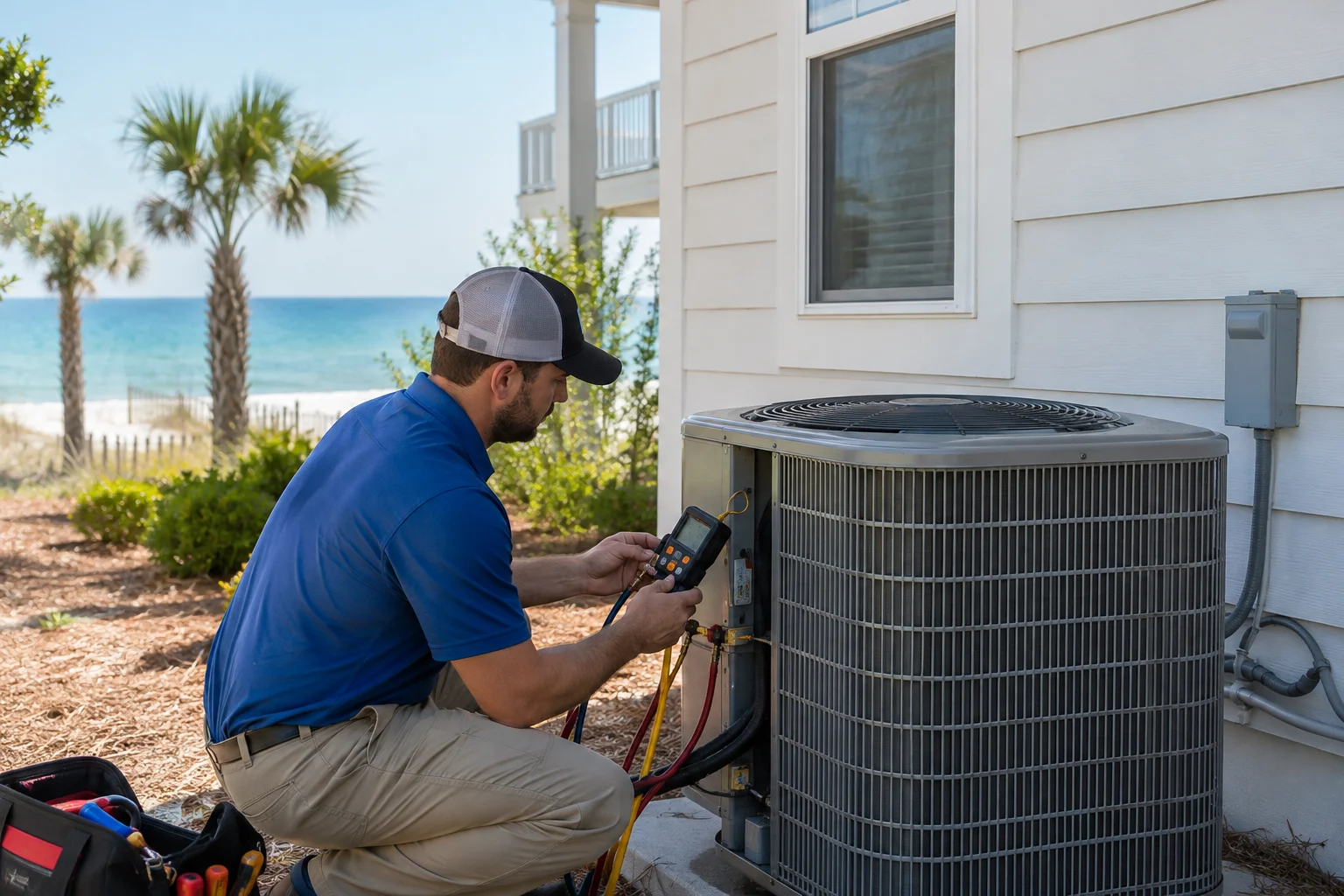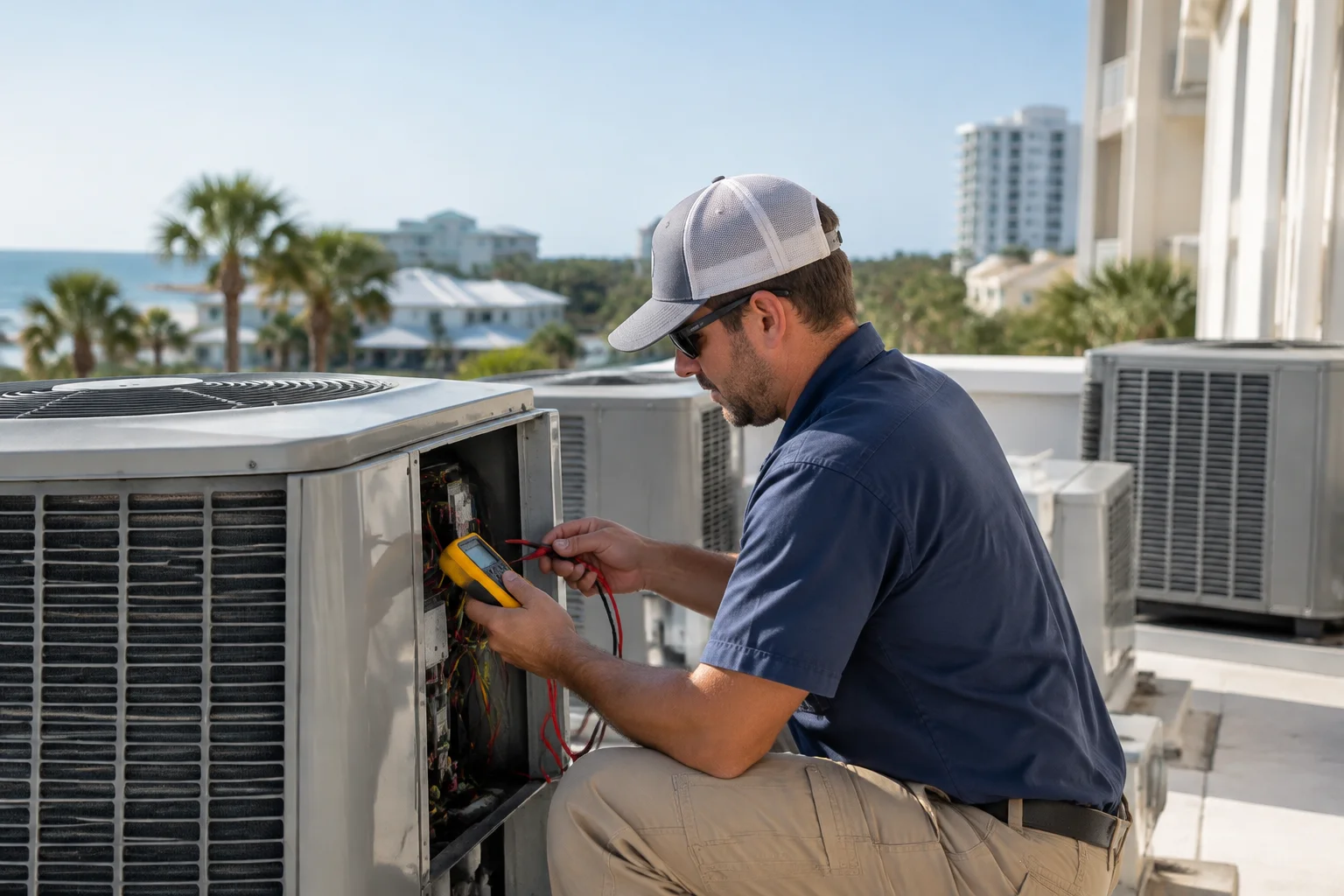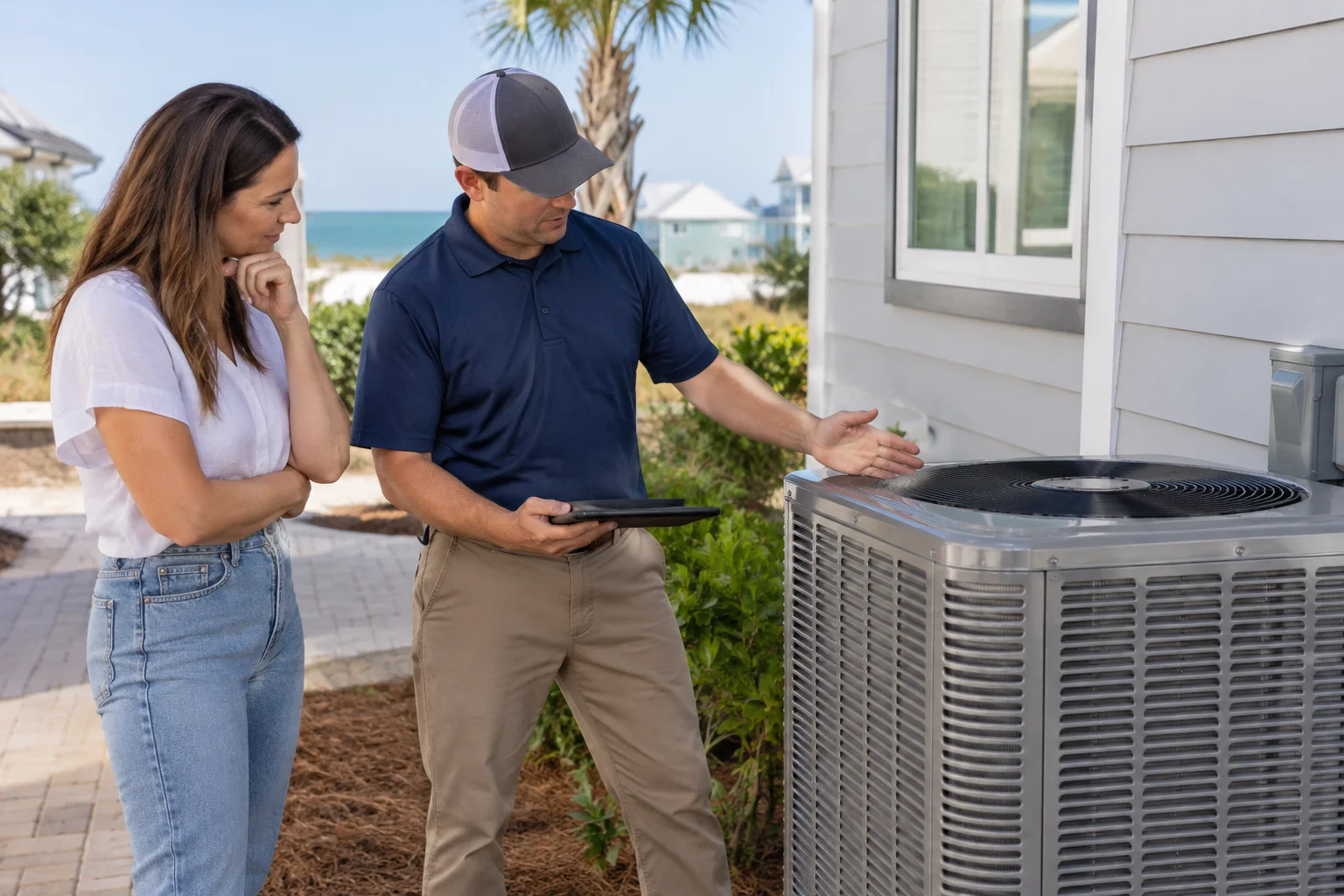
Inlet Beach, FL can be hard on HVAC systems. Gulf humidity, salt air, and long cooling seasons put steady stress on everything from ductwork to refrigerant systems. Whether your commercial building is newer or older, small warning signs can turn into comfort issues, higher energy use, and emergency cooling concerns if they are ignored.
This guide connects the dots between common HVAC warning signs homeowners notice at commercial properties and the commercial HVAC repair work that may be needed. You will also find maintenance tips that can help protect indoor comfort and indoor air quality while reducing the odds of costly downtime.
Why Inlet Beach HVACs struggle, even when they seem “fine”
Commercial HVAC service in Inlet Beach is shaped by local conditions. The area’s warm temperatures and frequent humidity mean air conditioning systems work harder for longer. In many buildings, the HVAC cycle has to manage moisture while maintaining airflow and stable temperatures. Add salt air near the coast and you can see corrosion and wear where components are exposed.
Older buildings may have legacy ductwork, aging thermostats, and condensate drainage systems that were designed for different building loads. Newer buildings can still face problems if airflow balancing, filter changes, or maintenance schedules do not match how the building actually performs. In both cases, warning signs are often clues that refrigerant systems, condensate drainage, airflow, controls, and indoor air quality are not operating as intended.
Warning signs that often point to commercial HVAC repair
Some symptoms are obvious, like warm air coming from supply vents. Others are easier to miss because they seem “minor” at first. The key is recognizing patterns and addressing them before the system is forced to run longer or harder than it should.
1) Humidity climbs indoors or feels “sticky” even with cooling running
In a coastal Florida climate, humidity is a major comfort factor. When humidity rises, you may notice condensation on windows, damp smells, or rooms that feel clammy. For commercial systems, this can be tied to airflow restrictions, filter issues, cooling performance problems within refrigerant systems, or condensate drainage problems that prevent proper moisture removal.
Because humidity control is part of normal air conditioning operation, persistent moisture issues can also affect indoor air quality. Mold and mildew risk increases when condensation is not managed correctly.
What to do: schedule commercial HVAC repair in Inlet Beach and ask the technician to review airflow and moisture removal, not just temperature.
2) Airflow changes: weak supply, strong return, or uneven comfort
Airflow problems show up as hot and cold zones, drafty areas, or rooms that never reach setpoints. Ductwork condition matters. Over time, ductwork can develop leaks, become obstructed, or lose proper airflow distribution. Even if the equipment is cooling, poor airflow can make the system cycle inefficiently.
For homeowners managing or overseeing a commercial property, uneven airflow can also lead to higher energy use because the system runs longer to compensate.
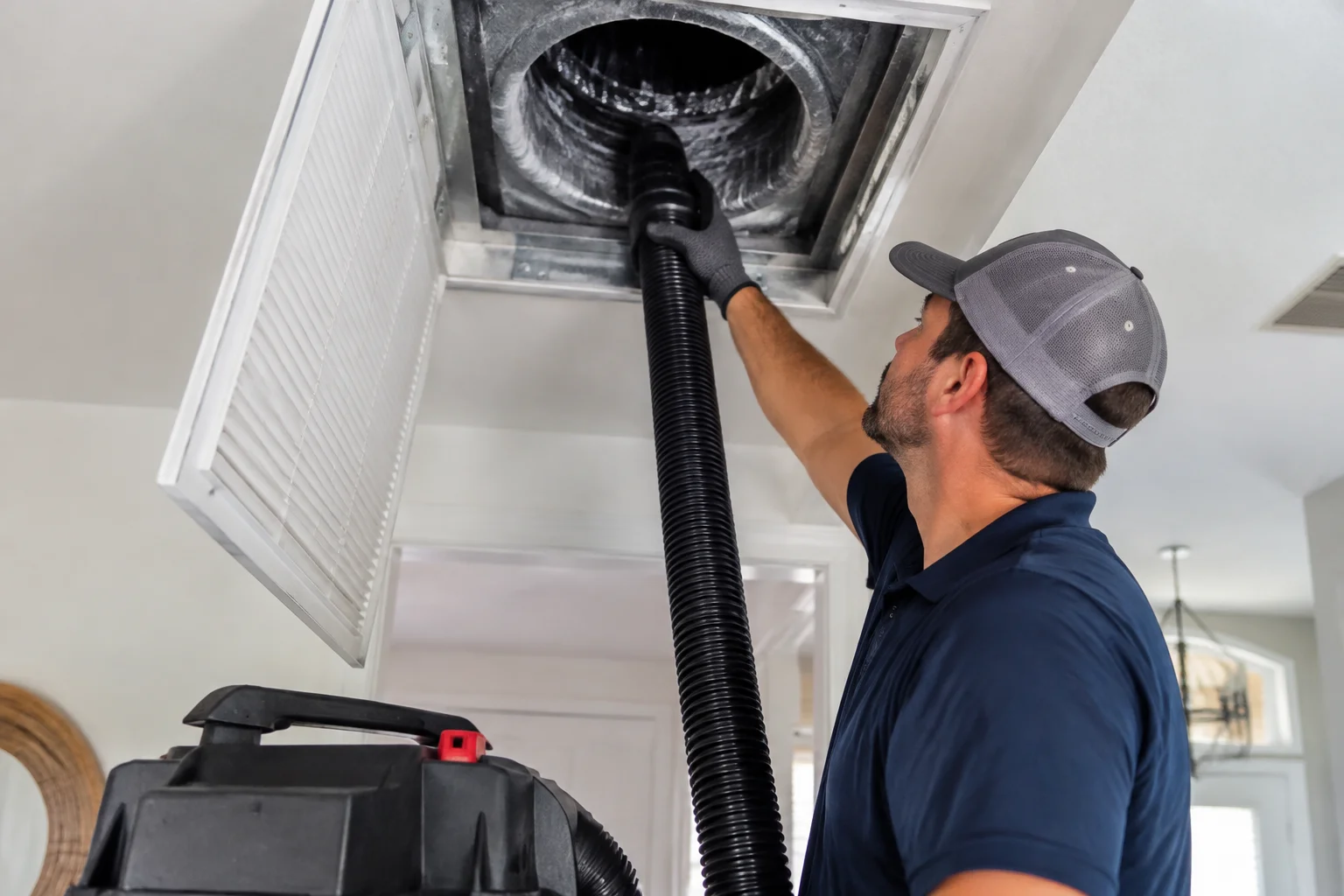
What to do: consider a duct inspection to look for airflow restrictions and duct leakage patterns.
3) Strange noises or vibration that begins after a maintenance gap
New or worsening noises can indicate failing bearings, loose components, airflow turbulence, or issues tied to moving parts. In humid coastal conditions, corrosion can also affect fan and coil components, causing vibration or abnormal sounds.
If you hear rattling, grinding, or persistent scraping, treat it as a maintenance priority. A noise that seems “tolerable” can worsen quickly when the system is under load.
What to do: arrange HVAC repair before the noise becomes a breakdown that interrupts business operations.
4) Thermostat behavior seems off: short cycling, wrong temperature, or display errors
Thermostats are the control center for comfort. In commercial settings, thermostats may be connected to zoning, schedules, or building automation. Warning signs include frequent short cycling, delays in response, or setpoints that do not match actual room temperatures.
Sometimes the thermostat itself is the issue. Other times, the problem is the system’s ability to maintain stable operating conditions due to airflow, refrigerant performance, or condensate drainage.
What to do: ask for a professional review of the heating control and cooling control behavior. If you need thermostat work, search for thermostat installation near me or related control services, but confirm the root cause with an on-site HVAC evaluation.
If your building includes advanced controls, it can help to review heating control systems concepts even when the concern is cooling. Control logic and sensor inputs affect both.
5) Refrigerant-related symptoms: icing on coils or repeated performance drops
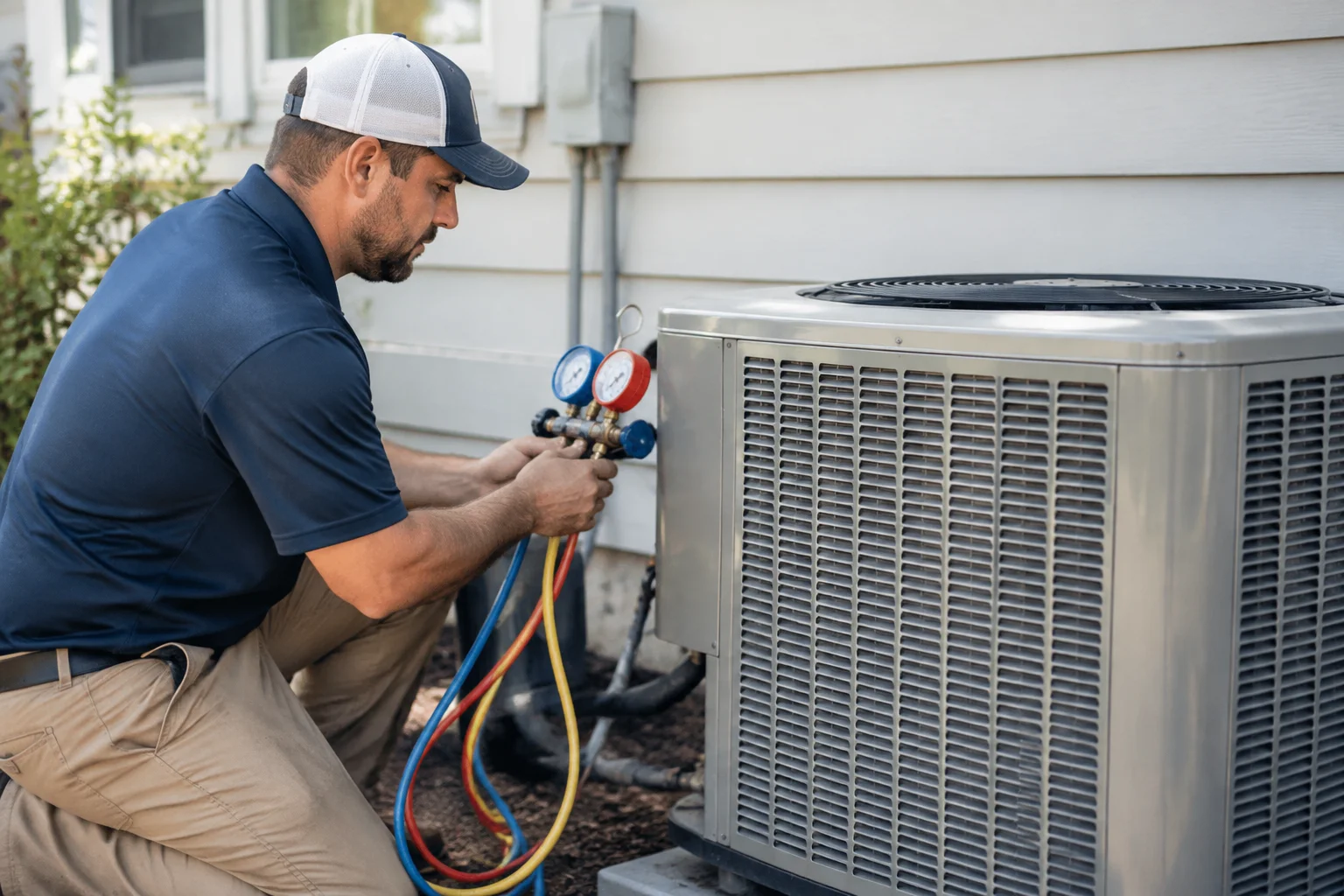
Some warning signs can be associated with refrigerant system performance. For example, you might notice ice forming on coils or the equipment struggling to cool consistently. Refrigerant systems are designed to operate within specific parameters, and improper performance can cause damage beyond comfort issues.
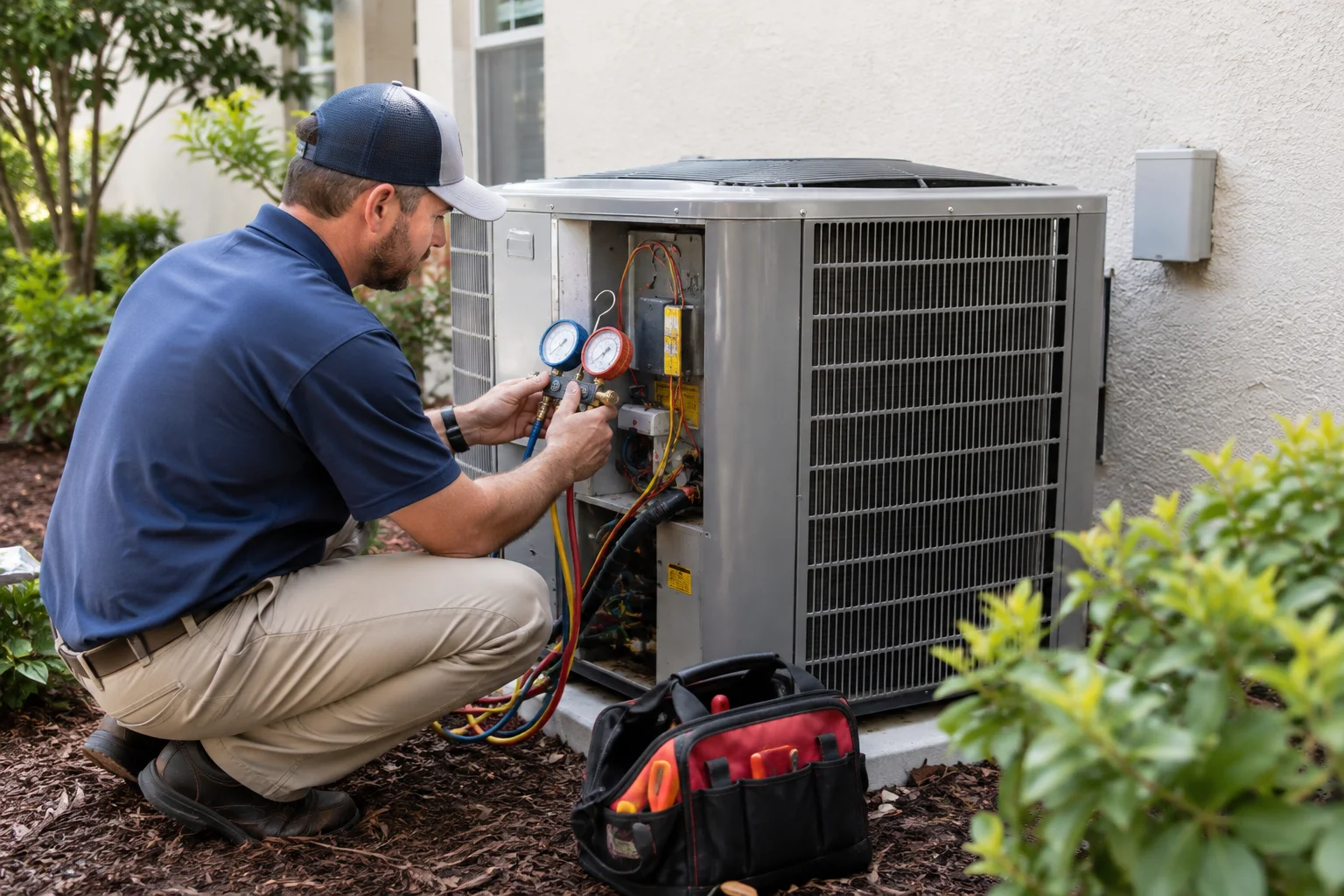
Homeowners should not attempt refrigerant adjustments. An accurate diagnosis requires professional tools and an in-person inspection. A technician should evaluate airflow, coil conditions, and system operation before making any conclusions.
What to do: schedule commercial HVAC repair and let the technician evaluate whether refrigerant system performance is part of the issue.
6) Condensate drainage problems: water pooling, clogged lines, or odors
In humid climates, condensate drainage is critical. When drainage is restricted or the condensate line is blocked, water can overflow, leak into nearby areas, or contribute to musty odors. Even if the AC seems to cool, a condensate drainage issue can create larger problems.
What to do: look for signs of water near the indoor unit, wet insulation, or recurring dampness. Have a professional inspect condensate drainage as part of the repair process.
7) Indoor air quality complaints: dust, odors, headaches, or allergy flare-ups
Commercial HVAC systems affect indoor air quality through filtration, ventilation, humidity control, and air distribution. Warning signs include increased dust on surfaces, persistent odors, or occupants complaining of symptoms that correlate with HVAC operation.
Sometimes the issue is a filter change schedule that is not realistic for the building’s actual conditions. Other times it is airflow imbalance, ductwork leakage, or moisture problems that allow contaminants to build up.
What to do: consider targeted support through indoor air quality services and pair it with HVAC maintenance.
Older vs. newer buildings: the warning signs can look similar, but causes differ
It is common to see homeowners or property managers assume that newer buildings will not have HVAC problems. In reality, warning signs can appear in both older and newer properties, but the drivers may be different.
Older commercial buildings
Older buildings may have ductwork with leaks, aging components, or condensate drainage that does not handle today’s humidity loads as well. Thermostats and control wiring may also be outdated. You might notice comfort issues that come and go, especially during peak humidity.
For older systems, preventive HVAC maintenance often includes verifying airflow, checking condensate drainage, and confirming that filters and ventilation settings match real operating conditions.
Newer commercial buildings
Newer buildings can still struggle if maintenance routines are inconsistent or if the system was not balanced to the building’s final occupancy patterns. A building that changed use, added equipment, or increased occupancy can develop airflow and indoor air quality issues even when the equipment is relatively new.
Thermostat schedules, zoning behavior, and air distribution can also create warning signs that look like equipment failure but are actually control or airflow related.
Maintenance tips that help prevent HVAC warning signs from becoming emergencies
Commercial HVAC repair is often the result of a pattern. Maintenance can help interrupt that pattern by keeping airflow, humidity control, and controls operating correctly. Below are practical steps homeowners and property managers can use between professional visits.
Keep filters and airflow in mind, not just temperature
In Inlet Beach’s heat and humidity, restricted airflow can make the system run longer and harder. Replace filters on a schedule that fits your building and dust conditions. If you are unsure, ask your HVAC company for filter guidance based on your system and indoor air quality needs.
Also watch for airflow changes. If vents feel weaker or return air seems unusually strong, do not assume it is “normal.” It can be an early warning sign.
Protect condensate drainage and watch for moisture
Condensate drainage should move moisture away properly. During humid periods, keep an eye on drain pans, condensate lines, and areas where moisture could collect. If you notice water pooling, damp odors, or recurring wet spots, address it promptly because moisture can affect indoor air quality and building materials.
Use thermostats and schedules thoughtfully
Setpoint schedules that do not match occupancy can cause unnecessary cycling. Short cycling can stress equipment and increase energy use. If you have zoning, confirm that the system is behaving as expected when different areas are occupied.
If you are considering HVAC maintenance near me services, choose a provider that reviews controls and operating behavior, not just cleaning.
Plan for salt air exposure and corrosion-prone areas
Salt air can contribute to corrosion on outdoor components. That does not mean every issue is salt-related, but it does mean coastal buildings benefit from consistent inspection. Ask a technician to check for signs of corrosion and component wear during routine maintenance.
Address indoor air quality with a matching HVAC plan
Indoor air quality services are most effective when paired with HVAC health. If occupants report odors, dust, or irritation, review filtration, airflow, and humidity control together. For homeowners searching for indoor air quality services near me, look for a provider that can connect indoor air quality goals to the HVAC system’s actual performance.
How to spot a “small issue” that is actually a bigger repair need
Some problems start quietly. A minor temperature mismatch, a slight musty smell, or a brief drop in airflow may look harmless. In humid Florida conditions, these small issues can combine. For example, reduced airflow can worsen humidity control, and poor moisture management can contribute to indoor air quality complaints.
When a warning sign repeats, pay attention to the pattern. Does it happen only during peak afternoons? Does it appear after heavy occupancy days? Does it show up after filters are overdue? These details help a technician narrow down what to inspect first.
If you are comparing how commercial repair needs evolve across the region, these reads can help: Why Commercial HVAC Repair Matters to Home Comfort in Miramar Beach and Commercial HVAC Repair in Fort Walton Beach: What Property Owners Should Pay Attention To Before Small Problems Grow.
Energy use and comfort: why warning signs often show up in utility bills
HVAC systems can waste energy when they cannot maintain airflow, control humidity, or operate efficiently with stable refrigerant system performance. In a cooling-heavy climate, inefficiencies add up. Homeowners and property managers may notice higher utility use even when thermostat settings have not changed.
Do not treat energy increases as a mystery. Warning signs like weak airflow, persistent humidity, or repeated cycling often tie directly to repair needs. A professional air conditioning inspection can help connect comfort symptoms to system operation.
If you are actively comparing options and want to keep your building running efficiently, look for air conditioning inspection near me style services that include diagnostics, not guesswork.
Emergency cooling concerns: what to do when the system fails during peak heat
Inlet Beach summers can bring long stretches of high heat and high humidity. When a commercial HVAC system fails during business hours, comfort and operations can be at risk. Emergency cooling concerns are not only about comfort. They can also affect product handling, equipment environments, and occupant health.
If you are searching for emergency AC repair near me, prioritize a contractor that can provide fast, professional diagnostics and repair planning. Even when repairs are urgent, the technician should still evaluate airflow, condensate drainage, thermostat behavior, and system operation rather than making assumptions.
For more context on how weather patterns affect repair needs, see How Local Weather Affects Commercial HVAC Repair in Destin, FL and How Better Commercial HVAC Repair Helps Seagrove Beach Homes Stay Protected.
When system replacement comes up, it should be based on an in-person evaluation
Homeowners sometimes ask whether they should pursue HVAC replacement near me after a warning sign appears. Replacement can be appropriate in some cases, but it should be based on a full evaluation of system condition, performance, and repair history.
A professional technician should inspect the system on site, review operating behavior, and explain what is driving the problem. Without that, it is easy to misread symptoms and replace equipment that could have been repaired or optimized.
If you want to explore the broader service options in Walton County, you can also review commercial HVAC repair resources for Walton County and the local coverage area on the Inlet Beach service page.
Choosing the right local HVAC company for commercial repair
Commercial HVAC service near Inlet Beach is not one-size-fits-all. The right HVAC company should understand how coastal Florida climate impacts cooling performance, humidity control, condensate drainage, airflow, and indoor air quality.
When you call, ask about the repair process and how they approach diagnostics. A strong provider will connect symptoms to system operation and explain what they are checking. That is especially important for refrigerant systems, condensate drainage, and airflow issues, where accurate diagnosis requires proper tools and on-site inspection.
For commercial properties in Inlet Beach, you can start with A Superior Mechanical’s commercial HVAC repair page to understand how local service supports comfort and reliability.
Preventive HVAC maintenance checklist you can use between visits
Use this checklist to stay ahead of common warning signs. It is not a substitute for professional service, but it helps you notice issues early.
Replace filters on schedule and confirm airflow feels normal at supply vents.
Watch for humidity changes such as condensation, musty odors, or sticky indoor air.
Inspect visible condensate drainage areas for signs of water pooling or recurring dampness.
Confirm thermostat schedules match occupancy and that temperature control is stable.
Note any unusual noises, vibration, or airflow changes and record when they occur.
Schedule indoor air quality testing if complaints persist, especially during humid stretches.
For many buildings, a proactive approach to preventive HVAC maintenance near Inlet Beach helps reduce emergency cooling concerns and keeps energy use more predictable.
Find Commercial HVAC Repair in Inlet Beach, FL
If you need Commercial HVAC Repair in Inlet Beach, FL, visit our local service page or contact A Superior Mechanical today.
Map of Inlet Beach, FL
Frequently Asked Questions
What are the most common HVAC warning signs in Inlet Beach commercial buildings?
The most common warning signs include rising indoor humidity, uneven airflow or hot and cold zones, musty odors, thermostat behavior that does not match room temperatures, and repeat cycling. In humid coastal weather, condensate drainage issues can also show up quickly.
Can ductwork problems cause both comfort issues and indoor air quality complaints?
Yes. Leaks, restrictions, or airflow imbalance can reduce ventilation effectiveness and disrupt humidity control. That can contribute to dust buildup and odors, which is why a duct inspection is often part of the solution.
Why does my commercial AC run longer when the humidity is high?
High humidity increases the load on air conditioning. If airflow is restricted, condensate drainage is not working properly, or cooling performance is off, the system may run longer to reach temperature and moisture targets. An on-site commercial HVAC repair inspection is the safest way to pinpoint the cause.
Should I try to adjust refrigerant or diagnose a refrigerant issue myself?
No. Refrigerant systems require proper testing and safe handling. Homeowners should not attempt refrigerant diagnosis or adjustments. A professional should evaluate airflow, coil conditions, and system operation before making any conclusions.
When is emergency AC repair needed for a commercial property?
Emergency cooling concerns are typically when the system stops cooling, fails to maintain safe comfort levels during peak heat, or shows signs of rapid failure that affect occupants. If you are dealing with a breakdown during business hours, contact a local provider for fast diagnostics and repair planning.
Related Articles
- Why Commercial HVAC Repair Matters to Home Comfort in Miramar Beach
- Commercial HVAC Repair in Fort Walton Beach: What Property Owners Should Pay Attention To Before Small Problems Grow
- How Local Weather Affects Commercial HVAC Repair in Destin, FL
- How Better Commercial HVAC Repair Helps Seagrove Beach Homes Stay Protected
Photo Gallery