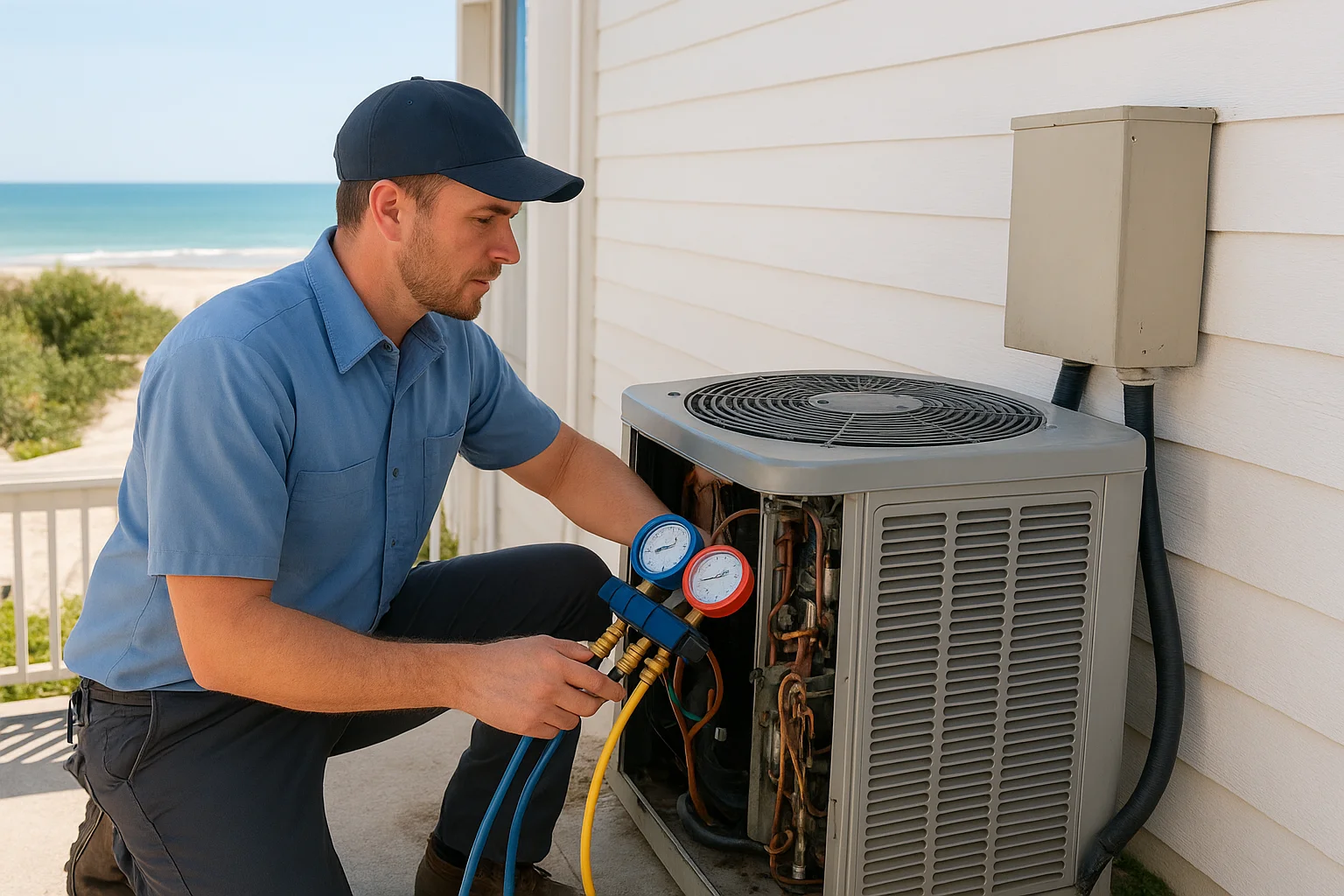
Building a new home in Santa Rosa Beach, FL is exciting, but coastal conditions can put pressure on HVAC systems from day one. Florida heat, humidity, and salt air stress refrigerant systems, condensate drainage, ductwork, and even airflow balance. When something is off, the first clues are often not dramatic breakdowns. They are warning signs that show up as weak airflow, inconsistent temperatures, unusual humidity levels, or repeated thermostat complaints.
This guide covers HVAC warning signs connected to new construction HVAC for homes in Santa Rosa Beach, FL, and how homeowners can improve airflow and reliability. It also explains why professional local service matters for residential HVAC service near me searches, AC repair near me needs, and preventive HVAC maintenance before the hottest weeks arrive.
Why new construction HVAC can struggle in Santa Rosa Beach
Even when a system is brand new, the installation details determine how it performs. In Santa Rosa Beach, the environment is a big variable. Summers bring heavy humidity, intense sun load, and fast temperature swings. Coastal air can also introduce more corrosive elements than inland areas, which makes good material choices and careful installation important.
New construction also means the HVAC system must work with the building envelope. If insulation, air sealing, or duct routing is not aligned with the design, the system may run longer, struggle to maintain comfort, and create indoor air quality problems.
These factors can affect:
- Airflow through supply and return ducts
- Refrigerant system performance under real operating conditions
- Condensate drainage from the indoor coil
- Thermostat control and sensor placement
- Energy use and system cycling behavior
Warning signs that point to airflow problems
Airflow is the foundation of both cooling and heating performance. When airflow is restricted or unbalanced, comfort suffers and the system can wear out faster. Homeowners often notice these issues first.
1) Rooms are uneven: hot upstairs, cool downstairs, or “cold pockets”
New homes can have complex layouts, but large temperature differences between rooms can signal ductwork airflow imbalance, poor register sizing, or supply and return locations that do not match the airflow design. If one area feels consistently warmer or cooler, it is a strong indicator that the system is not distributing conditioned air as intended.
2) Weak airflow from vents even when the system runs
Weak airflow may come from duct restriction, improper duct sizing, poorly connected duct joints, or restrictions at the air handler. Filters installed during construction can also be overlooked. If a filter is clogged with construction dust, airflow drops quickly, and the system may respond by running longer without achieving comfort.
3) The system cycles on and off more frequently than expected
Short cycling can be linked to airflow issues, thermostat placement, or control settings. It can also be connected to humidity control and coil performance. Homeowners may hear frequent starts, notice temperature swings, or see the system “chasing” the setpoint.
4) Air feels humid or “stuffy” during cooling
In coastal Florida, indoor humidity matters. If the indoor coil does not remove moisture efficiently, the home can feel sticky even when the thermostat shows the temperature is near target. Airflow that is too high or too low can impact coil performance and how well condensate drainage operates.
Humidity and condensate drainage red flags
In Santa Rosa Beach, humidity is not a minor inconvenience. It is a comfort and indoor air quality factor. New construction HVAC systems must manage moisture through proper coil operation and reliable condensate drainage.
5) Water stains, damp drywall, or musty odors near the air handler
Condensate drainage problems can develop quickly if the drain line is trapped incorrectly, pitched incorrectly, or exposed to conditions that interrupt flow. Even a small drainage issue can lead to moisture accumulation, which can worsen indoor air quality and damage building materials.
6) The system removes “some” humidity but not enough for real comfort
Sometimes there is no obvious leak, but the home still feels too damp. That can indicate airflow imbalance across the coil, an indoor coil that is not performing as expected, or ductwork conditions that reduce dehumidification effectiveness.
7) Condensate line seems to back up during heavy humidity days
During peak humidity, condensate drainage must keep up. If it does not, you might notice slow draining, intermittent moisture, or odors that return after the system runs.
Refrigerant system and cooling performance warning signs
It is tempting for homeowners to assume a brand new system should “just work.” Yet refrigerant systems are sensitive to installation quality and operating conditions. Refrigerant issues should be evaluated in person, because diagnosing refrigerant problems requires testing and safe procedures.
8) The air is not as cold as expected, even after the system has run
Weak cooling performance can come from airflow problems, control issues, or refrigerant system performance concerns. Because multiple causes can look similar, an air conditioning inspection near me should include a full comfort and airflow evaluation, not just surface checks.
9) Ice or frosting on the indoor coil or refrigerant lines
Frosting can be caused by restricted airflow, incorrect airflow across the coil, or other system conditions. It is a warning sign that should be addressed promptly. Continued operation when frosting occurs can lead to compounding problems.
10) Unusual noises during cooling cycles
Some sound is normal, but repeated rattling, hissing, or vibrating noises can indicate airflow restriction, improper mounting, or refrigerant system concerns. Salt air and coastal humidity can also accelerate corrosion where components are exposed. A licensed HVAC contractor near me can help assess whether the noise is normal operation or a symptom of a problem.
Thermostat and control issues that show up early
New construction thermostats are often installed during the final stages of work. If they are placed in a spot exposed to direct sunlight, near drafts, or behind doors that do not open normally, readings can be inaccurate. Control problems can create comfort complaints that look like equipment failure.
11) Temperature setpoint changes do not match the real comfort level
If the thermostat says the home should be cooling, but comfort does not improve, it may be receiving incorrect readings or controlling the system in a way that does not match the home’s airflow and humidity needs.
12) Short bursts of cooling or heating that do not stabilize
Short cycling can be related to airflow, thermostat settings, sensor placement, or commissioning issues. A professional review of thermostat installation and system operation can prevent the system from running inefficiently.
If you are considering thermostat installation near me help, choose a contractor that understands how control settings interact with ductwork airflow and humidity needs in Florida homes.
Ductwork and air sealing problems that affect reliability
Ductwork is often where new construction systems gain or lose performance. Even with a properly sized unit, poor duct design or installation can reduce airflow, increase energy use, and create indoor air quality issues by pulling in dust or moisture from unconditioned spaces.
13) Ducts sweating, condensation on duct surfaces, or visible moisture
Condensation on duct surfaces can be a sign of temperature differences, airflow issues, or insulation problems. In humid coastal conditions, duct insulation and air sealing quality matter.
14) Construction dust lingering in the air or coming from vents
New builds often create dust that can settle in ductwork. If ducts are not properly cleaned after construction, homeowners may notice ongoing dust circulation. Some homeowners search for duct cleaning near me, but cleaning should be paired with an airflow and filtration plan so the dust does not return.
15) Registers do not feel balanced or airflow “blasts” in one area
A duct inspection near me can help confirm that dampers, supply and return paths, and register placements align with the design intent. This is especially relevant for homes with long duct runs, multiple floors, or bonus rooms.
Energy use and “system stress” warning signs
When HVAC systems run longer than they should, they are not only costing more in energy use. They are also experiencing additional wear on motors, compressors, and indoor components. In Florida heat, that stress shows up quickly.
16) The system runs continuously during mild weather
Continuous operation can indicate airflow restriction, humidity control imbalance, or building envelope issues. It can also be a sign that the system is not properly commissioned.
17) Higher-than-expected utility bills after move-in
Utility bills are not diagnostic by themselves, but they can support a comfort complaint. If the home feels humid or uneven, energy use often rises because the system is working harder to compensate.
Emergency cooling concerns to take seriously
Coastal Florida heat can become a safety issue when cooling fails. Even in new construction, homeowners should know the difference between a minor comfort problem and an emergency cooling concern.
When cooling is not working at all
If the AC or heat pump will not cool the home during hot, humid weather, do not wait. A professional air conditioning service response is important because indoor temperatures can climb quickly.
When you notice active water problems
If there is water pooling near the air handler, damp carpeting, or repeated condensate overflow, treat it as a priority. Moisture can affect indoor air quality and building materials.
Common causes behind new construction HVAC warning signs
Homeowners often ask why a brand new system would show symptoms so soon. The most common causes in new construction typically relate to installation details and commissioning.
- Airflow imbalance due to duct sizing, register placement, or improper connections
- Construction dust affecting filters and airflow paths
- Condensate drainage issues from incorrect drain line pitch or blockage
- Thermostat sensor location and control settings that do not match the home’s layout
- Incomplete commissioning or missed performance checks after installation
- Refrigerant system performance concerns that require safe, in-person evaluation
Because several issues can create similar symptoms, it is important not to rely on guesswork. A professional residential HVAC service near me typically starts with comfort and airflow assessment, then checks for moisture and operational concerns.
How to improve airflow and reliability in a new Santa Rosa Beach home
Improving performance is usually about correcting the root cause, not just adjusting the thermostat. Here are practical steps homeowners can take while also knowing what requires a licensed HVAC contractor.
Start with basic checks you can do safely
- Replace or confirm the correct air filter type and size after construction dust has settled.
- Make sure supply vents and returns are not blocked by furniture, rugs, or storage.
- Confirm thermostat placement is not in direct sun or near drafts.
Request an airflow-focused inspection
When homeowners search for new construction HVAC in Santa Rosa Beach, FL, a good next step is an inspection that includes ductwork airflow verification and airflow distribution checks. A duct inspection near me should look at supply and return pathways, register balance, and any signs of duct leakage or insulation issues.
Address humidity and condensate drainage reliability
If humidity feels high, or if there are any moisture concerns, a professional should evaluate condensate drainage operation and coil conditions. Whole home comfort in Florida depends on moisture control as much as temperature.
In homes where humidity control is a persistent challenge, some homeowners also consider whole home dehumidifiers as part of an overall indoor air quality strategy. A proper assessment is important because ductwork airflow and system operation can influence how much dehumidification you need.
Use preventive HVAC maintenance to catch issues early
New systems still benefit from preventive HVAC maintenance. Scheduling maintenance can help verify airflow, check condensate drainage, review thermostat operation, and ensure the system is running efficiently through Florida’s long cooling season. If you are searching for why better HVAC maintenance makes new AC installations work better, you are asking the right question.
Consider heating control upgrades if your home uses a heat pump
Santa Rosa Beach winters are mild compared to much of the country, but heating needs still matter. If your home has a heat pump, control strategy affects comfort and efficiency. For homeowners exploring heating control systems, a technician can help ensure controls support reliable operation.
Why professional local HVAC service matters for new installs
When something feels off in a new build, it is not always a simple repair. It may be a commissioning gap, a ductwork airflow mismatch, or condensate drainage that needs correction. A local team that understands Walton County homes, coastal humidity patterns, and typical installation challenges can evaluate the system in a way that protects both comfort and reliability.
A Superior Mechanical focuses on expert new construction HVAC design and installation for coastal homes, commercial buildings, and large scale developments. That matters because the best outcomes come from correct design, careful installation, and performance checks that align with how your home actually behaves in Santa Rosa Beach conditions.
For homeowners who need ongoing support, pairing new construction HVAC with preventive maintenance also reduces the chances of mid-summer surprises. If you are searching for HVAC service near me or air conditioning replacement because of repeated failures, the earlier you address airflow and humidity warning signs, the more options you often have.
If you manage multiple properties or are planning for long-term performance, you may also find value in better HVAC decisions for property managers and homeowners in Santa Rosa Beach and a homeowner’s guide to property management HVAC services in Santa Rosa Beach.
About refrigerant, repairs, and replacement decisions
Refrigerant system performance can be affected by installation and operating conditions, but diagnosing refrigerant issues requires safe testing and an in-person evaluation. Homeowners should avoid assuming what the refrigerant problem is based on symptoms alone.
Similarly, system replacement is not something to decide from a few comfort complaints. A professional evaluation should determine whether the issue is airflow, humidity control, ductwork, condensate drainage, thermostat control, or a refrigerant system concern. That is the difference between solving the real cause and chasing symptoms.
If you are dealing with heat pump repair near me needs or AC repair near me concerns, choose a licensed HVAC contractor near me who can explain the findings clearly and recommend the next step based on on-site testing.
Preventive maintenance habits that protect indoor air quality
Preventive HVAC maintenance supports comfort, energy use, and indoor air quality. In a new home, it also helps clear out construction dust and keeps airflow consistent as the home settles.
- Plan routine filter changes and verify filter compatibility with your system.
- Check that returns are not blocked so the system can pull air through the filter and coil.
- Watch for moisture signs around the air handler and follow up quickly if you see dampness.
- Keep thermostat settings realistic for your home’s layout and occupancy habits.
- Schedule seasonal service that includes airflow verification and condensate drainage checks.
For homeowners who want a deeper look at commissioning and performance, the post Keeping New Construction HVAC on Track in Santa Rosa Beach Homes offers a practical way to think about early performance checks.
What to do if you see multiple warning signs
If you notice weak airflow, humidity that feels too high, and uneven rooms, treat it as a system performance issue rather than isolated complaints. The most reliable path is a professional evaluation that connects airflow, ductwork, condensate drainage, thermostat control, and cooling performance.
For Santa Rosa Beach homeowners, starting with a new construction HVAC specialist can prevent small problems from becoming emergency cooling concerns later in the season. You can review the service focus at /service-areas/walton-county/santa-rosa-beach/new-construction-hvac, and learn more about the local service area at /service-areas/walton-county.
Find New Construction HVAC in Santa Rosa Beach, FL
If you need New Construction HVAC in Santa Rosa Beach, FL, visit our local service page or contact A Superior Mechanical today.
Map of Santa Rosa Beach, FL
Frequently Asked Questions
How can a brand new HVAC system have airflow problems in a new construction home?
Even new systems can struggle if ductwork was installed with restrictions, if supply and return airflow is unbalanced, or if filters and airflow paths are still affected by construction dust. Thermostat placement and control settings can also contribute to uneven comfort.
What humidity warning signs should Santa Rosa Beach homeowners watch for?
Look for a home that feels sticky despite cooling, musty odors near the air handler, damp drywall, or water staining that suggests condensate drainage issues. Coastal humidity makes moisture control a key part of indoor air quality.
Should I try to diagnose refrigerant issues myself if cooling feels weak?
No. Refrigerant system diagnosis requires safe, in-person testing. Weak cooling can also be caused by airflow, ductwork, thermostat control, or condensate drainage problems, so a professional evaluation is the right first step.
When is it reasonable to request a duct inspection in a new home?
If rooms are consistently uneven, vents have weak airflow, or you notice condensation or dust returning through registers, a duct inspection can help confirm ductwork routing, insulation, connections, and airflow balance.
How does preventive HVAC maintenance help a new installation last longer in Florida’s heat?
Preventive maintenance supports airflow consistency, helps verify condensate drainage, and checks system operation through the cooling season. That reduces the chance of small issues becoming larger comfort or reliability problems.
Related Articles
- Keeping New Construction HVAC on Track in Santa Rosa Beach Homes
- Why Better HVAC Maintenance Makes New AC Installations Work Better in Santa Rosa Beach
- Better HVAC Decisions for Property Managers and Homeowners in Santa Rosa Beach
- A Homeowner’s Guide to Property Management HVAC Services in Santa Rosa Beach
Photo Gallery