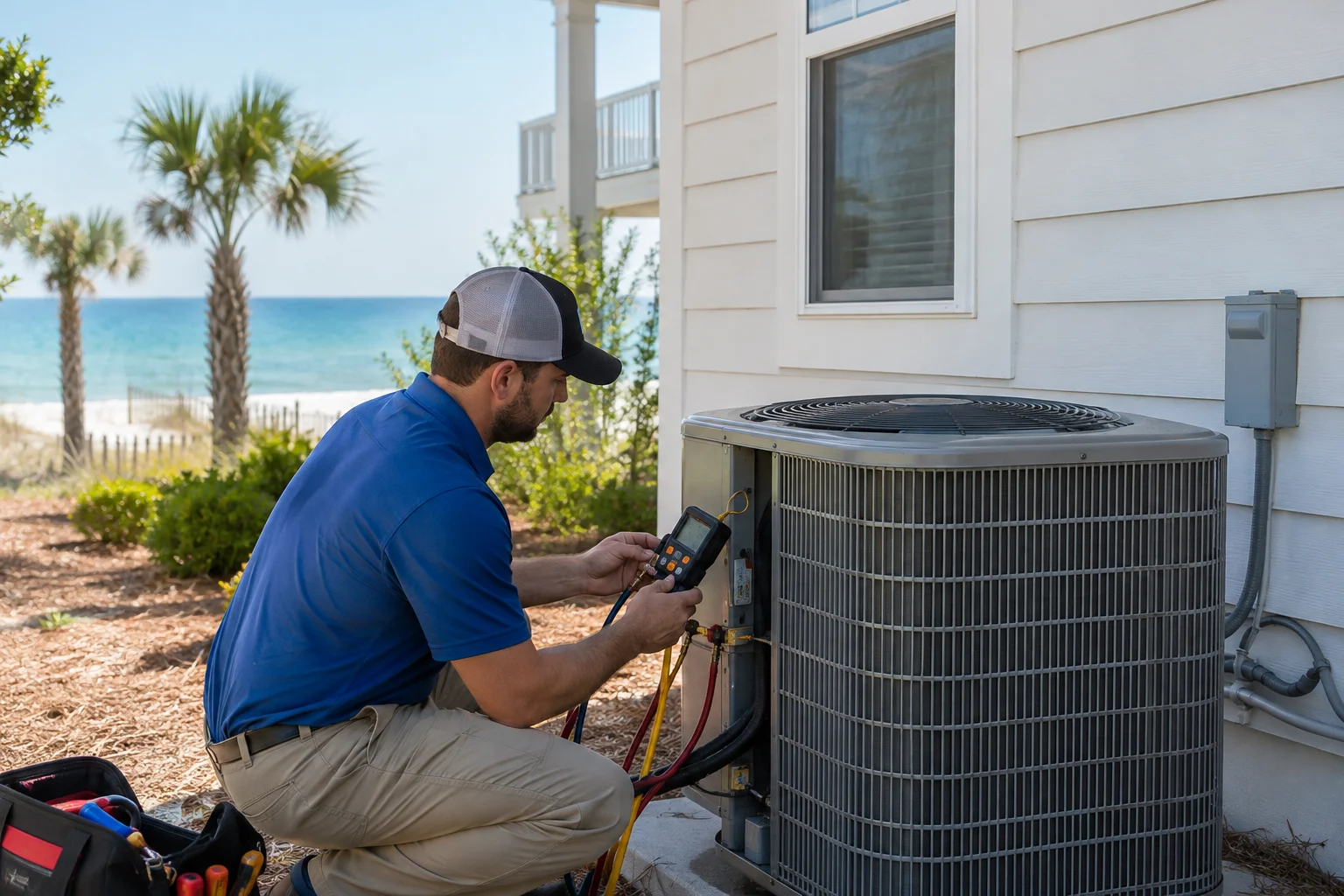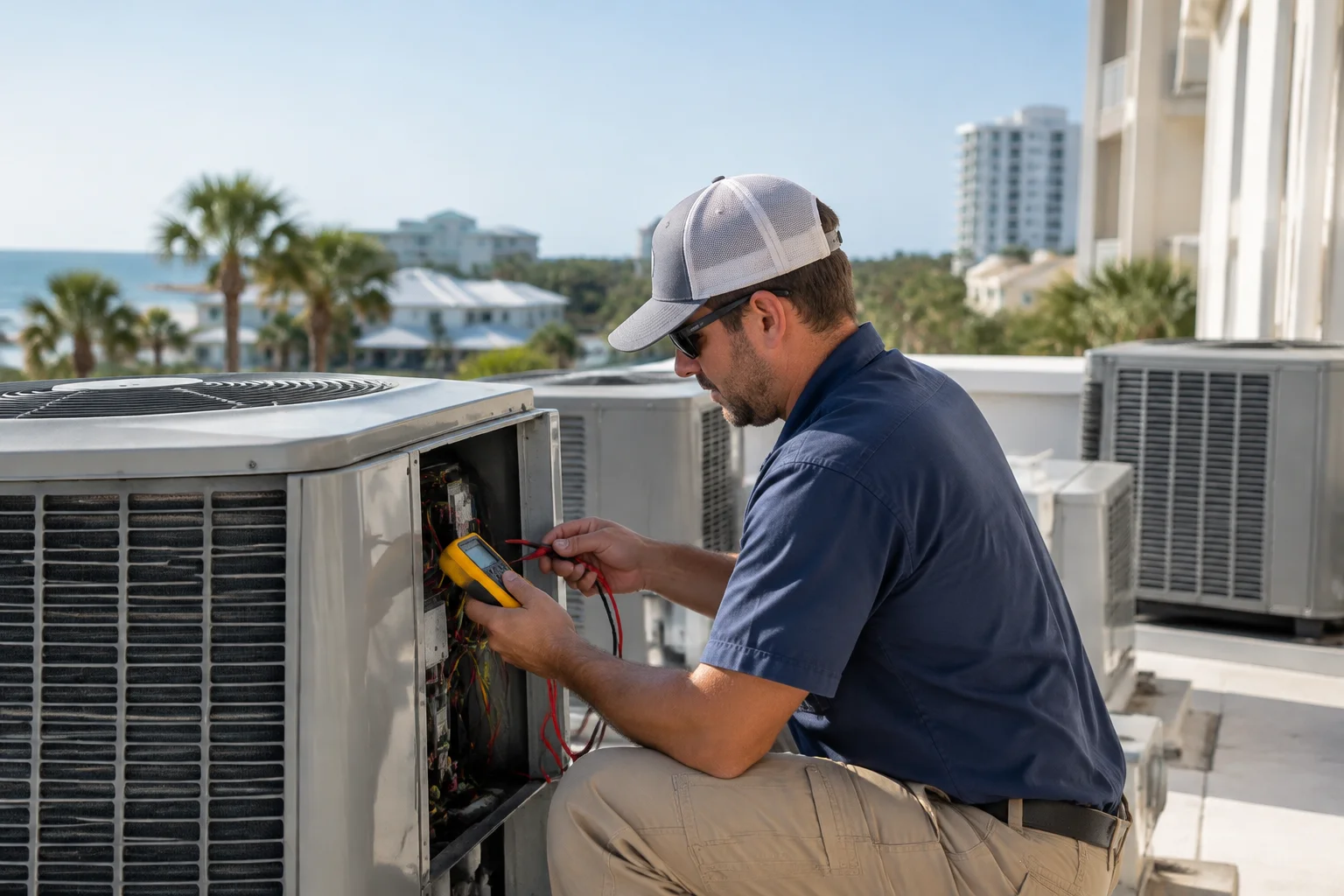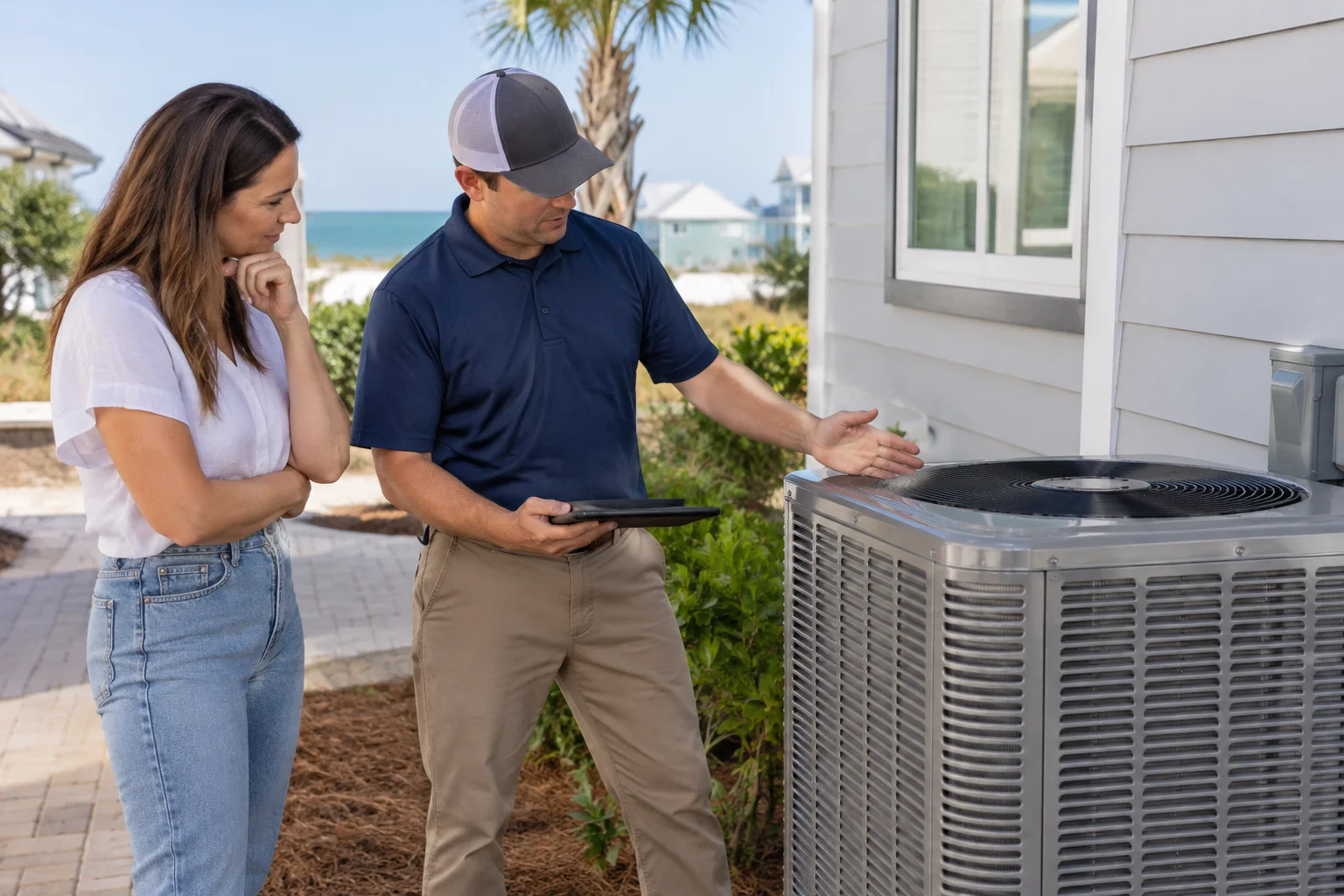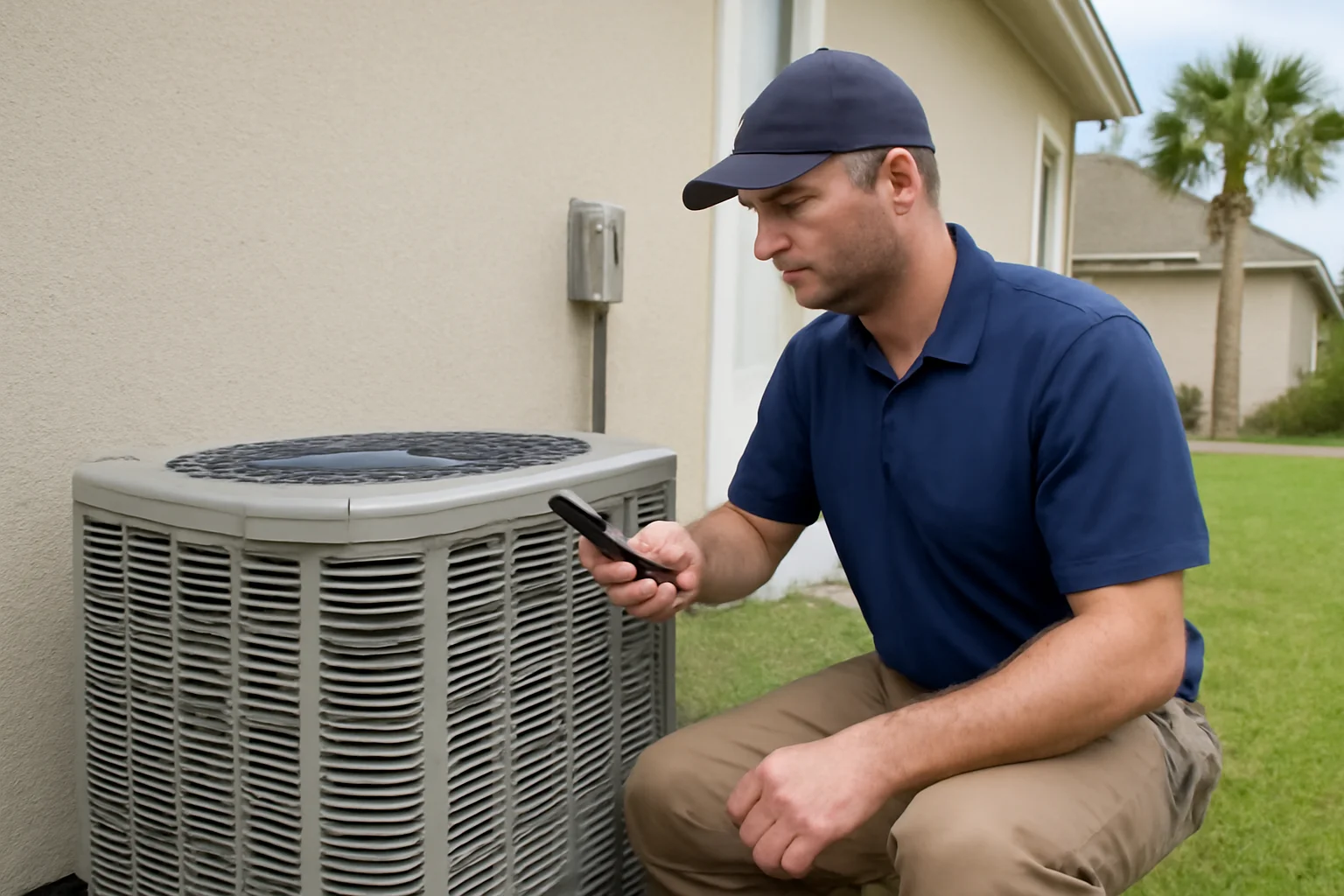
Miramar Beach homes feel the Gulf climate every day. Long humid stretches, salt air, and frequent storms can strain air conditioners and heat pumps, especially when ductwork, condensate drainage, and airflow are not performing as they should. When indoor air quality slips, homeowners often assume it is just “Florida weather.” Sometimes it is, but often the HVAC system is part of the story.
This guide connects common HVAC warning signs to indoor air quality testing, so you can spot problems earlier, reduce emergency cooling concerns, and plan preventive HVAC maintenance that protects comfort, health, and energy use. If you are searching for HVAC repair near me or AC tune up near me, using air quality clues can help you ask better questions and prioritize the right checks.
Why indoor air quality testing matters in Miramar Beach
Indoor air quality is not only about what is in the air. It also reflects how your heating and cooling system is moving air, controlling humidity, and managing moisture. In Miramar Beach, high humidity can push HVAC systems to work harder, while salty coastal conditions can add stress to components and airflow pathways over time.
Indoor air quality testing can help identify issues that are often connected to HVAC performance, such as:
- Excess moisture that can lead to musty odors and potential mold concerns
- Airborne allergens that worsen seasonal symptoms
- Ventilation and airflow problems that leave some rooms stale or unevenly cooled
- Contaminants associated with ductwork and the air handling process
When these factors show up, they can also create HVAC warning signs that homeowners recognize as “something feels off” before the system fails completely.
HVAC warning signs that often show up before air quality tests
Below are practical warning signs that commonly connect to indoor air quality issues. Not every sign means the same cause, but together they can point toward the areas an HVAC professional should inspect.
1) Musty odors after the AC runs
A musty smell that appears when the air conditioner kicks on can indicate moisture buildup on cooling surfaces, microbial growth potential, or airflow that is carrying contaminants. In humid Florida weather, condensate drainage and coil conditions matter. If condensate is not draining properly, moisture can linger. If airflow is restricted, the system may not dehumidify as intended.
Indoor air quality testing can help confirm whether moisture and airborne particles are present, while an on-site HVAC inspection can evaluate condensate drainage, airflow, and the condition of cooling components.
2) Allergy flare ups only at home
If symptoms spike when you are indoors, especially in bedrooms or specific rooms, the cause may be related to ventilation balance, ductwork distribution, or humidity levels that allow allergens to concentrate. Even a well-sized system can underperform if ductwork has leaks, poor airflow, or blocked pathways.
Testing can support a clear direction for troubleshooting indoor air quality. It also helps you avoid guessing, which is important when homeowners are deciding between air conditioning repair near me and broader system maintenance.
3) Hot spots and uneven cooling
Uneven cooling can create comfort problems, but it can also affect air quality. Rooms that do not receive consistent airflow may trap humidity and contaminants. That can be especially noticeable during peak Gulf summer conditions when the HVAC system is running longer.
Airflow issues can come from ductwork restrictions, dirty filters, blower performance concerns, or thermostat settings that are not aligned with the actual system behavior. Indoor air quality testing combined with HVAC checks can help determine whether the issue is primarily airflow or humidity control.
4) Condensation around vents or near the air handler
Visible condensation can be a warning sign that humidity control is not working as expected. In Florida heat and humidity, condensation can also appear when airflow is restricted or when the system is not removing moisture effectively. Persistent moisture is a risk factor for mold concerns and can contribute to musty odors.
An HVAC technician should inspect how the system is cooling and dehumidifying, including condensate drainage and ductwork airflow.
5) Short cycling or the system runs but feels ineffective
When an air conditioner or heat pump runs frequently but does not cool effectively, homeowners may notice stale air, higher humidity, or lingering smells. Short cycling can be influenced by thermostat behavior, airflow restrictions, or other system issues. If the system is not moving air properly or cannot maintain stable operation, humidity control can suffer.
Because indoor air quality is tightly linked to moisture and ventilation, air quality testing can be a useful “connect-the-dots” step when you suspect the HVAC is not performing as it should.
How indoor air quality testing connects to HVAC system performance
Indoor air quality testing does not replace HVAC diagnostics. Instead, it adds context. It can reveal whether the indoor environment is trending toward higher humidity, elevated airborne particles, or other concerns that are commonly influenced by HVAC operation.
Here are the most common HVAC pathways that connect to indoor air quality outcomes in Miramar Beach homes.
Humidity control and dehumidification
In humid climates, the HVAC system must do more than cool. It should remove moisture from the air. If humidity control is weak, you may see condensation, feel clamminess, and notice musty odors. Over time, moisture can support microbial growth potential.
Indoor air quality testing can help confirm whether humidity and airborne conditions are consistent with a dehumidification problem. Then a professional can inspect airflow, filter condition, thermostat settings, and cooling performance during an on-site evaluation.
Airflow and ductwork condition
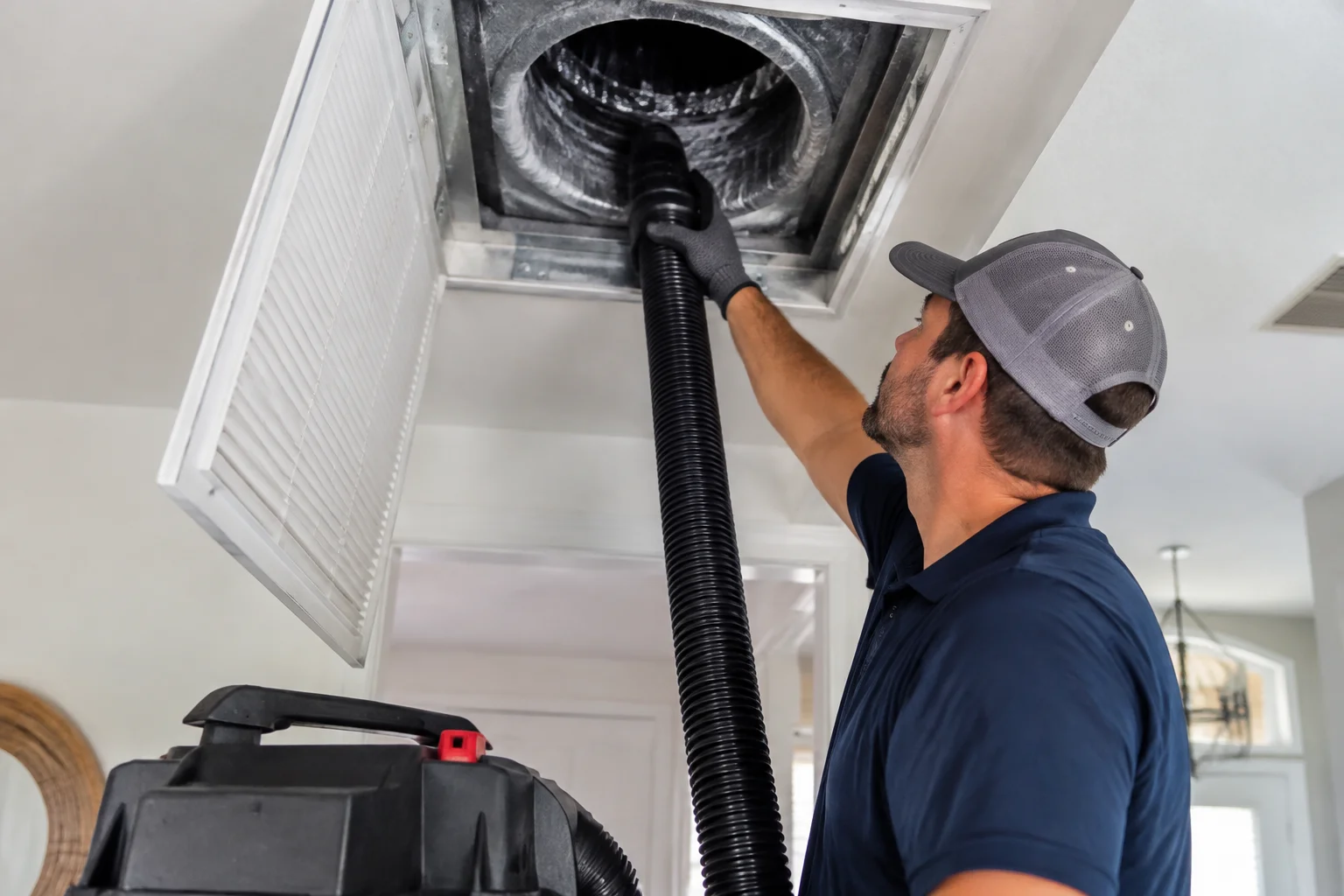
Ductwork is the bridge between your system and the rooms you live in. If ductwork has leaks, poor insulation, or airflow restrictions, air can bypass intended pathways. That can lead to uneven temperatures, higher indoor humidity in certain areas, and increased dust or allergen concentration.
Homeowners often search for ductwork or duct inspection help after noticing air quality symptoms. If you suspect airflow problems, consider pairing indoor air quality testing with a duct-focused inspection. You can also review Duct Inspection for Miramar Beach homes.
Condensate drainage and moisture management
When cooling happens, condensate drainage becomes critical. If the condensate line is slow, partially blocked, or draining inconsistently, moisture can collect where it should not. That can contribute to odors and increase the likelihood of microbial concerns.
Indoor air quality testing can support the bigger picture, while an HVAC technician can verify condensate drainage performance during operation.
Thermostats and comfort controls
Thermostats influence run time, fan operation, and humidity management. A thermostat that is misconfigured, outdated, or not matched to the system can make the HVAC run in a way that does not control humidity effectively. In coastal Florida, where humidity is persistent, comfort controls matter.
If you are considering thermostat installation near me as part of improving humidity control and comfort, an HVAC professional should evaluate your system’s behavior first to avoid chasing the wrong cause.
Refrigerant systems and cooling performance
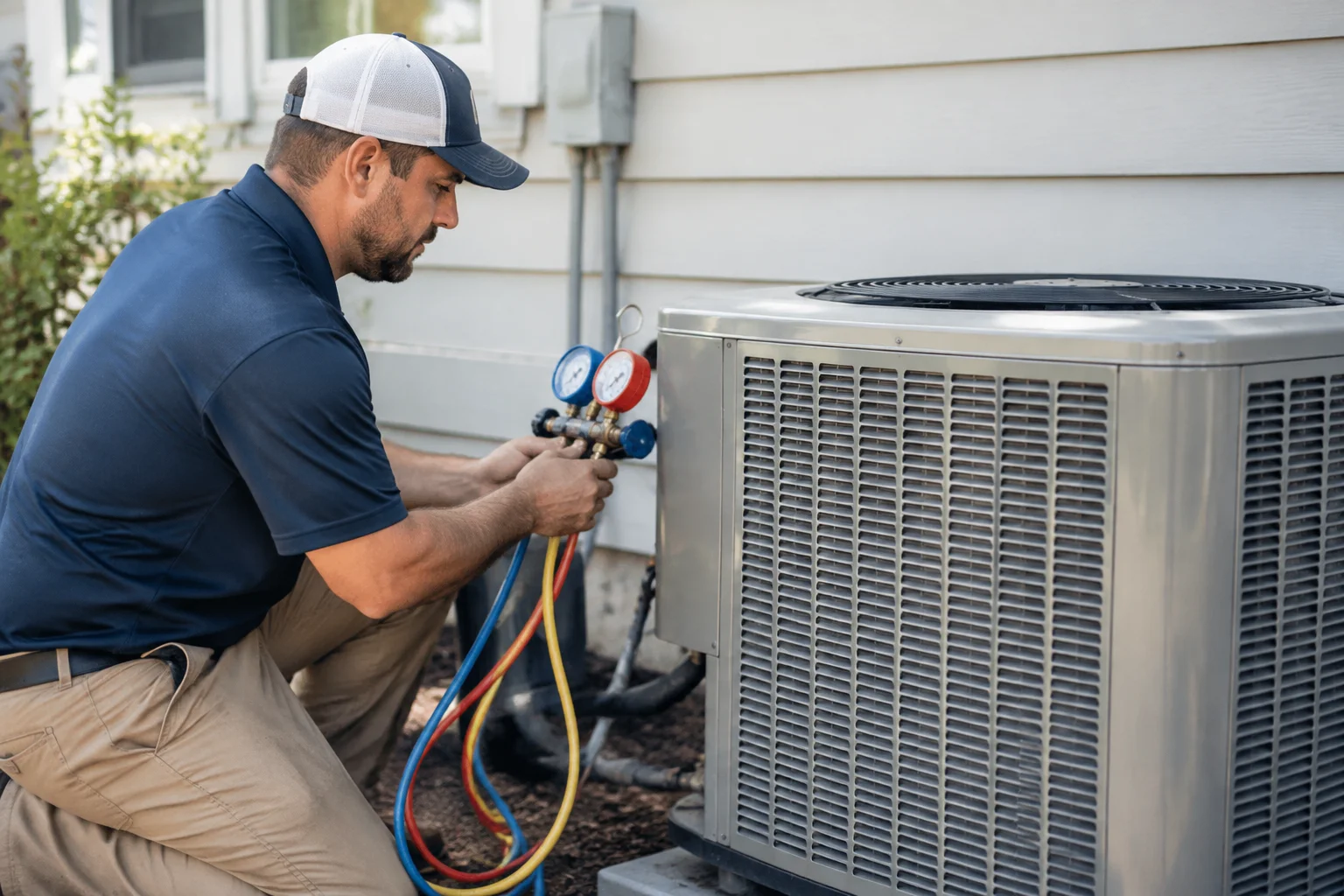
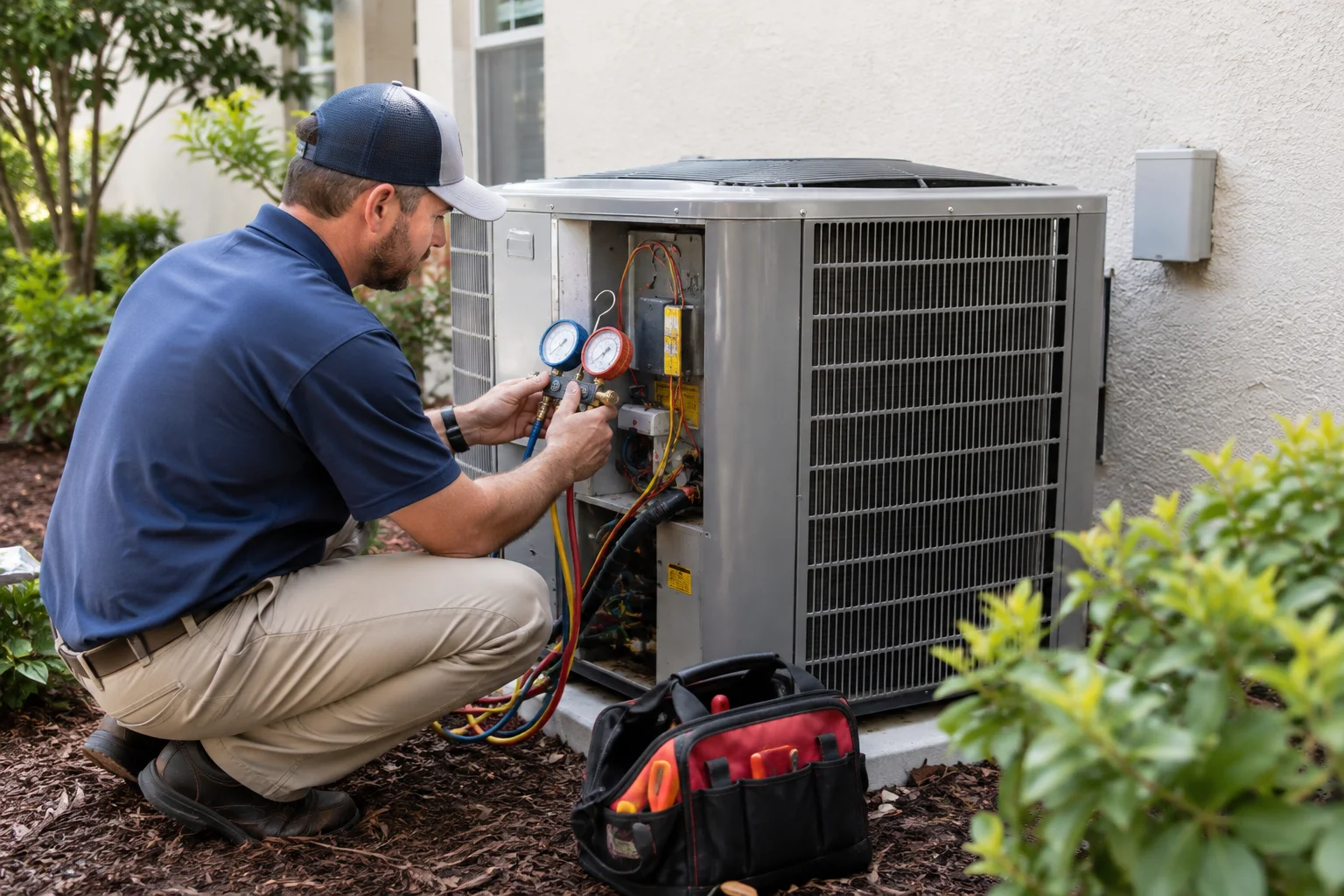
Refrigerant systems affect how well an air conditioner or heat pump cools and how effectively it can remove moisture. However, refrigerant-related issues require careful, in-person evaluation. Air quality testing can suggest that the system is not meeting moisture and comfort needs, but it cannot confirm refrigerant condition on its own.
If indoor air quality results and comfort symptoms point toward cooling performance concerns, a licensed HVAC contractor can determine what checks are appropriate and whether any repairs are needed.
Florida-specific factors that make early detection pay off
Miramar Beach is not just hot. It is hot, humid, and influenced by salt air. Those conditions can raise the odds of HVAC problems showing up in ways that affect indoor air quality.
High humidity increases system strain
During humid stretches, air conditioners and heat pumps may run longer to maintain comfort. Longer run times can expose weaknesses in airflow, condensate drainage, and filtration. When the system cannot dehumidify effectively, indoor air quality can deteriorate along with comfort.
Salt air can accelerate corrosion and affect performance
Coastal conditions can contribute to corrosion in certain HVAC components over time. That can impact airflow pathways and how components operate. Even when equipment still “works,” performance can drift, affecting humidity control and air movement.
Vacation rentals and homes with variable occupancy
Miramar Beach properties often include vacation rentals, second homes, and seasonal occupancy patterns. When the system is off for long periods, humidity can build. When the system resumes, it may take time to restore comfort, and the first cooling cycle can reveal issues with filtration, duct distribution, and moisture management.
Indoor air quality testing can be especially helpful for landlords and property managers who want consistent indoor conditions and fewer surprises.
Preventive maintenance steps that support better indoor air quality
You can reduce the chance of indoor air quality problems turning into HVAC emergencies by keeping maintenance focused on moisture control, airflow, and system stability.
Schedule preventive HVAC maintenance before peak summer
Preventive HVAC service helps catch issues related to airflow, refrigerant system performance, and condensate drainage before a breakdown forces you into urgent repairs. If you are searching for HVAC maintenance near me, look for a plan that includes inspection of airflow pathways, thermostat operation, and moisture management components.
If you want a broader view of how routine care supports comfort, A Superior Mechanical also offers Commercial HVAC Maintenance for businesses that need consistent indoor conditions.
Keep filters clean and matched to your system
Dirty filters restrict airflow. Reduced airflow can lower cooling effectiveness, weaken humidity control, and increase dust and allergen circulation. Filter changes are one of the simplest homeowner tasks, but the key is using the right type for your system and replacing on schedule.
Use the thermostat settings that support humidity control
Thermostat settings can influence fan cycling and run time. If you regularly notice humidity staying high even when temperatures feel “okay,” the thermostat schedule and system behavior may need adjustment during an HVAC service visit. A professional can help you choose settings that align with how your unit actually performs.
Watch condensate drainage during humid weather
During heavy humidity, check for signs of overflow, unusual water collection, or inconsistent drainage. If you notice recurring moisture problems, do not wait for it to “go away.” Address the cause through HVAC inspection and, when appropriate, indoor air quality testing.
Inspect ductwork and airflow distribution
Ductwork issues can cause hot spots, stale air, and uneven humidity. If you suspect airflow problems, pairing indoor air quality testing with duct inspection can help you target the true source. You can also read Why Preventive HVAC Service Matters for Duct Inspection in Miramar Beach Homes.
For new homes or homes undergoing major changes, planning airflow from the start also matters. See New Construction Air Conditioning for related considerations.
When to pair indoor air quality testing with HVAC repair or service
Homeowners do not always need testing, but pairing it with HVAC service can prevent repeated “trial and error” repairs. Consider indoor air quality testing when you notice multiple symptoms at once or when the system seems to run but comfort and air feel worse.
Good reasons to schedule testing
- You smell musty odors after cooling cycles
- Humidity feels high even after the AC runs for a while
- Allergy symptoms worsen indoors, especially in specific rooms
- Condensation appears near vents or around indoor equipment
- You have uneven temperatures and suspect airflow issues
How testing supports better HVAC repair decisions
When you call for HVAC repair near me or air conditioning repair near me, a technician should evaluate the system’s performance and the indoor environment. Testing can help you explain what you are experiencing and help prioritize inspections related to humidity, airflow, and moisture management.
For homeowners exploring heat pump service, remember that heat pumps also operate as part of your indoor humidity and airflow strategy. If you are searching for heat pump repair near me or heat pump installation near me, include indoor comfort and air quality concerns in your initial conversation.
Whole-home humidity control and air purification as support tools
Some homeowners look for solutions like whole-home dehumidifiers or air purifiers to improve indoor air quality. These can help, but they work best when the HVAC system and ductwork are also performing properly.
If humidity control is a recurring challenge, you may want to explore Whole Home Dehumidifiers. If you are searching for whole home air purifier near me, it is smart to coordinate air cleaning strategies with filtration, ductwork condition, and ventilation so you do not mask the symptoms while the root cause remains.
For deeper seasonal context, read Why Miramar Beach Homes Benefit from Indoor Air Quality Testing During Humid, High-Allergen Seasons.
How to choose indoor air quality testing that fits your home
Not all testing is the same. The most useful approach is one that matches your symptoms, your HVAC setup, and your living style. A Superior Mechanical focuses on indoor air quality testing in Miramar Beach, FL to identify humidity-related concerns, allergens, mold concerns, and HVAC-related air quality issues.
If you are considering testing, you can start here: indoor air quality testing for Miramar Beach homes. It is also helpful to review the broader service area coverage on our Miramar Beach page.
Questions homeowners can ask during scheduling
- What indoor air quality indicators are you evaluating for my symptoms?
- How will the results connect to HVAC airflow, ductwork, and humidity control?
- Will you recommend specific HVAC checks based on the findings?
- How should I prepare the home before testing?
These questions help you get results that are actionable, not just a report. They also make it easier to decide whether you need air conditioner service near me, licensed HVAC contractor near me support for ductwork, or a plan that combines maintenance with indoor air quality improvements.
Preventing HVAC emergencies by addressing air quality early
HVAC emergencies often happen when multiple small issues stack up. Filters go too long. Airflow drops. Humidity control weakens. Condensate drainage becomes a problem. Then, during the next hot, humid stretch, the system struggles and fails at the worst time.
Indoor air quality testing can help detect those trends earlier by highlighting conditions tied to HVAC operation. When paired with preventive HVAC maintenance and targeted inspections, it can support fewer surprise breakdowns and fewer emergency cooling concerns.
If you are also managing a business or property with frequent occupancy changes, it can help to understand how HVAC performance affects indoor comfort. See Why Commercial HVAC Repair Matters to Home Comfort in Miramar Beach.
For additional reading on homeowner blind spots, check What Miramar Beach Homeowners Often Miss About Indoor Air Quality Testing.
When you should call a professional right away
Some HVAC warning signs should not wait. Call a qualified contractor for urgent support when you have:
- No cooling or no airflow when the system is running
- Persistent water leaks or signs of condensate overflow
- Strong, ongoing musty odors that return quickly after cleaning
- Repeated short cycling or the system cannot maintain comfortable temperatures
- Visible signs of duct damage or major airflow problems
Professional evaluation matters because HVAC issues can overlap. Indoor air quality results can point you toward likely causes, but a technician should still inspect the system in person before any repair plan is chosen. This is especially true for refrigerant systems, where diagnosis and next steps must be based on on-site checks.
For Miramar Beach homeowners looking for a reliable path from air quality clues to HVAC solutions, A Superior Mechanical offers indoor air quality testing and HVAC-focused guidance. Learn more on our Walton County coverage and explore how indoor air quality testing can fit your home.
Find Indoor Air Quality Testing in Miramar Beach, FL
If you need Indoor Air Quality Testing in Miramar Beach, FL, visit our local service page or contact A Superior Mechanical today.
Map of Miramar Beach, FL
Frequently Asked Questions
Can indoor air quality testing tell me what is wrong with my AC?
Testing can identify indoor air quality conditions that are often connected to HVAC performance, such as humidity issues, airborne particle levels, or potential mold concerns. It does not replace an on-site HVAC inspection. A licensed HVAC contractor should connect the results to airflow, condensate drainage, thermostat behavior, and refrigerant system performance during evaluation.
Why do my allergy symptoms get worse in the summer in Miramar Beach?
Florida humidity can increase moisture indoors and affect how allergens concentrate. If your HVAC system is not dehumidifying well or airflow is uneven due to ductwork issues, certain rooms can feel more uncomfortable and trigger symptoms. Indoor air quality testing can help clarify what is happening indoors so you can target the right HVAC maintenance.
What HVAC problems are most connected to musty odors?
Musty odors after cooling can be linked to moisture management problems, such as condensate drainage that does not clear properly, reduced airflow across cooling components, or conditions that allow microbial growth potential. Indoor air quality testing can support the overall picture while a technician checks the HVAC system during operation.
Should I schedule indoor air quality testing before or after AC repair?
It depends on your symptoms and urgency. If you have active HVAC issues like no cooling, water leaks, or repeated short cycling, repair evaluation should come first. If the system cools but air quality feels worse, testing can help prioritize inspections and preventive maintenance. A Superior Mechanical can help you decide based on your situation.
How does ductwork affect indoor air quality in Miramar Beach homes?
Ductwork can influence airflow balance, humidity distribution, and how much dust or allergens circulate. Leaks, restrictions, or poor insulation can create hot spots and stale air. When indoor air quality testing results point to uneven conditions, duct inspection and HVAC airflow checks are often part of the solution.
Related Articles
- What Miramar Beach Homeowners Often Miss About Indoor Air Quality Testing
- Why Miramar Beach Homes Benefit from Indoor Air Quality Testing During Humid, High-Allergen Seasons
- Why Commercial HVAC Repair Matters to Home Comfort in Miramar Beach
- Why Preventive HVAC Service Matters for Duct Inspection in Miramar Beach Homes
Photo Gallery