Freeport, FL feels like a warm, humid handshake most of the year. That’s great for beaches, but it can be tough on indoor air quality. When air stays damp, airflow slows, and HVAC systems work harder, homeowners often notice musty odors, sticky indoor humidity, or allergy flare ups. A practical way to manage those problems is indoor air quality testing that looks beyond “it feels humid” and focuses on what’s actually in the air and how your system is handling moisture and circulation.
If you are searching for indoor air quality testing in Freeport, FL, this guide breaks down what testing can reveal, what local homeowners often overlook, and how to connect air quality results to HVAC fixes like ductwork improvements, condensate drainage checks, and thermostat settings.
Why Freeport humidity makes indoor air quality testing more important
In Freeport and across Walton County, the combination of warm temperatures and high humidity changes how homes behave. Air conditioning helps, but it also creates conditions that can lead to trouble when the system or ductwork is not performing well.
Here are a few ways humidity and heat show up indoors:
- Moisture buildup when condensate drainage is restricted or when indoor humidity stays above comfort targets.
- Airflow problems when filters, supply ducts, return pathways, or registers limit circulation. Poor airflow can leave some rooms feeling clammy while others feel overly cold.
- Airborne contaminants that become more noticeable when air stays stagnant, when dust accumulates in ducts, or when indoor humidity supports microbial growth.
- VOCs and odors from everyday products like paints, cleaners, and building materials. These can linger longer when ventilation is inadequate.
Freeport also has coastal air. Salt air can contribute to corrosion concerns in some HVAC components over time, and that can affect system performance. Indoor air quality testing helps you identify whether the comfort issues you feel are tied to moisture, airflow, or other airborne contaminants.
What indoor air quality testing actually measures
Indoor air quality testing is not one single test. A professional indoor air quality services approach typically combines multiple measurements to understand both the air you breathe and the conditions that affect it.
Humidity and moisture conditions
Humidity is a major driver of comfort and air quality. Higher humidity can make it easier for mold or mildew to develop in hidden areas like near duct connections, behind returns, or in condensate drainage pathways. It can also make air feel warmer even when the thermostat is set to a reasonable temperature.
Testing typically looks at indoor humidity levels and may include related indicators that point to moisture control issues. If your HVAC system is removing moisture inefficiently, you can end up with a home that feels damp, even during air conditioning.
Airborne particulates and allergens
Dust, pollen, and other particulates can worsen allergy symptoms. When filtration is mismatched to your home’s needs, or when ductwork leaks and bypass air, indoor particulates can build up.
Testing can help clarify whether the indoor environment is contributing to those symptoms, which can guide next steps like ductwork improvements, filter recommendations, and airflow balancing.
Mold and microbial concerns
Mold is often a moisture story first. That is why homeowners who rely only on a visible spot sometimes miss the bigger issue: moisture is present somewhere, but the source may be hidden. Indoor air quality testing can help identify whether mold or other microbial concerns are likely contributing to odors, irritation, or persistent dampness.
Important note: a professional evaluation is needed to connect test findings to the likely source. Mold and moisture can overlap with ventilation and airflow issues, so it should be interpreted with your home’s HVAC setup and history.
VOCs and odor-causing compounds
Volatile organic compounds, or VOCs, can come from normal household products and building materials. In coastal areas where homes are sealed up for comfort, ventilation patterns matter. If air exchange is off, VOCs and odors can linger.
Testing can help determine whether VOCs or related air quality concerns are present, which can influence decisions about ventilation, filtration, and system operation.
Local HVAC problems that commonly affect indoor air quality in Freeport
Even the best equipment can struggle if the system is not matched to the home or if airflow and moisture management drift over time. Homeowners in Freeport often run into a few recurring HVAC issues that directly impact indoor air quality.
Condensate drainage issues
During air conditioning, moisture condenses on cooling coils. If condensate drainage is partially blocked, poorly routed, or not draining correctly, moisture can collect where it should not. That can increase humidity, contribute to musty odors, and create conditions that support microbial growth.
Condensate drainage problems are not always obvious. Indoor air quality testing can help confirm whether moisture conditions are consistent with a drainage or moisture removal issue, but it still requires an in-person HVAC assessment to verify the source.
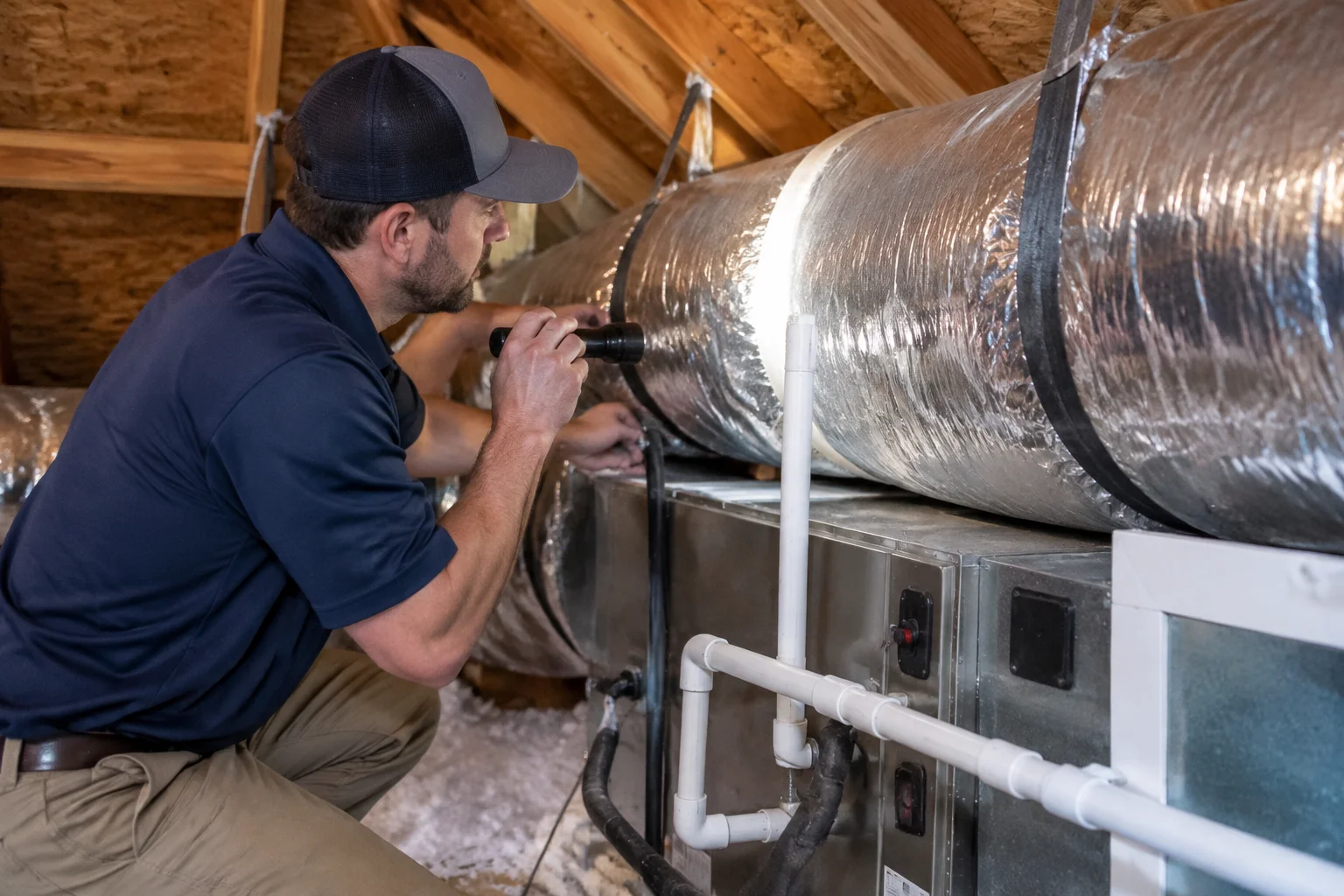
Ductwork leaks and airflow imbalances
Ductwork can be a silent indoor air quality problem. Leaks can pull unconditioned air into the system, and that air can carry humidity, dust, and airborne contaminants. Poor airflow can also cause certain rooms to run hotter or colder, which makes the system cycle in a way that may not properly manage humidity.
If you are noticing uneven temperatures, persistent “hot spots,” or rooms that feel stuffy, it can be linked to ductwork or register issues. Many homeowners also choose to pair indoor air quality testing with duct cleaning or ductwork repairs when appropriate. Testing helps you avoid guessing.
Filter and thermostat operation misunderstandings
Filters that are too restrictive or not changed often enough can limit airflow and reduce humidity removal. Thermostat settings also matter. Some homes are over-cooled to chase comfort, which can lower temperature without removing enough moisture, leaving the air feeling clammy.
A common homeowner mistake is treating humidity as something you can only fix by turning the thermostat down. In reality, humidity control depends on airflow, system performance, and how long the system runs in the right mode. A professional air conditioning inspection can connect these dots.
Refrigerant system performance and airflow matching
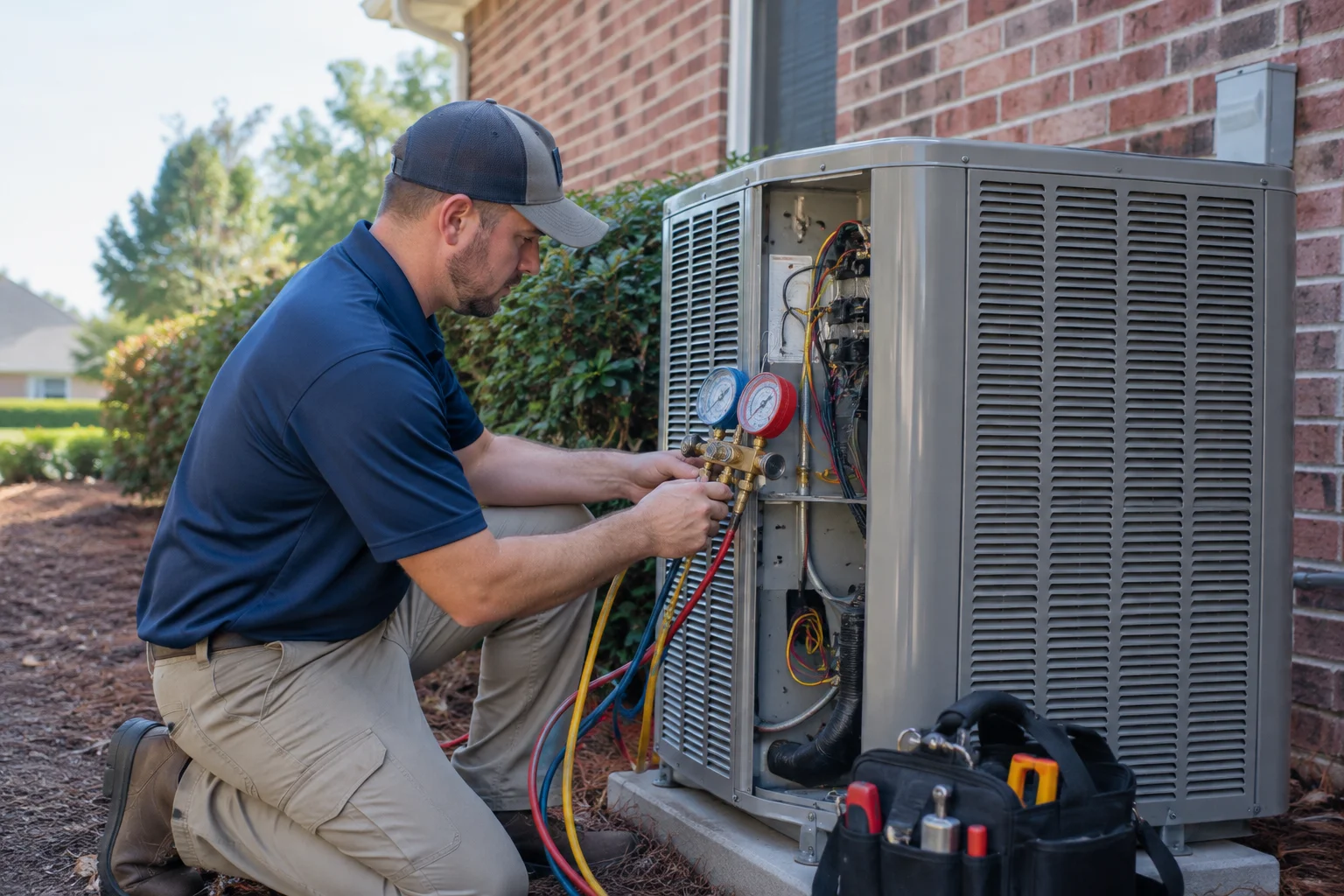
Refrigerant systems and airflow are connected. If indoor airflow is too low or if the system is not operating as designed, cooling performance and moisture removal can suffer. Coastal environments can also add stress over time, and wear can show up as performance drift.
It is important not to jump to conclusions about refrigerant based on symptoms alone. Indoor air quality testing can indicate whether comfort and moisture conditions align with system performance problems, but refrigerant diagnosis requires a technician’s in-person evaluation.
Signs your home may benefit from indoor air quality testing
You do not need to wait for a major problem. Homeowners often consider indoor air quality testing when multiple comfort or health issues show up together, especially during summer air conditioning in Freeport.
- Humidity feels high even when the thermostat is set to cool.
- Musty or stale odors that return after rain or after the AC has run for a while.
- Allergy or irritation symptoms that seem worse indoors.
- Uneven temperatures and rooms that feel stuffy or overly cold at the same time.
- Condensation around vents, registers, or near indoor equipment.
Also consider testing when you have had major changes like ductwork repairs, new air conditioning service, or a switch in how the home is used. Vacation rentals and second homes in Freeport can go through long periods of being unoccupied, which can change dust levels, humidity patterns, and ventilation behavior.
How to use test results to guide HVAC decisions
Testing should not just produce numbers. The real value is connecting the results to HVAC actions that improve airflow, moisture control, and contaminant management.
Moisture problems usually point to HVAC moisture removal
If testing suggests elevated humidity or conditions consistent with moisture problems, the next step is to look at condensate drainage, coil performance, airflow, and thermostat operation. It might also involve ductwork inspection because airflow leaks can bring humidity into the system.
For homeowners planning preventive HVAC maintenance, addressing moisture control early can reduce the chance of recurring odor complaints and helps the AC run more effectively.
Airflow findings often tie to ductwork and filter strategy
If the results suggest particulate buildup or uneven air distribution, focus on circulation. That can include filter selection, register balance, duct sealing, and in some cases duct repair or duct cleaning.
If you suspect ductwork problems, it can help to ask about duct cleaning and duct repair options after the testing clarifies what is happening.
VOC and odor concerns can connect to ventilation and system run times
When testing indicates VOC or odor-related concerns, it does not automatically mean you need to replace equipment. It often means the home needs better ventilation strategy, improved filtration, and attention to how the HVAC system circulates air.
In some cases, air purification solutions like a whole home air purifier may be discussed as part of a broader plan. The key is that air purification works best when moisture and airflow issues are also addressed.
Preventive HVAC maintenance that supports better indoor air quality
Indoor air quality testing is a snapshot. Preventive HVAC maintenance is the routine plan that keeps the snapshot from turning into a recurring problem. For Freeport homeowners, a maintenance approach should emphasize humidity control, airflow, and system cleanliness.
Prioritize airflow and filter performance
Filters should be appropriate for your system and your home’s needs. A filter that is too restrictive can reduce airflow and make humidity control harder. A filter that is too basic can allow more particulates to circulate. During maintenance, a technician can check airflow conditions and discuss filter choices.
Check condensate drainage during cooling season
Because Freeport summers can be relentless, condensate drainage should be checked regularly during AC season. This is one of the most overlooked moisture control steps, and it ties directly to indoor humidity and odor issues.
Inspect ductwork connections and return pathways
Ductwork is not just about comfort. Returns and supply connections affect how the system moves air and whether it pulls in unwanted humidity. Preventive inspections can help catch issues before they lead to noticeable indoor air quality problems.
Review thermostat settings and operating modes
Thermostats influence humidity management. If a home cycles too quickly, it might not dehumidify as intended. If the system is set up in a way that limits proper run time, the indoor environment can remain damp. A technician can discuss practical thermostat settings that match your home’s layout and comfort goals.
If you are also considering larger changes, you can explore resources like a homeowner’s guide to HVAC financing and why it matters in Freeport, FL to help you plan for system replacement if it ever becomes necessary.
When to call for HVAC service right away
Some indoor air quality concerns overlap with safety and emergency cooling concerns. If you are dealing with a cooling failure during peak heat, do not wait.
Call for emergency AC repair near me if you have a complete loss of cooling, unusual sounds, strong burning smells, or signs that the system is not operating normally. For health and comfort, also reach out promptly if you notice rapid onset of musty odors with visible condensation or water intrusion.
Even if the issue seems like “just humidity,” the system could be struggling with airflow, condensate drainage, or performance drift. A licensed HVAC contractor near me can evaluate what is happening and recommend the right next steps based on your home, not guesswork.
How A Superior Mechanical approaches indoor air quality testing in Freeport
A Superior Mechanical provides indoor air quality testing in Freeport, FL to help homeowners and businesses understand moisture, airborne contaminants, and comfort drivers that impact how the HVAC system performs. That matters in a coastal climate where heat and humidity can make small HVAC issues snowball into bigger indoor air quality problems.
Testing can also support decisions around related services. Depending on results and the home’s needs, you may be directed to HVAC repair, ductwork attention, or additional indoor air quality services. If you have questions about duct cleaning or airflow improvements, you can also review why efficient heating and cooling starts with commercial HVAC maintenance in Freeport, FL for the maintenance mindset, even if your home is residential.
For homeowners planning upgrades such as ductless mini split solutions, testing can help clarify comfort and humidity goals before installation. If that sounds like your situation, you can learn more about ductless mini splits and how whole-home comfort planning works.
Questions to ask before scheduling indoor air quality testing
If you are booking indoor air quality services near me, these questions help you get clear on how the process will connect to your HVAC system and comfort goals.
- What measurements will you take and how do they relate to humidity, airflow, and contaminants?
- How will you connect results to HVAC issues like ductwork, condensate drainage, and thermostat operation?
- Will you recommend follow-up HVAC service based on what you find?
- How do you handle homes with moisture history such as prior leaks, damp crawl spaces, or recurring odors?
- What additional steps might be needed if the results point to ductwork or system performance concerns?
Those answers matter because indoor air quality testing is most useful when it leads to a practical plan for managing heat and humidity, improving airflow, and reducing airborne concerns.
Getting better indoor air quality without wasting energy
When HVAC systems do not manage humidity properly, energy use often rises. The system may run longer than necessary, or it may cycle in a way that feels uncomfortable. By identifying the moisture and airflow drivers behind indoor air quality problems, homeowners can reduce the “chase comfort” cycle and focus on solutions that support both health and efficiency.
That is especially relevant for Freeport homes that rely heavily on air conditioning during hot, humid stretches. Preventive HVAC maintenance paired with indoor air quality testing can help keep the system operating effectively while maintaining comfortable indoor conditions.
If you are comparing options for AC repair near me or thinking about next steps for system replacement, start with an evidence-based approach. Testing and an in-person HVAC evaluation together provide a clearer path forward than symptoms alone.
For guidance specific to your area, you can also review the Freeport service overview on our Freeport, FL service area page and the broader Walton County service area information.
If you are ready to address comfort and air quality with a structured plan, schedule indoor air quality testing in Freeport, FL with A Superior Mechanical.
Find Indoor Air Quality Testing in Freeport, FL
If you need Indoor Air Quality Testing in Freeport, FL, visit our local service page or contact A Superior Mechanical today.
Map of Freeport, FL
Frequently Asked Questions
How is indoor air quality testing different from a standard air conditioning inspection?
An air conditioning inspection focuses on HVAC performance and components like airflow, condensate drainage, and system operation. Indoor air quality testing looks at the indoor environment that results from those conditions, including moisture indicators and airborne contaminants. The best outcomes come when both are connected to your home’s HVAC setup.
Can high humidity alone cause mold problems in a Freeport home?
High humidity can create conditions where mold and mildew are more likely to grow, especially when moisture is trapped in hidden areas. In many cases, humidity is linked to HVAC performance, airflow, and condensate drainage. Testing helps confirm whether the indoor conditions match those concerns.
Will indoor air quality testing tell me if I need duct cleaning or duct repair?
Testing can point to whether airflow and particulates are part of the problem, but it does not replace an in-person HVAC evaluation. A technician may recommend duct cleaning or duct repair when the results align with what is found in your ductwork and system operation.
Do I need to test for VOCs and allergens if my main issue is comfort?
Not always, but comfort issues in Freeport can overlap with air quality drivers like moisture, particulates, and odor-causing compounds. If you also have allergy symptoms, persistent smells, or recurring dampness, testing can help you avoid guessing and focus on the right HVAC adjustments.
What should I do if I notice musty odors or condensation while the AC is running?
Contact a licensed HVAC contractor promptly. Musty odors and condensation can indicate moisture control problems tied to condensate drainage, airflow, or system performance. Indoor air quality testing can help confirm the indoor conditions, but an in-person evaluation is needed to address the cause safely.
Related Articles
- Why Efficient Heating and Cooling Starts With Commercial HVAC Maintenance in Freeport, FL
- The Details That Get Missed in Commercial HVAC Installation in Freeport, FL
- A Homeowner’s Guide to HVAC Financing and Why It Matters in Freeport, FL
- Staying Ahead of Commercial HVAC Problems in Freeport, FL: A Practical Guide for More Reliable Buildings
Photo Gallery