A damp cabinet floor, a toilet that keeps refilling, or an unexplained jump in water use can all point to plumbing trouble. Some leaks are easy to spot. Others travel along pipes or beneath flooring before showing up somewhere far from the source.
For homeowners in Lower Grand Lagoon, FL, catching these problems early matters. Coastal humidity can slow drying, and vacation homes may sit empty long enough for a small leak to cause substantial damage. A Superior Mechanical provides water leak repairs in Lower Grand Lagoon, including hidden leak detection, pipe repairs, slab leak service, and water line repairs. Knowing what to check helps you respond before the damage spreads.
Stop active water damage before investigating
If water is spraying from a supply connection or spreading across the floor, focus on controlling it first. Close the fixture's shutoff valve if it is accessible and turns without excessive force. For a broken pipe or a leak you cannot isolate, use the home's main water shutoff.
Do not force a corroded valve. If it will not close, contact a plumber and ask your water utility about emergency shutoff assistance. Never operate utility-owned equipment without authorization.
Situations that deserve an urgent plumbing call
A burst pipe, sewage entering the home, a rapidly spreading wet area, or a ceiling bulging with water needs immediate attention. Keep people away from sagging ceilings. Avoid standing water near outlets, appliances, or electrical panels, and do not enter a wet area to reach a breaker.
If a leak involves a water heater, stop using it and request safe shutdown instructions. Never cap a temperature and pressure relief valve or its discharge pipe. Photograph damage if safe, move belongings, and arrange drying after the source is controlled.
Small changes that can reveal a hidden leak
Not every plumbing leak leaves a puddle. Watch for recurring musty odors, peeling cabinet finishes, soft baseboards, bubbling paint, or flooring that starts to lift. A warm patch on a slab floor can suggest a hot water line problem, although it is not proof by itself.
Changes in water use are another clue. Compare bills with similar occupancy and irrigation patterns. A busy week with guests will naturally use more water than an empty house. An increase that does not match household activity deserves investigation.
Listen for toilets refilling between uses or the sound of water moving when every fixture is off. Homeowners searching for water leak repair near me often notice these quieter symptoms before finding visible damage. Share when the sound occurs and where it seems loudest with the plumber.
Use the water meter to narrow the problem
If your home has an accessible individual water meter, a simple check can help establish whether water is moving unexpectedly. Turn off faucets and stop water-using equipment, including irrigation, laundry, dishwashers, and automatic pool fill systems. Make sure no toilet is refilling.
Record the reading or observe the meter's leak indicator, then check again after a period with no intentional water use. Movement can suggest a leak, but it does not identify the location. Water treatment equipment cycling automatically can also affect the result.
A stationary meter does not rule out an intermittent leak or a drain leak that occurs only during use. Condominiums and properties with shared meters may require help from management. If you are searching for hidden water leak detection near me, ask how the plumber will distinguish supply leaks from drainage problems before opening walls or flooring.
Why plumbing leaks develop in coastal homes
Lower Grand Lagoon's warm, humid climate affects how moisture behaves inside a home. Condensation can resemble a plumbing leak, while enclosed cabinets may stay damp after the original problem stops. A proper diagnosis separates condensation, rain intrusion, and plumbing failures rather than assuming every wet spot comes from a pipe.
Aging connections and excessive water pressure
Supply hoses, shutoff valves, faucet cartridges, and pipe joints can deteriorate over time. Salt-laden air may contribute to corrosion on exposed metal components, but interior pipe failures depend on pipe material, water chemistry, installation, and age.
Excessive water pressure adds stress to supply lines, valves, and appliance connections. A plumber can measure static pressure and check whether a pressure regulator is working. Residential pressure above 80 psi generally calls for pressure control under plumbing standards. Pressure spikes associated with water heating may require a separate thermal expansion assessment.
Mineral buildup and changing occupancy
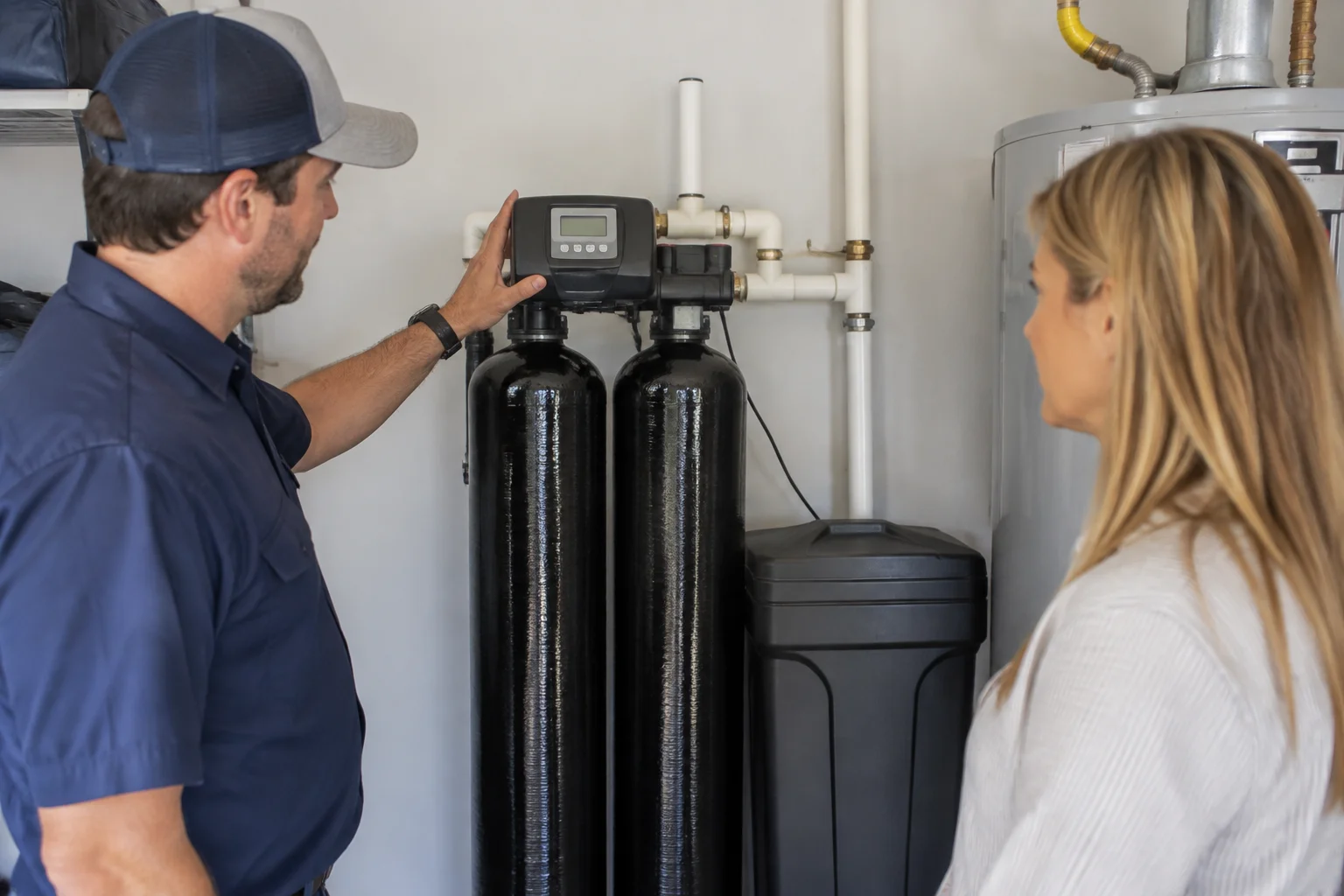
Hard water can leave scale on aerators and fixtures and contribute to water heater maintenance needs. Do not assume every Lower Grand Lagoon property has the same hardness. Testing helps determine whether treatment is useful. Seasonal occupancy also changes plumbing demand, making checks before and after guest stays worthwhile.
A drain leak needs a different repair than a supply leak
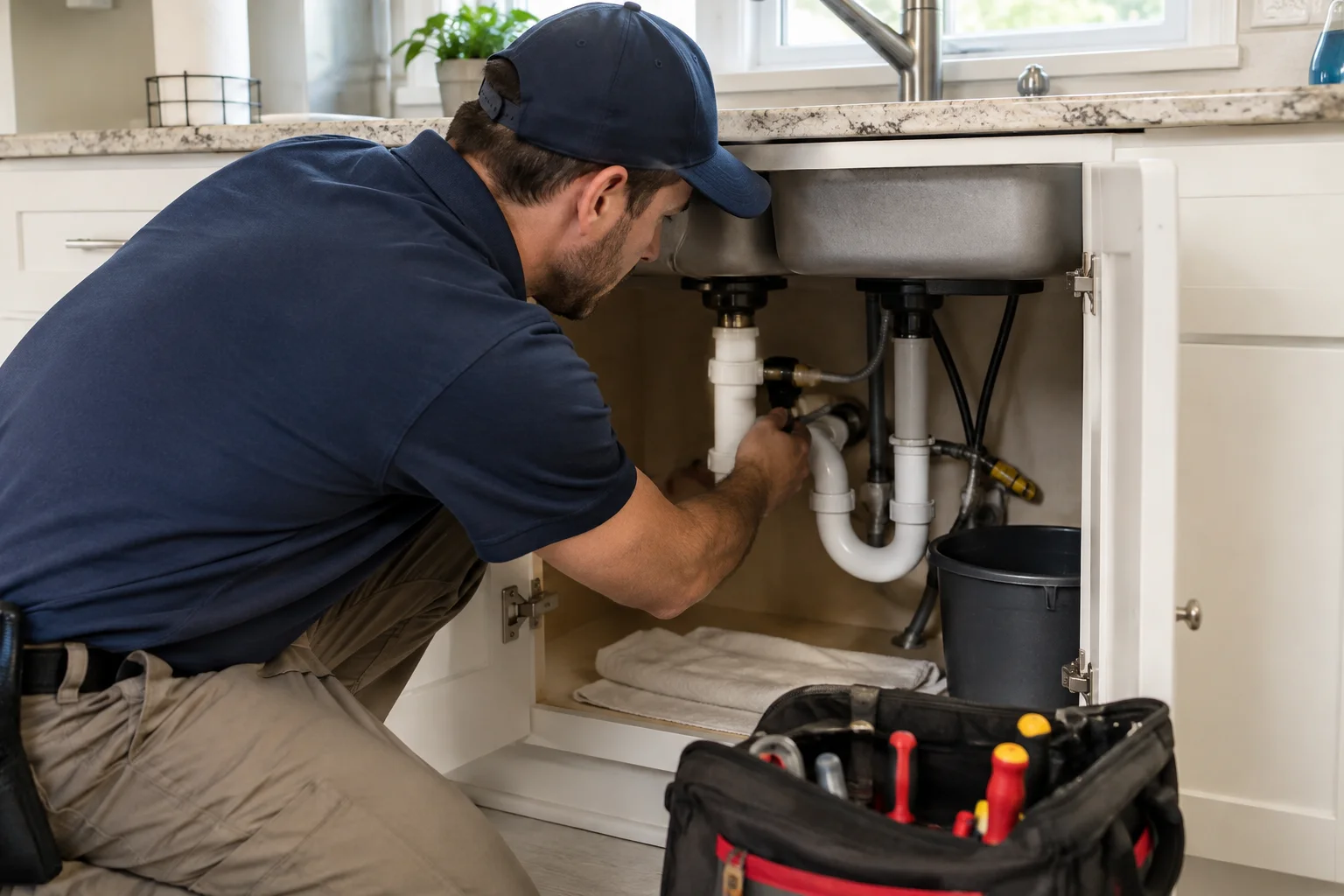
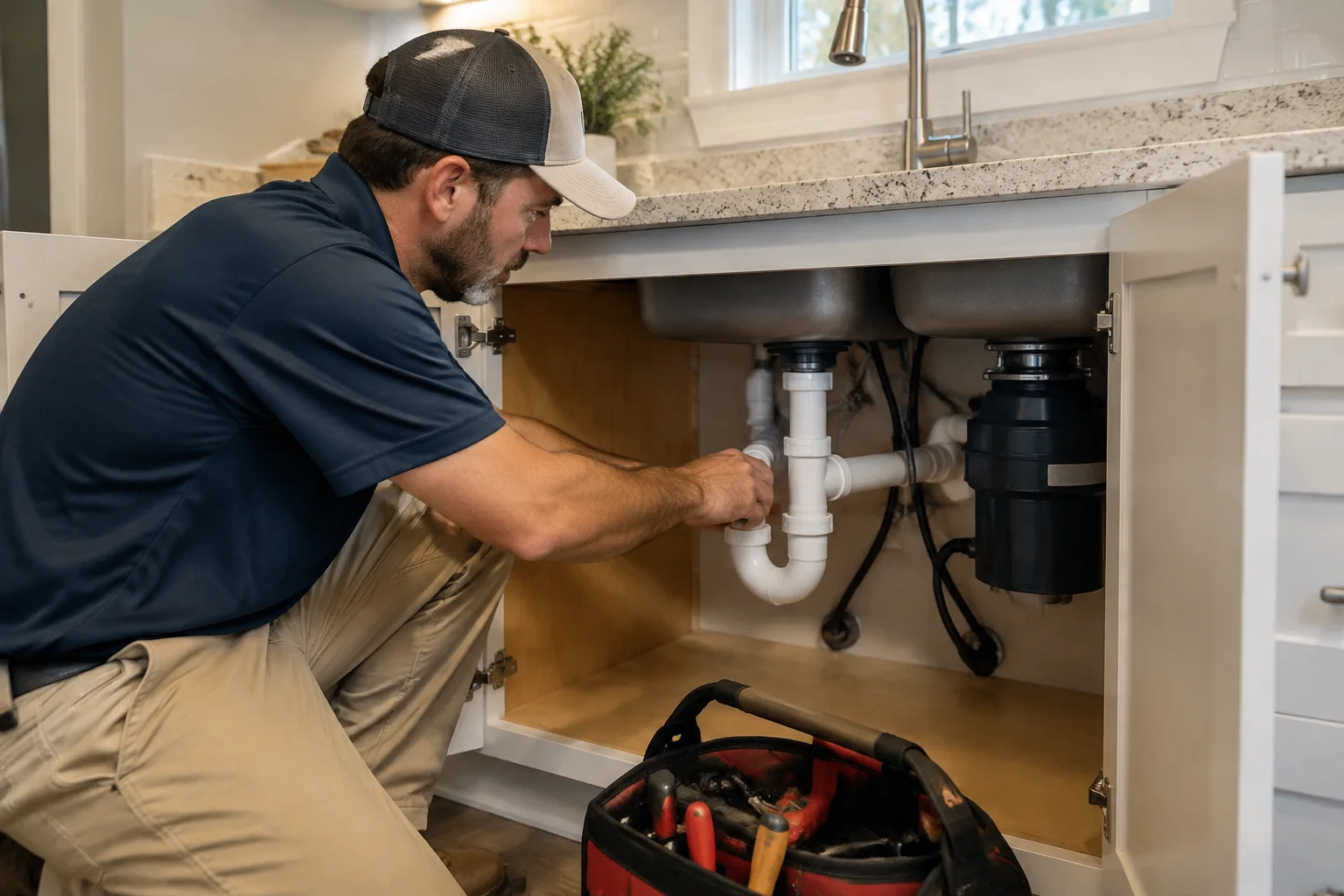
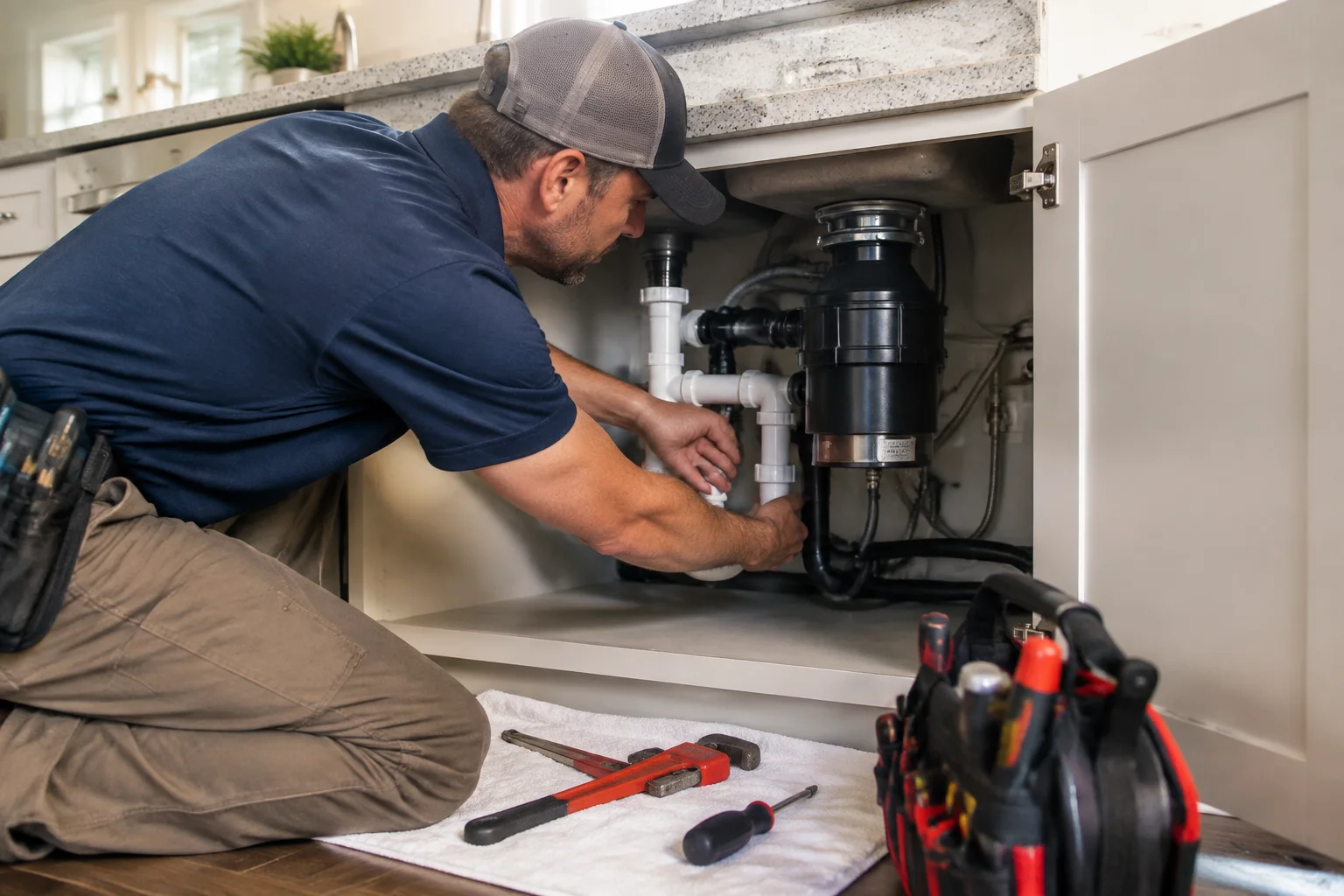
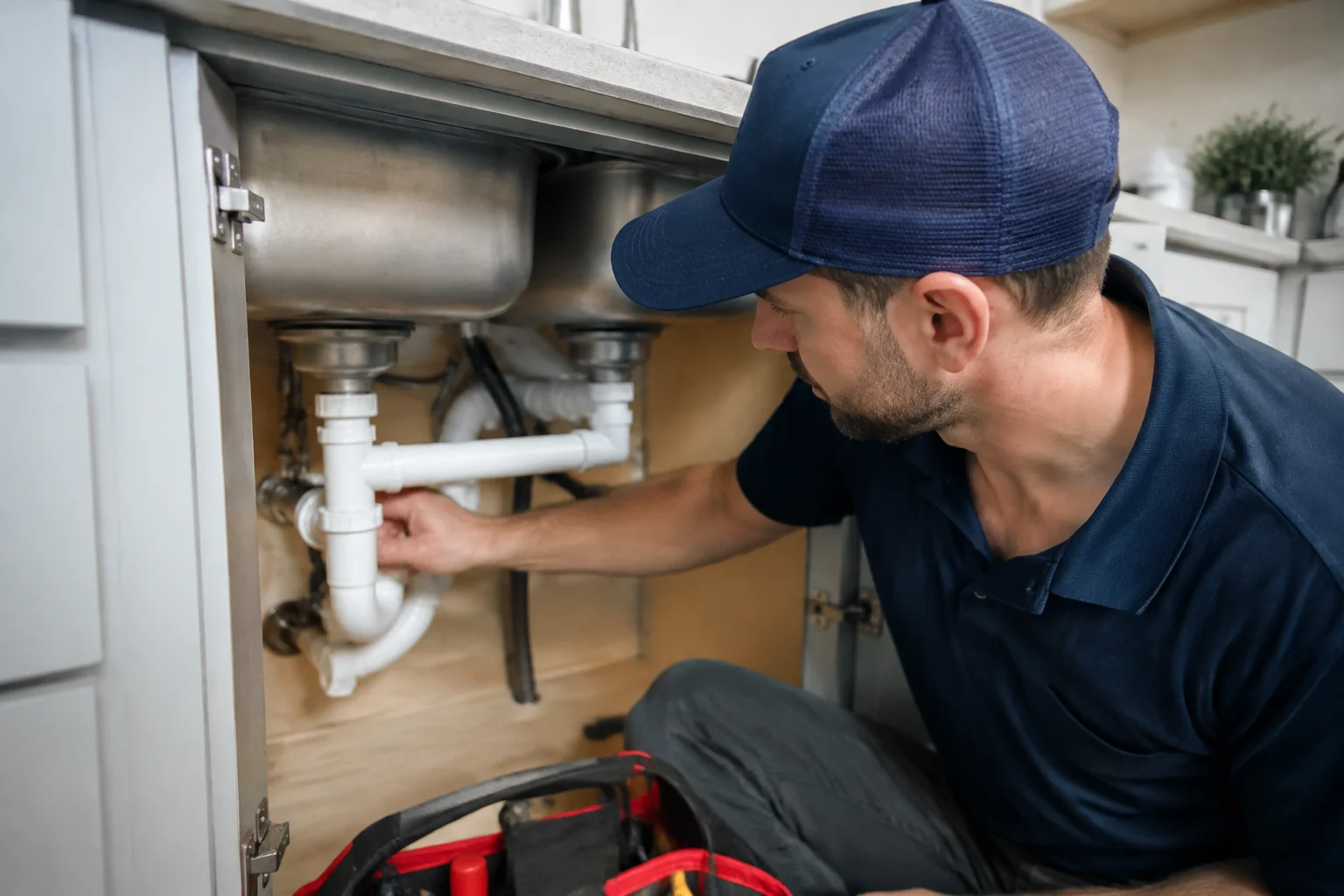
A pressurized supply pipe can leak continuously, even when a fixture is not running. A sink drain may leak only when water passes through it. Dry the accessible area beneath a sink, then briefly run the faucet while watching from a safe position. Water near the trap, disposal connection, or drain basket helps narrow the inspection.
Do not keep testing if water is reaching electrical equipment or damaging cabinetry. Avoid running a garbage disposal that is leaking near its electrical connection. Sink repair may involve a seal or fitting, while a corroded disposal housing may require replacement.
Slow drainage introduces another problem. A blockage can make a weak connection leak during use, but clearing the clog will not repair a cracked pipe. Kitchen drain cleaning should address grease and debris without treating every clog as a reason to pour corrosive chemicals down the sink.
Several fixtures backing up together, a toilet gurgling when another fixture drains, or sewage appearing at a low drain can indicate a shared drain or sewer line problem. Stop using affected plumbing. Homeowners searching for sewer backup repair near me should mention whether the issue affects one fixture or multiple rooms. Camera inspection may help identify roots, damage, or recurring obstruction.
Slab leaks need confirmation before concrete is opened
In a slab-on-grade home, leaking water lines beneath the foundation can be difficult to locate. Unexplained water use, moisture at floor edges, persistent warm flooring, or water sounds with fixtures off can justify further testing. Each symptom can also have other causes.
Professional diagnosis may involve pressure testing, isolating sections of piping, and acoustic or thermal tools where appropriate. No single tool guarantees an exact location in every building.
If you are considering slab leak repair near me, ask about the options after detection. A localized repair may be practical, while rerouting a line can sometimes avoid repeated access through the slab. The choice depends on pipe condition, accessibility, layout, and repair history, not simply which option requires the smallest opening today.
Choose a repair that addresses the cause
A lasting plumbing repair should do more than stop the visible drip. The plumber should identify the failed component and consider whether pressure, corrosion, poor support, or deterioration elsewhere contributed to it.
A damaged faucet cartridge or toilet fill valve may need a targeted replacement. An isolated pipe defect may call for replacing one section. Repeated failures along an aging supply line can make waterline replacement worth discussing rather than continuing to patch individual spots.
For homes with widespread deterioration, a broader plumbing replacement assessment can help prioritize work. Ask what the estimate includes, whether access and surface restoration are separate, and how the completed repair will be tested. Repair scope is more useful than comparing price alone.
Check toilets, faucets, and water heaters separately
Running toilets and leaking faucets
A toilet can waste water internally without wetting the floor. A worn flapper, faulty flush seal, or improperly adjusted fill valve may be responsible. A toilet-safe dye test in the tank can help reveal water passing into the bowl without flushing.
Water around the toilet base needs a different inspection. Possible sources include the supply connector, tank hardware, condensation, or a failed seal at the drain connection. Avoid rocking the toilet or tightening bolts aggressively, which can damage porcelain.
For faucets, note whether water drips from the spout, collects around the handle, or appears below the counter. Those locations point to different components and help guide faucet repair.
Water heater moisture and corrosion
Water near a heater can come from supply connections, a drain valve, a relief discharge, or the tank itself. Tankless systems also have service connections and, on condensing models, condensate drainage to inspect. Do not assume every puddle means the entire heater needs replacement.
Scheduled water heater maintenance can help identify connection problems and address sediment or scale according to the manufacturer's instructions. A leaking tank generally requires replacement rather than a surface patch.
Build leak prevention into routine property care
Once a month, look beneath sinks, around toilet supply connections, and near the water heater. Check washing machine hoses for bulges, corrosion, or moisture, and replace components according to their condition and manufacturer guidance. Keep shutoff valves accessible and make sure household members know the main shutoff location.
Leak sensors are useful beneath sinks, beside laundry equipment, and near water heaters. Monitored sensors and compatible automatic shutoff systems can provide additional protection for homes that sit empty. They supplement inspections rather than replacing them.
Before leaving a vacation home, consider shutting off the main supply if appropriate for the property. First account for fire sprinklers, irrigation, water heaters, and other equipment that may need water. Ask a plumber to help establish a safe vacancy procedure.
For a broader inspection routine, read why better plumbing maintenance pays off for Lower Grand Lagoon homes. If testing confirms water quality concerns, this guide to filtration and plumbing protection explains useful considerations. Standard filtration does not necessarily remove hardness; treatment should match the measured issue.
Get local help with the whole plumbing problem
Local plumbing service matters when access, occupancy, and building layout affect a repair. A vacation rental may need coordination between guests, an owner, and a property manager. A condominium may require management involvement before shutting off shared water or accessing common piping.
A Superior Mechanical offers plumbing help in Lower Grand Lagoon and serves properties throughout Bay County. When requesting service, describe the moisture location, whether it changes during fixture use, any meter movement, and steps already taken to stop the water.
For active flooding, sewage backups, or a suspected concealed supply leak, request emergency plumbing assistance promptly. For smaller recurring leaks, schedule an inspection before another stain or higher water bill becomes the reminder.
Find Water Leak Repairs in Lower Grand Lagoon, FL
If you need Water Leak Repairs in Lower Grand Lagoon, FL, visit our local service page or contact A Superior Mechanical today.
Map of Lower Grand Lagoon, FL
Frequently Asked Questions
How can I tell whether a hidden leak is raising my water bill?
Compare water use with similar occupancy and irrigation patterns, then check your individual water meter with all water-using fixtures and equipment off. Unexpected movement can indicate a leak, but professional testing may be needed to locate it. A stationary meter does not rule out intermittent or drain leaks.
Does a slab leak always require breaking through the floor?
No. After confirming the leak, a plumber may recommend direct access, rerouting the affected line, or more extensive pipe replacement. The best approach depends on the home's layout, pipe condition, accessibility, and history of leaks.
What should I do before a plumber arrives for an active water leak?
Close the affected fixture's shutoff valve if it operates safely, or close the home's main water shutoff for a leak you cannot isolate. Keep away from water near electrical equipment and avoid sagging ceilings. Photograph damage if safe, move belongings, and tell the plumber whether water is still flowing.
Related Articles
Photo Gallery