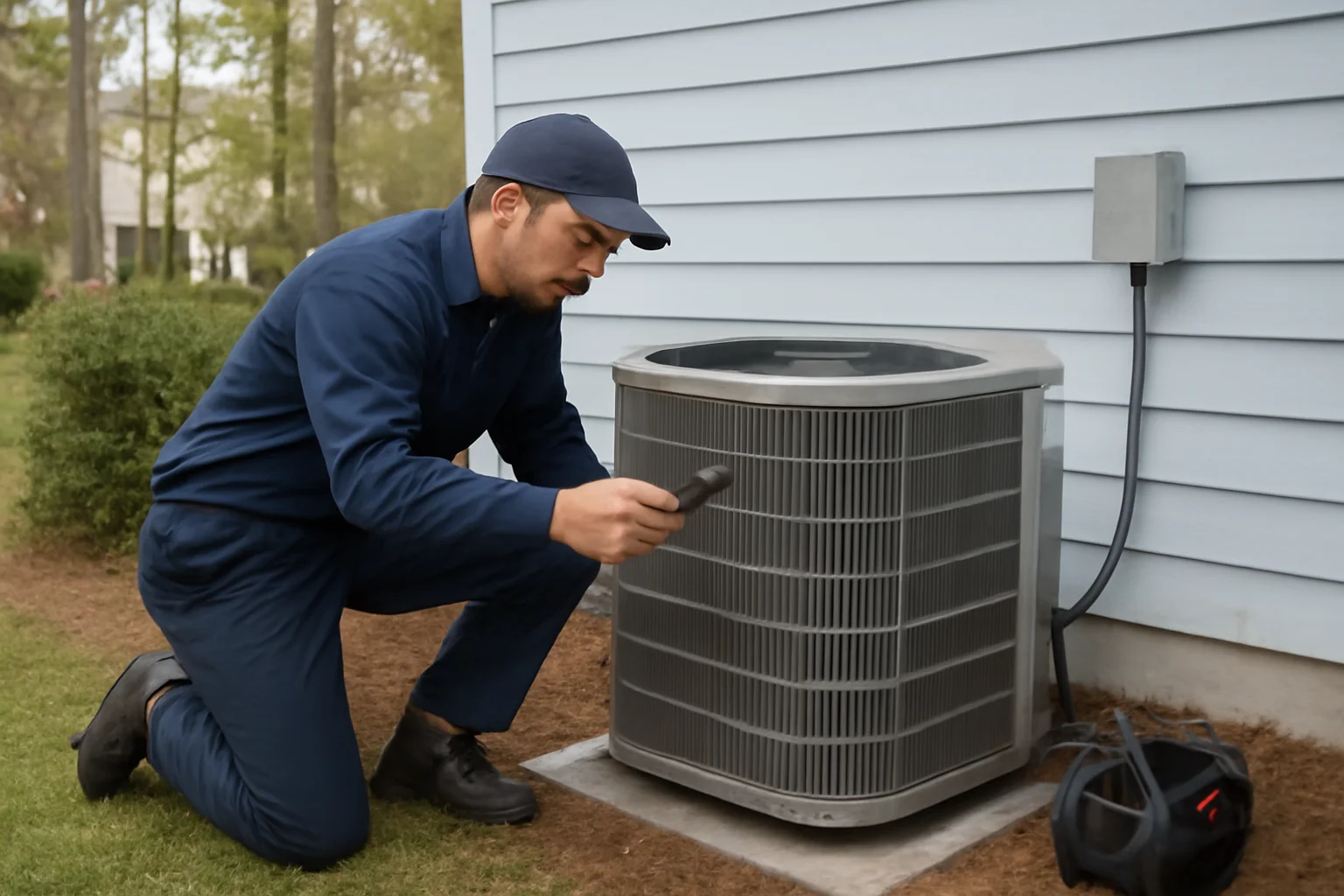
WaterColor, FL homes live in a mix of heat, humidity, and salty air. That environment does not just affect comfort. It can also stress the parts of your HVAC system that manage temperature and regulate heating and cooling, like thermostats, zoning controls, and the airflow pathways that keep refrigerant systems operating the way they are designed to.
This guide focuses on heating control systems and everyday reliability. You will find practical prevention steps, common causes of control-related problems, and clear signs that professional HVAC service is the right next move. If you are searching for heating control systems in WaterColor, FL, this is a helpful place to start.
Why heating control systems are extra important in WaterColor
Heating control systems are the “decision makers” for your comfort. They sense indoor conditions, communicate with your HVAC equipment, and coordinate how your system heats, cools, and maintains steady temperatures. When controls are misread, poorly calibrated, or blocked by airflow issues, you can see symptoms that look like “equipment failure” but are really control or system interaction problems.
In WaterColor, several local conditions can make those problems more likely:
- Florida heat and humidity: High humidity can affect indoor comfort and can also influence how systems handle moisture, especially around condensate drainage on cooling cycles.
- Salt air exposure: Coastal air can increase corrosion risks on metal components and can influence how reliably electrical connections and control wiring perform over time.
- Airflow restrictions in ductwork: Many homes rely on ductwork that can accumulate dust, develop leaks, or shift over time. Poor airflow can cause inconsistent temperatures and short cycling.
- Energy use pressure during peak seasons: When controls are set poorly or schedules are fighting the actual home conditions, you may see higher energy use and more wear on refrigerant systems.
Start with thermostat placement and everyday settings
Many heating control problems are preventable with simple homeowner habits. Even the best thermostat can behave badly if it is installed or configured in a way that does not match how your home actually heats and cools.
Check thermostat location
If your thermostat is near a doorway, in direct sunlight, above a heat source, or tucked behind furniture, it can read temperatures that do not reflect the rest of the room. That can cause the system to overshoot, run longer than needed, or cycle too frequently.
Consider these prevention steps:
- Keep the thermostat away from direct sun and drafts.
- Do not place it behind curtains or in corners where airflow is limited.
- If you have multiple floors or large open spaces, confirm the thermostat is in a representative location.
Use schedules that match how your household behaves
In WaterColor, most homes experience real temperature swings throughout the day due to sun exposure and humidity. If your schedule turns heating on and off aggressively, the system may struggle to maintain stable comfort. That can lead to frequent starts, uneven temperatures, and unnecessary energy use.
Instead of extreme setpoint changes, try moderate adjustments and allow the system time to respond. If you use a smart thermostat app, pay attention to whether “learning” features are actually helping or causing unexpected cycles. If controls seem to be fighting the home, it is a good time to ask a local HVAC professional to review settings and system behavior.
Confirm indoor humidity comfort goals
Florida humidity can make “temperature” feel different than the thermostat displays. When humidity is out of range, the system may run more often, which can add stress to refrigerant systems and increase condensate management demands. A properly tuned control strategy supports indoor comfort and indoor air quality.
If you are thinking about indoor air quality services near me for humidity control and filtration support, it is also worth discussing whether your heating and cooling controls are coordinating well with your comfort targets.
Zoning and automation: great benefits, common failure points
Many WaterColor homeowners upgrade to smart thermostats, zoning controls, or automation that coordinates multiple rooms or comfort modes. These systems can improve comfort when they are properly designed around your ductwork and airflow.
Problems often show up when zoning expectations do not match real airflow. A zone can feel “stuck” if dampers do not move freely, if airflow is limited, or if ductwork balance is off. The result can be temperature swings, uneven heating, or repeated system cycling.
Watch for symptoms that zoning controls are not balancing
- One room heats well while another stays too warm or too cool.
- The system turns on frequently even when temperature is close to the target.
- Zones call for heating or cooling at the same time, creating conflicting signals.
- Air feels weak from vents in certain areas.
These symptoms are not always caused by the control system itself. They can also be linked to ductwork condition, airflow restrictions, or condensate drainage behavior during cooling cycles. That is why professional HVAC service matters in WaterColor homes.
Airflow and ductwork: the control system’s real-world limits
Heating control systems can only regulate comfort if air can move properly. When ductwork has leaks, poor sealing, or restrictions, the equipment runs harder to compensate. Over time, that can contribute to control issues, inconsistent temperatures, and more frequent service needs.
Prevent airflow problems with simple checks
- Replace filters on schedule and do not let them become overly clogged.
- Keep supply and return vents clear of furniture, rugs, and window coverings.
- If you notice musty odors or persistent dust, consider whether ductwork and filtration need attention.
Get duct inspection before controls are blamed
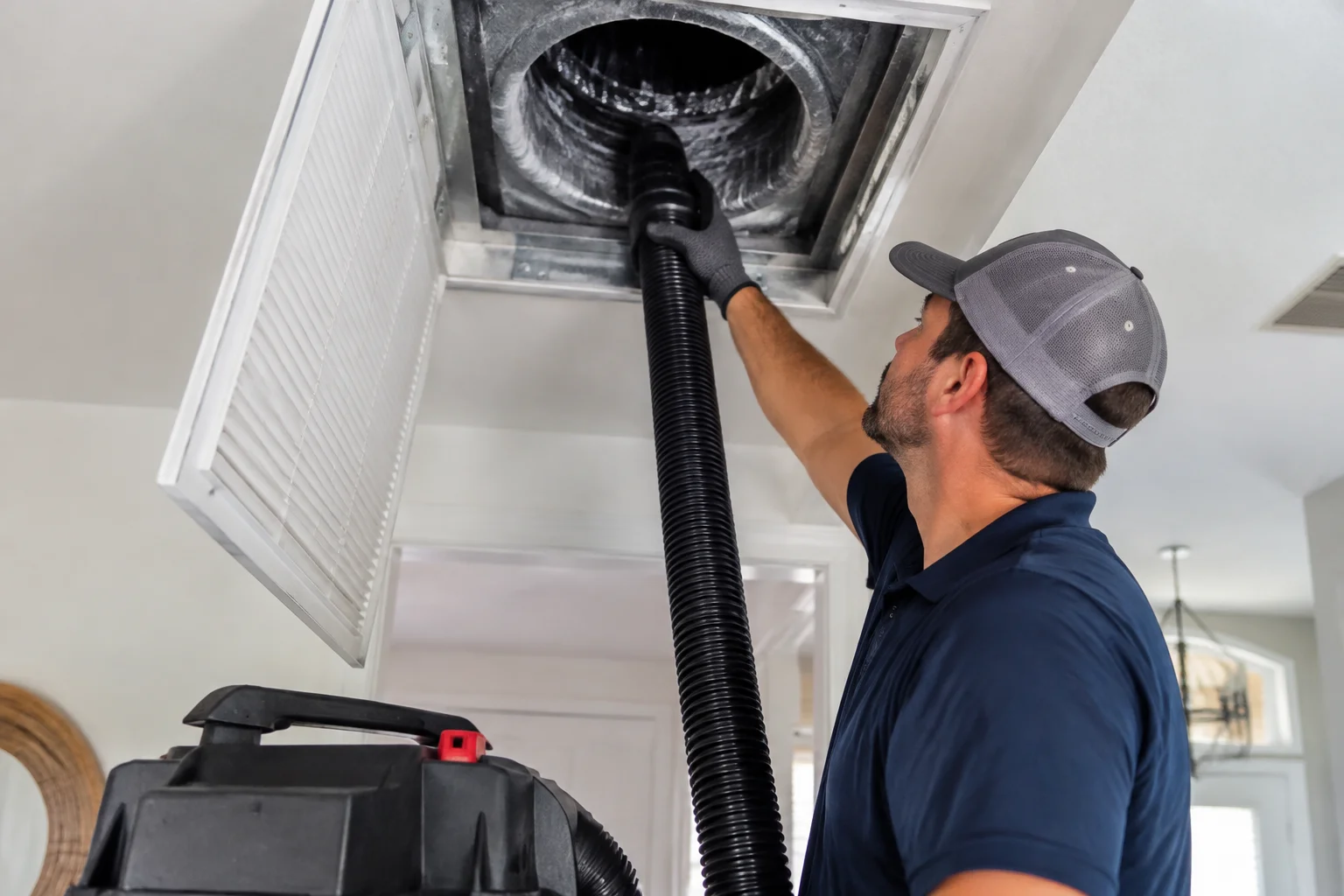
If you have uneven temperatures, persistent short cycling, or rooms that never match the thermostat, ductwork testing and inspection should be part of the troubleshooting process. For homeowners searching for duct inspection in WaterColor, this step often clarifies whether the heating control system is operating correctly or compensating for airflow limitations.
It also helps connect indoor air quality goals to the comfort strategy. If you are exploring indoor air quality improvements, ask how filtration and airflow affect humidity and temperature stability.
Condensate drainage and humidity: a quiet driver of control headaches
Even though this article focuses on heating control systems, it is important to understand how condensate drainage can affect HVAC reliability. During cooling cycles, moisture removal depends on proper condensate drainage. If drainage is restricted, water can back up or create conditions that lead to equipment shutdowns, nuisance alerts, or abnormal operating behavior that affects how controls respond.
In humid Florida weather, condensate drainage issues can show up more often. Homeowners may notice:
- Water around the indoor unit or near the condensate line.
- Musty odors after the system runs.
- Frequent system interruptions that look like thermostat issues.
These are strong reasons to schedule professional HVAC service rather than trying to adjust thermostat settings to “fix” the symptom. A technician can evaluate how the system manages moisture and how that impacts control operation.
Refrigerant systems and control behavior: why “it feels like the thermostat”
Heating and cooling controls influence how your refrigerant system cycles and responds. When the refrigerant system is not performing as expected, the control system may appear to be malfunctioning because it is trying to reach the setpoint.
It is tempting to say, “The thermostat must be bad,” but controls are only one part of the chain. Refrigerant performance, compressor operation, and airflow conditions all interact. For example, reduced airflow can change system pressure and heat transfer behavior, causing the HVAC system to run longer or cycle differently.
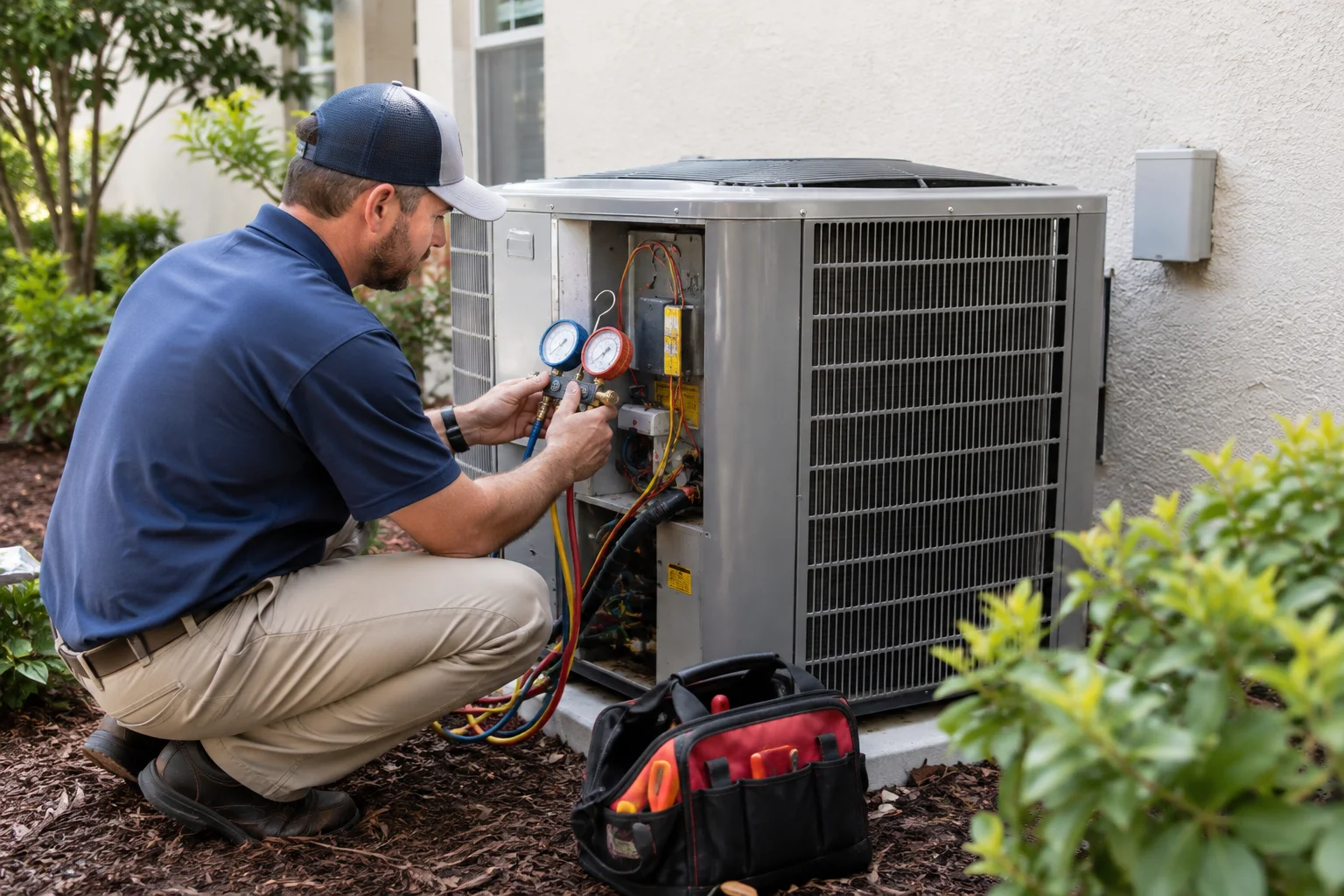
Because refrigerant system issues require in-person evaluation, it is not appropriate for homeowners to attempt diagnosis or make refrigerant decisions based on thermostat behavior alone. If you suspect a refrigerant-related problem, contact an HVAC professional for troubleshooting and safety checks.
Preventive maintenance that protects heating control reliability
Think of preventive HVAC maintenance as a way to keep the entire control loop stable. That includes thermostat operation, airflow, condensate drainage, and the performance of the heating and cooling equipment that the controls command.
What a good seasonal tune-up should cover
While the exact service depends on your system type, a high-quality AC tune up near me style visit typically includes checks and adjustments that support dependable operation. For homeowners in WaterColor, ask your technician to include:
- Thermostat function verification and coordination with the HVAC equipment
- Assessment of airflow across the system, including returns and supplies
- Inspection of condensate drainage performance during cooling operation
- Verification of control signals and safe operation under normal loads
- Review of filter condition and recommendations for indoor air quality support
Maintenance habits that support controls at home
- Keep a consistent filter schedule: Filters that are too restrictive can reduce airflow and cause control instability.
- Don’t ignore recurring alerts: If your thermostat or system displays error codes, write down what you see and when it happens.
- Monitor temperature consistency: If certain rooms lag or overshoot repeatedly, it can point to ductwork or zoning balance needs.
- Use the right comfort mode: In humid weather, the “fan only” and “auto” settings can change indoor moisture handling.
If you want a deeper look at how maintenance supports heating control systems, see How Better HVAC Maintenance Supports Heating Control Systems in Alys Beach. The same principles apply to coastal Florida comfort planning.
How duct sealing and balance affect temperature control
WaterColor homes often have unique layouts and airflow paths. Even small duct leaks can change how quickly your system reaches setpoints. That can lead to longer run times, higher energy use, and more frequent cycling that affects control reliability.
If you suspect airflow problems, it can help to pair heating control troubleshooting with ductwork performance improvements. Homeowners interested in duct repair near me may also benefit from understanding why sealing and airflow quality matter.
For more on this topic, read Why WaterColor Homes Benefit from Better Duct Sealing and Aeroseal Care.
When heating control issues become emergency cooling concerns
In Florida, “emergency” can happen fast. Even if your thermostat primarily controls heating, the same system is often responsible for cooling comfort too. If controls fail during a heat wave, you may face an immediate comfort problem.
Call for urgent HVAC repair when you notice:
- The system will not respond to thermostat commands.
- Repeated shutdowns or flashing alerts that interrupt heating or cooling.
- Uneven temperatures that rapidly worsen across the home.
- Any signs of moisture issues that could indicate condensate drainage failure.
If you are searching for emergency AC repair near me during peak summer conditions, having a local HVAC company that understands WaterColor home comfort patterns can reduce downtime and help prevent additional damage from abnormal operation.
Choosing local HVAC service for heating control reliability
Local HVAC contractors understand the realities of Walton County homes: coastal humidity, salt air exposure, and common comfort complaints tied to airflow and ductwork. That local context matters when troubleshooting heating control systems because the root cause is often a system interaction problem, not a single “bad part.”
A Superior Mechanical serves WaterColor homeowners with heating control system support. If you are evaluating new controls, zoning, or reliability improvements, you can explore the service area information here: heating control systems in WaterColor, FL. You can also browse the city and county service pages at /service-areas/walton-county/watercolor and /service-areas/walton-county.
Related comfort upgrades that can pair with heating controls
Heating control reliability improves when the rest of the HVAC system is aligned with your comfort goals. Depending on your home, you may also consider:
- Indoor air quality improvements: Better filtration and airflow support can help manage humidity comfort and reduce dust buildup. Start with indoor air quality.
- Duct inspection and duct repair: If vents feel weak or rooms are inconsistent, ductwork evaluation can clarify the problem. See duct inspection.
- Duct replacement planning: If ductwork is damaged or poorly matched to the home, replacement can support steadier temperatures. Learn more at duct replacement.
- Ductless options for specific zones: Some layouts benefit from ductless mini-splits for targeted comfort. Explore ductless mini-splits.
If you are weighing upgrades because your system feels unreliable, it can also help to understand how different home types respond. For broader context on system strain, you may like Keeping WaterColor Homes Comfortable Without the Emergency Call.
How to decide whether you need repair, tuning, or a bigger update
Homeowners often wonder whether the right move is a thermostat adjustment, an HVAC repair, or a more comprehensive HVAC replacement near me discussion. The safest approach is to let a professional evaluate the system in person, because heating control symptoms can overlap with airflow issues, condensate drainage problems, and refrigerant system performance concerns.
Here are practical guidelines that can help you prepare for a technician visit:
- If the problem is intermittent: Note when it happens, what mode you were using, and whether certain rooms were more affected.
- If temperatures are uneven: Document which areas are too hot or too cold and whether airflow feels weak at specific vents.
- If you see alerts: Record the exact messages from the thermostat or system panel.
- If humidity feels off: Note whether the home feels sticky, whether dehumidification seems weak, and if there are any moisture odors.
When a system is aging or repeatedly fails to maintain comfort, a technician can discuss options. If HVAC replacement near me becomes part of the conversation, it should be based on real performance, safe operation, and the needs of your WaterColor home, not just thermostat symptoms.
Common heating control system problems in WaterColor homes
Below are frequent issues homeowners encounter, along with prevention-minded ways to reduce recurrence:
- Short cycling: Often linked to airflow restrictions, oversized or poorly matched operation, or control settings that do not align with the home. Prevent it with filter discipline, clear vents, and scheduled AC tune ups.
- Uneven temperatures: Common when ductwork balance is off or zoning dampers are not coordinating with airflow. Prevent it by prioritizing duct inspection and airflow checks.
- Condensate drainage-related shutdowns: More common in humid Florida conditions. Prevent it with seasonal maintenance that includes condensate drainage inspection.
- Thermostat misreads: Caused by placement, sunlight exposure, drafts, or incorrect settings. Prevent it by keeping the thermostat in a stable location and using schedules thoughtfully.
- Control communication issues: Can occur due to wiring wear, corrosion risks from salt air, or compatibility problems with automation. Prevent it through professional evaluation rather than repeated DIY adjustments.
What to ask your HVAC company during a heating control service visit
If you want reliable HVAC service near me for heating control systems, use questions that guide the technician to consider the full system. Helpful questions include:
- “Could thermostat placement or scheduling be causing the symptoms we are seeing?”
- “Should we evaluate ductwork airflow or duct sealing before adjusting controls?”
- “Can you check condensate drainage performance and confirm it is operating correctly during cooling?”
- “Are the heating and cooling control signals coordinating properly with the equipment?”
- “What preventive HVAC maintenance steps will best support stable comfort in our WaterColor home?”
These questions help keep troubleshooting grounded in what is actually happening in your home. They also support indoor air quality goals and reduce the chance of repeated service visits for the same comfort complaint.
If your next step is finding a local team that understands WaterColor conditions and can support smart heating control systems, start with A Superior Mechanical’s heating control systems service area and browse the broader options at /service-areas/walton-county/watercolor.
Find Heating Control Systems in WaterColor, FL
If you need Heating Control Systems in WaterColor, FL, visit our local service page or contact A Superior Mechanical today.
Map of WaterColor, FL
Frequently Asked Questions
How can I tell if my thermostat settings are causing heating control problems?
If the system overshoots, short cycles frequently, or comfort changes drastically when you only adjust the thermostat schedule, settings and thermostat location are likely contributors. A technician can verify thermostat operation and coordination with your HVAC system after checking airflow and humidity factors.
Can ductwork issues make heating controls seem “broken”?
Yes. If airflow is restricted by duct leaks, poor sealing, or clogged filters, the system may run longer or cycle differently to reach the thermostat setpoint. That can look like a control problem, but duct inspection and airflow checks often reveal the real cause.
What role does condensate drainage play in thermostat or control complaints?
During cooling cycles, condensate drainage must work correctly to remove moisture. If drainage is restricted, the system may shut down or behave abnormally, which can trigger alerts and comfort problems. Preventive maintenance should include condensate drainage inspection.
Should I attempt refrigerant or electrical troubleshooting if heating controls act up?
No. Refrigerant system performance and electrical or control wiring issues require safe, in-person evaluation. If heating and cooling controls do not seem to match system response, contact a licensed HVAC professional for troubleshooting.
How often should WaterColor homeowners schedule preventive HVAC maintenance for better control reliability?
Seasonal preventive maintenance is the best baseline for HVAC reliability in Florida’s heat and humidity. If you use zoning, automation, or smart thermostats, maintenance visits help confirm that controls, airflow, and moisture management stay coordinated throughout the year.
Related Articles
Photo Gallery