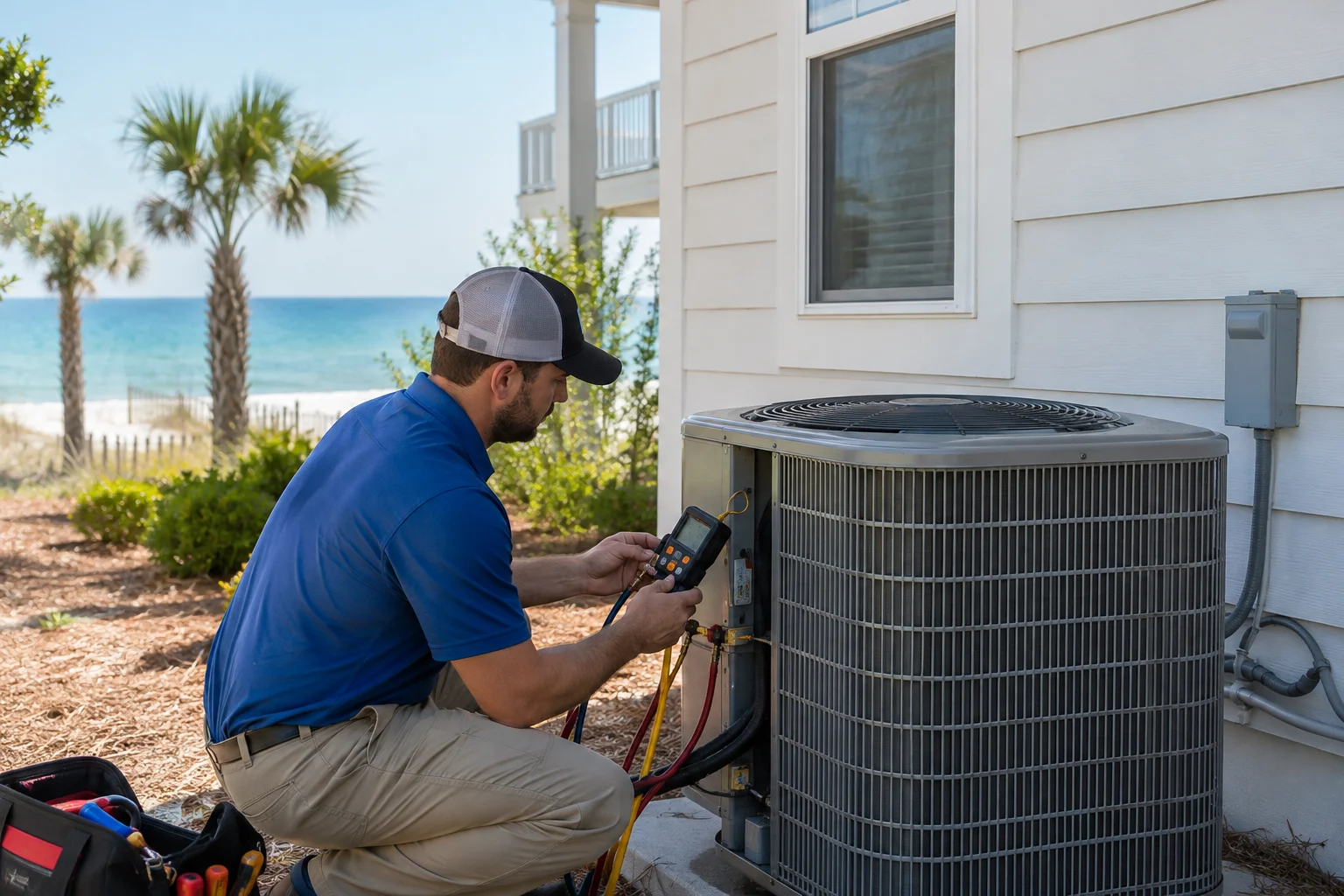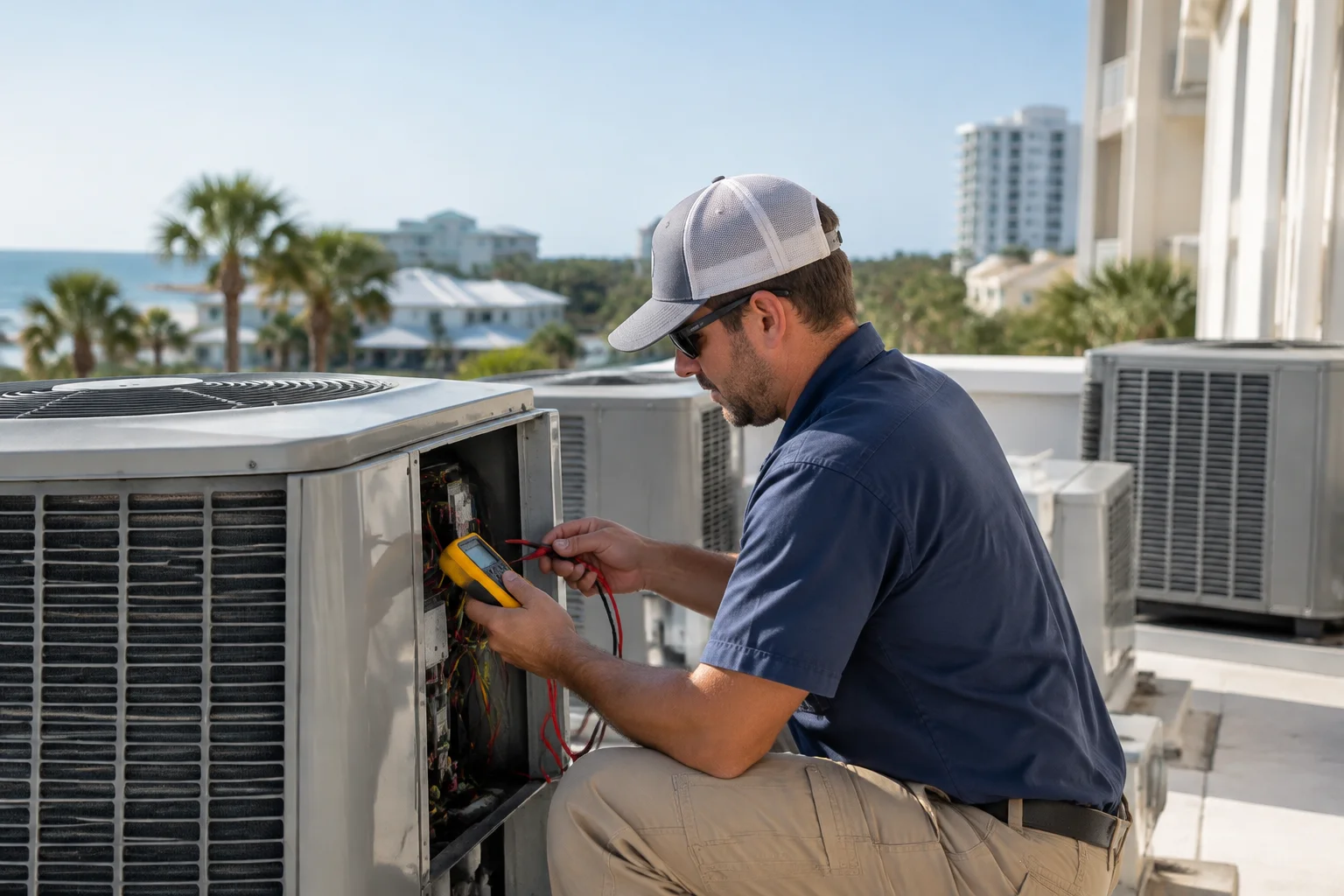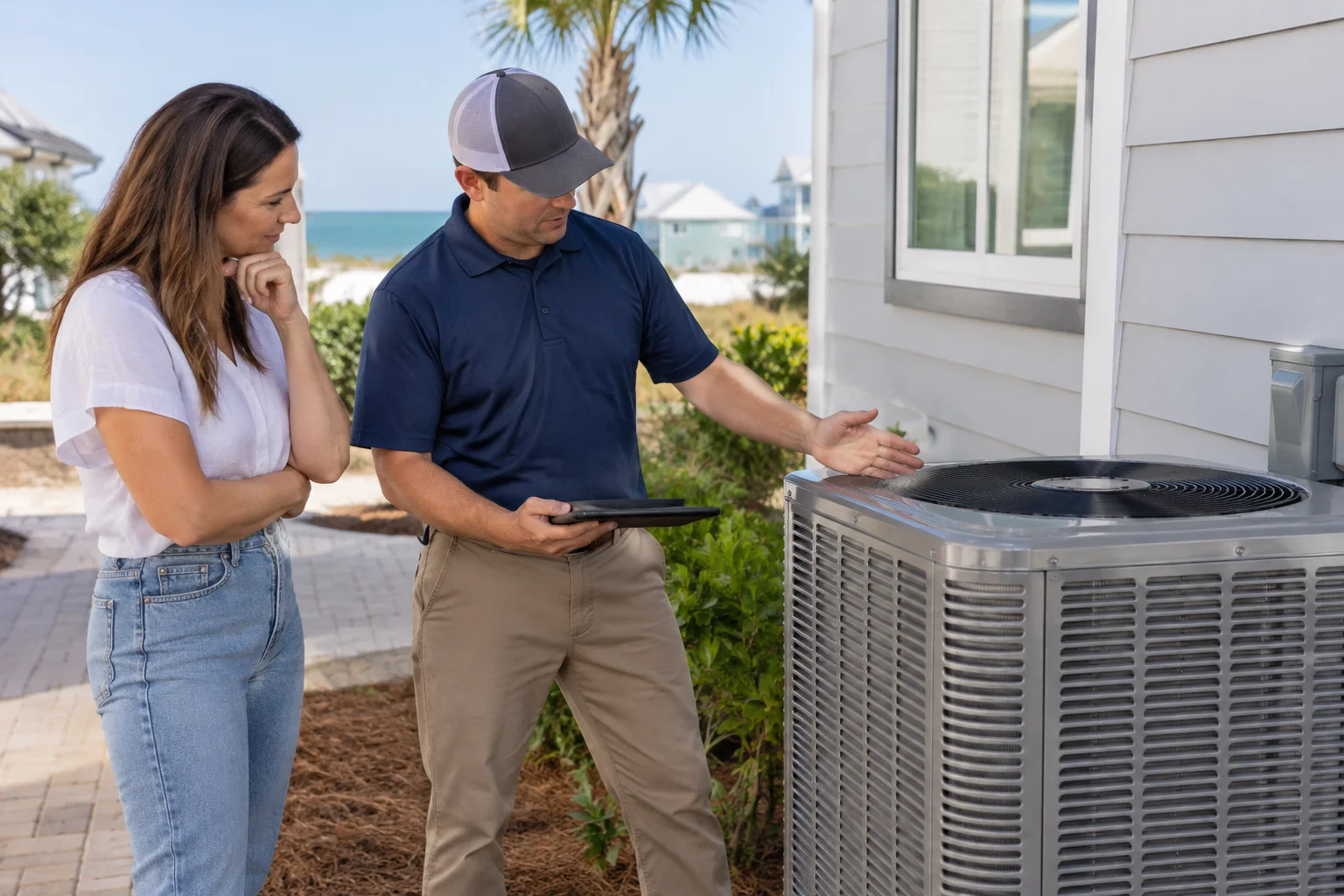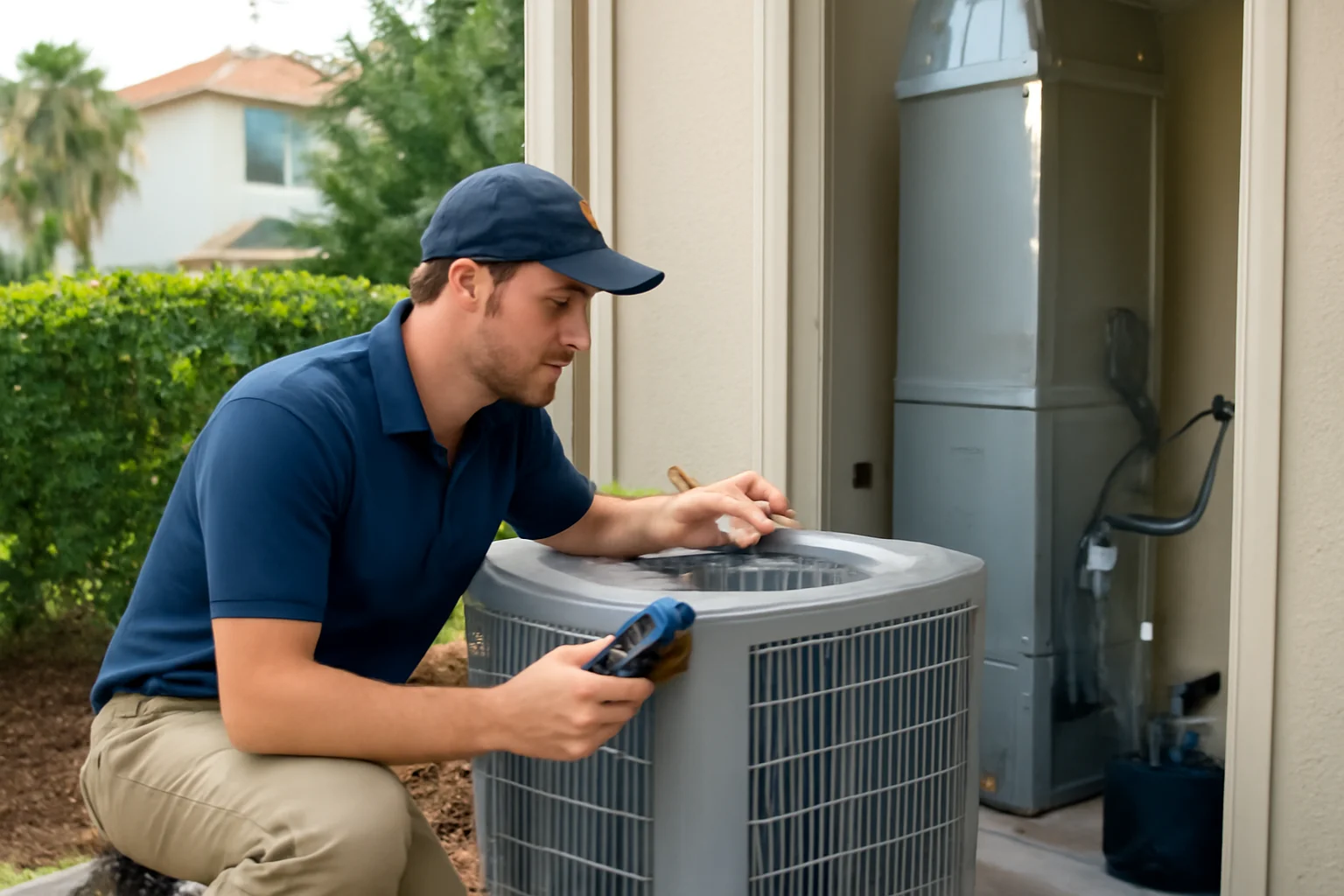
Laguna Beach, FL homes and rental properties live with a very real HVAC challenge. Heat loads build quickly, humidity can push comfort and air quality off track, and salt air can add stress to metal components and airflow paths. For property managers, the goal is simple: keep systems running reliably between guest stays, tenants, and seasonal weather swings. That usually comes down to early detection plus consistent preventive HVAC maintenance, not last-minute emergency cooling calls.
This guide focuses on property management HVAC services in Laguna Beach, FL and how homeowners and managers can spot HVAC trouble early. We also cover what to look for in air conditioning service, heat pump service, ductwork, indoor air quality, condensate drainage, refrigerant system concerns, and thermostat performance, with practical steps that support energy use and comfort.
Why Laguna Beach weather makes “early” HVAC issues harder to ignore
In Florida’s coastal climate, your HVAC system does more than cool. It also removes moisture, keeps airflow steady, and maintains indoor air quality. When something starts to drift out of spec, you may not notice immediately as a complete failure. Instead, you see smaller symptoms that can grow into larger problems.
Laguna Beach properties often face:
- Higher humidity pressure on cooling: A system that is slightly underperforming can struggle with latent cooling, leaving spaces feeling clammy even when the thermostat says the temperature is right.
- Airflow restrictions from ductwork and filters: Dust buildup, duct leakage, and blocked returns can reduce airflow, which can affect comfort and system efficiency.
- Corrosion stress from salt air: Outdoor units and nearby metal surfaces can experience accelerated wear, especially when landscaping debris traps moisture around equipment.
- Condensate drainage issues: When condensate drains are slow or partially blocked, water can back up, raising risks for water damage and microbial growth.
For property managers, these issues matter because they can interrupt occupancy, increase energy use, and lead to bigger refrigerant system problems. Early detection helps you address the root cause before it becomes a shutdown.
Build a property HVAC “watch list” for early warning signs
Most homeowners only notice HVAC trouble when the system stops cooling. Property management works better when you track patterns and small changes. Use a watch list and document what you see during routine visits or tenant check-ins.
Comfort and humidity clues
- Rooms feel damp or muggy: This can point to a cooling performance problem, airflow imbalance, or condensate drainage concerns.
- Temperature swings: Hot rooms that never fully stabilize can indicate airflow restrictions in ductwork, a thermostat mismatch, or a failing component.
- Air feels warm at the registers: That can be related to airflow problems, refrigerant system performance, or compressor issues. It is also a sign to schedule AC repair near me promptly to avoid extended strain.
Airflow and ductwork red flags
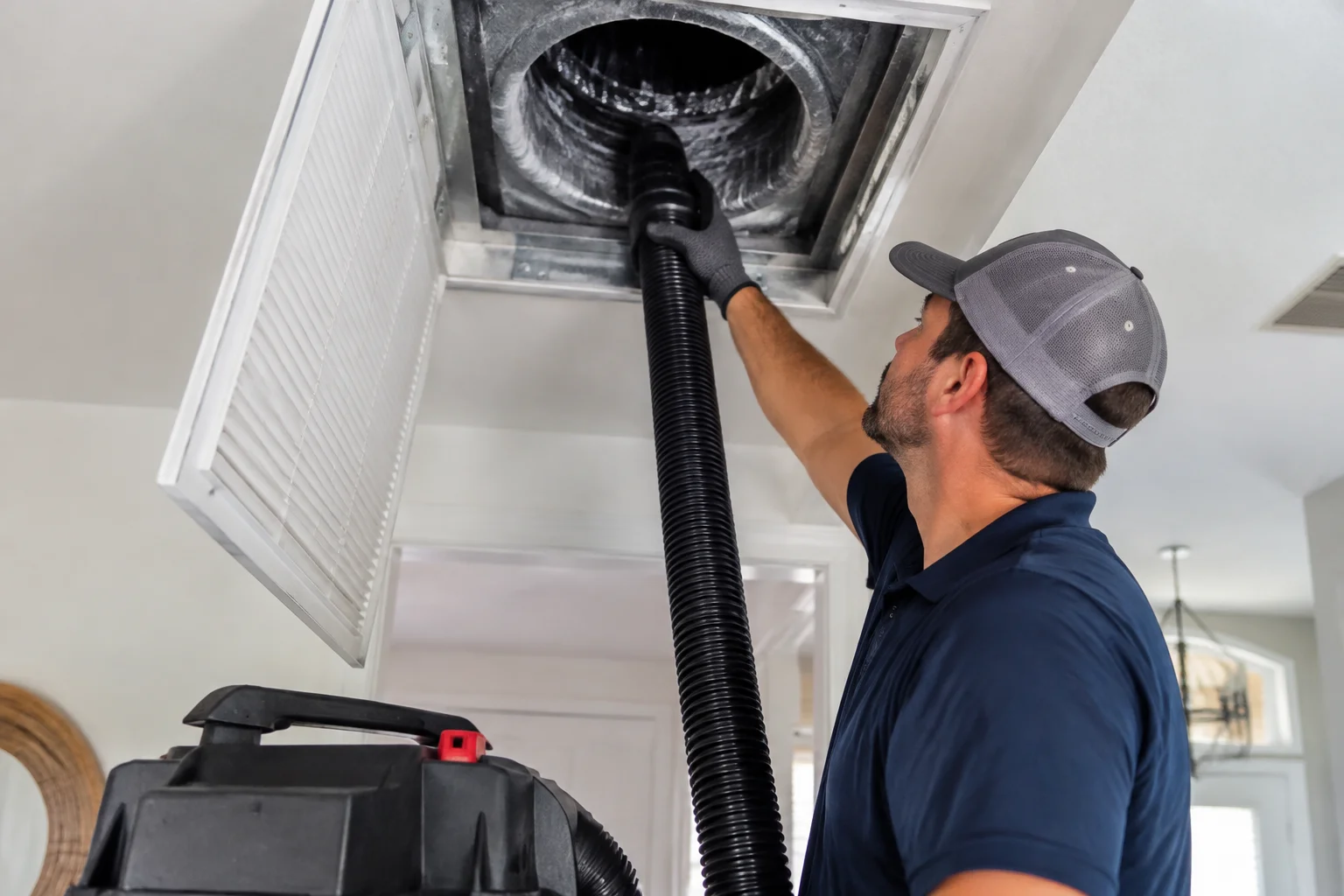
- Weak airflow from vents: Check for clogged filters, blocked returns, or duct leakage. If weak airflow persists after filter changes, professional duct inspection near me can help.
- Uneven temperatures between rooms: This often involves ductwork design, dampers, or return air pathways, especially in multi-zone homes.
- Whistling or rattling: Sounds can come from duct connections, loose panels, or blower issues.
Thermostat and control behavior
- Short cycling: A system that turns on and off frequently can wear components and fail to remove humidity effectively.
- Schedules that do not match comfort: If the thermostat is not calibrated, misprogrammed, or not reading indoor conditions accurately, the system may run longer than needed.
- Unexpected fan operation: Continuous fan mode can change humidity control and energy use.
Refrigerant system and coil performance concerns
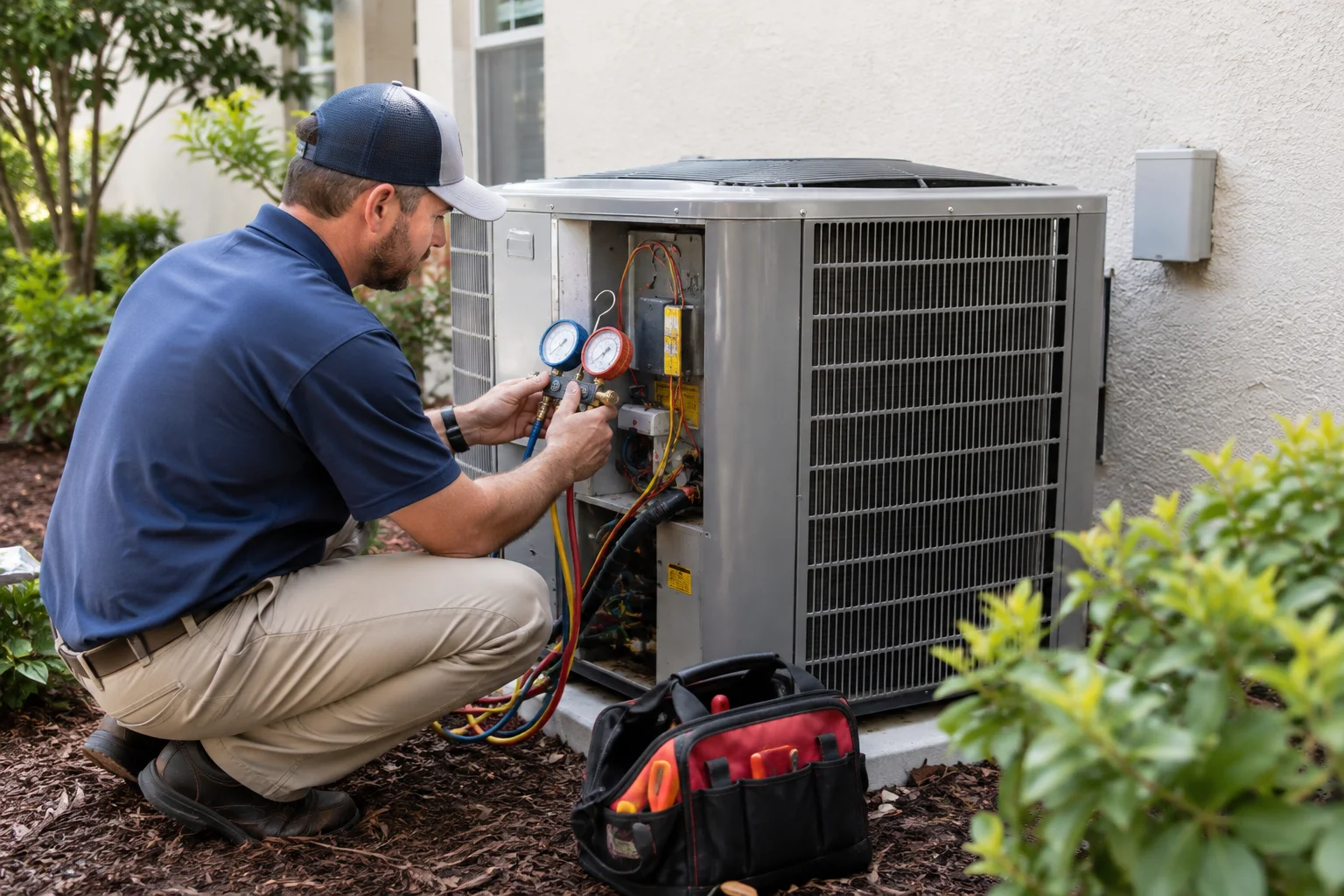
Homeowners should avoid DIY refrigerant checks, but you can still notice outcomes that suggest refrigerant system issues or coil problems.
- Frost or ice on coils: Ice can indicate airflow problems, control issues, or other cooling system conditions that require professional evaluation.
- Repeated “reset” behavior: If the system stops and needs attention to resume cooling, it may be protecting itself due to a detected abnormal condition.
- Strong chemical or unusual odors: Odors can be from dust on coils or other issues that should be inspected.
Common HVAC problems in Laguna Beach rentals and portfolios
Property managers often manage multiple units across different home types. The following issues show up frequently in Florida coastal communities and can be spotted early with consistent monitoring.
Dirty coils and restricted airflow
When indoor coils and blower components collect debris, airflow drops. That can reduce cooling capacity and worsen humidity control. It can also raise system stress by forcing the system to work longer for the same comfort level.
Routine HVAC maintenance near me typically includes inspection and cleaning where appropriate, plus checks that help confirm airflow is adequate for the equipment.
Condensate drainage clogs
Air conditioning service depends on proper condensate drainage. If the drain line is partially blocked, water can overflow or back up. Over time, this can contribute to moisture problems and indoor air quality concerns.
A Superior Mechanical can evaluate condensate drainage during preventive service visits as part of a broader inspection of system performance.
Thermostat issues and comfort complaints
Many guest and tenant comfort problems are control problems, not always equipment failures. A thermostat that is installed incorrectly, reading poorly, or programmed incorrectly can lead to unnecessary run time and uneven comfort.
If you are considering upgrades, review options like Smart Thermostat Installation to support better scheduling and monitoring across properties.
Ductwork leaks and poor return air pathways
Ductwork can impact both comfort and energy use. Leaks can pull in unconditioned air, and blocked returns can limit airflow. Either can make the system appear to “underperform” even when the equipment is operating.
When comfort complaints repeat room to room, professional duct repair near me or duct inspection can help identify whether ductwork is contributing to the problem.
Heat pump specific concerns (where applicable)
Some Laguna Beach properties use heat pumps for heating and cooling. Heat pump service can involve different performance patterns than standard systems. If you manage properties with heat pumps, monitor for signs like reduced heating effectiveness, unusual sounds during operation, or persistent humidity issues during cooling mode. These are indicators that professional heat pump repair near me may be needed.
Preventive HVAC maintenance that property managers can schedule consistently
Preventive maintenance is how you reduce emergency cooling concerns. It is also how you protect indoor air quality by keeping airflow pathways and components in better condition.
Create a seasonal maintenance cadence
Florida weather can shift quickly, so many property managers plan maintenance ahead of peak demand. A typical approach is to schedule preventive HVAC maintenance before the hottest stretches and again as needed based on system age, usage patterns, and observed performance.
During visits, a licensed HVAC contractor can inspect key areas tied to cooling reliability and airflow.
What a professional inspection should cover
While exact steps vary by system type, a strong preventive HVAC visit generally includes:
- Airflow checks: Confirming the system delivers appropriate air delivery through ductwork and registers.
- Blower and coil inspection: Looking for buildup that can reduce efficiency and cooling capacity.
- Condensate drainage evaluation: Ensuring condensate drainage flows correctly during operation.
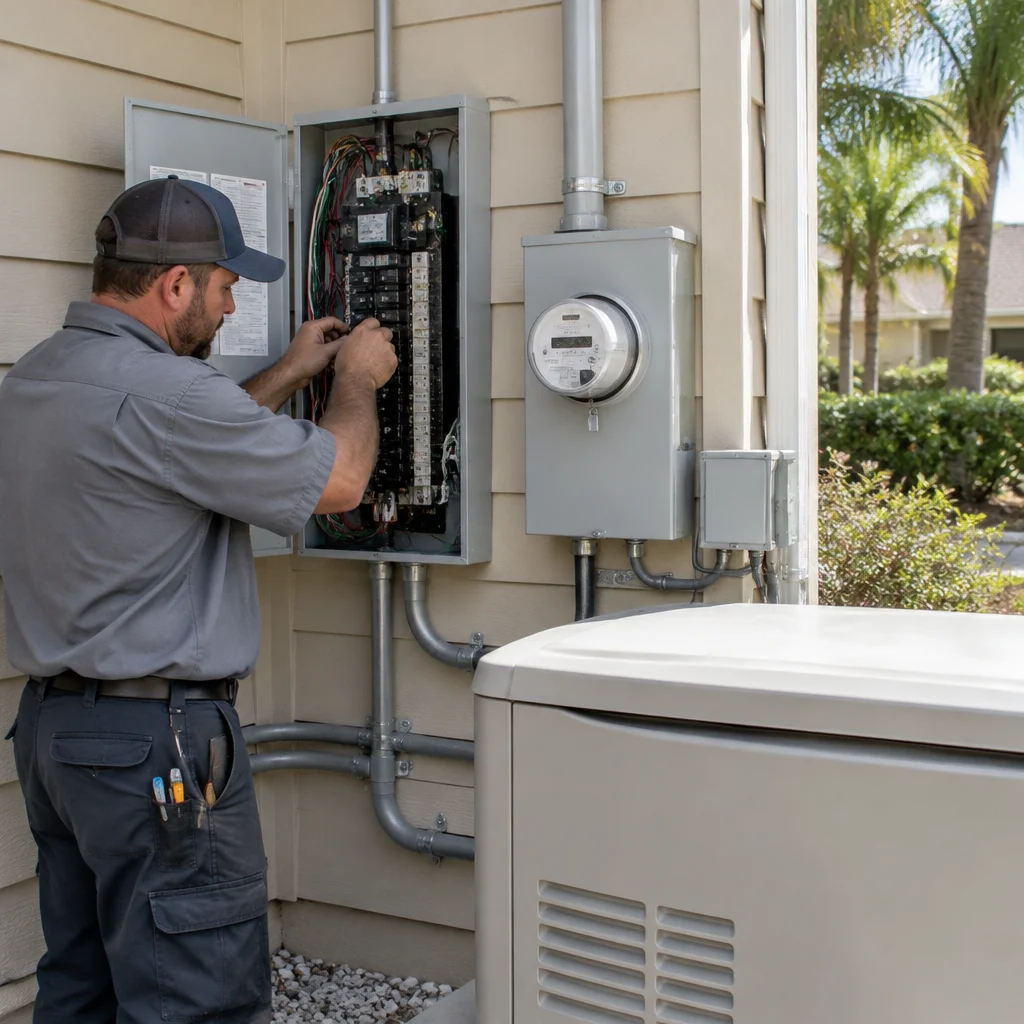
- Thermostat and control review: Verifying the thermostat and settings support stable comfort and humidity control.
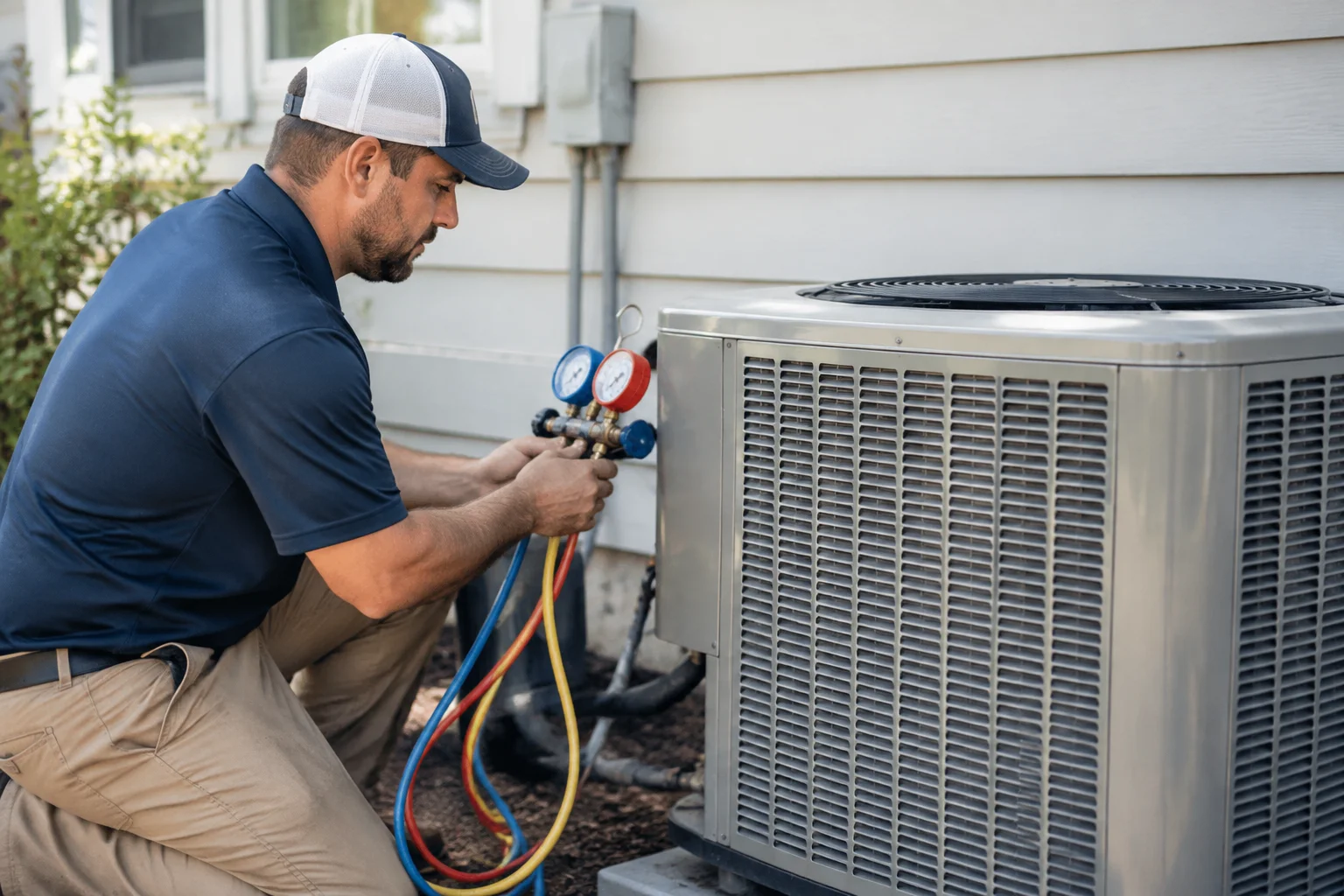
- General refrigerant system performance indicators: Without guessing, professionals can assess conditions that may point to refrigerant system issues and decide what additional evaluation is required.
Homeowners should not attempt refrigerant diagnostics or component replacement based on symptoms alone. An in-person evaluation is needed to confirm the cause.
Plan filter and airflow habits for tenants and guests
If your properties have shared maintenance responsibility, set clear expectations for filter access and return air pathways. Filters are a simple part of indoor air quality, but they also affect airflow and energy use.
For homeowners searching for duct cleaning near me or indoor air quality improvements, remember that ductwork cleanliness is only one piece. Airflow, filtration, and system cleanliness work together.
How to document HVAC performance between visits
Property management HVAC services work best when you have a record. Documentation helps technicians focus on the right symptoms and helps you compare performance across seasons.
Track the right data points
- Thermostat settings and outcomes: Desired temperature vs. actual comfort.
- Run time patterns: Frequent short cycles, long continuous run time, or repeated start-stop behavior.
- Humidity comfort feedback: Reports of dampness, stale air, or “too cold but still humid” feelings.
- Airflow complaints by room: Note which rooms feel weak, drafty, or consistently warmer.
- Odors or water signs: Any musty smell that could connect to condensate drainage issues, or visible water around the indoor unit area.
Use consistent inspection checklists
Even a simple checklist during routine property visits can help you catch issues early. If you can identify the pattern, you can schedule HVAC repair near me or service visits before a full breakdown.
Energy use and comfort: the connection homeowners often miss
HVAC problems rarely stay “just comfort.” When airflow is restricted or humidity control is off, systems can run longer. That increases energy use and can accelerate wear on components.
In a Florida coastal climate with high humidity, the system may also work to remove moisture. If the indoor coil or drainage paths are compromised, the system can struggle to dehumidify. That can result in higher operating time, more frequent cycling, and higher maintenance needs.
By scheduling preventive HVAC maintenance and addressing airflow and ductwork concerns early, property managers can help systems operate more steadily.
When emergency cooling becomes a real risk
Emergency cooling concerns are most likely when problems are already advanced. For property managers, that means you should treat certain symptoms as time-sensitive.
Escalate quickly if you notice
- No cooling or rapidly worsening cooling performance during peak heat.
- Repeated shutdowns or protective stops that prevent stable operation.
- Water leaks or overflow around indoor equipment that may connect to condensate drainage issues.
- Ice formation on coils or persistent frost that suggests a cooling system condition needing inspection.
These scenarios are not ideal for waiting. A licensed local HVAC contractor can evaluate the system in person. For managed properties, that often means having a plan for how emergency cooling will be handled when a guest or tenant calls.
Replacement planning without guessing
Some property managers eventually face system replacement decisions. Even then, it is important not to assume replacement based only on symptoms. A professional evaluation can help determine whether repairs, airflow corrections, or other adjustments address the problem.
If you are evaluating longer-term options, review local guidance on topics like Air Conditioning Replacement and how to plan for reliability in rental and portfolio settings.
Smart upgrades that support property management HVAC reliability
Upgrades can help systems run more consistently, but they should be chosen based on the property’s layout, ductwork, and equipment condition.
Thermostat upgrades for better control
A well-installed thermostat can improve comfort consistency, support scheduling, and reduce unnecessary run time. If you want to standardize controls across multiple units, consider Smart Thermostat Installation through a local HVAC professional.
Ductwork focus for airflow and indoor air quality
When airflow is uneven, ductwork may be part of the issue. Homeowners searching for duct inspection near me often want to understand whether the system can deliver balanced comfort. Duct repair and ductwork evaluation can be part of a broader plan for better HVAC performance.
For more on duct-related performance, read Cleaner Air Starts in the Ducts: A Laguna Beach Homeowner’s Guide to Better HVAC Performance.
Property manager priorities: reliability, documentation, and professional service
What sets property management HVAC services apart is continuity. Instead of reacting to a single complaint, you plan for the full ownership cycle: preventive HVAC maintenance, scheduled inspections, documented issues, and repair follow-through.
If you manage multiple properties, you can also benefit from standardized processes for monitoring thermostats, tracking comfort complaints, and scheduling service before peak heat increases the chance of emergency cooling concerns.
For broader planning ideas, these reads can help:
- Smart HVAC Planning for Air Conditioning Maintenance in Laguna Beach, FL
- Keeping Laguna Beach Properties Reliable with Smarter HVAC Management
- Commercial HVAC Installation in Laguna Beach, FL: The Issues Local Property Owners Should Not Overlook
Where to turn for property management HVAC services in Laguna Beach
If you are looking for a licensed HVAC contractor familiar with coastal Florida conditions, start with a local provider that can support both preventive HVAC maintenance and repairs when issues begin. A Superior Mechanical offers property management HVAC services in Laguna Beach, FL for vacation rentals, residential portfolios, and commercial properties.
To explore the broader service area, visit the Laguna Beach HVAC service page or Bay County HVAC services.
If you are dealing with recurring comfort complaints, humidity issues, airflow problems, or condensate drainage concerns, scheduling an in-person inspection is the most reliable next step. It is the only way to confirm what is happening with airflow, refrigerant system performance, and system controls without guessing.
Find Property Management HVAC Services in Laguna Beach, FL
If you need Property Management HVAC Services in Laguna Beach, FL, visit our local service page or contact A Superior Mechanical today.
Map of Laguna Beach, FL
Frequently Asked Questions
What are the most common early HVAC warning signs in Laguna Beach rentals?
Look for persistent humidity or damp comfort, uneven room temperatures, weak airflow from vents, short cycling, slow condensate drainage, and ice or frost on coils. These patterns often point to airflow restrictions, control issues, or cooling system performance problems that deserve professional evaluation.
How often should property managers schedule preventive HVAC maintenance in Florida heat and humidity?
Many property managers plan preventive service before the hottest stretches and schedule follow-ups based on system age, usage patterns, and observed performance. A local HVAC contractor can recommend a cadence after reviewing your equipment and past service history.
Can ductwork problems affect indoor air quality even if the AC is running?
Yes. Leaky or restricted ductwork can reduce airflow, move dust around, and create uneven pressure that impacts how air is delivered and filtered. Improving ductwork performance and supporting filtration can help indoor air quality.
Should homeowners try to diagnose refrigerant issues or replace parts on their own?
No. Refrigerant system concerns require in-person evaluation by a licensed HVAC contractor. DIY attempts can be unsafe and can delay the real cause, especially when airflow, controls, or condensate drainage are also involved.
When is cooling an emergency for a rental or occupied property?
Cooling becomes urgent when there is no cooling, repeated shutdowns, water leaks or overflow near indoor equipment, or ice formation that is getting worse. These signs can indicate a system condition that needs prompt professional attention to protect comfort and property.
Related Articles
- Smart HVAC Planning for Air Conditioning Maintenance in Laguna Beach, FL
- Commercial HVAC Installation in Laguna Beach, FL: The Issues Local Property Owners Should Not Overlook
- Keeping Laguna Beach Properties Reliable with Smarter HVAC Management
- Cleaner Air Starts in the Ducts: A Laguna Beach Homeowner’s Guide to Better HVAC Performance
Photo Gallery