Commercial HVAC systems in Blue Mountain Beach, FL run hard. Between Florida’s summer heat, coastal humidity, and the salt air that can ride in on breezes, comfort and indoor air quality depend on steady airflow, reliable refrigerant system performance, and clean condensate drainage. When these pieces fall out of balance, small issues can escalate into emergency cooling concerns, costly downtime, and higher energy use.
This guide focuses on practical, homeowner-friendly habits that can help reduce the frequency of commercial HVAC repair needs. If you manage a rental property, run an office, or oversee a retail or restaurant space, you can use these steps to protect comfort and avoid avoidable failures.
Why Blue Mountain Beach weather puts commercial HVAC systems under pressure
Blue Mountain Beach sits along the 30A corridor in Walton County, where summers are hot, air is often humid, and coastal conditions can introduce corrosion risk. Commercial systems have to cool and dehumidify consistently, even when outdoor air is heavy with moisture. That means your AC repair and air conditioning service needs are tied closely to how well the system controls humidity and maintains airflow.
Common stressors include:
- Heat load: Hot afternoons increase compressor workload and can expose airflow problems.
- Humidity load: High moisture makes condensate drainage critical and can strain refrigeration components.
- Salt air and corrosion: Coastal exposure can affect fan motors, coils, and metal components.
- Air leakage and ductwork challenges: Leaky ductwork or blocked supply and return paths can reduce performance.
These factors also influence refrigerant systems. Refrigerant performance depends on correct airflow across coils and proper condensate drainage. When airflow drops, coils can ice or become less efficient, and humidity control suffers.
Start with airflow: the most preventable comfort problem
Many commercial HVAC complaints look like “the AC isn’t cold enough,” but the root cause is often airflow. When air cannot move through ductwork and across the indoor coil properly, the system struggles to remove heat and manage moisture.
Watch for airflow clues in daily operations
- Hot spots near vents: If one area is consistently warmer, supply or return airflow is likely restricted.
- Weak airflow at registers: Dirty filters, blocked returns, or ductwork issues can reduce circulation.
- Rooms that feel muggy even when the temperature is set low: Humidity control can be impaired when airflow is uneven.
- Short cycling: If the system turns on and off rapidly, airflow and thermostat settings can be part of the story.
Prevent airflow restrictions you can control
- Keep return paths clear: Make sure supply and return grilles are not blocked by shelving, decor, or temporary storage.
- Maintain filters on schedule: Follow the filter change cadence recommended for your building and occupancy. High humidity and coastal dust can load filters faster.
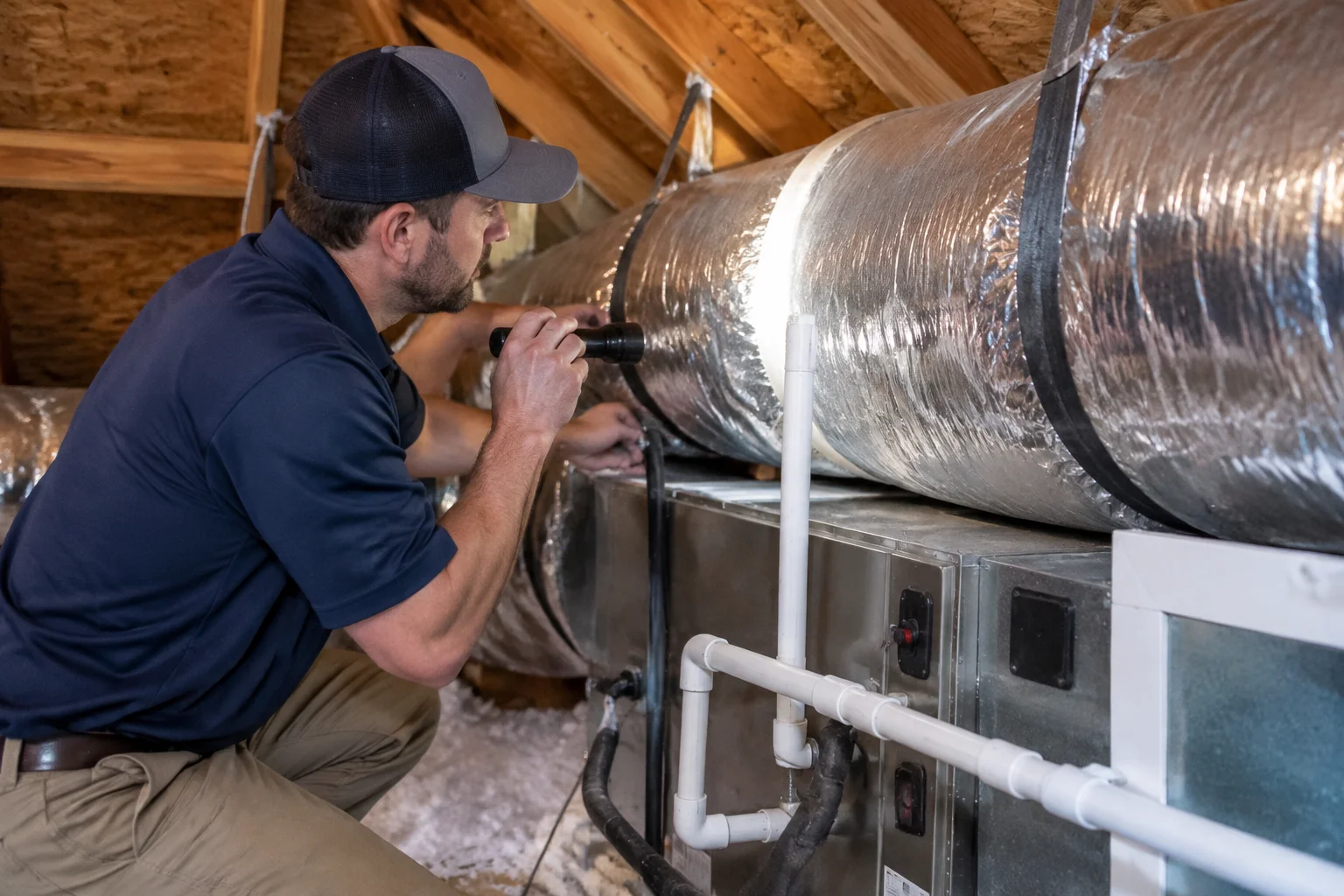
- Use duct inspection as part of routine checks: If you suspect airflow imbalance, a duct inspection can help identify restrictions and leakage patterns.
If you are searching for an HVAC contractor near me or commercial HVAC service near me because of airflow issues, ask whether the plan includes airflow checks and ductwork evaluation, not just temperature adjustments.
Humidity control is not optional on the Gulf Coast
For many Blue Mountain Beach businesses, comfort means more than temperature. It means humidity levels that allow occupants to breathe comfortably and help protect building materials. When the system cannot dehumidify effectively, you may notice condensation, musty odors, or damage to finishes over time.
Look for condensate drainage problems
Most cooling systems produce condensate as they remove moisture from indoor air. Proper condensate drainage is essential. Blocked or improperly draining condensate can lead to overflowing pans, water damage, and performance problems.
- Water near the indoor unit: Even small signs of moisture should be addressed.
- Sluggish or slow drain behavior: Slow drainage can be a sign of buildup or a blockage.
- Musty odors: Standing moisture can contribute to indoor air quality problems.
Condensate drainage issues are often connected to airflow and coil conditions, so prompt attention can prevent a bigger repair need later.
Use thermostats correctly for better humidity management
Thermostats influence how long the system runs and how it handles humidity. A thermostat that is set for comfort but not configured properly can lead to comfort complaints and higher energy use.
- Confirm schedule settings: After-hours setbacks that are too aggressive can affect humidity recovery when the building reoccupies.
- Check fan operation: In some systems, continuous or staged fan settings can help maintain more consistent airflow.
- Consider thermostat installation when upgrading controls: If your thermostat is outdated, inaccurate, or frequently triggers nuisance calls, commercial HVAC repair professionals can advise on safe, appropriate upgrades after an in-person evaluation.
If you are weighing thermostat installation near me, choose a licensed HVAC contractor who understands how commercial systems manage humidity, not just temperature setpoints.
Salt air, corrosion, and coil cleanliness: the maintenance you can feel
Coastal exposure can accelerate corrosion and increase the importance of keeping coils and air paths clean. When coils are dirty or the system is exposed to corrosion, heat transfer becomes less efficient and the system may work longer to reach the same comfort level.
Common symptoms of coil and cleanliness issues
- Rising energy use: If the bill increases while comfort stays inconsistent, the system may be struggling.
- Uneven cooling across zones: Dirty coils and airflow restrictions can create performance differences.
- Frequent maintenance calls: If you keep addressing the same complaint season after season, the underlying issue may be cleaning and airflow management.
How to reduce the chances of refrigerant system stress
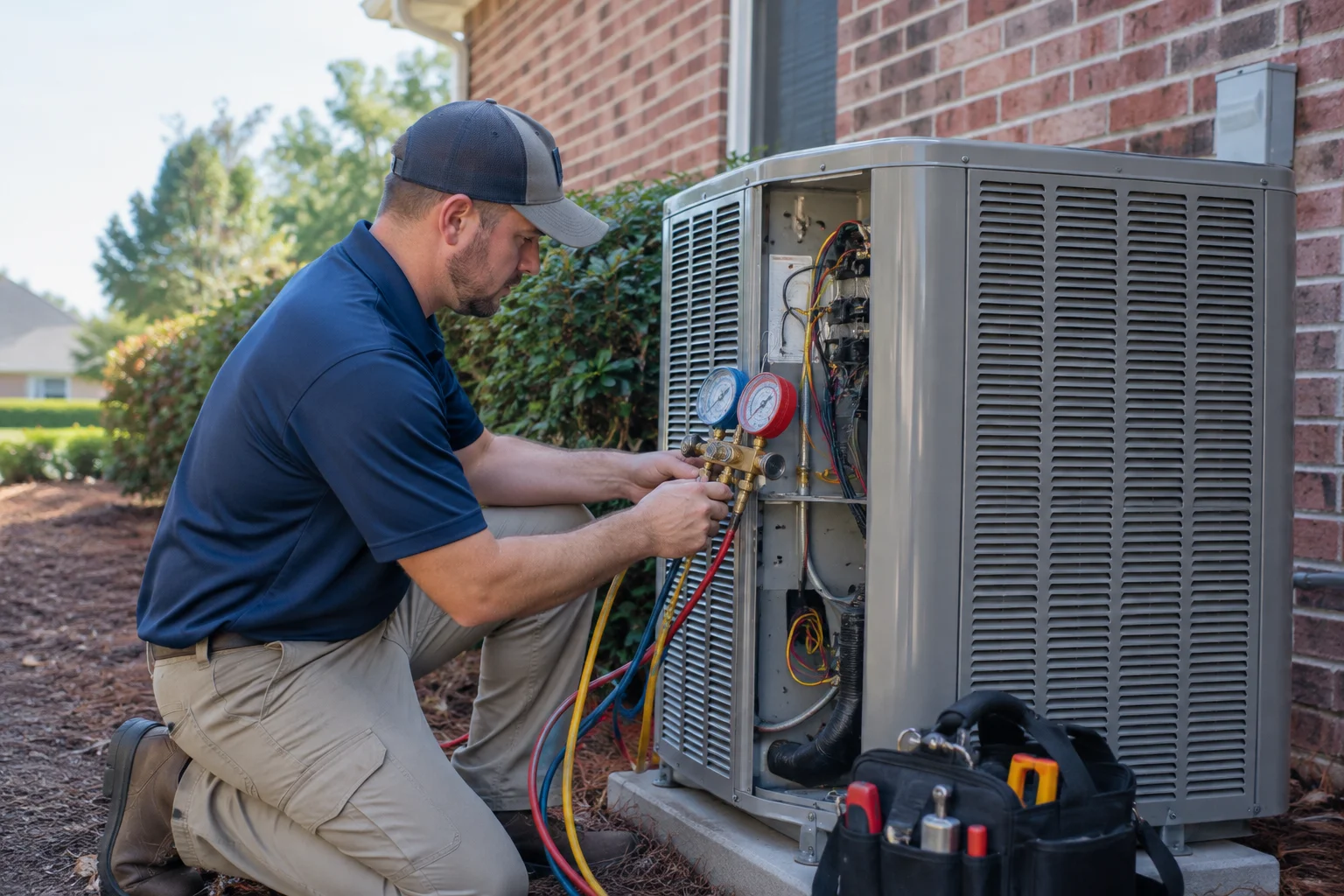
Refrigerant systems depend on consistent airflow and proper operation. A coil that does not transfer heat efficiently can cause the system to run longer and work harder. This does not mean homeowners should attempt refrigerant work. Refrigerant diagnosis should always be handled by qualified professionals who can safely verify system performance.
What you can do is support the conditions that help refrigerant systems work properly: clean filters, clear airflow paths, and scheduled preventive HVAC maintenance.
Preventive maintenance that actually protects comfort
Preventive HVAC maintenance is where many commercial issues are caught early. A good program helps reduce emergency cooling concerns by addressing wear, cleaning key components, and verifying that the system is operating within safe limits for your building.
What a strong commercial HVAC maintenance plan covers
Every building is different, but a professional commercial HVAC maintenance visit typically focuses on:
- Cleaning and inspecting coils and airflow components
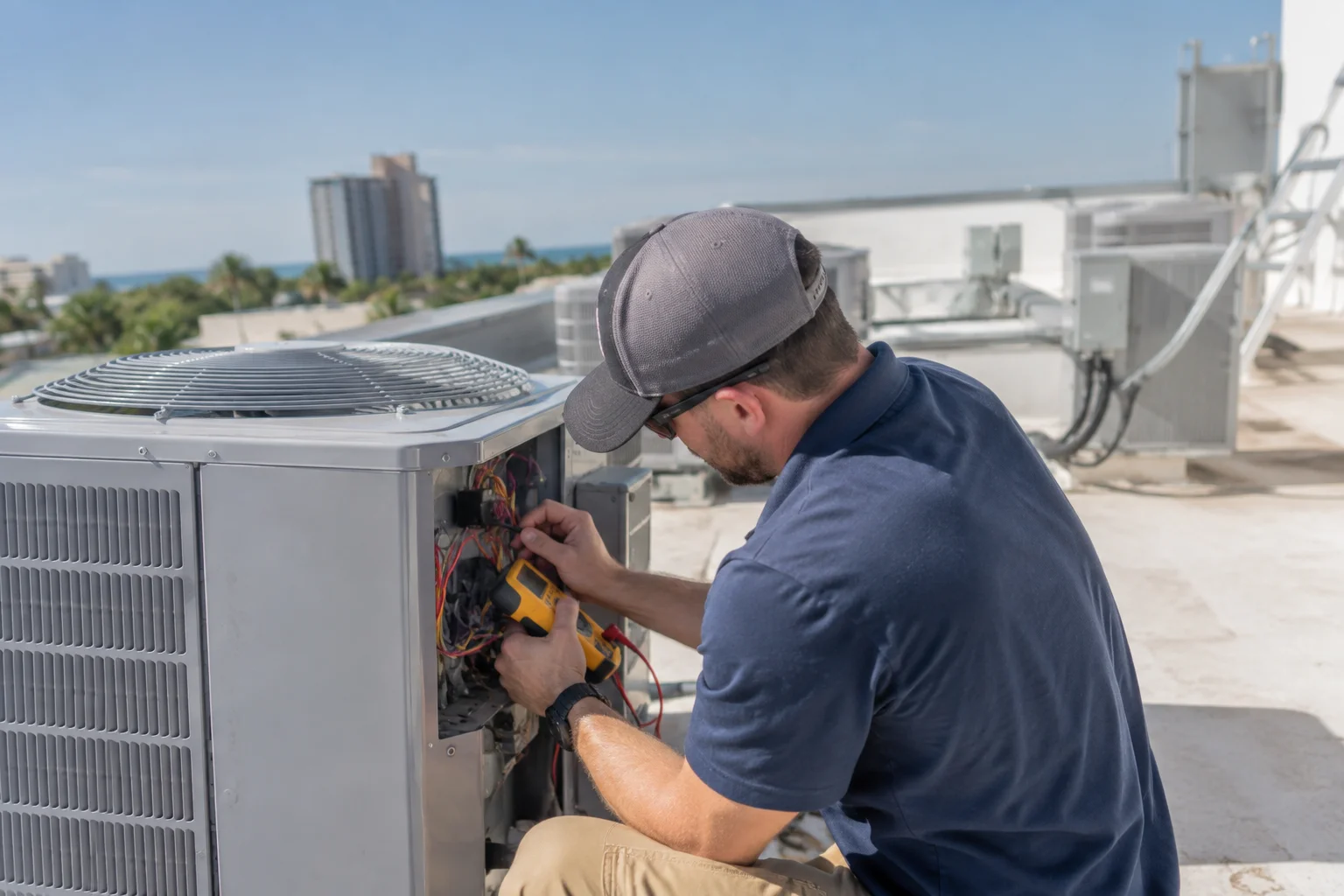
- Checking indoor and outdoor unit operation
- Verifying airflow performance and ductwork connections
- Inspecting condensate drainage and related components
- Reviewing thermostat behavior and control settings
- Assessing signs of corrosion or component wear tied to coastal exposure
For homeowners managing properties, the key is consistency. When HVAC maintenance near me searches lead to one-off visits, issues can slip through. A maintenance schedule helps you stay ahead of the heat and humidity patterns common to Walton County.
When ductwork and indoor air quality become the real problem
Commercial HVAC systems also affect indoor air quality. In humid climates, poor ventilation and inadequate filtration can increase the likelihood of odor complaints, comfort issues, and concerns related to airborne particulates.
Air quality issues that often show up in commercial spaces
- Musty smells: Often linked to moisture, condensate drainage, or dirty coils.
- Dust buildup: Can point to filtration problems or ductwork leaks.
- Temperature swings: Can indicate airflow imbalance or ductwork restrictions.
If your occupants complain about stale air or humidity, consider pairing AC tune up and maintenance with duct evaluation. Many teams offer duct inspection, and in some situations, duct cleaning near me becomes part of the plan when buildup is confirmed.
Balancing comfort and energy use
In Florida, it is easy to chase comfort by lowering thermostat settings. That often increases energy use without fixing the real issue. Better airflow, correct control settings, and clean coils help the system cool and dehumidify more effectively, which can reduce unnecessary run time.
Heat pumps and ductless systems: prevention still matters
Some commercial properties in the area use heat pumps or ductless mini split systems. Even when the equipment type differs, the principles stay the same: humidity control, airflow, and drainage still matter on the Gulf Coast.
Heat pump considerations in humid coastal weather
Heat pumps can be effective, but they still need clean coils and correct airflow to manage moisture. If humidity control is weak, occupants may feel clammy even when temperatures seem acceptable.
If you operate a building with heat pump equipment, use heat pump services and maintenance to keep performance steady through summer.
Ductless mini split installation and ongoing comfort
Ductless systems can be a strong choice when designed correctly for the space. However, poor placement, incorrect sizing for the load, or inadequate control settings can contribute to comfort complaints. If you are considering or evaluating a ductless approach, it helps to work with a contractor experienced in local conditions. Some homeowners search for ductless mini split installation near me when they want targeted comfort, but the long-term goal is still humidity management and balanced airflow.
System replacement planning: prevention helps you avoid last-minute decisions
Not every HVAC problem is repairable, and not every system lasts forever. Coastal exposure can wear components faster than inland conditions. A preventive maintenance program can help you understand the system’s condition over time and plan for HVAC replacement near me decisions before a failure disrupts business operations.
It is also smart to discuss replacement considerations when you see repeated repairs, worsening comfort, or rising energy use. A professional evaluation should consider the building layout, ductwork condition, control strategy, and indoor air quality goals.
Replacement decisions should be based on an in-person assessment by a qualified team, not on remote estimates or guesses about refrigerant or electrical issues.
Small issues that can become emergency cooling concerns
Florida summers do not wait. A problem that seems minor on a mild day can become urgent during a heat spike. Commercial HVAC repair planning helps avoid downtime.
Common early warning signs
- Temperature is slow to recover: The system may be losing efficiency due to airflow or coil issues.
- Humidity complaints increase: Condensate drainage and coil performance may be slipping.
- Strange noises or persistent vibration: Wear in fans or moving parts can worsen.
- Visible moisture or staining: Condensate drainage should be investigated.
- Thermostat behavior seems inconsistent: Incorrect scheduling or control configuration can worsen comfort and energy use.
If you notice these patterns, address them early. For businesses searching for AC repair near me or air conditioner service near me, the most helpful calls are the ones that include inspection of airflow, drainage, and system operation, not just a quick temperature adjustment.
How to choose the right local team for commercial HVAC repair in Blue Mountain Beach
Local experience matters because coastal conditions, humidity patterns, and building types differ. A team that regularly services Walton County and the 30A corridor is more likely to understand what commonly fails, how systems behave in humid conditions, and what preventive steps reduce repeat issues.
What to ask when calling a commercial HVAC service team
- Will you inspect airflow and ductwork connections? Comfort depends on movement of air.
- How do you evaluate condensate drainage? Moisture control is part of the job.
- Do you check thermostat settings and operation? Controls influence humidity and energy use.
- How do you handle refrigerant system questions? A professional should verify performance safely on-site.
- Can you build a preventive HVAC maintenance schedule? This reduces emergency cooling concerns.
If you are looking for commercial HVAC repair in Blue Mountain Beach, you can review A Superior Mechanical’s service area information here: commercial HVAC repair in Blue Mountain Beach. You can also explore the broader service coverage on the city page at /service-areas/walton-county/blue-mountain-beach and the county overview at /service-areas/walton-county.
Useful reading for property managers and business owners
If you want more context on keeping comfort steady and preventing small problems from becoming major repairs, these guides can help:
- Why Commercial HVAC Repair Matters to Home Comfort in Miramar Beach
- Commercial HVAC Repair in Fort Walton Beach: What Property Owners Should Pay Attention To Before Small Problems Grow
- How Local Weather Affects Commercial HVAC Repair in Destin, FL
- How Better Commercial HVAC Repair Helps Seagrove Beach Homes Stay Protected
A practical checklist you can use before the busiest weeks
You do not have to be an HVAC expert to reduce the chance of breakdowns. Use this checklist to guide what to look for and what to schedule.
- Confirm filters are in good condition and replaced on your normal schedule.
- Check for blocked return grilles and supply registers in every occupied zone.
- Look for moisture signs around indoor units and condensate drainage areas.
- Review thermostat schedules and make sure the system runs long enough to control humidity.
- Plan ductwork evaluation if some areas are consistently warmer or smell musty.
- Schedule commercial HVAC maintenance before the peak stretch of humid weather.
For businesses that need help right away, consider reaching out to a local HVAC company near me that can inspect the system in person. A Superior Mechanical focuses on commercial comfort needs across Walton County and the 30A corridor, including air conditioning systems and related service support.
When to call professional commercial HVAC repair in Blue Mountain Beach
Some problems should be handled promptly because they affect comfort, indoor air quality, and moisture control. If you are seeing any of the following, call a professional commercial HVAC repair team for an on-site inspection:
- Persistent humidity issues despite normal thermostat operation
- Visible moisture, water staining, or concerns about condensate drainage
- Uneven cooling that suggests airflow or ductwork problems
- Repeated AC repair calls for the same comfort complaint
- Any situation that risks emergency cooling concerns during peak heat
Professional service helps ensure refrigerant systems are evaluated safely, controls are set correctly, and repairs address the real cause. That approach is especially important in Blue Mountain Beach, where heat, humidity, and salt air can turn small performance issues into bigger problems faster than many inland climates.
Find Commercial HVAC Repair in Blue Mountain Beach, FL
If you need Commercial HVAC Repair in Blue Mountain Beach, FL, visit our local service page or contact A Superior Mechanical today.
Map of Blue Mountain Beach, FL
Frequently Asked Questions
How can a commercial building in Blue Mountain Beach prevent humidity-related HVAC problems?
Focus on airflow and dehumidification. Keep filters clean, ensure return and supply paths are not blocked, and make sure condensate drainage is working properly. A scheduled commercial HVAC maintenance visit can help catch coil and drainage issues before they affect comfort.
What are early warning signs that my AC repair issue is becoming an emergency cooling concern?
Look for slow temperature recovery, increasing humidity complaints, musty odors, water around indoor units, short cycling, or uneven cooling across zones. If these patterns appear during hot stretches, it is time for an on-site inspection rather than waiting.
Should homeowners try to troubleshoot refrigerant problems themselves?
No. Refrigerant diagnosis and repair require proper training and safety procedures. If you suspect refrigerant system issues, schedule professional commercial HVAC service so a technician can evaluate system performance in person.
How do ductwork and indoor air quality connect to commercial HVAC repair needs?
Ductwork affects airflow, which affects cooling performance and humidity control. Poor airflow can also contribute to stale air, dust complaints, and moisture-related odors. If you have comfort or air quality concerns, ask about duct inspection.
What maintenance step helps most in Florida’s heat and humidity?
Consistent preventive maintenance that includes airflow checks, coil cleaning, and condensate drainage inspection. In coastal climates like Walton County, it also helps to address corrosion risk and verify control settings tied to thermostat schedules.
Related Articles
- Why Commercial HVAC Repair Matters to Home Comfort in Miramar Beach
- Commercial HVAC Repair in Fort Walton Beach: What Property Owners Should Pay Attention To Before Small Problems Grow
- How Local Weather Affects Commercial HVAC Repair in Destin, FL
- How Better Commercial HVAC Repair Helps Seagrove Beach Homes Stay Protected
Photo Gallery