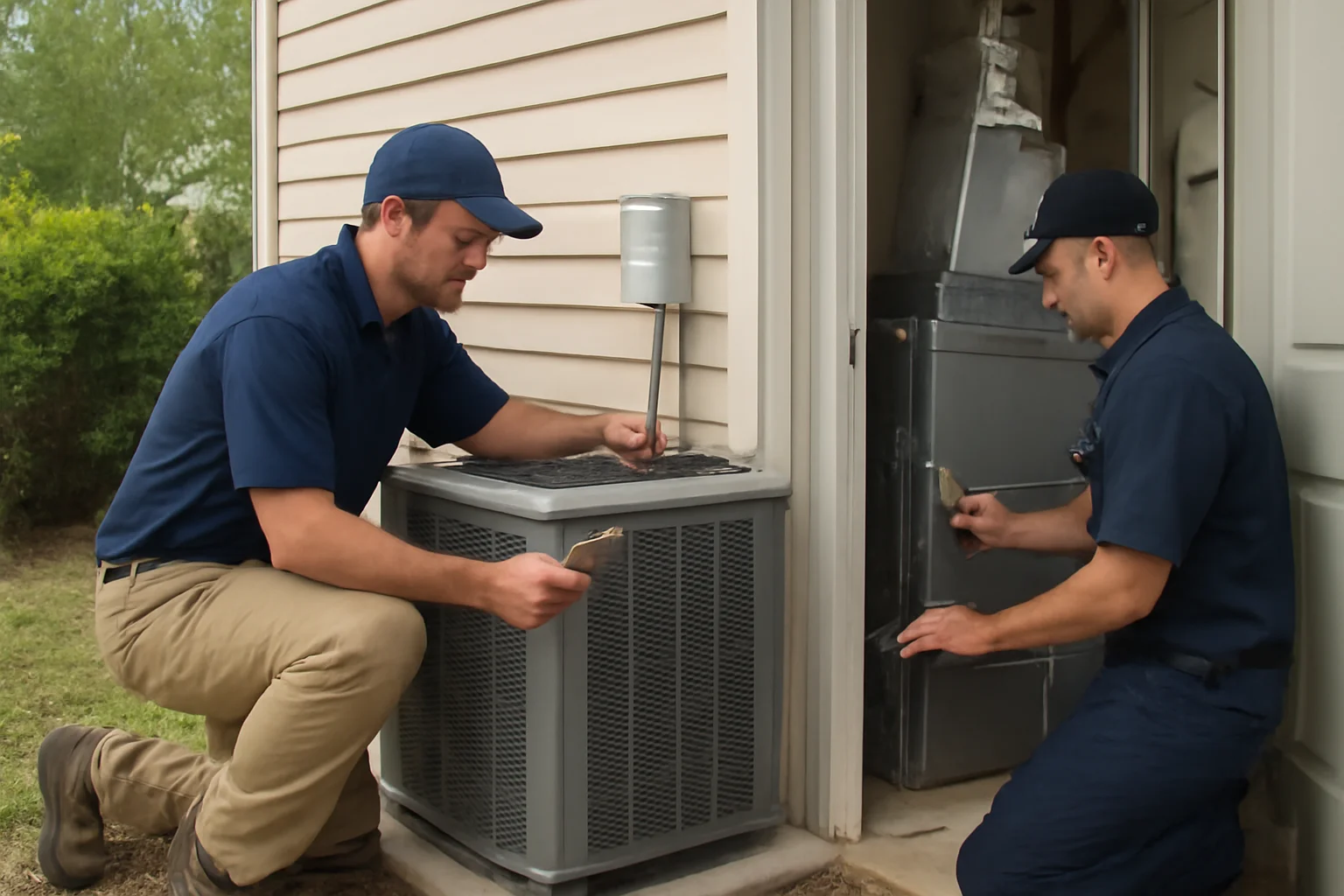
Panama City, FL is a coastal market where summer heat comes with real humidity. For commercial buildings, that combination can stress refrigerant systems, strain ductwork, and turn comfort problems into indoor air quality issues. Smart HVAC habits can help you manage cooling and humidity more consistently, lower energy use, and reduce emergency cooling concerns when conditions spike.
If you run an office, retail space, restaurant, hotel, or multi-unit property, the goal is simple: keep air moving the right way, keep moisture under control, and catch performance issues early. This guide focuses on commercial HVAC services in Panama City and the surrounding Bay County area, with practical steps homeowners can ask about and business owners can apply.
Why Panama City humidity challenges commercial cooling
Humidity is not just “sticky air.” When outdoor moisture enters the building or when the system cannot remove moisture effectively, indoor conditions can become uncomfortable and unhealthy. In coastal Florida, salt air exposure and frequent humidity swings can also accelerate wear on components and contribute to corrosion concerns.
Commercial HVAC systems manage moisture through the cooling process, airflow balance, and condensate drainage. If any part of that chain underperforms, you may notice:
- Rooms that feel clammy even when the thermostat is set low
- Uneven temperatures with some areas too cold and others too warm
- Condensate drainage issues such as slow draining or overflow risks
- Higher energy use because the system cycles inefficiently
- Indoor air quality complaints such as musty odors or increased dust
Those symptoms often point to airflow problems, refrigerant system performance limits, ductwork leaks or restrictions, thermostat settings, or filtration and indoor air quality factors. A licensed HVAC contractor can evaluate the full system, not just the thermostat display.
Cooling strategy: humidity control starts with airflow and setpoints
Many commercial comfort issues come from the way a building is cooled, not simply the thermostat number. In humid climates, the system must do two jobs at once: reduce air temperature and remove moisture. That requires steady airflow across the cooling coil and proper system operation.
Use thermostats to support humidity removal, not fight it
Smart thermostats can help, but they need to be configured for the building. Ask your commercial HVAC service provider to review:
- Whether the thermostat is controlling the system correctly for occupied and unoccupied hours
- How fan operation is scheduled, especially during humid mornings and evenings
- Whether setpoints are realistic for the building envelope and occupancy patterns
For businesses, the “best” setpoint can differ by zone. A uniform schedule across a whole building can overload certain areas and leave others under-conditioned. If you are searching for smart thermostats or air conditioning repair, ask how the thermostat strategy supports airflow and humidity control.
Confirm airflow before you chase temperature
Airflow problems can make cooling ineffective. Common causes include clogged filters, blocked supply registers, ductwork restrictions, or failing dampers. If airflow is weak, the coil may not get the air contact it needs to remove moisture, and the system may short-cycle.
In humid weather, that can show up as:
- Long run times without comfortable dehumidification
- Cold air that feels dry in some areas but not others
- Higher humidity readings indoors
That is why commercial HVAC service often begins with airflow verification, duct inspection, and system checks that look beyond surface-level symptoms. If you are looking for air conditioning service near me or HVAC service near me, ask specifically whether the technician will evaluate airflow, ductwork, and indoor air quality factors as part of the visit.
Humidity management: condensate drainage and coil performance matter
When an air conditioner or heat pump cools, moisture condenses on the indoor coil and drains through the condensate drainage system. In coastal Florida, humidity is high and cooling demand can be constant. That makes condensate drainage reliability more important, especially during peak summer.
Watch for early condensate drainage warning signs
Some signs are easy to spot. Others require a careful inspection. For commercial buildings, pay attention to:
- Water stains near air handlers or ceilings
- Musty odors that suggest moisture buildup
- Slow drainage or recurring clogs
- Alarms or shutoffs that interrupt operation
- Visible algae or residue around drain lines
Condensate drainage problems can lead to water damage and can also affect indoor air quality. A proper evaluation should include checking drain lines, assessing the condition of the condensate drainage path, and confirming that the system is operating as intended.
Coil cleanliness and airflow work together
Even if the thermostat is correct, dirty coils and restricted airflow can reduce the system’s ability to remove moisture. Coil performance is tied to airflow patterns through ductwork and the condition of filters.
Home and business owners often underestimate how quickly humidity control can degrade when filters are neglected or when ductwork is partially blocked. If you are planning HVAC maintenance near me for a commercial property, ask for a maintenance plan that includes filter checks, coil inspection, and airflow verification.
Ductwork and zoning: the difference between “working” and “working well”
Commercial comfort depends on distribution. Even a properly functioning air conditioner can struggle if ductwork is leaky, undersized, poorly balanced, or clogged with dust and debris. Zoning adds another layer: dampers and controls must coordinate with the thermostat and the building schedule.
Look for uneven comfort as a ductwork clue
Humidity control is especially sensitive to airflow distribution. If one zone receives insufficient airflow, that area can feel warmer and moister. Other zones may overcool. Common complaints include:
- Hot spots near exterior walls or high-heat rooms
- Cold drafts in some offices with lingering humidity in others
- Areas that feel “stale” even when the system runs
These patterns can indicate ductwork issues or balancing problems. Searching for duct inspection near me is a good starting point, but the real win is choosing a provider that evaluates airflow, balancing, and distribution patterns as part of commercial HVAC services.
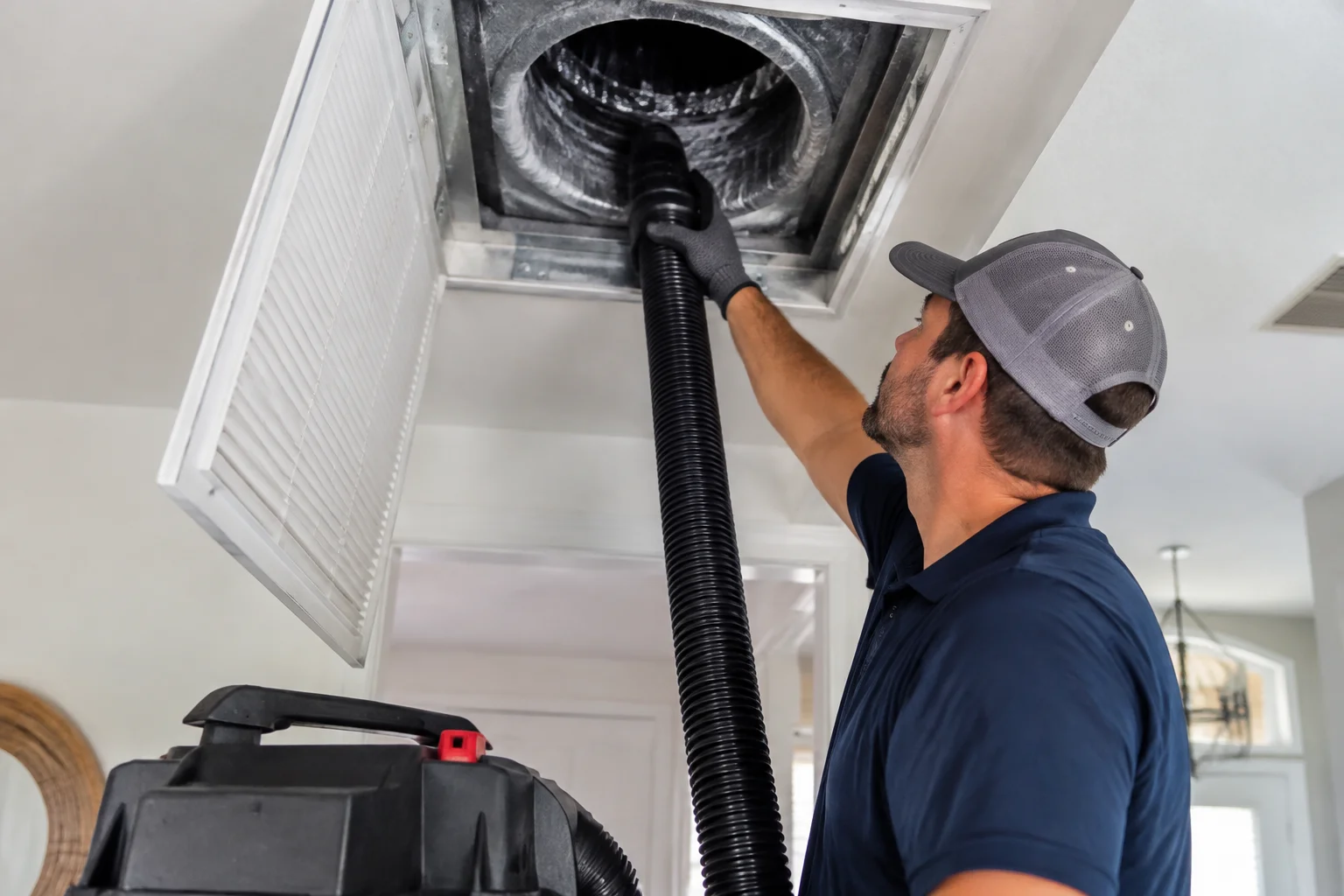
Plan for duct cleaning with the building’s HVAC wear and tear in mind
Duct cleaning can help when it is needed, but commercial systems vary. Wear and tear affects how debris is loosened and how airflow is impacted. If your building has older ductwork, ongoing humidity problems, or heavy dust loads, it is worth asking how duct cleaning is approached for your specific system.
You can also read how HVAC wear and tear changes the way duct cleaning works to understand why the process should match the condition of the system.
Indoor air quality: filtration, ventilation, and moisture go hand in hand
Humidity control is part of indoor air quality. When moisture levels rise, occupants may notice musty odors, increased dust, or respiratory discomfort. Filtration and ventilation settings can influence how well the building stays comfortable.
Choose filtration with the system and airflow in mind
Filtration is not one-size-fits-all. Higher-efficiency filters can improve indoor air quality, but they can also increase pressure drop if the system is not designed for them. That is why filters should be selected based on your HVAC system’s airflow capability and the building’s needs.
If your property is dealing with dust, odors, or humidity-related complaints, consider pairing filtration upgrades with an evaluation of airflow and condensate drainage. For more on air cleaning options, explore air filtration and purifiers.
Ventilation settings should match occupancy and humidity
Commercial buildings often add outside air for ventilation. In humid conditions, that outside air can raise indoor moisture loads. The goal is to balance ventilation for health with humidity management for comfort. A professional HVAC contractor can help assess whether your ventilation strategy is supporting, or undermining, humidity control.
Refrigerant systems and emergency cooling concerns
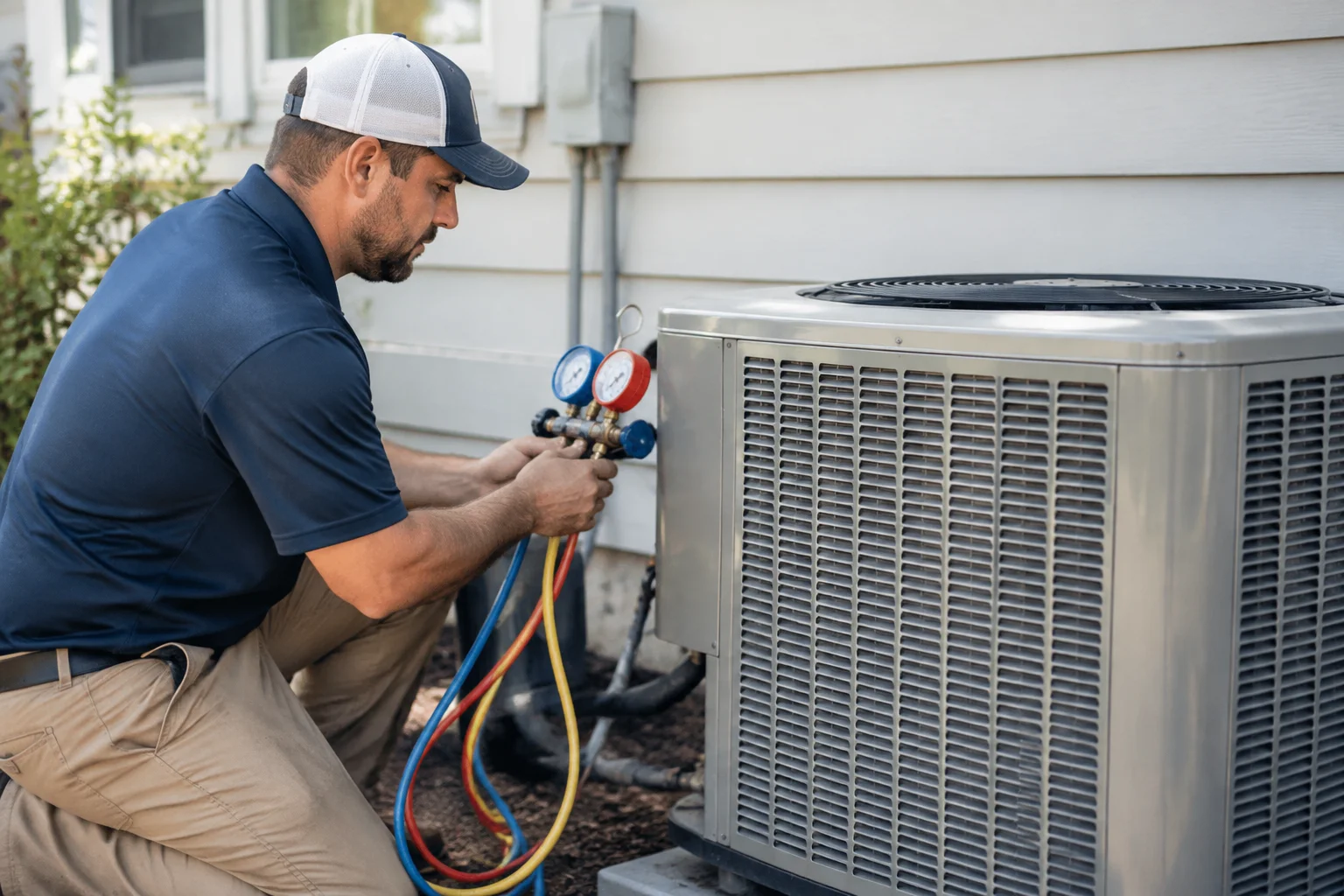
Refrigerant systems are designed to move heat and remove moisture through the cooling cycle. When performance drops, the system may run longer, remove less moisture, and create conditions that feel worse even as equipment runs.
Know the difference between “running” and “performing”
In commercial settings, you may see the system operate for extended periods while humidity remains high. That can be caused by airflow restrictions, coil issues, control problems, or refrigerant system performance limits. It can also be influenced by building heat gain from sun exposure, occupancy, or poor insulation.
Because refrigerant systems are safety and performance sensitive, homeowners and business managers should avoid trying to self-diagnose refrigerant issues. Any refrigerant system evaluation should be handled through an in-person professional assessment by a qualified technician.
Plan for emergency cooling concerns before peak heat hits
When a commercial system fails during a hot, humid day, it can disrupt operations and create comfort and health risks quickly. If you want a practical view of how to reduce downtime, read keeping commercial HVAC trouble from turning into an emergency in Panama City.
For properties that cannot afford downtime, it is also wise to review whether you have the right coverage and escalation plan with your HVAC company. If your building is at risk of losing comfort during peak conditions, consider discussing emergency HVAC services as part of your seasonal planning.
Salt air and coastal wear: what commercial owners should watch
Panama City’s coastal environment can increase corrosion exposure, especially on outdoor units and metal components. Salt air does not guarantee failure, but it can accelerate wear over time, particularly when equipment is not maintained.
Smart commercial HVAC habits include:
- Keeping outdoor units clear of obstructions that restrict airflow
- Scheduling preventive maintenance before the hottest weeks
- Checking for signs of corrosion buildup and component deterioration
- Ensuring condensate drainage is functioning properly during high humidity
A Superior Mechanical provides commercial HVAC services across Bay County, including preventive HVAC maintenance, repair, and replacement planning. You can explore the service area here: commercial HVAC services in Panama City.
Energy use and comfort: small changes that add up
Humidity control and energy use are linked. When airflow is restricted or when the system is not removing moisture effectively, the HVAC system may run longer, increasing energy consumption while still not achieving comfort. Smart management focuses on reducing inefficiencies.
Track comfort problems by time and location
Instead of treating complaints as random, document patterns. For example:
- Does humidity spike during certain hours when outside air is highest?
- Are complaints concentrated in one wing, floor, or zone?
- Do problems appear after filter changes or after schedule changes?
This helps technicians evaluate whether the issue is airflow distribution, thermostat scheduling, ductwork balance, filtration, or something else that needs attention. It is also useful when you are comparing options for system replacement or upgrading indoor air quality controls.
Set maintenance schedules based on real usage
Commercial buildings do not all run the same way. A restaurant with frequent door openings has different HVAC demands than an office building with stable occupancy. Preventive HVAC maintenance near you should reflect your building’s schedule, occupancy, and humidity exposure.
Smart prevention checklist for commercial HVAC maintenance in Bay County
Here is a practical checklist you can use as a conversation starter with your commercial air conditioning contractor near me or licensed HVAC contractor near me. The goal is to prevent small issues from becoming comfort failures.
Before peak summer humidity arrives
- Confirm filters are correct for the system and indoor air quality goals
- Schedule an AC tune up that includes airflow checks and inspection of key components
- Review thermostat schedules and confirm they support humidity control
- Inspect ductwork for signs of leaks, restrictions, or poor distribution
- Check condensate drainage components for proper function
- Discuss whether duct inspection near me is needed for your layout and zoning
During humid weeks
- Monitor comfort complaints by zone and time of day
- Watch for odors that suggest moisture buildup
- Confirm the system is not short cycling due to control or airflow problems
- Verify that outdoor unit airflow is not blocked
When to call for commercial AC repair or HVAC service
Even with prevention, issues can happen. Call a professional for commercial AC repair near me or HVAC service near me when you notice:
- Humidity feels high even with normal thermostat settings
- Airflow seems weak or uneven across zones
- Condensate drainage issues, water stains, or recurring clogs appear
- Strange noises, repeated shutdowns, or comfort failures occur
- Energy use rises noticeably while comfort does not improve
If you are considering a new approach such as ductless mini split installation near me for specific zones, a technician can evaluate whether ductless cooling and humidity management fits your building layout and comfort goals. For some commercial spaces, a hybrid approach can reduce strain on central systems, but it should be designed and commissioned properly.
Why professional commercial HVAC service matters in Panama City
Commercial buildings are not just larger homes. They have different schedules, occupancy patterns, zoning needs, and indoor air quality requirements. In Panama City, the combination of heat, humidity, and coastal exposure makes it even more important to rely on an experienced team.
A qualified provider can evaluate the whole system: thermostat controls, refrigerant system performance, airflow through ductwork, condensate drainage, filtration and indoor air quality, and the building factors that influence heat gain. That is how you move from temporary fixes to durable comfort.
If you are looking for a commercial air conditioning contractor near me or a commercial HVAC service near me for your Bay County property, start with the right service partner. You can review A Superior Mechanical’s commercial HVAC services for Panama City here: /service-areas/bay-county/panama-city/commercial-hvac-services-pcflbc, and browse the Bay County area coverage at /service-areas/bay-county.
Find Commercial HVAC Services in Panama City, FL
If you need Commercial HVAC Services in Panama City, FL, visit our local service page or contact A Superior Mechanical today.
Map of Panama City, FL
Frequently Asked Questions
Why does my commercial building feel humid even when the thermostat is set to cool?
Humidity control depends on airflow, coil performance, and condensate drainage. If airflow is restricted or the system is not removing moisture effectively, the space can feel clammy even with cooling running. A professional evaluation can check ductwork distribution, filters, and system operation.
What maintenance items help prevent humidity and comfort issues in Panama City?
Preventive HVAC maintenance should include filter checks, airflow verification, coil inspection, and condensate drainage inspection. Coastal humidity and salt air exposure can accelerate wear, so maintenance before peak season is especially helpful.
Can ductwork problems cause temperature and humidity to be uneven across zones?
Yes. Leaks, restrictions, and poor balancing can reduce airflow to some areas while overcooling others. That imbalance can make humidity worse in certain zones. Duct inspection and airflow checks are often needed to confirm the cause.
Is it safe for me to troubleshoot refrigerant issues on my own?
No. Refrigerant systems require trained, in-person assessment and proper handling. If you suspect a refrigerant or cooling performance problem, contact a licensed HVAC contractor for an on-site evaluation.
When should a business call for emergency cooling help?
Call emergency HVAC services if the system stops cooling, repeatedly shuts down, or comfort failures create urgent health or operational risks during hot, humid weather. Planning ahead can reduce downtime when conditions spike.
Related Articles
Photo Gallery