Hammock Bay families rely on clean water every day. It is in the morning coffee, the kids' bath time, the ice in the freezer, and the laundry that comes out feeling fresh. When your water starts showing signs of trouble, reverse osmosis (RO) can be a smart, targeted solution for drinking and cooking. But RO systems are not one-and-done appliances. If you wait until filters clog or water chemistry shifts, the repairs and replacements can add up fast.
This guide walks you through how reverse osmosis systems work, what is common in Hammock Bay and Walton County, and how to prevent the expensive problems homeowners often run into. If you are searching for reverse osmosis systems in Hammock Bay, FL, the goal is the same: keep your home supplied with cleaner, safer drinking water while protecting plumbing, fixtures, and appliances.
Why Hammock Bay water can push RO systems into higher costs
Water quality is local. In coastal Northwest Florida, many homes deal with a mix of minerals, sediment, and occasional taste or odor issues that can be more noticeable during seasonal changes. Even if your water looks clear, dissolved minerals can still be hard on surfaces and equipment.
Homeowners often notice:
- Hard water spots on glass, especially after showers and dishwashing
- Scale buildup around faucets, showerheads, and plumbing where water evaporates or sprays
- Dry skin or dull hair after bathing that can feel like water never quite rinses clean
- Metallic, chlorinated, or unpleasant taste in drinking water
- Cloudy ice cubes or ice that looks hazy in the tray
- Poor tasting coffee and cooking water, even with good beans and quality ingredients
- Appliances wearing out faster, including coffee makers, water heaters, and dishwashers
- Soap that does not lather or rinses poorly
- Visible sediment, discoloration, and odor concerns that show up intermittently
RO can help with many of the drinking-water symptoms, but it is not the only piece of the puzzle. When water is hard or carries sediment, the RO membrane and cartridges can clog sooner. That is where maintenance timing and proper pre-filtration matter so much.
Reverse osmosis basics: what your system is actually doing
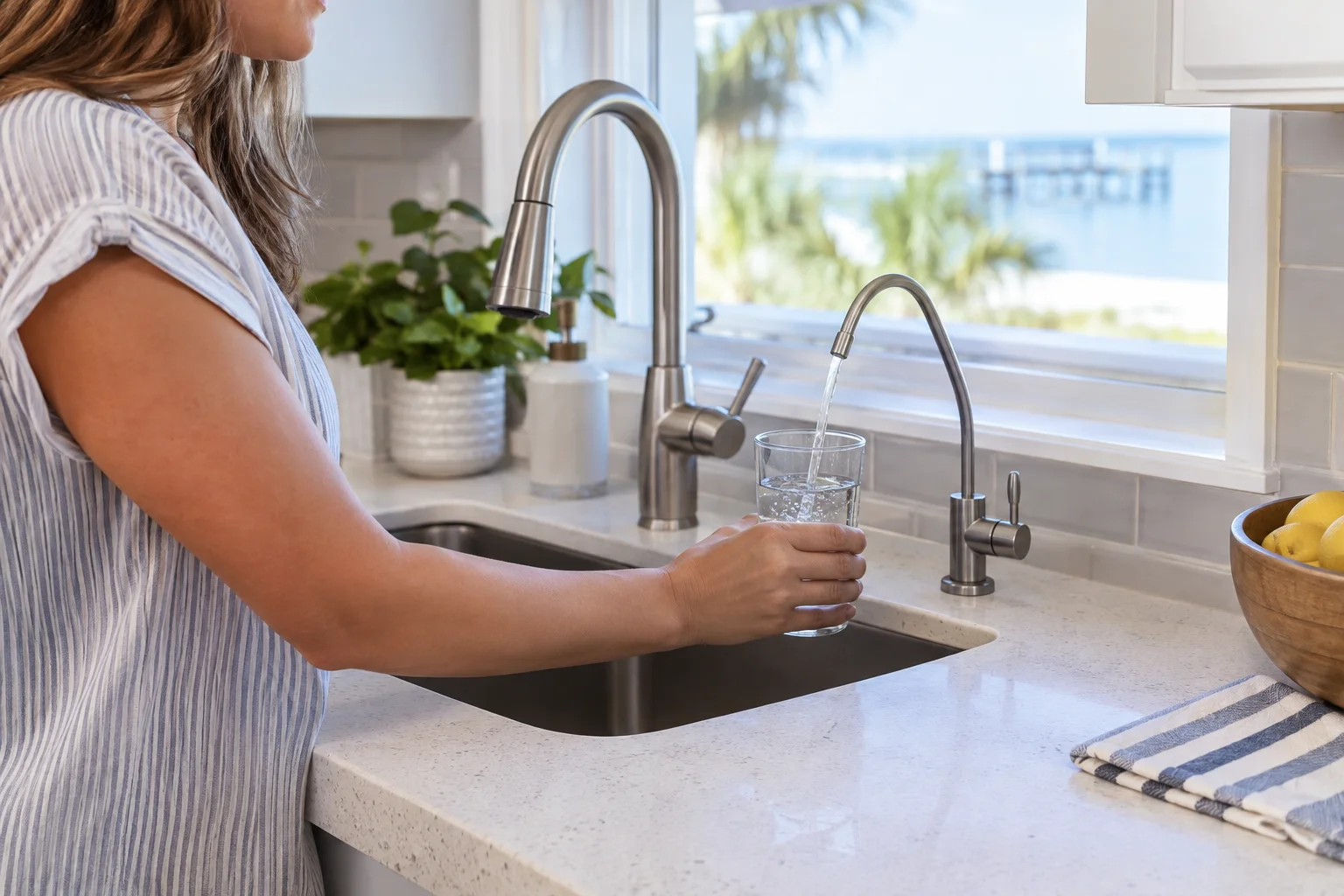
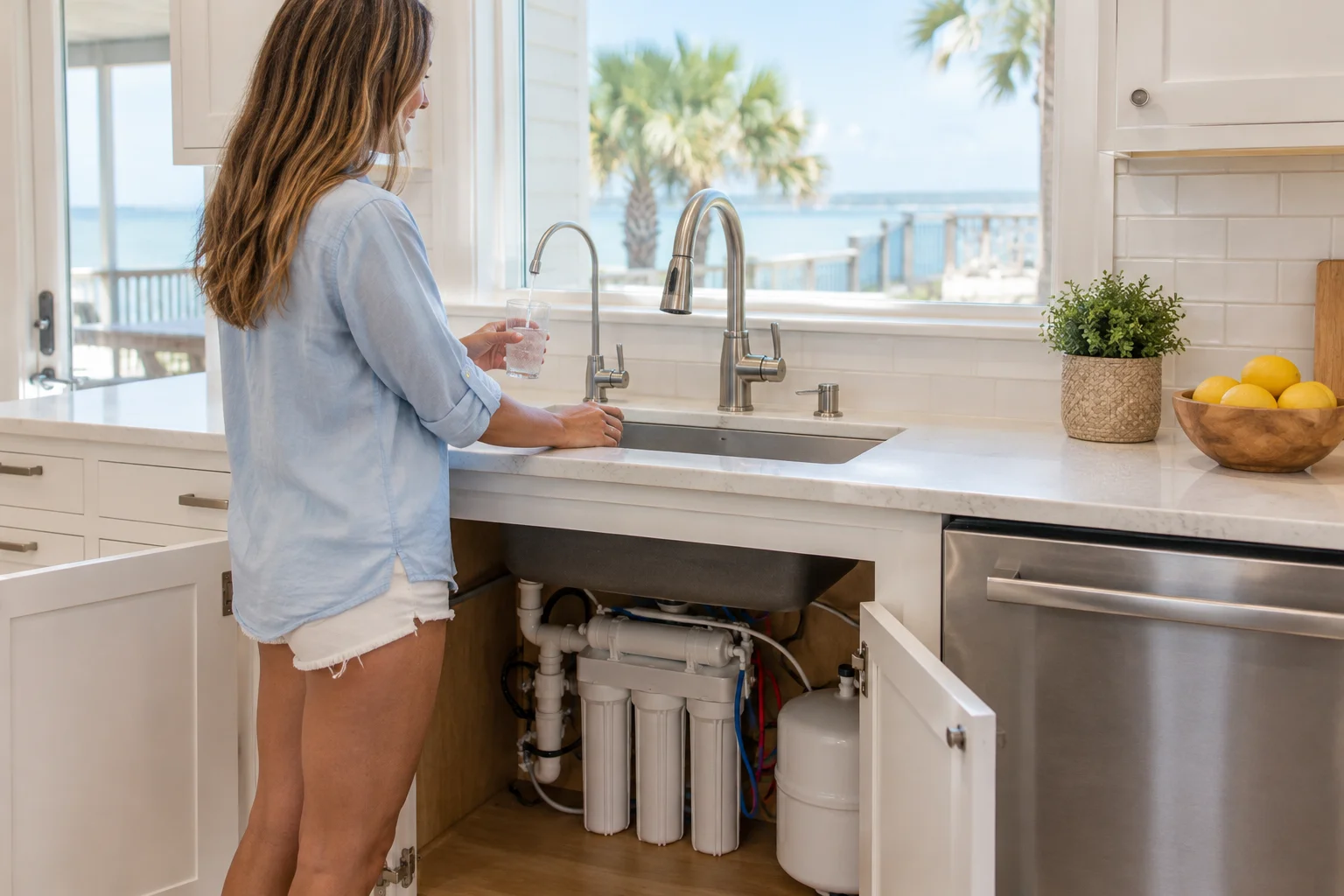
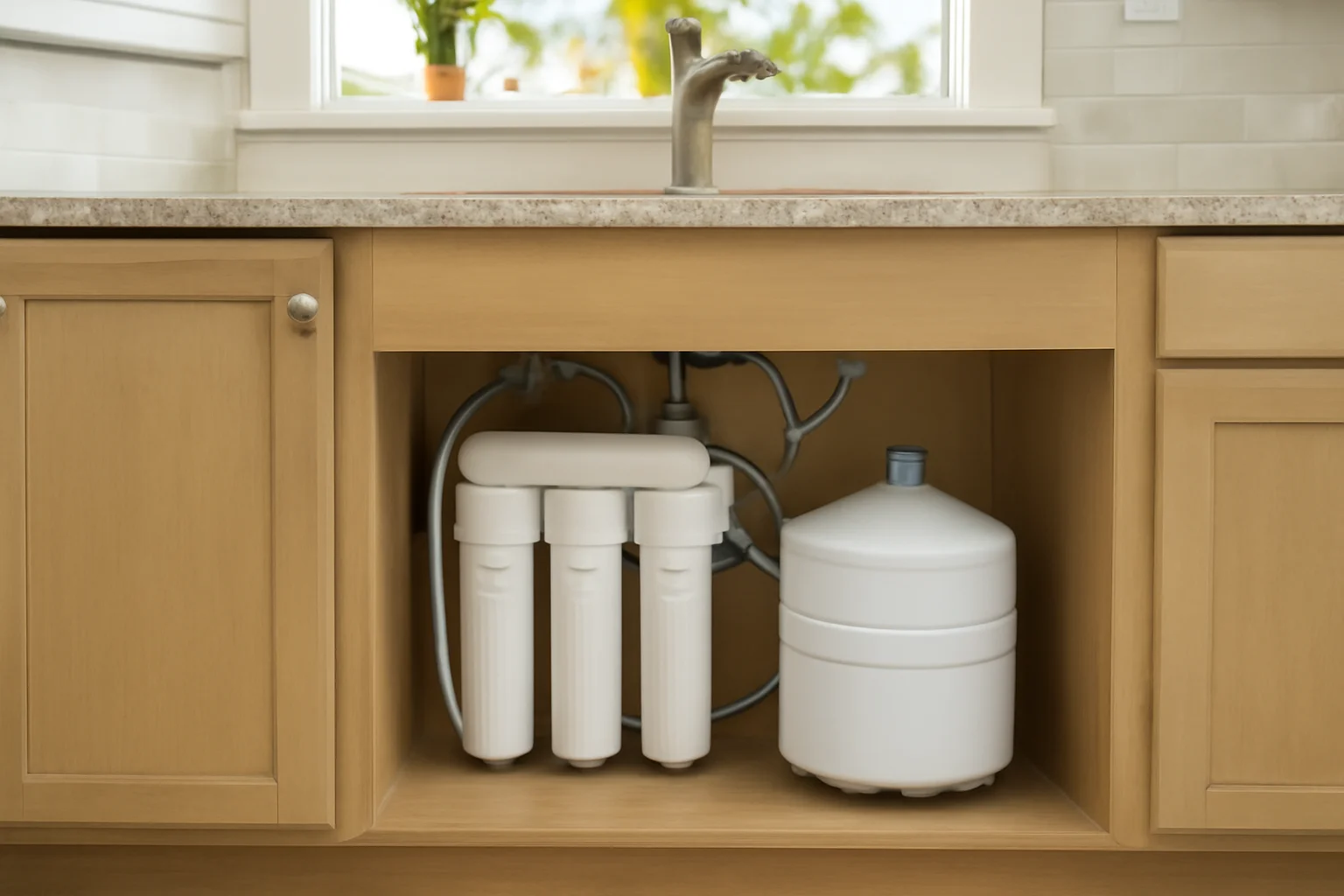
A typical under-sink reverse osmosis system produces a small amount of highly treated water for drinking and cooking. The process usually includes:
- Pre-filtration to catch sediment and protect the membrane
- RO membrane that removes dissolved contaminants by forcing water through a semi-permeable barrier
- Post-filtration such as carbon to improve taste and odor
- Storage tank (in many systems) to provide ready-to-use drinking water
- Dedicated RO faucet for kitchen drinking water
Because the RO membrane is designed to do precision work, it is sensitive to what comes before it. If pre-filters are neglected or if hardness and sediment are higher than expected, the membrane can foul. A fouled membrane can lead to lower production, higher wastewater, and more frequent parts replacement. Those are the “becoming expensive” moments homeowners want to avoid.
Common Hammock Bay RO problems that raise repair and replacement costs
1) Filters that are overdue
Most RO systems require routine filter changes. When they get delayed, sediment and mineral buildup can reach the membrane. You might still get water, but performance declines quietly. Homeowners may first notice:
- Water tastes off again
- Ice cubes look cloudy
- The RO system takes longer to produce water
- The unit seems louder due to flow changes
Regular maintenance is usually less costly than replacing a membrane early.
2) Hard water scaling that affects system performance
Hard water does not only cause hard water spots on glass and scale around showerheads. It can also create buildup inside water treatment systems. When hardness is not addressed upstream, RO membranes and components can experience accelerated fouling.
In a Hammock Bay kitchen, this can show up when the family relies on RO for drinking and cooking water, but the system gradually underperforms. Coffee tastes flat, cooking water does not behave the way it should, and the family starts noticing metallic or chlorinated notes again.
3) Sediment and occasional discoloration
If you ever see visible sediment or discoloration in household water, that is a clue to check filtration. RO systems can handle many contaminants, but sediment overload can increase the burden on pre-filters. A system that is not protected properly may require more frequent cartridge replacement.
4) Membrane aging or failure
Even with great maintenance, membranes eventually age. The key is to align replacement timing with your water conditions. In humid coastal climates, water chemistry and seasonal changes can affect how quickly your system works. If you are treating water that is consistently harder or more mineral-heavy, membrane life may be shorter.
How to tell your RO system needs attention before it becomes a bigger bill
Homeowners often wait until the RO system is “broken.” A better approach is to watch for early warning signs. If you notice any of the following, it is time to schedule service:
- Cloudy ice cubes or a return of unpleasant taste in drinking water
- Soap does not lather in general, plus RO tasting worse, suggesting broader water quality issues
- Visible sediment or discoloration in the kitchen sink
- Slow production of RO water or reduced flow from the RO faucet
- Higher-than-usual wastewater or changes in system operation
- Appliances wearing out faster and scale forming quicker, pointing to hard-water management needs
These clues matter because RO is often installed to improve everyday life. When it starts to slip, kitchen routines get disrupted. Family members may switch back to bottled water, and then everyone feels the cost in a different way.
RO vs water softening vs whole home filtration: choosing the right combination
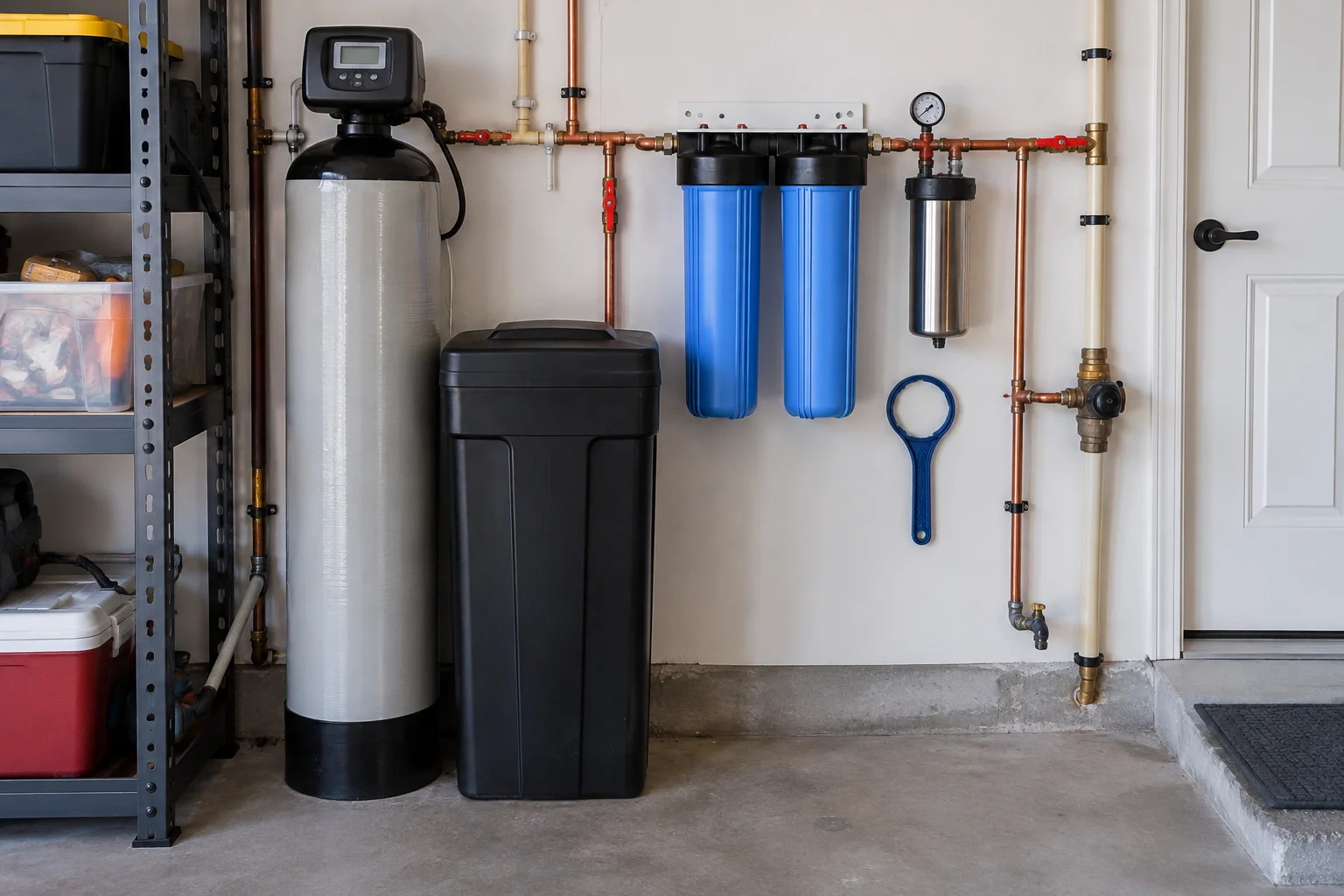
Many Hammock Bay homes benefit from a layered approach to water treatment. RO is focused, but whole home water filtration and water softening address broader concerns.
Reverse osmosis for drinking and cooking
RO is excellent for improving drinking water quality and cooking water. It can help with metallic taste, unpleasant odor, and many dissolved contaminants. If you are searching for reverse osmosis system near me or drinking water filter near me, it helps to understand what RO is designed to do and what it is not.
Water softening to reduce scale and protect fixtures
Water softening helps reduce the mineral buildup that causes scale buildup around faucets and showerheads and contributes to dry skin from hard water. It can also make downstream equipment last longer.
Some homeowners ask about an AO Smith water softener. That is often part of the solution when hardness is the main driver of scaling. If you are considering water softener installation near me, it is worth pairing it with the right filtration strategy so you protect both your plumbing and your RO system.
A Superior Mechanical can help evaluate whether your home needs softening, RO, whole home filtration, or a combination. You can also explore the broader options at /water-filtration-ro-water-softeners.
Whole home water filtration for cleaner water systems throughout the house
Whole home filtration can reduce sediment and improve water quality before it reaches faucets, showerheads, laundry, and appliances. For homeowners searching for whole home water filtration near me, the benefit is consistency. Instead of treating only the drinking water point, whole home clean water systems support the entire household routine.
In Hammock Bay, where you may see changes in water conditions over time, whole home filtration can help keep your RO system’s pre-filters from being overwhelmed. That can reduce the likelihood of premature membrane wear.
AO Smith RO and related equipment: why brand and design matter
When you are evaluating RO systems, you will likely see AO Smith mentioned by local water treatment professionals. AO Smith water filtration equipment is commonly used because it is designed for residential reliability and practical serviceability. The important part for homeowners is not just the name on the label, but whether the system is matched to your water and serviced on schedule.
A well-designed RO setup includes the right pre-filtration and post-treatment for your household needs. That is how you maintain taste and odor improvement while reducing the strain that leads to expensive repairs.
Maintenance that prevents the expensive part
RO systems are not complicated, but maintenance is. A few habits can protect your investment and keep your kitchen water tasting right.
Keep a simple filter change schedule
Ask your technician for a maintenance plan based on local water and system usage. Homes with higher demand, more laundry, or multiple occupants may use RO water more often. That means more frequent service for certain components.
Watch how the system performs, not just whether it runs
Many homeowners notice taste changes first, but you can catch issues earlier by paying attention to production rate and flow. If RO water seems to take longer or the RO faucet output is weaker, it can indicate clogged filters or membrane stress.
Address hard water and scale at the source
If you are dealing with hard water spots on glass and scale around showerheads, consider whether your home also needs water softening or whole home filtration. RO can improve drinking water quality, but it does not erase the effects of hardness throughout the home.
When hard water treatment becomes part of protecting fixtures and appliances, you reduce scale buildup that can shorten appliance lifespan and increase cleaning time.
Keep the RO area clean and accessible
Under-sink spaces can collect dust and moisture. Keep the area dry and make sure the system is accessible for service. This helps technicians replace components efficiently and reduces the chance of leaks going unnoticed.
How better water affects everyday life in Hammock Bay
Picture a typical day in a Hammock Bay home. Someone fills a glass for drinking water. The kettle goes on for coffee. A child steps into the shower after a day outside. Later, laundry runs, dishes are loaded, and someone wipes down the bathroom sink.
When water quality is improved, those routines feel different:
- Drinking water tastes cleaner, with fewer metallic or chlorinated notes
- Cloudy ice cubes reduce, so ice looks clear and refreshing
- Coffee and cooking water perform better, because the base water flavor is more consistent
- Bathing feels better, with less dry skin from hard water
- Fixtures stay cleaner longer, meaning less scrubbing for scale buildup
- Soap rinses better, improving how laundry and bathing feel
- Appliances may last longer when scale is reduced
That is why homeowners consider home water purification near me and water treatment service in Walton County. It is not just about a lab report. It is about protecting the things your family uses every day.
Planning your RO investment in Walton County, not just buying a unit
One reason RO can become expensive is that homeowners sometimes focus only on the initial purchase. In reality, the long-term cost depends on:
- How hard your water is and how quickly scale forms
- How much sediment is present and how often pre-filters need replacement
- Whether the system is correctly sized for your household
- How consistently maintenance is scheduled
- Whether you pair RO with water softening or whole home filtration when needed
For Hammock Bay homes, the right plan helps you avoid repeated visits for emergency service. It also helps ensure the system continues to produce water your family actually wants to drink.
If you want a deeper look at system choices, read A Practical Guide to Reverse Osmosis Systems for Hammock Bay Homes. It covers selection basics and how to think about performance over time.
Smart habits that keep RO running well
Even the best system can struggle if it is used in ways that increase stress on the membrane or ignore warning signs. A few practical habits can help:
- Do not ignore taste and odor changes. If metallic or chlorinated notes return, service may be needed.
- Use the RO faucet as intended and avoid mixing it with other water sources.
- Pay attention to ice. If cloudy ice cubes appear, check the RO performance and storage tank.
- Keep an eye on soap performance. If soap does not lather, it can signal hard water issues beyond the kitchen.
For additional routine tips tailored to 30A-area homes, see Smart Plumbing Habits for Reverse Osmosis Systems in 30A Homes.
When it is time to call A Superior Mechanical
If your Hammock Bay home is showing signs like hard water spots on glass, scale around faucets and showerheads, dry skin after bathing, metallic or unpleasant tasting water, cloudy ice cubes, or visible sediment concerns, it is a strong signal to evaluate your treatment setup.
Calling a professional early can prevent the expensive cascade. A Superior Mechanical can help you identify whether RO is the right solution, whether water softening or whole home water filtration is needed, and how to keep your system performing at its best.
You can start with service coverage and options on the local page: /service-areas/walton-county/hammock-bay/reverse-osmosis-systems-hbfl. If you want to explore the wider service area, visit /service-areas/walton-county/hammock-bay and /service-areas/walton-county.
Plan maintenance with your plumbing schedule, not after a problem
Water treatment and plumbing maintenance are connected. When you maintain filtration and address scale, you reduce stress on fixtures and appliances. It also helps you avoid the “surprise” problems that show up after a season of heavy use.
For homeowners who like to stay ahead, these reads pair well with RO planning:
- Planning Ahead for Plumbing Maintenance in Hammock Bay Homes
- Planning Ahead for Cleaner Water and Fewer Plumbing Surprises in Hammock Bay
That proactive approach is how you keep your home’s clean water systems running smoothly, protect your investment, and make sure your kitchen and bathrooms stay comfortable through the year.