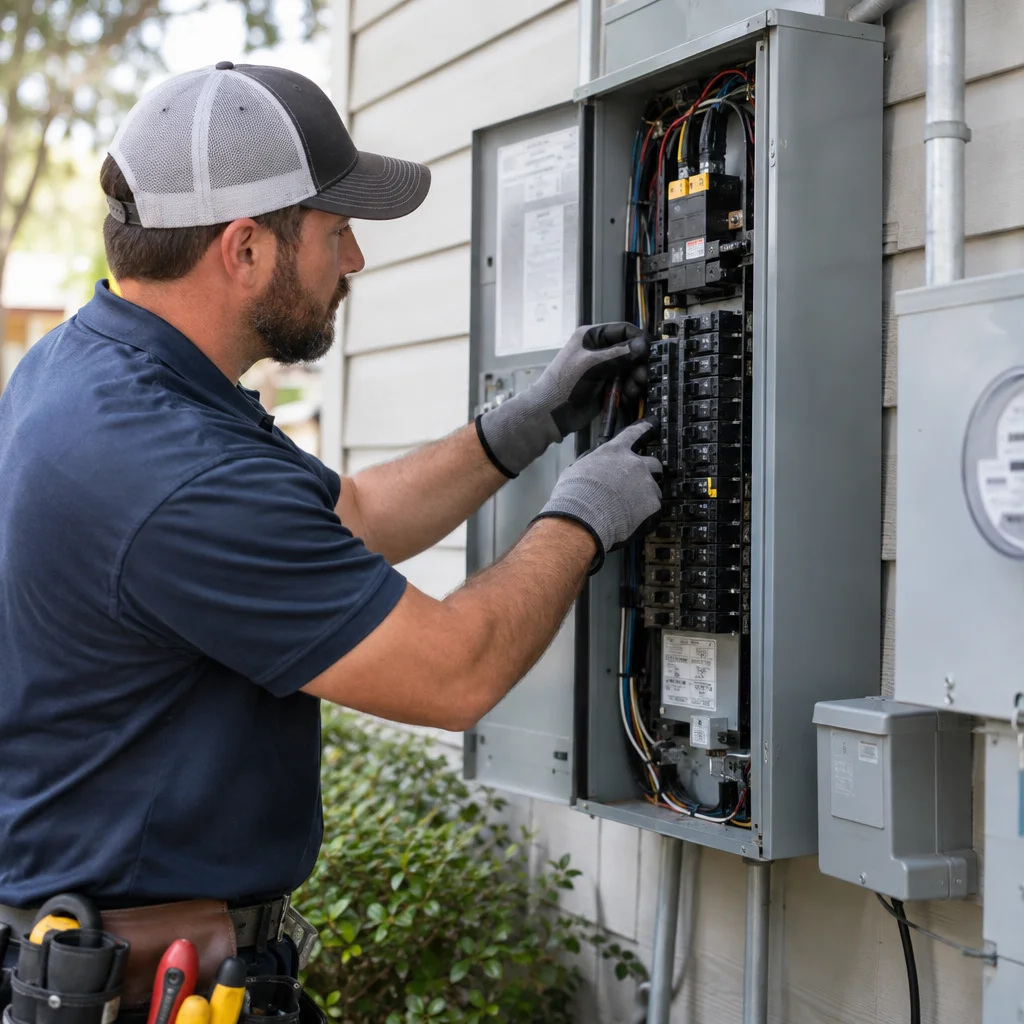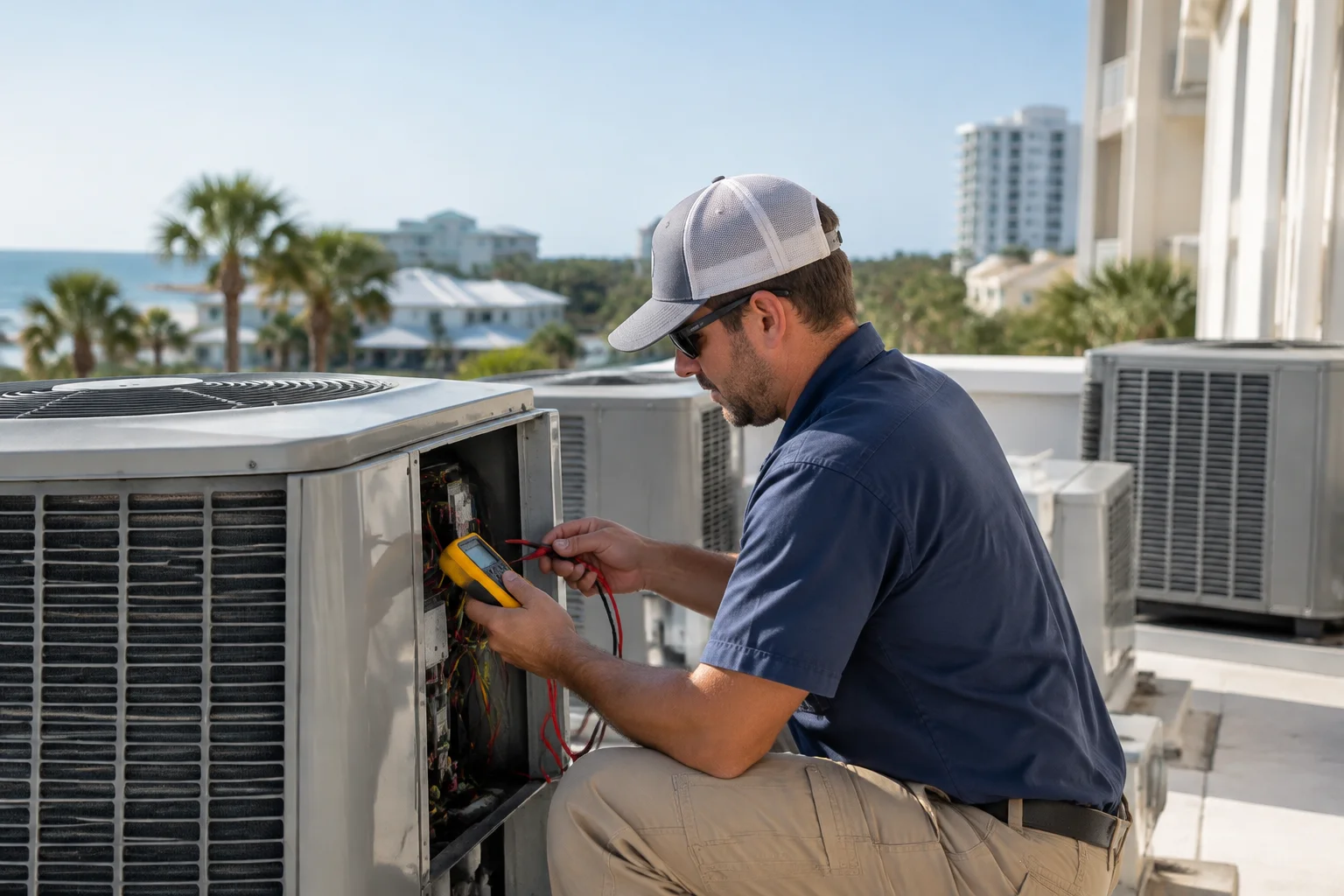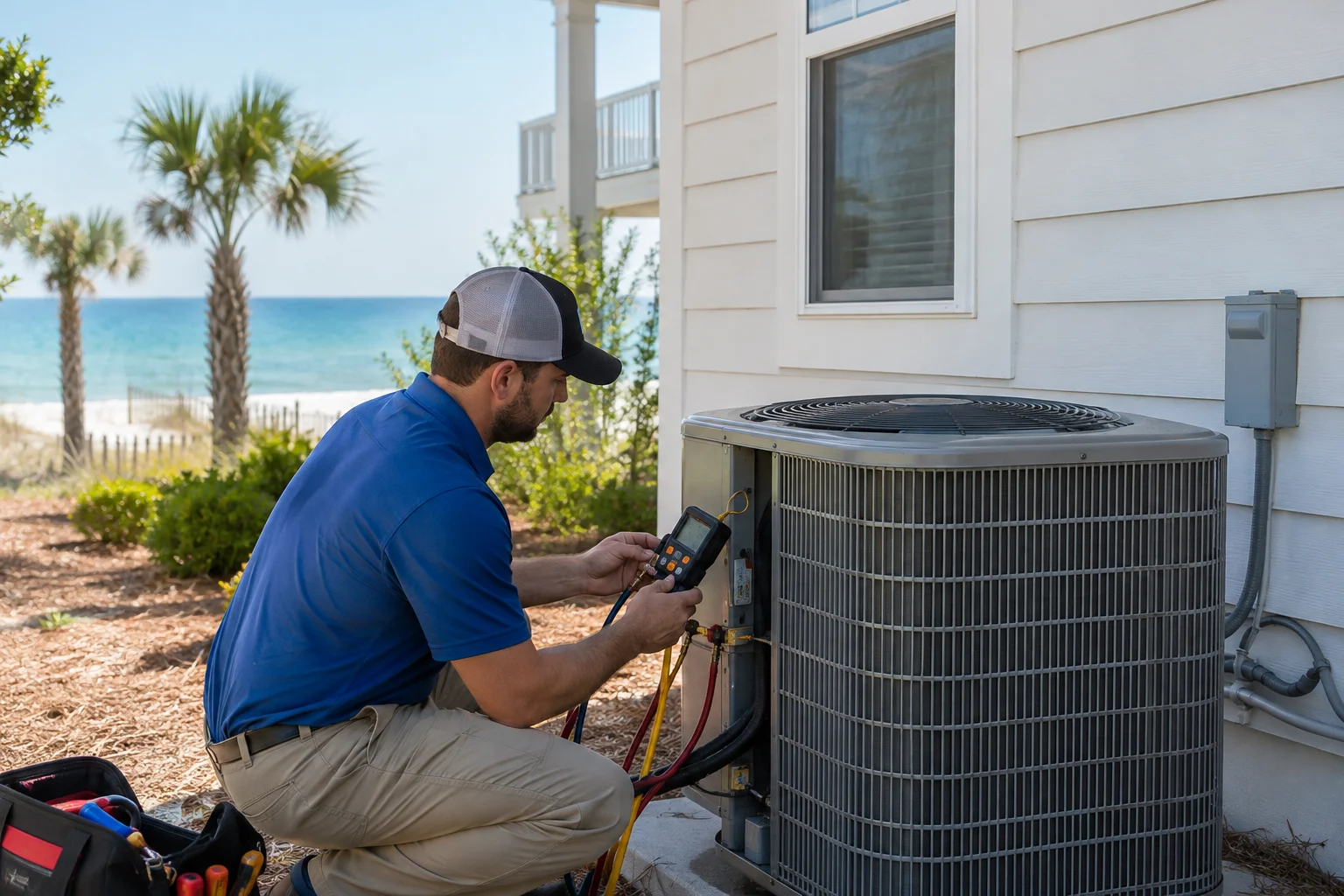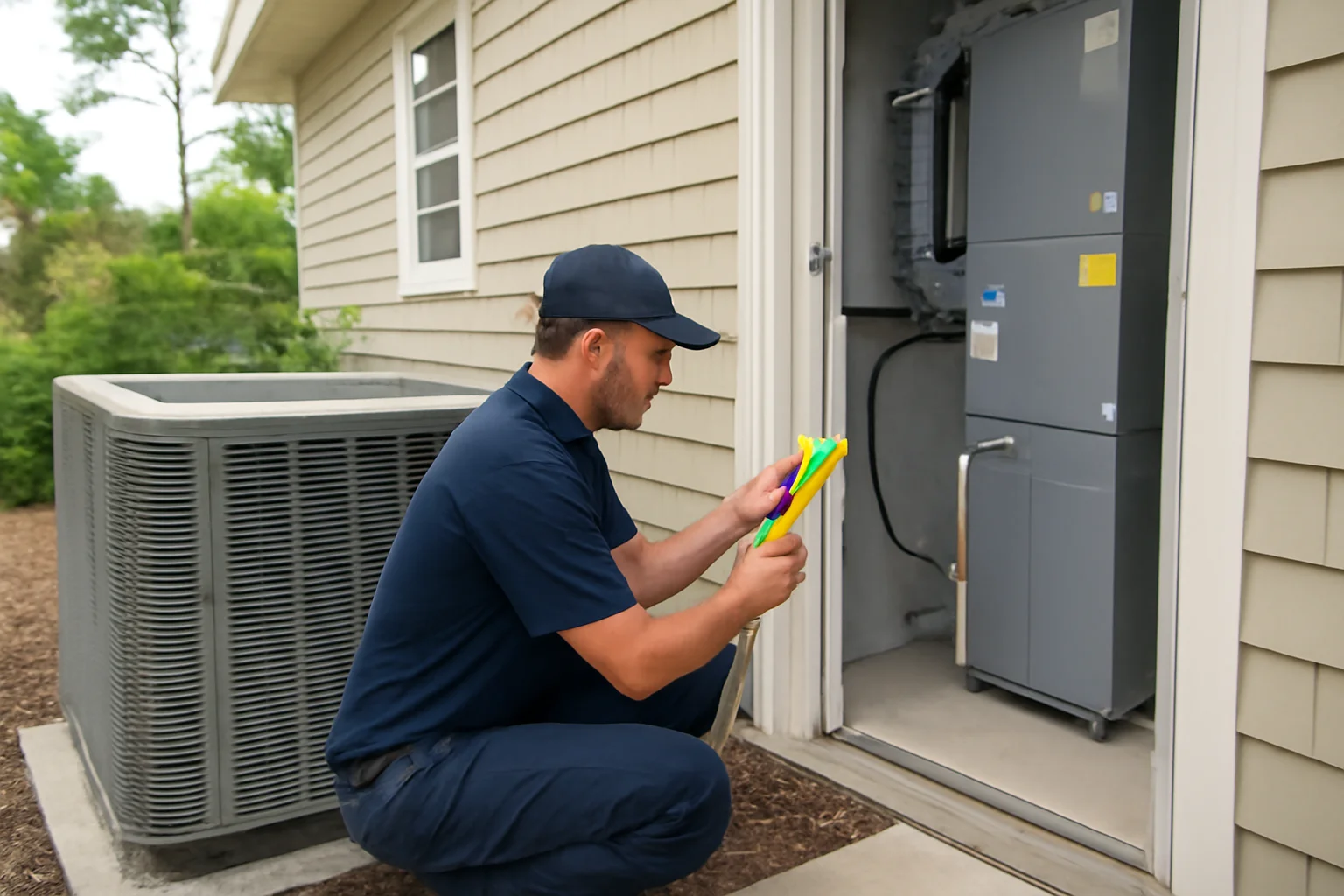
Blue Mountain Beach businesses and multi unit properties rely on steady cooling through Florida heat, humidity, and salt air. A commercial HVAC installation can look “fine” on day one, then struggle as temperatures climb and moisture loads increase. Many homeowners and property managers focus on the outdoor unit and miss the system details that actually control comfort, energy use, and long term reliability.
This guide highlights smart, practical HVAC installation considerations for commercial buildings in Blue Mountain Beach, Walton County, FL. It also points out common causes of uneven cooling, indoor air quality problems, and emergency cooling concerns when summer demand hits.
Why “good cooling” starts before the first refrigerant line is connected
In a coastal area like Blue Mountain Beach, comfort is shaped by airflow, humidity control, and how well the system matches the building. Florida summers bring persistent moisture, and salt air can add corrosion stress over time. If the installation plan does not account for those conditions, the equipment may run longer than expected, short cycle, or fail to remove humidity effectively.
When you are comparing commercial HVAC installation in Blue Mountain Beach, FL, ask how your contractor will address the full system, not just the components. A Superior Mechanical designs and installs commercial systems with those building realities in mind.
Airflow problems are the most common “mystery” behind uneven cooling
Many homeowners notice hot spots in hallways, cooler break rooms, or temperature swings between floors. Often, the cause is airflow distribution, not the thermostat setting.
Check ductwork sizing, layout, and sealing
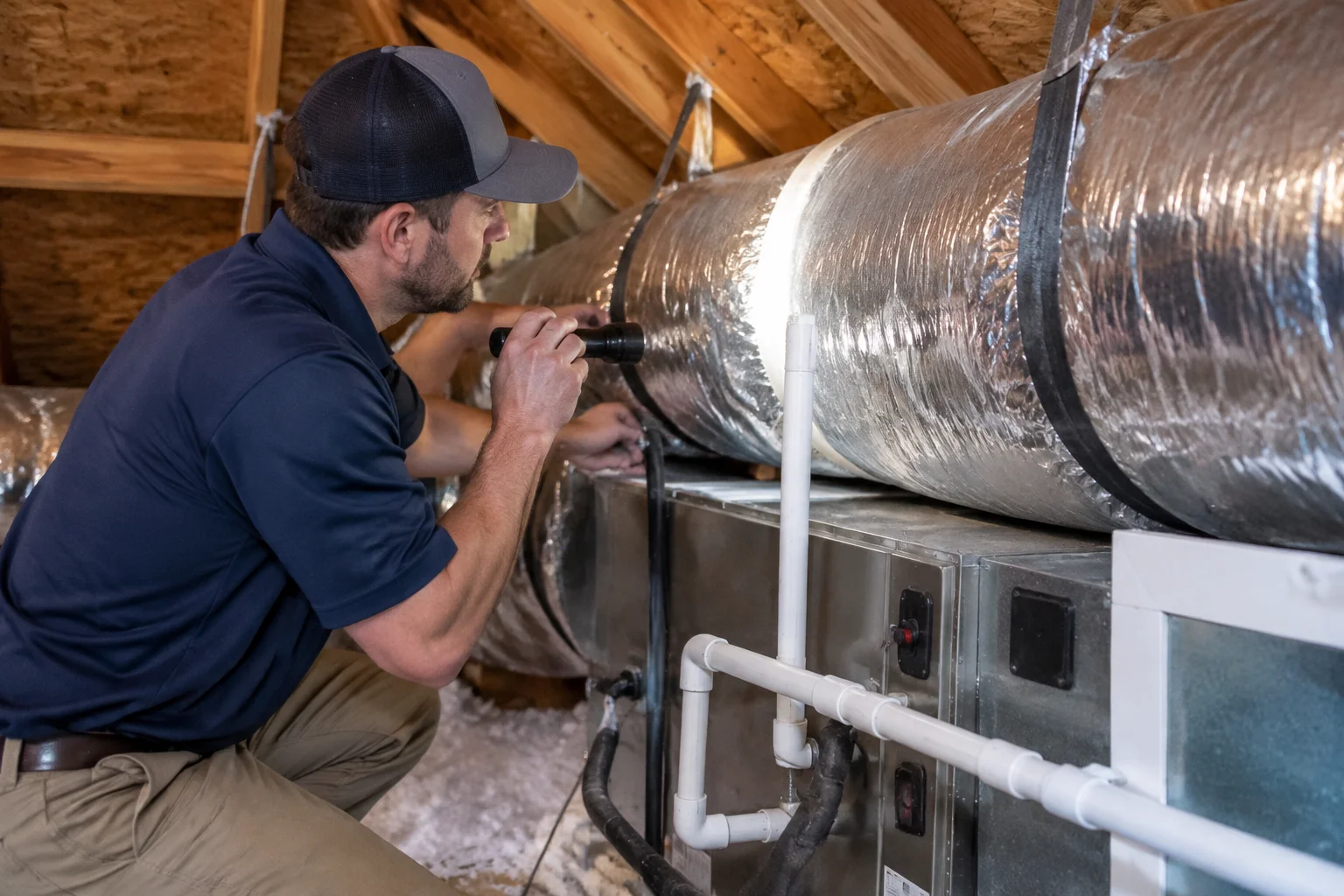
Ductwork that is undersized, poorly routed, or leaky can reduce air delivery exactly where you need it. In commercial spaces, long duct runs, multiple zones, and ceiling obstructions can make airflow harder to balance. During installation, duct repair and proper sealing matter for both performance and energy use.
If you are searching for duct repair near me because comfort is inconsistent, the best place to start is with an installation and airflow assessment. Improper ductwork can also contribute to higher static pressure, which can strain components and lead to more frequent calls for HVAC repair near me.
Balance supply and return air paths
Good cooling requires air to move both ways. Returns that are blocked, undersized, or located far from the supply can cause negative pressure or poor circulation. That can pull in humid outdoor air through gaps, making indoor air quality worse and increasing the load on the air conditioner.
Humidity control matters as much as temperature in Walton County summers
In Blue Mountain Beach, the goal is not only a cooler thermostat reading. It is maintaining comfortable humidity levels so the space feels “dry” and stable. If humidity removal is weak, occupants may feel clammy even when temperatures are set low.
Match the system to the building’s moisture load
Commercial loads vary widely across offices, retail spaces, restaurants, and multi unit properties. Equipment that is oversized can cool quickly but remove less moisture, which can increase dampness and encourage odor and microbial growth. Equipment that is undersized can run constantly without ever reaching the right balance.
Professional design should consider occupancy, ventilation requirements, sun exposure, and how the building envelope performs in Florida heat. This is one reason smart HVAC installation is different from a simple swap.
Plan for condensate drainage during installation
When a system dehumidifies, condensate drainage is part of the job. Clogged drains, improper slope, missing traps, or poor discharge routing can lead to overflow risk and moisture problems. In humid coastal conditions, small drainage issues can become big comfort and indoor air quality concerns.
Ask your installer how condensate drainage will be routed, how drain lines will be protected, and how they will verify proper operation after installation.
Thermostats and controls should be set up for real schedules and real spaces
Thermostats are not just temperature knobs. In commercial buildings, control strategy affects comfort, energy use, and equipment cycling.
Use controls that reflect how the space is actually used
A restaurant, for example, may need different cooling patterns during service hours than after hours. Offices may have meeting room occupancy changes. If controls are configured too aggressively or without zoning logic, you can get short cycling or temperature drift.
Verify sensor placement and calibration
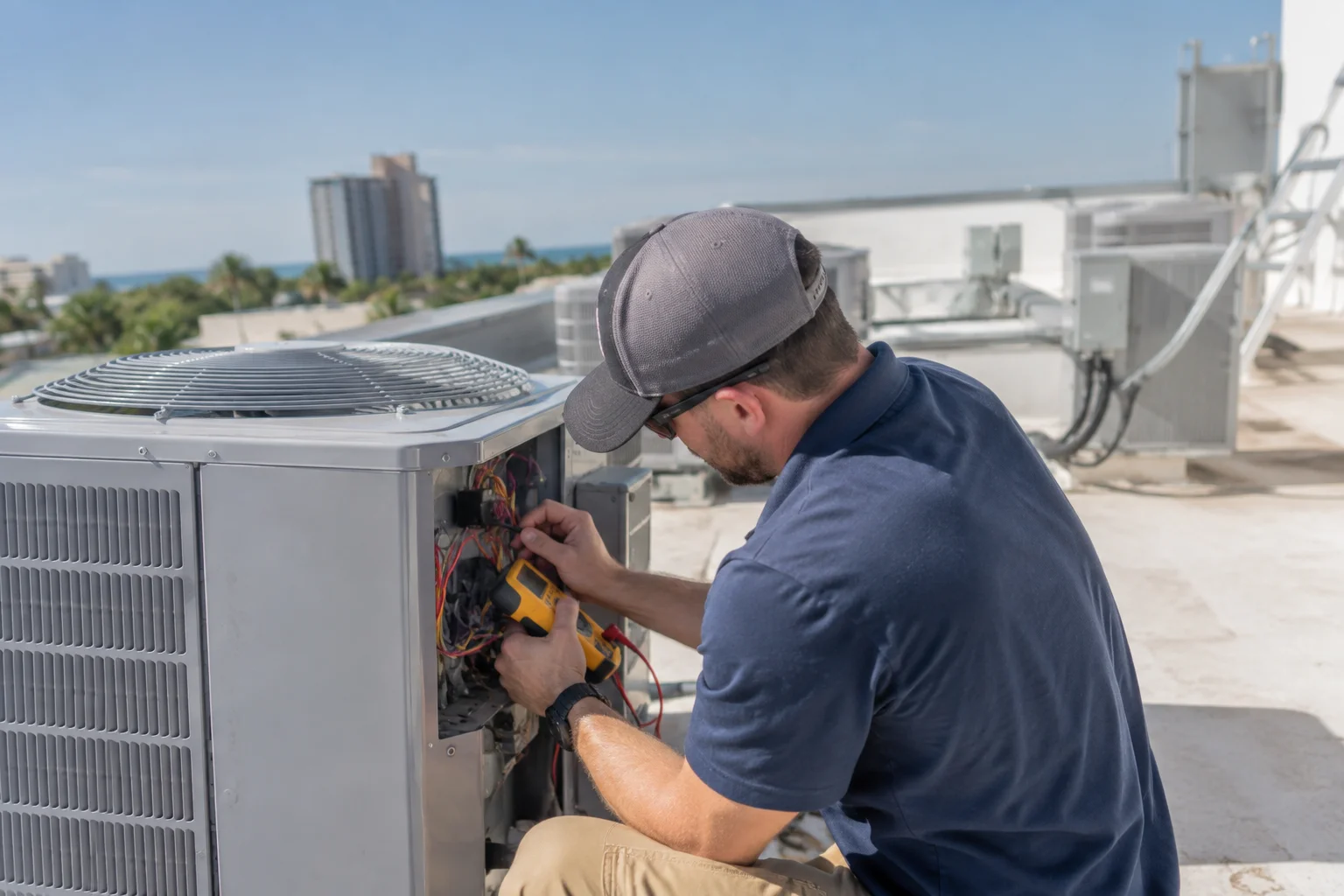
Even a well installed commercial HVAC system can perform poorly if sensors are in drafts, direct sunlight, or locations with unusual heat loads. During installation, sensor placement and calibration should be checked so the control system measures what you actually care about.
Refrigerant systems need careful installation practices, not guesswork
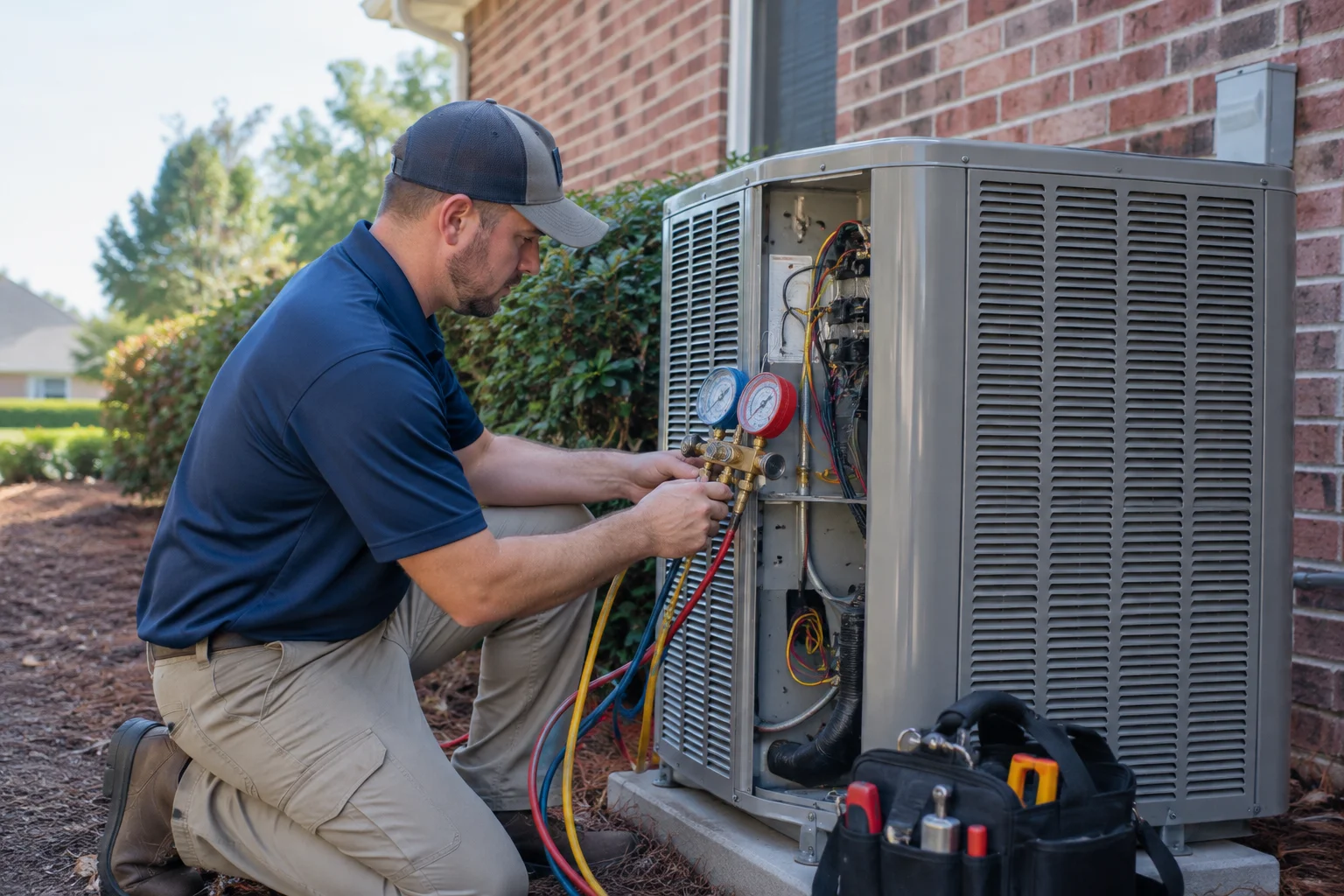
Refrigerant systems influence cooling performance and reliability, but they are not DIY territory. Proper installation practices matter, including leak testing, correct line routing, and adherence to manufacturer requirements.
Homeowners should avoid assuming that a “low cooling” complaint automatically means a refrigerant diagnosis is needed. Refrigerant issues can be caused by other problems like airflow restrictions, dirty coils, or control settings. A professional evaluation is the only safe way to determine what is actually happening.
If you are planning new AC installation near me for a commercial property, request that your contractor documents key checks after installation and verifies system operation under expected conditions.
Florida heat, salt air, and outdoor unit placement can make or break performance
Coastal air can accelerate corrosion, and Florida heat stresses components when airflow and clearances are not handled correctly. Outdoor unit placement and protection should be part of the installation plan.
Clearances, airflow, and protection from salt exposure
Outdoor units need unobstructed airflow. If the condenser is installed too close to walls, fences, or landscaping, it can overheat and lose efficiency. Salt air can affect fin surfaces and nearby hardware, so proper placement and maintenance planning are important.
Plan for airflow paths around the building
In coastal areas, wind patterns and building orientation can affect how air moves. That can influence how quickly spaces recover after doors open, how humidity behaves, and how well the system maintains stable temperatures.
Indoor air quality is tied to installation quality, not just filters
When indoor air quality suffers, occupants may complain about odors, dryness, headaches, or frequent asthma and allergy triggers. In humid climates, indoor air quality is closely connected to moisture control and air movement.
Get filtration and air handling right for the space
Filter selection and installation affect airflow and filtration performance. If filters are installed incorrectly or are too restrictive for the system, you can see pressure issues that reduce cooling performance. Your installer should help you select a practical approach for the commercial environment.
Consider how ventilation interacts with cooling
Commercial buildings often require ventilation for code compliance and occupant comfort. Poor coordination between ventilation and cooling can raise humidity and reduce comfort even when temperatures seem acceptable.
If you are already dealing with comfort complaints and moisture concerns, an air conditioning inspection in Blue Mountain Beach, FL can help identify where installation gaps or operating problems may be contributing.
Energy use is a performance metric, not an afterthought
In Florida, energy demand peaks quickly. If a commercial HVAC system is not matched to the building and installed with attention to airflow and controls, it can run longer and consume more electricity.
Homeowners often overlook these energy drivers during installation:
- Airflow restrictions from ductwork issues or dirty coils
- Incorrect sizing that leads to short cycling or continuous operation
- Control settings that do not match occupancy schedules
- Poor condensate drainage that contributes to moisture and indoor air quality problems
Rather than relying on assumptions, ask for a documented commissioning process and post installation verification. That is where performance is confirmed.
Preventive maintenance planning should be part of installation
Commercial HVAC systems are built to run. Preventive maintenance near me is not just about avoiding breakdowns. It is also how you protect indoor air quality, maintain airflow, and reduce the chance of emergency cooling concerns during peak summer weeks.
Build a maintenance schedule around Florida conditions
Coastal humidity and salt exposure can increase dirt and corrosion risk. That means coil cleaning, drain line checks, and inspection of airflow components should be prioritized. A commercial AC tune up near me should include checks that support stable cooling and humidity control.
Know what “normal” sounds and symptoms look like
Staff can often spot early issues before they become costly. Watch for:
- Rising indoor humidity or damp odors
- Hot spots that appear after steady performance
- Short cycling or sudden increases in run time
- Water near condensate drain areas
If you notice these patterns, it is wise to schedule HVAC maintenance near me rather than waiting for a full failure.
Smart installation choices for common commercial building types in Blue Mountain Beach
Blue Mountain Beach properties range from offices and retail to restaurants and multi unit buildings. The installation details that matter most can vary by building type.
Offices and retail spaces
Comfort issues often come from zoning, duct distribution, and thermostat placement. If some rooms are consistently warmer, airflow balance and return paths may be the culprit. A detailed airflow review can prevent repeated HVAC repair near me calls.
Restaurants and kitchens
Cooking loads and ventilation can add heat and moisture. Humidity control and condensate drainage need careful attention. If the system struggles during service hours but recovers after closing, the control strategy and load matching should be evaluated.
Multi unit properties
Shared duct systems and differing occupant schedules can create uneven performance. Proper zoning logic, ductwork sealing, and return air planning help prevent moisture migration and comfort complaints between units.
How to spot installation red flags before problems start
Some issues show up immediately. Others appear after the first humid weeks. Here are red flags homeowners and property managers can watch for during commercial HVAC installation planning and walkthroughs:
- Limited discussion of ductwork, airflow, and return paths
- No explanation of condensate drainage routing and verification
- Thermostat placement that ignores drafts, sunlight, and unusual heat sources
- Quick decisions that do not consider occupancy, ventilation, and moisture load
- No post installation testing or commissioning steps
If you are comparing contractors for HVAC installation near me, these questions help you evaluate whether the company approaches the job as a full system, not a component swap.
When emergency cooling concerns are on the line
In summer, a failed cooling system can disrupt operations quickly. Emergency AC repair near me is often needed when issues are discovered late. While no one wants downtime, being prepared reduces risk.
Consider these practical steps for commercial properties:
- Keep a maintenance record so technicians can see what has been checked and when
- Train staff to report early symptoms like rising humidity or water leaks
- Plan for seasonal inspections before peak demand
- Confirm that the building has an appropriate cooling contingency plan
If you are dealing with ongoing comfort problems and need help evaluating the system, start with an air conditioning inspection to identify what is affecting cooling performance and indoor air quality.
Related reading for Blue Mountain Beach and nearby areas
If you manage commercial properties across the 30A corridor, these guides can help you compare installation details and avoid common mistakes:
- The Details That Get Missed in Commercial HVAC Installation in Freeport, FL
- Commercial HVAC Installation in Laguna Beach, FL: The Issues Local Property Owners Should Not Overlook
- Keeping Sandestin Buildings Comfortable Starts With Smarter Commercial HVAC Installation
- What Panama City Beach Property Owners Should Know Before a Commercial HVAC Installation
You can also explore broader service options for Walton County here: /service-areas/walton-county, and learn more about the local service area: /service-areas/walton-county/blue-mountain-beach.
Choosing the right system type for your building
Many commercial buildings use standard air conditioning systems, but some owners consider alternatives like heat pumps. If you are evaluating system options, it helps to understand how each approach performs in humid Florida conditions.
For homeowners comparing options, these services may be relevant:
Whether you need commercial HVAC service near me for installation, repairs, or ongoing maintenance, the right approach is the one that fits your building’s airflow and moisture needs. If you are considering an upgrade and want to compare an AC replacement estimate near me, professionals can review the current system performance, ductwork condition, and indoor air quality impacts during an on site assessment.
For commercial HVAC installation in Blue Mountain Beach, FL, A Superior Mechanical can help you plan a system that supports better cooling performance, stable comfort, and preventive HVAC maintenance that matches local conditions.
Learn more at commercial HVAC installation in Blue Mountain Beach, FL.
Find Commercial HVAC Installation in Blue Mountain Beach, FL
If you need Commercial HVAC Installation in Blue Mountain Beach, FL, visit our local service page or contact A Superior Mechanical today.
Map of Blue Mountain Beach, FL
Frequently Asked Questions
Why does my commercial space feel humid even when the thermostat is set low?
Humidity issues often come from airflow distribution, return air problems, or a system that does not match the building’s moisture load. Poor condensate drainage during installation can also contribute. A professional inspection helps confirm what is actually causing the indoor humidity to stay high.
Can ductwork problems cause short cycling and higher energy use?
Yes. Leaky or undersized ductwork can restrict airflow, increase system stress, and make temperature control less stable. That can lead to longer run times, uneven comfort, and more frequent HVAC repair calls.
What should be checked after commercial HVAC installation to confirm performance?
Ask about post installation verification and commissioning steps that confirm airflow, thermostat/control operation, condensate drainage function, and safe refrigerant system operation. An in person evaluation is the right way to confirm performance.
Is a refrigerant issue always the reason cooling is weak?
No. Weak cooling can be caused by airflow restrictions, dirty coils, control settings, or ductwork issues. A technician should evaluate the system as a whole before concluding that refrigerant work is needed.
How can preventive HVAC maintenance help prevent emergency cooling concerns?
Preventive maintenance helps keep airflow steady, supports humidity control, and reduces the chance of clogged drains or component failures during peak summer demand. Reporting early warning signs like rising humidity or water near condensate areas can also prevent breakdowns.
Related Articles
- The Details That Get Missed in Commercial HVAC Installation in Freeport, FL
- Commercial HVAC Installation in Laguna Beach, FL: The Issues Local Property Owners Should Not Overlook
- Keeping Sandestin Buildings Comfortable Starts With Smarter Commercial HVAC Installation
- What Panama City Beach Property Owners Should Know Before a Commercial HVAC Installation
Photo Gallery