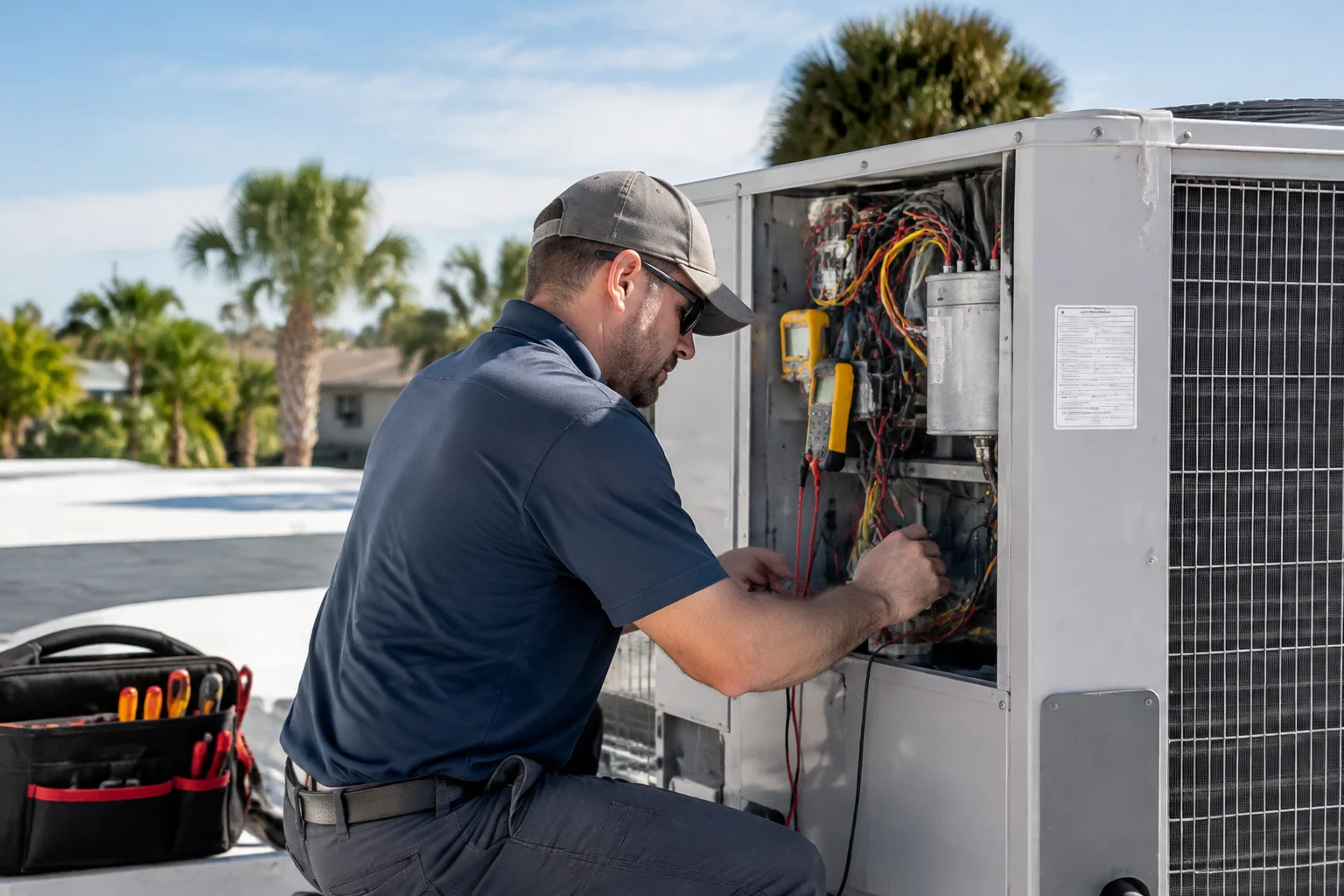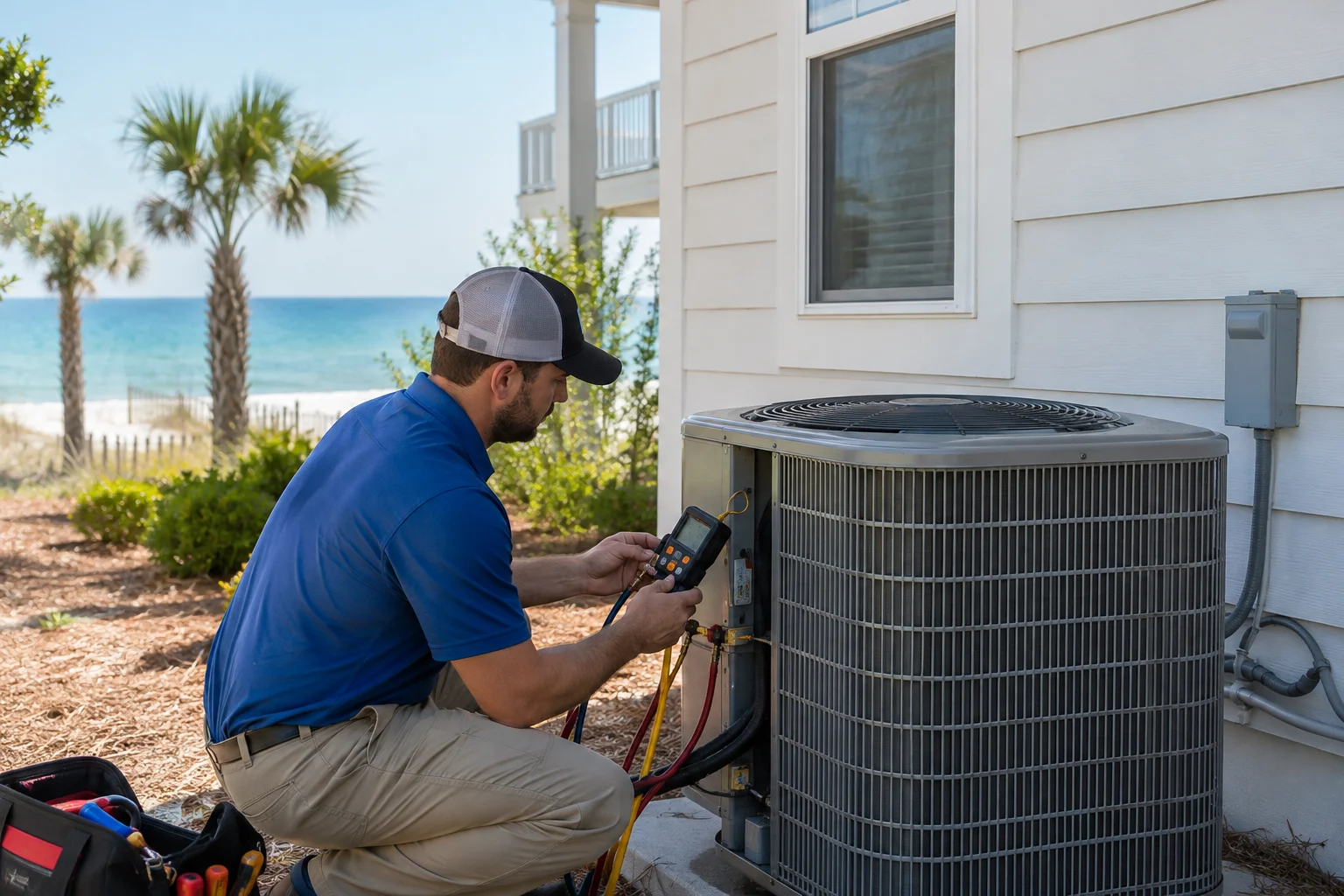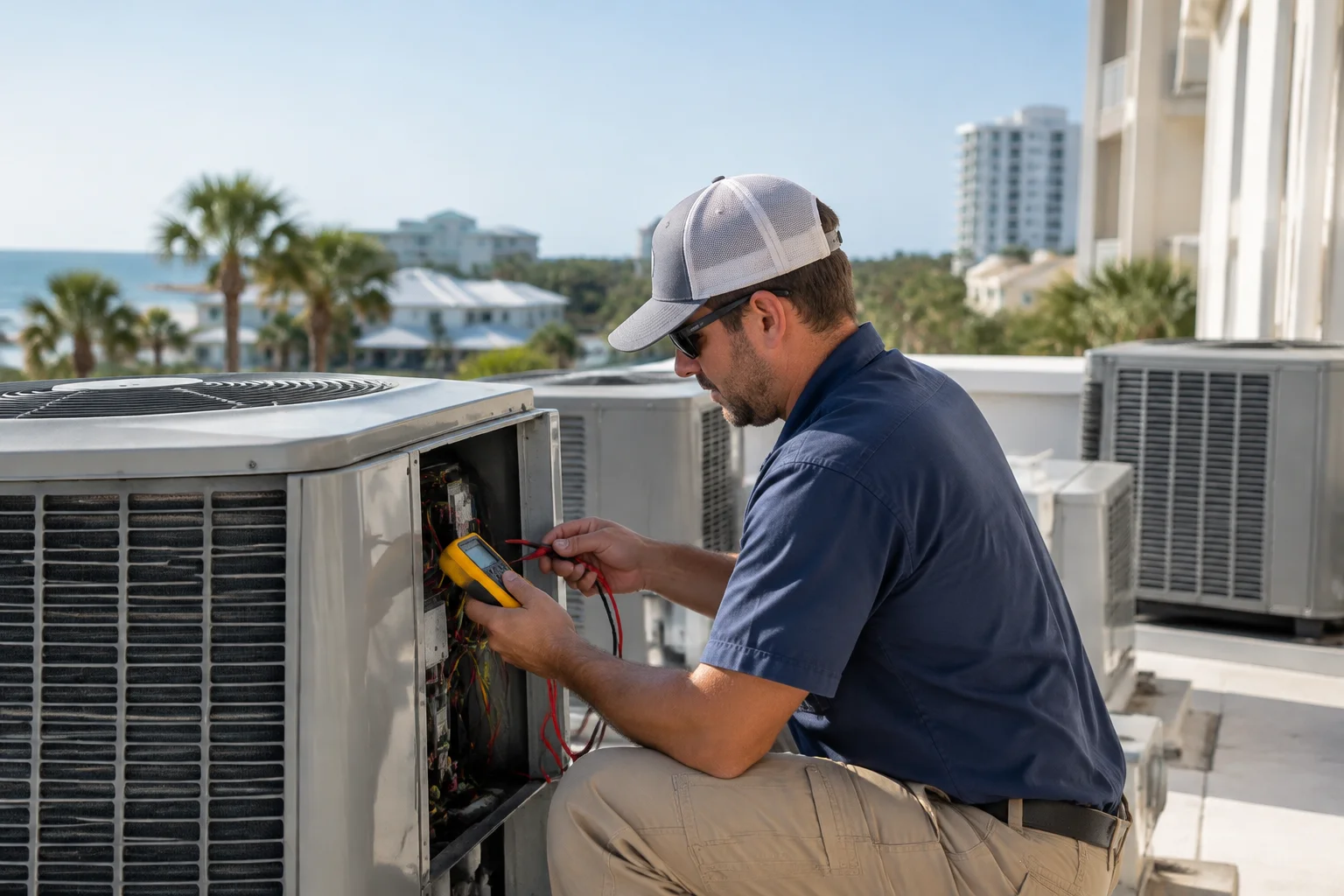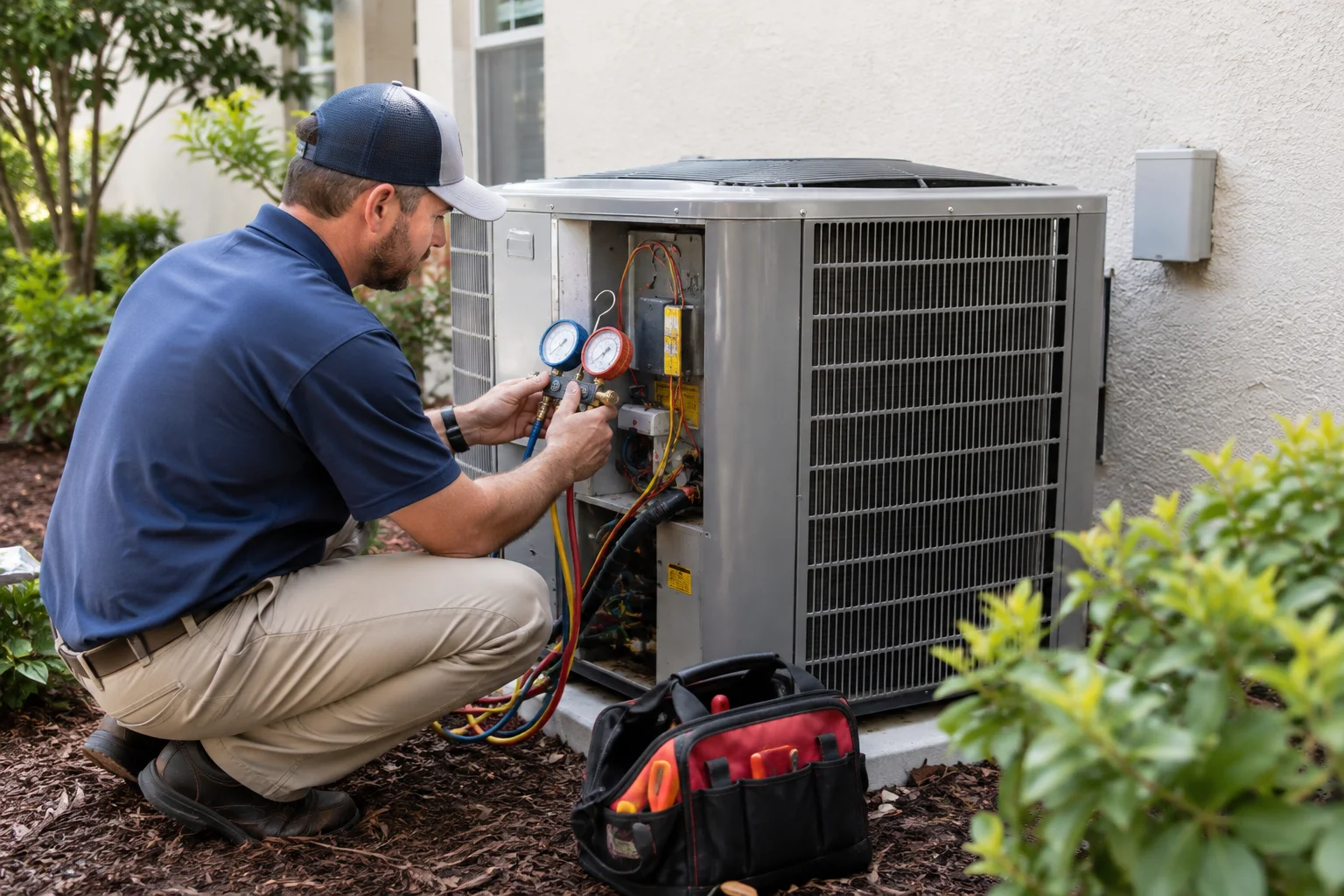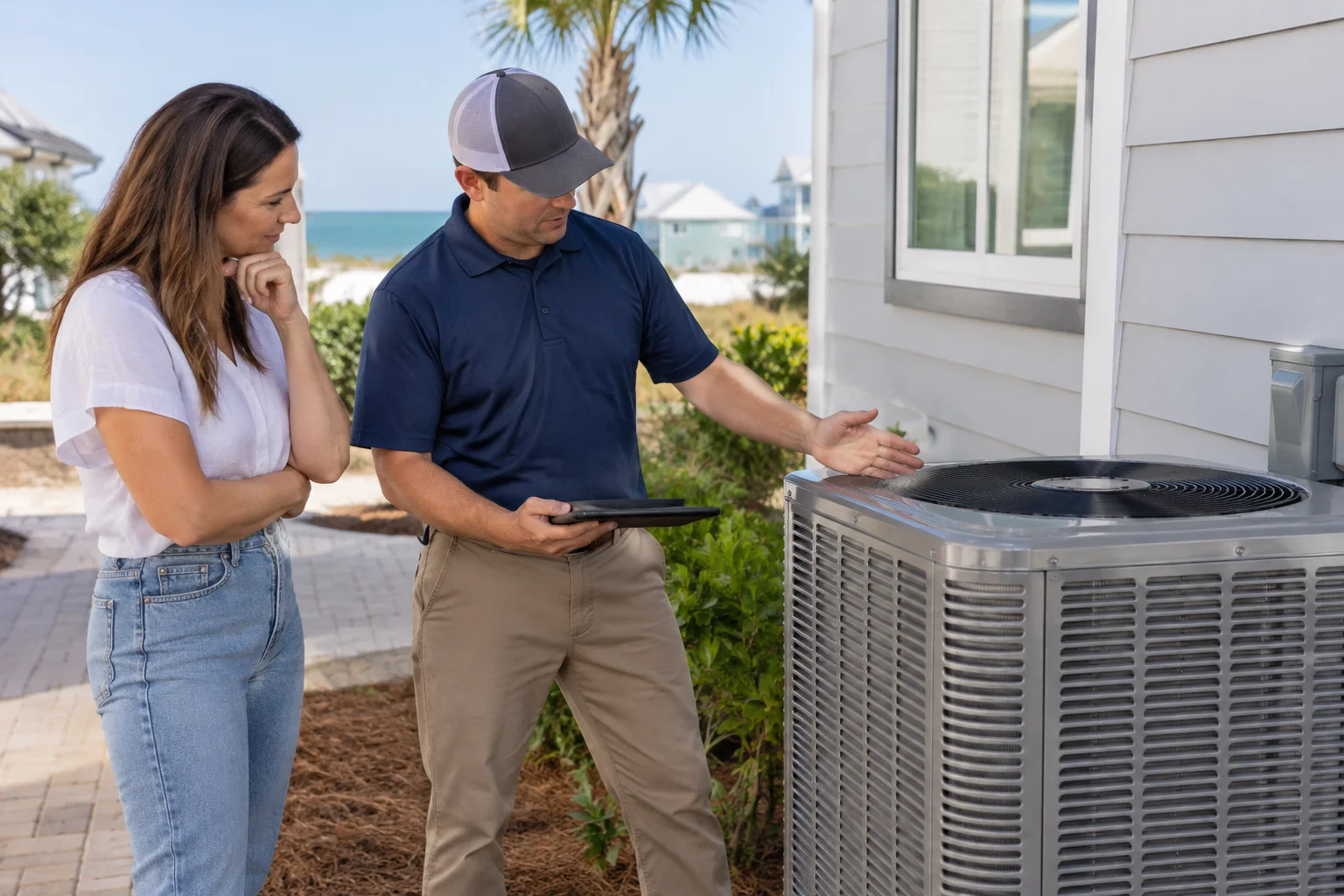
Smart thermostats can make cooling feel easier and more consistent, especially in Lower Grand Lagoon where summer heat, coastal humidity, and salt air can stress HVAC systems. The goal is simple: avoid those frustrating, last-minute “emergency AC repair near me” moments caused by preventable thermostat issues, airflow problems, or comfort settings that push your system too hard.
Below is a homeowner-focused guide to using smart thermostats to support better cooling performance, reduce unexpected breakdowns, and know when it is time to involve a licensed HVAC contractor.
Why Lower Grand Lagoon homes face higher cooling stress
In Bay County, Florida, air conditioning is not just a convenience. It is a daily comfort system. During hot, humid stretches, your AC and heat pump must remove moisture while keeping indoor temperatures stable. When the system struggles, homeowners often notice symptoms that can look like thermostat problems, even when the root cause is airflow, condensate drainage, ductwork, or refrigerant system performance.
Lower Grand Lagoon also sits in a coastal environment. Salt air can accelerate wear on outdoor HVAC components over time, and long cooling seasons mean the system runs more frequently. That makes preventive HVAC maintenance and correct HVAC controls service more important than ever.
Smart thermostat settings that can trigger emergency cooling concerns
Smart thermostats are designed to improve control, but a few common setup issues can lead to overheating indoors, short cycling, or repeated system calls. When that happens during Florida heat, it can feel like the system is failing even if it is simply being asked to perform in an inefficient way.
1) Setting aggressive temperature swings
Many homeowners like the idea of “cool fast” by dropping the temperature quickly. With smart thermostats, it is easy to set large step changes or allow schedules that swing from warm to very cool. That can increase compressor run time and strain the air conditioning system.
Instead, aim for gradual setpoint changes that match how your home cools in humid conditions. If your home has higher humidity, the AC may need more run time to remove moisture, not just lower the temperature.
2) Ignoring humidity control and dehumidification needs
In Lower Grand Lagoon, humidity can make indoor air feel hotter than the thermostat reading suggests. If your smart thermostat is not using humidity-aware settings (or if humidity targets are set too high), the system may run longer to catch up, or the space may remain uncomfortable even when the thermostat says it is “cool.”
This can create a cycle of frustration where homeowners keep adjusting the thermostat, increasing system calls. Proper indoor air quality and comfort depend on both temperature and moisture control, and that is where professional guidance helps.
3) Using the wrong operating mode or fan behavior
Smart thermostats often let you choose cooling mode, fan settings, and sometimes auxiliary behavior with heat pumps. If the thermostat is set to the wrong mode, or if the fan schedule does not align with how your ductwork delivers airflow, you can see uneven cooling, hot rooms, or rooms that never reach comfort targets.
Those symptoms can lead to repeated calls for cooling, especially in summer. A technician can confirm that the thermostat wiring and HVAC control logic match your system type and how the air handler and outdoor unit work together.
4) Over-reliance on remote control without system feedback
Remote access is helpful, but it can also encourage “set it and forget it” behavior. If airflow is reduced due to dirty filters, blocked returns, or duct issues, the thermostat will still try to cool to the setpoint. That can increase run time and stress the refrigerant system.
Smart thermostats may show alerts or runtime behavior, but they cannot replace checks like air conditioning inspection near me, verifying condensate drainage, and confirming airflow.
Cooling performance depends on airflow, not just thermostat commands
Even the best smart thermostat cannot cool a home if air cannot move through the system. In Florida humidity, airflow problems can also affect moisture removal, which impacts comfort and indoor air quality.
Airflow issues that can look like “thermostat failure”
- Dirty or clogged air filters that restrict airflow and reduce cooling capacity.
- Blocked returns from furniture, curtains, or storage.
- Leaky or poorly sealed ductwork that sends cooled air into attics or crawl spaces.
- Incorrect duct balancing that leaves some rooms warm and others overcooled.
- Condensate drainage problems that can cause moisture to back up around the air handler.
When these issues exist, the thermostat may call for cooling repeatedly. That is when homeowners sometimes end up searching for emergency AC repair near me. Preventive HVAC maintenance and duct inspection near me can help catch airflow and moisture-control problems before they become urgent.
Why ductwork and indoor air quality matter in humid coastal climates
In Lower Grand Lagoon, the air is often moisture-laden. Poor airflow and weak filtration can worsen indoor air quality. That can increase the likelihood that occupants feel “stuffy” even when temperature is acceptable. Smart thermostat schedules alone cannot solve that.
If you are considering upgrades that support comfort, explore Indoor Air Quality and Air Scrubbers. Pairing better air handling with smart temperature control can reduce the temptation to constantly adjust the thermostat.
Smart thermostat installation and HVAC control setup for real-world performance
Smart thermostat performance depends on correct installation and accurate configuration. Homeowners often ask about smart thermostat installation near me, but the best results come from a careful match between the thermostat and the HVAC system.
What a quality installation should address
- Compatibility with your system type (central AC, heat pump, variable-speed systems, or multi-stage setups).
- Proper wiring and HVAC control configuration so the thermostat controls cooling, fan, and any heat pump behavior correctly.
- Verification of temperature sensing placement to avoid reading near a heat source, direct sun, or a drafty register.
- Schedule and occupancy settings tuned to how your home actually cools in Bay County humidity.
If you have experienced repeated cooling callouts, it is worth reviewing your thermostat settings and system behavior with a local team. You can also review the smart thermostat service page for Lower Grand Lagoon here: /service-areas/bay-county/lower-grand-lagoon/smart-thermostats-lglbc.
Use smart features to prevent trouble, not just chase comfort
Most smart thermostats include features like geofencing, scheduling, alerts, and sometimes “smart recovery” style functions. Used correctly, these can reduce unnecessary runtime and help prevent emergency cooling concerns.
Set schedules around how your home holds temperature
In Florida heat, homes can warm up quickly when the sun is strongest. Instead of letting the thermostat run far behind all day and then trying to catch up at night, create a schedule that keeps indoor temperatures within a reasonable range. This reduces the chance of short cycling and helps maintain steady cooling performance.
Choose humidity-aware targets when available
If your thermostat supports humidity settings, use them to support dehumidification. When indoor humidity stays high, the cooling system may need more time to feel comfortable. That can lead to constant “tweaking,” especially if you are away from home and relying on remote control.
Comfort is not only temperature. It is temperature plus moisture and airflow. A professional HVAC controls service can help you align thermostat behavior with your system and ductwork.
Use alerts as early warning signals
Some thermostats notify you about unusual runtime patterns, sensor issues, or equipment communication problems. Treat these as prompts to check filters, airflow, and system status. If alerts repeat during peak heat, it can be a sign of a deeper issue that requires an air conditioning inspection near me.
Preventive HVAC maintenance that reduces thermostat-related emergencies
Smart thermostats can help, but preventive maintenance is what keeps the cooling system ready for Lower Grand Lagoon’s long, humid summers. When homeowners search for HVAC service near me, they often want faster fixes. A better approach is to prevent the conditions that turn a minor issue into a full cooling failure.
Maintenance priorities for better cooling reliability
- AC tune up near me style service: cleaning and inspecting components, verifying operation, and checking safety controls.
- Air filter checks and timely replacement based on household needs and dust levels.
- Condensate drainage inspection to ensure moisture can drain properly and that the system does not back up.
- Airflow verification so the thermostat’s cooling demands translate into real cooling at the vents.
- Duct inspection near me when you notice hot rooms, weak airflow, or persistent humidity problems.
During Florida humidity spikes, small issues like partial airflow restriction or a drainage problem can escalate quickly. That is when emergency AC repair near me becomes more likely.
Refrigerant systems and why you should not guess from thermostat behavior
Sometimes homeowners assume the refrigerant system is low when they see poor cooling. While refrigerant problems can contribute to comfort issues, confirming that requires an in-person evaluation. Smart thermostat runtime patterns can suggest a performance concern, but they are not a substitute for proper diagnostic testing.
If cooling is weak, the system runs constantly, or the home stays humid despite normal thermostat settings, contact a licensed HVAC contractor for an air conditioning inspection near me. Trying to self-diagnose refrigerant systems or other HVAC controls can delay the fix and add stress to the equipment.
When smart thermostats still cannot prevent an emergency
Even with smart thermostat installation and good settings, emergencies can happen. The key is knowing the difference between “adjust and wait” and “stop adjusting and get help.”
Call for professional help if you see these cooling red flags
- The AC will not cool when the thermostat is calling for cooling.
- Repeated short cycling or rapid on-off behavior that continues after basic checks like filter replacement.
- Water around the indoor unit or signs of clogged condensate drainage.
- Warm air blowing from vents while cooling is enabled.
- Unusual noises combined with comfort failure.
In Lower Grand Lagoon, prolonged indoor heat and humidity can affect comfort quickly. If cooling is not keeping up, it is reasonable to seek emergency cooling help so your home stays safe and livable.
Smart thermostat troubleshooting you can do safely before calling
You can reduce unnecessary service calls by doing a few basic, safe checks. These steps address common thermostat and airflow issues without requiring equipment diagnosis.
Simple checks that often resolve “it feels like the thermostat is wrong”
- Confirm the thermostat is in cooling mode and the setpoint is below the current indoor temperature.
- Check the fan setting (for example, ensure it is not set to continuous when you expect cycling behavior).
- Replace the air filter if it is dirty or overdue.
- Make sure supply vents and returns are not blocked by furniture, rugs, or curtains.
- Verify the thermostat is not exposed to direct sun or placed near a heat source.
If the problem persists, it is time for an HVAC service near me visit. A local licensed HVAC contractor can confirm system operation, airflow, condensate drainage, and thermostat communication.
Planning upgrades: when ductless or replacement becomes part of the comfort plan
Some Lower Grand Lagoon homes have airflow limitations that create uneven cooling. If you consistently struggle with hot rooms or humidity that never seems to improve, ask about ductwork improvements or alternative system layouts.
Ductless mini-split installation for targeted comfort
If your home layout makes duct-based airflow difficult, ductless systems can help you control temperature in specific zones. If you are exploring that direction, review Ductless Mini-Split Services and discuss whether a ductless approach fits your cooling goals and indoor air quality needs.
Homeowners searching for ductless mini split installation near me often want a comfort solution that works with how their home is built, not just a thermostat change.
System replacement is a bigger decision than thermostat changes
Thermostats can improve control, but they do not fix failed components or major performance issues. If your system is aging and struggling in peak summer, you may need an HVAC replacement conversation. Start with Air Conditioning Replacement and consider a full inspection of the AC system, ductwork, and indoor comfort factors.
Why local HVAC service matters for smart thermostat success
Lower Grand Lagoon homes share common challenges: humid summers, salt air exposure, and ductwork that may not deliver airflow evenly. A technician familiar with Bay County layouts and cooling patterns can help ensure your thermostat is configured to support real cooling performance.
That is also why working with a local team for HVAC controls service matters. Smart thermostat installation should not be treated like a one-time setup. It should be paired with an understanding of your system, ductwork, and indoor air quality goals.
If you want to explore service options in your area, you can also visit the Lower Grand Lagoon overview page at /service-areas/bay-county/lower-grand-lagoon and then choose the smart thermostat service that fits your home.
Cooling confidence checklist for Lower Grand Lagoon homeowners
Use this checklist to reduce the odds of emergency cooling concerns during Florida heat.
- Thermostat settings are realistic for humidity and your home’s cooling pace.
- Schedule changes avoid large temperature swings that force constant recovery cycles.
- Filters are clean and airflow is not restricted.
- Vents and returns are clear and duct airflow is not blocked.
- Condensate drainage is functioning properly and there are no signs of backup.
- Alerts are treated as early warning signals, not ignored.
- Preventive HVAC maintenance keeps the system ready for peak humidity and temperature.
If you are dealing with persistent humidity, uneven cooling, or thermostat behavior that does not match comfort, schedule an Air Conditioning Systems inspection and discuss how smart thermostat settings can be tuned to your system.
For homeowners specifically focused on smart thermostat installation and HVAC control in Lower Grand Lagoon, start here: /service-areas/bay-county/lower-grand-lagoon/smart-thermostats-lglbc.
If you want to compare how smart thermostats behave in nearby coastal conditions, these reads may help: Smart Thermostats in Panama City Beach: Small Problems That Can Turn Into Bigger HVAC Headaches and Smart Thermostats and Fewer HVAC Surprises in Panama City Homes.
Find Smart Thermostats in Lower Grand Lagoon, FL
If you need Smart Thermostats in Lower Grand Lagoon, FL, visit our local service page or contact A Superior Mechanical today.
Map of Lower Grand Lagoon, FL
Frequently Asked Questions
Can a smart thermostat cause my AC to break down in Florida heat?
A smart thermostat usually does not “break” an AC by itself. However, incorrect settings, schedule behavior, or fan mode choices can lead to excessive runtime, short cycling, or comfort issues that make homeowners notice the system more during peak humidity. If cooling is failing, an in-person inspection is the right next step.
Why does my home stay humid even when the thermostat is set to cool?
Humidity problems often relate to airflow, condensate drainage, ductwork performance, or overall system capacity. Smart thermostat temperature settings alone may not achieve dehumidification. A technician can check the system’s cooling performance and moisture removal during an air conditioning inspection.
What thermostat settings help prevent emergency cooling concerns?
Use gradual temperature changes, avoid extreme temperature swings, and if available, use humidity-aware targets. Also confirm the correct operating mode and fan behavior. If alerts show unusual runtime patterns, address the issue early instead of repeatedly adjusting the thermostat.
Should I call for help if the thermostat says it is cooling but the air feels warm?
Yes. Warm air while the thermostat calls for cooling can indicate an operational problem with the air conditioning system. Basic checks like replacing a dirty filter can help, but persistent performance failure needs professional evaluation.
How do I know if I need thermostat repair or HVAC service?
If the thermostat display and settings look correct but cooling performance remains poor, the issue may be airflow, condensate drainage, ductwork, or refrigerant system performance. A licensed HVAC contractor can determine whether thermostat repair, HVAC controls service, or broader AC tune up is the appropriate fix after an on-site inspection.
Related Articles
- A Local Homeowner’s Guide to HVAC Financing in Lower Grand Lagoon, FL: Comfort, Airflow, Humidity, and Prevention
- Smart Thermostats in Panama City Beach: Small Problems That Can Turn Into Bigger HVAC Headaches
- Smart Thermostats and Smoother Comfort in Destin Homes: Staying Ahead of HVAC Problems Before They Grow
- Smart Thermostats and Fewer HVAC Surprises in Panama City Homes
Photo Gallery