Niceville summers bring long stretches of heat, humidity, and salty air from the Gulf. For many families, the HVAC system works overtime to keep indoor temperatures steady and comfortable. A smart thermostat can help you manage comfort and reduce unnecessary strain, but only if it is installed correctly and configured with your home’s airflow, ductwork, and humidity needs in mind.
This guide focuses on smart thermostats for homeowners searching for HVAC service in Niceville, FL, with practical steps to avoid the kinds of problems that lead to expensive AC repair, heat pump service calls, and emergency cooling concerns.
Why smart thermostats matter in Niceville’s climate
In Niceville and across Okaloosa County, indoor comfort depends on more than temperature. Florida heat and humidity affect how your air conditioner and heat pump move moisture out of the air. When humidity stays too high, you may feel “cool” but still feel sticky, and your system can run longer than it should.
Smart thermostats add control features such as scheduling, remote adjustments, and system monitoring. Those tools can help you:
- Maintain consistent temperatures across the day
- Reduce short cycling by coordinating runtime with real demand
- Lower energy use by avoiding unnecessary cooling when the house is empty
- Spot comfort issues early, before they turn into a full HVAC repair event
They are not a substitute for preventive HVAC maintenance. But they can make it easier to notice when airflow, condensate drainage, or refrigerant system performance is off. That is where professional residential HVAC service near me can help most.
Common “smart thermostat” problems that actually come from HVAC issues
Smart thermostats are designed to control HVAC systems, but if the underlying system has issues, the thermostat can only do so much. Homeowners often blame the thermostat when the real cause is airflow, ductwork, or a refrigerant system problem.
Here are a few situations that frequently lead to costly repairs if they are ignored:
Humidity stays high even when the thermostat is set correctly
If the system is not removing moisture effectively, you may see condensation around vents, persistent “clammy” air, or uneven comfort from room to room. This can be tied to:
- Airflow restrictions in ductwork
- Dirty filters limiting evaporator airflow
- Problems with condensate drainage
- Incorrect thermostat configuration for humidity control
Uneven temperatures between rooms
Smart thermostats can only measure at one location. If your home has hot or cold zones, the thermostat may “think” the house is comfortable while other areas struggle. Uneven airflow is often connected to ductwork design, poor duct sealing, or blocked returns.
If you suspect airflow issues, consider duct sealing or ask for a ductwork services evaluation.
Short cycling and frequent start and stop behavior
Short cycling can increase wear on AC components and contribute to comfort problems. It can be influenced by thermostat settings, but it is also commonly caused by airflow problems, thermostat placement, or system capacity mismatches. If your AC is constantly kicking on and off, treat it as an HVAC issue, not just a settings issue.
Confusing alerts, unreachable equipment, or “it worked yesterday” behavior
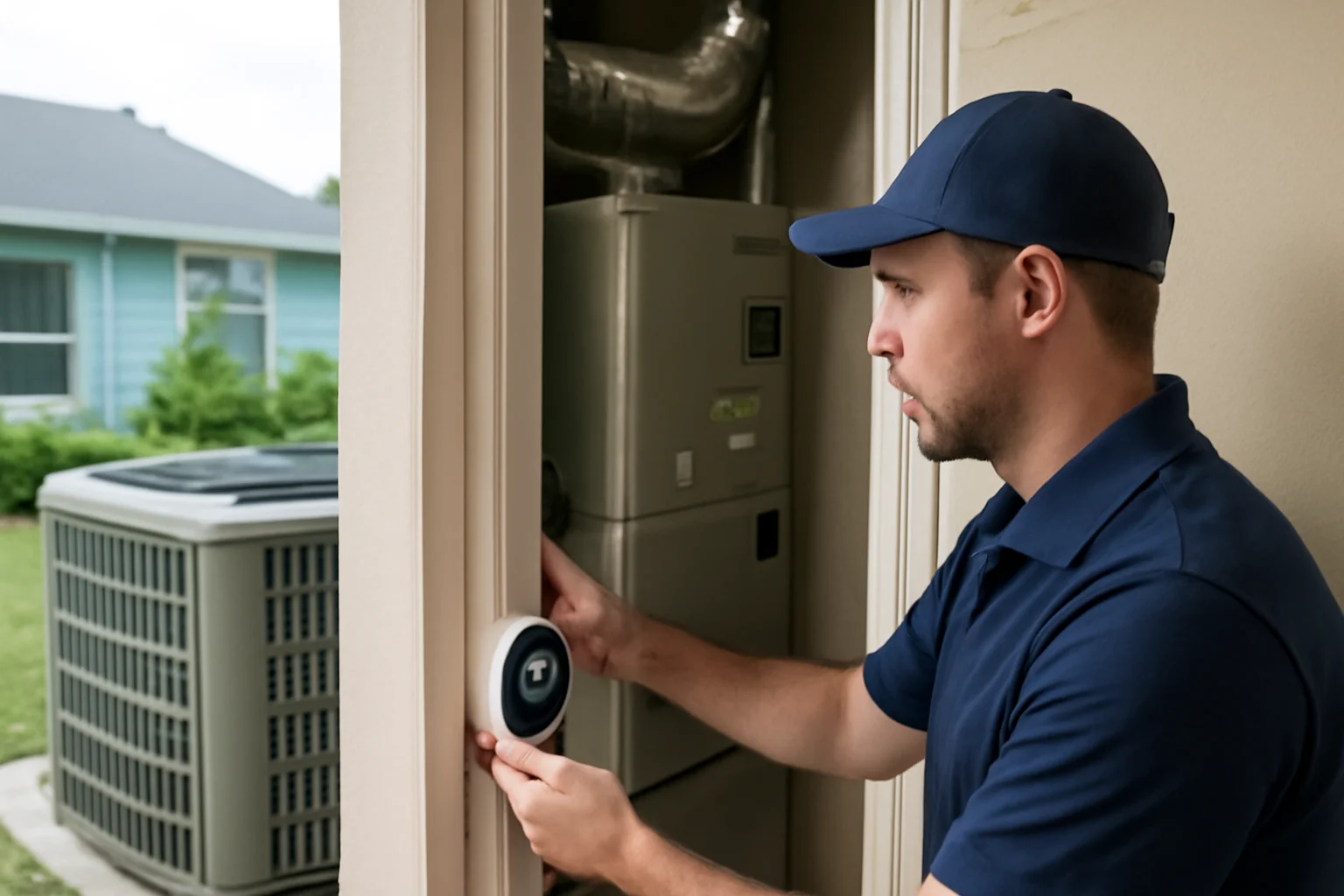
Smart thermostats rely on proper wiring, compatible HVAC system controls, and stable connectivity. Weather, humidity, and age can all affect performance. If alerts appear or the system fails to respond reliably, it is worth scheduling smart thermostats service so a licensed HVAC professional can verify wiring and compatibility in person.
Choosing the right smart thermostat for a Niceville home
Not every smart thermostat is ideal for every HVAC setup. Before purchasing, confirm your system type and control compatibility. Niceville homes may have central AC, heat pumps, and different thermostat wiring configurations. A smart thermostat should be able to operate your cooling and heating functions correctly, including fan behavior and stage control when applicable.
Look for features that support comfort and humidity
Humidity control is especially important in Florida. Some smart thermostats include humidity sensing and may support humidity-related logic. If your home struggles with dampness, a thermostat with humidity-aware settings can help you avoid running the system in a way that feels cool but does not dry the air well.
Check for compatibility with heat pumps and multi-speed systems
If you have a heat pump, the thermostat must coordinate heating and cooling modes properly. When families search for smart thermostat installation and also need heat pump installation near me or heat pump repair near me, the key is making sure the thermostat and HVAC control system work together.
Do not assume compatibility based on marketing language alone. Ask a licensed HVAC contractor to review your current thermostat wiring and system type during an in-person visit.
Installation details that can prevent repair headaches
A smart thermostat is only as effective as its installation. In Florida’s humidity and heat, small installation mistakes can lead to big comfort complaints.
Thermostat placement affects readings and runtime
Place the thermostat where it can sense average indoor conditions, not direct sunlight, drafts, or heat from vents. If the thermostat sits near a supply register or in a hallway that gets sun, it may trigger cooling too early or too late, increasing system runtime and wear.
Wiring and control settings must match your system
Smart thermostats require correct wiring and correct configuration of system type, fan control behavior, and heating and cooling stages. Incorrect setup can cause:
- Cooling that runs when it should not
- Heating and cooling mode confusion
- Improper fan operation that affects airflow
This is one reason homeowners looking for HVAC service near me should choose a licensed HVAC contractor near me to handle thermostat integration, not just a general handyman.
Airflow and ductwork should be considered during setup
Even with perfect thermostat settings, restricted airflow can cause evaporator coils to ice up, increase humidity problems, and shorten equipment life. If your home has known ductwork issues, schedule an airflow and duct evaluation alongside thermostat installation.
Smart thermostat settings for Florida comfort and fewer HVAC repairs
You can reduce the chance of costly HVAC repair by using settings that match how your system handles humidity, airflow, and refrigerant system performance.
Use schedules that reflect real occupancy
Smart thermostats shine when you align cooling and heating with your day. Set comfort targets for when you are home, and allow wider temperature ranges when the house is empty. The goal is to avoid extreme temperature swings that can cause long recovery cycles.
In humid Florida weather, avoid aggressive setbacks that force the system to run harder for longer just to bring humidity under control.
Set fan behavior thoughtfully
Continuous fan can help distribute air, but it can also increase energy use and may worsen moisture removal if it changes how the system cycles. Intermittent fan or system-controlled fan often works better for typical cooling and dehumidification needs. If you are unsure, ask your HVAC technician how your specific system is designed to operate.
Consider humidity targets, not just temperature
When humidity stays high, residents may feel uncomfortable even if the thermostat reads a good temperature. Smart thermostat features that respond to humidity can help, but the HVAC system still needs correct airflow and condensate drainage to work properly.
If you notice water leaks, musty odors, or moisture around the air handler, do not keep adjusting settings. Those symptoms can point to condensate drainage problems that should be inspected in person.
Avoid “fighting” the system with constantly changing setpoints
Smart thermostats make it easy to adjust comfort quickly. But frequent changes can lead to repeated start and stop behavior, especially if the HVAC system is already operating near its limits during peak Florida heat.
Try to make fewer adjustments and allow the system time to stabilize. If comfort never stabilizes, that is a sign your HVAC may need preventive HVAC maintenance or a diagnostic check.
How smart thermostats can help you catch HVAC problems early
One of the best ways to avoid costly repairs is to notice patterns. Smart thermostats can provide clues that your AC or heat pump is struggling.
Run-time patterns that do not match the weather
If your system runs much longer than expected for mild days, it can indicate airflow restrictions, dirty components, or refrigerant system issues. A professional air conditioning inspection near me can determine what is actually happening.
Frequent alerts or “offline” equipment
Communication problems can be harmless, but they can also hide real HVAC control issues. If alerts persist, have a technician verify thermostat wiring and HVAC control performance.
Comfort complaints that improve when you change thermostat settings, then return
If small changes temporarily help but the problem returns, it may be related to ductwork airflow, condensate drainage, or system performance. Pair thermostat troubleshooting with a broader look at duct inspection near me, filter maintenance, and system operation.
Preventive maintenance habits that pair well with smart thermostats
Smart thermostats help you manage comfort, but preventive HVAC maintenance keeps the system capable of delivering that comfort. In Niceville, humidity and salt air can accelerate wear on some components and contribute to buildup over time.
Keep filters clean and airflow strong
A dirty filter increases resistance and can reduce airflow across the evaporator coil. That can lead to poor cooling, higher humidity, and potential icing. Replace filters on schedule and consider having your system inspected if you see persistent airflow weakness.
Schedule seasonal checks for AC and heat pump performance
Before peak summer, schedule an HVAC maintenance near me visit for system inspection. A professional can check airflow, verify operation, and confirm that condensate drainage is working properly. This is also a good time to review thermostat settings and confirm the system is configured correctly.
Inspect ductwork and registers for blockages and leaks
Airflow problems can make smart thermostats look “wrong” when the real issue is duct sealing, duct insulation, or blocked returns. If your home has rooms that never feel right, ask about ductwork services or targeted duct inspection.
Watch condensate drainage and indoor air quality symptoms
Condensate drainage issues can contribute to moisture buildup and indoor air quality concerns. If you notice water where it should not be, recurring musty odors, or persistent humidity, schedule an evaluation. Pairing thermostat control with indoor air quality improvements can make comfort more consistent. Learn more about indoor air quality options if humidity or odors are part of the problem.
When smart thermostats are not enough: signs you need professional HVAC service
Smart thermostat settings can help, but they cannot safely diagnose refrigerant systems, electrical control issues, or mechanical failures. If any of the following show up, it is time to contact an HVAC contractor for an in-person evaluation.
- Your AC or heat pump struggles to reach temperature targets
- You hear unusual noises from the indoor unit or outdoor unit
- You see ice on coils or notice airflow that feels weak
- There is water leakage, clogged drain symptoms, or repeated condensate overflow concerns
- Your home stays humid even when the system runs frequently
- The system cycles rapidly or stops unexpectedly
- You experience emergency cooling concerns during extreme heat
For urgent situations, searching for emergency AC repair near me can help you find the fastest support. For non-urgent issues, homeowners often do best with air conditioning inspection near me or HVAC repair near me so the problem can be addressed before it escalates.
Thermostat repair vs replacement: how to decide responsibly
When a smart thermostat does not seem to work, it can be tempting to keep troubleshooting at home. However, thermostat repair and replacement decisions should be based on what a technician finds with your system.
A technician can confirm whether the issue is:
- Thermostat wiring or configuration
- Compatibility with your HVAC control system
- Airflow and humidity performance problems elsewhere in the system
- Mechanical or refrigerant system performance concerns
Do not assume equipment replacement is appropriate without an in-person professional evaluation. Similarly, avoid trying to “self-diagnose” refrigerant system problems. Those require proper tools and safety procedures.
If you need thermostat repair near me or a smart thermostat installation review, scheduling service in Niceville is the safest route.
How to use smart thermostats alongside ductwork and system improvements
Many families can get more out of smart thermostats by pairing them with comfort upgrades that address airflow and indoor air quality. Smart controls work best when the HVAC system is delivering air where it needs to go.
Consider duct sealing and ductwork services
Leaky or poorly designed ductwork can waste conditioned air and create hot and cold spots. When the thermostat senses one area, the rest of the home may still be struggling. If comfort is uneven, consider duct sealing or a ductwork services evaluation.
Support indoor air quality with better airflow and filtration
Florida humidity and salt air can affect how your home feels and smells. If you are also dealing with odors, dust, or humidity complaints, explore indoor air quality options. Better indoor air quality can make thermostat comfort feel more consistent because the air you breathe matches the temperature you set.
For businesses and larger systems, plan control for the whole building
Niceville also has commercial spaces where multiple zones and higher loads can complicate control. If you are managing a business HVAC system, consider commercial HVAC services so smart thermostat control is coordinated with the building’s airflow and occupancy patterns.
Local context: why professional HVAC service matters in Niceville
Niceville homes often face the combination of high humidity, long cooling seasons, and salt air exposure. Those factors can make HVAC components work harder and can contribute to buildup and performance drift over time. The result is that small issues become bigger problems faster if they are not addressed.
Professional local HVAC service matters because it connects thermostat control to real system operation: airflow, condensate drainage, refrigerant system performance, and ductwork distribution. For families searching for residential HVAC service near me or HVAC service near me, the best outcomes come from technicians who understand how Florida systems behave and who can verify comfort issues in person.
If you want a smart thermostat setup that fits your home, start with the smart thermostat service page: /service-areas/okaloosa-county/niceville/smart-thermostats-nvocfl. You can also browse the city overview at /service-areas/okaloosa-county/niceville and explore more across /service-areas/okaloosa-county.
Helpful reading for Niceville homeowners
If you are already thinking about smart thermostats, these related articles can help you avoid common missteps that lead to HVAC headaches:
- Smart Thermostats in Panama City Beach: Small Problems That Can Turn Into Bigger HVAC Headaches
- Smart Thermostats and Smoother Comfort in Destin Homes: Staying Ahead of HVAC Problems Before They Grow
- Keeping Your Cool in Panama City Beach Without Letting Smart Thermostats Create Bigger HVAC Problems
A practical checklist before and after smart thermostat installation
Use this checklist as a homeowner guide. It helps you ask better questions and spot issues early without guessing about refrigerant systems or electrical components.
Before installation
- Confirm your HVAC system type: central AC or heat pump, single stage or multi-stage
- Ask whether your current thermostat wiring is compatible
- Plan the thermostat location based on sunlight, drafts, and airflow from vents
- Consider ductwork airflow if your home has hot or cold spots
After installation
- Set a realistic schedule for occupancy and Florida humidity patterns
- Verify cooling and heating mode behavior
- Monitor comfort consistency across rooms
- Watch for moisture signs related to condensate drainage
- Schedule preventive HVAC maintenance if you have not had seasonal service recently
When you treat smart thermostat control as part of a full HVAC comfort plan, you reduce the odds of mid-summer breakdowns and the frustration that comes with inconsistent cooling.
Find Smart Thermostats in Niceville, FL
If you need Smart Thermostats in Niceville, FL, visit our local service page or contact A Superior Mechanical today.
Map of Niceville, FL
Frequently Asked Questions
Can a smart thermostat help with humidity problems in Niceville, FL?
It can, especially if it includes humidity sensing or supports humidity-aware settings. However, humidity issues often involve airflow, ductwork, and condensate drainage. If your home stays damp or you notice water or musty odors, schedule an air conditioning inspection to address the HVAC causes, not just the thermostat settings.
Why does my AC run a lot after installing a smart thermostat?
Frequent runtime can happen when the thermostat is placed in a spot with drafts or sunlight, when settings are too aggressive for Florida humidity, or when the HVAC system has airflow restrictions. A licensed HVAC contractor can check configuration and system operation in person before you assume it is a thermostat-only issue.
Is it safe to troubleshoot refrigerant system issues based on smart thermostat alerts?
No. Refrigerant system problems require proper tools and safe procedures. Smart thermostat alerts can be a clue that something is wrong, but you should not attempt refrigerant diagnosis at home. Contact a professional for an in-person evaluation.
What should I do if my smart thermostat is not controlling my heat pump correctly?
Verify that the thermostat is compatible with your heat pump and that the system type and control settings were configured correctly during installation. If it still behaves inconsistently, request smart thermostat service so an HVAC technician can inspect wiring and HVAC control operation.
How can I prevent costly HVAC repairs during peak summer in Niceville?
Pair smart thermostat scheduling with preventive HVAC maintenance. Keep filters clean, monitor comfort and humidity trends, and schedule seasonal inspections so airflow, ductwork, and condensate drainage stay in good shape before problems turn into emergency cooling concerns.
Related Articles
- Smart Thermostats in Panama City Beach: Small Problems That Can Turn Into Bigger HVAC Headaches
- Smart Thermostats and Smoother Comfort in Destin Homes: Staying Ahead of HVAC Problems Before They Grow
- Smart Thermostats and Fewer HVAC Surprises in Panama City Homes
- Keeping Your Cool in Panama City Beach Without Letting Smart Thermostats Create Bigger HVAC Problems
Photo Gallery