Florida weather does not ease up just because you installed a smart thermostat. In Bluewater Bay, FL, your HVAC system has to handle hot afternoons, humid air, salt air exposure, and frequent temperature swings. Planning ahead helps your thermostat work with your system instead of fighting it, improving day-to-day comfort and reducing the odds of mid-season breakdowns.
A Superior Mechanical helps homeowners and property managers across Okaloosa County set up smart thermostat installation, troubleshoot control issues, and support preventive HVAC maintenance. If you are looking for smart thermostats in Bluewater Bay, this guide shows how to prepare before problems start.
Start with the thermostat your system can actually run
Smart thermostats are designed to manage heating and cooling, but not every HVAC setup communicates the same way. Before you buy or switch models, plan around what your existing system supports.
Know your HVAC control setup
Most homes rely on a thermostat connected to the indoor unit controls. Some systems also include heat pump reversing valves, multiple stages, or specialized fan operation. If the thermostat wiring and control signals do not match your system, you can see symptoms like incorrect mode behavior, comfort swings, or repeated cycling.
Because wiring and control compatibility vary by home, it is best to have a licensed HVAC contractor confirm what your system needs during an air conditioning inspection or thermostat assessment. This is especially important for older homes, vacation rentals, and commercial spaces where upgrades may have been done over time.
Plan for humid Florida comfort, not just temperature
Bluewater Bay humidity can make “set it and forget it” feel misleading. A thermostat that tracks temperature alone may not address indoor moisture. Smart thermostats often include humidity-related features or fan scheduling options, but the effectiveness depends on your AC performance, airflow, and condensate drainage.
Planning ahead means you should treat humidity control as part of the installation, not an afterthought. That often includes checking airflow paths, ductwork condition, and how condensate drains during cooling.
Check airflow and ductwork before you rely on smarter scheduling
Smart thermostats can improve comfort, but they cannot fix weak airflow. If air movement is restricted, the thermostat may sense the home differently than rooms actually feel, leading to comfort complaints and more frequent HVAC cycles.
Look for uneven cooling and hot spots
In many Bluewater Bay homes, certain rooms run warmer because of duct layout, register placement, or duct leakage. If you are planning smart thermostat installation near me because you want consistent comfort, it is worth scheduling an airflow and duct inspection first.
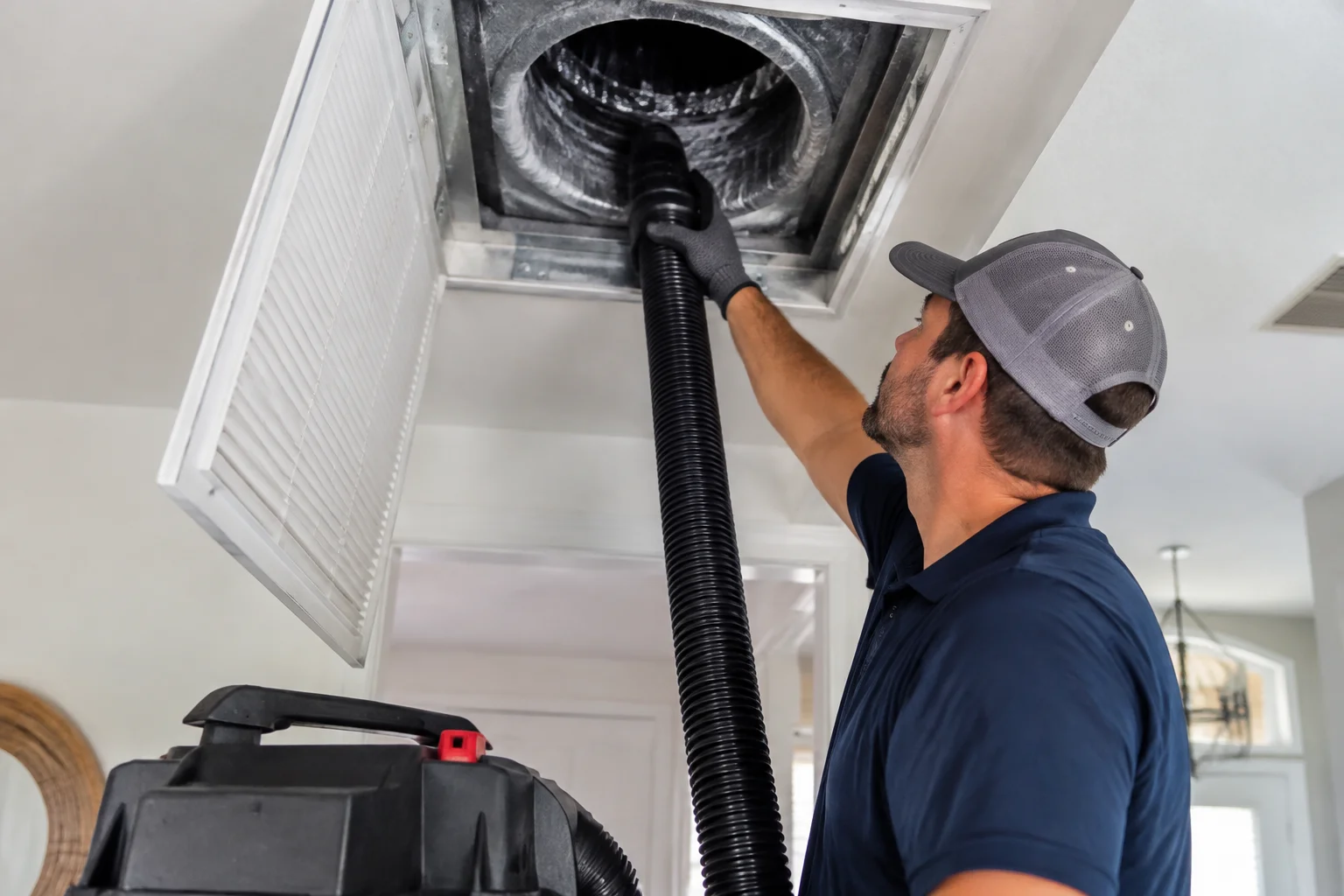
Consider asking about duct inspection and related services such as duct cleaning if there is visible dust buildup or airflow complaints, and duct sealing when leakage seems likely. These steps can help your thermostat’s readings better reflect what is happening throughout the home.
Confirm the system can move air the way the thermostat expects
Smart thermostats can adjust fan behavior and timing, but the HVAC system still needs to deliver conditioned air. A system with clogged filters, dirty coils, or failing blower components may not respond the way you expect to new schedules.
If you want your smart thermostat to support reliable everyday HVAC reliability, plan for air conditioning inspection and preventive HVAC maintenance before the hottest weeks arrive.
Plan your settings around Bluewater Bay schedules and real life
The best smart thermostat settings are the ones that match how the home is actually used. In Bluewater Bay, that may include a full-time family home, a vacation rental with changing occupancy, or a small business with predictable work hours.
Choose modes that match your comfort goals
Smart thermostats typically let you schedule heating and cooling, set fan preferences, and use remote control. The planning step is deciding how you want those modes to behave when you are away.
During peak heat and humidity, avoid settings that allow the indoor environment to drift too far. Large temperature swings can increase workload when the system has to catch up. Instead, plan a realistic temperature band that helps the AC manage humidity while still saving energy use during periods of lower occupancy.
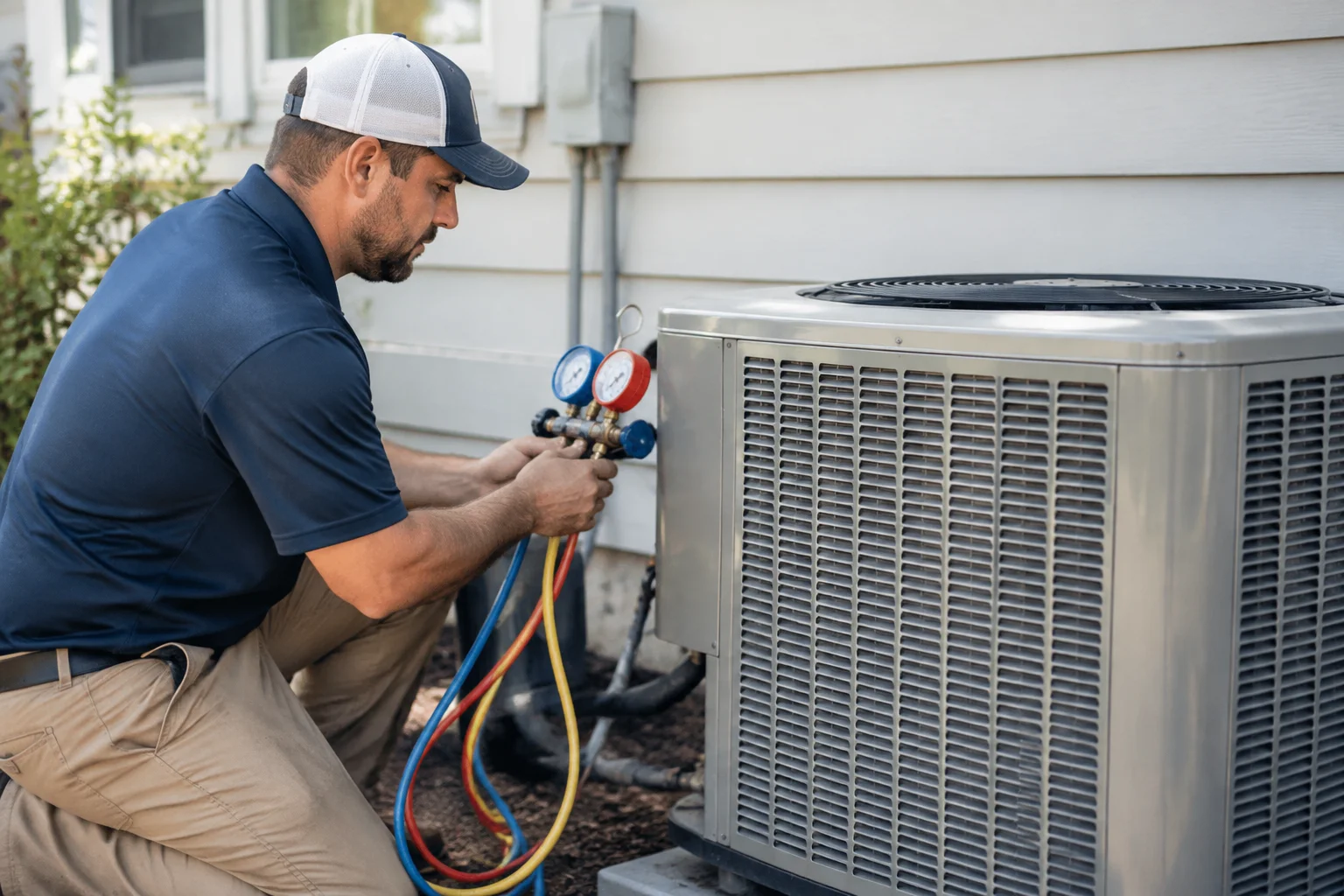
For heat pump homes, plan around how your system handles heating and cooling transitions. Heat pumps rely on refrigerant systems to move heat, and control behavior matters. If the thermostat is set in a way that conflicts with how your heat pump operates, you can see comfort issues and unnecessary cycling.
Set fan schedules with airflow in mind
Many smart thermostats offer options for fan run times or “circulate” behavior. Fan scheduling can improve comfort by reducing temperature stratification. It can also affect indoor air quality because air is pulled through filters and across coils.
However, fan operation should align with your system’s design and your indoor air quality goals. Planning fan settings with a technician helps avoid overshooting humidity removal or causing the system to run longer than needed.
Humidity, condensate drainage, and why thermostat changes do not replace cooling performance
In Florida, cooling is about more than temperature. When the AC runs, it removes moisture from indoor air. That moisture leaves the system through condensate drainage. Smart thermostats may show humidity trends, but the real-world results depend on your refrigerant systems, coil condition, and drainage performance.
Watch for warning signs that cooling is not removing moisture
Even if your thermostat says the home is cooling, you may still have comfort problems if:
- There is a musty odor near vents or in the home.
- Humidity stays high even when cooling runs.
- You notice water around the indoor unit or near condensate lines.
- Rooms feel clammy, especially at night.
If you see signs of drainage issues, do not assume a thermostat setting will fix it. Condensate drainage problems can lead to indoor air quality concerns and can damage components over time. A professional HVAC inspection is the right next step.
Salt air and coastal exposure can affect HVAC performance
Bluewater Bay is part of a coastal region where salt air can contribute to corrosion and wear on outdoor components. Planning ahead means staying on top of preventive HVAC maintenance so the system’s cooling performance remains steady even as conditions change.
When corrosion or buildup affects outdoor units, the system may run longer to achieve the same comfort. That can make smart thermostat scheduling less effective and increase energy use.
Preventive maintenance is the real “smart” upgrade
Smart thermostats can optimize control, but they do best when the HVAC system is already healthy. Think of preventive maintenance as the foundation that lets your thermostat deliver consistent results.
Build a maintenance timeline for Florida’s seasons
Bluewater Bay homes usually feel the most strain during the hottest stretches. Planning means scheduling maintenance before peak demand, not after the first emergency cooling concern.
A practical approach is to line up:
- Filter checks and replacements based on your household needs and indoor air quality goals.
- Indoor coil and blower inspection for airflow reliability.
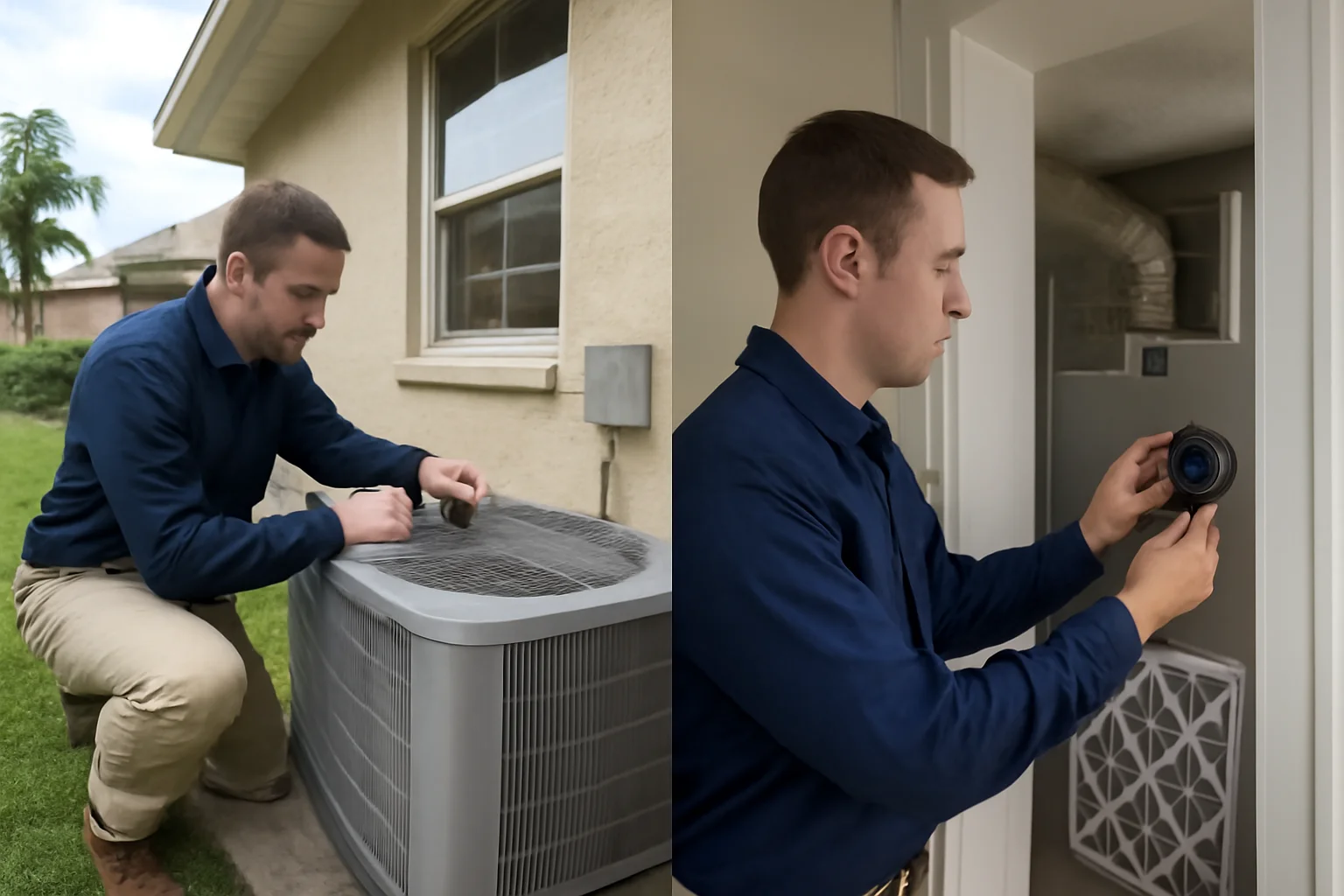
- Outdoor unit checks for airflow and cleanliness.
- Verification of condensate drainage during cooling operation.
- Review of thermostat operation and scheduling behavior after installation.
If you are searching for HVAC maintenance near me because you want to avoid a mid-summer breakdown, planning this work ahead of time can reduce stress when temperatures spike.
Make sure ductwork and registers support the comfort plan
Smart thermostats can help even out comfort when air distribution is consistent. If you have closed-off rooms, blocked returns, or registers that never get adjusted, the thermostat may “think” the home is comfortable while other areas lag behind.
Planning includes confirming that returns and supply registers are not obstructed and that airflow paths remain open. If you have persistent hot or cold rooms, ask about duct inspection near me and whether ductwork performance needs attention.
For rentals and businesses, plan for remote control and occupant changes
Smart thermostats are popular for vacation rentals and businesses because you can manage comfort remotely. In Bluewater Bay, that matters when occupancy changes quickly. Still, scheduling and remote control features should be planned carefully to avoid comfort gaps and unnecessary energy use.
Use schedules that match turnover patterns
For rentals, consider how long the home sits between stays. Leaving the system too relaxed for too long can create humidity and comfort recovery issues. Planning a recovery-friendly schedule helps the AC manage indoor air quality without running at full capacity for extended periods.
For commercial HVAC, plan around occupancy hours, equipment heat loads, and typical traffic patterns. If your system cycles too frequently because control settings do not align with operation, occupants may feel temperature swings.
Document thermostat settings for consistent results
When multiple people manage the property, documentation matters. After installation, keep a simple record of mode preferences, fan behavior, and recommended temperature ranges. This reduces the chance someone changes settings in a way that affects airflow, humidity removal, or energy use.
If you want guidance specific to your setup, you can explore the smart thermostat service area here: /service-areas/okaloosa-county/bluewater-bay/smart-thermostats-bwbfl.
Know the thermostat issues that show up in Florida homes
Smart thermostats can be reliable, but problems can still happen. Planning includes recognizing early signs so you can get help before an HVAC repair turns into an emergency cooling situation.
Common symptoms homeowners notice
- Cooling runs too long or never seems to reach the set temperature.
- Short cycling where the system turns on and off rapidly.
- Fan behavior feels wrong compared to how the home used to cool.
- Mode confusion such as heating and cooling commands that do not match the season.
- Humidity feels high even when the thermostat indicates cooling is active.
These symptoms can be caused by control compatibility, airflow restrictions, condensate drainage problems, or refrigerant system performance. A professional evaluation is the safe way to determine what is actually happening.
Do not try to diagnose refrigerant or electrical issues yourself
Homeowners sometimes assume a thermostat is the only problem. In reality, HVAC reliability depends on multiple systems working together, including refrigerant systems and condensate drainage. If the thermostat is not behaving as expected, it is still not appropriate to attempt refrigerant diagnosis or electrical diagnosis without an in-person professional evaluation.
A licensed HVAC contractor can inspect the system, verify control operation, and confirm that refrigerant systems, airflow, and drainage are functioning within expected ranges.
When to call A Superior Mechanical for smart thermostat help
Even with careful planning, you may need a professional. Call when you notice comfort issues that persist after basic checks, when the thermostat installation is incomplete, or when system behavior changes suddenly.
Call for help if you see these red flags
- The thermostat will not control cooling reliably during hot weather.
- You suspect airflow problems, such as weak or uneven cooling.
- You notice water where it should not be, or you suspect condensate drainage issues.
- Energy use increases noticeably after thermostat changes.
- You have an emergency cooling concern and need reliable operation quickly.
If you are searching for HVAC repair near me because your system is not keeping up, it helps to contact a local HVAC company that understands Bluewater Bay conditions and can address thermostat control plus system performance together.
For homeowners who want to reduce risk when storms or heat waves hit, this related read can help: Why Bluewater Bay Homes Rely on Fast Emergency HVAC Service.
Pair smart thermostat upgrades with smart comfort checks
Planning ahead for smart thermostats is not only about the device. It is about how your system handles refrigerant systems, airflow, ductwork performance, condensate drainage, and indoor air quality in Florida’s humidity.
If you are still deciding what to prioritize, these steps usually make the biggest difference:
- Confirm thermostat compatibility with your HVAC control setup during an in-person visit.
- Address airflow and ductwork performance so temperature readings match real comfort.
- Plan humidity management and condensate drainage checks as part of cooling reliability.
- Use schedules that fit how the home is occupied, especially for rentals and businesses.
- Keep preventive HVAC maintenance on your calendar so smart control has a healthy system to work with.
If you are comparing smart thermostat experiences in nearby coastal markets, you may find these helpful:
- Smart Thermostats in Panama City Beach: Small Problems That Can Turn Into Bigger HVAC Headaches
- Smart Thermostats and Smoother Comfort in Destin Homes: Staying Ahead of HVAC Problems Before They Grow
- Smart Thermostats and Fewer HVAC Surprises in Panama City Homes
For more local context on HVAC services across the area, visit /service-areas/okaloosa-county/bluewater-bay and explore options across /service-areas/okaloosa-county.
Find Smart Thermostats in Bluewater Bay, FL
If you need Smart Thermostats in Bluewater Bay, FL, visit our local service page or contact A Superior Mechanical today.
Map of Bluewater Bay, FL
Frequently Asked Questions
Do smart thermostats work well with heat pumps in Bluewater Bay, FL?
They can, but compatibility depends on your heat pump control setup and wiring. An in-person evaluation helps confirm the thermostat can manage your heat pump’s heating and cooling behavior correctly, especially during humid Florida conditions.
Why does my home feel humid even when the thermostat says it is cooling?
Humidity comfort depends on more than the thermostat display. Airflow, coil performance, and condensate drainage all affect moisture removal. If humidity stays high, a technician can inspect the HVAC system rather than relying on thermostat settings alone.
Can I install a smart thermostat myself to save money?
DIY installs can work in some cases, but mismatched wiring or control settings can cause cooling or heating issues. For dependable everyday HVAC reliability in Bluewater Bay, many homeowners choose professional thermostat installation and a system check.
How do ductwork problems affect smart thermostat performance?
If ductwork has leaks, blockages, or uneven airflow, room temperatures can lag behind what the thermostat senses. That can lead to comfort complaints, longer run times, and more frequent cycling. Duct inspection and related services can help align airflow with your comfort goals.
What should I do if my smart thermostat changes cause higher energy use?
Higher energy use can happen when schedules do not match occupancy, humidity needs are not addressed, or the HVAC system is not operating as expected. A technician can review thermostat settings and inspect system performance to identify the cause.
Related Articles
- Why Bluewater Bay Homes Rely on Fast Emergency HVAC Service
- Smart Thermostats in Panama City Beach: Small Problems That Can Turn Into Bigger HVAC Headaches
- Smart Thermostats and Smoother Comfort in Destin Homes: Staying Ahead of HVAC Problems Before They Grow
- Smart Thermostats and Fewer HVAC Surprises in Panama City Homes
Photo Gallery