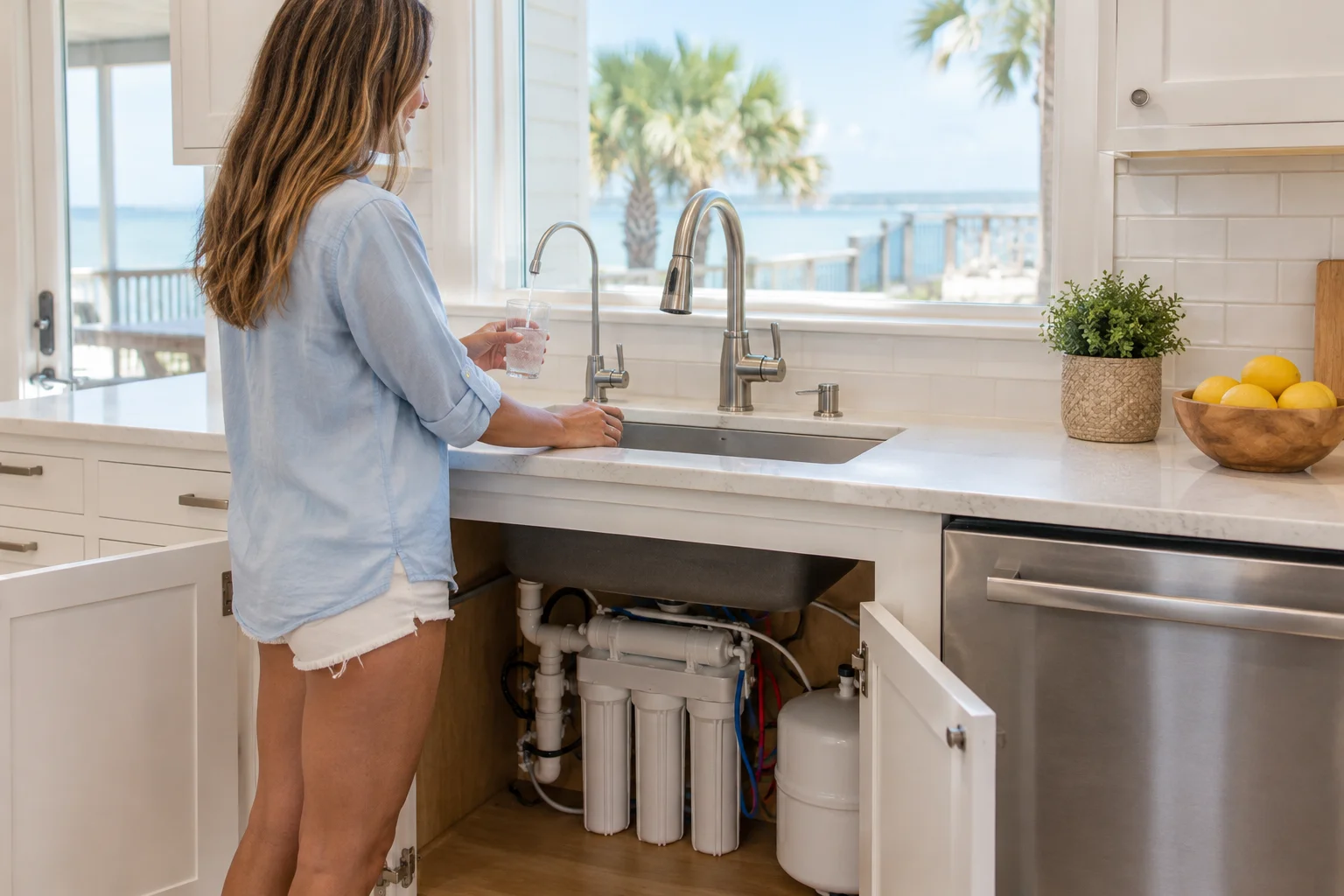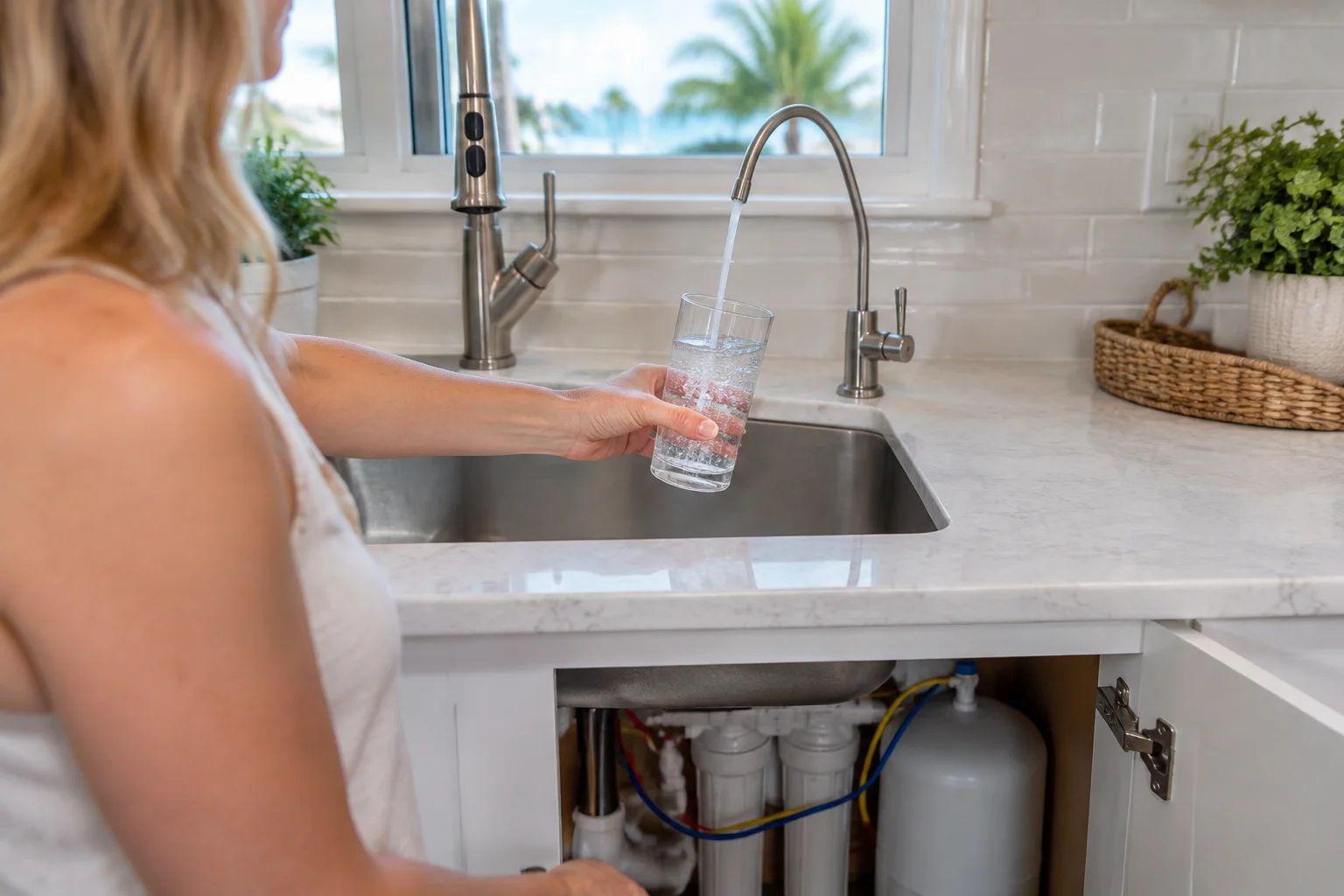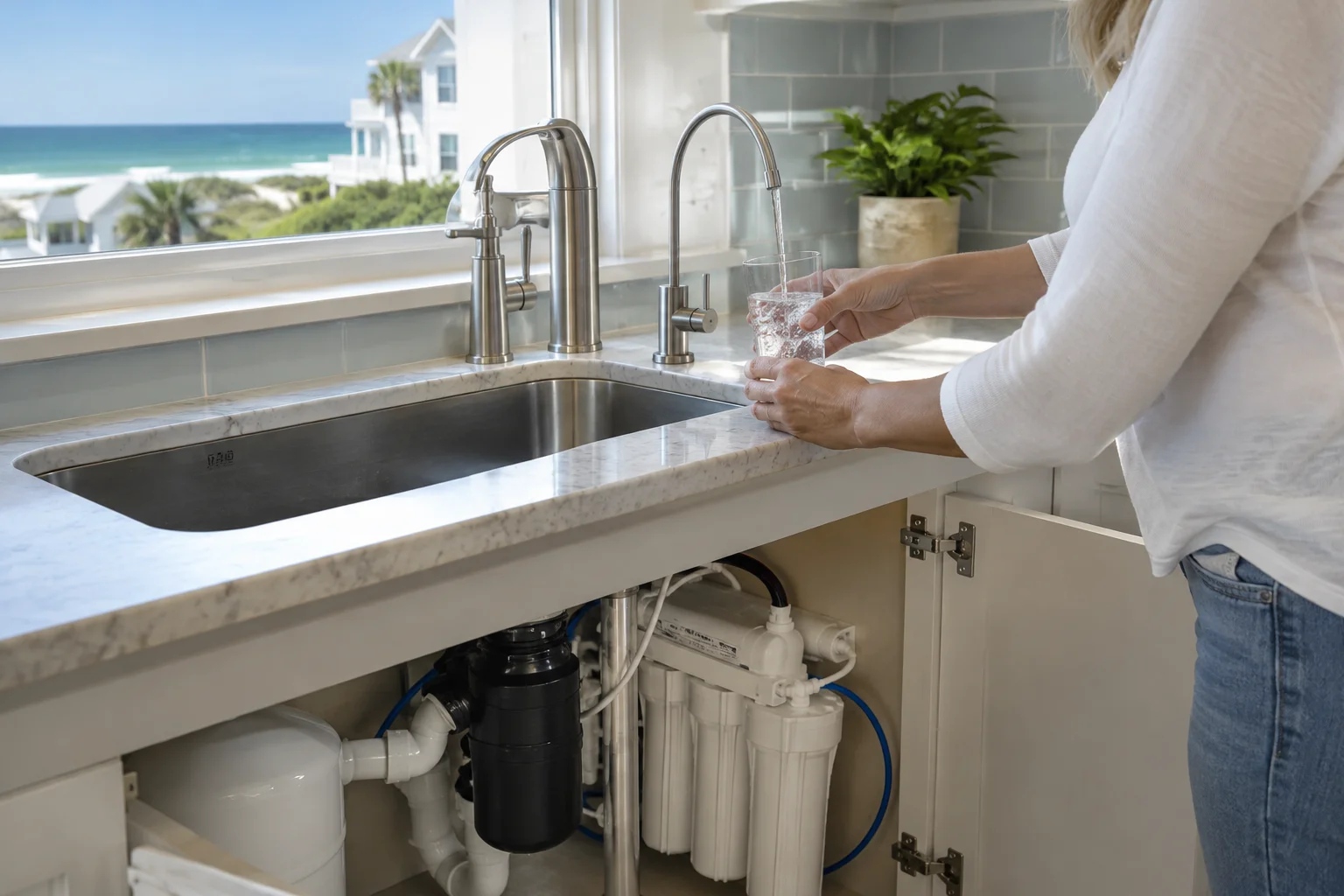
Reverse osmosis (RO) systems are built to help homeowners enjoy better drinking water, cleaner cooking water, and more comfortable bathing and laundry. But when RO systems fall out of sync with what your home needs, you can start noticing the same everyday frustrations that hard water usually causes: scale on faucets, dull hair after showers, and that “off” taste in the kitchen.
In Bluewater Bay, FL, the timing of filter changes, the condition of pre-treatment, and the way your home’s plumbing handles water pressure and flow matter more than many people realize. A small delay can turn what should be a smooth RO drinking water system into a source of recurring problems.
If you are searching for reverse osmosis systems in Bluewater Bay, this guide explains the most common causes of RO performance issues and why maintenance schedules should match local water realities.
Bluewater Bay water realities that stress RO systems
RO is not a magic filter that ignores incoming water. It depends on consistent feed water quality and proper pre-treatment. In coastal Northwest Florida, many homes deal with a mix of dissolved minerals, possible sediment, and the effects of municipal water chemistry. Even when your water is treated before it reaches your street, your home plumbing and storage can still contribute to what your RO system sees.
When the incoming water has more hardness and minerals, RO membranes and cartridges can foul faster. That is when homeowners notice the “hard water” symptoms that go beyond taste. You may see:
- Hard water spots on glass, dishes, and bathroom fixtures
- Scale buildup around faucets, showerheads, and plumbing connections
- Soap that does not lather or rinse well
- Dry skin or dull hair after bathing
- Metallic, chlorinated, or unpleasant taste in drinking water
- Cloudy ice cubes and poor tasting coffee or cooking water
Timing matters because RO systems are sensitive to gradual changes. A membrane can decline without an immediate “failure,” and the system can still produce water that seems okay at first. Then, weeks or months later, symptoms show up in the kitchen and bathroom.
What can cause problems with reverse osmosis systems in your home
Most RO issues come from a few repeatable causes. Some are maintenance related, others are installation and flow related, and some are connected to the rest of your whole home water filtration setup.
1) Pre-filter cartridges used too long
RO usually includes pre-filters that protect the membrane from sediment and chlorine-related damage. If those cartridges get used past their intended life, they can stop doing their job. Sediment can clog the system and reduce flow. Chlorine can shorten membrane life and lead to declining water quality.
This is one of the most common “timing” problems. Homeowners might wait until taste or clarity changes are obvious. By then, the membrane may already be under stress.
When pre-filters are overdue, you might notice more than just drinking water concerns. Homeowners often report:
- Visible sediment, discoloration, and odor concerns in water
- Cloudy ice cubes even when the water looks clear in the sink
- Poor tasting coffee and cooking water
- Appliances wearing out faster due to harder, mineral-rich water moving through the home
2) Hard water scale buildup that overwhelms the system
Even though RO removes a large portion of dissolved solids, hardness minerals can still contribute to scale buildup on components, especially if pre-treatment is not aligned with your water. Scale buildup on faucets and showerheads is visible around the house, but scale can also form inside the RO system, reducing efficiency.
Scale buildup reduces membrane performance and can increase pressure demands. Over time, that can lead to slower production, inconsistent water quality, and more frequent service needs.
If your home already shows classic hard water signs like spots on glass and rough-feeling residue on fixtures, RO maintenance timing should be tighter. Many homeowners benefit from pairing RO drinking water with appropriate water softening or whole home water filtration strategies.
3) Chlorine taste in water and membrane damage
Chlorine and similar disinfectants are useful for municipal safety, but they can be harsh on RO membranes if protective filtration is not working. When the system’s carbon stage or protective elements are depleted, you can experience metallic, chlorinated, or unpleasant taste.
This is a common reason people call for “drinking water filter near me” services. The taste problem can start small, then become noticeable in everyday routines like:
- Family coffee in the morning tasting flat or “off”
- Cooking water leaving residue or changing how flavors come through
- Drinking water that does not feel as clean even though it is clear
4) Low water pressure or inconsistent flow
RO systems need adequate water pressure and stable flow to operate correctly. If your home experiences pressure drops or the system is throttled, the membrane can produce less water and may not rinse properly. That can increase the chance of sediment carryover or inconsistent quality.
Low pressure can be caused by plumbing changes, shutoff valve issues, or other flow restrictions upstream. It can also be related to the way the RO unit was installed.
When flow is off, homeowners may notice the tank filling slowly, fewer gallons produced than expected, or a decline in clarity and taste.
5) A storage tank that is not being maintained
Many RO systems use a storage tank to supply drinking water. If the tank pressure is not correct, or if there are issues with how the system cycles, water can sit longer than it should. Stagnation can affect taste and odor, and it can mask the early warning signs of a failing membrane or exhausted cartridges.
Cloudy ice cubes can be a clue here. If ice is made from RO water that has been stored and the quality is drifting, you may see it sooner in the freezer than you notice in the sink.
6) Incorrect filter sizing or an RO system not matched to your household
Not all RO systems are sized the same. A household with heavy drinking, cooking, ice making, and laundry use may need different production capacity and pre-treatment than a smaller home.
In Bluewater Bay, where many families spend time outdoors and run dishwashers and showers regularly, the water demand can add up fast. If your RO setup is undersized or the pre-treatment is not designed for your hardness and mineral levels, you can end up paying for frequent repairs.
This is also why some homeowners choose AO Smith water filtration solutions as part of a more complete approach, especially when they want dependable performance and clear maintenance intervals.
Signs your RO system is drifting out of alignment
RO problems are often gradual. The best time to address them is before they turn into a full system breakdown or before scale and sediment start compounding hard water headaches.
Look for these red flags in everyday life:
- Hard water spots on glass, dishes, and fixtures that seem to be getting worse
- Scale buildup around faucets and showerheads, plus stubborn residue on plumbing
- Dry skin or dull hair after bathing, even when you are using the same routine
- Metallic, chlorinated, or unpleasant taste in drinking water
- Cloudy ice cubes or ice that looks different from before
- Poor tasting coffee and cooking water that affects flavor
- Visible sediment, discoloration, and odor concerns in the cold water line
- Soap that does not lather or rinse well, suggesting hardness is still dominating
- Appliances wearing out faster than expected, especially those that rely on consistent water quality
If you are seeing multiple symptoms at once, it is often not just “the RO filter.” It can be the timing of cartridge changes, the need for water softening, or a whole home water filtration plan that better matches your incoming water.
Why timing matters: the RO maintenance schedule that protects the membrane
Homeowners often think RO maintenance is a simple countdown: replace filters, done. In reality, timing depends on your water conditions and the way your household uses treated water.
In Bluewater Bay, the combination of typical mineral content, potential sediment in water lines, and household demand can shorten the useful life of pre-filters. If you wait too long, you can push contaminants into the membrane stage.
Here is how the timing chain usually works:
- Pre-filters trap sediment and protect the membrane. When they are overdue, the membrane clogs faster.
- Carbon filtration helps reduce chlorine taste and protects membrane longevity. When it is exhausted, taste and odor can worsen.
- Membrane performance declines when fouled or damaged. It may still produce water, but quality can drop and production can slow.
- Storage and system cycling can amplify issues by letting water sit or by producing inconsistent results.
A Superior Mechanical can help you align your service intervals with what your system is actually experiencing. That means fewer surprises, steadier RO drinking water, and less risk of scale buildup and sediment carryover.
Hard water treatment and RO: how they work together
Reverse osmosis is excellent for improving drinking water quality. But many Bluewater Bay homes also need hard water treatment to protect showers, faucets, laundry, and appliances. If you only treat drinking water, you may still see scale buildup on fixtures and experience dry skin or dull hair after bathing.
That is where water softening and whole home water filtration can complement your RO drinking water system.
When water softening makes sense
If you see frequent hard water spots, scale buildup around showerheads, and soap scum that builds quickly, a water softener can reduce hardness throughout the home. That can help lower the strain on plumbing and appliances and make bathing and laundry feel better.
With softer water in the home, your RO system often benefits indirectly because the overall mineral environment is more controlled.
Why whole home water filtration can reduce everyday frustrations
Whole home water filtration near me searches often come from homeowners who want cleaner water beyond the kitchen sink. When you reduce sediment and improve water clarity, you can see changes in:
- Less visible sediment and discoloration
- Better tasting drinking water and cooking water
- Cleaner fixtures and fewer hard water spots on glass and dishes
- Better lathering and rinsing for laundry and bathing
For homeowners planning a more complete system, you can explore the approach at /water-filtration-ro-water-softeners. It is a practical way to think about RO drinking water system performance alongside whole home water filtration and water softening.
AO Smith and dependable RO performance
Many homeowners want an RO drinking water system that is reliable, serviceable, and built for consistent results. AO Smith water filtration solutions are frequently chosen because they are designed for dependable performance and clear maintenance needs.
Even with a quality unit, timing still matters. A well designed system can still struggle if pre-filters are overdue, if chlorine protection stages are depleted, or if scale buildup is not addressed. That is why pairing the right equipment with the right schedule is the real difference between “it worked for a while” and “it keeps working.”
Maintenance habits that help RO last longer
You do not have to be a water treatment expert to protect your investment. A few smart habits can reduce problems and help you catch issues earlier.
Track taste, clarity, and ice quality
Pay attention to small changes. If cloudy ice cubes appear, or if coffee tastes different than it used to, treat it as a maintenance cue rather than waiting for a complete breakdown.
Know your household water use patterns
When your family adds guests, runs more dishwashing, or uses more ice for entertaining, the RO system will cycle more often. That can affect when cartridges need replacement.
Replace filters on schedule, not on guesswork
Instead of waiting until “something seems wrong,” stay consistent with your service interval and let a professional check pressure, flow, and pre-treatment performance.
If you are also dealing with whole home issues, reading about broader purification can help. See Cleaner Water, Fewer Plumbing Surprises: A Bluewater Bay Guide to Home Purification and Staying Ahead of Plumbing Problems in Bluewater Bay Homes.
Why local water treatment service matters in Okaloosa County
Bluewater Bay is part of Okaloosa County, and local conditions influence how quickly systems foul or how often filters need attention. Your home’s plumbing, the age of fixtures, and how your RO system is installed all play a role, but the biggest factor is matching your maintenance to the reality of your water.
When homeowners look for “water treatment near me” or “water filtration near me,” they are usually trying to solve a mix of symptoms: chlorine taste in water, metallic tasting water, sediment in household water, and hard water spots on glass and fixtures. A local service team can assess your RO system while also considering whether hard water treatment or whole home water filtration near me is part of the fix.
For reverse osmosis-specific support in your area, you can review reverse osmosis systems in Bluewater Bay. If you want a broader view of available help across the region, visit /service-areas/okaloosa-county and the city hub at /service-areas/okaloosa-county/bluewater-bay.
When to call A Superior Mechanical for RO service
Call a professional if you notice any of the following:
- Your RO water tastes metallic, chlorinated, or unpleasant
- Cloudy ice cubes show up or your ice starts looking different
- Production slows down, or you get less water than usual
- You see visible sediment or discoloration tied to the cold water line
- Hard water symptoms persist even after you change RO filters
- Scale buildup on faucets and showerheads seems to be increasing
- Your home appliances seem to wear out faster than expected
Timing matters because early service can protect the membrane and reduce the chance of repeat issues. If you are trying to keep hard water headaches under control, working on RO maintenance alongside hard water treatment and whole home water filtration decisions often produces the most noticeable improvements.
If you want to reinforce your routine with practical habits, this guide may help: Smart Plumbing Habits for Reverse Osmosis Systems in 30A Homes.
For reverse osmosis system installation, repair, and maintenance in Bluewater Bay, A Superior Mechanical is built to help you get cleaner, better-tasting drinking water that fits how your household cooks, drinks, bathes, and lives.
Find Reverse Osmosis Systems in Bluewater Bay, FL
If you need Reverse Osmosis Systems in Bluewater Bay, FL, visit our local service page or contact A Superior Mechanical today.
For a broader look at whole-home water filtration, reverse osmosis, and water softener options, visit our water filtration, RO, and water softener page.
Map of Bluewater Bay, FL
Frequently Asked Questions
How often should I change filters in a reverse osmosis system in Bluewater Bay, FL?
Most systems need pre-filter and carbon stage changes on a schedule, but the exact timing depends on local water conditions and household use. If you notice chlorine taste in water, metallic tasting water, or cloudy ice cubes, it can mean filters are overdue. A professional check helps confirm what your RO system needs and protects the membrane.
Can hard water cause problems for reverse osmosis systems?
Yes. Hard water can contribute to scale buildup on RO components and reduce membrane efficiency. That can lead to slower production, declining taste, and more frequent service needs. Many homeowners improve results by pairing RO drinking water with hard water treatment such as water softening or whole home water filtration.
Why does my RO water taste chlorinated or metallic?
Chlorine taste in water or metallic tasting water often points to exhausted carbon filtration or a pre-treatment issue. If protective stages are depleted, chlorine can reach the membrane and affect both taste and membrane longevity. Service typically involves checking cartridges, system flow, and membrane condition.
What does cloudy ice from RO water usually mean?
Cloudy ice cubes can be a sign of inconsistent RO quality, storage tank issues, or early filter and membrane decline. It can also happen if water is sitting too long. Checking RO performance and confirming filter timing can restore clearer results.
Should I choose AO Smith water filtration or another RO unit for my home?
AO Smith water filtration solutions are a popular option because they are designed for dependable RO performance and practical maintenance. The best choice still depends on your household water use, incoming water quality, and whether you need additional hard water treatment. A Superior Mechanical can help you select and maintain the right setup for Bluewater Bay.
Related Articles
Photo Gallery