Freeport, Florida is a place where summer comfort depends on more than just cold air. Humidity, salt air from the Gulf, and frequent heat spikes all affect how your HVAC system performs. VRF multi-zone HVAC systems can be a strong option for both newer builds and older homes, because they provide flexible zoning and efficient refrigerant-based cooling and heating. Still, VRF works best when it is designed for the home, installed correctly, and maintained with the right attention to airflow, indoor air quality, and condensate drainage.
This guide covers what homeowners in Freeport should know about VRF multi-zone HVAC systems, including common issues that show up in our local climate and what preventive HVAC maintenance looks like in real life. If you are searching for VRF multi-zone HVAC systems in Freeport, or you need air conditioning maintenance to keep your system reliable, the details below will help you ask better questions and spot problems earlier.
What VRF multi-zone HVAC systems actually do
VRF stands for Variable Refrigerant Flow. Instead of sending heated or cooled air through traditional ductwork from a single indoor unit, a VRF system uses refrigerant to move cooling and heating capacity to multiple indoor units. Those indoor units can serve different rooms or zones, giving each area its own thermostat control.
In practice, VRF multi-zone systems can be a good fit for homes where:
- You want more precise comfort room by room.
- Your layout makes one-size-fits-all duct distribution difficult.
- You are planning an addition, remodeling, or upgrading comfort in separate living areas.
- You need flexible heating and cooling behavior for different parts of the home.
Because VRF is refrigerant-based, the system design focuses on refrigerant piping, indoor unit placement, airflow management, and condensate drainage. That means homeowner concerns often show up around comfort, humidity control, and air movement, not just “the air is cold or not cold.”
Freeport climate factors that matter for VRF performance
Freeport sits in a humid subtropical climate. During summer, indoor humidity can climb quickly, and that makes airflow and dehumidification performance critical. In winter, temperatures are generally mild, but humidity and occasional cold snaps can still impact comfort and indoor air quality.
Local conditions that influence VRF multi-zone HVAC systems include:
- Heat and humidity load: When moisture in the air is high, comfort depends on effective cooling and proper condensate drainage.
- Salt air exposure: Coastal air can be hard on outdoor components and can contribute to corrosion over time, especially if maintenance is delayed.
- Airflow and ductwork realities: Even with zoning, poor airflow paths can cause uneven comfort and strain the system.
- Air quality concerns: High humidity can increase the risk of musty odors and mold growth if moisture is not managed.
For homeowners searching for air conditioner service near me or HVAC repair near me, it helps to remember that “comfort problems” can originate from airflow restrictions, condensate drainage issues, or thermostat and control settings, not only from a mechanical failure.
VRF zoning in older homes: where comfort problems often start
Older Freeport homes can be excellent candidates for VRF multi-zone HVAC, but they also present design challenges. Many older houses were built with different insulation levels, different window performance, and different airflow paths than today’s homes. If the zoning plan does not match the home’s real heat and moisture behavior, you may feel hot spots, cold spots, or persistent humidity.
Common issues homeowners notice in older homes include:
- Uneven temperature between rooms: This can happen if indoor units are not positioned to capture the load of each zone.
- Humidity that feels “stuck”: Even when cooling is running, moisture control depends on correct operation and effective condensate drainage.
- Airflow complaints: Rooms may feel drafty near an indoor unit but warm farther away if air distribution is not planned.
- Thermostat behavior that surprises you: Homeowners may expect one setting to solve everything, but zoning systems still need correct configuration for how each area is used.
Another older-home reality is that ductwork may not exist where you want it, or it may not be sized for modern comfort goals. VRF does not automatically eliminate ductwork concerns, but it can reduce the dependence on a single central duct layout by using indoor units where comfort is needed.
VRF zoning in newer homes: planning for airflow and indoor air quality
Newer construction tends to be tighter and better insulated, which can help VRF systems operate more efficiently. Still, tight homes can trap humidity and odors if ventilation and moisture management are not handled properly. VRF multi-zone HVAC systems can improve comfort, but the system must be balanced with good indoor air quality strategies.
In newer homes, homeowners often see issues when:
- Indoor units are installed without considering furniture, door swings, or ceiling obstructions: Blocked airflow reduces performance and can increase dust buildup.
- Filters and maintenance schedules are inconsistent: VRF indoor units still rely on airflow through filters and coils.
- Condensate drainage paths are not ideal: Poor drainage can lead to water management problems and comfort complaints.
- Expectations are mismatched: Zoned control is powerful, but it is not the same as whole-home humidity control unless the system is set up with that goal in mind.
If you are also thinking about moisture control, consider pairing your VRF system with an approach designed for humidity in the Gulf Coast climate. Many homeowners in Freeport explore whole home dehumidifiers to support comfort during peak humidity periods.
Airflow and ductwork: what “zoned” does and does not fix
It is easy to assume that zoning means every room will feel exactly right. In reality, zoning controls the refrigerant delivery to indoor units, but airflow still has to move the conditioned air through the space. If a room is closed off, has a ceiling fan that is used inconsistently, or has a layout that prevents air mixing, comfort can still be uneven.
Even when VRF uses indoor units that do not rely on long duct runs, ductwork can still play a role in how air moves between rooms. Homeowners sometimes inherit ductwork from older systems or add ductwork during renovations. That is why planning often includes:
- Air distribution checks so each zone gets enough air without short-cycling comfort.
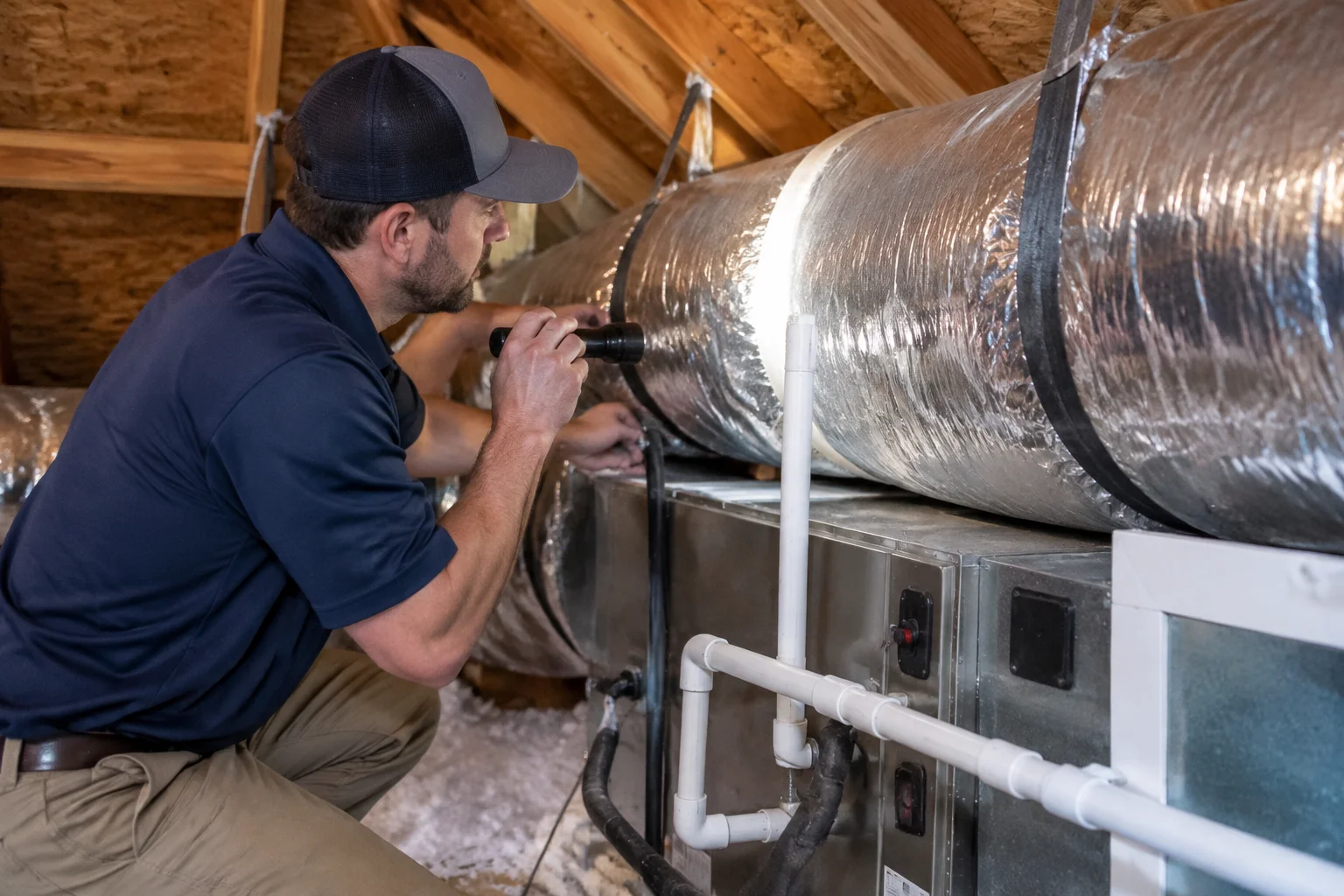
- Duct inspection for any existing ductwork, including leaks, poor connections, and airflow restrictions. If you are searching for duct inspection near me, it is worth asking for a look at how existing ducts affect zoning performance.
- Airflow balance between zones so one area does not “steal” comfort while another struggles.
Some homeowners also ask about duct cleaning near me. Duct cleaning is not a cure-all for comfort problems, but if dust buildup and airflow restrictions are present, it can support overall indoor air quality. A professional can help determine whether cleaning is actually needed versus focusing on filters, coils, and airflow paths.
Condensate drainage and humidity control with VRF
Cooling in a humid climate creates condensate. VRF indoor units also manage moisture, and the condensate drainage system must work correctly. When drainage is slow, blocked, or improperly routed, homeowners may notice:
- Water dripping near an indoor unit
- Damp drywall smells or musty odors
- Visible moisture around a wall or ceiling penetration
- Reduced comfort, because moisture management is not operating as intended
Condensate drainage needs careful installation and ongoing checks. In Freeport, where humidity can be persistent, small drainage issues can become bigger problems over time. If you suspect a drainage concern, it is best to schedule professional service rather than attempting a DIY fix.
Thermostats and controls: why settings matter more than you think
VRF multi-zone systems typically use thermostats that control each indoor unit or zone. Homeowners sometimes set schedules once and forget them, but in a zoned system, schedules and temperature targets can influence comfort and moisture.
Common control-related causes of homeowner complaints include:
- Overlapping comfort goals: For example, one zone may be set for cooler temperatures while another zone is set higher, causing the system to work differently across the home.
- Fan settings that limit air mixing: Inconsistent fan operation can lead to uneven temperature and humidity.
- Schedule changes after renovations: If you add a room, change how you use a space, or install new window treatments, your zoning plan may need adjustment.
Thermostats are part of the comfort system, not an afterthought. If you are troubleshooting comfort or humidity issues, ask your technician to review thermostat settings and how the system is responding in each zone during real conditions.
Refrigerant systems: safety and the limits of DIY troubleshooting
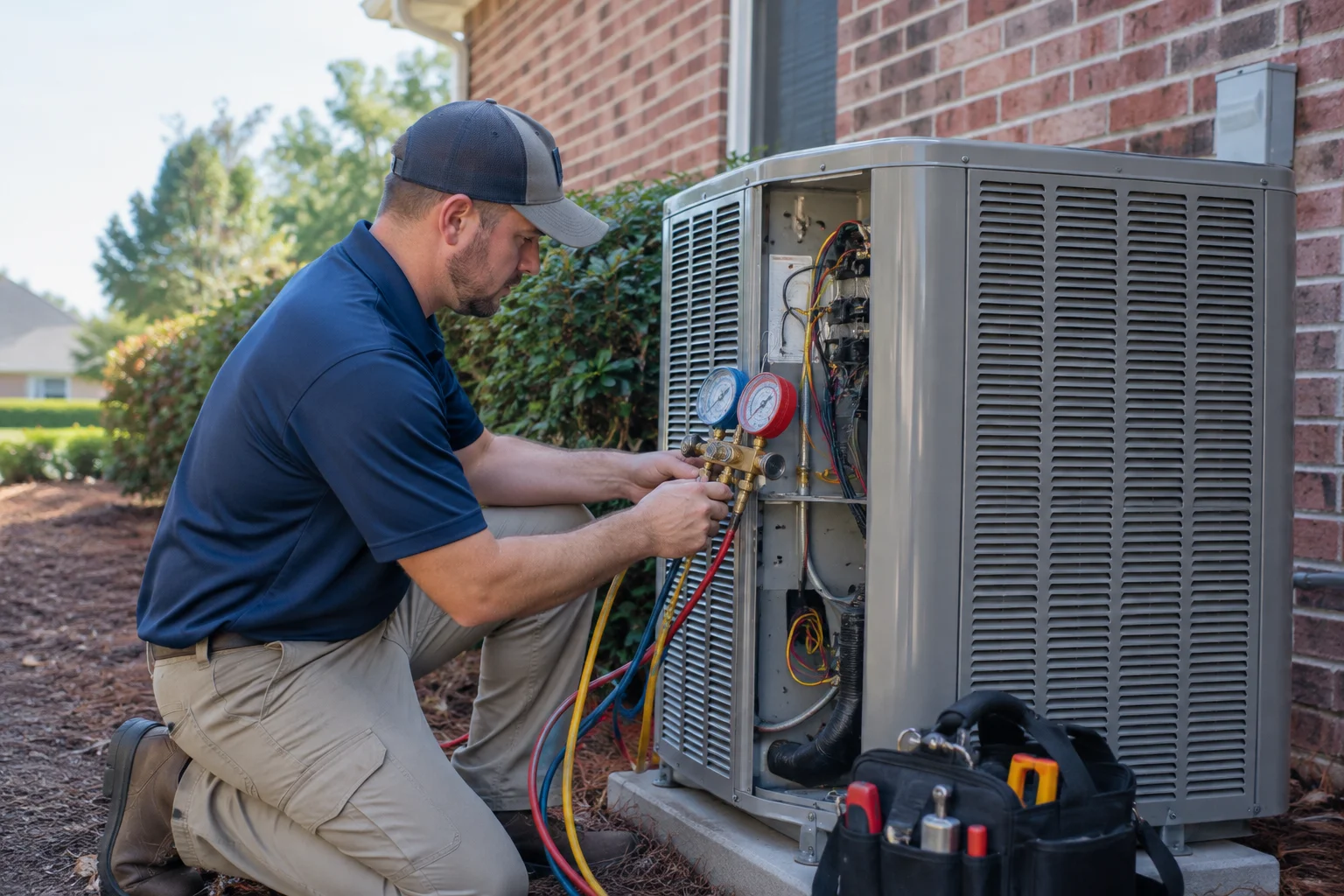
VRF systems are built around refrigerant flow and refrigerant piping. Because refrigerant is involved, homeowners should avoid DIY work on any refrigerant components. Refrigerant systems require trained technicians and proper tools to handle diagnostics and repairs safely.
If your VRF system is not providing cooling or heating consistently, or if one zone behaves very differently from the others, the cause could involve refrigerant system performance, airflow issues, condensate drainage problems, or control settings. However, a homeowner should not attempt to diagnose refrigerant issues without an in-person evaluation.
When searching for AC repair near me or HVAC repair near me, prioritize a contractor that regularly services VRF systems and can explain how they will check airflow, drainage, filter condition, thermostat operation, and system performance before concluding what is wrong.
Preventive HVAC maintenance that protects comfort in Freeport
Preventive HVAC maintenance is where homeowners can make VRF systems last longer and stay comfortable through the hottest months. In Freeport, that means maintenance should focus on moisture control, airflow, and system cleanliness, not only on “it runs.”
A practical VRF maintenance routine typically includes:
- Indoor unit inspections for filter condition, coil cleanliness, and airflow restrictions.
- Airflow verification so each zone delivers the expected comfort without strain.
- Condensate drainage checks to confirm moisture can drain properly during peak humidity.
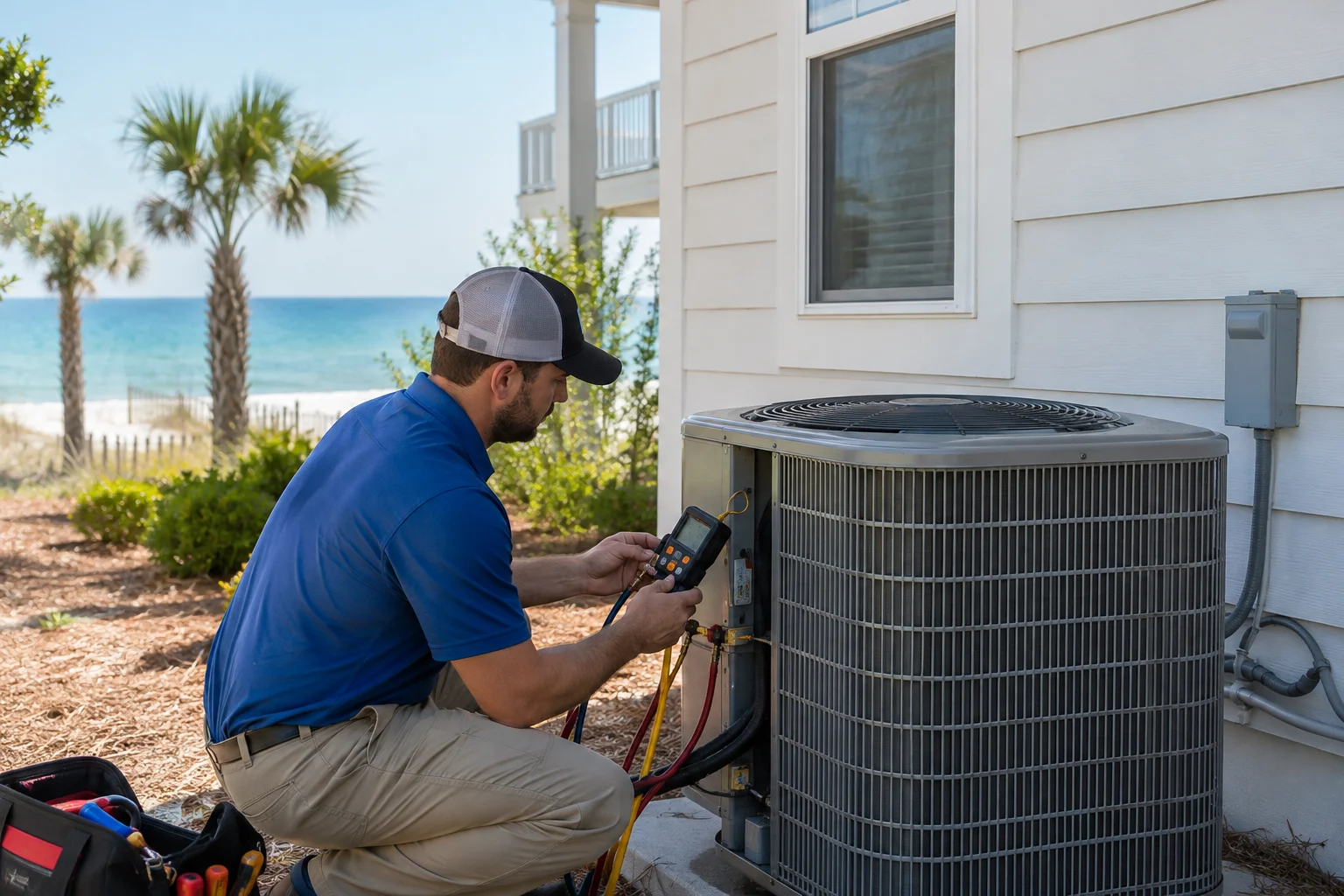
- Outdoor unit care to reduce the impact of salt air and debris buildup.
- Thermostat and control review to ensure zoning schedules match how your home is used.
For homeowners who want a broader maintenance perspective, the same principles apply whether the building is residential or commercial. You can also read Why Efficient Heating and Cooling Starts With Commercial HVAC Maintenance in Freeport, FL to see how maintenance habits help systems stay efficient under heavy local loads.
If you are trying to plan ahead for seasonal demands, an AC tune up near me search is often a good way to find a contractor that can schedule maintenance before summer heat peaks.
Common VRF multi-zone problems homeowners report
While every home is different, certain patterns show up in Freeport when VRF systems are not operating as designed. Here are homeowner-friendly examples of what might be happening:
- One zone is consistently warmer or cooler: Often linked to airflow path issues, indoor unit placement, filter condition, or control settings.
- Cooling works but humidity feels high: Condensate drainage and airflow management can be key, especially in Gulf Coast moisture conditions.
- Unusual noises during operation: Could relate to indoor unit airflow, debris, or other mechanical factors that need inspection.
- Musty odors after cooling runs: Moisture management and drainage should be checked.
- System short-cycling or inconsistent comfort: Can be tied to airflow restrictions, improper balancing across zones, or control configuration.
These issues are often fixable, but they require an HVAC technician who can evaluate the system in person. A homeowner can collect helpful details such as which zones are affected and when comfort problems appear, but the diagnosis should stay professional.
Emergency cooling concerns: how to respond safely
In Freeport, “waiting it out” during a cooling failure can become uncomfortable quickly, especially for households with young children, older adults, or anyone sensitive to heat and humidity. If you are dealing with a VRF multi-zone system that is not cooling properly, treat it as a comfort and safety issue.
What homeowners can do right away:
- Check thermostats for correct mode and zone settings.
- Verify filters are not completely clogged. If they are dirty, do not ignore it, but avoid aggressive cleaning that damages components.
- Look for visible condensate drainage concerns around indoor units.
- Reduce heat gain by closing blinds or curtains on sun-facing windows during the hottest hours.
For true emergency AC repair concerns, it is reasonable to search for emergency AC repair near me and contact a qualified local HVAC provider. VRF systems are not “one switch fixes everything,” so getting a technician to assess which zone or component is affected matters.
System replacement and upgrades: planning for VRF compatibility
Homeowners often ask about HVAC replacement near me when comfort issues continue. With VRF systems, replacement decisions should be based on an in-person evaluation of system condition, indoor unit performance, refrigerant system behavior, and overall design fit.
Do not assume that replacing one part is enough. VRF multi-zone systems are integrated, so the best path depends on what is failing and how the system was originally designed for the home. A professional can also help determine whether a partial upgrade makes sense or if a redesign would better address airflow, ductwork considerations, and indoor air quality goals.
If you are planning an upgrade or installation, it helps to review installation quality details. You may find useful context in The Details That Get Missed in Commercial HVAC Installation in Freeport, FL, because many of the “hidden” installation issues apply to complex zoning systems as well, even in residential applications.
Why professional local VRF service matters in Walton County
VRF multi-zone HVAC systems are more complex than single-zone comfort systems. That complexity is also why professional local service matters. In Freeport, technicians need to understand how coastal air and humidity affect performance and how local homes behave under heavy summer loads.
Choosing a contractor who regularly supports VRF systems can help with:
- Accurate troubleshooting of comfort complaints that may be tied to airflow, condensate drainage, or thermostat behavior.
- Better preventive HVAC maintenance that targets moisture and airflow, not just basic operation.
- More reliable installation and service coordination when your home has ductwork constraints or unique room layouts.
If you want to explore VRF service options, you can learn more about VRF multi-zone HVAC systems in Freeport, FL and how A Superior Mechanical supports design, installation, and service across Walton County. You can also browse the broader Freeport service area and Walton County coverage to see how local scheduling and support are handled.
Questions to ask before service, repair, or a VRF upgrade
When homeowners call for HVAC repair or residential HVAC service, these questions help ensure the work addresses the root cause, not just symptoms:
- Which zones are affected, and what changed recently in those rooms?
- Have you checked airflow and filter condition in each indoor unit?
- Can you inspect condensate drainage and confirm moisture is draining properly?
- How do thermostat settings and schedules affect operation across zones?
- If ductwork is involved, will you do a duct inspection near me style evaluation of leaks or airflow restrictions?
- What preventive HVAC maintenance steps will you recommend for Freeport humidity conditions?
For homeowners considering a new system, it can also help to compare installation approaches. If you are exploring air conditioning installation in Freeport, ask how the contractor plans to manage airflow, humidity, and condensate drainage during the design phase.
Energy use and comfort: how homeowners can think about efficiency
VRF multi-zone systems are designed to vary refrigerant flow based on demand. That can support efficient operation when the system is matched to the home and when zones are managed correctly. Still, energy use is influenced by factors homeowners can control, including thermostat schedules, how often doors and windows are opened, and whether filters and coils stay clean.
In Freeport’s heat and humidity, efficiency is tied to comfort outcomes. If zones are fighting for balance due to airflow restrictions or drainage issues, the system may work harder to maintain temperature. Preventive maintenance and clean airflow paths help protect both comfort and energy use.
Financing and planning: keeping your comfort upgrade realistic
VRF system upgrades can be a major home improvement. Planning ahead helps you avoid rushed decisions when comfort problems spike during peak summer. If financing is part of your plan, this guide can help you think through options and what to consider: A Homeowner’s Guide to HVAC Financing and Why It Matters in Freeport, FL.
When you are budgeting, also consider the value of preventive HVAC maintenance. A well-maintained system is more likely to deliver consistent comfort across zones and reduce the chance of mid-season emergency cooling concerns.
If you are evaluating VRF multi-zone HVAC systems for an older home, a newer build, or a property with multiple comfort needs, A Superior Mechanical can help you connect the dots between zoning, airflow, humidity management, and refrigerant system performance. For local support, start with the service area page for VRF multi-zone HVAC systems and explore the Freeport and Walton County coverage options.
Find VRF Multi-Zone HVAC Systems in Freeport, FL
If you need VRF Multi-Zone HVAC Systems in Freeport, FL, visit our local service page or contact A Superior Mechanical today.
Map of Freeport, FL
Frequently Asked Questions
Is VRF multi-zone HVAC a good choice for older Freeport homes?
It can be, especially when you want room-by-room control and your layout makes duct distribution difficult. The key is matching indoor unit placement, airflow paths, and humidity management to how the older home actually heats and cools.
Why does one VRF zone feel uncomfortable while other rooms are fine?
Common causes include airflow restrictions, dirty filters, thermostat schedule settings, indoor unit obstructions, or condensate drainage and moisture issues in that specific zone. A professional inspection is needed to pinpoint the cause.
How does VRF handle humidity in Freeport’s coastal climate?
VRF systems cool and manage moisture, but comfort depends on proper condensate drainage, correct airflow across indoor units, and appropriate thermostat and control settings. If humidity feels high, condensate drainage and airflow should be checked during service.
Can I troubleshoot refrigerant problems in a VRF system myself?
No. Refrigerant systems require trained service and proper tools. If you suspect a VRF refrigerant system issue, contact a qualified HVAC technician for an in-person evaluation.
What should I do if my VRF system stops cooling during a hot day?
Check thermostat mode and zone settings, look for obvious filter or airflow blockages, and watch for any condensate drainage concerns. If cooling is not restored and comfort is at risk, contact emergency AC repair support from a local professional.
Related Articles
- Why Efficient Heating and Cooling Starts With Commercial HVAC Maintenance in Freeport, FL
- The Details That Get Missed in Commercial HVAC Installation in Freeport, FL
- A Homeowner’s Guide to HVAC Financing and Why It Matters in Freeport, FL
- Staying Ahead of Commercial HVAC Problems in Freeport, FL: A Practical Guide for More Reliable Buildings
Photo Gallery