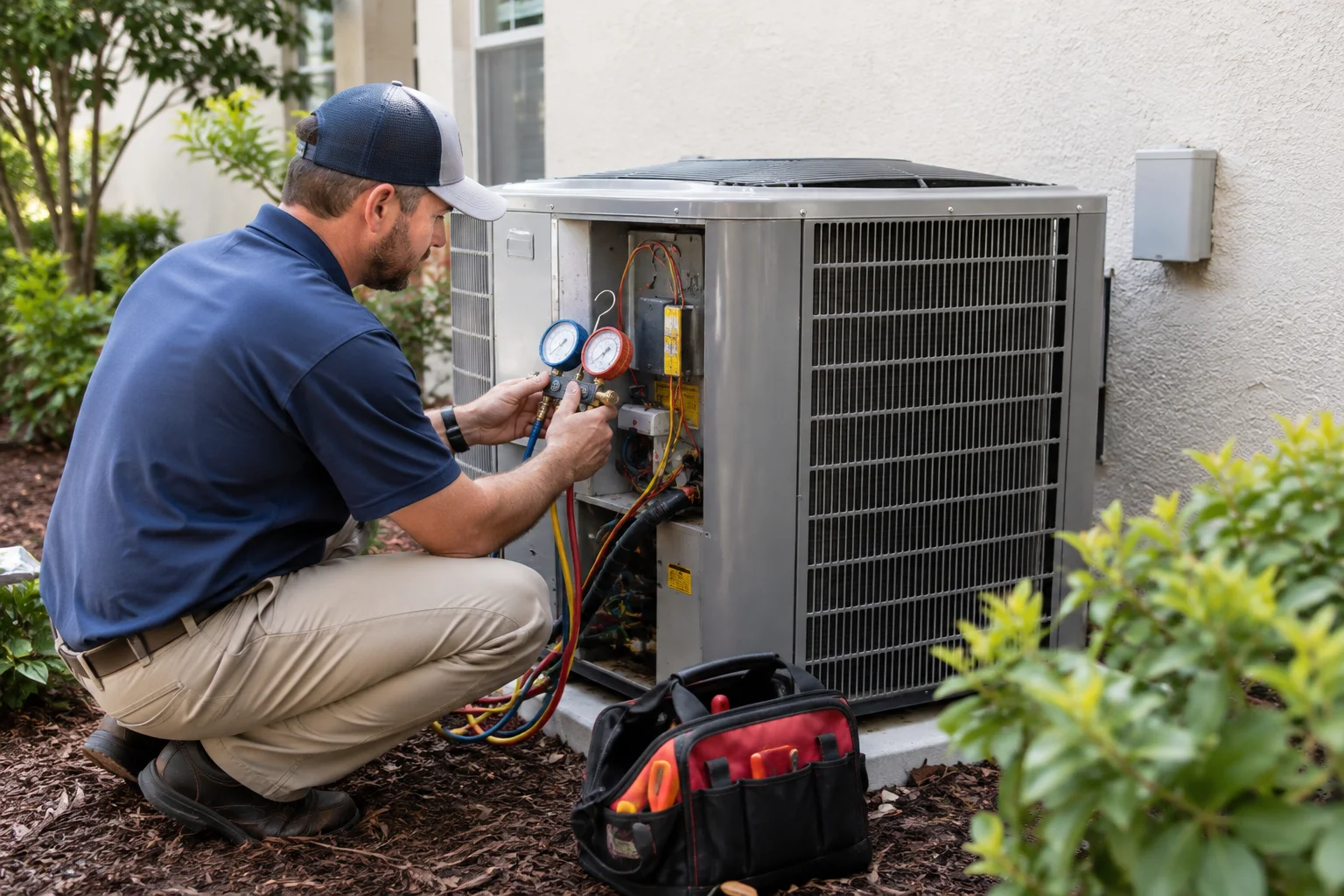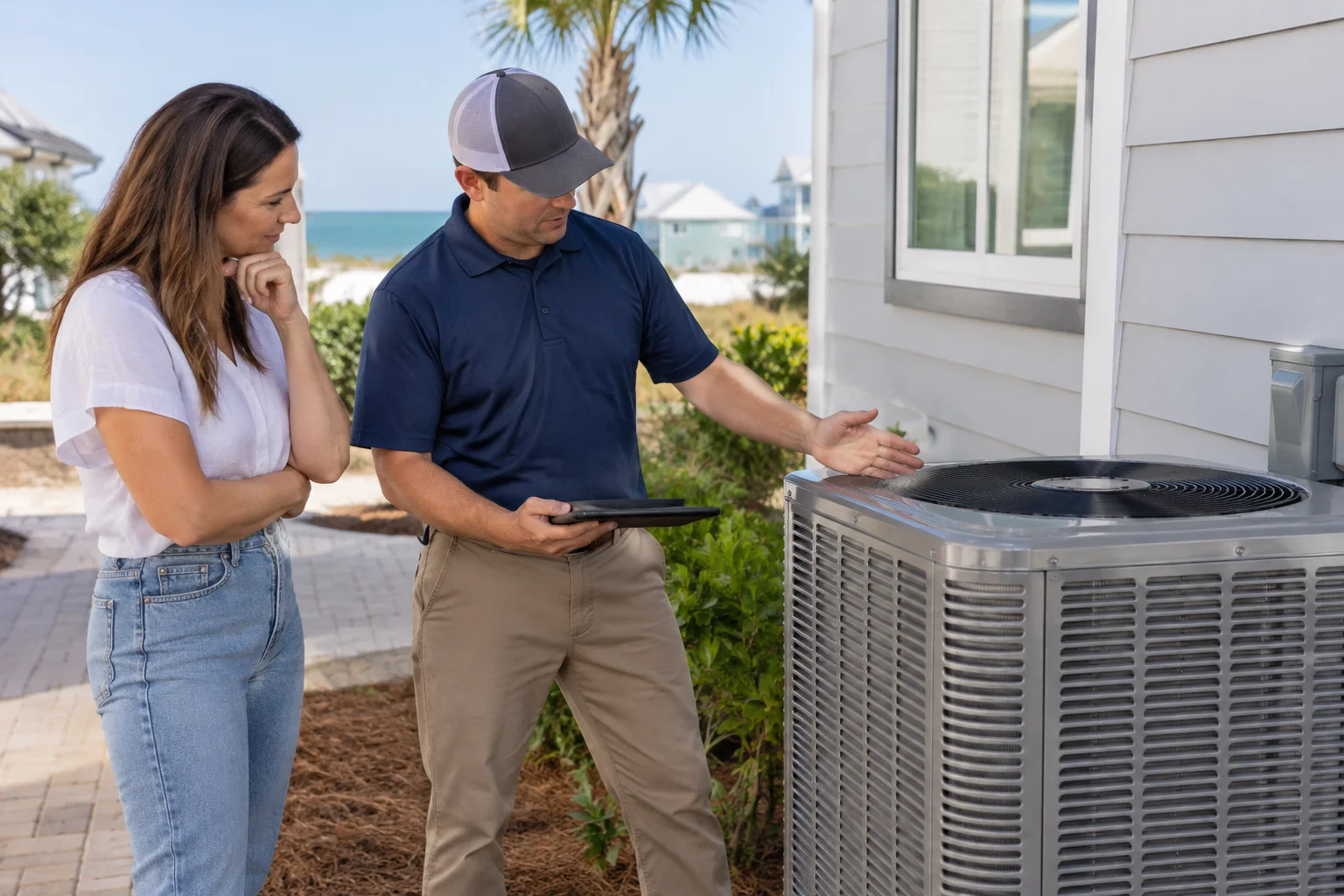
Ocean City, FL homes live with a tough mix. Warm Florida heat, high humidity, salty air from the coast, and constant indoor airflow demands all put pressure on HVAC systems. That is why air filtration and air purifiers are more than comfort upgrades. When filtration equipment and purifier performance start slipping, they can reveal early HVAC problems that might otherwise show up as weak cooling, rising energy use, or emergency cooling concerns.
This guide connects common HVAC warning signs to the air filtration and purifier systems homeowners use, so you can catch issues early and keep indoor air quality steady through peak summer.
Why air filtration and purifiers can “signal” HVAC trouble
Your HVAC does more than blow cold air. It moves air through ductwork, across refrigerant systems, and through filtration stages that capture dust, pollen, and airborne particles. Many homes also use devices like portable air purifiers, whole-home air cleaners, or in-duct filtration products. When airflow is reduced, when condensate drainage is off, or when the system cannot maintain normal operating conditions, filtration and purifier performance often changes first.
In Ocean City, the timing matters. Early signs during hot, humid stretches can show up before a complete breakdown. Addressing them can help prevent mid-summer breakdowns that often lead people to search for emergency HVAC services or AC repair near me.
Warning sign #1: Airflow feels weaker, even though the thermostat says the system is running
One of the most common filtration-connected issues is reduced airflow. If your air conditioner or heat pump turns on but the house does not cool evenly, you may notice:
- Rooms feel warmer than others
- Supply vents push out less air
- Air purifier fans seem louder because they work harder
- Filters clog faster than they used to
Filtration and purifier systems can magnify airflow problems. Higher-efficiency filters and certain air cleaner setups can increase resistance to airflow. That is normal when sized and installed correctly. But if your HVAC blower, ductwork, or system balance is already struggling, filtration can become the “first thing you notice.”
Coastal humidity can also contribute to duct performance issues. If ductwork has leaks, the system may pull in more humid air or lose conditioned air, making it harder to maintain stable indoor conditions.
If you are troubleshooting, start by thinking about airflow and ductwork. A careful ductwork services visit can include duct inspection near me style assessments such as measuring airflow and checking for restrictions.
Warning sign #2: Filters look dirty sooner than expected, or they clog unevenly
Homeowners often replace filters on a routine schedule, then notice a change. In Ocean City, it is not unusual for coastal pollen, airborne dust, and humidity to increase particulate load. Still, a sudden shift can point to HVAC or filtration mismatch issues.
Watch for:
- Filters turning dark or overloaded much earlier than usual
- Uneven loading, such as one side heavily clogged
- Visible debris around the filter area or in the return path
- Purifier indicators showing higher particle levels than normal
Uneven loading can sometimes indicate airflow problems through the filter slot or a poor seal around the filter housing. If air is bypassing filtration, indoor air quality can worsen even if you are “using filters.”
Some homeowners also search for duct sealing pays off for Ocean City homes after they realize the system is pulling in unfiltered air. That is a key piece of the puzzle. If return leaks exist, your filter may not protect the supply air the way it should.
Warning sign #3: Increased humidity indoors, plus purifier struggles
Humidity is a big deal in coastal Florida. When your air conditioner removes moisture, it helps prevent that sticky feeling and reduces the conditions that encourage mold and mildew. If filtration and purifier performance is inconsistent and you also notice humidity issues, the HVAC may not be dehumidifying properly.
Common clues include:
- Condensation on windows or in rooms that used to stay dry
- Persistent musty odors when the system runs
- Air purifier filters or media getting damp or quickly accumulating debris
- Rooms feel clammy even when the thermostat is set low
Moisture control depends on how the refrigerant system operates and how condensate drainage is working. If the system is not cooling as expected, or if condensate drainage is restricted, humidity removal can fall behind. That can also affect filter performance because damp particles cling more readily.
Because refrigeration and condensate drainage involve components that require on-site evaluation, homeowners should not attempt refrigerant troubleshooting. Instead, schedule an air conditioning inspection near me with a licensed HVAC contractor who can check drainage, airflow, and system operation.
Warning sign #4: Condensate drainage problems show up near the furnace or air handler
Even when your focus is air filtration and purifiers, condensate drainage can be the hidden driver. If condensate drainage is backing up or draining too slowly, you can see:
- Water near the indoor unit, drain pan, or air handler area
- Frequent “water” or gurgling sounds during cooling cycles
- Musty smells that come and go with AC cycles
- Purifier media that seems to collect more moisture-related debris
High humidity plus salty air can create conditions where buildup forms faster. A blocked drain line, clogged drain pan, or poorly maintained condensate system can lead to indoor air quality issues and reduced system efficiency.
This is one of those moments where professional help matters. If you are dealing with water concerns, it is worth arranging HVAC troubleshooting that includes checking condensate drainage and verifying airflow patterns across the filtration setup.
Warning sign #5: Purifier or filter indicators change, but HVAC runtime does not
Many air purifiers have particle sensors, airflow indicators, or filter life monitors. Whole-home filtration systems may also have performance indicators. When purifier readings rise but the HVAC does not appear to run longer, you can get a mismatch between what the air cleaner is seeing and what the HVAC is delivering.
Possible causes include:
- Air is not circulating through the filtration stage as expected
- Return airflow is impaired by duct leaks, blockages, or pressure imbalances
- The thermostat settings or fan mode are not aligned with how the filtration system is meant to operate
- Filter media or installation is not seated correctly, allowing bypass
Thermostats and HVAC controls matter. If your thermostat is set for intermittent fan operation, some air cleaners may not receive consistent airflow. Conversely, if the fan is running continuously but cooling performance is weak, the system may be struggling with refrigerant system operation or duct restrictions. An HVAC contractor can verify airflow and control sequences rather than guessing.
Warning sign #6: Strange odors after replacing filters or running purifiers
Odors can be subtle and easy to misread. After you change filters, you might notice new smells that seem tied to the purifier or filtration path. In Ocean City homes, odors can come from:
- Dust and organic buildup that gets disturbed when airflow increases
- Moisture-related growth when condensate drainage is not performing
- Dirty duct surfaces or dust in the return path
- Salt air residue that accumulates in coastal environments
Some homeowners search for keeping Ocean City homes comfortable starts with the air inside when they realize odor issues are not just “smell.” Odor can be a clue that indoor air quality needs more than filter changes. It may require duct inspection near me, verification of airflow, and targeted cleaning or maintenance based on what is found.
Warning sign #7: Energy use climbs while cooling comfort drops
Air filtration and purifier issues can overlap with HVAC efficiency problems. If your electric bills rise and your home never feels fully comfortable, consider whether:
- The system is running longer to compensate for reduced airflow
- Filters are clogged or installed in a way that increases resistance
- Ductwork is leaking, forcing the system to work harder
- The refrigerant system is not maintaining normal cooling performance
In Florida heat and humidity, the HVAC has to work steadily. If filtration resistance and duct leakage combine, the system can spend more time in cycles that do not deliver the comfort you expect. That is also when homeowners often look for “HVAC company near me” because the comfort problem becomes urgent.
How to connect the dots at home: a quick homeowner checklist
You can do a few safe checks that do not require technical diagnosis. These steps help you describe the issue clearly to your HVAC contractor.
1) Compare filter condition over time
Note how quickly filters darken or clog. If it is dramatically faster than before, that suggests airflow or particulate load changes. Take a photo before replacing so you can share what you saw.
2) Check for consistent airflow at vents
Walk room to room during cooling. If some rooms are weak and others are fine, it can point to duct balance or airflow restrictions.
3) Look for moisture clues
If you see water around the indoor unit or notice musty odors that match cooling cycles, that is a strong reason to schedule service focused on condensate drainage and indoor air quality.
4) Review thermostat fan settings
Make sure the thermostat fan mode matches how you want the home to circulate air. If you run the fan continuously for air filtration, confirm the HVAC is still cooling and dehumidifying correctly.
What professional HVAC service should include for filtration and purifier concerns
When homeowners schedule air conditioning service or HVAC maintenance near me, it helps to ask targeted questions. A quality visit for air filtration and purifier-related warning signs should include:
- Airflow checks across the air handler and filtration stages
- Verification of ductwork performance and pressure balance where appropriate
- Inspection of condensate drainage and the drain pan area
- Assessment of thermostat settings and control operation
- Indoor air quality considerations based on what the filtration system is intended to capture
- Recommendations for filter practices that match your system and indoor conditions
Because refrigerant systems and condensate components require careful, in-person evaluation, the safest approach is professional inspection rather than DIY attempts to diagnose refrigerant or electrical issues.
Prevention that matters in Ocean City: maintenance habits for better filtration performance
Air filtration and purifiers work best when the HVAC system is healthy. Preventive maintenance helps keep airflow stable and keeps moisture under control in Florida’s humid coastal climate.
Keep filtration aligned with your system
Using filters that are installed correctly and matched to your HVAC setup matters. If you have upgraded filters or added air cleaners, it is worth confirming that your blower and ductwork can handle the airflow resistance. A licensed HVAC contractor can help you avoid “it should work” situations where filtration becomes the limiting factor.
Address duct issues before they become indoor air quality problems
Leaky ductwork can pull in unconditioned air, including humidity from crawlspaces or attics. That can reduce cooling effectiveness and make filtration feel like it is not keeping up. If you suspect duct problems, consider ductwork services and duct inspection.
If you are deciding between cleaning and sealing priorities, it helps to start with inspection. Homeowners often search for duct sealing pays off for Ocean City homes because sealing can reduce the load on both the HVAC and filtration stages.
Plan seasonal HVAC tune ups during high-demand months
In Ocean City, the system faces heavy cooling demand. Scheduling an AC tune up near me before peak heat can help identify airflow, drainage, and control issues before they become emergencies. This is also a good time to review whether your filtration and purifier setup still matches your current comfort needs.
Special considerations for ductless systems and mixed-use homes
Some Ocean City homes use ductless mini split systems or multi-zone setups. In these cases, air filtration still matters, but the airflow paths and pressure dynamics are different. If you have a ductless system and you notice uneven comfort, purifier performance changes, or rising humidity, the cause may be airflow distribution to zones, system balance, or maintenance needs.
If you are using or considering ductless, a professional can explain how filtration and indoor air quality strategies fit your layout. For homeowners with ductless systems, it can help to discuss options like VRF Multi-Zone Systems and how filtration should be managed across zones.
When to escalate to emergency cooling help
Filtration and purifier warning signs are often early indicators, but some situations should be treated as urgent, especially during Florida heat. Consider contacting emergency HVAC services if:
- The system stops cooling during peak heat
- Water is actively leaking or pooling near the indoor unit
- Odors are strong and increasing quickly
- Indoor temperatures rise rapidly and the thermostat shows the system is calling for cooling
Waiting too long can turn a manageable filtration or airflow issue into a larger comfort and indoor air quality problem.
Air filtration and purifiers are only as good as the HVAC moving air
In Ocean City, salt air, humidity, and constant cooling demand can stress HVAC systems. When filtration and purifier performance changes, it is often because airflow, moisture control, or system operation is shifting. Treat those warning signs seriously, document what you observe, and schedule professional air conditioning service or HVAC maintenance so the system can deliver clean, comfortable air consistently.
If you are focused on indoor air quality services near me, it can also help to review how filtration connects to the rest of the system. For related context, read Keeping Ocean City Homes Comfortable Starts With the Air Inside and consider how ductwork impacts performance with Why Duct Sealing Pays Off for Ocean City Homes.
For homeowners with business properties or mixed-use layouts, airflow and filtration can be even more complex. You can explore Why Commercial HVAC Service Matters in Ocean City Homes and Mixed-Use Properties to understand how system demands differ.
To learn how air filtration and purifier services are handled in your area, you can also review A Superior Mechanical’s specific service page for air filtration and purifiers in Ocean City, FL and the broader coverage on Ocean City service areas.
Find Air Filtration and Purifiers in Ocean City, FL
If you need Air Filtration and Purifiers in Ocean City, FL, visit our local service page or contact A Superior Mechanical today.
Map of Ocean City, FL
Frequently Asked Questions
Can a dirty air filter make my air purifier work worse?
Yes. A clogged or poorly sealed filter can reduce HVAC airflow through the system. When airflow drops, purifier performance and indoor air quality can feel inconsistent even if the purifier itself is running. A technician can check airflow, filter fit, and related ductwork and return-path issues.
Why does my home feel humid when the AC is running?
Humidity issues can happen when the HVAC is not dehumidifying properly. Common causes include airflow restrictions, refrigerant system performance problems, or condensate drainage issues. Because refrigerant and system operation require on-site evaluation, it is best to schedule an air conditioning inspection with a licensed HVAC contractor.
Is duct cleaning the answer if my filters clog quickly?
Sometimes, but not always. Quick filter loading can point to airflow problems, duct leaks, or particulate sources that are not solved by cleaning alone. An inspection helps determine whether ductwork issues, return air leaks, or other factors are driving the faster buildup.
What should I check with my thermostat if I run my fan for air quality?
Confirm the thermostat fan mode and how often the fan runs. Continuous fan operation may increase circulation, but it should not come at the expense of cooling and dehumidification. If comfort is slipping, the HVAC controls and system operation may need professional review.
When should I call for emergency AC repair near me?
Call for emergency help if the system stops cooling during extreme heat, if you see active water pooling near the indoor unit, or if odors and moisture concerns are rapidly worsening. During Ocean City summers, those issues can affect comfort and indoor air quality quickly.
Related Articles
Photo Gallery