Destin homes run on the same daily routines as anywhere else: coffee in the morning, showers after a beach day, laundry on weekends, and family meals in the kitchen. When the water quality slips, it can quietly show up in the places you notice most. You might see hard water spots on glass, feel dry skin after bathing, or notice a metallic, chlorinated, or unpleasant taste in drinking water.
In Destin and across Okaloosa County, water softening often becomes the practical next step when hard water is driving scale buildup, sediment, and “off” water experiences. This guide connects common water quality warning signs to what they usually mean, why water softening helps, and how homeowners can decide between a water softener, whole home water filtration, or reverse osmosis for drinking water.
Why Destin homeowners notice water quality problems faster
Destin sits in a humid, coastal climate where plumbing systems, water heaters, and fixtures face steady demand. Hard water and minerals can build up over time, especially in homes that run showers, sprinklers, laundry, and dishwashing frequently. When mineral content is high, it does not just “sit” in the water. It reacts with soap, settles as residue, and forms scale inside plumbing and on fixtures.
That is why local water treatment service matters. A professional water softener service in Destin helps you match the right solution to the water you actually have, not a guess. That pairing is especially important if you are also dealing with odor, sediment, or chlorine taste in water that makes drinking and cooking less enjoyable.
Water quality warning signs that point to hard water and scale
Hard water issues tend to repeat themselves across the home. If you are seeing more than one of the signs below, it usually means minerals are interfering with cleaning, appliance performance, and the feel of your water.
1) Hard water spots on glass, dishes, and fixtures
Look at the last rinse cycle on your shower door, drinking glasses, or kitchenware. If you see stubborn white spots or a cloudy film that does not wipe away easily, that is a classic sign of scale and mineral deposits. Over time, those deposits can become harder to remove and can even make fixtures look dull and worn.
Homeowners often describe it as “the water leaves a mark.” That is exactly what hard water does, especially when water softening is not in place or is not working properly.
2) Scale buildup around faucets and showerheads
Check around aerators, faucet handles, and showerheads. Scale buildup around faucets and showerheads can restrict flow and require more scrubbing to keep things clean. If you notice water pressure dropping in specific fixtures, mineral scale could be contributing.
When scale builds up inside plumbing, it can also lead to reduced efficiency in water heaters and increased strain on appliances that heat water.
3) Dry skin or dull hair after bathing
Hard water treatment is not only about what you see. It can affect how water feels on your skin. Many people report dry skin from hard water, tightness after showers, or dull hair that does not respond well to conditioning. A major reason is that minerals can interfere with soap and leave residue behind.
If you notice your shampoo and body wash do not feel as effective as they used to, that is a strong clue you may need water softening to improve everyday bathing.
4) Soap that does not lather or rinse well
One of the most practical indicators is how soap behaves. If soap does not lather, or it rinses away poorly, you may be fighting mineral buildup. This is common in homes where hard water is high enough to “use up” soap before it can clean effectively.
In a family kitchen, that can show up in dishwashing too. Glassware can feel slick or look streaky, and laundry can come out less fresh even when you use the same detergent you always have.
5) Metallic, chlorinated, or unpleasant taste
Some water quality issues are mineral related, while others are related to disinfectants or source water characteristics. Still, homeowners notice them together. Metallic tasting water, chlorine taste in water, or an unpleasant odor can make drinking water and cooking less appealing.
When taste and odor are part of the problem, homeowners often ask whether a water softener alone is enough. In many cases, softening helps with scale and mineral effects, while additional filtration like whole home water filtration or reverse osmosis addresses taste, odor, and finer sediment.
6) Cloudy ice cubes and “not quite right” drinking water
Cloudy ice cubes can be a sign of dissolved minerals, sediment, or filtration issues. If your ice looks cloudy even when your refrigerator is clean, it is worth investigating your water quality. For families that rely on cold water for drinking and cooking, this is one of the first daily cues that something needs attention.
Homeowners searching for clean water systems near me often start with the ice question for a reason. It is easy to observe and hard to ignore.
7) Poor tasting coffee and cooking water
Coffee and cooking water are sensitive to water chemistry. If coffee tastes flat, bitter, or “off,” or if soups and rice do not turn out the way you expect, your water may be contributing. Better water for drinking and cooking is not just a luxury. It can improve flavor and consistency.
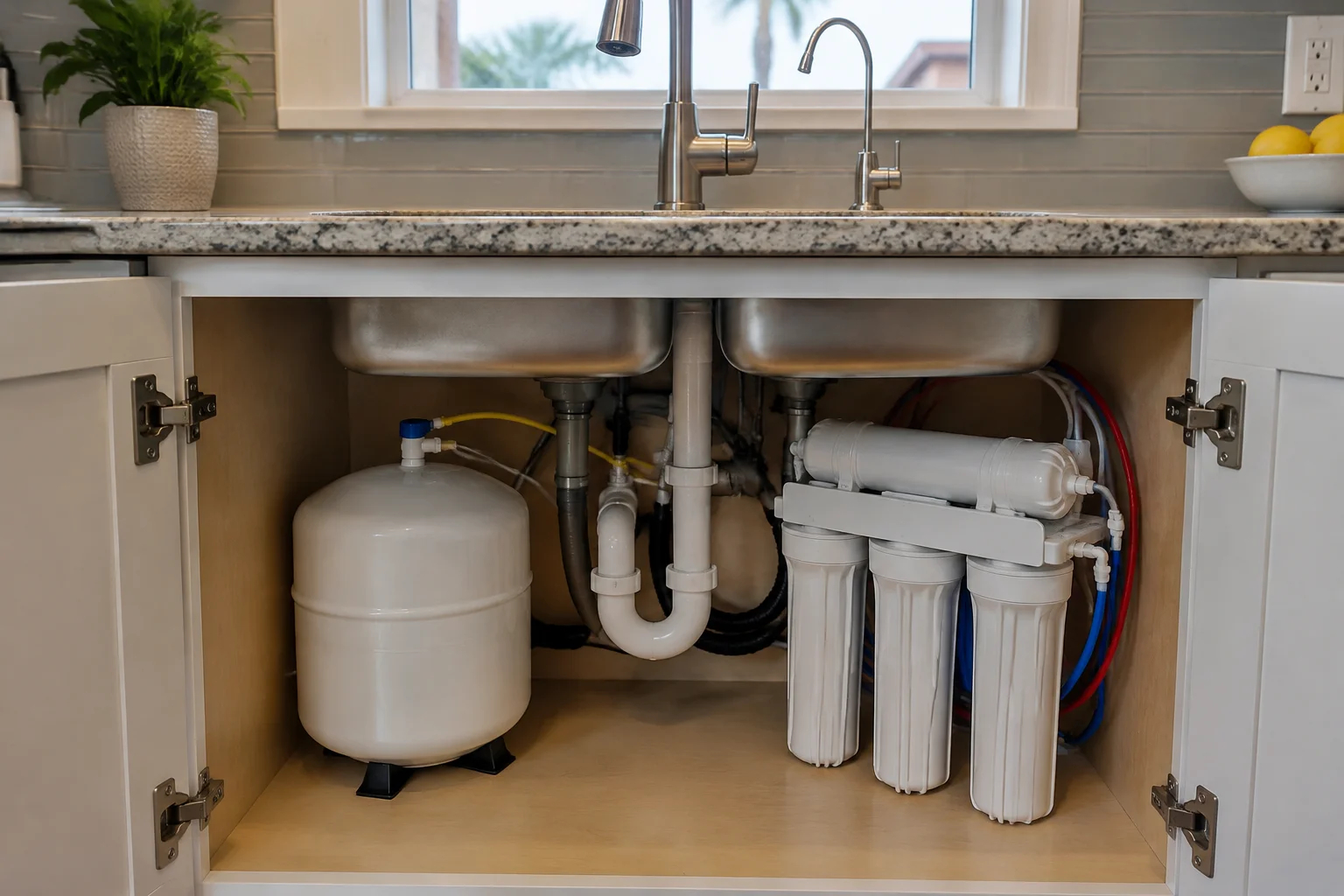
Many households notice the difference once they add the right filtration for drinking water, sometimes using reverse osmosis installation under the sink, paired with whole home water softening for the rest of the home.
8) Appliances wearing out faster
Dishwashers, water heaters, and other appliances that use hot water can suffer when scale forms. Scale buildup reduces efficiency, can shorten equipment life, and may increase energy costs. When hard water treatment becomes part of protecting fixtures and appliances, it often shows up as fewer repairs and more reliable performance.
Sediment and odor: how they connect to softening decisions
Not every sediment or odor concern is caused by hard water alone. However, minerals and sediment can travel together, and the effects overlap. You might see visible sediment, discoloration, and odor concerns at the same time scale spots appear in the bathroom and kitchen.
Here is a helpful way to think about it:
- Water softening primarily addresses hardness minerals that cause scale buildup, soap inefficiency, and residue.
- Water filtration targets sediment particles and other contaminants that affect taste, odor, and clarity.
- Reverse osmosis focuses on high-quality drinking water at the point of use, often reducing dissolved contaminants that impact flavor.
If you are dealing with visible sediment in addition to hard water spots, you may need a system that combines softening and filtration. That is where whole home water filtration near me searches often lead to solutions that treat more than one problem at once.
How water softening works to reduce scale, odor, and chlorine concerns
Water softening works by reducing hardness minerals, typically calcium and magnesium. Instead of those minerals leaving deposits on fixtures and inside plumbing, the system helps prevent the scale-forming process. The result is usually noticeable within days to weeks:
- Less scale buildup around faucets and showerheads
- Soap that lathers and rinses more effectively
- Cleaner-looking glass and dishes after washing
- Less residue that can contribute to dry skin from hard water
- Better appliance performance over time
Softening can also support your overall clean water systems by reducing the “mineral load” that clogs filters and interferes with other treatment components. While softeners are not designed to remove all odors or chlorine by themselves, they can make the water experience more consistent, especially when paired with the right filtration.
Choosing the right approach: water softener, AO Smith filtration, whole home systems, or reverse osmosis
Homeowners in Destin often want one solution that handles everything. The truth is that different symptoms point to different treatment goals. Many homes benefit from a layered approach, such as water softening for scale control and filtration for taste, odor, and sediment.
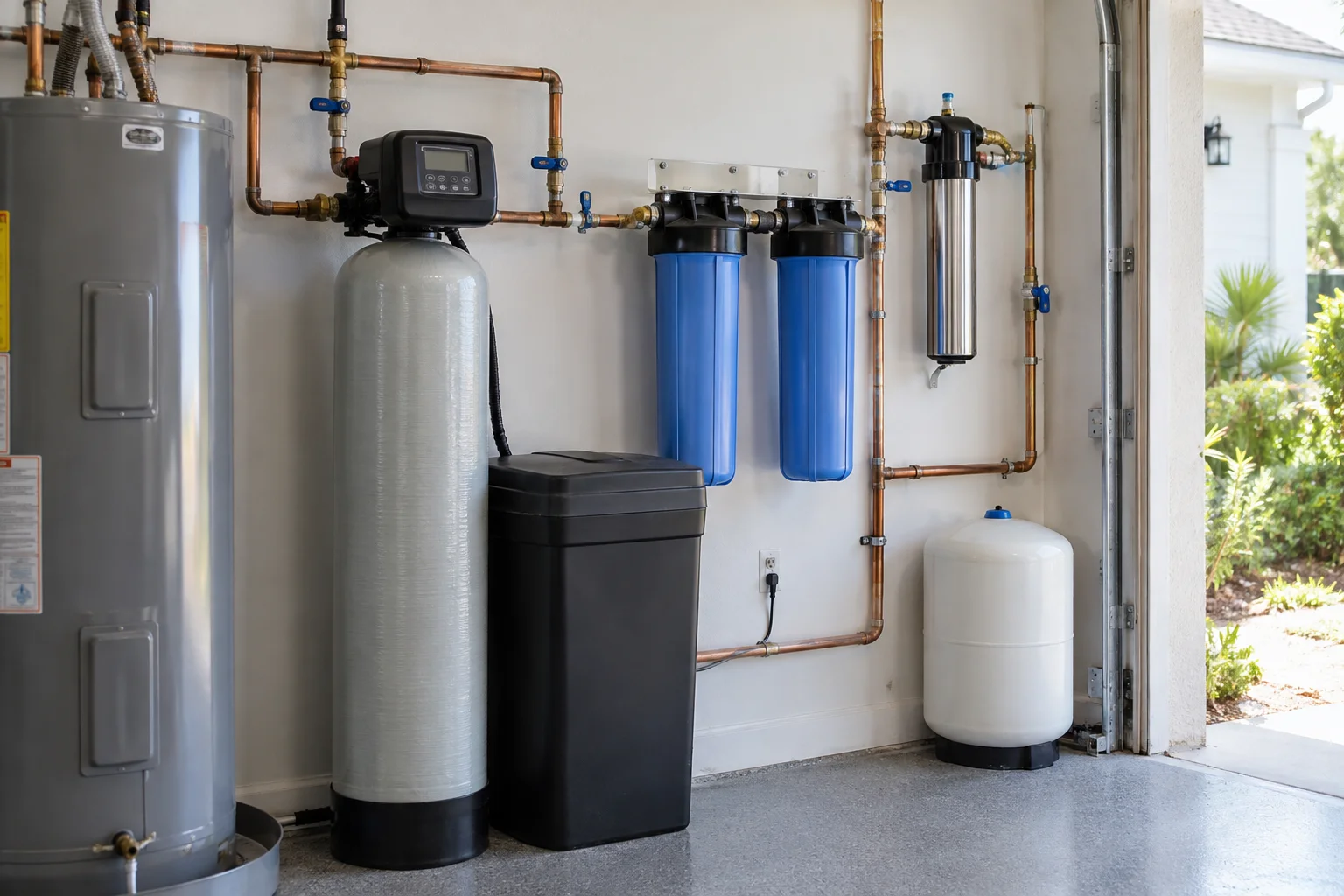
Water softening for the whole home
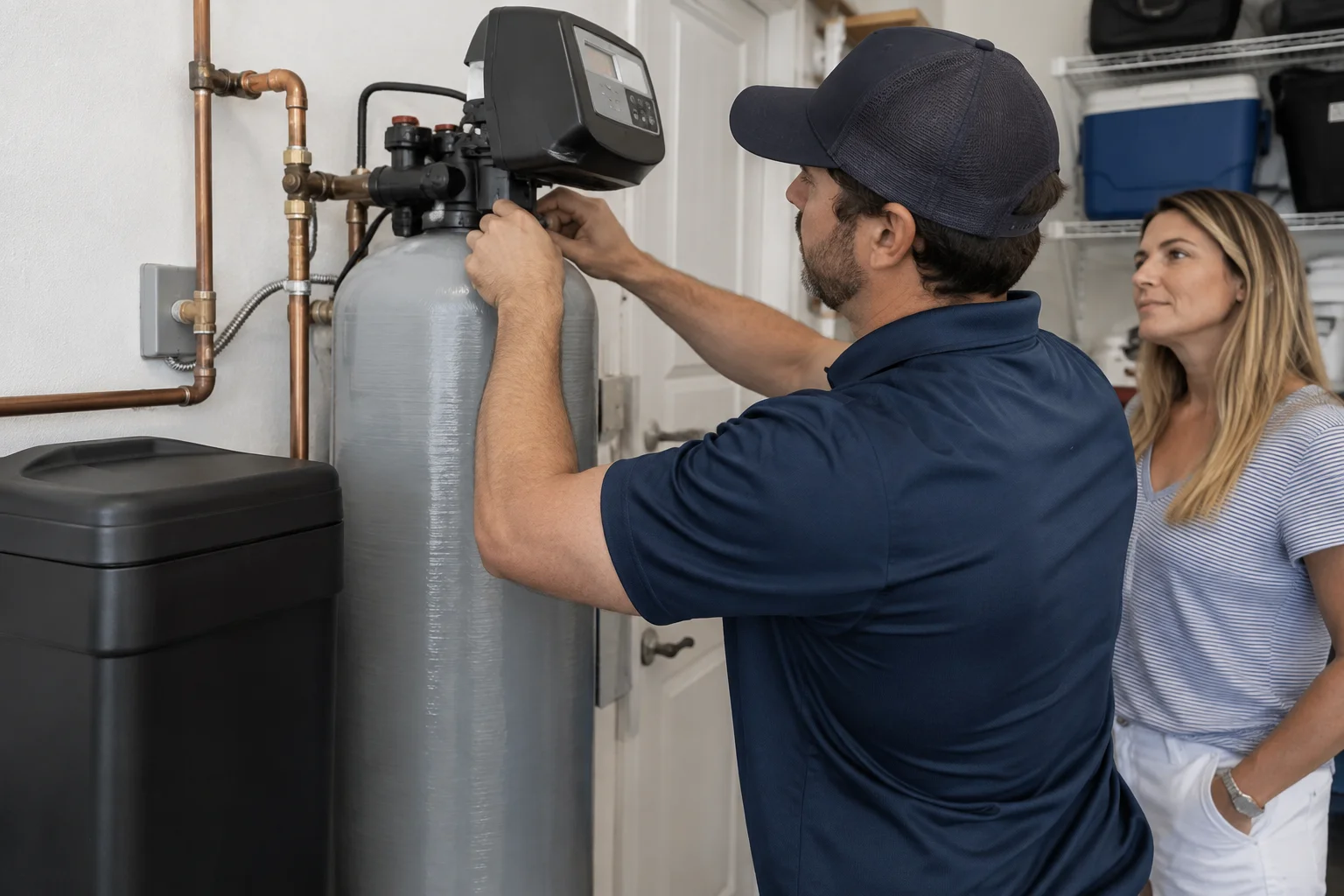
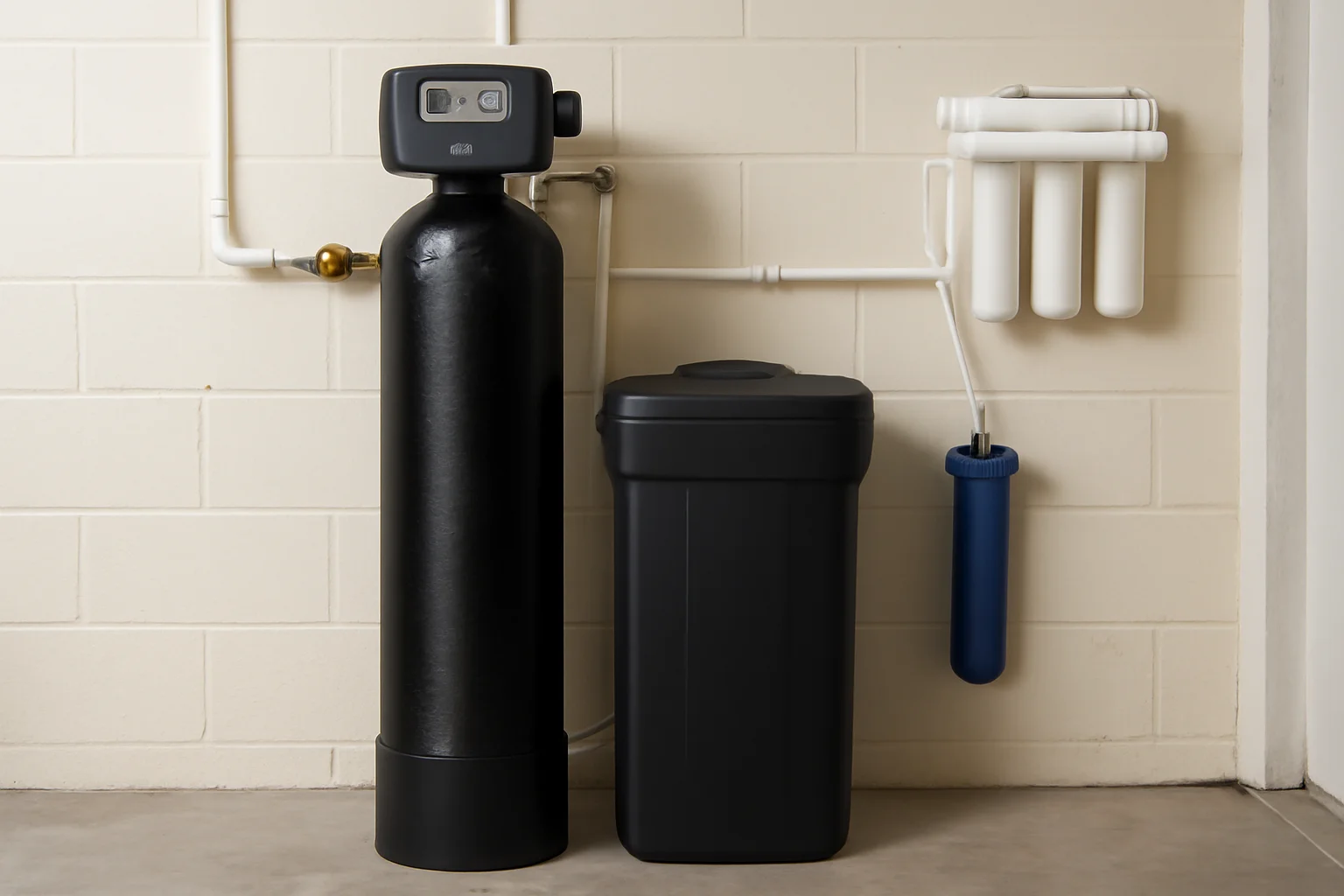
If your biggest complaints are scale buildup, soap that does not lather, dry skin after bathing, and appliances wearing out faster, a water softener service near me is a logical starting point. A properly sized system can make a noticeable difference across showers, laundry, and dishwashing.
If you want to explore professional options, you can review the water softening service area details here: /service-areas/okaloosa-county/destin/water-softening-fwbdofl.
AO Smith water filtration for cleaner, more consistent water
AO Smith water filtration is a common choice for homeowners who want dependable whole home hard water solutions and cleaner water throughout the house. Whole home water filtration near me often comes up when families want fewer sediment issues, improved taste and odor consistency, and better overall water quality for daily use.
AO Smith systems are designed to support whole home water treatment goals and pair well with softening, depending on your water test results.
If you are comparing options, you can start with the main water filtration landing page here: /water-filtration-ro-water-softeners.
Reverse osmosis installation for drinking and cooking
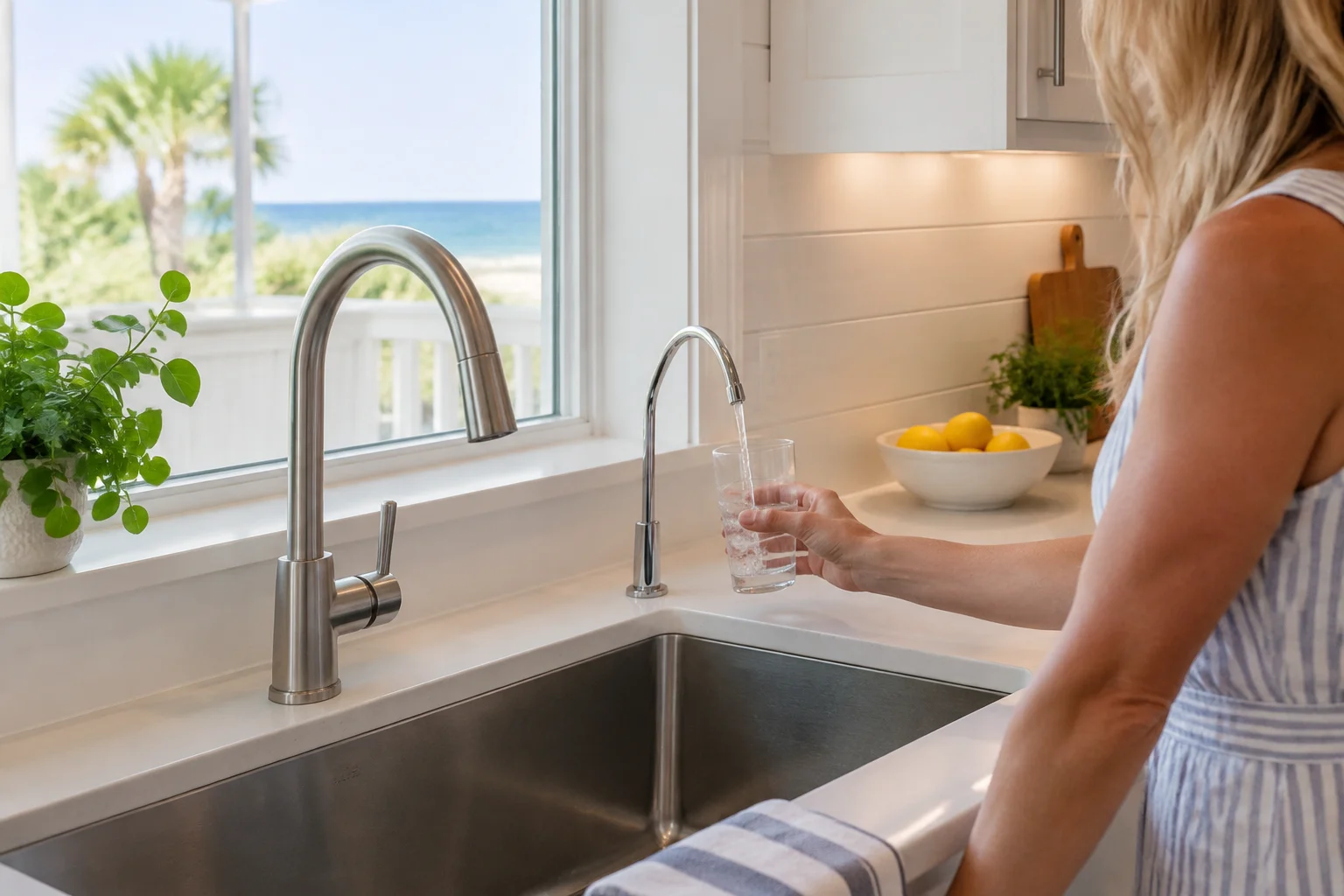
When metallic tasting water, chlorine taste in water, cloudy ice cubes, and poor tasting coffee water are your top concerns, reverse osmosis is often a strong match for drinking water and cooking water. Many households choose reverse osmosis installation near the kitchen sink so the water used for drinking, ice, and recipes is treated at a higher level.
Softening can help the rest of the home, while reverse osmosis helps the water you drink. That combination is especially useful for families who notice differences in daily routines, like a child grabbing a glass of water straight from the fridge or a couple brewing coffee every morning.
Whole home water filtration for sediment and odor concerns
If you are seeing visible sediment, discoloration, and odor concerns across multiple taps, whole home water filtration may address the source of those issues. Treating sediment and improving water clarity can also reduce how often you notice cloudy ice cubes and can help appliances and fixtures stay cleaner.
What a homeowner can do right now: quick checks that help you describe the problem
You do not need to be a water expert to gather clues. A few simple observations can help a technician recommend the best water softener service or water filtration system for your home.
Check the “spot trio”
Take a look at:
- Glassware after drying
- Faucets and showerheads for scale buildup
- Dishwasher residue and spots on plates
Note whether the residue is white and chalky, clear but streaky, or discolored.
Test how soap behaves
Try a small test with your usual soap or a simple liquid soap. If it does not lather and feels “waxy” on the skin, hardness minerals may be interfering. This connects directly to dry skin from hard water and poor rinse performance.
Observe ice and drinking water
If ice cubes are cloudy or drinking water has a metallic or chlorinated taste, write down when it occurs. Does it happen all day, only in the morning, or after heavy water use? That timeline can help identify whether the issue is consistent or tied to plumbing flow.
Everyday life improvements you can expect when water softening is done right
When Destin families take action, the benefits show up in normal routines, not just lab results.
- Kitchens: Better water for drinking and cooking can make coffee taste cleaner and improve the flavor of soups, rice, and pasta. Dishes come out with fewer spots.
- Bathrooms: Softer water can reduce residue that contributes to dry skin after bathing and can help shower glass stay clearer.
- Laundry: Clothes often feel cleaner, and detergent can perform better when soap does not get “neutralized” by hardness minerals.
- Fixtures and appliances: With less scale buildup around faucets and showerheads, fixtures look better longer, and appliances often run more efficiently.
Many homeowners also feel more confident about clean water systems near me because the changes are visible. The water experience becomes more predictable, especially for families who drink water daily and rely on it for cooking and ice.
Why prevention matters for plumbing, fixtures, and appliances
Scale does not just make things look bad. It can accumulate inside plumbing, water heaters, and appliance lines. When mineral deposits build up, they can reduce flow, reduce heating efficiency, and increase the chance of premature wear.
That is why water softening is not only a response to a problem. It is a prevention strategy. Homes that invest in the right hard water treatment early often spend less time scrubbing and fewer dollars repairing.
If you are also concerned about hidden plumbing issues that can affect water quality and flow, these reads may help:
- Why a Camera Inspection Can Save Destin Homeowners from Bigger Plumbing Problems
- Cleaner Everyday Water Starts With Plumbing Services in Sandestin, FL: Hard Water Spots, Scale, Taste, and Odor
- Smart Plumbing Habits for Cleaner Water and Fewer Repairs in Sandestin
Even though those posts focus on broader plumbing and water quality habits, the theme is consistent: cleaner water depends on both treatment and how your plumbing is maintained.
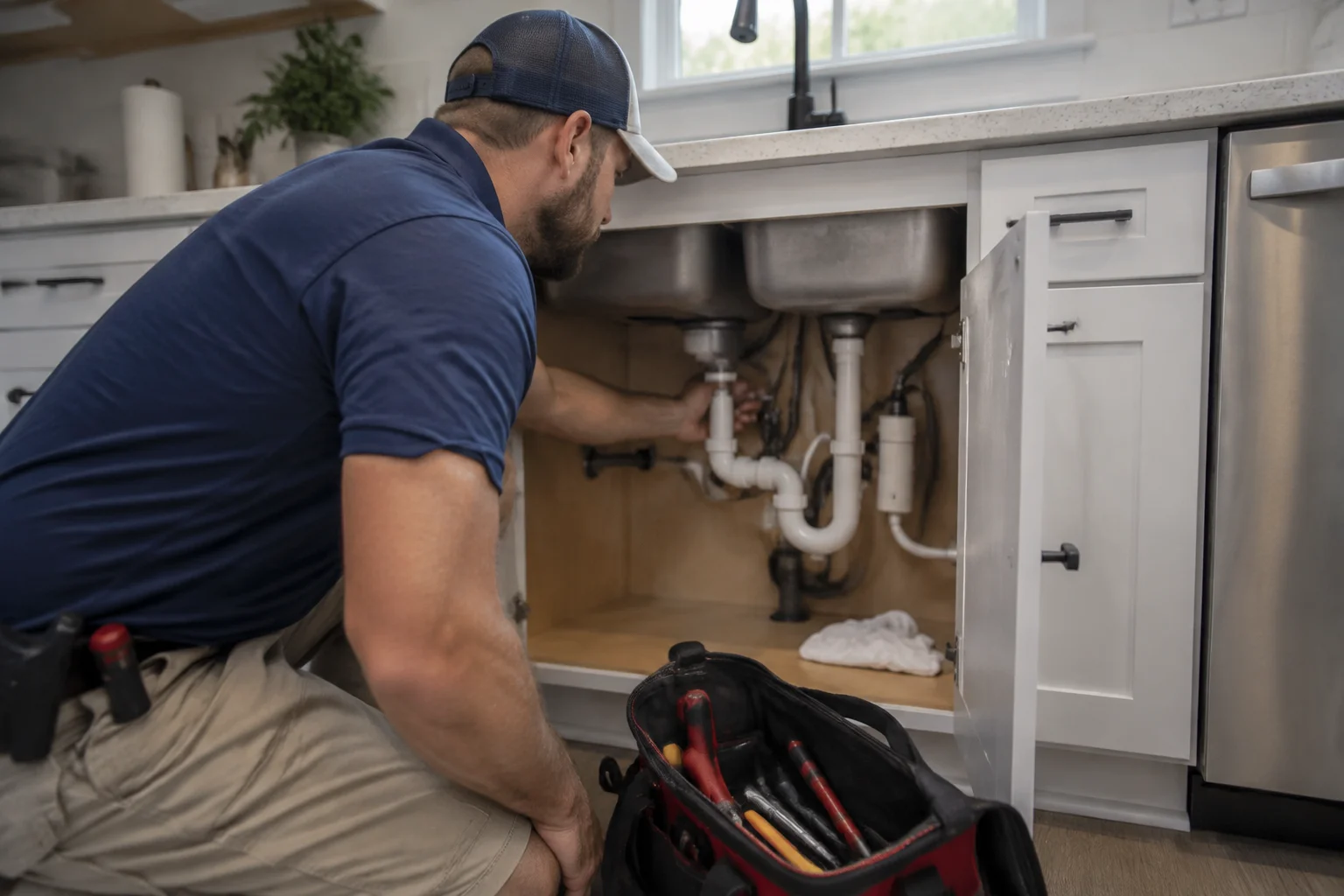
When to call a professional water treatment company in Destin
It is time to schedule professional help if you notice multiple warning signs at once, or if the issue is getting worse over time. Consider contacting A Superior Mechanical when:
- You see persistent hard water spots on glass and fixtures despite cleaning efforts
- Scale buildup around faucets and showerheads is increasing or water pressure drops in specific fixtures
- Dry skin from hard water or dull hair after bathing is affecting your household
- Your drinking water has metallic tasting water, chlorine taste in water, or unpleasant odor
- Ice cubes are cloudy and the issue repeats consistently
- Appliances seem to wear out faster than expected
- You see visible sediment, discoloration, or odor concerns
A professional can recommend the right system size and configuration based on a water test. That is how you avoid buying a solution that does not match the problem, and it is also how you decide whether water softening alone is enough or whether you should add AO Smith water filtration, whole home water filtration, or reverse osmosis installation near the kitchen sink.
For homeowners who want to understand how local service supports better water outcomes, you can also browse the Destin area overview here: /service-areas/okaloosa-county/destin and the broader Okaloosa County coverage here: /service-areas/okaloosa-county.
FAQ-style guidance homeowners ask before choosing a system
Many families want a clear answer to a few key questions before committing to water softener service or water filtration. Here are practical guidelines you can use while you plan your next step.
Does water softening remove chlorine taste?
Water softening is primarily designed to address hardness minerals that cause scale and soap residue. If your main issue is chlorine taste in water, you may need additional filtration. Many homes choose whole home water filtration or reverse osmosis for drinking water and ice, then use softening to protect fixtures and appliances.
Will reverse osmosis help with hard water spots?
Reverse osmosis installation is typically focused on drinking and cooking water. It can improve taste and reduce certain contaminants at the tap you use for drinking. For scale buildup around faucets, showerheads, and plumbing, water softening is usually the better match for whole home protection.
How fast will I notice changes after softening?
Many homeowners notice improvements quickly, especially in how soap lathers and how dishes and glass look. Full system effects, including reduced scale buildup and improved appliance performance, develop over time as mineral deposits are prevented from forming and existing residue is gradually reduced.
If you are weighing options like water softening, AO Smith water filtration, whole home water filtration, or reverse osmosis installation near Destin, the best starting point is a site assessment and water testing. That is how you build a clean water system that fits your household routines, your plumbing, and the water conditions common to the Emerald Coast.
For more context on how softening supports local plumbing and long-term protection, you may also find this useful: How Water Softening Protects Rosemary Beach Plumbing from Costly Water Damage.
Find Water Softening in Destin, FL
If you need Water Softening in Destin, FL, visit our local service page or contact A Superior Mechanical today.
For a broader look at whole-home water filtration, reverse osmosis, and water softener options, visit our water filtration, RO, and water softener page.
Map of Destin, FL
Frequently Asked Questions
Are hard water spots on glass and dishes enough to choose a water softener?
They are a strong clue that hardness minerals are present. If you also notice soap that does not lather, scale buildup around faucets, or dry skin from hard water, a water softener is often the right starting point. A water test confirms the best system settings.
Can a water softener fix cloudy ice cubes and metallic tasting water?
Softening helps with hardness-related residue and scale, but it does not always address taste, odor, or dissolved contaminants that can make ice look cloudy. Many Destin homeowners pair softening with whole home water filtration or reverse osmosis installation for drinking water and ice.
What is the difference between whole home water filtration and reverse osmosis for drinking water?
Whole home water filtration near me options typically improve water quality throughout the house, including sediment and odor reduction. Reverse osmosis is usually installed at the kitchen sink for high-quality drinking water, helping with chlorine taste in water and poor tasting coffee water.
How do I know if my water softener needs repair or service?
If you notice the return of hard water spots, soap that does not lather, or increased scale buildup around showerheads and faucets, your softener may be underperforming. Scheduling water softener service near me can restore proper performance.
Related Articles
- Why a Camera Inspection Can Save Destin Homeowners from Bigger Plumbing Problems
- Cleaner Everyday Water Starts With Plumbing Services in Sandestin, FL: Hard Water Spots, Scale, Taste, and Odor
- Smart Plumbing Habits for Cleaner Water and Fewer Repairs in Sandestin
- How Water Softening Protects Rosemary Beach Plumbing from Costly Water Damage
Photo Gallery