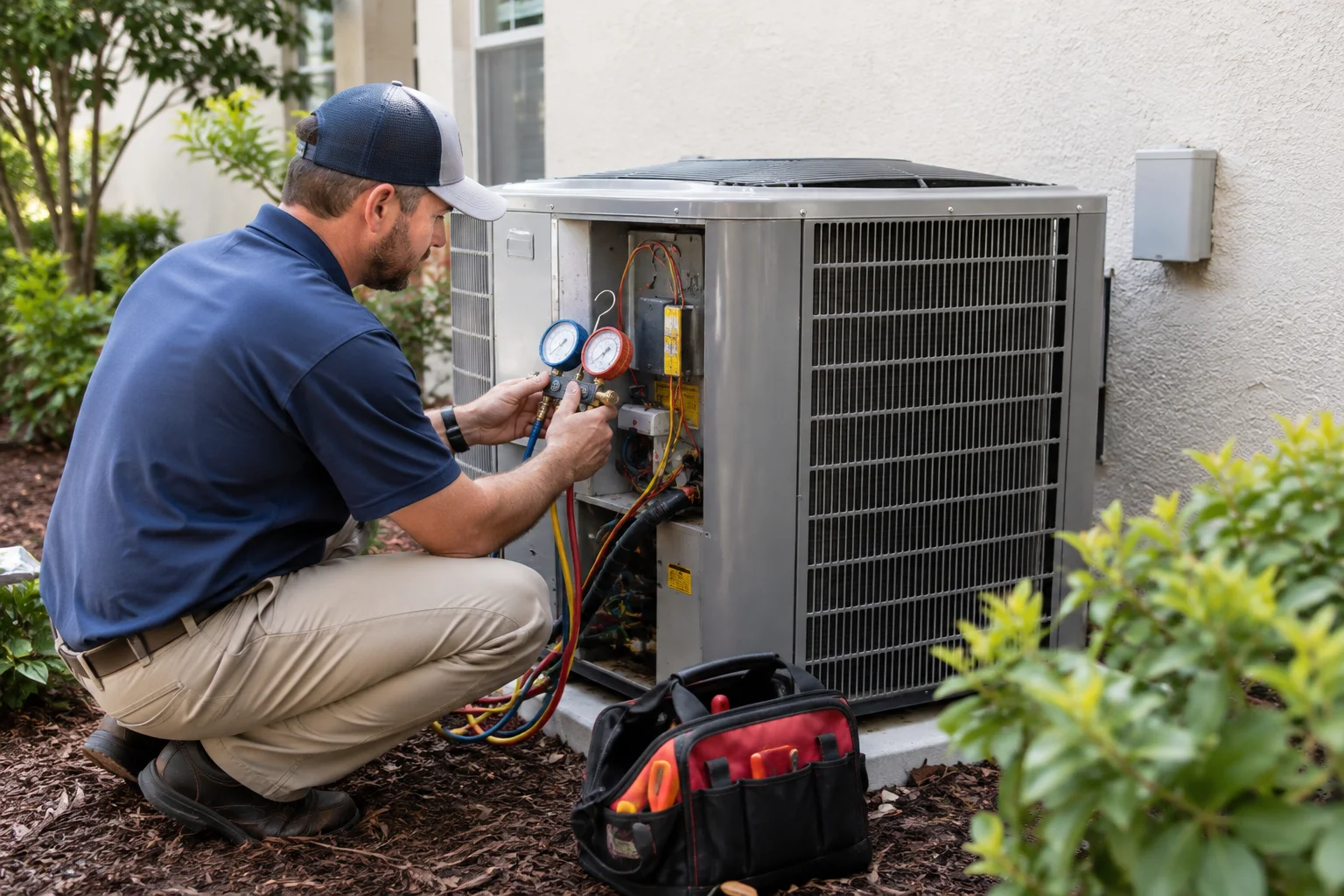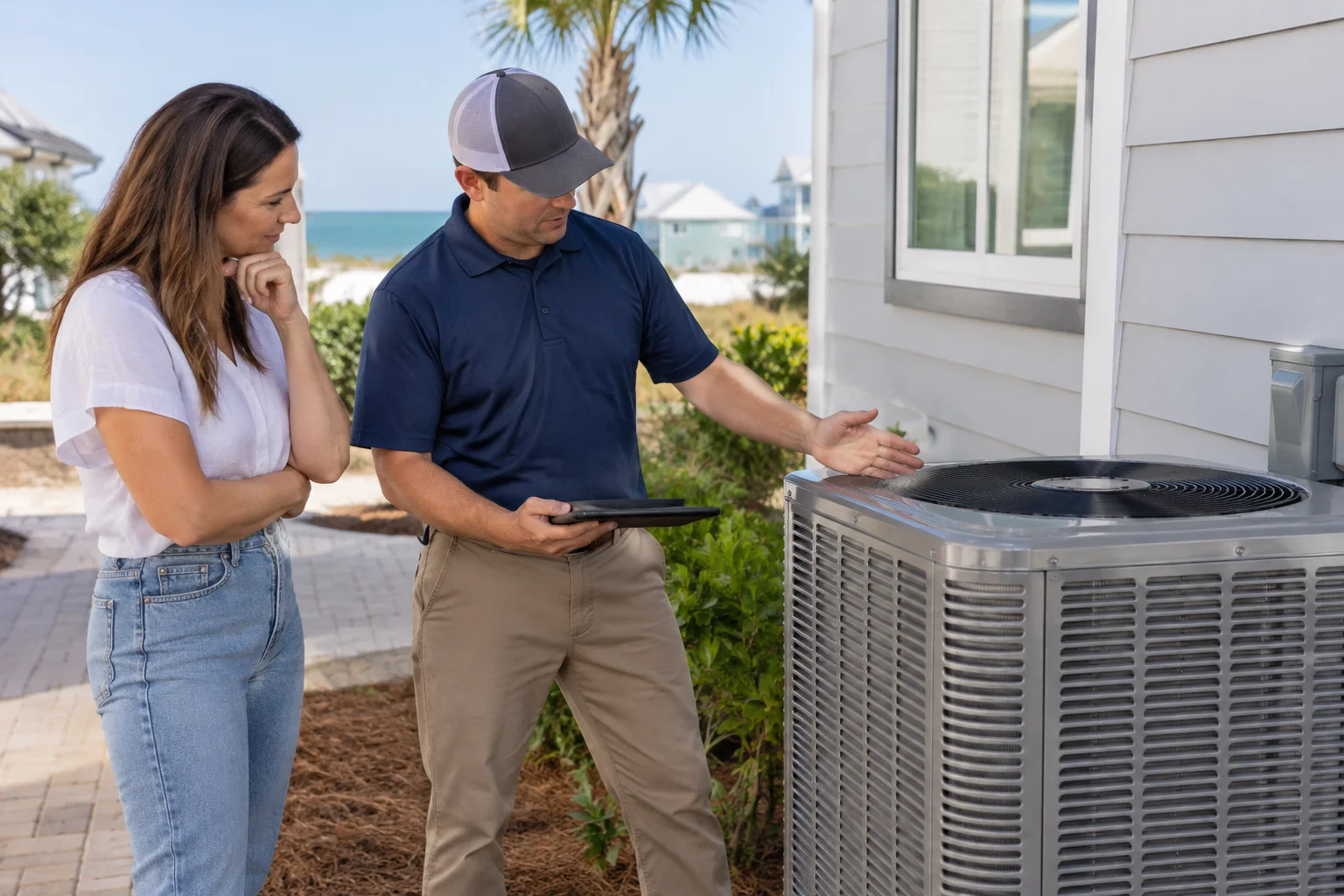
Indoor air quality testing sounds straightforward: measure the air, find the problem, fix the problem. For homeowners in Bid-A-Wee, FL, though, the process can get complicated fast because Florida heat and humidity, salt air, and the way your HVAC system moves air through ductwork all influence what tests show.
If you are seeing musty odors, condensation on windows, allergy flare ups, or rooms that never cool evenly, testing can help. But testing can also be misleading when the HVAC system that conditions the air is the real root cause. This guide explains common reasons indoor air quality testing can struggle, what HVAC problems to suspect early, and how professional indoor air quality services near me can connect air readings to system performance.
Florida conditions can change what “good” indoor air looks like
In Bid-A-Wee and across Bay County, homes deal with warm, humid air for much of the year. When outdoor humidity is high, your air conditioner, heat pump, or other cooling system has to do more than just lower temperature. It must also remove moisture as part of the cooling process.
That moisture handling depends on several HVAC factors:
- Airflow across the evaporator coil (too little airflow can reduce dehumidification)
- Ductwork condition and distribution (leaks, disconnections, and poor balancing can shift humidity and contaminants to certain rooms)
- Condensate drainage (a clogged drain pan or line can cause moisture problems)
- Thermostat operation (short cycling or incorrect staging can reduce coil time for moisture removal)
- Refrigerant system performance (a system that is not operating properly can affect cooling and coil temperatures)
Because these factors drive humidity and comfort, indoor air quality results can look different from one test to the next. A test done during a period of strong cooling performance may show fewer issues than a test taken during a time when the system is struggling to move air or remove moisture.
What can cause indoor air quality testing to miss HVAC problems
Homeowners often assume indoor air quality testing is the same as an HVAC diagnostic. Sometimes it is, but not always. The following issues can make air testing less reliable for pointing to the real cause, especially in a home with ductwork, humidity, and airflow problems.
1) The HVAC system is not controlling humidity consistently
Many indoor air quality concerns are tied to humidity. Even if a test focuses on airborne contaminants, humidity can still be the underlying driver by supporting mold growth on surfaces and increasing the presence of musty odors.
In humid Florida weather, your cooling system should remove moisture from the air. If airflow is restricted by dirty filters, clogged evaporator coils, blocked return vents, or duct restrictions, the coil may not reach the conditions needed for effective dehumidification. The result can be a home that feels clammy or shows condensation even when the thermostat is set correctly.
If testing happens after a few hours of good cooling, you might not see the same symptoms as you would during normal daily operation. That is why it matters whether your HVAC performance is evaluated alongside indoor air quality readings.
2) Ductwork leaks and poor distribution skew the results
Bid-A-Wee homes may have ductwork that is older, partially sealed, or not fully balanced. Leaks can pull in unconditioned air from attics, crawl spaces, or wall cavities. In coastal areas, salt air and outdoor moisture can also find their way into the system through gaps.
When air enters the duct system unevenly, some rooms can become more humid than others. A test taken in one area may not represent the conditions in problem rooms, especially bedrooms, hallways, or areas with closed doors.
For homeowners searching for duct repair near me or air conditioning inspection near me, this is a common reason air quality complaints persist even after surface cleaning. The HVAC system can be distributing moisture and contaminants in ways that a single test location does not capture.
3) Condensate drainage issues create hidden moisture
Every cooling cycle produces condensate. When condensate drainage is partially blocked, the system can back up moisture into areas it should not reach. That can lead to persistent dampness and musty odors.
Testing may not always identify the source if the moisture problem is intermittent. For example, a drain line can clear temporarily, then clog again during heavy humidity periods. A homeowner might schedule testing during a window when drainage is functioning, only to see problems return soon after.
Professional HVAC evaluation should include checking condensate drainage and identifying moisture pathways, not just collecting air samples.
4) Short cycling and thermostat problems reduce coil time
If your system runs briefly and shuts off early, the evaporator coil may not stay cold long enough to remove moisture effectively. Short cycling can be caused by thermostat settings, thermostat calibration, airflow issues, or system control problems.
Sometimes the thermostat reads “cool” because temperature changes, but humidity removal requires sustained operation. If indoor air quality testing is performed while the system is cycling oddly, the results can understate the real comfort and moisture issues.
This is also why homeowners searching for AC tune up near me often benefit from a service visit that includes checking thermostat behavior, run times, and airflow, not just swapping filters.
5) Air sampling timing does not match your home’s daily patterns
Many indoor air quality complaints in Bid-A-Wee show up at predictable times: after cooking, after showers, overnight when doors are closed, or during the hottest afternoon periods. If testing is done at a different time than when the symptoms peak, it may not reflect the true problem.
Also consider local climate patterns. During high humidity spells, the cooling system may struggle more, and moisture-driven issues may worsen. A test performed on a drier day can miss what you experience during the muggiest weeks.
6) Outdoor influences can complicate indoor readings
Coastal and near-coastal areas can involve salt air and outdoor humidity. Even with closed windows, infiltration happens through gaps, weatherstripping wear, and pressure changes. If the HVAC system is pulling outdoor air through leaks or if ventilation settings are not appropriate, indoor readings can reflect outdoor conditions.
That does not mean testing is useless. It means the HVAC system’s ability to filter, condition, and control airflow needs to be part of the conversation.
Early HVAC warning signs that often show up before air quality “tests”
Testing can be helpful, but homeowners can also catch HVAC problems early by watching for repeatable signals. The following issues are common in Florida homes and are closely tied to indoor air quality.
Uneven cooling and rooms that feel different from the rest of the house
If certain rooms stay warmer, stay damper, or develop odors, the ductwork may be leaking or poorly balanced. Restricted airflow can also reduce the ability of the cooling coil to remove moisture. This can lead to humidity control issues that no filter change can fully solve.
Condensation on windows or damp drywall smells
Condensation can be a sign of excess indoor humidity. In many cases, the HVAC system is not dehumidifying properly due to airflow restriction, coil contamination, or drainage problems.
Musty odors that return after the AC runs
A musty smell can point to moisture in the system or on surfaces. Condensate drainage problems, dirty coil conditions, and duct contamination can all contribute. Indoor air quality testing can help confirm whether airborne contaminants are elevated, but it should not replace checking where moisture is coming from.
Allergy flare ups that track with system operation
If symptoms worsen when the air conditioner runs, the issue may involve filtration, duct distribution, or airflow patterns that stir up dust and particles. A professional air conditioning service near me visit can pair system checks with air quality recommendations.
Frequent filter changes without improvement
If filters fill quickly or you still feel poor air, the problem may be airflow related or duct related. A system that is struggling can circulate particles differently than expected.
How professional indoor air quality testing should connect to HVAC performance
When you schedule indoor air quality testing in Bid-A-Wee, the most useful visits do not treat the HVAC system as separate from the air readings. Look for a process that includes both.
Step 1: Review your comfort history and symptoms
A technician should ask about when issues occur, which rooms are affected, whether odors appear after cooling cycles, and whether humidity feels high even when the thermostat is set low. This helps align testing to your actual daily environment.
Step 2: Evaluate airflow and system operation
Airflow is the bridge between HVAC performance and indoor air quality. If the system cannot move air properly, it cannot filter, dehumidify, or distribute conditioned air as designed.
Professional HVAC evaluation may include checking return and supply airflow paths, assessing filter and cabinet conditions, and inspecting duct connections. For homeowners searching for HVAC maintenance near me, this is where preventive work matters. Small airflow issues can become major humidity and comfort problems over time in Florida heat.
Step 3: Check humidity control components, including condensate drainage
A system that removes moisture has to drain it correctly. Checking the condensate drainage pathway is especially important in humid coastal climates. Even if an air quality test looks “okay,” ongoing moisture issues can still cause longer-term problems.
Step 4: Consider refrigerant system performance without guessing
Refrigerant systems affect coil temperatures and cooling behavior. If the system is not operating within normal performance ranges, humidity removal and comfort can suffer. However, refrigerant diagnosis should be based on an in-person HVAC assessment, not air test results alone.
Professional technicians can determine whether performance issues are likely tied to the refrigerant system, airflow, or other factors. Homeowners should avoid assuming a refrigerant problem based solely on indoor air quality symptoms.
Step 5: Use thermostat and control information to interpret test timing
Thermostats influence run time and cycling behavior. If the home is cooling in a way that does not support moisture removal, air quality concerns can worsen even if the temperature feels “right.”
When to treat indoor air quality as an HVAC repair issue, not just a cleaning issue
Cleaning can help, but HVAC related issues often come back if the system is still distributing moisture or contaminants. Consider HVAC repair or air conditioning service when you notice patterns such as:
- Problems that change with AC run time
- Humidity control issues that persist despite normal filter maintenance
- Musty odors that correlate with cooling cycles
- Rooms that stay damp or warmer than the rest of the house
- Visible signs of moisture around the indoor unit or near condensate drainage
For related reading, homeowners often find these helpful: How Preventive HVAC Service Supports Cleaner Indoor Air in Bid-A-Wee and Comfort That Holds Up in Bid-A-Wee Starts With Timely AC Repair.
Preventive HVAC maintenance that supports better indoor air quality
Bid-A-Wee homeowners do not need to wait for symptoms to get serious. Preventive HVAC maintenance can reduce the chance that indoor air quality problems start in the first place.
Keep filters and airflow paths clean
Dirty filters and blocked returns reduce airflow, which can lower dehumidification performance. This can lead to higher indoor humidity and comfort issues. Replace filters as recommended for your system and ensure return vents are not blocked by furniture, rugs, or storage.
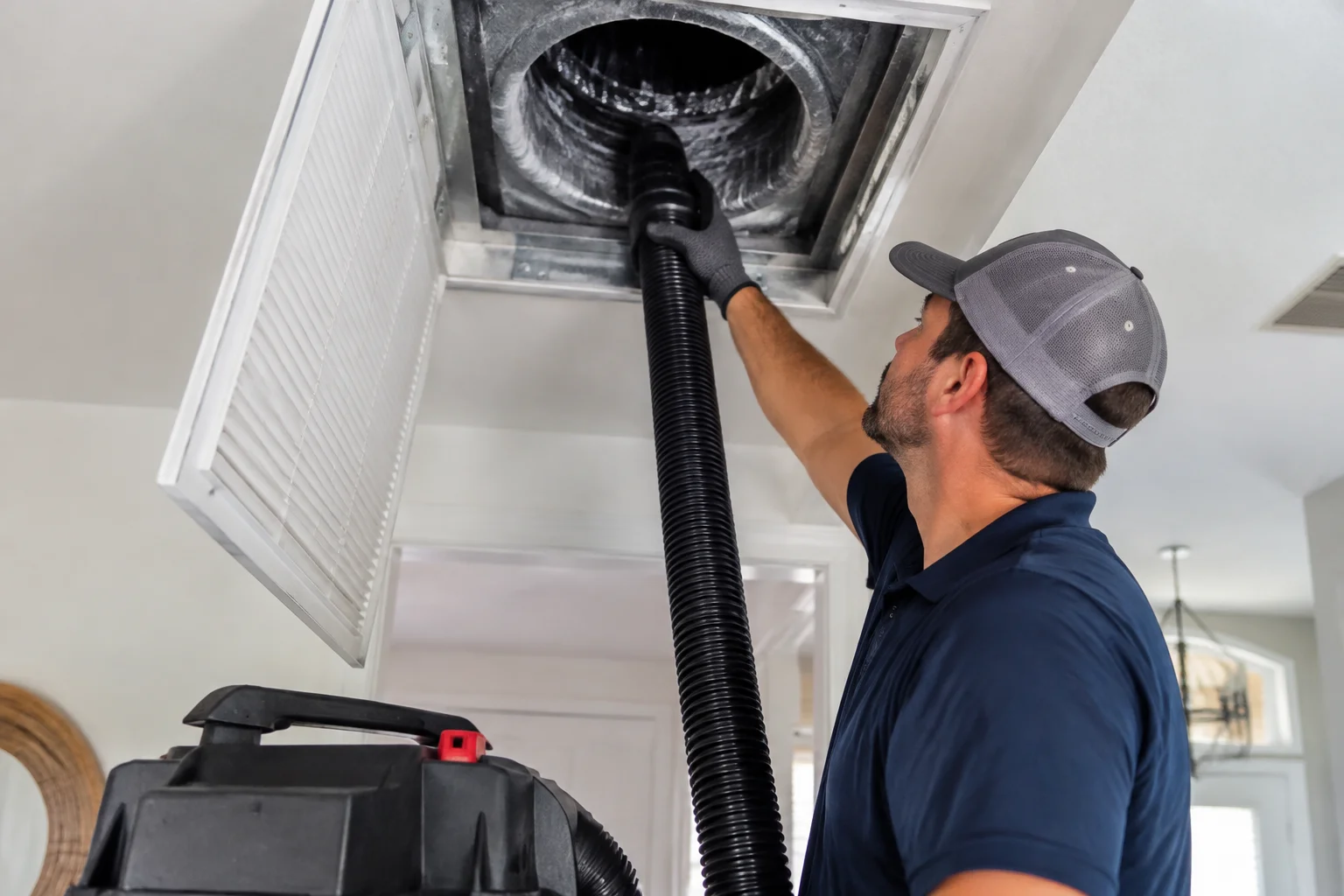
Address ductwork leaks and disconnections
Even small duct leaks can matter in Florida humidity. If air is escaping into an attic or crawl space, moisture and contaminants can enter the system and spread through the home.
If you suspect duct leaks, consider an air conditioning inspection that includes airflow and distribution checks.
Verify condensate drainage stays clear
Condensate drainage issues often build gradually. Routine checks help prevent hidden moisture conditions that can affect indoor air quality.
Confirm thermostat settings and system behavior
Thermostat settings that cause frequent short cycling can reduce moisture removal. If you are adjusting settings often or the system seems to run in odd patterns, schedule HVAC service to evaluate the controls and operation.
Plan maintenance around seasonal humidity spikes
In Bay County, the real pressure on HVAC systems tends to show up when humidity is highest and cooling demand is constant. Preventive work before peak season helps your system handle moisture removal and airflow more reliably.
How system replacement decisions connect to indoor air quality
Homeowners sometimes consider system replacement when indoor air quality issues persist. That can be appropriate in some cases, but it should be based on an in-person assessment of system condition, performance, and the causes of humidity and airflow problems.
Replacing an HVAC system without addressing ductwork and distribution issues may not solve the root cause of indoor air quality concerns. For a clearer path, review an HVAC inspection that evaluates the whole system, including ductwork and moisture control.
If replacement is on the table, explore an air conditioning replacement consultation. For homeowners also managing larger properties, Property Management HVAC Services can be useful for consistent maintenance planning and monitoring.
Emergency cooling concerns and indoor air quality risk
In Florida, a failing air conditioner is not just uncomfortable. It can become an emergency cooling concern when temperatures climb and humidity stays high. When the system cannot cool, indoor humidity can rise quickly, which can worsen odor and comfort issues.
If you have a sudden breakdown during a hot, humid stretch, consider Emergency HVAC Services so your home can return to safe cooling conditions. That emergency response also helps reduce the risk that moisture problems start or intensify while the system is down.
Choosing the right indoor air quality testing in Bid-A-Wee, FL
To get the most value from indoor air quality testing, choose a provider that understands the HVAC side of the story. Look for a visit that ties air readings to humidity control, airflow, condensate drainage, ductwork performance, and thermostat operation.
If you are searching for indoor air quality services near me in Bid-A-Wee, you can start with A Superior Mechanical’s indoor air quality testing page here: /service-areas/bay-county/bid-a-wee/indoor-air-quality-testing-bidbcfl.
For broader service coverage across the area, visit /service-areas/bay-county/bid-a-wee. And if you want to understand the service footprint across Bay County, see /service-areas/bay-county.
Local HVAC context: why Bid-A-Wee homes need proactive attention
Bid-A-Wee is shaped by the kind of coastal weather that stresses HVAC systems. Humidity drives comfort problems, and salt air can affect how quickly components collect residue and how often homes feel “stale” even after cleaning. Add in ductwork that may not have been sealed and balanced as the home aged, and it becomes easier for indoor air quality issues to start as HVAC performance issues.
That is why a local HVAC contractor who regularly works on air conditioning service and humidity control in the area matters. Preventive HVAC maintenance and timely AC repair can reduce energy use by keeping the system operating efficiently, and it can help your home maintain steadier humidity control.
If your goal is healthier indoor air, the HVAC system is the foundation. Indoor air quality testing is most effective when it is paired with HVAC diagnostics and preventive HVAC maintenance that keep airflow, moisture removal, and distribution working as they should.
For more context on how testing and comfort connect in nearby coastal communities, you may also like Why Seaside Homes Benefit From Indoor Air Quality Testing Before Comfort Issues Spread and Indoor Air Quality Testing That Helps Inlet Beach Homes Stay Comfortable Longer.
If your system includes ductless components, the same principles apply. Air handling, filtration, and humidity control still matter. Homeowners looking into ductless mini split installation near me should also plan for proper indoor air quality and airflow management, especially during humid Florida seasons.
Find Indoor Air Quality Testing in Bid-A-Wee, FL
If you need Indoor Air Quality Testing in Bid-A-Wee, FL, visit our local service page or contact A Superior Mechanical today.
Map of Bid-A-Wee, FL
Frequently Asked Questions
Can indoor air quality testing show a problem even if my AC seems to be working?
Yes. Your system can cool the home while still failing at humidity control, airflow distribution, or condensate drainage. Those issues can contribute to musty odors or higher particle levels, even when temperatures feel acceptable.
Why would my indoor air quality test results change from one visit to another?
Humidity levels, cooling run time, thermostat behavior, and duct airflow can vary day to day in Bid-A-Wee. If testing happens during different operating conditions, the readings may differ. A professional evaluation should connect test timing to how the HVAC system is performing.
Should I rely on indoor air quality testing instead of an air conditioning inspection near me?
Indoor air quality testing is most helpful when paired with HVAC checks. An air conditioning inspection can identify airflow restrictions, ductwork issues, and condensate drainage problems that drive the indoor conditions your testing measures.
What are common HVAC causes of humidity control problems in Bid-A-Wee homes?
Common causes include restricted airflow, dirty or inefficient cooling performance, duct leaks, thermostat or cycling issues, and condensate drainage problems. Salt air and coastal humidity can also make moisture issues more noticeable.
When should I treat indoor air quality concerns as an emergency cooling issue?
If your AC stops working during a hot, humid stretch, indoor humidity can rise quickly and comfort can deteriorate fast. If cooling is not available, consider emergency HVAC services to restore cooling and reduce moisture risk.
Related Articles
Photo Gallery