Sandestin homeowners are adding EV chargers for everyday convenience, but the electrical work behind that upgrade matters just as much as the charger itself. A proper installation does more than power a vehicle. It helps protect the home from overheating, shock hazards, nuisance breaker trips, and the kind of hidden wiring issues that can turn a simple project into a safety concern. In a coastal area like Sandestin, where salt air, humidity, storms, and older electrical systems can all affect performance, professional service is the difference between a charger that works and one that works safely.
If you are comparing options for EV Charger Installation in Sandestin, FL, it helps to understand what a licensed electrician is actually checking before the charger is mounted. The right installation starts with the panel, the breaker, the wiring path, the grounding, and the load on the home as a whole. That is especially important in homes with additions, remodels, detached garages, older fuse boxes, or other electrical updates that were done years apart.
Why EV chargers need more than a convenient outlet
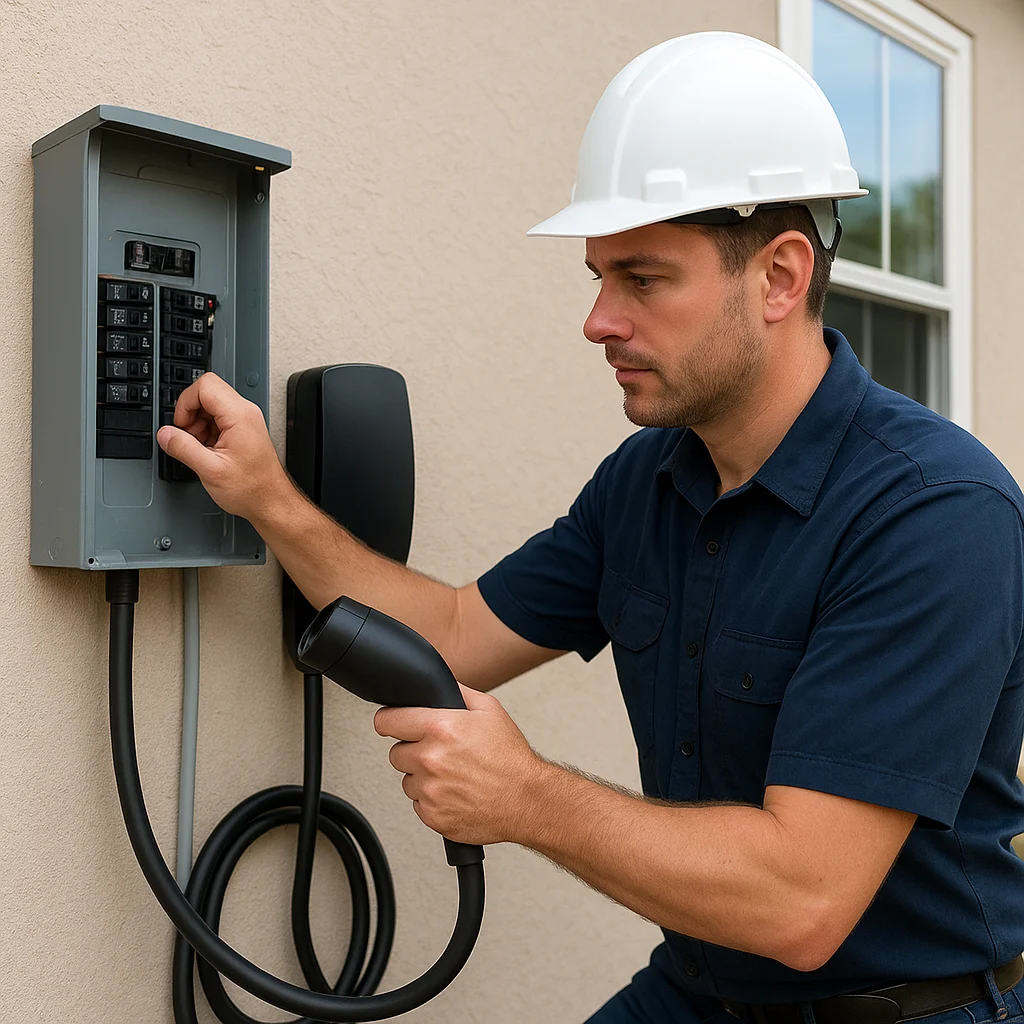
A Level 2 EV charger is not like plugging in a lamp or charging a phone. It draws a sustained load for hours, often overnight, and that load has to be handled by a dedicated circuit sized for the equipment and the home’s electrical capacity. A charger that shares a circuit with outlets, lighting, or another appliance can create heat where the wiring was never meant to carry that much current for that long.
That is one reason homeowners searching for an electrician near Sandestin should ask about load calculations and panel capacity before installation begins. A professional electrician looks at the service size, breaker space, wire gauge, grounding, and GFCI requirements so the charger is supported by the system instead of stressing it.
Fire risk often starts with hidden electrical strain
Most electrical fires do not begin with dramatic sparks. They often start with loose connections, undersized conductors, worn breakers, damaged outlets, or a panel that is already working too hard. Add an EV charger to an overloaded system and the risk goes up. Heat builds slowly inside walls, at junction boxes, or at the panel, where homeowners may not notice a problem until there is a burning smell, warm outlet cover, or breaker that keeps tripping.
That is why professional installation is not just a convenience. It is a safety step. A qualified residential electrician near me search should lead you to someone who can verify that the circuit is dedicated, the terminations are tight, and the charger is installed according to code and manufacturer instructions.
Sandestin homes face conditions that change the equation
Sandestin’s coastal climate adds wear to electrical systems. Humidity, salt air, and storm activity can corrode connections faster than in inland neighborhoods. Even when the wiring looks fine from the outside, moisture intrusion can weaken receptacles, outdoor disconnects, breaker panels, and service equipment over time. After storms, homeowners sometimes discover that a charger stopped working not because the charger failed, but because a breaker, surge protector, or upstream connection was damaged.
In newer homes and remodels, the issue is often power demand. Modern homes use more electricity than older homes did, especially when they include EV charging, smart appliances, pool equipment, upgraded lighting, ceiling fans, and outdoor systems. In older homes, the challenge may be even greater. A panel that was fine years ago may not have enough spare capacity for a charger today. That is where panel upgrades, circuit additions, and careful code corrections become part of the EV conversation.
For homeowners who need broader electrical help in Walton County, the county page at Walton County electrical services is a useful place to start when comparing options for inspections, repairs, and upgrades.
What a professional electrician checks before installation
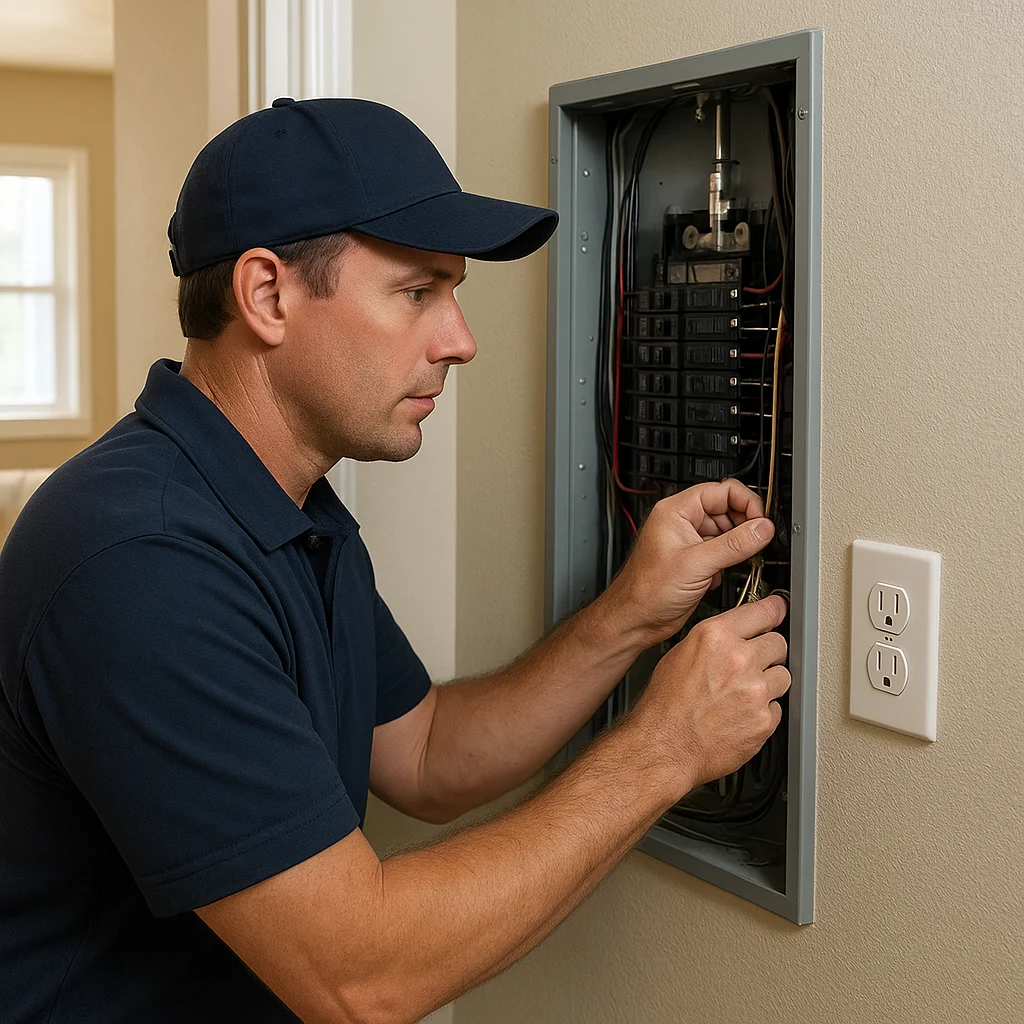
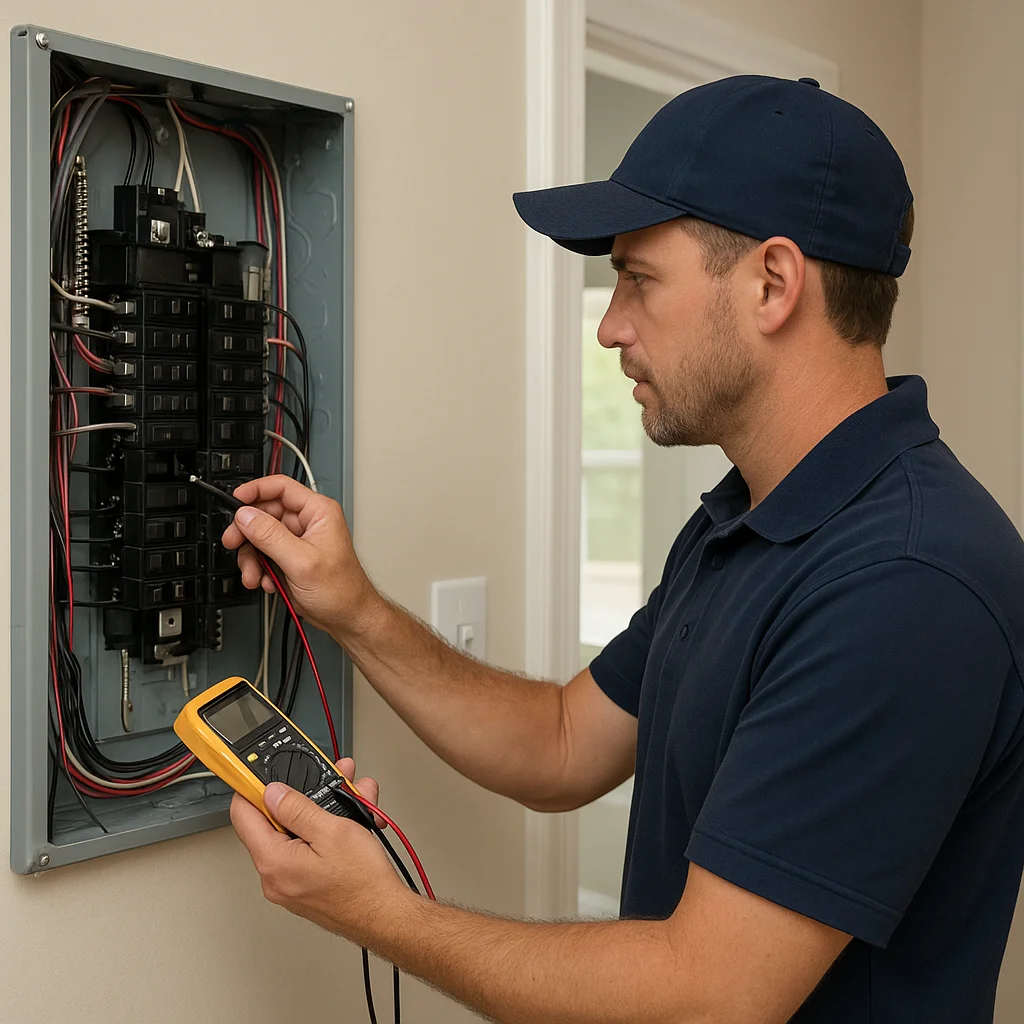
A safe EV charger installation is built on planning. Before any mounting or wiring begins, a professional electrician should review the home’s electrical system and confirm that the charger can be added without creating risk.
Panel capacity and breaker sizing
The electrical panel is the center of the home’s distribution system. If it is full, outdated, or already near capacity, the charger may require a panel upgrade or a subpanel arrangement. The electrician also confirms the correct breaker size for the charger, which is critical for both safety and performance. An undersized breaker may trip constantly. An oversized breaker can fail to protect the circuit.
Dedicated circuit and conductor sizing
EV chargers should be placed on a dedicated circuit so they are not sharing power with outlets, lighting, or other appliances. The wire size must match the amperage and distance of the run. Long wire runs, especially in garages or detached structures, need careful planning to avoid voltage drop and heat buildup.
Grounding and GFCI protection
Proper grounding helps direct fault current safely away from people and equipment. GFCI protection may also be required depending on the charger location and the local code interpretation. This matters in garages, carports, and exterior installations where moisture is a factor. If a homeowner has needed device upgrades or outdoor landscape lighting work, it is a good sign to have the whole area evaluated for grounding and protection as well.
Weather protection and mounting location
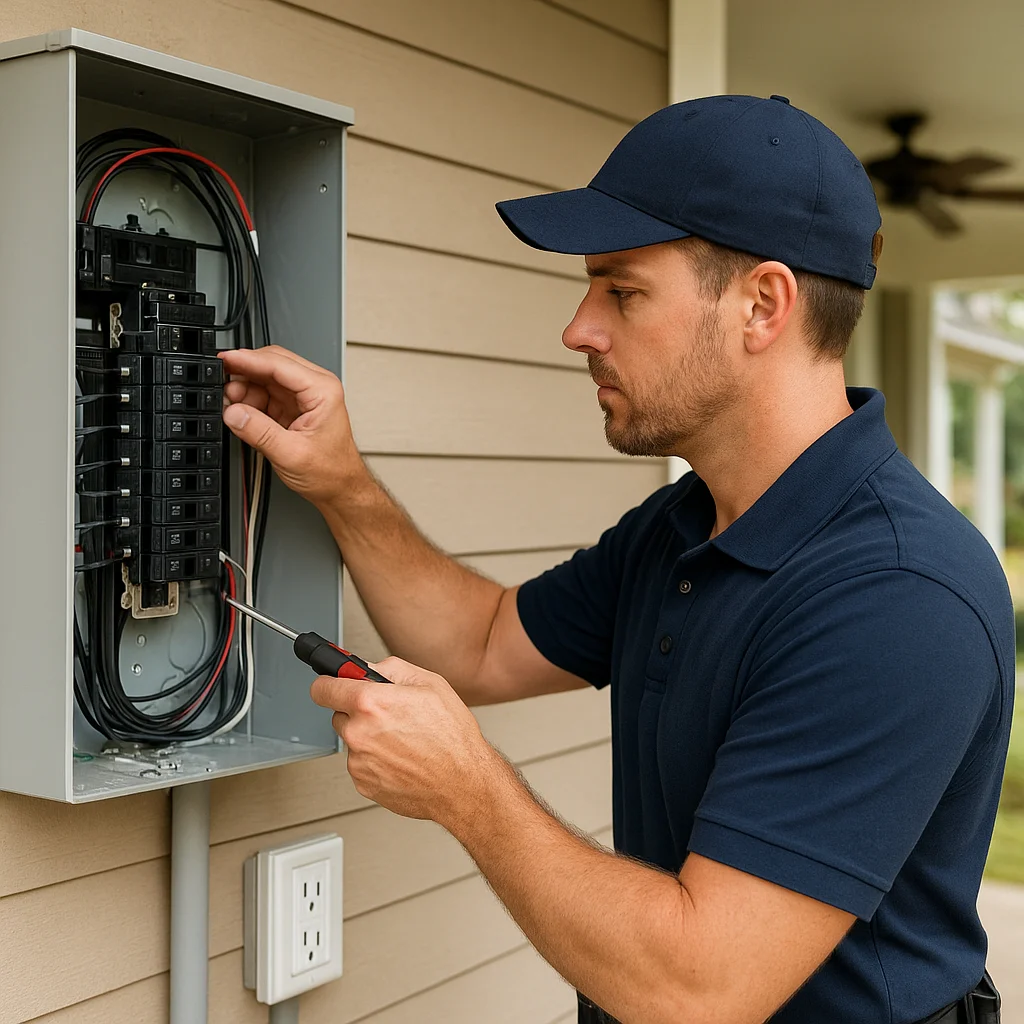
Coastal weather makes placement important. Chargers installed in exposed areas should be selected and mounted with the right enclosure and protection from wind-driven rain. A professional also considers how the charger is mounted near existing outlets, switches, and conduit so the installation stays neat, serviceable, and code compliant.
How a bad installation creates shock hazards
Shock risk is often tied to poor connections, damaged insulation, missing grounding, or improper use of outlets and adapters. Some homeowners try to save money by plugging into a standard receptacle or using equipment that was not designed for continuous EV charging. That can lead to overheated plugs, melted receptacles, and damaged cords. If an outlet repair near me search points to a bigger wiring issue, the problem may be the circuit itself rather than the outlet faceplate.
Professional installation reduces this risk by making sure the charger is supported by the right wiring method from the start. That includes verifying conductor integrity, replacing worn receptacles when needed, and correcting any unsafe splices or loose terminations found during the job. If the home also has older two-prong outlets, a loose GFCI, or a panel that has not been updated in years, the electrician may recommend broader electrical repair before the charger is energized.
Why local service matters in Sandestin
Electrical work in Sandestin is not the same as electrical work in a dry inland market. Local electricians understand how storms affect service equipment, how corrosion shows up in coastal panels, and how many homes in the area have been remodeled over time. Some properties mix older wiring with newer additions, which can create mismatched circuits, overloaded breakers, or hidden junctions that need attention before an EV charger is added.
That local knowledge also helps when a homeowner is balancing several projects at once. A charger installation may uncover the need for lighting installation, switch repair, ceiling fan work, or surge protection. If the garage, carport, or driveway area needs better visibility, lighting and fixtures or ceiling fan services may be part of the same visit. In homes with exterior parking areas, adding landscape lighting installation can improve safety around the charging area after dark.
Other electrical issues that should be handled before or during charger installation
Many EV charger projects reveal other electrical needs. That is a good thing, because it gives homeowners a chance to correct problems before they become emergencies. A panel with scorch marks, breakers that feel warm, outlets that do not hold plugs securely, or lights that flicker when large appliances start all point to a system that needs attention.
Homeowners often search for services like device upgrades, lighting installation, ceiling fan installation, or LED lighting installation when they are already planning electrical improvements. If your home has a panel that needs modernization, a breaker that keeps tripping, or a service mast that has weather damage, it may be time to address those issues before the EV charger goes in. A homeowner searching for electrical panel upgrade near me or fuse box replacement near me may be dealing with the same underlying capacity problem.
It is also smart to think about surge protection and smoke detector installation while the electrician is on site. Coastal storms and utility interruptions can create voltage spikes that damage chargers, appliances, and electronics. And because EV charging often happens overnight, working smoke and carbon monoxide detectors add another layer of safety for the home.
Emergency concerns homeowners should not ignore
Some electrical issues require fast action. If you notice a burning smell, buzzing at the panel, scorch marks on outlets, repeated breaker trips, or a charger that feels hot to the touch, stop using the circuit and call for help. Those symptoms can point to loose wiring, a failing breaker, or a damaged connection that could worsen quickly. In storm season, homeowners sometimes need storm electrical repair near me service after lightning, flooding, or a power surge damages the panel or charging equipment.
If the home loses power in part of the garage or driveway area after a storm, or if the EV charger stops working after a utility event, a same day electrician near me search may be the right move. A prompt inspection can help determine whether the issue is isolated to the charger, or whether the panel, grounding, or service equipment needs repair.
How maintenance keeps the charger safer over time
Even a professionally installed charger should be checked periodically. Coastal homes benefit from regular electrical maintenance because salt and humidity can loosen or corrode connections over time. A routine inspection can catch signs of overheating, damaged conduit, worn weather seals, or a breaker that no longer trips the way it should.
Maintenance is especially useful in homes that also rely on generators, smart devices, or upgraded lighting. If you already use electrical device upgrades or are considering generator installation for storm readiness, the electrician can make sure the EV charger is part of a balanced system rather than an afterthought. That kind of planning helps protect the home during outages and keeps power distribution more stable during everyday use.
Choosing the right electrician for EV charger work
Not every electrician approaches EV charger installation the same way. The right contractor will talk about panel load, circuit length, grounding, permits, and code compliance before they talk about mounting hardware. They should also be comfortable identifying related issues such as outlet repair, breaker replacement, wiring repair, and service upgrades. If you are looking for an electrical company near me that can handle more than one repair visit, choose a team that understands both the charger and the home behind it.
For Sandestin homeowners, that local experience matters. Whether the property is a primary residence, vacation home, rental, or newer build, the charger should be installed with the same attention to safety that you would expect from any major electrical project. A careful install protects the home, the vehicle, and everyone who uses the driveway, garage, or parking area.
If you are planning EV charger installation in Sandestin, FL, A Superior Mechanical can help evaluate the panel, wiring, and layout so the system is set up for safe daily use. That is the kind of electrical work that pays off every time you plug in.
For homeowners comparing broader electrical support in the area, it can also help to review local electrical services in Sandestin and schedule an inspection before small issues turn into larger repairs.
Find EV Charger Installation in Sandestin, FL
If you need EV Charger Installation in Sandestin, FL, visit our local service page or contact A Superior Mechanical today.
Map of Sandestin, FL
Frequently Asked Questions
Do I need a dedicated circuit for an EV charger?
Yes. Most Level 2 chargers should be installed on a dedicated circuit sized for the charger and the home’s electrical capacity. Sharing a circuit can create overheating and nuisance trips.
Can an older Sandestin home support EV charger installation?
Often yes, but older homes may need a panel upgrade, new wiring, grounding improvements, or code corrections first. A load calculation helps determine what the system can safely handle.
Why is GFCI protection important for EV chargers?
GFCI protection helps reduce shock risk in damp or outdoor locations. It is especially important in garages, carports, and exterior charging areas where moisture and coastal weather are concerns.
What should I do if my breaker trips during charging?
Stop using the charger and have the circuit inspected. Repeated trips can point to an undersized breaker, loose wiring, a panel problem, or a charger issue that needs professional repair.
Related Articles
Photo Gallery