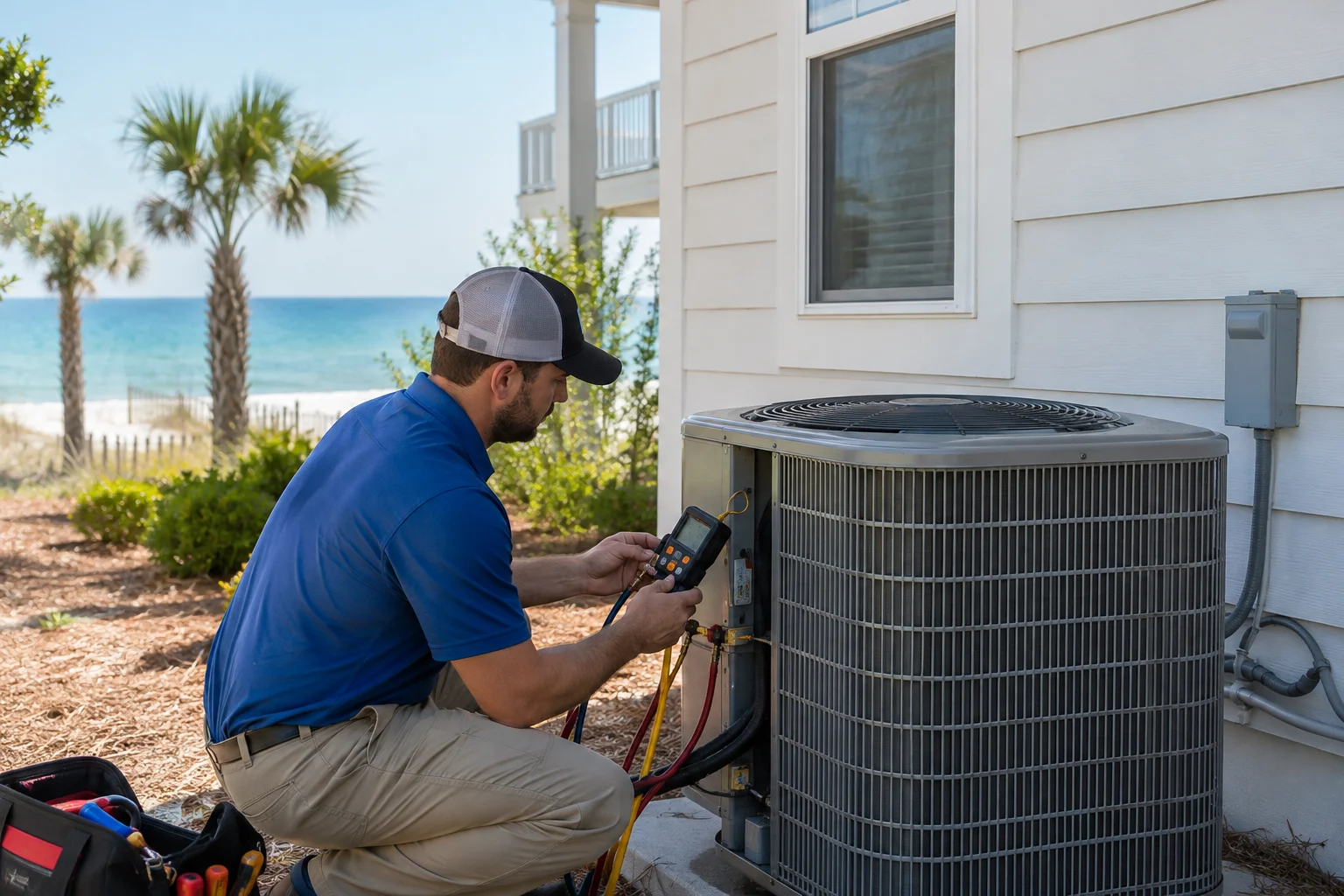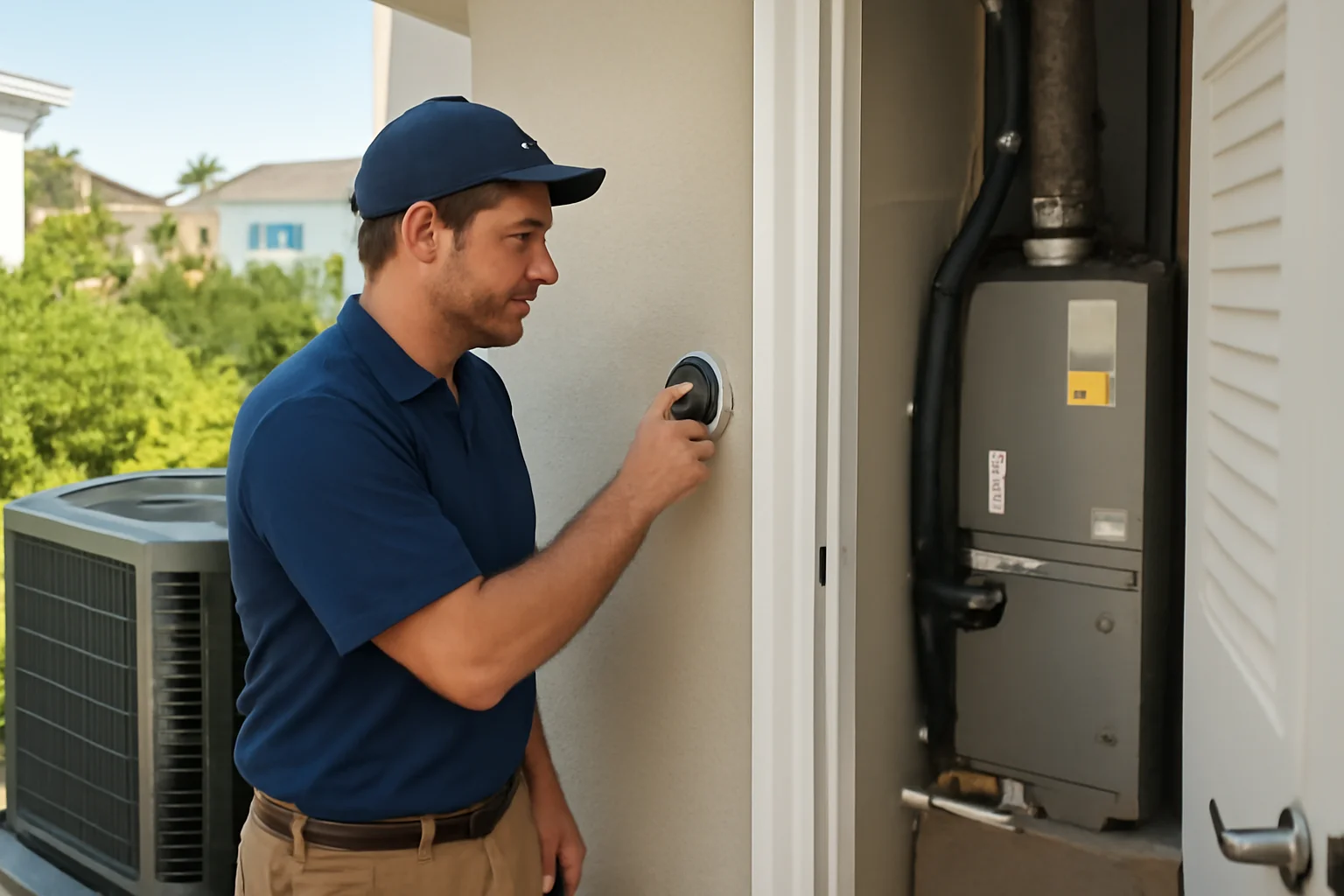
Smart thermostats are popular in Rosemary Beach because they can help you manage comfort around beach schedules, vacation rentals, and changing indoor routines. But coastal Florida is not a gentle environment for HVAC controls. Heat, humidity, salt air, and the way your system cycles can all create comfort problems that feel like “the thermostat is wrong,” even when the issue is really tied to airflow, condensate drainage, or refrigerant system performance.
If you are seeing temperature swings, humidity that will not stabilize, or unexpected AC cycling, it helps to understand the most common smart thermostat problems in Rosemary Beach homes and what to do next so you can plan repairs with confidence.
How coastal conditions in Rosemary Beach can turn a smart thermostat into a comfort problem
Smart thermostats do more than display a temperature. They read indoor conditions, learn how your HVAC responds, and use settings that affect how the system heats or cools. In coastal areas like Rosemary Beach, the HVAC environment can shift quickly. That means the control strategy that works in a dry climate may not match your home’s real airflow and humidity behavior.
1) Humidity and “temperature comfort” do not always match
Florida heat and humidity can make your home feel warmer than the thermostat setpoint suggests. A smart thermostat may show you are at the target temperature while indoor humidity remains high. That can lead to:
- Perceived muggy air even when the thermostat reads “comfortable”
- Longer cooling run times because the system is working to remove moisture
- Frequent cycling that feels disruptive, especially in well-insulated coastal homes that still have humidity infiltration
Many homeowners interpret this as a thermostat failure. Often, the thermostat settings are fine, but the HVAC system needs attention to airflow, condensate drainage, or overall cooling performance.
2) Salt air and coastal corrosion can affect HVAC components that thermostats rely on
Smart thermostats depend on consistent system operation. Coastal salt air can contribute to corrosion on HVAC parts exposed to outdoor conditions. Even when corrosion does not “break” a component immediately, it can change how reliably the system runs. When the AC or heat pump does not respond as expected, a smart thermostat may continue to call for cooling or heating based on its programmed behavior, which can create comfort problems.
Because HVAC controls are only one part of the system, it is important to treat thermostat issues as a possible symptom, not always the root cause.
3) Airflow problems can make thermostat readings misleading
Smart thermostats measure air near the wall or indoor unit location. If airflow in your home is uneven, the thermostat may “see” a different temperature than other rooms. In Rosemary Beach homes, this can be influenced by:
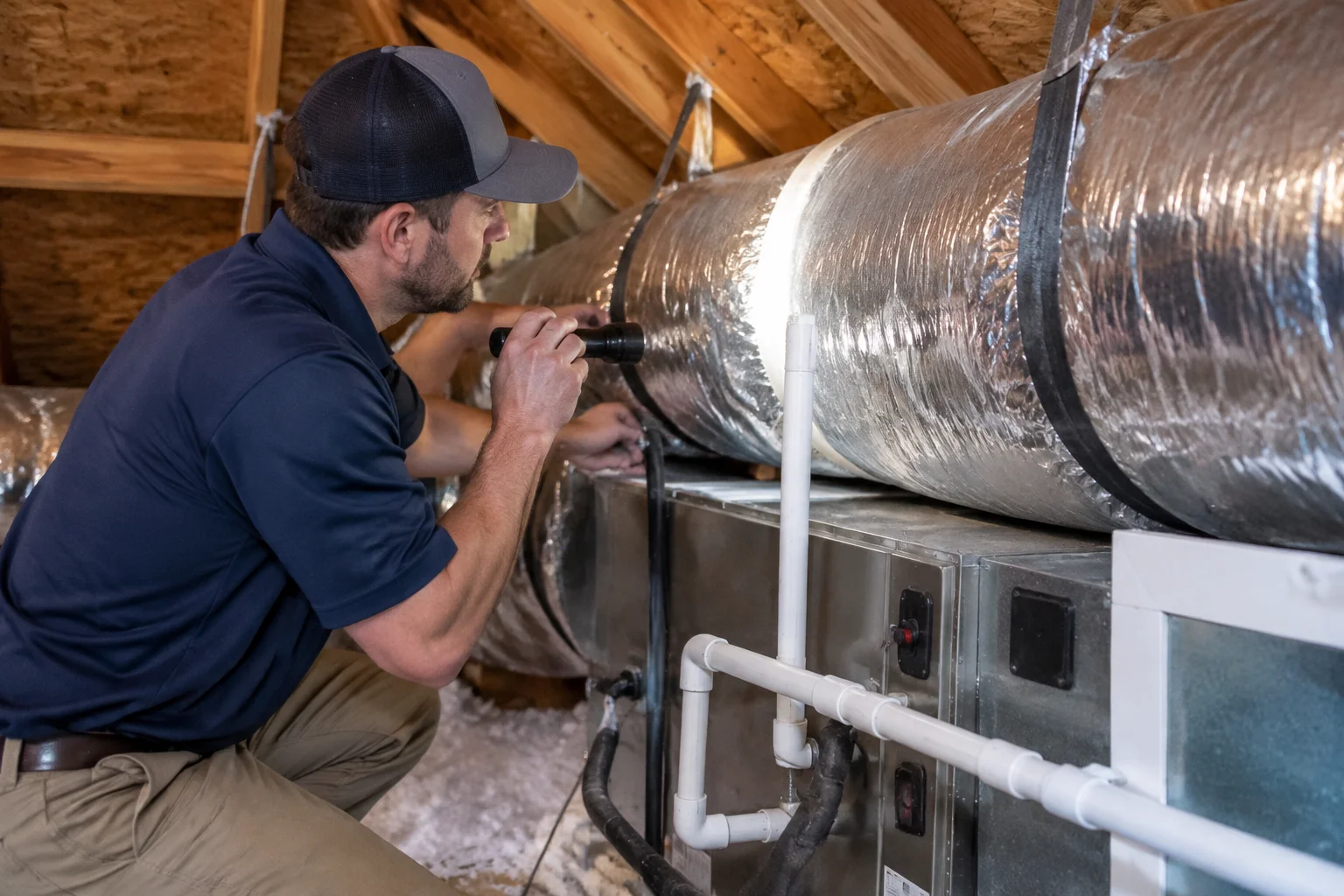
- Ductwork that has leaks, poor balancing, or restricted airflow
- Dirty filters that slow air movement
- Supply or return vents that are blocked by furniture, curtains, or seasonal storage
- Register placement that creates hot or cold pockets
When airflow is off, you can get temperature swings, short cycling, and humidity that lingers. Homeowners often search for “thermostat repair near me” because the symptoms show up at the thermostat, but the fix may involve ductwork, air conditioning service, or preventive HVAC maintenance.
Comfort problems homeowners notice with smart thermostats in Rosemary Beach
Below are the most common comfort complaints that lead people to call an HVAC company about smart thermostat issues. Use these as a checklist when you are explaining the problem to a technician.
Temperature swings and “it never feels right” cooling
Maybe the thermostat says the home is at 74°F, but it feels sticky in the living room and cool in the hallway. Temperature swings can happen when:
- Airflow through the return is restricted
- Ductwork has leaks that change how quickly the system exchanges air
- The system is short cycling due to operational issues
Smart thermostats can exaggerate this problem if their scheduling or learning mode does not match your home’s actual response time.
Humidity stays high, even when the setpoint is met
In coastal Florida, humidity control is part of comfort. If moisture removal is not happening well, indoor air quality can suffer too. Homeowners may notice:
- Condensation on windows
- Musty odors
- Drywall or trim that seems damp after heavy rain or humid stretches
Condensate drainage problems and cooling performance issues can contribute. If condensate drainage is not working properly, the system may not dehumidify as intended, and the thermostat may keep trying to correct the temperature without solving the moisture issue.
Unexpected AC cycling, especially at night or during peak humidity
Many smart thermostats show you “system status,” which makes it easier to notice short cycling. In Rosemary Beach, rapid humidity changes can affect how your system performs. If the AC or heat pump refrigerant system is not operating as it should, cooling may not sustain long enough for proper moisture removal. That can create a loop where the thermostat calls for cooling repeatedly.
It is not appropriate to guess about refrigerant issues from thermostat behavior alone. An in-person evaluation is the right next step.
Remote control works, but comfort is still inconsistent
One reason homeowners feel confused is that the smart thermostat app may show the correct settings, yet the home does not respond as expected. Common causes include:
- Scheduling conflicts between app settings and thermostat settings
- System response delays that make the thermostat’s “learning” less accurate
- Airflow issues that keep indoor conditions from matching the thermostat location
Even if remote HVAC control is functioning, comfort problems can still be tied to the HVAC system itself.
Why smart thermostat installation and setup matter as much as the thermostat itself
Smart thermostat installation in Rosemary Beach is not just about mounting the device and connecting wires. Coastal conditions and typical home layouts can impact how the thermostat measures indoor air and how the HVAC system responds.
Placement and airflow around the thermostat
A thermostat should not be placed where it gets direct sunlight, heat from electronics, or airflow from a supply vent. In beach homes, it is also common for living spaces to be open concept, which can move air differently throughout the day. If the thermostat is in a high-traffic area or near a vent that changes direction seasonally, the readings can be inconsistent.
System compatibility and correct wiring setup
Smart thermostats must be compatible with your specific HVAC control configuration. Heat pump systems, multi-stage AC, and certain zoning setups can require careful setup. If the thermostat is not configured correctly, you may see comfort issues like:
- Cooling running when heating is needed, or vice versa
- Short cycles because the system is responding differently than the thermostat expects
- Energy use that feels higher than normal due to incorrect control behavior
For homeowners who are looking for smart thermostat installation in Rosemary Beach, FL, professional setup helps reduce the chance that control settings fight the realities of your home’s airflow and humidity.
Scheduling for vacation rentals and changing occupancy
Rosemary Beach has many second homes and vacation rentals. Smart thermostats are great for remote scheduling, but the “wake up and cool down” cycle can be hard on equipment if it is set too aggressively for humid conditions. If the thermostat is set to drop from a high temperature to a low one quickly, the system may run longer than expected, which can increase wear and strain on airflow components.
Using a more gradual recovery approach can help comfort and reduce stress on the HVAC system, but the right schedule depends on your ductwork, insulation, and system capacity. A local HVAC professional can help you plan settings that match how your system actually performs.
Common HVAC issues that look like smart thermostat problems
When a thermostat causes confusion, the root cause is often one of the HVAC-related issues below. These are especially relevant in coastal Florida, where humidity and airflow challenges are common.
Dirty filters and restricted airflow
Restricted airflow can cause the system to struggle with cooling and dehumidification. A smart thermostat may keep calling for cooling because the indoor temperature near the thermostat changes slowly. Homeowners may blame thermostat accuracy, but the better approach is to check airflow and filtration as part of preventive HVAC maintenance.
If you also suspect ductwork problems, duct repair near me is a search many homeowners use when vents feel weak or rooms never reach the same comfort level.
Ductwork leaks or imbalance
Leaky ductwork can pull in humid air from attics or crawlspaces, especially during windy coastal weather. Imbalanced airflow can also cause hotspots and cold zones. Both issues can make thermostat readings and comfort targets feel disconnected.
For residents searching for HVAC service near me, it helps to ask whether airflow testing and ductwork evaluation are included when thermostat behavior suggests comfort problems.
Condensate drainage issues
In cooling mode, condensate drainage removes moisture from the indoor coil area. If drainage is slow or partially blocked, you can see:
- Reduced dehumidification performance
- Water-related concerns around the indoor unit
- Musty odors that affect indoor air quality
A smart thermostat may still report the temperature setpoint is reached, while humidity remains high because the system is not removing moisture effectively.
Heat pump or AC refrigerant system concerns
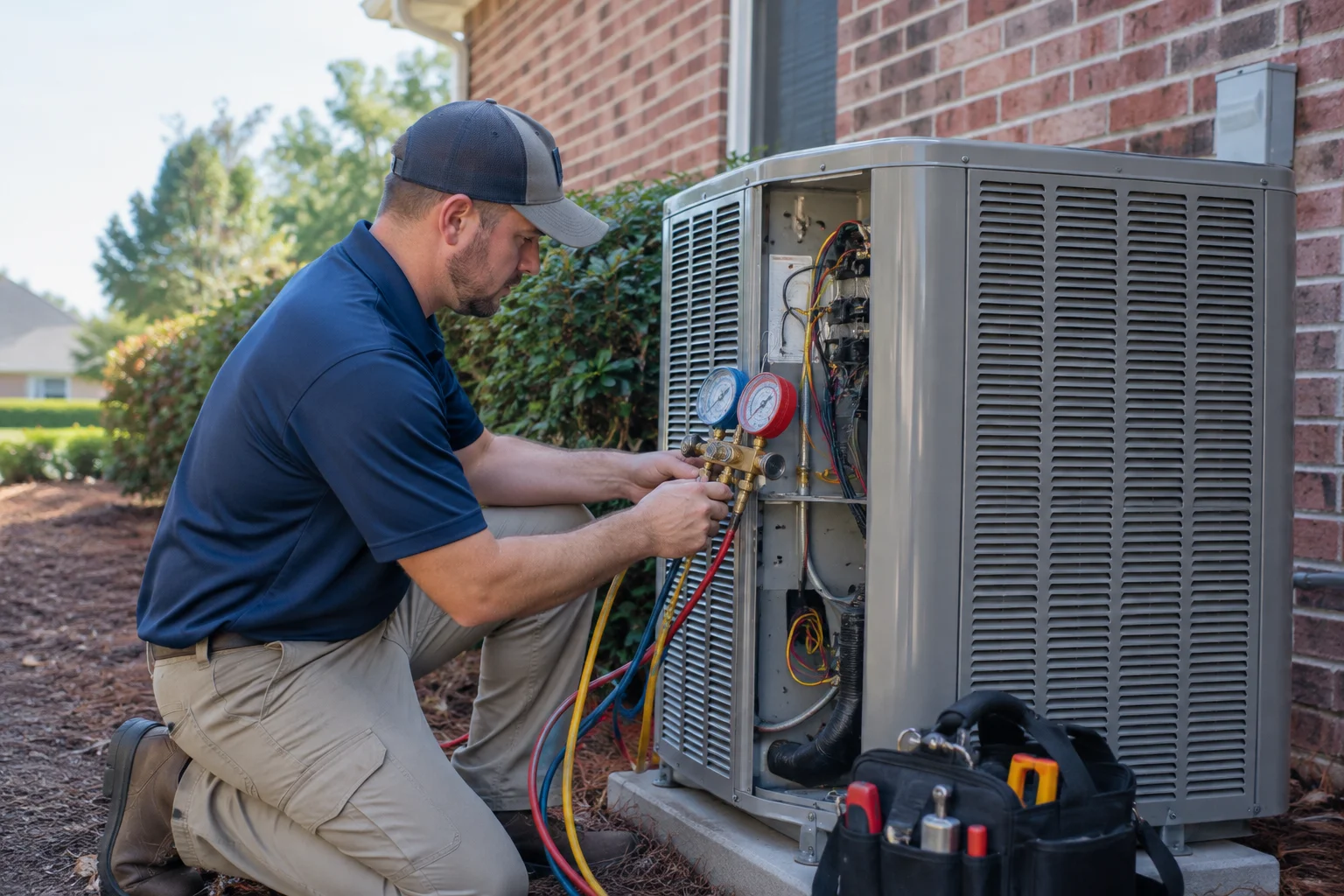
Cooling comfort depends on proper refrigerant system operation. If the refrigerant system is not performing correctly, the system may not cool consistently or may cycle in ways that create humidity and comfort problems. However, it is not appropriate to diagnose refrigerant issues based only on thermostat logs or app alerts.
An HVAC technician should evaluate system operation in person before recommending any refrigerant-related repair. If you are noticing emergency cooling concerns because the home is not maintaining comfort during hot, humid stretches, prioritize an HVAC company that can inspect the system promptly.
Thermostat configuration and learning mode behavior
Smart thermostats often include learning features or adaptive recovery. If your home’s airflow is inconsistent or your schedule changes frequently, those learning algorithms can behave unpredictably. You may see:
- Long pre-cooling periods
- Overshooting and then undershooting temperature
- Increased energy use due to repetitive cycling
Adjusting thermostat settings may help, but it should be done with an understanding of how your HVAC system responds. A smart thermostat is a control device, not a substitute for proper HVAC diagnostics.
Repair planning: how to talk to an HVAC contractor about smart thermostat comfort issues
Homeowners can avoid wasted time by preparing a few details before scheduling HVAC service. This is especially helpful for people searching for residential HVAC service near me or thermostat repair near me.
Gather these observations
- What the thermostat app shows during the problem (setpoint, indoor temperature, system mode, and any error messages)
- When the issue happens (afternoons, evenings, after rain, during high humidity)
- Which rooms feel most uncomfortable and whether the issue is consistent
- Whether humidity feels higher than usual or if you notice condensation
Ask the right questions
When you meet with an HVAC contractor, consider asking:
- Could airflow or ductwork be affecting thermostat readings?
- Is condensate drainage functioning properly in cooling mode?
- Does the system short cycle or run longer than normal under certain conditions?
- Are thermostat settings aligned with how my AC or heat pump actually operates?
- Would indoor air quality services help with comfort and moisture-related concerns?
If your home has a heat pump, you may also want to ask about heat pump installation near me for new systems, or for existing systems ask whether heat pump service is part of troubleshooting. For property managers and operators, smart control can be even more important, so it can help to review options like Property Management HVAC Services.
Preventive maintenance that reduces smart thermostat comfort problems
A smart thermostat can highlight issues quickly, but preventive HVAC maintenance helps prevent many of the underlying causes. In coastal Florida, that maintenance is not a “set and forget” task.
Seasonal checkups for coastal stress
Before peak summer humidity, schedule maintenance that focuses on cooling performance, airflow, and system reliability. This may include checking indoor coil condition, verifying airflow, and reviewing condensate drainage. For homeowners planning for reliability, Air Conditioning Maintenance is a practical starting point.
Filter and airflow habits that support accurate thermostat control
Even the best smart thermostat cannot overcome poor airflow. Make sure filters are changed on schedule and that vents are not blocked by furniture, beach gear, or seasonal decor. If you have ductwork concerns, consider duct cleaning near me or duct repair near me searches when vents feel inconsistent.
For homeowners who manage multiple units, such as small commercial properties, HVAC planning may also be relevant through Commercial HVAC Services and Commercial HVAC Installation.
Indoor air quality checks when humidity is a recurring issue
When humidity is high, indoor air quality can become harder to manage. If you are seeing persistent musty odors or condensation, ask about indoor air quality services near me as part of a comfort-focused HVAC plan. Moisture control and airflow management often work together.
When thermostat behavior becomes an emergency cooling concern
In Rosemary Beach summers, “comfort problems” can become urgent fast. If your home is not cooling properly during extreme heat and humidity, do not wait on troubleshooting alone.
Call an HVAC contractor if you notice:
- The system runs continuously but the home does not cool
- Cooling cycles repeatedly without reaching comfort
- Unusual odors, water around the indoor unit area, or signs of condensate drainage failure
- Any error codes or repeated system lockouts shown on the thermostat
Smart thermostats can provide useful signals, but they should not delay a professional evaluation when comfort and safety are at risk.
Smart planning for Rosemary Beach: combining thermostat settings with real HVAC performance
Many homeowners find better results by pairing smart thermostat planning with HVAC-focused improvements. For example, if ductwork is leaking or airflow is uneven, your thermostat will struggle to maintain consistent comfort. If condensate drainage is not keeping up during humid periods, humidity will remain stubborn. If your refrigerant system is not operating correctly, cooling performance may not match the thermostat’s expectations.
You can get more consistent comfort by aligning the thermostat’s schedule and settings with the way your system responds, then supporting that system with preventive maintenance and airflow management. A Superior Mechanical can help you connect the dots between thermostat behavior and HVAC performance through service planning tailored to Rosemary Beach homes.
If you want to improve how your system behaves day to day, these reads can help you think through comfort planning and airflow:
- Smart HVAC Planning for Rosemary Beach Homes: Comfort, Airflow, and Coastal Protection
- How HVAC Wear and Tear Changes the Air Inside Rosemary Beach Homes
- Smart Thermostats and Smoother Comfort in Destin Homes: Staying Ahead of HVAC Problems Before They Grow
For broader context on how small thermostat problems can become larger comfort headaches nearby, you can also review Smart Thermostats in Panama City Beach: Small Problems That Can Turn Into Bigger HVAC Headaches.
For local service options, it also helps to review the service area coverage on the Rosemary Beach page and the broader Walton County area when planning your HVAC schedule.
If you are planning smart thermostat installation or need help untangling comfort issues, start with a service plan centered on your HVAC system. That is the most reliable way to protect comfort, indoor air quality, and energy use while you enjoy coastal living.
Find Smart Thermostats in Rosemary Beach, FL
If you need Smart Thermostats in Rosemary Beach, FL, visit our local service page or contact A Superior Mechanical today.
Map of Rosemary Beach, FL
Frequently Asked Questions
Can a smart thermostat be “accurate” but still make my home feel uncomfortable in Rosemary Beach?
Yes. Smart thermostats measure air near the device, but comfort in a humid coastal home depends on airflow balance, humidity removal, and condensate drainage. If ductwork or airflow is uneven, the thermostat can read the target temperature while other rooms feel muggy or uneven.
Why does my AC keep cycling when I use a smart thermostat app schedule?
Short cycling can be caused by restricted airflow, ductwork imbalance, condensate drainage issues, or system performance problems. Smart thermostat scheduling can also make cycling more noticeable. A technician should evaluate system operation in person rather than assuming the thermostat is defective.
What should I check first before calling for thermostat repair near me?
Start with basic checks: confirm the thermostat setpoints and mode (cooling vs. heat) match your schedule, verify vents near the thermostat are not blocked, and review whether indoor humidity seems unusually high. If comfort issues persist, schedule HVAC service so airflow, condensate drainage, and system operation can be checked.
How do I plan repairs if I suspect my thermostat is not the real problem?
Bring notes to your appointment: when the issue happens, what the thermostat app shows, which rooms feel uncomfortable, and whether you notice condensation or musty odors. Ask the contractor to evaluate airflow, ductwork, condensate drainage, and HVAC performance as part of the troubleshooting plan.
Is it safe to adjust thermostat settings to fix comfort problems myself?
Small changes like schedule timing or temperature setpoints are generally safe. However, do not rely on app adjustments to mask deeper HVAC issues like drainage problems or refrigerant system performance. If the home will not cool reliably during hot, humid weather, get an in-person evaluation.
Related Articles
- Smart HVAC Planning for Rosemary Beach Homes: Comfort, Airflow, and Coastal Protection
- How HVAC Wear and Tear Changes the Air Inside Rosemary Beach Homes
- Smart Thermostats in Panama City Beach: Small Problems That Can Turn Into Bigger HVAC Headaches
- Smart Thermostats and Smoother Comfort in Destin Homes: Staying Ahead of HVAC Problems Before They Grow
Photo Gallery