Smart thermostats are popular in Inlet Beach for a reason. They let you adjust temperatures from your phone, schedule comfort around your day, and often provide smarter control over heating and cooling. But in a coastal area like Walton County, where Florida heat and humidity come with salt air and strong summer airflow demands, smart thermostat problems can show up in ways many homeowners do not expect.
This article covers common causes of smart thermostat trouble in Inlet Beach homes and what local homeowners often overlook. It also explains how those issues connect to the HVAC system itself, including AC repair, air conditioning service, heat pump service, ductwork, indoor air quality, refrigerant systems, condensate drainage, and preventive HVAC maintenance.
Smart thermostats do not fail in isolation
A smart thermostat does not cool or heat by itself. It coordinates with your system through sensors, control boards, wiring, and airflow conditions. If the HVAC system is struggling, the thermostat may respond in the wrong direction or repeatedly try to correct a comfort problem that has a physical cause.
In Inlet Beach, that physical cause might be airflow resistance from ductwork, humidity load from Florida summers, or condensate drainage issues that affect system performance. Even if the thermostat looks fine, the HVAC system may be unable to deliver the temperature and humidity targets you set.
Humidity and coastal air can confuse comfort readings
Many smart thermostats use built-in temperature sensors and sometimes humidity sensors to help manage comfort. In a humid climate, temperature alone does not tell the full story. If your home feels clammy, the thermostat may show the right temperature while your indoor air quality feels off or your cooling cycles feel too frequent.
Local homeowners often miss a key point: humidity is influenced by more than thermostat settings. It depends on:
- How well the AC removes moisture during cooling
- Whether condensate drainage is flowing correctly
- Airflow through ductwork and indoor coils
- Run time and staging behavior of your cooling system
If moisture removal is weak, the thermostat may keep calling for cooling to hit a temperature target. That can increase energy use without improving perceived comfort. This is especially common when a system is struggling with airflow or when ductwork has leaks or restrictions that reduce performance.
Airflow problems make smart thermostat control feel “off”
Smart thermostats rely on the home’s actual conditions to match the targets you set. If air is not moving the way the system expects, the thermostat can appear unreliable. Homeowners may notice symptoms like:
- Temperature swings room to room
- Short cycling, where cooling starts and stops quickly
- Long run times that still do not bring comfort back
- Hot or cold spots near vents
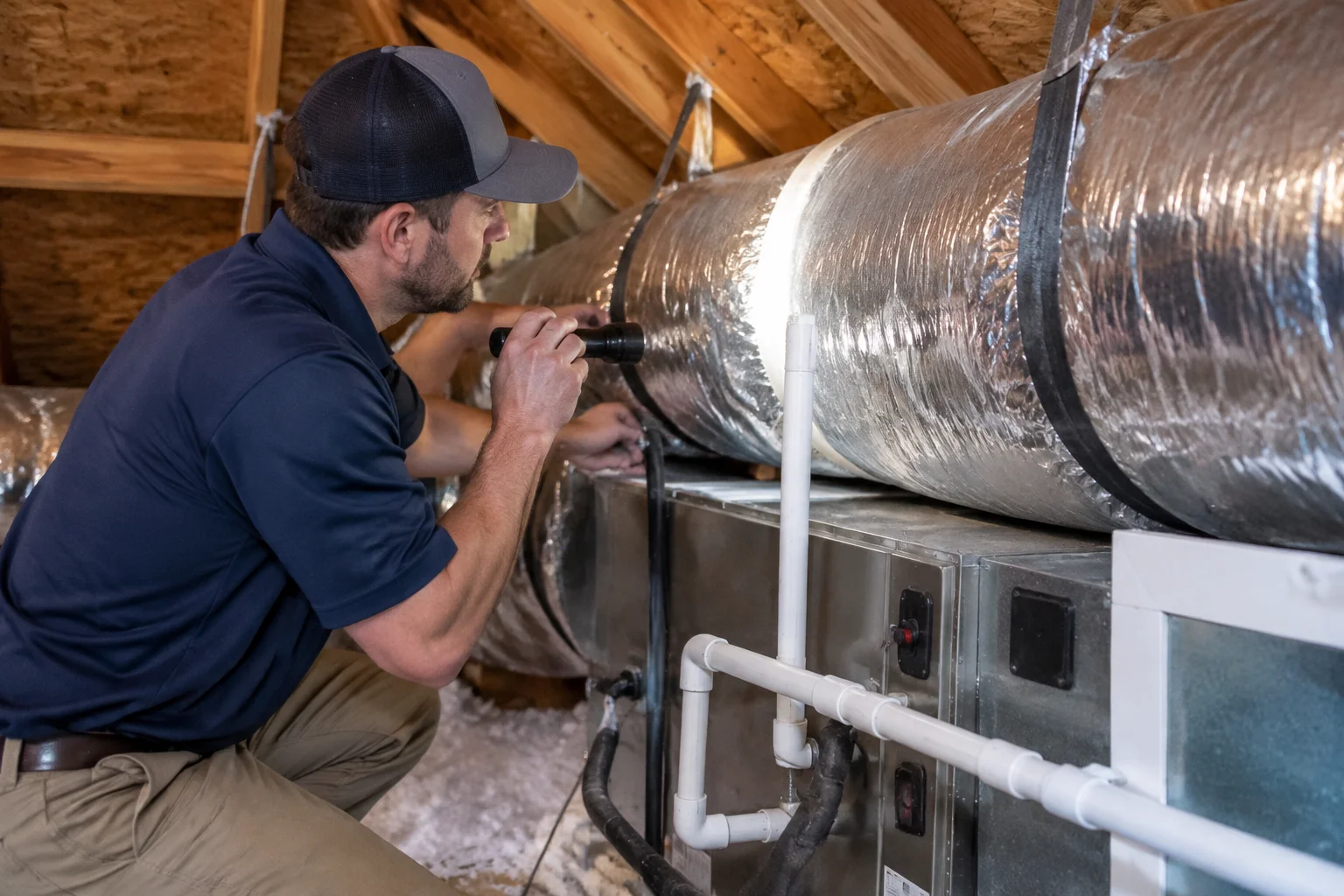
In Inlet Beach, ductwork can be a major factor. Duct leaks, disconnected sections, clogged returns, or poor duct sizing can prevent consistent airflow. When airflow is restricted, refrigerant systems may not be operating as intended, and the indoor unit may not transfer heat effectively.
If you suspect airflow issues, it can help to start with duct inspection. A technician can look at airflow pathways and identify where comfort is breaking down before you chase thermostat settings.
Salt air and coastal wear can affect HVAC performance
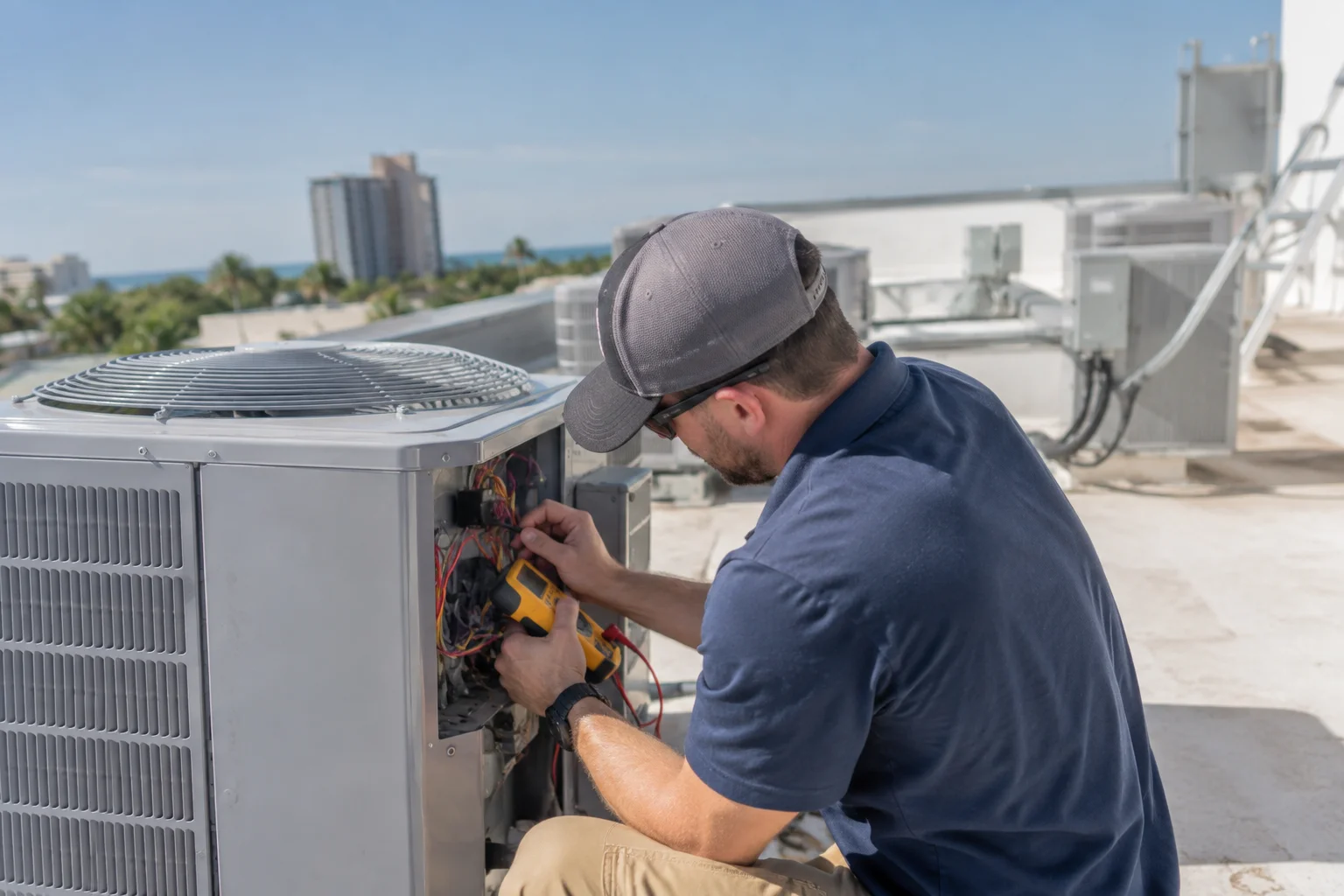
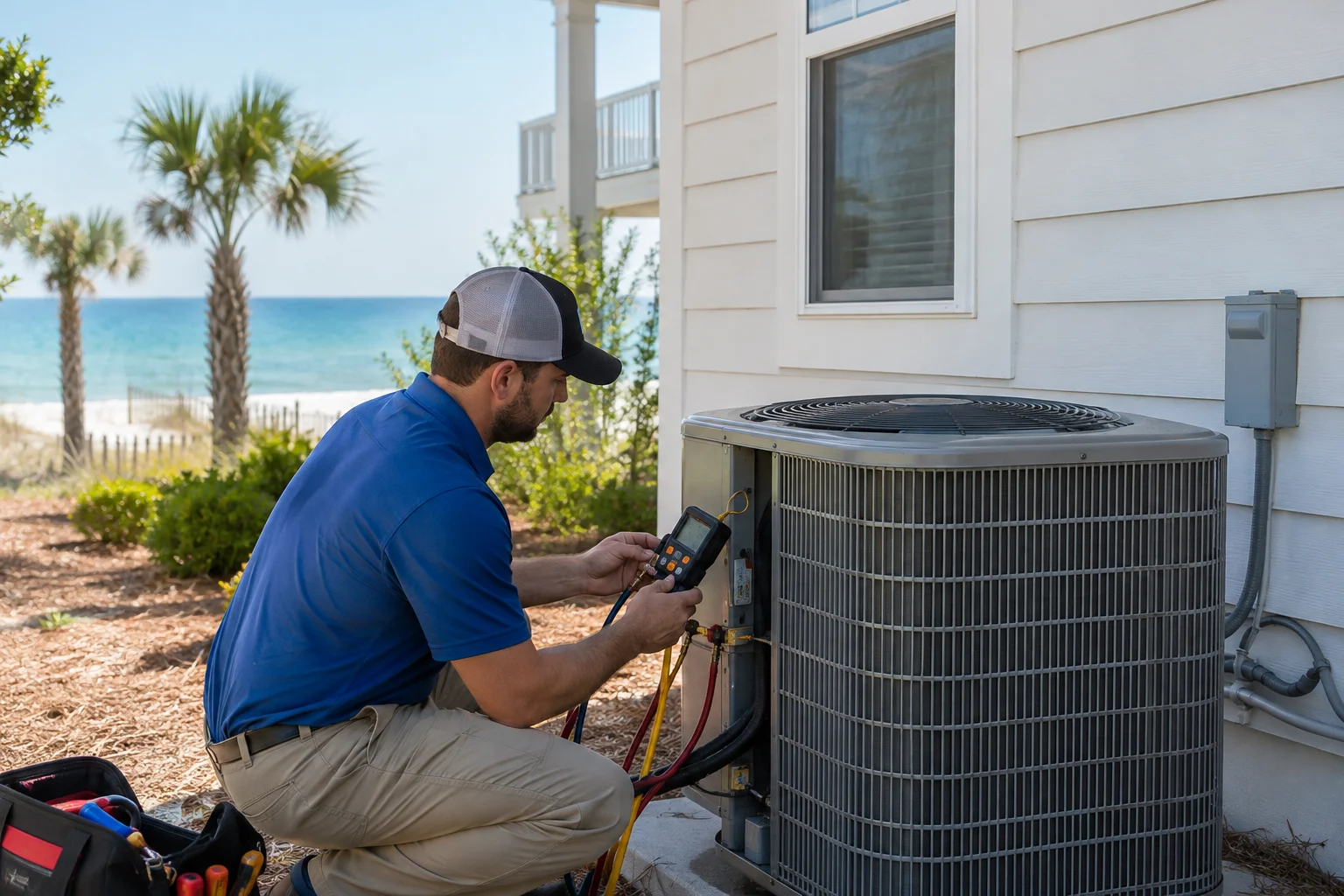
Inlet Beach is a coastal community. Salt air can accelerate corrosion on outdoor components and contribute to buildup that affects heat exchange. When the outdoor unit is less efficient, cooling and heat pump operation can become inconsistent. The thermostat may then try to compensate by extending run time or cycling more frequently.
Homeowners sometimes interpret this as a “bad thermostat,” but the thermostat is often responding to a system that cannot maintain performance. That is why residential HVAC service near me searches should not just focus on the thermostat device itself.
Condensate drainage issues can lead to comfort failures
During cooling, AC systems remove moisture and produce condensate. If condensate drainage is slow, blocked, or improperly routed, moisture can back up and affect indoor humidity control and coil performance. Even if the thermostat reads a comfortable temperature, indoor air quality can still feel humid or uncomfortable.
Signs that condensate drainage may be a problem include:
- Musty odors
- Water around the indoor unit
- Unusual system cycling
- Humidity that stays high despite cooling
Because condensate drainage connects directly to air conditioning service performance, a technician should verify drainage and related conditions during troubleshooting. It is not something to guess at from thermostat screens.
Wiring, compatibility, and power issues are common smart thermostat culprits
Smart thermostats need the right signals and power to run correctly. In real homes, wiring configurations vary. Some older systems or certain add-on setups can create issues like:
- Thermostat rebooting or going offline
- Incorrect mode behavior, such as cooling not starting as expected
- Fan settings not matching what you select
- Delayed response between thermostat commands and system action
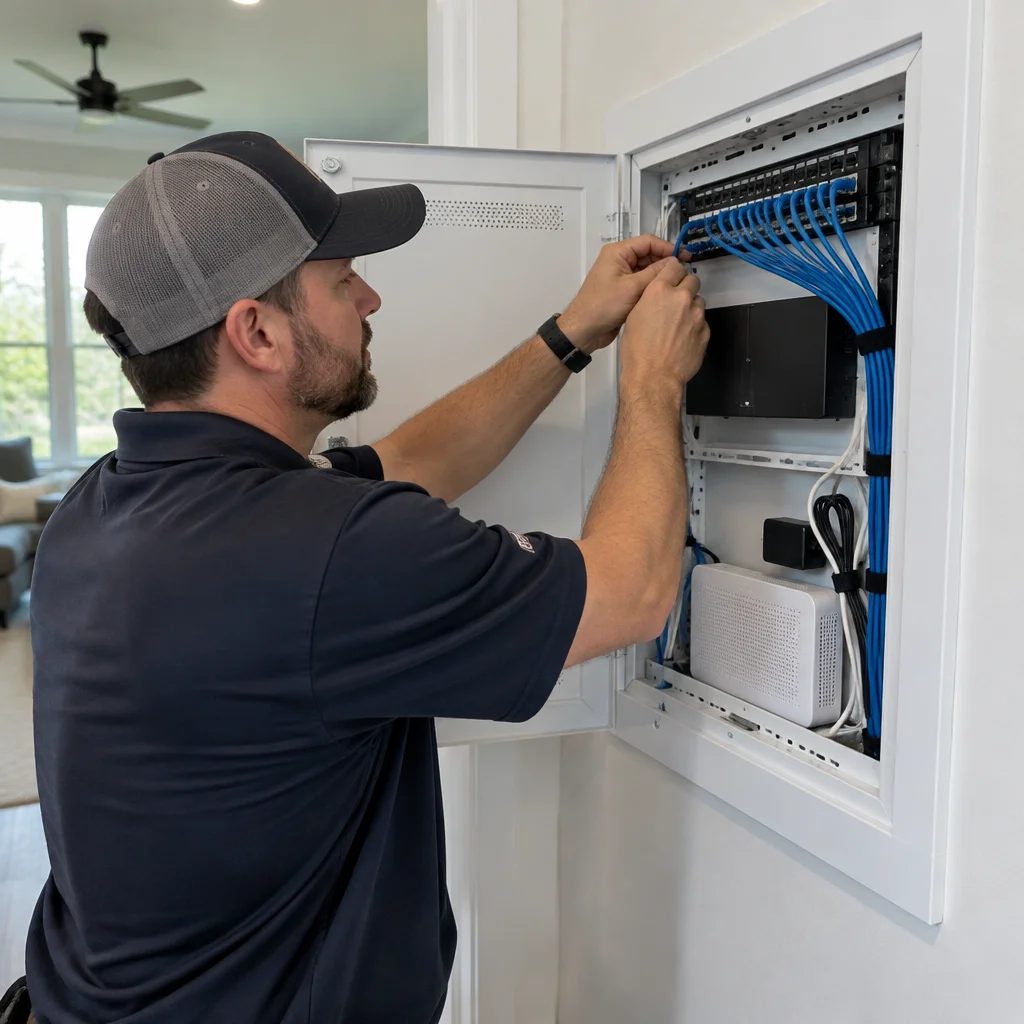
Homeowners often overlook that a thermostat can be “installed” but not fully compatible with how their existing HVAC control is wired. That is why smart thermostat installation near me should include a compatibility check and a careful review of the thermostat and HVAC system interface.
If you are considering a new device, ask for a professional evaluation of system compatibility and control wiring before finalizing the setup. If you already installed a smart thermostat and it behaves inconsistently, do not keep changing settings hoping it will self-correct.
Heat pump and dual-fuel homes need careful configuration
Many Inlet Beach homes use heat pumps, often with supplemental heating depending on the system design. Smart thermostats may require different configuration for heat pump staging, auxiliary heat behavior, and temperature thresholds.
When these settings are incorrect, homeowners may see problems such as:
- Heating or cooling that feels weaker than expected
- Unexpected auxiliary heat operation
- Comfort targets that take longer to reach
If you are searching for heat pump repair near me or heat pump installation near me, it is smart to choose a local HVAC contractor that understands how thermostat controls interact with heat pump behavior. Proper setup can reduce unnecessary energy use and improve comfort stability.
Placement matters more than most people think
Smart thermostats often include occupancy detection or use remote sensors. Placement can strongly affect readings, especially in homes with:
- Direct sun exposure
- Air drafts from doors, vents, or hallway traffic
- Mounting near exterior walls
- Nearby appliances or heat sources
In Florida’s bright sun, a thermostat mounted where it gets heated can read higher temperatures than the rest of the home. The result can be overcooling in one area and undercooling in another. If your home has duct airflow issues, the thermostat may also be measuring air that is not representative of the living space.
A technician can evaluate thermostat location and airflow patterns, which is often more effective than repeatedly changing schedules or temperature set points.
When thermostat settings fight your HVAC system
Smart thermostats offer features like adaptive recovery, humidity control, fan scheduling, and “smart” learning. Those options can be useful, but they can also produce unexpected comfort behavior when they are not aligned with your system.
Common homeowner oversights include:
- Humidity targets set too low for the system’s moisture removal capacity
- Fan schedules that reduce dehumidification time
- Two different control strategies running at once, such as humidifier or dehumidifier settings that conflict with HVAC cooling behavior
- Extreme temperature setbacks that increase recovery demand
Adjusting settings can help, but it should be done with an understanding of how the indoor coil and airflow are performing. If the system is not removing humidity well because of airflow, condensate drainage, or coil performance, thermostat changes alone will not solve the root issue.
Refrigerant and coil performance can show up as thermostat “misbehavior”
Refrigerant systems and coil performance directly influence cooling capacity and humidity removal. If a system is underperforming, the thermostat may keep trying to reach targets by extending cycles or increasing demand.
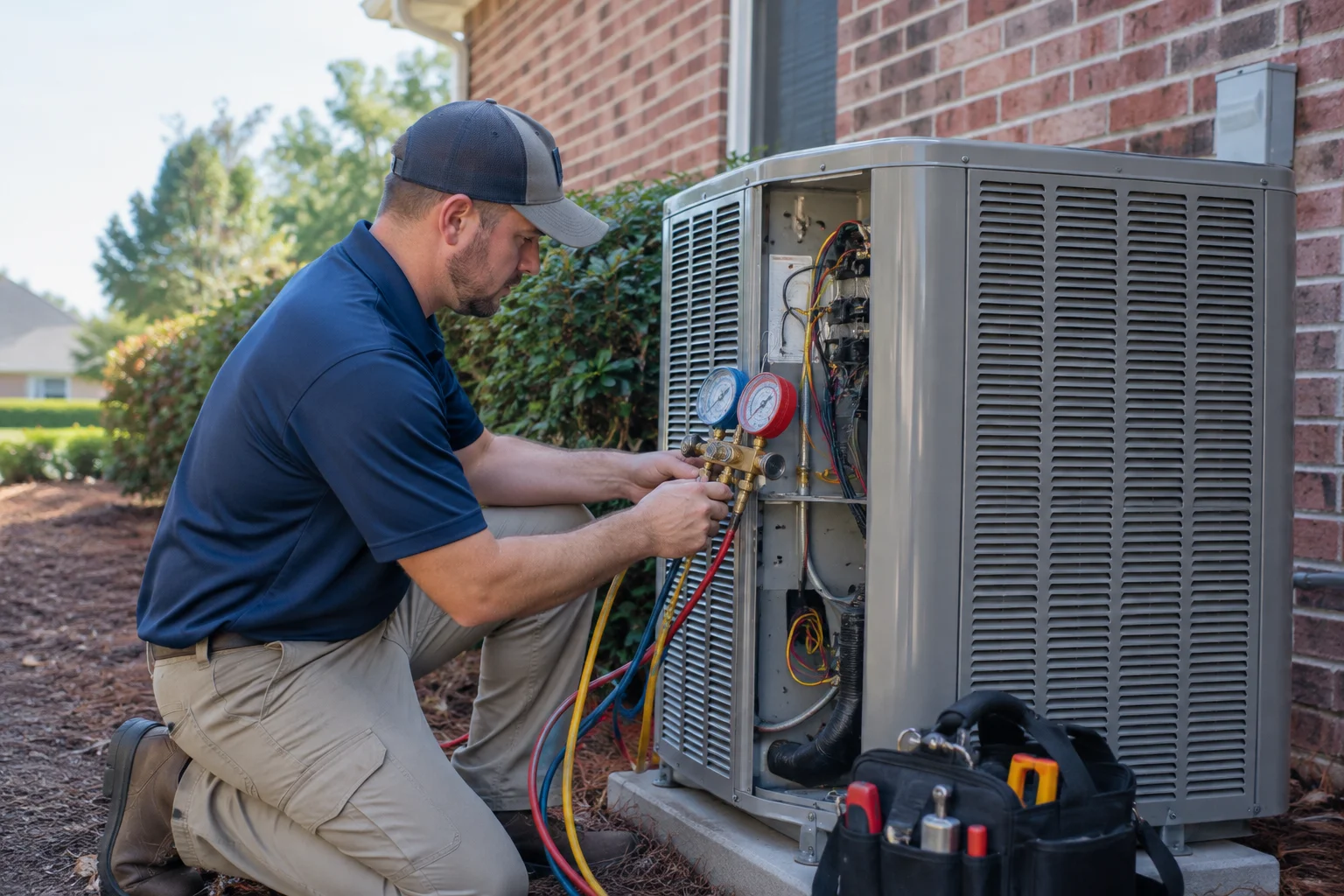
It is important to avoid guessing about refrigerant levels or diagnosing refrigerant issues from thermostat data. A proper check requires in-person evaluation by a licensed professional using the right tools and procedures.
Still, homeowners should recognize the pattern: if cooling repeatedly fails to reach comfortable temperatures or humidity stays high, the problem may be in system performance rather than thermostat programming. That is when air conditioning repair near me or AC repair near me should involve a full comfort and system check, not only thermostat screen troubleshooting.
Ductwork and indoor air quality issues can affect how comfort feels
Smart thermostats can only control what your home experiences. If your ductwork is delivering uneven airflow, your thermostat may show a stable temperature while indoor air quality suffers. Poor distribution can also contribute to:
- Stale or uneven airflow
- Higher humidity in certain rooms
- More frequent cycling as the system tries to compensate
Homeowners in coastal climates often pay attention to humidity and comfort. But indoor air quality is also influenced by filtration, airflow, and maintenance. If you are noticing persistent humidity or musty odors, consider pairing thermostat troubleshooting with ductwork and system performance checks.
If you are evaluating duct-related concerns, you can also explore duct inspection to understand where airflow is being lost.
Preventive maintenance reduces smart thermostat headaches
Smart thermostats can make HVAC control more convenient, but they cannot replace preventive HVAC maintenance. Routine service helps ensure the system can deliver what the thermostat requests.
For Inlet Beach homes, preventive maintenance should pay attention to:
- Indoor and outdoor coil cleanliness
- Airflow and ductwork condition
- Condensate drainage operation
- Filter condition and return airflow
- System controls and sequence of operation
- Safety checks and performance verification
When an HVAC maintenance near me search is used to schedule seasonal checkups, it can prevent mid-summer breakdowns that leave you scrambling for emergency cooling. Even a well-installed smart thermostat can struggle if the system is not ready for Florida heat.
Energy use problems are a clue, not an excuse to ignore performance
Smart thermostats are often purchased to improve energy use. But if you see unexpected increases in runtime, frequent cooling calls, or unusually high energy bills, it can be a sign your HVAC system is not delivering comfort efficiently.
Examples of overlooked causes include:
- Restricted airflow from dirty filters or duct leakage
- Moisture removal not keeping up with Florida humidity load
- Outdoor unit efficiency reduced by coastal exposure and buildup
- Control settings that do not match system behavior
Before assuming your thermostat is defective, a local HVAC professional can help determine whether the issue is comfort delivery, airflow, humidity control, or system performance.
Emergency cooling concerns: what to do if your system will not respond
Florida summers can turn uncomfortable fast. If your smart thermostat indicates cooling or heating demand, but the system does not respond, treat it as an HVAC reliability concern.
Look for practical signs that you may need emergency HVAC services:
- Indoor air is not cooling even after the thermostat requests cooling
- The system repeatedly cycles without improving comfort
- Strange sounds or strong odors that occur when the system runs
- Visible water around the indoor unit
Do not keep resetting the thermostat repeatedly. That can delay proper troubleshooting and may increase wear if the system is already struggling.
How to get smart thermostat help that actually resolves the comfort issue
If your smart thermostat is causing frustration, the best approach is to combine thermostat review with HVAC system performance checks. When you contact a residential HVAC service near me provider, consider asking for a comfort-focused assessment that includes:
- Verification of thermostat settings and mode behavior
- Assessment of airflow and ductwork impact on comfort
- Check of condensate drainage during cooling operation
- Review of system control sequences for heat pump or AC operation
- Inspection of indoor air quality factors such as filtration and airflow
If you are unsure whether your issue is thermostat related or HVAC related, that is exactly the kind of question a professional should address after an in-person evaluation. Avoid DIY decisions that change critical settings without confirmation, especially when refrigerant systems performance or condensate drainage could be involved.
Local service matters in Walton County
Inlet Beach homes face a specific mix of challenges: Florida heat and humidity, coastal salt air exposure, and airflow demands that can stress older systems and ductwork. A local HVAC contractor that understands these conditions can spot patterns that a generic troubleshooting guide will not.
For homeowners searching for HVAC replacement near me or thermostat installation near me, the most helpful contractor is the one that can explain what is happening in your system, not just the thermostat device. If your HVAC needs upgrades, smart controls should be integrated into a system that can deliver stable comfort and humidity control.
If you want to focus on smart thermostat setup for your home, you can review the service details here: smart thermostat installation in Inlet Beach, FL. You can also explore the broader local coverage at this Inlet Beach service area page and learn how Walton County HVAC needs vary across neighborhoods.
Related reads for homeowners who want to prevent repeat issues
If you are trying to keep smart thermostat control from turning into bigger HVAC problems, these reads can help you spot issues early:
- Smart Thermostats in Panama City Beach: Small Problems That Can Turn Into Bigger HVAC Headaches
- Smart Thermostats and Smoother Comfort in Destin Homes: Staying Ahead of HVAC Problems Before They Grow
- Keeping Your Cool in Panama City Beach Without Letting Smart Thermostats Create Bigger HVAC Problems
When a duct problem or ductless system changes the comfort picture
Some Inlet Beach homes use ductless mini-splits, while others rely on central air and ductwork. Smart thermostat control can still be impacted by how air is delivered. If you are evaluating a ductless setup, air distribution and control integration are key.
For ductless comfort planning, see Ductless Mini-Splits. For duct-related concerns, consider pairing smart thermostat troubleshooting with duct inspection so your HVAC can meet the comfort targets you program.
What to do next
If your smart thermostat is giving you confusing results, treat it as a clue about system performance and comfort delivery. In a humid coastal climate, the thermostat may be doing what it is told while the HVAC system struggles with airflow, condensate drainage, or efficiency.
Contact a local professional for an in-person evaluation so you can confirm thermostat compatibility, verify airflow and humidity control, and address the root cause behind the comfort problems. If you are ready to plan ahead, preventive HVAC maintenance can help keep your system stable through Florida heat and reduce the odds that you will need emergency AC repair near me during the hottest stretches.
Find Smart Thermostats in Inlet Beach, FL
If you need Smart Thermostats in Inlet Beach, FL, visit our local service page or contact A Superior Mechanical today.
Map of Inlet Beach, FL
Frequently Asked Questions
Why does my smart thermostat say the temperature is set correctly, but my Inlet Beach home still feels humid?
Humidity comfort depends on more than temperature. If your AC is not removing moisture effectively, it can be due to airflow restrictions in ductwork, condensate drainage issues, or reduced cooling performance. A technician can verify system operation and comfort delivery rather than relying on thermostat readings alone.
Can a smart thermostat be installed correctly but still not work well with my HVAC system?
Yes. Compatibility and wiring details matter, especially for heat pumps, staging, and fan control. Even a properly installed thermostat can behave inconsistently if the HVAC control interface is not matched. Professional smart thermostat installation in Inlet Beach includes checking how the thermostat communicates with your system.
What thermostat problems are actually caused by airflow or ductwork?
Airflow issues can cause hot and cold spots, short cycling, and delayed comfort recovery. The thermostat may appear wrong because it is responding to conditions that do not represent the whole home. A duct inspection can identify where airflow is being lost or restricted.
When should I stop troubleshooting and call for emergency AC repair near me?
If the system will not cool when the thermostat requests cooling, repeatedly cycles without improving comfort, shows water around the indoor unit, or creates unusual odors or sounds, it is time to call for emergency HVAC services. Florida heat can make delays risky for comfort and indoor air quality.
Does preventive HVAC maintenance help smart thermostats work better?
It can. When coils are clean, airflow is correct, and condensate drainage works properly, the HVAC system can deliver the temperature and humidity targets your smart thermostat controls. Preventive maintenance reduces the likelihood of comfort issues that look like thermostat failures.
Related Articles
- Smart Thermostats in Panama City Beach: Small Problems That Can Turn Into Bigger HVAC Headaches
- Smart Thermostats and Smoother Comfort in Destin Homes: Staying Ahead of HVAC Problems Before They Grow
- Smart Thermostats and Fewer HVAC Surprises in Panama City Homes
- Keeping Your Cool in Panama City Beach Without Letting Smart Thermostats Create Bigger HVAC Problems
Photo Gallery