WaterColor is the kind of place where homeowners notice the little things. Spotty glass after a party. A shower that leaves skin feeling tight. Coffee that tastes off, even when the beans are good. A lot of that everyday frustration can trace back to the same culprit: hard water.
Planning ahead for water softening means you are not just reacting to problems after they show up. You are setting up your home for smoother plumbing performance, cleaner laundry, and better water for drinking and cooking. If you are searching for water treatment near me or water filtration near me, it helps to understand what hard water does and how to build a treatment plan that fits your home in WaterColor, Walton County, FL.
What hard water looks like in real life (and why WaterColor homes feel it)
Hard water is not just a taste issue. It is mineral content, usually calcium and magnesium, that can leave deposits as water heats and evaporates. In WaterColor, homeowners often see the results in the places that get the most water use.
Common hard water spots you can spot quickly
Take a look at your home and you might notice:
- Hard water spots on glass, especially after showers or when drinking glasses are washed and air dried.
- Scale buildup around faucets, showerheads, and plumbing, including rough buildup that makes fixtures look dull.
- Soap that does not lather or rinse well, so you end up using more product and still feel like residue remains.
- Dry skin or dull hair after bathing, which can feel like your routine is not working even when you are using the same shampoo and body wash.
- Cloudy ice cubes, often connected to mineral content and sometimes to other water quality factors.
- Metallic, chlorinated, or unpleasant taste, which can show up in drinking water and cooking water.
- Visible sediment, discoloration, and odor concerns, especially after water sits or during certain usage patterns.
- Appliances wearing out faster, including water heaters, dishwashers, and washing machines that struggle with mineral scale inside.
Why local conditions make planning important
Water quality can vary across Walton County. Even when your water source is consistent, seasonal changes, household plumbing age, and how water moves through your system can affect how quickly scale forms. In a coastal area like WaterColor, homeowners also tend to run air-conditioning and irrigation differently across seasons, which can change water usage patterns and how often hot water is used. That means scale can build faster if your home is not set up with the right water softening and filtration strategy.
Start with a baseline: test before you guess
If you want fewer hard water headaches, the planning step that matters most is measurement. A professional water test or a service visit that includes water quality checks can help you identify what you actually need. “Hard water treatment” is not one-size-fits-all.
What to ask about during a water test
When homeowners schedule water treatment near me services, these are the items that typically matter:
- Hardness level (how much calcium and magnesium is present).
- Iron and sediment indicators that can cause discoloration, odor, or staining.
- Chlorine-related taste and odor concerns that can affect drinking water and cooking.
- Water clarity and whether you are seeing cloudy ice cubes.
With those results, you can plan the right combination of water softening, whole home water filtration, and, when appropriate, reverse osmosis for drinking water.
Build a treatment plan that matches how your family actually uses water
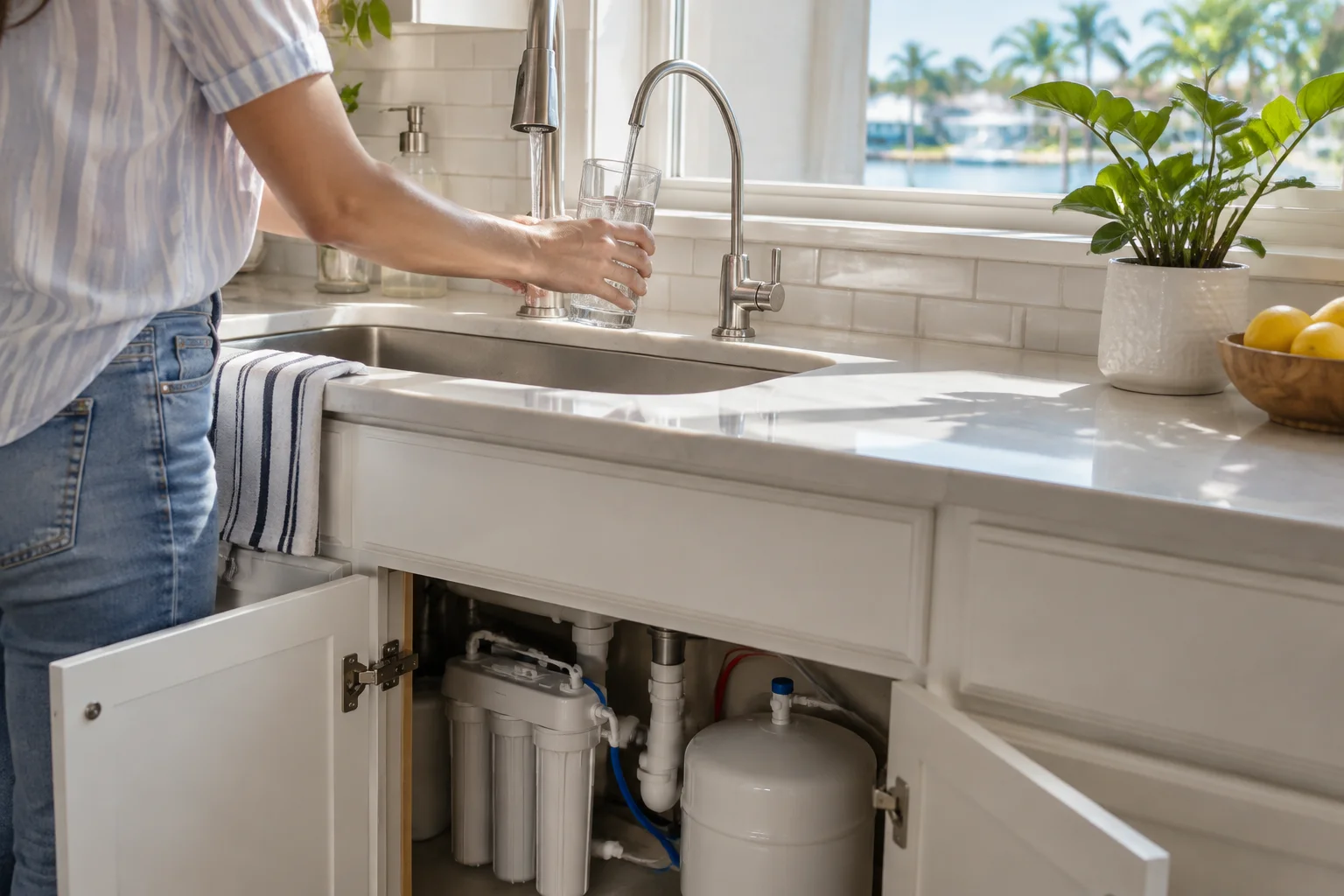
Think about your daily routine in WaterColor. There is the kitchen scene, where someone is filling a glass, brewing coffee, and rinsing vegetables. There is the shower routine, where water quality shows up on skin and hair. There is laundry, where mineral buildup can affect how clothes come out. And then there are the fixtures and appliances that silently absorb mineral scale over time.
Kitchen and drinking water: plan for taste and cleanliness
Hard water can contribute to metallic tasting water and can make drinking water taste less fresh. If you are noticing poor tasting coffee and cooking water, you are not imagining it. Minerals can affect how water interacts with coffee extraction and how flavors develop in soups and sauces.
Many homeowners solve this with a layered approach:
- Whole home water filtration to reduce sediment and improve overall water quality throughout the house.
- Water softening to reduce scale buildup that affects fixtures and appliance performance.
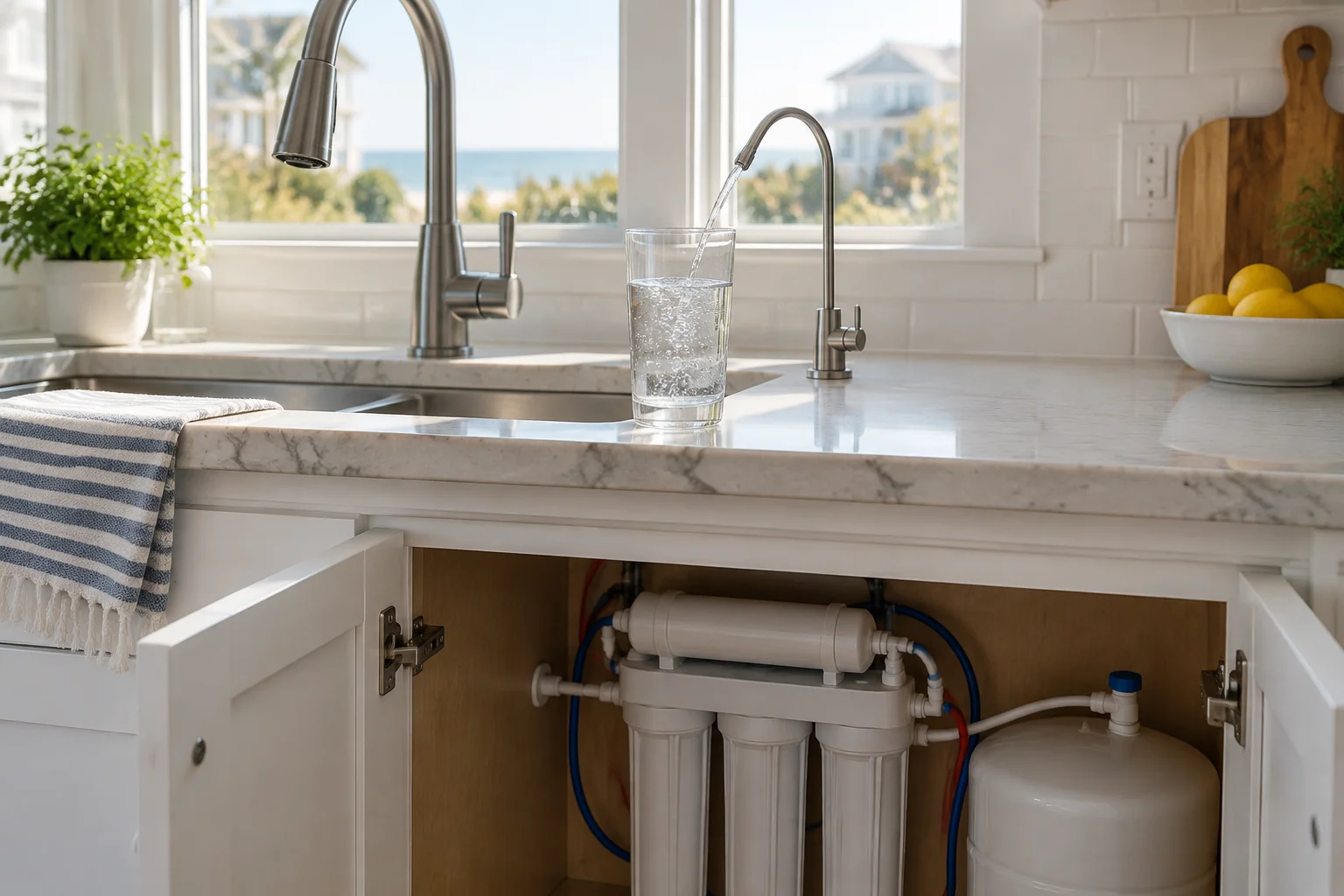
- Reverse osmosis at a drinking water point (or integrated system) for better drinking water and cleaner cooking water.
If you have been searching for reverse osmosis installation near me, it is usually because homeowners want a strong option for drinking water filter performance, not just “better than before.” A properly sized reverse osmosis system can reduce many taste and quality issues and help you enjoy water that feels consistent glass to glass.
Bathing and skin: plan to reduce buildup and improve feel
When hard water is building up, it can leave behind residue that makes soap feel like it never fully rinses. That can contribute to dry skin or dull hair after bathing, even if your products are high quality. Softened water helps reduce the mineral residue that can interfere with how soap and shampoo work.
For families, that means fewer “why does my shower feel different lately?” moments. It also means fixtures stay cleaner longer, with less scale buildup around showerheads that can reduce spray performance.
Laundry: plan for cleaner rinse and longer appliance life
Hard water can make detergent work harder, leading to dingier clothes and more residue. Over time, mineral scale can also accumulate inside washing machines and water heaters. When homeowners plan ahead with water softening and whole home water filtration, it is not just about comfort. It is about reducing the internal buildup that makes appliances wear out faster.
That matters in WaterColor where many homes are vacation rentals or have seasonal occupancy. If water sits unused and then gets run heavily, mineral effects can show up quickly. A planned system helps keep performance steadier.
Choose the right equipment: water softener, filtration, and RO where it fits
There are a few ways to approach hard water treatment. The best plan is usually a combination rather than a single device.
Water softening for scale control
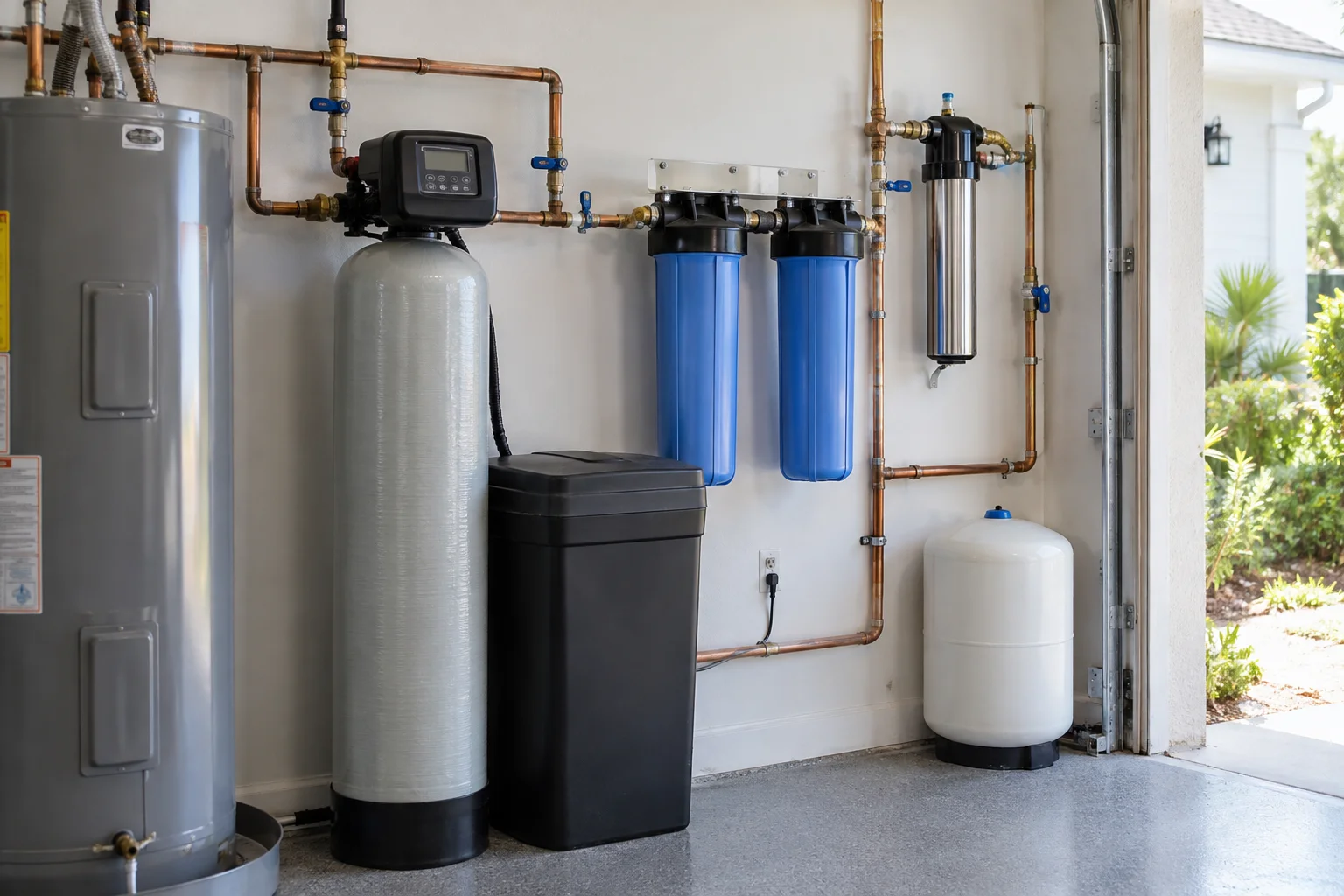
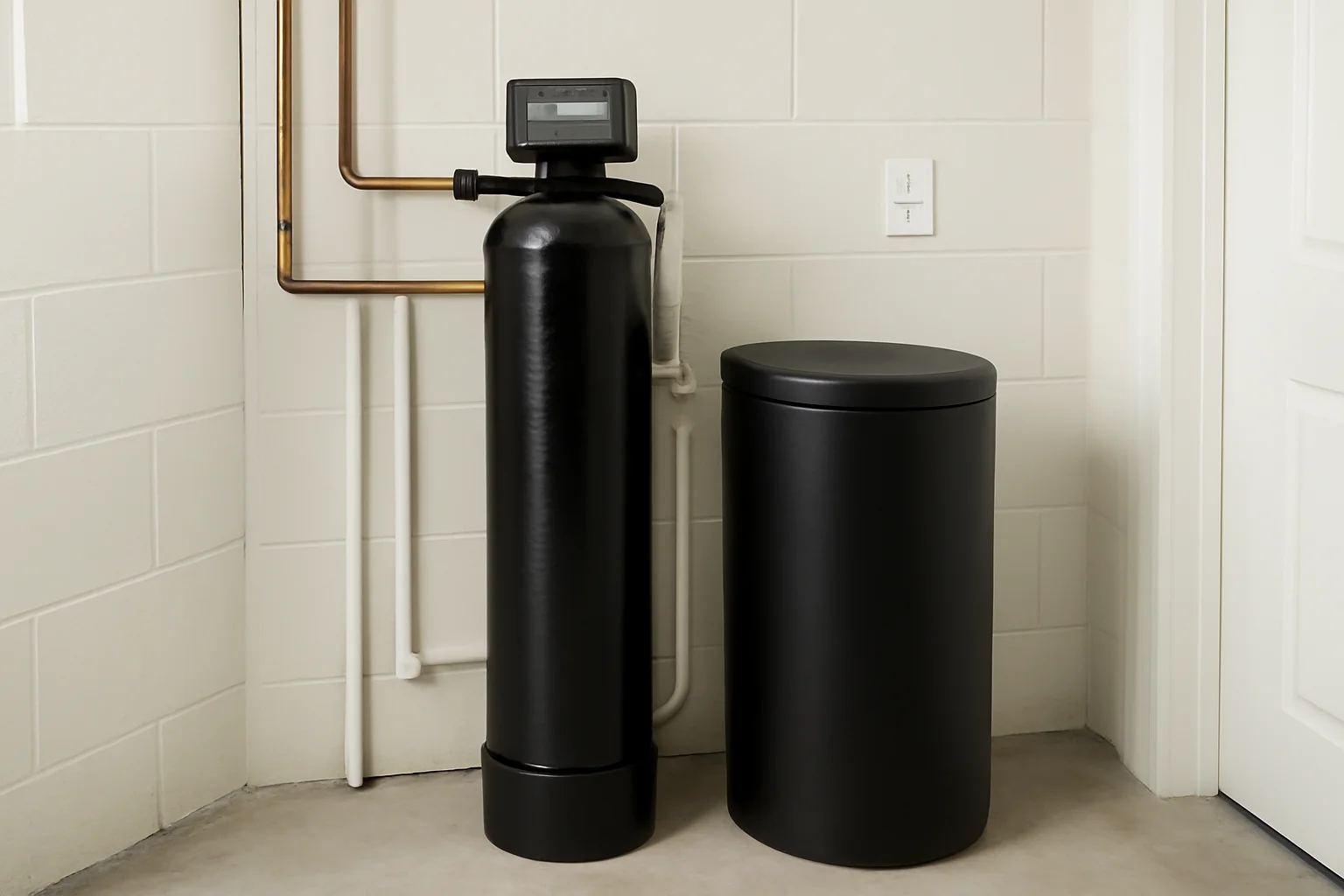
A water softener is designed to reduce hardness minerals so you get less scale buildup on faucets, showerheads, and plumbing. If you are dealing with hard water spots on glass, dull fixtures, and rough deposits, softening is often the foundation.
Many WaterColor homeowners also choose an AO Smith water softener because AO Smith systems are built for whole home performance and are commonly used in residential water treatment setups. The right size and settings are what make the biggest difference, not just the brand.
If you are comparing options, ask how your system will be sized based on household size, water usage, and hardness readings. A correctly sized AO Smith water softener typically means fewer interruptions, more consistent performance, and better protection for appliances.
Whole home water filtration to protect and improve every tap
Water softening focuses on hardness, but other water quality issues can still affect your home. Whole home water filtration can help reduce sediment and improve overall water clarity and feel, which can also support better results from your softening system.
For homeowners searching for home water purification near me, it helps to think in layers. Whole home filtration is often the “base layer” that supports better water outcomes throughout the house.
Many households also consider AO Smith water filtration options as part of a complete treatment approach, especially when they want consistent performance for both daily use and longer-term system protection.
Reverse osmosis for drinking and cooking water
Hard water can affect taste, and other water quality factors can show up in drinking water. Reverse osmosis is often the next step when homeowners want better drinking water and cooking water for coffee, tea, and everyday meal prep.
If you are seeing metallic, chlorinated, or unpleasant taste, or if you are tired of cloudy ice cubes, reverse osmosis can be a practical solution at the kitchen tap. Some homeowners choose a system that pairs with whole home filtration and softening so the drinking water filter is not fighting every water issue at once.
To explore options, you can start with the water filtration and water softener overview at /water-filtration-ro-water-softeners.
Plan for maintenance and seasonal usage so performance stays steady
A water softening system is not a “set it and forget it forever” appliance. Planning ahead for maintenance is how you avoid the cycle of noticing problems, calling for help late, and paying for repairs that could have been avoided.
What to include in your WaterColor maintenance checklist
- Salt and brine tank monitoring if you use a salt-based softener. Running out of salt can quickly lead to scale returning.
- Regeneration schedule checks so the system matches your household water use patterns.
- Filter replacement planning for whole home filtration and reverse osmosis components.
- System performance checks to confirm hardness reduction and water quality improvements continue.
In WaterColor, seasonal occupancy can make maintenance timing tricky. If your home is rented out or you are away part of the year, your system can still be working, but your typical usage patterns might not be what the system was originally configured for. That is why periodic service matters.
Watch for early warning signs
Before hard water headache turns into a bigger issue, look for these signals:
- Scale buildup on showerheads starts appearing faster than usual.
- Soap does not rinse as cleanly as it used to.
- Glasses show new hard water spots after washing.
- Coffee tastes flat or off again.
- Cloudy ice cubes become more frequent.
- You notice visible sediment or discoloration at fixtures.
When those signs show up, it is a good time to review settings, check salt levels, and schedule a water treatment service visit.
Plan your installation around the home, not just the equipment
Water softening works best when it is installed and integrated correctly. Your home’s layout, plumbing configuration, and water usage points all matter.
Where homeowners often underestimate impact
- Water heater protection: Hard water scale inside a water heater can reduce efficiency and lifespan. Softening helps reduce that internal buildup.
- Fixture performance: Scale buildup around faucets and showerheads can reduce water flow and degrade spray patterns.
- Appliance longevity: Dishwashers and washing machines can wear out faster when minerals accumulate in internal components.
- Rental properties: Turnover and variable occupancy can make water quality problems show up quickly without proper treatment and maintenance.
If you want to plan ahead with local expertise, A Superior Mechanical provides water softening service for homes in WaterColor. You can review the service area details at /service-areas/walton-county/watercolor/water-softening-wcfl and learn more about service coverage at /service-areas/walton-county/watercolor and /service-areas/walton-county.
Cost control: how planning ahead reduces long-term expenses
Hard water can be expensive in ways homeowners do not always connect. You might replace a showerhead sooner, see etched spots on glassware, or notice your water heater cycling more often. Over time, scale buildup on faucets and plumbing can contribute to reduced flow and higher energy costs.
Planning ahead with water softening and filtration is often cheaper than replacing components after mineral damage occurs. It also helps you avoid repeated cleaning and product waste from soap that does not lather or rinse well.
Another benefit is comfort and consistency. When the family wakes up and the shower feels better, when laundry rinses cleaner, and when the kitchen water tastes right, the system is doing its job. That is the real payoff of a thoughtful water treatment plan.
Common scenarios in WaterColor homes and how to respond
“My glassware looks terrible after the dishwasher.”
That is often hard water spots on dishes and glass. Softening can reduce mineral deposits and help dishwashing results. Whole home water filtration may also help if sediment or water clarity issues are part of the problem.
“The shower leaves my skin dry.”
Dry skin or dull hair after bathing can be linked to soap residue and mineral interaction. A properly configured water softener can reduce that residue. If you also notice unpleasant taste or odor concerns elsewhere, consider pairing softening with whole home filtration for more consistent overall water quality.
“Our ice looks cloudy and coffee tastes off.”
Cloudy ice cubes can be mineral-related, and metallic, chlorinated, or unpleasant taste can affect your coffee and cooking water. Whole home filtration plus reverse osmosis at the kitchen tap is a common approach for better drinking water and better tasting beverages.
“We see scale around faucets and showerheads, and water pressure seems different.”
Scale buildup around faucets, showerheads, and plumbing can restrict flow over time. Water softening is usually the foundation, and it can also help protect your water heater and appliances from mineral accumulation.
How to choose a water treatment strategy you can stick with
Homeowners often start with one goal. Maybe it is better drinking water. Maybe it is protecting fixtures and appliances from scale buildup. Maybe it is reducing dry skin or improving laundry results. The planning step is choosing a strategy that supports all of those outcomes without overcomplicating your routine.
A practical approach for WaterColor families is:
- Water softening to reduce hardness and stop scale buildup on fixtures and inside appliances.
- Whole home water filtration to improve clarity and reduce sediment-related issues that can affect odor, discoloration, and overall water feel.
- Reverse osmosis at the kitchen for reverse osmosis system near me style performance for drinking and cooking.
When those layers are sized correctly and maintained, you typically see fewer hard water headaches across the home: cleaner fixtures, better bathing comfort, and water that tastes and feels right.
Find Water Softening in WaterColor, FL
If you need Water Softening in WaterColor, FL, visit our local service page or contact A Superior Mechanical today.
For a broader look at whole-home water filtration, reverse osmosis, and water softener options, visit our water filtration, RO, and water softener page.
Map of WaterColor, FL
Frequently Asked Questions
How do I know if I need water softening in WaterColor, FL?
If you notice scale buildup on faucets and showerheads, hard water spots on glass and dishes, soap that does not lather well, or dry skin and dull hair after bathing, you likely have hardness issues. A water test can confirm the level and help determine the right softener settings.
Can water softening help with metallic or unpleasant taste and cloudy ice cubes?
Water softening mainly targets hardness, which can reduce some taste and clarity issues indirectly. For metallic taste, chlorinated taste, and cloudy ice cubes, many homeowners also add whole home water filtration and, for drinking water, a reverse osmosis system for cleaner kitchen water.
What is the benefit of whole home water filtration with an AO Smith water softener?
Whole home filtration can help reduce sediment and improve water quality throughout the house. When paired with an AO Smith water softener, it can help protect plumbing and appliances while supporting better overall results at every tap.
How often do reverse osmosis systems and filters need maintenance?
Maintenance schedules vary by water quality and usage, but most homeowners plan filter changes on a regular timeline. A service visit can confirm when cartridges and membranes should be replaced so you keep consistent drinking water quality.
Is it worth planning ahead if our WaterColor home is used seasonally?
Yes. Seasonal occupancy can change water usage patterns and make water quality problems show up quickly. Planning ahead with correctly sized water softening and filtration, plus periodic checks, helps keep performance steady whether the home is full-time or rented.
Related Articles
- How WaterColor Homeowners Can Stay Ahead of Hidden Plumbing Problems With Camera Inspections
- Practical Sewer Care for WaterColor Homes That Helps Avoid Bigger Plumbing Repairs
- How Water Softening Protects Rosemary Beach Plumbing from Costly Water Damage
- Water Heater Replacement in WaterColor: What Homeowners Should Watch For
Photo Gallery