Breakfast can reveal quite a bit about your water. The coffee tastes slightly bitter even with fresh beans. Yesterday's clean glasses have white spots. Ice from the refrigerator looks cloudy, and someone reaches for bottled water instead of filling a glass at the sink. Upstairs, the showerhead has a chalky crust that keeps returning.
These frustrations do not necessarily share one cause, and they rarely call for the same treatment. A Superior Mechanical provides water filtration services in Seaside, FL, including AO Smith systems, reverse osmosis, water softening, and whole home treatment. The useful starting point is identifying what is in the water, then matching equipment to the problems your household actually experiences.
Why water treatment deserves a local approach in Seaside
Seaside's warm, humid coastal climate means frequent showers, laundry, and refilled drinking glasses, especially when family or guests fill the house. Outdoor salt exposure can affect fixtures and equipment, but coastal air does not establish what is in your tap water. Hardness, disinfectant levels, sediment, and dissolved substances need their own evaluation.
Conditions can differ with the water provider, distribution system, building plumbing, and periods of low use. A regularly occupied home may have different treatment and maintenance needs than a vacation property that sits empty between visits. Review your provider's current water quality report, then use household testing to investigate concerns at the tap.
Local service also matters because equipment must fit the property. In Seaside homes, installation planning may involve compact utility spaces, existing cabinetry, drainage access, and coastal exposure. A treatment system needs to be practical to maintain, not simply small enough to squeeze into an available corner.
Read the clues before choosing a system
White spots, stubborn scale, and soap residue
Hard water contains dissolved calcium and magnesium. As water dries, those minerals can leave hard water spots on glass, dishes, and fixtures. Scale buildup on faucets and showerheads often looks white or chalky. Inside plumbing and water-heating equipment, accumulated deposits can restrict flow or interfere with heat transfer.
Soap that does not lather or rinse well is another clue. Hardness minerals react with soap, creating residue on shower surfaces and sometimes on skin and hair. Homeowners may describe dry skin from hard water or dull hair after bathing, although skin conditions, hair products, and bathing habits can also contribute. Water softening addresses hardness, not every cause of irritation.
Taste, odor, and cloudy ice
Chlorine taste in water can come from the disinfectant used to protect a public supply. Metallic tasting water may involve plumbing corrosion or dissolved metals and deserves investigation rather than a guess. Other unpleasant tastes and water odor concerns can originate in the supply, household plumbing, a water heater, or even the sink drain.
Cloudy ice cubes are not proof of unsafe water. Trapped air and the way ice freezes can create cloudiness, while minerals can also affect appearance. Reverse osmosis may improve ice quality when dissolved substances are contributing, but even treated water can freeze into cloudy cubes in a conventional ice maker.
Sediment and discoloration need a closer look
Visible sediment, rusty discoloration, or particles should be traced to a source. Check whether the issue affects one fixture or several and whether it appears in cold water, hot water, or both. Sediment in household water may follow distribution work, but it can also point to deteriorating plumbing or equipment.
Sudden discoloration, a strong chemical smell, or an unexplained major change warrants prompt contact with your water provider and a qualified professional. Follow any drinking water advisories. Clear appearance and pleasant taste do not establish safety, and a standard household filter should not be assumed to make contaminated water safe.
Filtration, softening, and reverse osmosis do different jobs
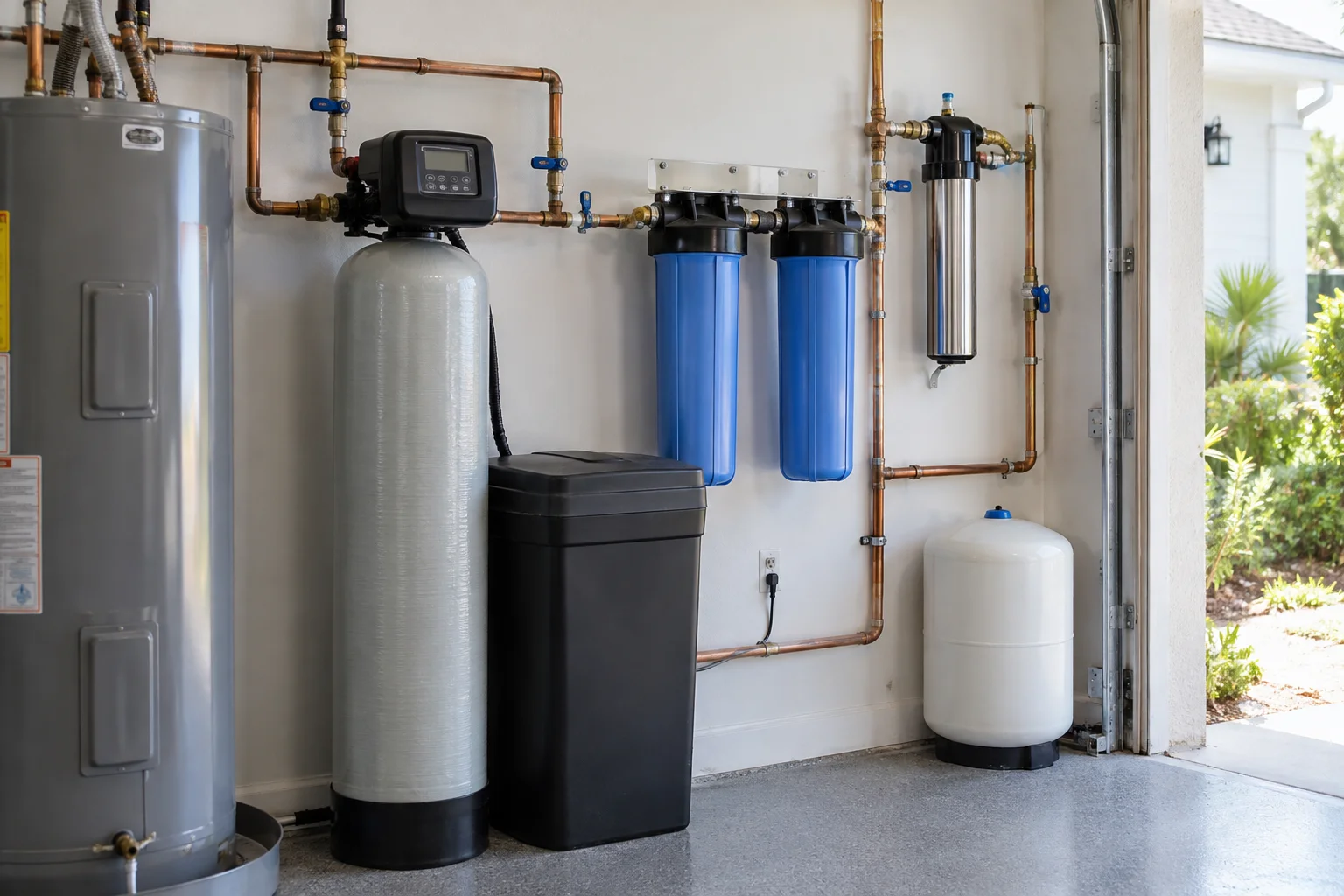
Homeowners searching for water treatment near me often encounter equipment described as if it solves everything. In practice, treatment works best when each component has a defined purpose. A sediment filter catches particles, a carbon filter targets certain taste and odor issues, a softener removes hardness minerals, and reverse osmosis reduces many dissolved substances at a dedicated outlet.
Whole home water filtration for incoming water
Whole home water filtration treats water as it enters the house, before it reaches most fixtures. Depending on its design, a system may reduce sediment, chlorine taste and odor, or other specifically identified substances. The media and capacity must match the water chemistry and the household's peak flow requirements.
Carbon filtration does not ordinarily remove hardness minerals, and different disinfectants require different treatment specifications. If your provider uses chloramine, the equipment must be designed and sized for that application. Ask about independently certified reduction claims rather than relying on a broad promise of cleaner water.
Water softening for mineral-related problems
A conventional ion-exchange water softener removes calcium and magnesium by exchanging them for sodium or potassium ions. This makes it a targeted option for hard water treatment, particularly where testing confirms mineral-related spotting, soap residue, and scale. Softening does not disinfect water or remove every substance that affects taste.
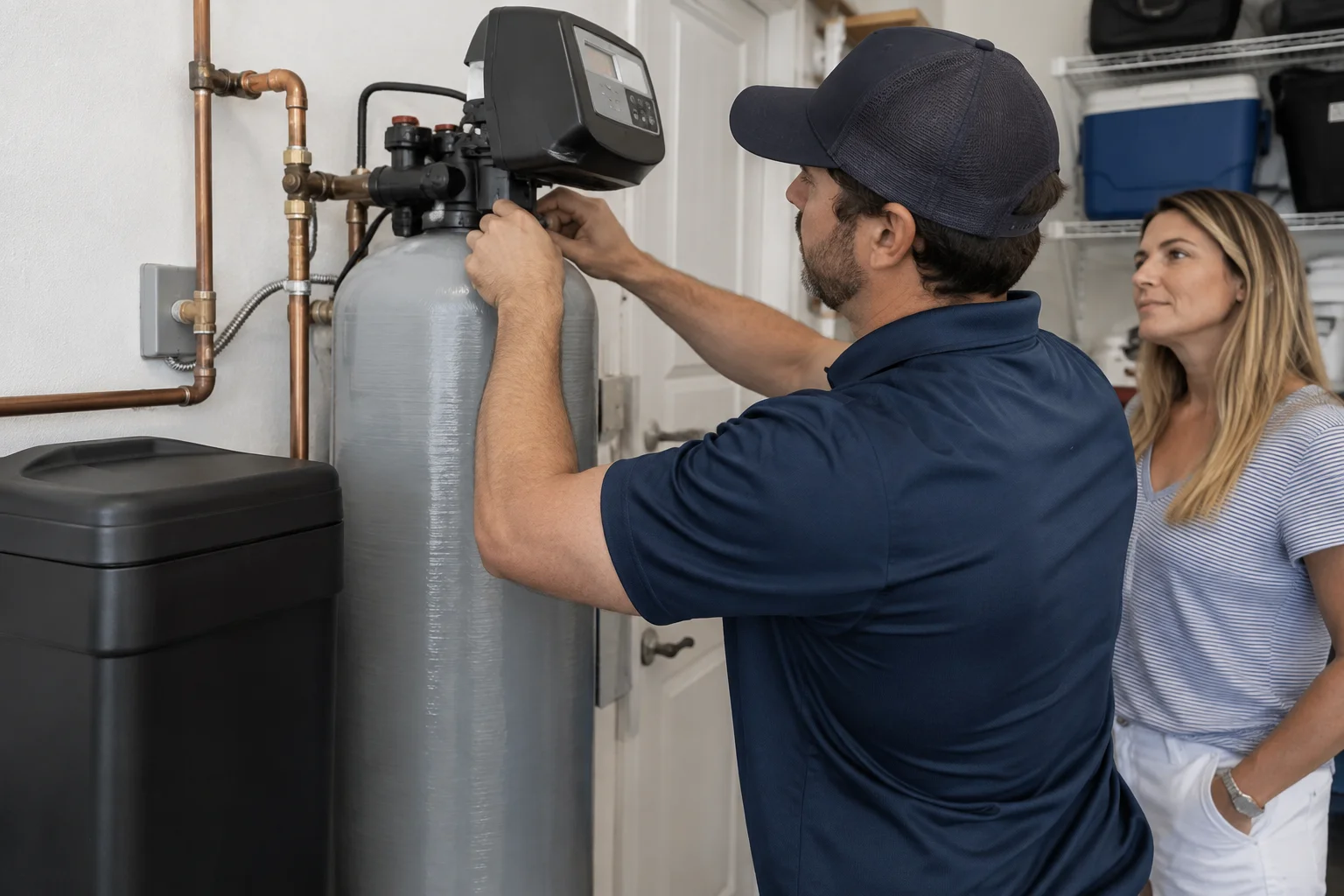
An AO Smith water softener should be selected using measured hardness, daily water use, and peak demand, not bedroom count alone. Salt-based equipment also needs regeneration, an appropriate drain arrangement, and routine attention. Households limiting sodium intake should discuss a suitable drinking water arrangement with their treatment professional and healthcare provider.
Reverse osmosis for drinking and cooking water
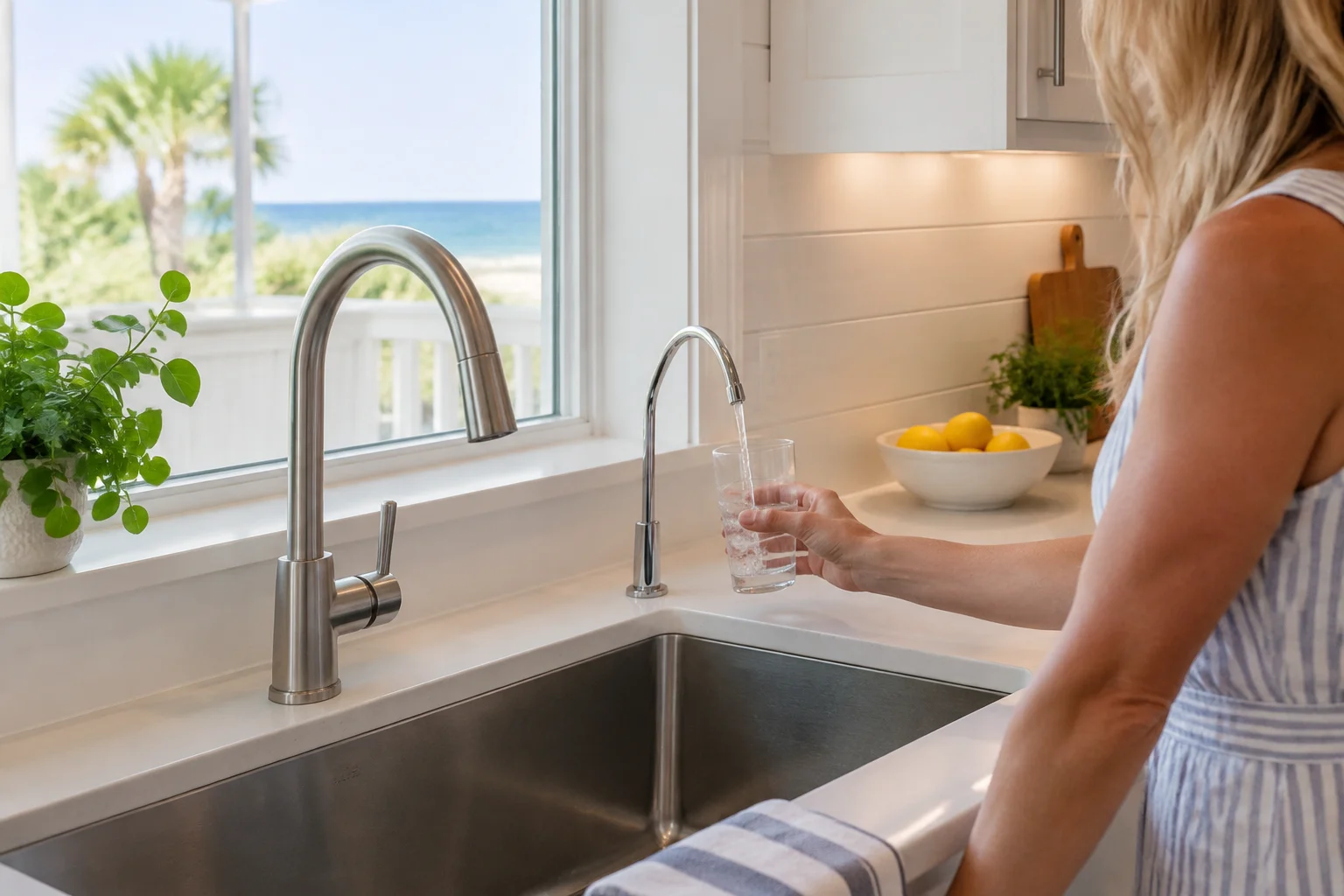
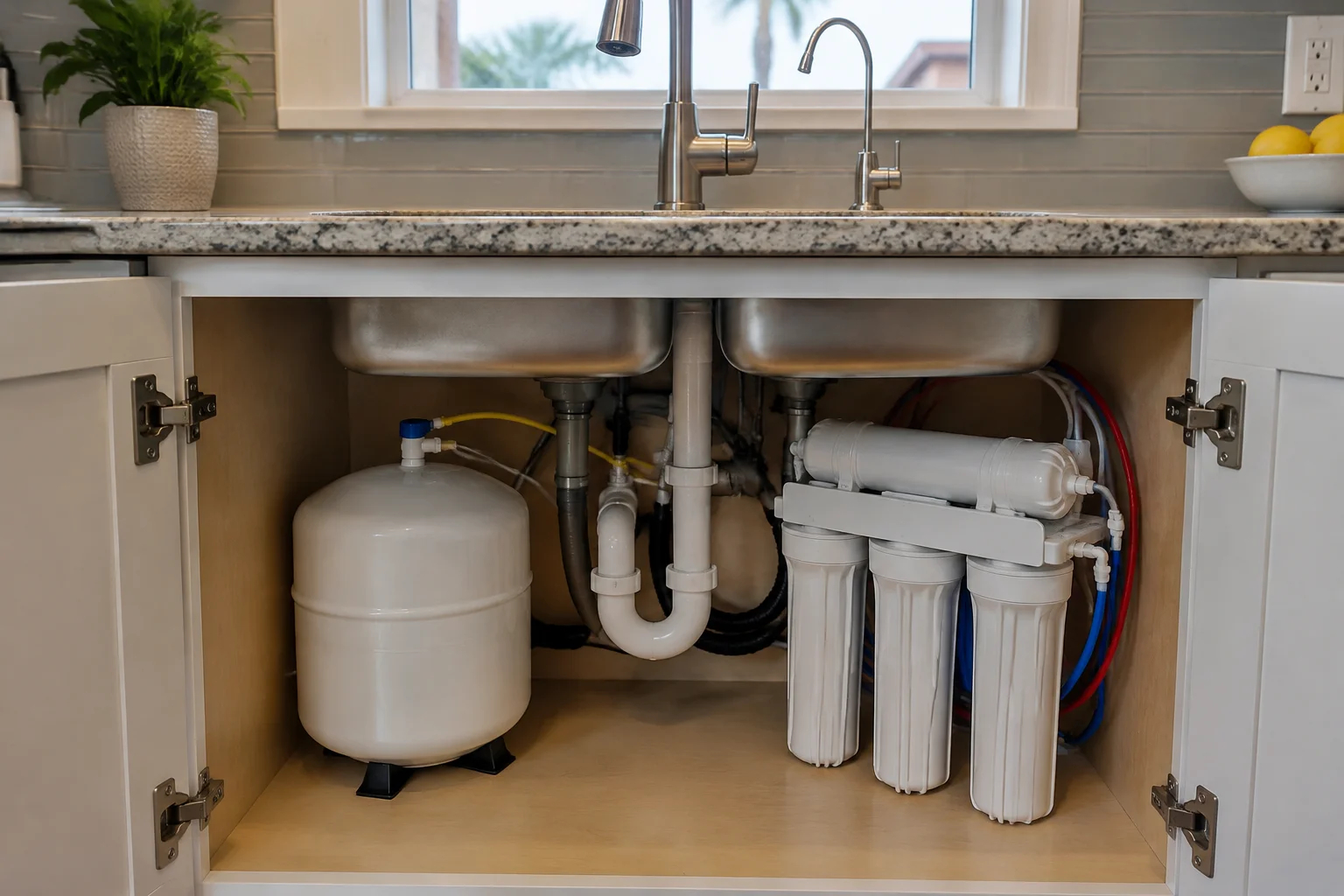
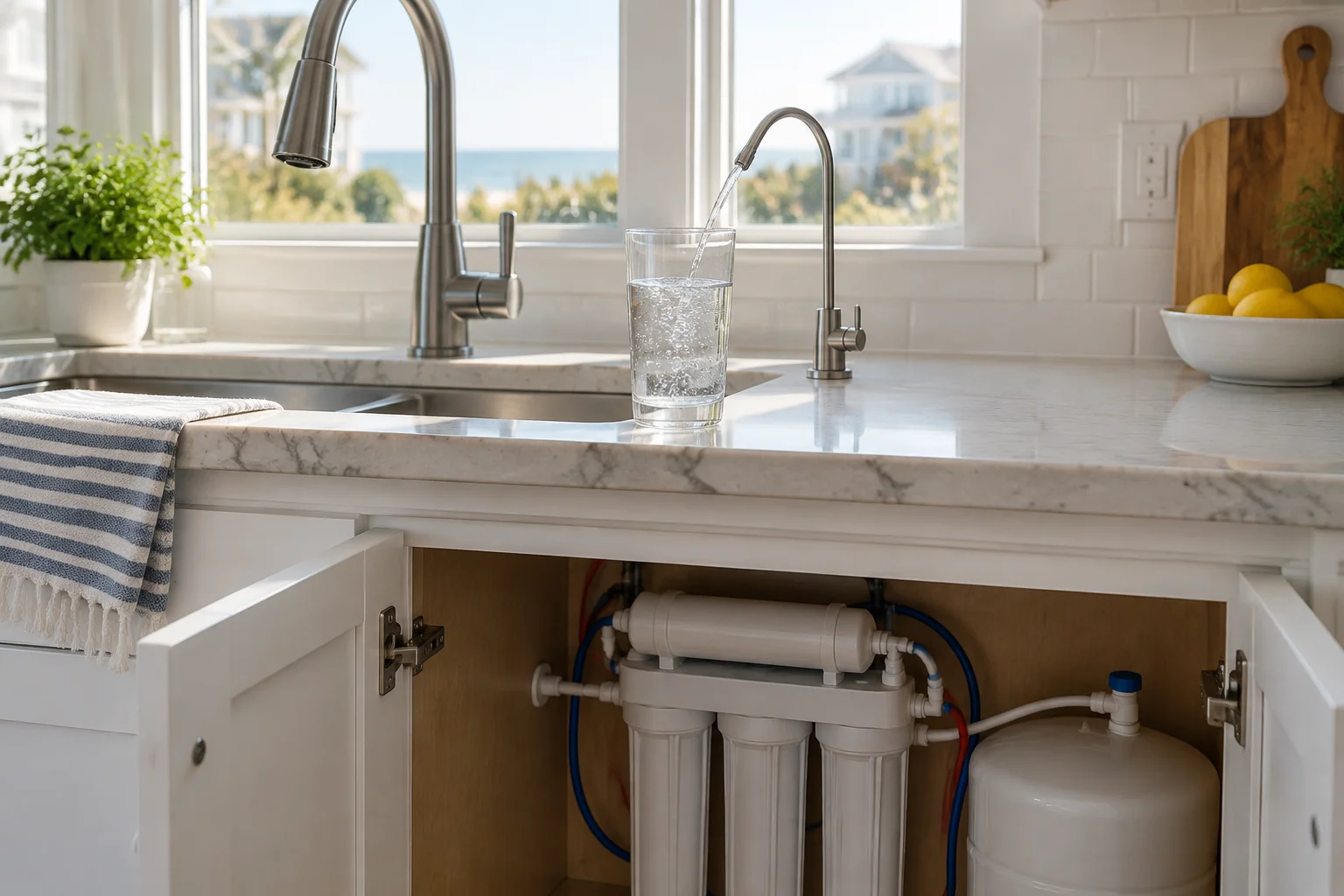
Reverse osmosis uses a membrane and supporting filtration stages to reduce many dissolved substances. An under-sink system commonly supplies a dedicated kitchen faucet for drinking water, cooking water, and filling kettles. Certain models can also serve a refrigerator when pressure, distance, and manufacturer requirements allow.
For a household tired of poor tasting coffee water, this targeted approach may be more useful than treating every outdoor hose connection. Our guide to reverse osmosis systems for Seaside homes explores kitchen applications in more detail. A professional reverse osmosis installation should account for cabinet space, drainage, delivery pressure, and filter access.
Choose AO Smith equipment by the job it needs to do
AO Smith water filtration includes different products with different purposes. Brand recognition is helpful, but it does not replace model-specific selection. A drinking water filter, reverse osmosis system, and softener should not be treated as interchangeable simply because they share a manufacturer.
Ask which substances a proposed model is certified to reduce, its rated capacity, and what replacement parts it requires. NSF/ANSI certification relates to particular standards and claims, not universal removal of all contaminants. The complete range of water filtration, reverse osmosis, and water softener options can help frame a conversation about combining treatments without buying equipment you do not need.
Better water changes ordinary household routines
In the kitchen, water goes into much more than a drinking glass. It becomes oatmeal, soup, pasta, coffee, and the ice in a child's cup. Reducing an identified taste problem can make these everyday uses more enjoyable. Keep refrigerators, ice bins, and beverage equipment clean as well, since filtration cannot correct dirty appliances.
In bathrooms and laundry areas, properly softened water may reduce mineral residue and make soap easier to rinse away. Detergent adjustments may be appropriate after installation, following product instructions. Softening will not eliminate every water spot because other dissolved material can remain, and existing scale may still need careful cleaning.
Scale can also make water heaters, dishwashers, and other water-using appliances work less efficiently or contribute to components wearing out faster. Addressing confirmed hardness helps manage that risk, but treatment does not repair existing damage or guarantee a longer appliance lifespan. Continue the manufacturer's cleaning and maintenance schedule.
Plan around the house, not just the equipment
When comparing whole home water filtration near me, ask how the installer will size the system for simultaneous use. Two showers, a washing machine, and a kitchen faucet can create a very different demand from one open tap. Undersized equipment may cause an unacceptable pressure drop.
Installation planning should cover shutoff access, bypass valves, service clearances, drain requirements, and any required electrical supply. Equipment placed outdoors needs manufacturer-approved protection from sun, weather, and coastal conditions. Position filters where replacements can be performed without dismantling storage or reaching behind permanent fixtures.
For seasonal properties in Walton County, discuss return-to-service procedures after extended vacancy. Stagnant water and overdue cartridges deserve attention before guests arrive. Our practical advice for Seaside homeowners near the coast also addresses the broader conditions that can affect household water systems.
Maintenance keeps treatment useful
Filters have finite capacity. Replace cartridges according to the manufacturer's schedule, actual water use, and source-water conditions. Do not wait for an unpleasant taste to return, since some performance changes are not noticeable. A pressure drop can also signal a clogged sediment cartridge or another restriction that needs diagnosis.
Reverse osmosis systems need scheduled prefilter and postfilter changes, sanitation as directed, and membrane evaluation. A dissolved-solids reading can help track membrane performance, but it is not a complete water safety test. Storage tanks and tubing should also be checked for leaks and proper operation.
Softeners need salt checks, correct settings, and periodic inspection. A salt bridge can prevent proper brine formation even when the tank appears full. If you are searching for water softener service near me because spotting has returned, have the hardness at the outlet checked before assuming the entire system needs replacement.
Get a water assessment before buying another filter
A professional assessment is worthwhile when deposits keep returning, several fixtures lose flow, taste changes persist, or sediment has no clear explanation. Bring notes about when the problem started, which taps are affected, and whether it changes after the house sits unused. Include any existing water test results and equipment service records.
For homeowners comparing water filtration near me, the most useful proposal explains the water problem, the treatment selected, its limitations, and ongoing costs. A Superior Mechanical can help Seaside homeowners evaluate filtration, AO Smith equipment, reverse osmosis, and softening around those needs. Start with the water coming into your home and the improvements you want at the kitchen sink, shower, and laundry, then build the treatment plan around the evidence.
Find Water Filtration Services in Seaside, FL
If you need Water Filtration Services in Seaside, FL, visit our local service page or contact A Superior Mechanical today.
For a broader look at whole-home water filtration, reverse osmosis, and water softener options, visit our water filtration, RO, and water softener page.
Map of Seaside, FL
Frequently Asked Questions
Will whole home water filtration remove hard water spots in my Seaside home?
Not necessarily. Standard sediment and carbon filters generally do not remove the dissolved calcium and magnesium responsible for hardness. If testing confirms hard water, a properly sized softener can reduce mineral-related spotting and scale. Other dissolved substances can still leave some residue.
Should I choose reverse osmosis or a water softener?
They address different needs. Reverse osmosis typically treats drinking and cooking water at a dedicated faucet, while a softener addresses hardness throughout the home's treated water supply. Some households benefit from both. Water testing and your household priorities should guide the choice.
How do I choose an AO Smith water filtration system for a Seaside property?
Start with your provider's water quality report and testing for the concerns at your taps. Compare model-specific certified reduction claims, flow capacity, installation requirements, and maintenance costs. A Superior Mechanical can help match AO Smith filtration, softening, or reverse osmosis equipment to your water conditions and household use.
Related Articles
Photo Gallery