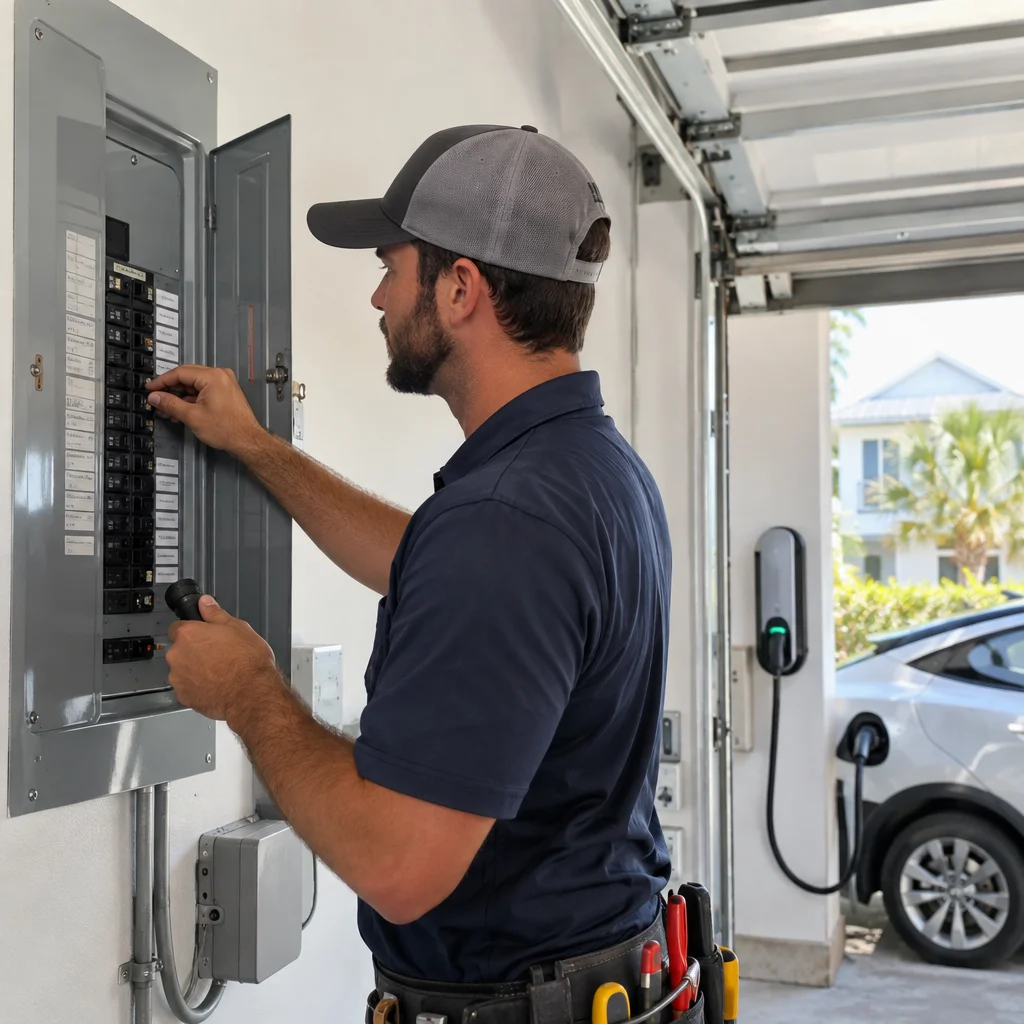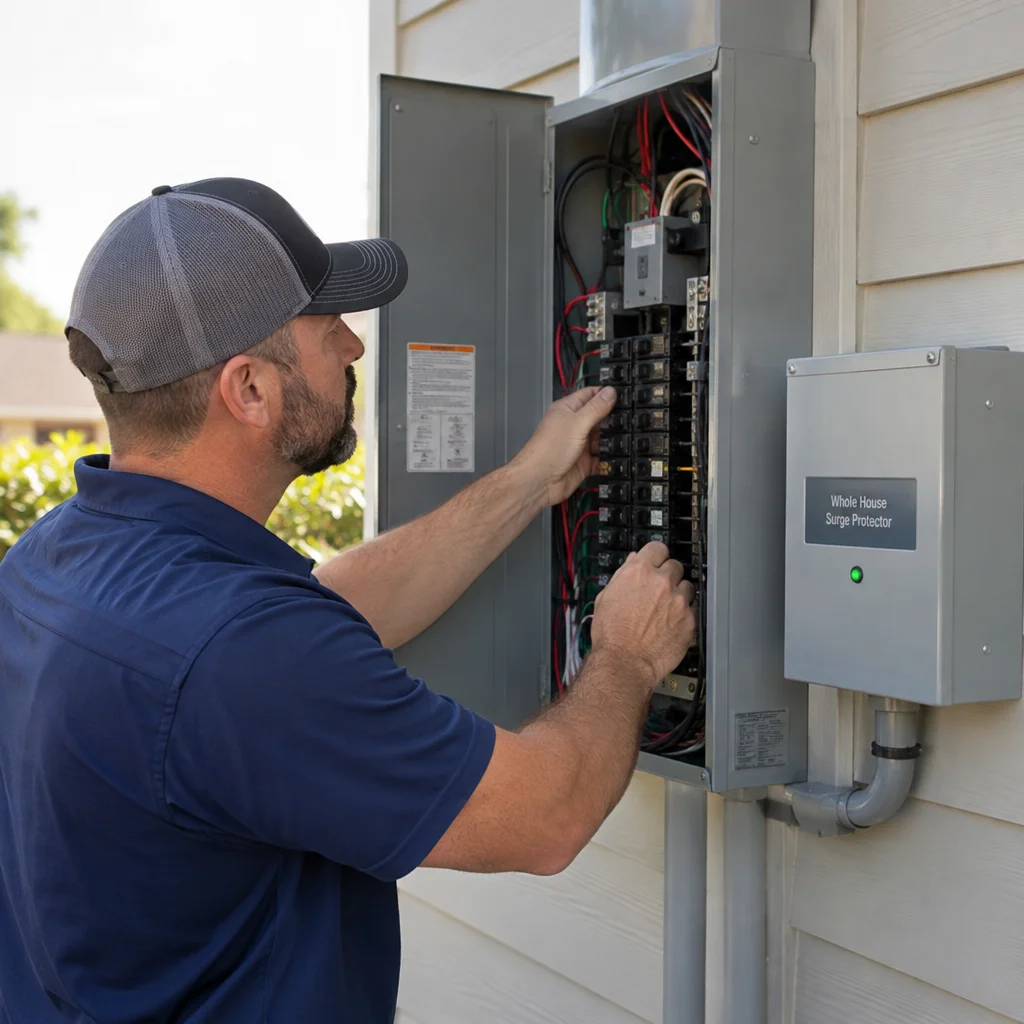
A summer thunderstorm rolls through Crestview, the lights blink, and everything seems normal again. Then the garage door opener stops responding or the refrigerator displays an error. A voltage surge is one possible cause, but similar symptoms can also point to wiring problems, failing equipment, or an unstable electrical connection.
Planning whole home surge protection in Crestview, FL means looking beyond a single device. Panels, breakers, grounding, circuits, and outlets all deserve attention. For homeowners working with A Superior Mechanical, the goal is a coordinated electrical plan that reduces surge exposure while addressing conditions a surge protector cannot fix.
Why Crestview Homes Need More Than a Power Strip
Crestview sits inland in Okaloosa County, but it still experiences Northwest Florida's thunderstorms, tropical weather, heavy rain, and extended periods of humidity. Lightning activity and utility switching can produce transient voltage surges. Storm damage can also cause outages and dangerous electrical faults that require a different response.
Surges can originate inside a home, too. Motors and other electrical loads may create brief voltage disturbances as they switch. Meanwhile, modern refrigerators, washing machines, lighting controls, ceiling fans, and entertainment systems contain electronics that can be sensitive to voltage spikes.
A plug-in surge protector only serves equipment connected to it. It does not protect a hardwired dishwasher or ceiling fan. Protection at the service equipment helps reduce incoming surges across connected circuits, while suitable point-of-use protection adds another layer for sensitive electronics.
Understand What Whole Home Surge Protection Actually Does
A surge protective device, often called an SPD, limits brief overvoltage events by diverting surge current through its designed protective paths. Its performance depends on correct selection, placement, installation, and the condition of the electrical system.
Protection has limits
No residential surge protector can guarantee protection against every event, especially a direct lightning strike. An SPD also does not provide backup power, correct persistent low voltage, or solve a loose neutral. Those conditions need separate evaluation and, sometimes, utility involvement.
Device ratings and installation both matter
An electrician should select a listed device appropriate for the electrical service and installation location. UL 1449 listing, voltage protection ratings, surge current ratings, status indicators, and manufacturer instructions all matter. A large advertised rating alone does not establish whether a product is suitable.
Depending on the device type, protection may be installed at service equipment or on the load side through an approved connection. Short, properly routed conductors help performance. This is not a homeowner panel-wiring project.
Start With the Panel, Not the Shopping Cart
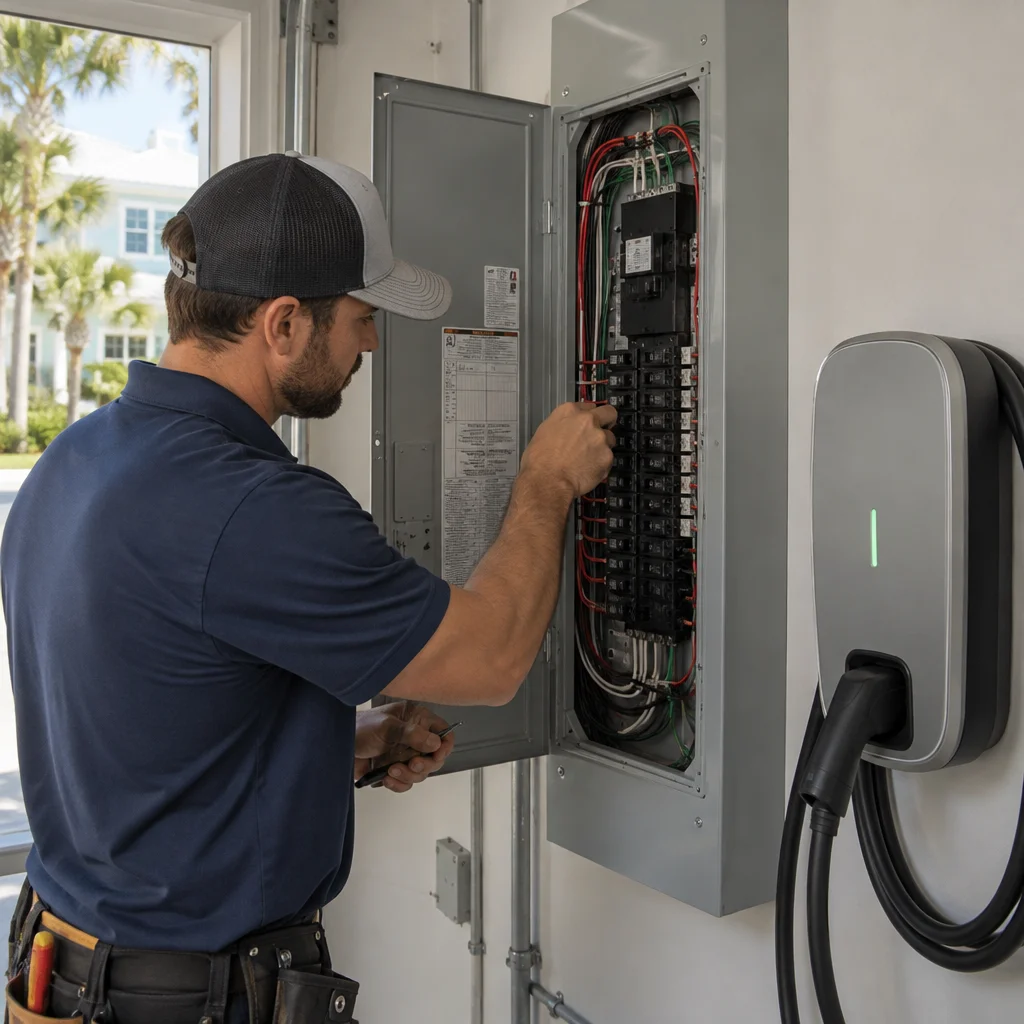
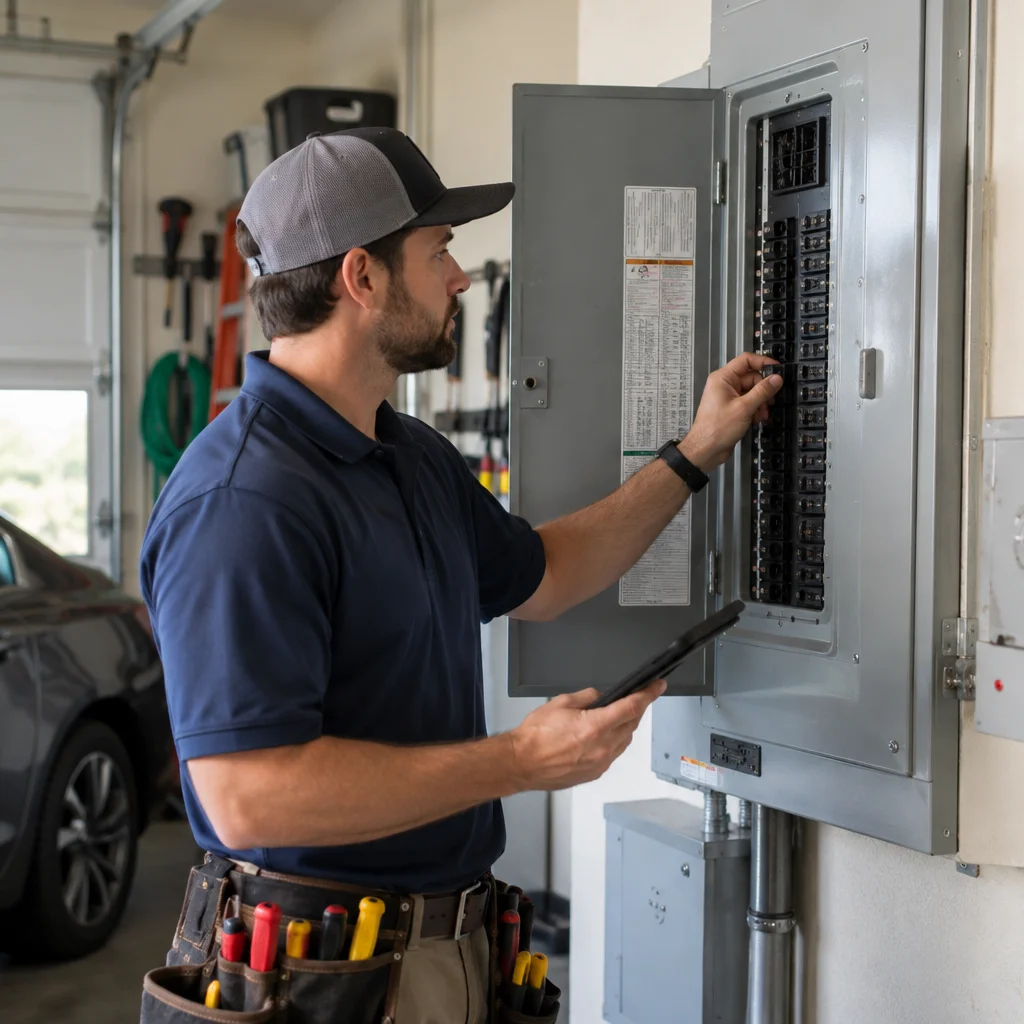
Before installing surge protection, an electrical inspection should establish whether the existing panel can safely support the proposed connection. The electrician can check its rating, breaker compatibility, available space, visible corrosion, and evidence of overheating. A full panel does not automatically require replacement, but it does require a compliant installation plan.
Older Crestview homes may have equipment selected for a much smaller electrical load. Newer homes can also develop capacity issues after additions, garage conversions, or major appliance changes. Age alone is not a reliable measure of safety or spare capacity.
Homeowners searching for electrical panel upgrade near me should ask for a load calculation rather than assume a 200 amp panel upgrade is necessary. Surge protection itself usually does not drive a capacity upgrade. Existing demand, planned equipment, panel condition, and service limitations determine the appropriate solution.
Breaker trouble needs its own diagnosis
Repeated tripping, unusual heat, buzzing, or a breaker that will not reset can indicate an overload, fault, loose connection, or defective component. A search for circuit breaker repair near me should lead to testing, not simply installing a larger breaker. Breaker ratings must remain appropriate for the wiring and equipment.
Grounding and Wiring Are Part of the Protection Plan
Grounding and bonding support electrical safety and proper surge protective device installation. An inspection may include accessible grounding electrode connections, bonding arrangements, and neutral connections. Adding a ground rod without evaluating the system is not a complete surge protection strategy.
A loose neutral is especially important to investigate because it can create damaging voltage imbalances. Lights that become unusually bright in one area while dimming elsewhere deserve prompt professional attention. Do not assume those symptoms are harmless storm effects.
Older wiring also needs an individual assessment. If aluminum branch-circuit wiring is present, connection methods and device compatibility require particular care. Damaged insulation, unsupported cables, uncovered junction boxes, and improvised remodel connections call for wiring repair or code corrections. Whole home surge protection cannot make defective wiring safe.
Give Outlets, Switches, and Lighting Their Own Checkup
Loose plugs, discolored receptacles, crackling switches, and intermittent lighting are not conditions to cover up with surge strips. Outlet repair and light switch replacement may be necessary before expensive equipment is reconnected. A grounded-looking receptacle also does not prove that an effective equipment grounding path exists.
GFCI protection and surge protection serve different purposes. A GFCI helps protect people from certain ground-fault shock hazards. An SPD helps limit transient overvoltage. Neither replaces the other, and required GFCI or AFCI protection must remain part of the electrical plan.
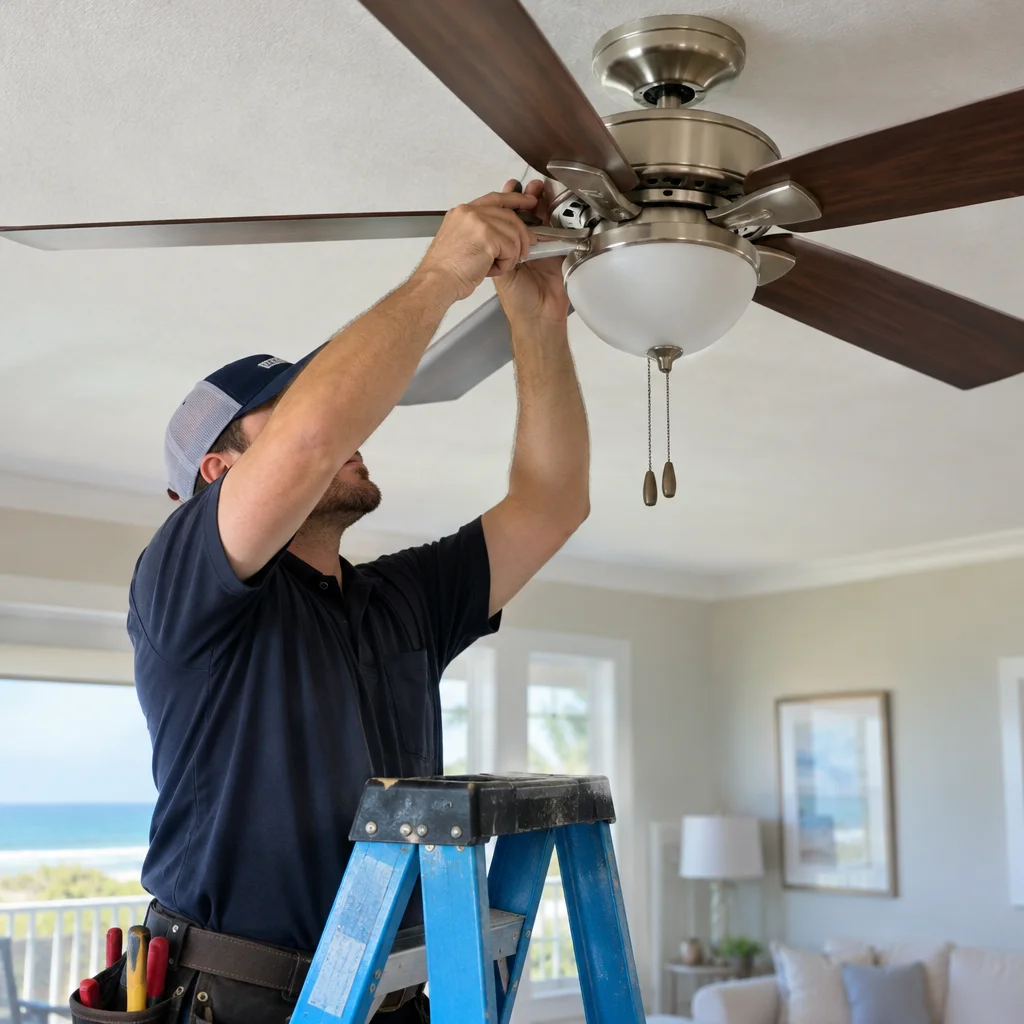
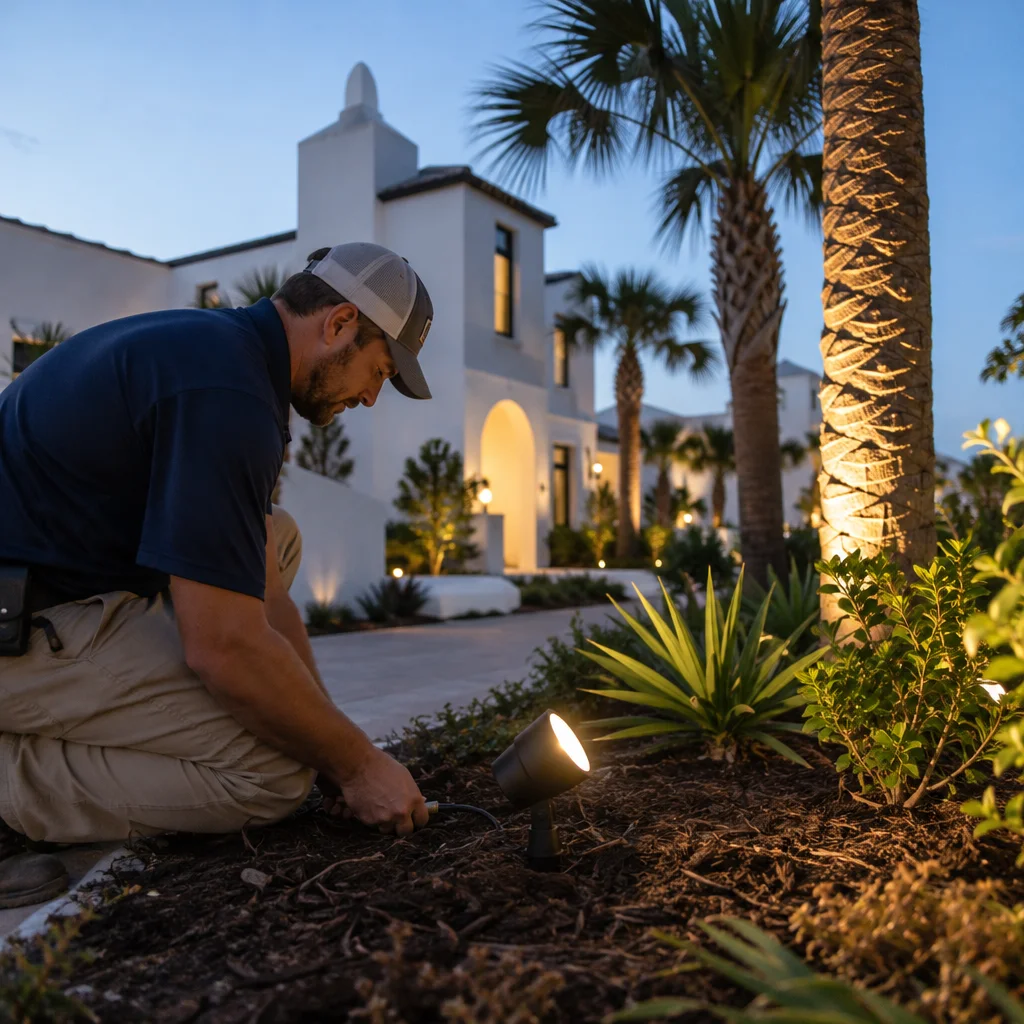
During lighting installation, consider the drivers and controls behind recessed fixtures, landscape lights, and bathroom lighting. Ceiling fans with electronic receivers and smart switches add more sensitive components. Outdoor fixtures need suitable ratings, weather-resistant connections, and required protective devices. Repeated flickering should be diagnosed rather than automatically attributed to surges.
Plan Around Remodels, EV Chargers, and Growing Demand
A kitchen remodel or room addition is a practical time to review surge protection because circuits and panel space are already under discussion. New appliances, a dryer outlet, an EV charger, or added workshop equipment can change demand considerably.
Dedicated circuits should be installed where required for the equipment and applicable code. For EV charger installation, the electrician should evaluate service capacity, charger settings, conductor sizing, circuit protection, and any appropriate load-management options. An SPD does not create additional electrical capacity.
New USB outlets, smart controls, and connected appliances can make everyday life easier, but they should fit a coherent wiring plan. The article on smarter electrical integration in Crestview homes offers related planning context. Keeping circuit directories accurate after each project also makes future troubleshooting and maintenance more efficient.
Coordinate Surge Protection With Generator Power
A generator addresses loss of power. Surge protection addresses short voltage spikes. A home may benefit from both, but neither takes the place of the other.
For homeowners searching for generator transfer switch installation near me, safe isolation from utility power is the first priority. A standby generator needs suitable transfer equipment. A portable generator hookup requires an approved arrangement that prevents backfeeding, with equipment selected for the panel and intended loads. Never feed generator power through a household receptacle.
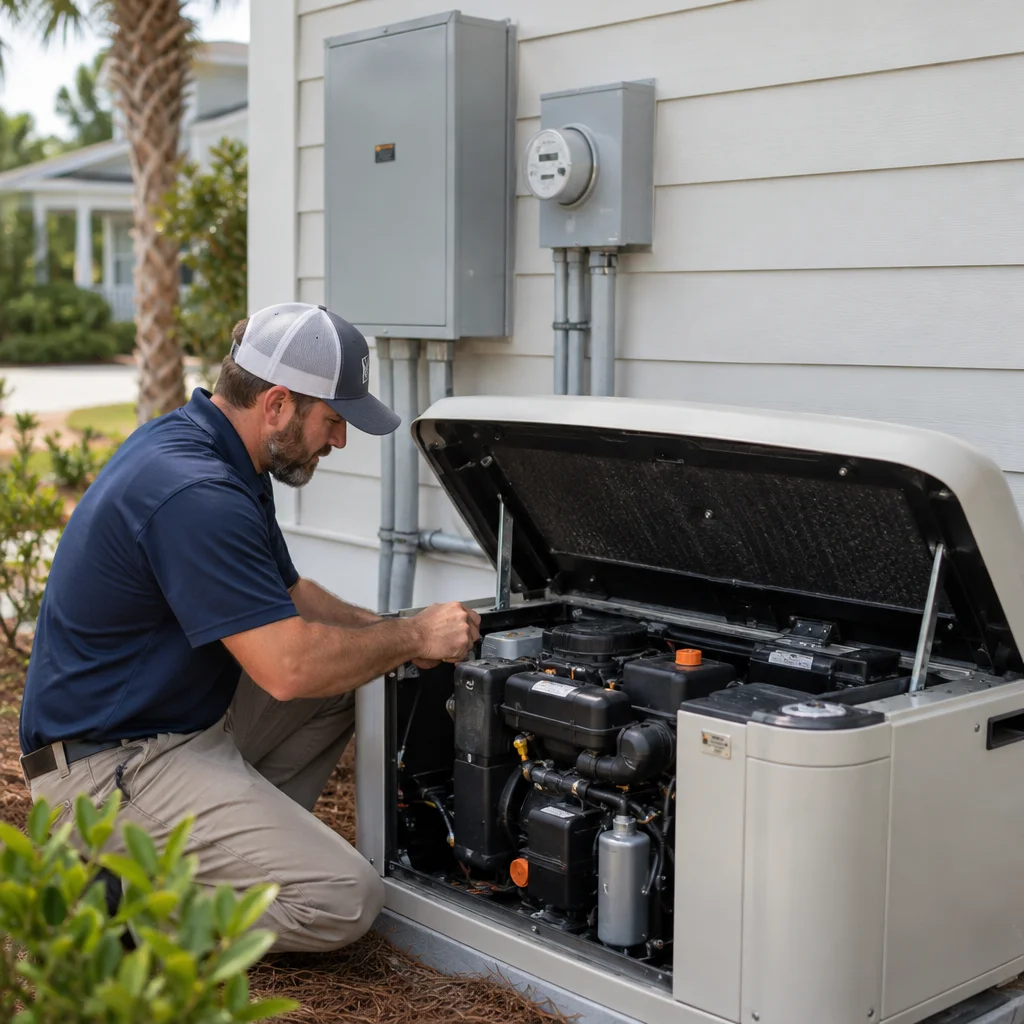
When planning generator installation and maintenance in Crestview, ask how the surge protective device will connect relative to the transfer equipment. The design should account for both normal and backup operation.
Larger projects involving selected circuits, load management, or broader outage coverage may call for whole home backup planning. Generator maintenance and safe outdoor placement remain essential, particularly during storm season.
Recognize Problems That Cannot Wait
A failed television after a storm can wait for a scheduled assessment if there are no other warning signs. Smoke, sparking, a burning smell, a hot panel, or water contacting electrical equipment demands immediate attention.
Keep away from wet equipment and damaged service conductors. Do not remove the panel cover or approach a flooded panel to turn off power. If there is fire, active arcing, or immediate danger, move to safety and call 911. Report downed lines to the utility and keep everyone well away.
Partial power loss or extreme changes in lamp brightness can signal a service connection problem. Contact the utility and an electrician promptly. A damaged service mast may require coordinated repairs and utility disconnection before work begins. A Superior Mechanical's emergency electrical services page provides a starting point for urgent electrical help in Crestview.
A Practical Inspection and Maintenance Routine
Homeowners searching for electrical safety inspection near me can make the visit more productive by noting when problems occur. Record which circuits trip, whether lights flicker during appliance startup, and whether trouble began after a storm or renovation.
Check visible status indicators
Many surge protective devices have lights or alarms that show protection status. Follow the manufacturer's instructions for checking them, and arrange service if an indicator shows a fault or loss of protection. Do not open electrical equipment to inspect the device yourself.
Review protection after major events
Surge components can wear out after repeated events or a significant surge. Have damaged equipment and abnormal operation assessed after severe weather. There is no universal replacement interval for every SPD, so use manufacturer guidance and the device's condition.
Maintain the rest of the safety system
Test GFCIs and smoke and carbon monoxide alarms according to their instructions. During electrical updates, review alarm placement, age, and interconnection. Smoke detector and carbon monoxide detector services complement surge planning, particularly in homes using fuel-burning appliances or backup generators.
Build a Local Electrical Plan With Clear Priorities
A useful proposal should identify the SPD, installation location, required panel work, applicable permitting, and any separate safety repairs. Ask what the device's indicators mean, how to check them, and what its warranty does and does not cover. Where applicable, surge protection requirements in the adopted electrical code should be addressed during service changes or other qualifying work.
If several repairs are needed, prioritize hazardous conditions before convenience upgrades. Homeowners considering payment options can review electrical financing considerations in Crestview while discussing the scope and timing of necessary work.
Local electrical service matters because storm exposure, utility coordination, permitting, and existing home conditions all influence installation. A Superior Mechanical provides a local starting point for electrical service planning in Crestview and properties throughout Okaloosa County.
To plan whole home surge protection, contact A Superior Mechanical with your panel information, recent electrical symptoms, and upcoming projects. A coordinated assessment can separate immediate repairs from preventive improvements and help protect the equipment your household depends on.
Find Whole Home Surge Protection in Crestview, FL
If you need Whole Home Surge Protection in Crestview, FL, visit our local service page or contact A Superior Mechanical today.
Map of Crestview, FL
Frequently Asked Questions
Will whole home surge protection prevent all lightning damage?
No. A properly selected and installed surge protective device can reduce exposure to transient voltage surges, but it cannot guarantee protection from every event or a direct lightning strike. Coordinated point-of-use protection can add another layer for sensitive electronics.
Does my Crestview home need a panel upgrade before surge protection can be installed?
Not necessarily. An electrician should evaluate panel condition, compatibility, connection options, and available space. A panel upgrade may be needed for unsafe equipment or increased electrical demand, but surge protection alone does not automatically require a larger panel.
Can whole home surge protection work with a backup generator?
Yes, when the installation is designed for the home's service and transfer equipment. An electrician should coordinate SPD placement with the generator connection. Surge protection does not replace approved transfer equipment, generator maintenance, or other electrical safety measures.
Related Articles
Photo Gallery