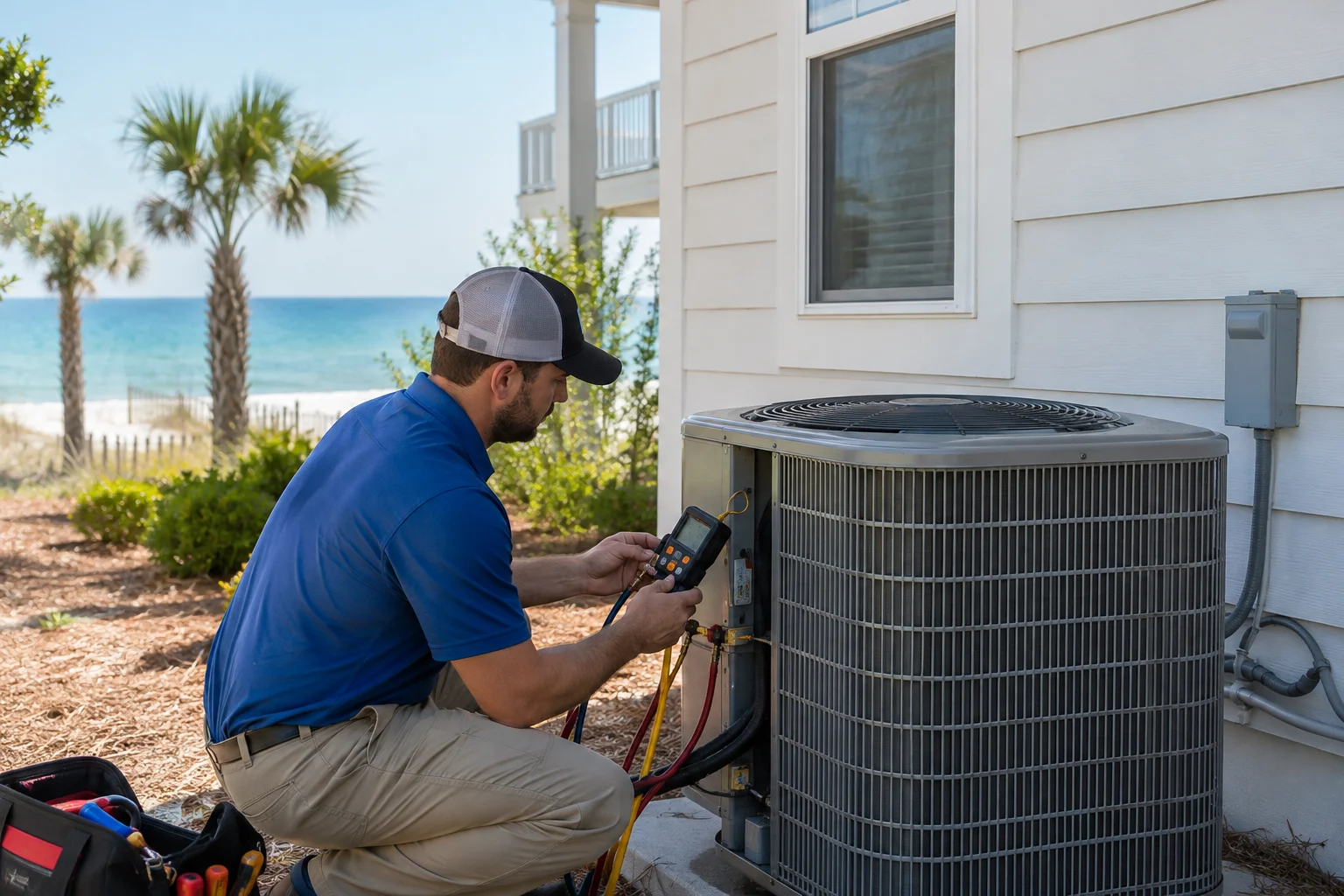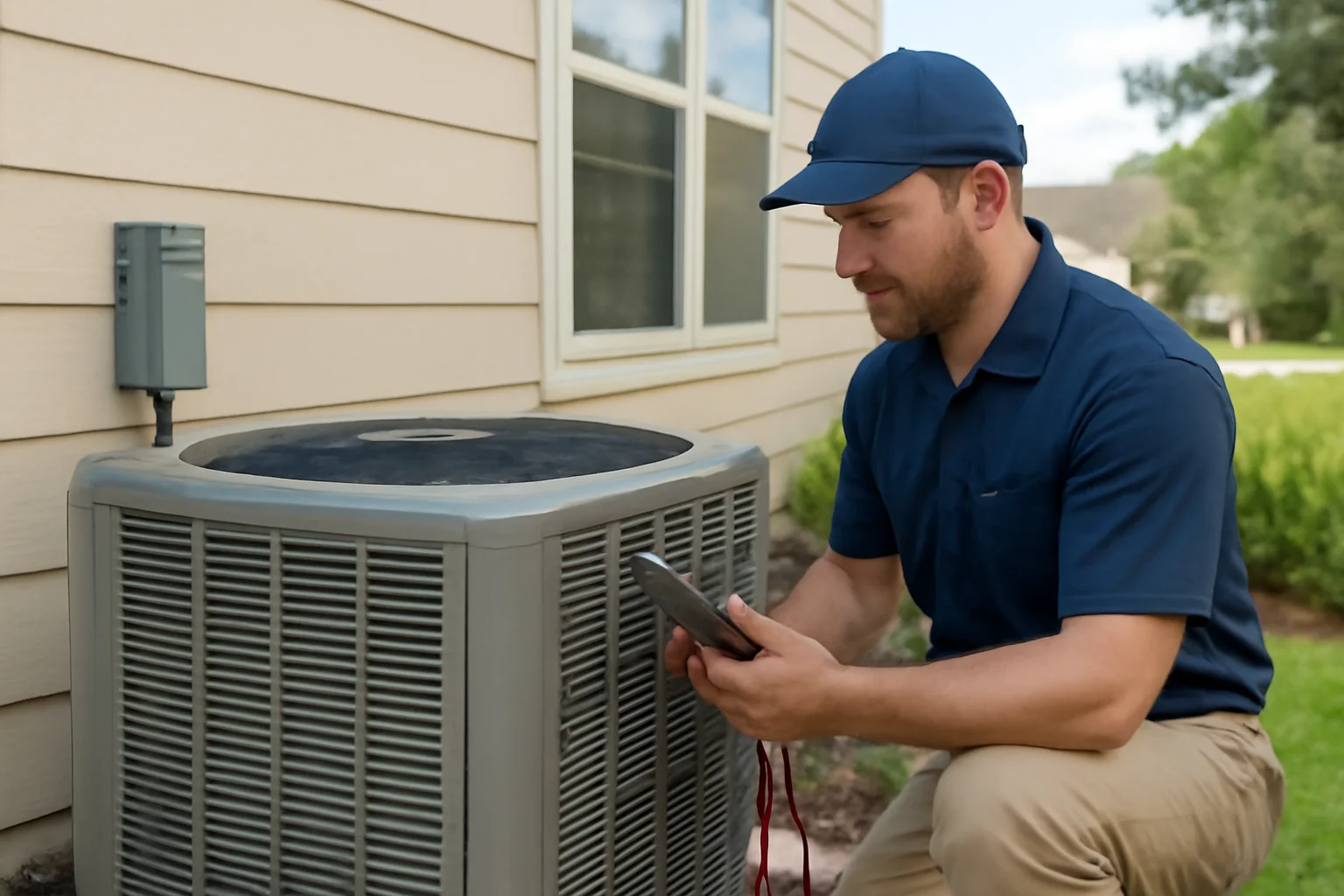
Seaside, FL cooling is a year-round job, even when the calendar says otherwise. Between Florida heat, heavy humidity, and salt air near the coast, air conditioning systems work harder than they do in many inland areas. That constant stress is exactly why a solid approach to air conditioning inspection matters, and why better HVAC maintenance can make those inspections more accurate and more useful.
If you have ever had an AC service visit where the technician focused on symptoms but could not clearly trace the root cause, you already know the problem. Maintenance habits, airflow conditions, and system history affect what an inspector can confirm in the moment. This guide walks through what local homeowners often overlook in Seaside and how preventive HVAC maintenance supports a thorough, professional inspection.
Why Seaside conditions change what an AC inspection should catch
In Seaside, your air conditioner is not just cooling. It is managing moisture, fighting corrosion, and maintaining airflow across ductwork that may be under strain from age, renovations, or coastal construction patterns.
Several local factors can complicate an air conditioning inspection:
- Humidity and high cooling loads: Florida humidity can increase condensate formation and stress the condensate drainage pathway.
- Salt air and corrosion risk: Outdoor components can accumulate residue and corrode faster, which can affect contact points, fan operation, and airflow performance.
- Airflow restrictions: Dirty filters, blocked return vents, and ductwork issues can make the system short-cycle or run longer than it should.
- Refrigerant system sensitivity: Refrigerant systems rely on stable operating conditions. If airflow and indoor load are off, readings and observations can be misleading without context.
When maintenance is behind, the inspection has less to work with. When maintenance is consistent, the inspection can focus on real issues instead of guessing why performance is inconsistent.
What homeowners often overlook before an AC inspection appointment
Even when you schedule an HVAC service with a licensed HVAC contractor, a few common homeowner oversights can cause the inspection to feel incomplete. Some of these are easy to fix; others require professional attention.
1) Filters and airflow problems that mask the true issue
Many Seaside homes have cooling comfort complaints that come from airflow, not the main refrigeration system. A clogged filter, a return vent blocked by furniture, or a supply vent with paint or debris can reduce airflow across the indoor coil and heat exchanger. That can lead to:
- Lower cooling output
- Longer run times and higher energy use
- Higher indoor humidity that makes rooms feel warmer than the thermostat setting
A technician will check airflow during an air conditioning service visit, but consistent filter changes help the inspection reflect the system’s normal behavior rather than a temporary restriction.
2) Condensate drainage issues that show up as “mystery” comfort problems
When condensate drainage is partially blocked or the drainage pathway is not flowing correctly, moisture can back up or fail to clear as intended. Homeowners may notice:
- Water around the indoor unit or near a drain line
- Musty odors
- Short cycling during humid weather
Because Florida humidity pushes condensate production, condensate drainage problems can become more obvious in summer. Preventive maintenance can keep the drainage system cleaner and reduce the chance that an inspection has to work around active moisture issues.
3) Thermostat settings and sensor placement that confuse system performance
Thermostats are part of the comfort system. If the thermostat is exposed to direct sun, mounted near a heat source, or set to aggressive schedules, the AC can cycle more frequently than it should. That can affect how the system responds during an inspection and can create the impression of a refrigerant or mechanical problem when the real driver is control behavior.
During a professional visit, technicians can evaluate thermostat operation as part of the overall inspection. Still, homeowners can help by ensuring thermostat batteries are fresh, settings are consistent, and the thermostat location is not constantly influenced by sunlight or drafts.
4) Ductwork leakage or ductwork restrictions that create uneven cooling
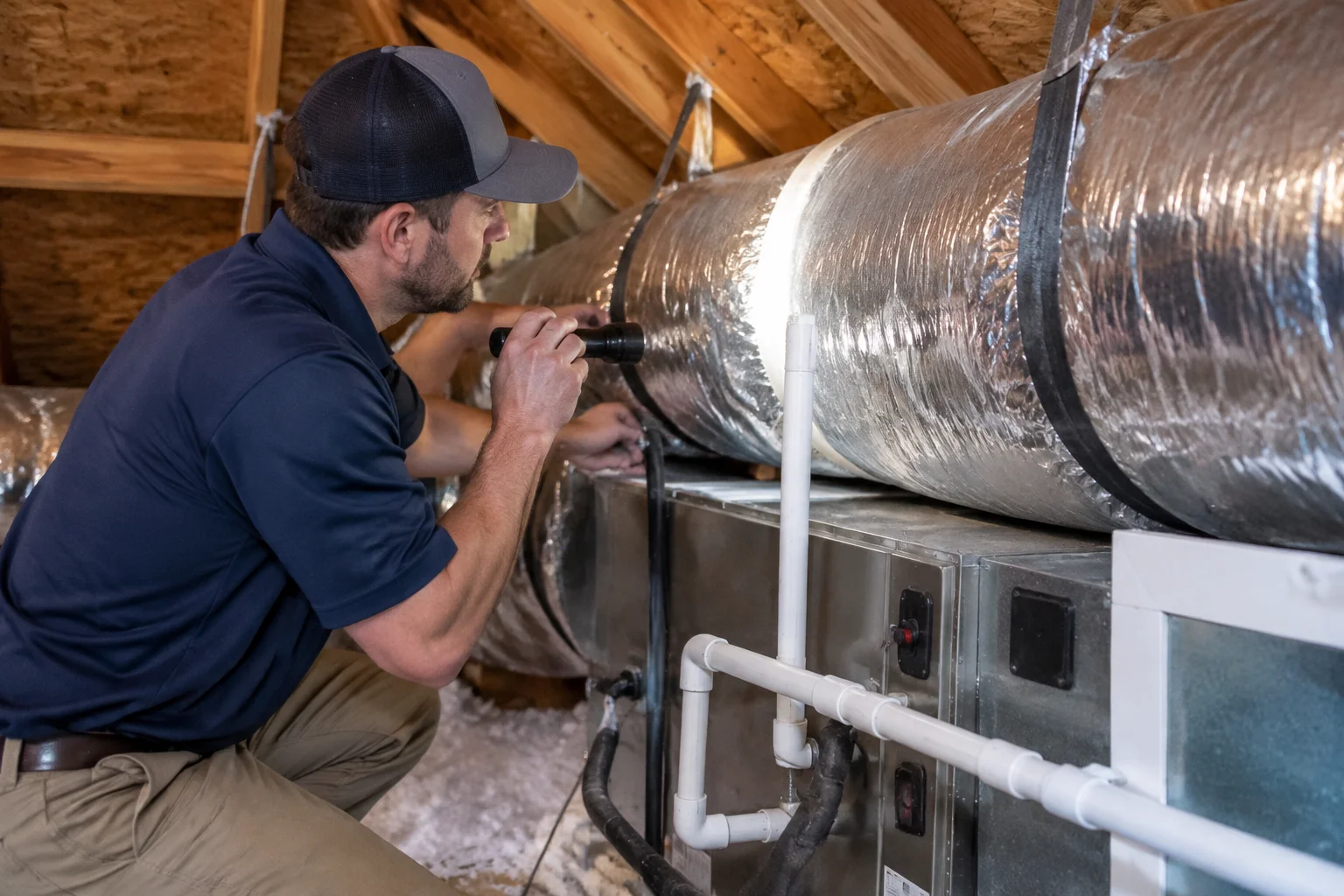
Many Seaside homes have ductwork that has aged, shifted, or been affected by renovations. Even small leaks can reduce airflow, and restrictions can create hot and cold rooms. Uneven airflow can also contribute to indoor air quality concerns, especially when dust and moisture are present.
If your inspection reveals airflow symptoms, it helps when routine maintenance has been keeping filters and system cleanliness up to date. That way, the technician can better separate ductwork issues from coil and blower performance.
5) Neglecting indoor air quality basics until comfort complaints start
Florida humidity can contribute to microbial growth when air circulation and filtration are not consistent. Homeowners may wait until they notice odors, allergy flare-ups, or “stale” air to pursue indoor air quality services.
Better HVAC maintenance supports a cleaner system environment, which makes an inspection more meaningful. It also helps the technician evaluate whether your comfort issue is tied to filtration, airflow balance, or humidity control.
If you want to understand how indoor air quality testing fits before comfort issues spread, read Why Seaside Homes Benefit From Indoor Air Quality Testing Before Comfort Issues Spread.
How preventive HVAC maintenance improves the quality of an air conditioning inspection
Maintenance does not replace a professional inspection. Instead, it improves what the inspection can confirm. Here is how.
Cleaner airflow paths help technicians interpret performance correctly
When filters are maintained and vents are unobstructed, the indoor unit can move air as designed. That gives the inspector a clearer view of:
- How well the system cools under normal airflow
- Whether airflow imbalance is contributing to humidity complaints
- Whether the indoor coil and blower are operating in a healthy range
Without that baseline, the inspection may show symptoms that are really caused by airflow restrictions.
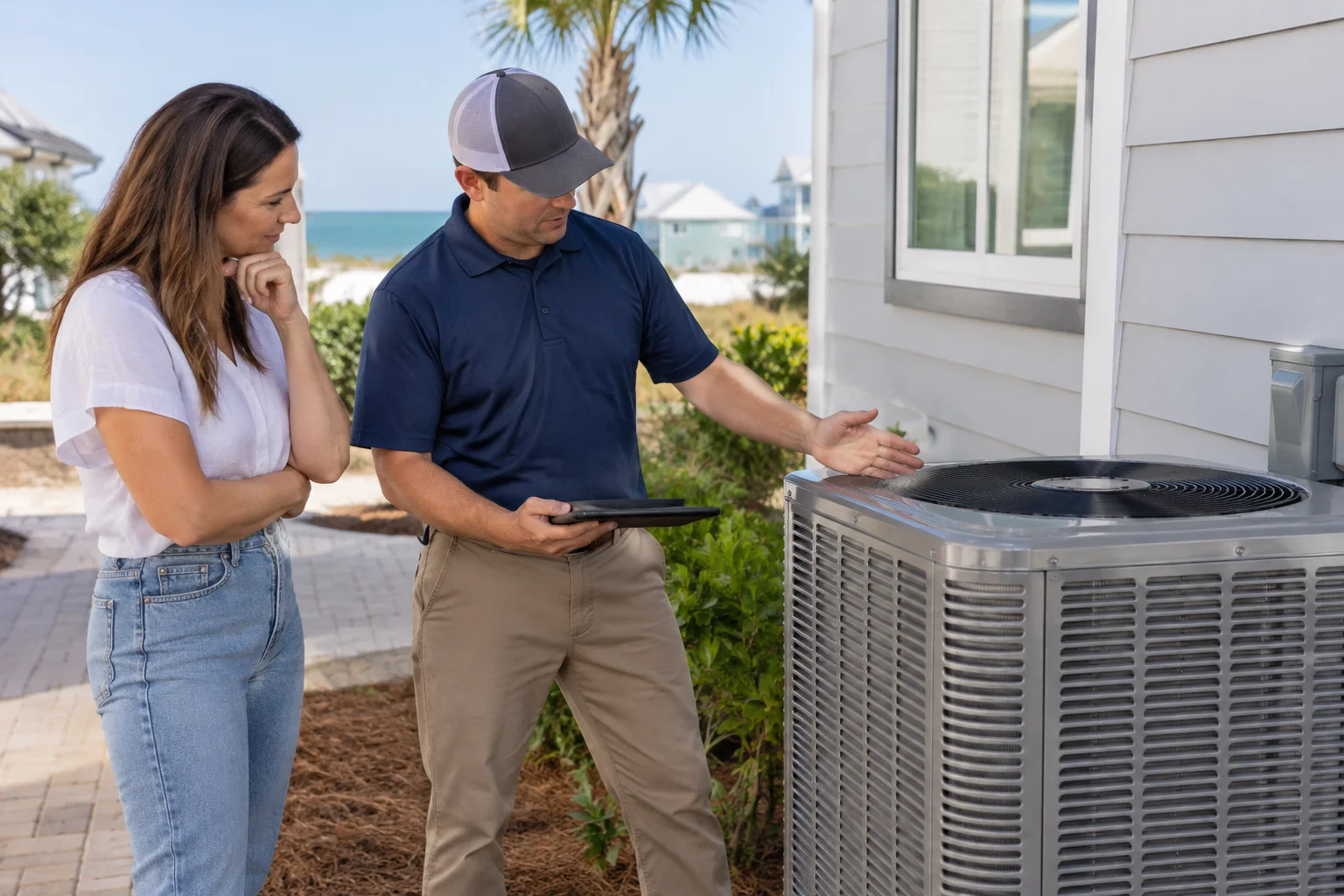
Regular attention to the outdoor unit supports better observations
In coastal areas, outdoor units can collect debris and salt residue. Preventive maintenance helps keep the system ready for inspection by reducing the noise created by buildup. That matters for:
- Airflow across the outdoor coil
- Fan operation
- Component cleanliness at the time of evaluation
It also supports safer, more accurate inspection steps because technicians can see conditions more clearly.
Maintenance history helps connect symptoms to likely causes
During an inspection, a technician looks for patterns. If your home has a consistent maintenance record, it is easier to spot what changed since the last season. If maintenance has been delayed, it can be harder to tell whether issues are new or long-standing.
That is why homeowners who keep up with HVAC maintenance near me tend to get more actionable inspection results. They are not starting from a blank slate.
What a thorough Seaside AC inspection usually includes
Every home and system is different, but a professional air conditioning inspection typically focuses on the whole cooling system. For Seaside homeowners, the goal is to check comfort, safety, and system readiness under Florida heat and humidity.
Airflow and system performance checks
Technicians evaluate how air is moving through the system, including the indoor unit and the ductwork connections. If airflow is off, cooling comfort and humidity control can suffer. That can show up as uneven temperatures, longer run times, or rooms that feel damp.
Refrigerant system observations without guesswork
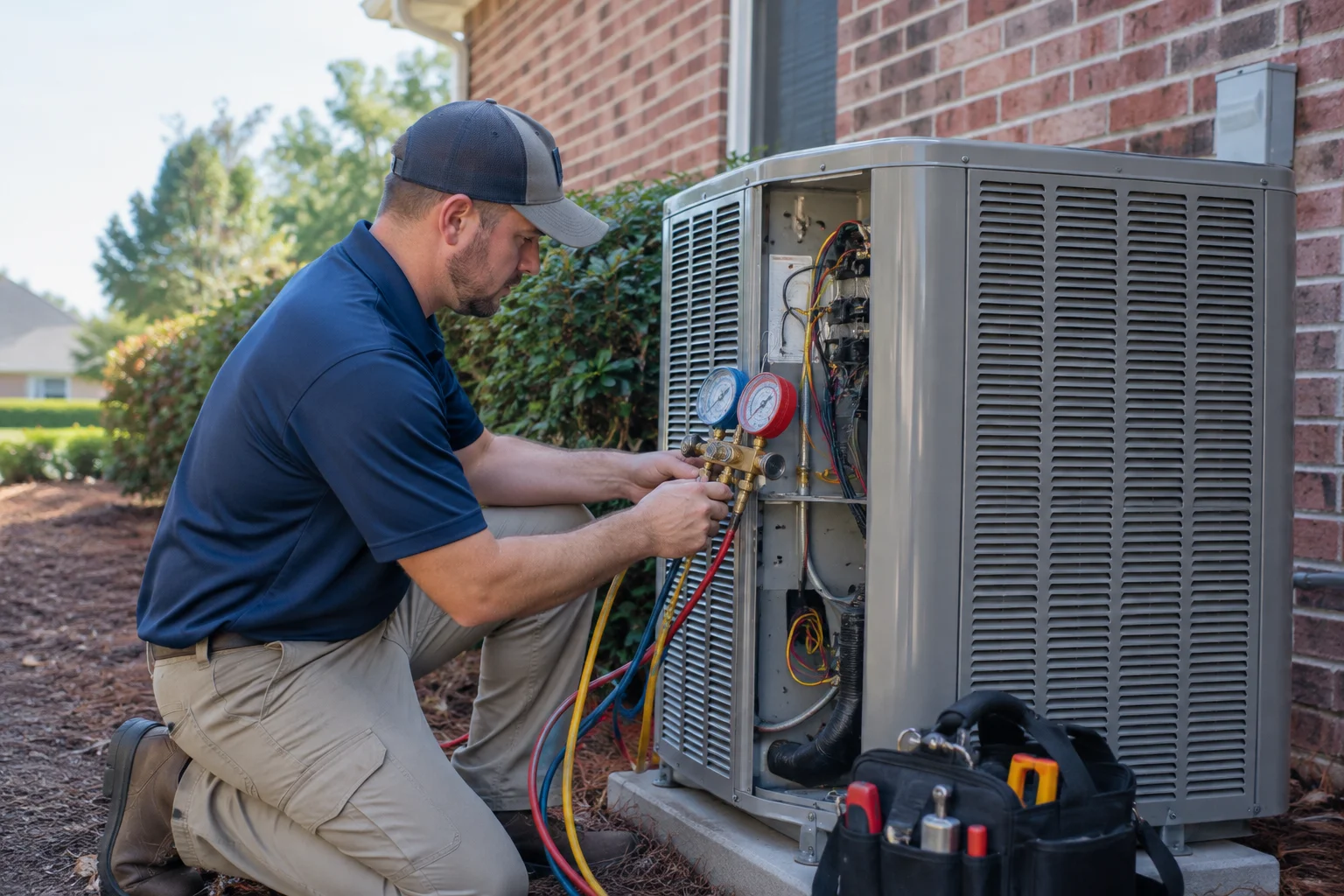
Refrigerant systems are sensitive to operating conditions. A professional inspection considers the entire cooling context, including airflow and indoor load, before drawing conclusions. If something seems out of range, a technician may recommend further evaluation on-site.
Homeowners should avoid assuming the root cause is refrigerant without an in-person assessment. Refrigerant diagnosis requires careful, professional evaluation.
Condensate drainage review
Because humidity is a constant in Seaside, condensate drainage is a key inspection point. A technician can check whether the condensate pathway is clearing properly and whether moisture is being managed as expected.
Thermostat and control behavior
Inspecting thermostat operation and how the system responds to calls for cooling helps confirm whether comfort issues are mechanical, control-related, or both.
Ductwork and airflow balance notes
During inspection, technicians often look for signs of ductwork problems that affect airflow. If you see persistent hot or cold spots, excessive dust buildup, or weak airflow from registers, the inspection can help identify whether duct repair may be part of the solution. For homeowners searching for duct repair near me, this is where those conversations begin.
Common AC inspection findings in Walton County coastal homes
Seaside homes are not identical, but patterns do show up. Here are issues that often influence air conditioning inspection outcomes in coastal Walton County.
Repeated short cycling during humid afternoons
Short cycling can be caused by airflow restrictions, control settings, or other system factors. When an AC runs in bursts instead of steady cooling cycles, indoor humidity control can suffer and comfort can feel inconsistent.
Preventive HVAC maintenance helps by keeping airflow and system cleanliness closer to normal, so inspection findings are easier to interpret.
Weak airflow and “it cools, but not evenly” complaints
Uneven cooling often points to ductwork issues, blower performance, or filter problems. If airflow is reduced, the system may still run but struggle to maintain comfort across rooms.
If you are searching for HVAC repair near me for inconsistent cooling, ask whether airflow and ductwork balance are being evaluated as part of the inspection.
Moisture and indoor air quality concerns
When humidity is not managed well, indoor air quality can decline. Dust, odors, and allergy symptoms can worsen. A maintenance-driven approach supports better humidity control, which can improve the overall indoor environment.
If you want a deeper look at how to address indoor air quality before comfort problems spread, see the indoor air quality testing article.
Corrosion and debris impacts on outdoor performance
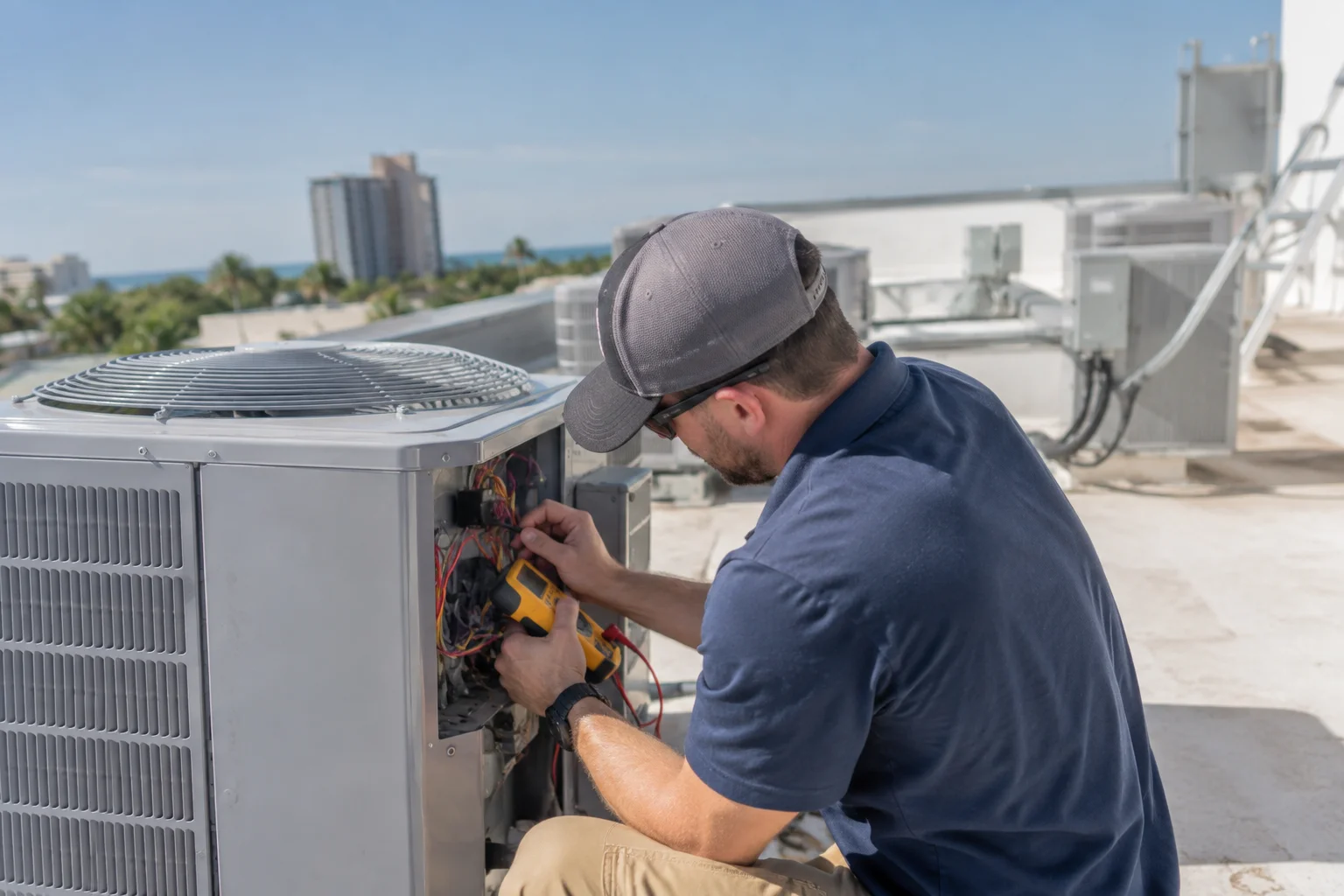
Coastal salt air can contribute to corrosion and buildup. That can affect airflow across coils and overall system efficiency. Maintenance helps reduce the impact of buildup and supports clearer inspection observations.
Energy use and comfort: the inspection is only as good as the system baseline
Homeowners often schedule AC service because the home feels too warm, humidity feels high, or the air conditioner runs longer than it used to. What is easy to miss is how much those issues can be influenced by airflow, filtration, and cleanliness.
When airflow is restricted, the system may use more energy to move the same amount of cooling. When condensate drainage is not functioning properly, humidity can linger. When ductwork is out of balance, some rooms may never reach comfort even if the thermostat is set correctly.
That is why preventive HVAC maintenance is not just about preventing breakdowns. It also helps your inspection reflect the real state of the system, so recommendations are more likely to match what your home actually needs.
Emergency cooling concerns: why maintenance and inspection should happen before the peak
Seaside summers can turn fast. When an AC fails during the hottest stretch, the priority becomes restoring cooling quickly. That is where preventive HVAC maintenance near me searches make sense. The more prepared your system is, the less likely you are to face a mid-summer emergency cooling situation.
If you want to see how local homeowners can get ready ahead of time, read Keeping Seaside Homes Ready for HVAC Emergencies.
How to choose a licensed HVAC contractor for air conditioning inspection in Seaside
Air conditioning inspection is not a one-size-fits-all checklist. It requires professional judgment based on what is happening in your home, your ductwork, and your system’s operating behavior.
When you are comparing AC repair near me or HVAC contractor near me options, look for a company that:
- Approaches inspection as a full system evaluation, not just a quick look outside
- Understands coastal conditions like humidity and salt air
- Explains how airflow, condensate drainage, thermostats, and refrigerant systems interact
- Uses a maintenance-first mindset so problems are addressed early
If you are in Seaside or the surrounding area, you can explore service options through A Superior Mechanical’s Seaside service area and the broader Walton County HVAC service area.
Other cooling upgrades that connect to better inspections
Some homeowners schedule inspections because they are already thinking about upgrades. An inspection can help clarify whether issues are tied to system performance, airflow problems, or comfort and humidity control. From there, the next step may be maintenance, repair, or a plan for system replacement.
Heat pump service and inspection planning
If your home uses a heat pump or you are considering a switch, it is worth pairing inspection and maintenance with your heat pump service plan. For more on that, review Heat Pump Services.
New construction and planned ductwork performance
Homes built for coastal weather often benefit from careful planning around airflow and ductwork. If you are working on a new build, see New Construction Air Conditioning.
Property management and rental comfort consistency
For rentals, consistent maintenance can make inspections more reliable and help reduce emergency cooling concerns. Property managers can also benefit from a system plan that keeps indoor air quality stable. Learn more at Property Management HVAC Services.
Commercial HVAC repair considerations
If you are inspecting cooling for a commercial space, the inspection needs may be different based on occupancy and load. For that, check Commercial HVAC Repair.
Air conditioning inspection outcomes improve when you do these maintenance basics first
You do not have to be an HVAC expert to support a better inspection. A few practical steps help your system and help your technician evaluate it accurately.
- Replace or check filters regularly: This supports airflow and helps indoor humidity control.
- Keep supply and return vents clear: Furniture, rugs, and storage can block airflow.
- Note thermostat behavior: If the temperature swings or the system short cycles, write down what you notice before the visit.
- Watch condensate drainage: Any water pooling or recurring moisture should be mentioned during the inspection.
- Schedule maintenance before peak demand: When an HVAC maintenance near me search happens after the hottest week, the system is already stressed.
If you are already seeing comfort clues, you may find this helpful: Seagrove Beach Comfort Clues That Point to a Better Air Conditioning Inspection.
When to call for an air conditioning inspection right away
Even with maintenance, some issues require prompt professional evaluation. Call an HVAC contractor for an air conditioning inspection when you notice:
- Cooling that suddenly weakens or stops
- Frequent short cycling or the system running constantly without comfort recovery
- Indoor humidity that stays high even with the thermostat set appropriately
- Moisture signs, odors, or concerns around condensate drainage
- Visible airflow problems, unusual sounds from the indoor blower, or weak register output
Because Seaside homes experience high humidity and coastal conditions, ignoring these signs can turn a manageable repair into an emergency cooling situation.
If you want a detailed, multi-point evaluation designed for local conditions, schedule your visit through this Seaside air conditioning inspection service page and talk with a professional about both preventive HVAC maintenance and any AC repair needs that show up during the inspection.
Find Air Conditioning Inspection in Seaside, FL
If you need Air Conditioning Inspection in Seaside, FL, visit our local service page or contact A Superior Mechanical today.
Map of Seaside, FL
Frequently Asked Questions
How often should Seaside homeowners schedule an air conditioning inspection?
Most homeowners benefit from preventive HVAC maintenance on a regular seasonal schedule. If your system runs heavily during Florida heat and humidity, or if you notice comfort issues, you may want an inspection sooner to confirm airflow, condensate drainage, and overall cooling performance.
Can poor maintenance make an AC inspection miss the real problem?
It can. Dirty filters, blocked vents, and inconsistent airflow can create symptoms that look like a refrigerant or mechanical issue. When maintenance is kept up, technicians can evaluate system performance under more normal conditions and make more accurate recommendations.
What does an AC inspection focus on besides refrigerant?
A thorough inspection typically looks at airflow, indoor comfort and humidity control, condensate drainage, thermostat operation, and ductwork-related airflow balance. Refrigerant systems are evaluated in context, but the inspection is broader than refrigerant alone.
Why do coastal conditions in Seaside matter for AC inspections?
Salt air and high humidity can increase corrosion risk and moisture-related stress. That can affect outdoor unit performance, condensate drainage behavior, and overall comfort. A local HVAC contractor familiar with Seaside conditions can tailor the inspection to what coastal homes experience.
Should I schedule indoor air quality services before or after an AC inspection?
It depends on your symptoms, but an AC inspection can help identify whether comfort and air quality concerns are tied to filtration, airflow, or humidity control. If indoor air quality services are needed, the inspection findings can guide the right next step. For related guidance, see this indoor air quality testing article.
Related Articles
Photo Gallery