A brighter kitchen, a welcoming front porch, or a ceiling fan that finally lights the whole room can make a home feel different. But a successful lighting upgrade involves more than choosing a fixture. The wiring, switches, connections, and circuit supplying it need to support the installation safely.
For homeowners planning lighting and fixtures in DeFuniak Springs, FL, that means considering both the finished space and the electrical system behind it. Older homes, newer construction, and growing households have different needs. A Superior Mechanical helps homeowners connect lighting improvements with practical electrical planning rather than treating each fixture as an isolated project.
Start with the room, then look at the circuit
Before shopping for fixtures, consider how you use each space. A kitchen needs focused light at counters and sinks, while a living room benefits from adjustable brightness. Hallways, stairs, and exterior entrances need dependable illumination without deep shadows or uncomfortable glare.
Layering ambient, task, and accent lighting usually works better than making one overhead fixture excessively bright. Compare lumens for light output, color temperature for appearance, and dimming compatibility for control. Use consistent color temperatures in connected spaces unless you have a specific design reason not to.
Make a useful lighting plan
Identify fixture locations, switch locations, furniture placement, and any areas that remain dark. Note whether outlets already carry space heaters, kitchen appliances, or office equipment. LED lighting generally uses little power, but an existing circuit may still have damaged wiring, poor connections, or too many competing loads.
Professional lighting and fixture services in DeFuniak Springs should account for these conditions before installation. A room-by-room plan also helps avoid opening the same wall twice when adding switches, receptacles, or new wiring.
Older homes and newer homes need different checks
DeFuniak Springs has established neighborhoods, historic properties, and newer residential development. In older homes, electrical work may reflect several generations of renovations. A modern-looking fixture does not confirm that the wiring above it has been updated or that its electrical box provides suitable support.
An electrician may find deteriorated insulation, missing equipment grounding, crowded boxes, or concealed connections that need correction. These conditions call for evaluation, not assumptions based on the home's age alone. Where problems are widespread, whole home rewiring may be more sensible than repeated isolated repairs.
Newer homes can also need changes. Builder-installed lighting may not suit a home office, workshop, or remodeled kitchen. Additions and converted garages can increase power demand and require new circuits. Permits, inspections, and code compliance depend on the scope of work and applicable local requirements.
Panels and breakers set the limits for expansion
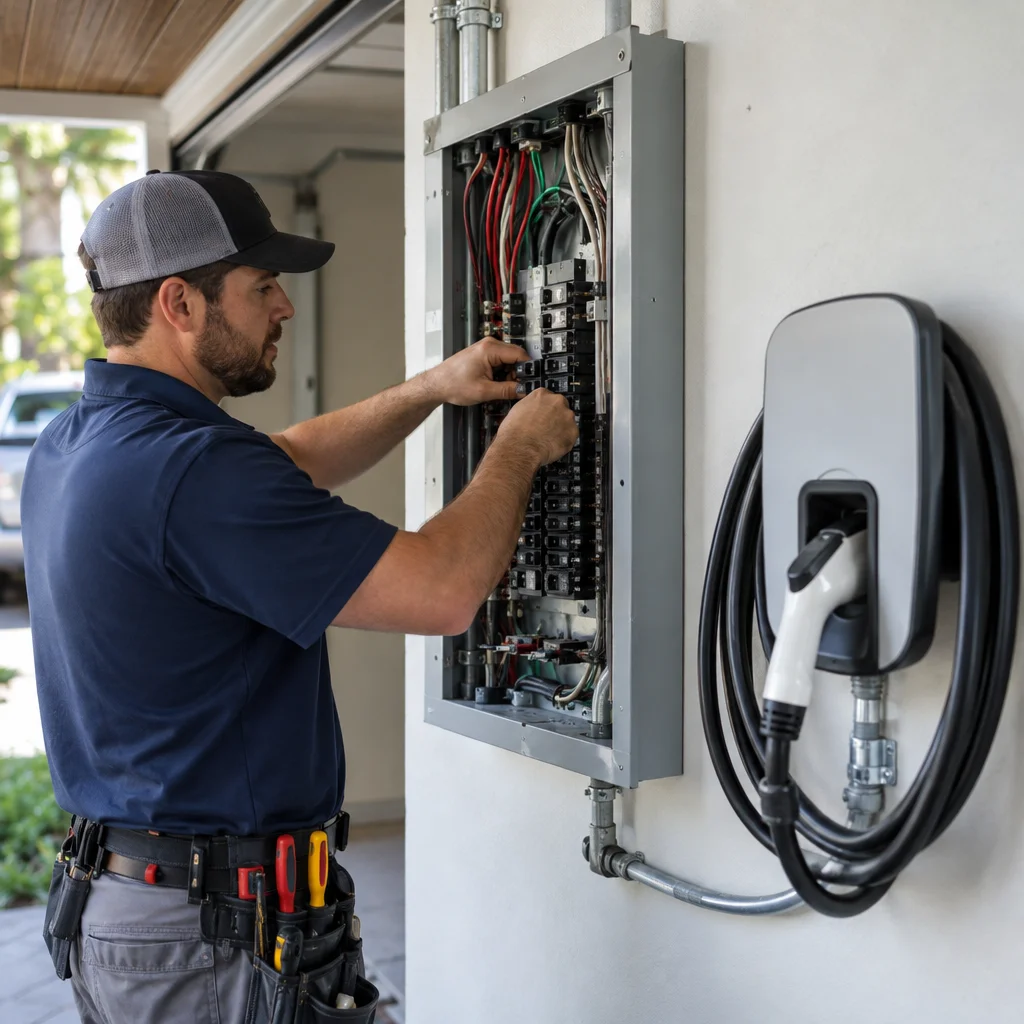
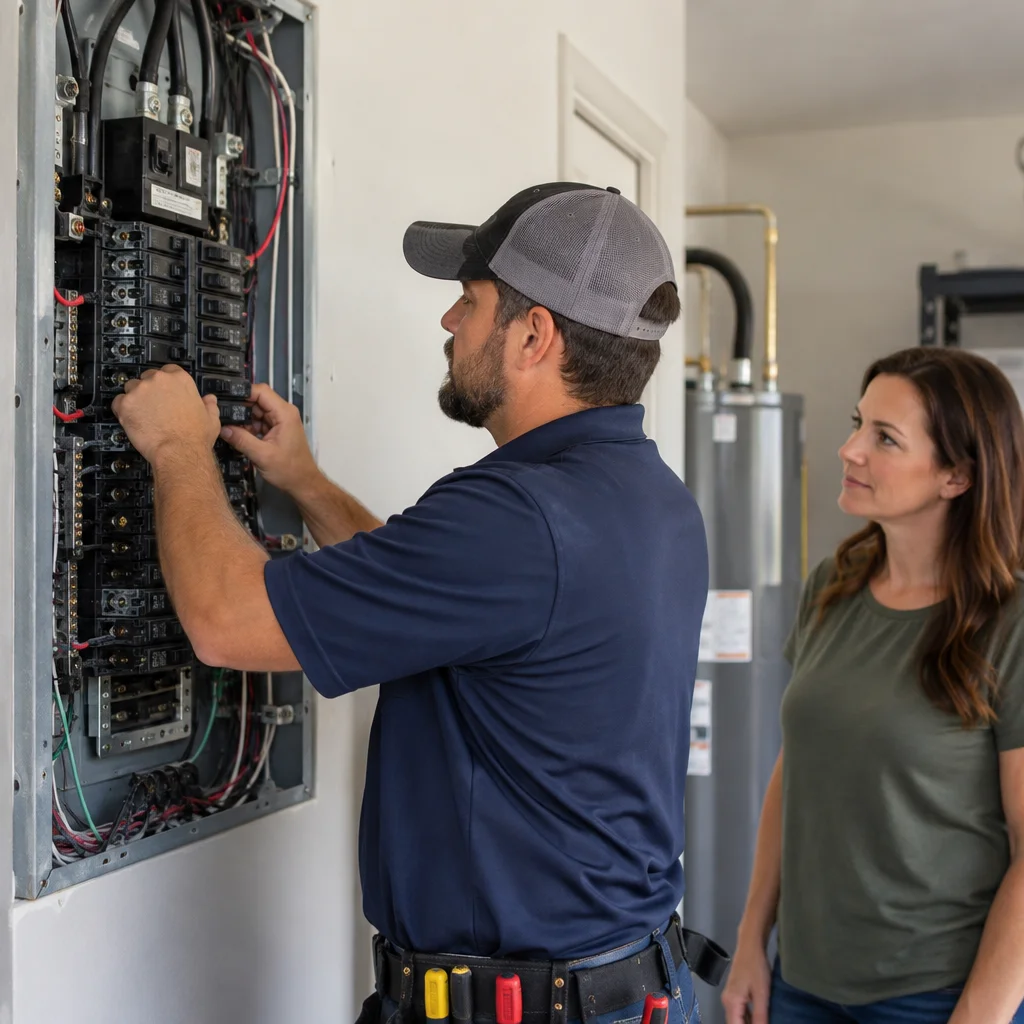
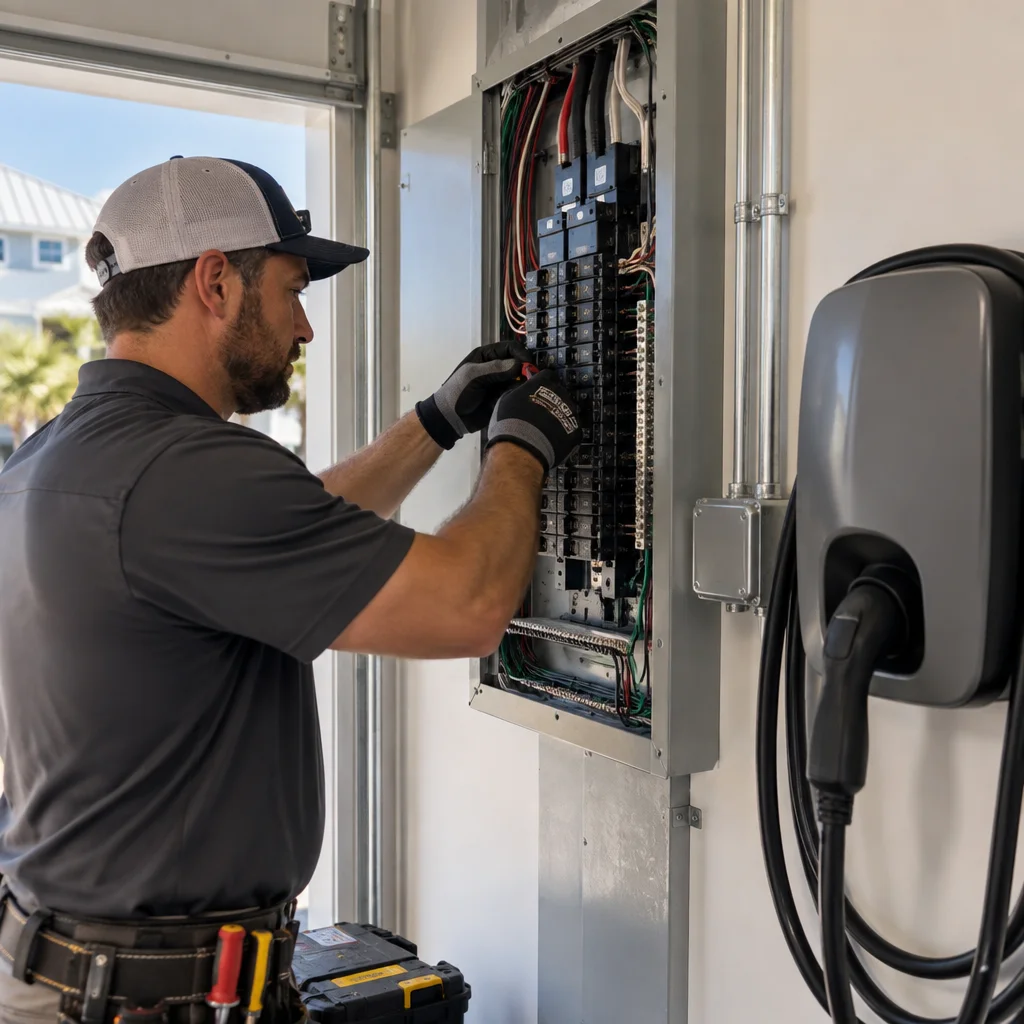
A panel with empty breaker spaces does not automatically have capacity for every planned upgrade. An electrician should consider the service rating, panel condition, existing loads, and calculated demand. Lighting alone rarely drives a major service upgrade, but lighting projects often happen alongside appliance changes, additions, or EV charger installation.
Homeowners searching for a licensed electrician near me should ask whether the estimate includes evaluating the circuits that will supply the new fixtures. This is especially important if lights dim noticeably when equipment starts or breakers trip during ordinary use.
Repeated breaker trips deserve diagnosis
A breaker may trip because of an overload, short circuit, ground fault, or another condition detected by its protective features. A failing breaker is possible, but replacing it without identifying the cause can leave the real hazard untouched. Never install a larger breaker simply to stop tripping.
Breaker repair generally involves diagnosing the circuit and replacing defective components with equipment approved for the panel. Panel upgrades or replacement may be appropriate when equipment is damaged, obsolete, or inadequate for planned loads. A fuse box also deserves evaluation before major expansion, rather than an automatic assumption that it is unsafe.
Wiring, outlets, and switches affect lighting performance
Flickering can come from a loose bulb, incompatible dimmer, failing LED driver, or poor electrical connection. If one lamp flickers, the problem may be local to that lamp. If several rooms brighten and dim unexpectedly, the issue could involve a service connection or neutral and needs prompt professional attention.
Warm receptacles, buzzing switches, scorch marks, and plugs that fit loosely are reasons to stop using the affected device. Outlet repair and wiring repair should address damaged connections and conductors, not merely replace a cover plate. Extension cords are not a substitute for permanent outlet installation.
Match controls to the fixture
LED lamps and integrated fixtures need compatible dimmers. Some smart switches require a neutral conductor, which may not be present in an older switch box. Box size, conductor condition, and grounding also matter. Smart home integration works best when controls are selected around the actual wiring and the homeowner's daily habits.
GFCI protection is required in many locations where electrical shock risk is higher, including specified bathroom, kitchen, garage, and outdoor locations under applicable code. AFCI protection addresses certain arcing hazards and may also apply. Neither protection replaces proper grounding or repairs to damaged wiring.
Fixture support matters as much as the connection
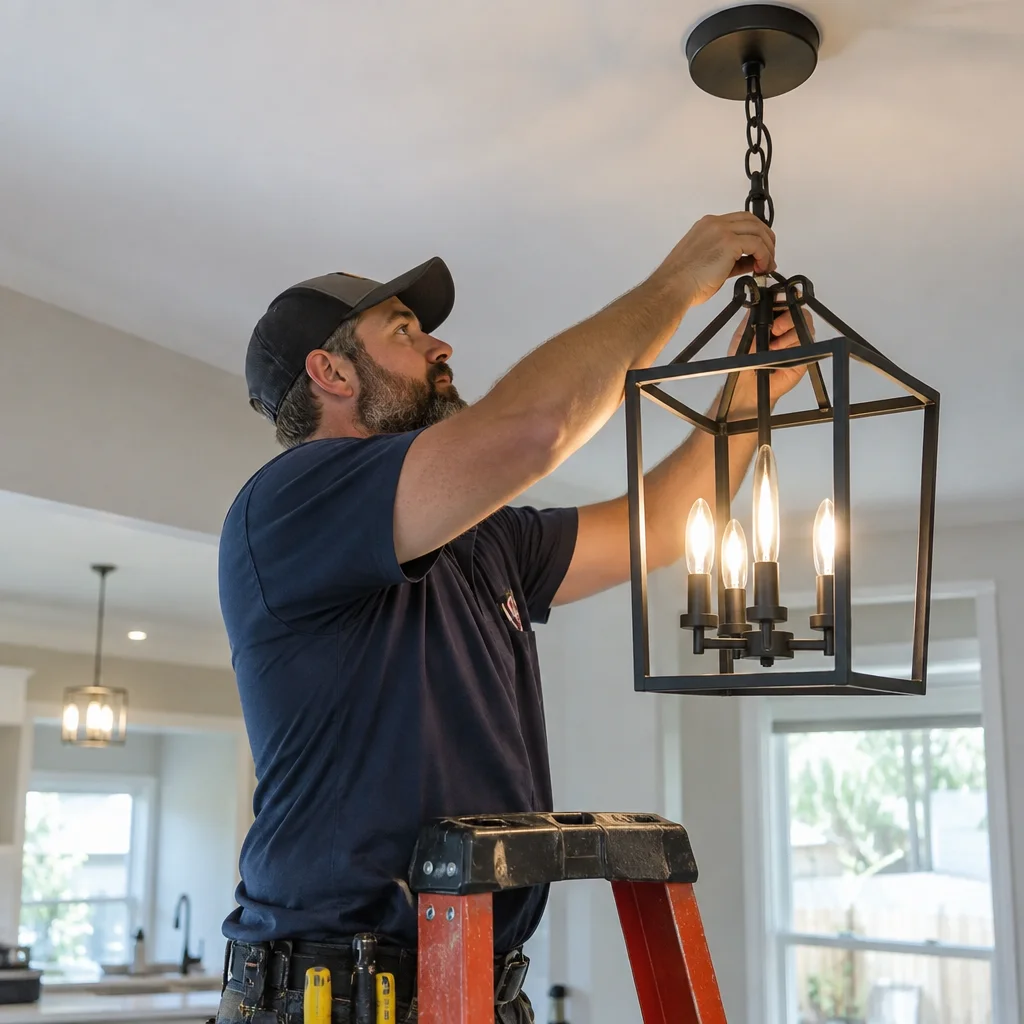
A chandelier, pendant, or ceiling fan needs an electrical box and mounting system suitable for its weight and use. A box intended for a basic light may not support a fan. Ceiling fans introduce movement and vibration, making correct support particularly important.
For covered porches, choose fixtures and fans with environmental ratings appropriate to their exposure. Damp-rated equipment is not interchangeable with wet-rated equipment. Ceiling fan services can coordinate fan support, controls, blade clearance, and lighting so the finished installation serves the room comfortably.
Outdoor lighting needs a Northwest Florida weather plan
DeFuniak Springs is inland, but it still experiences Northwest Florida's humidity, heavy rain, thunderstorms, and effects from tropical coastal weather systems. Exterior fixtures, connections, and wiring methods need to suit those conditions. Water intrusion and corrosion can damage equipment long before a fixture stops working completely.
Place entry lights where they illuminate locks, steps, and walking surfaces. Aim floodlights away from neighbors' windows and drivers' sightlines. Landscape lighting should reveal paths without creating glare. Motion sensors and timers can reduce unnecessary runtime while keeping frequently used entrances well lit.
If you are searching for outdoor lighting installation near me, ask about wet-location ratings, drainage around equipment, GFCI requirements, and protection for underground wiring. Low-voltage systems still need properly selected transformers and suitable cable. Pool-area lighting involves additional shock-prevention requirements and should receive specialized electrical evaluation.
Protect lighting electronics from storms and surges
LED drivers, smart switches, garage door controls, and household electronics can be vulnerable to voltage surges. Whole home surge protection adds protection at the electrical system level, while suitable point-of-use devices can provide another layer for sensitive equipment.
No surge protector guarantees protection from every event, especially a direct lightning strike. Proper grounding and bonding remain essential. Have surge protection checked according to manufacturer guidance, particularly after a significant electrical event. An indicator showing that protection has been lost should not be ignored.
Plan backup power around essential circuits
Generator installation should account for the loads you want to maintain, such as selected lights, refrigeration, communications, and medical equipment. A properly designed transfer arrangement prevents dangerous backfeeding into utility lines. Never connect a portable generator to a household wall outlet.
Operate portable generators outdoors, at least 20 feet from doors, windows, and vents, with exhaust directed away from the home. Working carbon monoxide alarms are essential. Permanent generator connections and transfer equipment require professional planning, permits where applicable, and coordination with the home's service equipment.
Use remodels to plan for tomorrow's power demand
When walls are open, it is easier to address inconvenient switches, insufficient outlets, and wiring routes for future improvements. Discuss dedicated circuits for equipment that requires them. EV charger installation, workshop tools, and major appliances can materially affect a load calculation even when new lighting does not.
If your remodel includes heating equipment changes, coordinate the electrical requirements with the mechanical design. This guide to planning a heat pump for a DeFuniak Springs home offers related context. The electrical work should follow the selected equipment's specifications rather than guesses about future demand.
Remodel planning is also a useful time to review smoke detector installation, required alarm locations, and interconnection requirements. A home safety inspection electrician near me search can help homeowners find professional evaluation before a renovation budget is committed. Ask for documented findings that distinguish urgent repairs from optional improvements.
Small maintenance habits can prevent bigger repairs
Test GFCI devices and smoke alarms according to manufacturer instructions. Replace damaged bulbs with compatible products, and never exceed a fixture's marked lamp rating. Keep the electrical panel accessible, maintain an accurate circuit directory, and check exterior fixtures for cracked lenses, loose mounting, or visible water intrusion.
Do not remove panel covers or open electrical boxes to investigate problems yourself. Schedule an electrical inspection after flooding, suspected lightning damage, or significant unexplained electrical changes. Equipment exposed to floodwater may require replacement even after it appears dry. Local electrical maintenance is especially useful for rentals and seasonally occupied homes where problems may go unnoticed.
Know which problems cannot wait
Smoke, active sparking, a burning electrical smell, or a hot panel requires immediate attention. Keep people away from the affected area. If there is fire or an immediate threat, leave the home and call 911. Do not touch wet electrical equipment or approach a damaged service connection.
For a fallen power line, stay well away and notify the utility and emergency services. If neighbors have also lost power, check utility outage information. If only part of your home loses power, or lights suddenly become unusually bright and dim, stop using affected equipment and seek urgent evaluation.
Searching for an emergency electrician near me makes sense for hazardous problems inside the home's electrical system, but utility-owned equipment may require the utility's response. Do not repeatedly reset a tripping breaker while waiting for help.
Bring a practical project list to your local electrician
Write down the rooms you want to improve, the symptoms you have noticed, and upcoming appliance or renovation plans. Photos of existing fixtures and an accessible panel label can help start the discussion without opening equipment. Ask about circuit capacity, fixture support, controls, permits, and any necessary code corrections.
A Superior Mechanical's DeFuniak Springs service information and broader Walton County service area connect homeowners with local help. To plan lighting installation or investigate a troublesome fixture, request an appointment and describe both the lighting goal and any electrical concerns. That gives the project a safer, clearer starting point.
Find Lighting and Fixtures in DeFuniak Springs, FL
If you need Lighting and Fixtures in DeFuniak Springs, FL, visit our local service page or contact A Superior Mechanical today.
Map of DeFuniak Springs, FL
Frequently Asked Questions
Do I need a panel upgrade before installing new lighting?
Not necessarily. LED fixtures generally add relatively little demand, but the existing circuit and panel still need to be suitable. An electrician can evaluate circuit condition, available capacity, and other planned loads before recommending a panel upgrade.
Why do my LED lights flicker after I install a dimmer?
The dimmer may not be compatible with the LED lamps or fixture drivers, or the connected load may fall outside its operating range. Loose connections and other wiring problems can also cause flickering. Have the installation checked if compatibility adjustments do not solve the problem, especially if multiple rooms are affected.
What should I look for in outdoor lighting for a DeFuniak Springs home?
Choose fixtures rated for their actual moisture exposure, with suitable mounting, wiring, and controls. Northwest Florida rain, humidity, and storms make weather resistance important. An electrician should also check applicable GFCI requirements, grounding, and surge protection while positioning lights to illuminate paths without excessive glare.
Related Articles
Photo Gallery