WaterColor, FL is beautiful, but the climate is demanding on HVAC systems. Warm, humid air, salt-laden coastal conditions, and frequent cooling cycles can wear down key parts of your heating and cooling equipment over time. When that wear affects airflow, refrigerant system operation, and condensate drainage, your air filtration and dehumidifiers do not perform the way they should. The result is often less “cool comfort” and more indoor air quality problems, especially in coastal homes.
This guide explains how HVAC wear and tear impacts air filtration and dehumidifiers, what homeowners in WaterColor commonly notice, and how preventive HVAC maintenance helps you avoid emergency cooling concerns during peak humidity.
Why WaterColor humidity makes HVAC wear more noticeable
In WaterColor, humidity is not occasional. It is part of daily life, especially during the warmer months when cooling runs longer. That matters because air filtration and dehumidifiers depend on consistent airflow and proper moisture control. When HVAC components drift out of spec, you may still get cold air, but you often lose the ability to remove moisture efficiently.
Coastal conditions add another layer. Salt air can contribute to corrosion on metal components, and it can accelerate buildup on parts that handle airflow and condensate. Even if your system keeps running, wear can reduce performance in subtle ways that show up first in your indoor air quality and comfort.
Air filtration and dehumidifiers are only as good as the airflow
Air filtration is not just about the filter media. It is about how air moves through your system and how long air spends in the filtration path. Wear and tear can interfere with both.
Clogged or mismatched filtration increases resistance
As filters load up with dust, pollen, and coastal particulates, airflow restriction increases. That can be made worse by:
- Filters installed that do not match your system requirements
- Filters that are not changed on a schedule suited to your humidity and dust load
- Dirty blower components that reduce air movement
When airflow slows, the system can struggle to maintain the temperature you set on your thermostat. It can also reduce the effectiveness of whole-home filtration because air is not moving through the system as expected.
Worn blower motors and dirty indoor coils reduce circulation
Over time, blower motors can lose efficiency, bearings can wear, and motors can draw differently than they did when new. Dirty indoor coils can also reduce heat transfer. Both issues can lead to less consistent airflow across your filtration equipment.
For homeowners, the pattern often looks like this: air feels weaker from vents, humidity feels “sticky” even when the thermostat shows cooling is running, and indoor air quality concerns increase.
How HVAC wear impacts dehumidification and condensate drainage
Dehumidifiers and AC systems remove moisture in different ways, but both rely on moisture moving through a drainage path and air passing over cooling surfaces. Wear and tear that affects the refrigerant system, evaporator coil condition, or condensate drainage can reduce moisture removal.
Dirty coils and reduced heat transfer can limit moisture removal
During cooling, the indoor coil helps condense moisture out of the air. If the coil surface is dirty or airflow across it is reduced, condensation efficiency can drop. That can leave more humidity circulating indoors, which can lead to:
- Condensation or dampness in areas around supply returns
- Musty odors and a higher chance of mold growth on susceptible surfaces
- Higher perceived temperatures even when the system runs
In WaterColor homes, this is especially noticeable because the outdoor air already brings in a lot of moisture. If your system cannot remove moisture effectively, the indoor environment feels uncomfortable quickly.
Condensate drainage problems can quietly worsen humidity
Air conditioning removes water as condensate. If condensate drainage is restricted, improperly sloped, or partially clogged, water can back up or drain slowly. That can affect humidity control and can also contribute to microbial growth in the drain pan area.
Some homeowners notice water around equipment, while others only notice comfort problems. Either way, condensate drainage is a key part of the dehumidification picture. A technician should inspect drainage during maintenance and after any air conditioning repair.
Refrigerant system wear can change moisture behavior
Wear and aging can affect how the refrigerant system operates and how consistently it cools. That can change coil temperatures and moisture condensation patterns. It can also increase strain on the system, which may show up as longer run times, uneven cooling, or higher energy use.
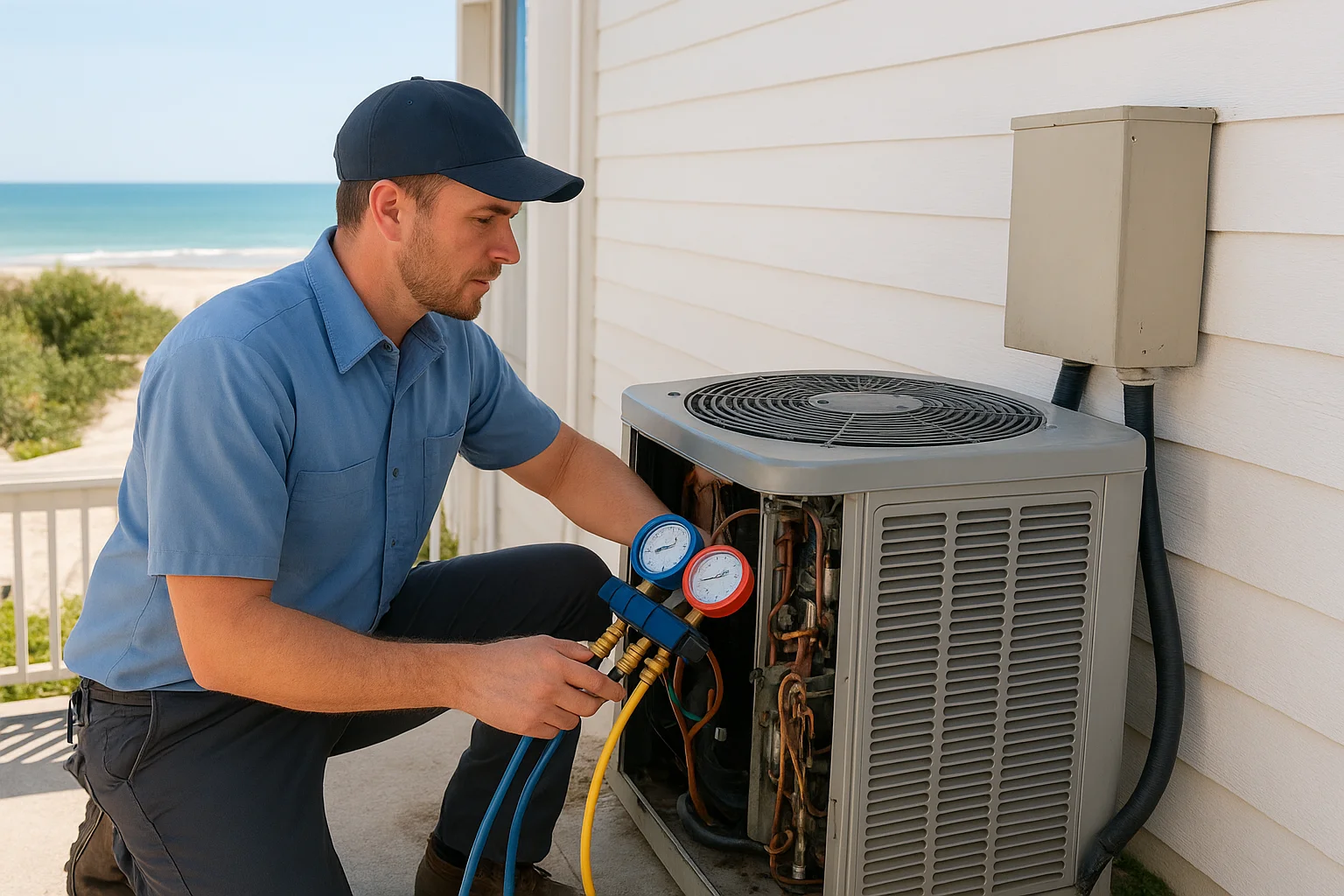
Homeowners should not attempt refrigerant adjustments on their own. Refrigerant issues require an in-person evaluation by a qualified HVAC contractor because diagnosis depends on system readings, airflow measurements, and component inspection.
Salt air, corrosion, and indoor air quality
Salt air can be hard on HVAC equipment. Corrosion can affect:
- Coils and metal components that handle moisture
- Fans and blower housings that move air through your filtration system
- Drain pan components and nearby surfaces
When corrosion and buildup occur, airflow can become less uniform, and surfaces that should stay clean can collect debris. That can increase indoor air quality concerns, especially for households with allergies, asthma, or sensitivities to airborne particles.
Better filtration helps capture particles, but it also needs the system to keep moving air properly. If airflow is constrained, the system may not deliver the expected clean air volume through your ductwork.
Thermostats and control behavior can hide the real problem
A common homeowner experience is: “The thermostat says it is cooling, so why does humidity feel high?” Part of the answer is that thermostat settings focus on temperature, not always on humidity control. If your system is struggling due to wear, it may reach the temperature target while still failing to remove enough moisture.
Some thermostats also have fan settings that influence circulation. If the system runs in short cycling patterns or the fan schedule is not aligned with your humidity needs, filtration and dehumidification can suffer. A professional can review thermostat operation and system behavior during an air conditioning service visit.
Ductwork wear and airflow leaks can undermine filtration and dehumidifiers
Even with the right filter and a properly working dehumidifier, ductwork problems can reduce performance. In WaterColor, many homes have ductwork runs that experience temperature swings and humidity exposure. Over time, duct joints can loosen, insulation can degrade, and air leaks can increase.
Air leaks reduce the delivered airflow that filtration needs
If conditioned air does not reach the right rooms, filtration and humidity control become uneven. You may notice some areas feel clammy while others feel cool. That uneven comfort often points to airflow problems, duct leakage, or duct sizing issues.
Condensate drainage and duct moisture can interact
When humidity is not controlled, duct surfaces can hold moisture. That can contribute to musty odors and indoor air quality concerns. Addressing ductwork and moisture control together is often part of a complete solution.
If you are looking for support, you can review how better duct sealing can help in coastal conditions by reading Why WaterColor Homes Benefit from Better Duct Sealing and Aeroseal Care.
Common homeowner symptoms that point to wear-related filtration and dehumidifier issues
Here are practical signs homeowners in WaterColor often notice when HVAC wear and tear is affecting air filtration and dehumidification:
- Humidity feels higher than it should, even when the thermostat is set to cool
- Musty odors that come and go with humidity changes
- Airflow feels weaker from vents, especially on hotter days
- Filters load up faster than expected
- Uneven cooling, with some rooms staying damp or warmer
- Condensate drainage concerns, such as slow drainage or water near the equipment area
Any of these can be related to filtration, airflow, coils, condensate drainage, or refrigerant system behavior. A professional HVAC contractor can connect the dots with real measurements and component inspection.
Why preventive HVAC maintenance matters in coastal climates
Preventive HVAC maintenance is one of the most effective ways to keep air filtration and dehumidifiers working together. In WaterColor, maintenance is not just about comfort. It is also about avoiding energy waste and reducing emergency cooling concerns when humidity peaks.
During HVAC maintenance, technicians typically check system components that influence airflow and moisture control, such as:
- Filter condition and installation practices
- Blower operation and airflow performance
- Coil cleanliness and heat transfer
- Condensate drainage function
- Thermostat operation and control settings
- General system condition that affects refrigerant system performance
For homeowners searching for HVAC maintenance near me, the goal is consistent indoor air quality and humidity control, not just “getting through” the season.
Air filtration and dehumidifier solutions for WaterColor homes
Not every home needs the same approach. The right solution depends on your ductwork, airflow, comfort goals, and how your system handles moisture. A Superior Mechanical offers Air Filtration & Dehumidifiers for WaterColor, FL to help homeowners improve indoor air quality and humidity control with solutions designed for coastal living.
Depending on your setup, solutions may include:
- Whole-home filtration improvements that match your system’s airflow needs
- Humidity-focused dehumidifier strategies for comfort and indoor air quality
- Airflow support through ductwork inspection and recommendations
- System tuning so filtration and dehumidification work as a coordinated system
If you are also dealing with cooling comfort problems, it can help to review Air Conditioning Repair and Air Conditioning Systems to understand how repairs and system performance connect to humidity control.
Energy use and comfort: wear can cost more than you think
When filtration is restricted or dehumidification is less effective, the system often runs longer to achieve temperature targets. Longer run times can increase energy use, especially during Florida heat and high humidity. That can also lead to faster wear on components, creating a cycle that homeowners feel as “the system is always running.”
Energy waste is not just a utility bill issue. It is also an indicator that airflow, moisture removal, or control behavior is not meeting the home’s needs.
When you should schedule an air conditioning service or duct inspection
Homeowners searching for AC repair near me are often focused on temperature. If you are seeing humidity issues, weak airflow, or air quality changes, treat those as signals to schedule service sooner rather than later.
Consider calling A Superior Mechanical if you notice:
- Humidity feels high during cooling cycles
- Airflow feels reduced and filters are loading quickly
- You suspect ductwork airflow problems and need duct inspection near me support
- Condensate drainage seems slow or you notice water where it should not be
If your home has a heat pump instead of a traditional AC system, you can also explore Heat Pump Services to understand how humidity control and airflow performance apply to your equipment type.
Coastal homes and rentals: extra wear, extra reasons to plan ahead
WaterColor properties include primary homes, second homes, and rentals. Systems may sit idle for stretches, then run hard during peak season. That can increase the chance of filtration and dehumidifier performance issues because dust accumulates, airflow pathways can get restricted, and moisture control needs change quickly.
For homeowners who want to avoid mid-season breakdowns, it helps to read Keeping WaterColor Homes Comfortable Without the Emergency Call. It pairs well with this topic because it focuses on planning, maintenance, and comfort stability.
How to talk to an HVAC contractor about filtration and dehumidifiers
When you call an HVAC company near me for filtration and dehumidifier concerns, you will get better results if you can describe what you are seeing. Bring up:
- How humidity feels compared to the thermostat setting
- Whether filters get dirty faster than expected
- Any musty odors or signs of moisture
- Any changes in airflow, vent strength, or temperature balance
- Whether condensate drainage seems normal
A professional evaluation should include inspection of airflow pathways, filtration setup, and moisture removal components. If refrigerant system behavior is suspected, it should be evaluated in person based on measurements and component condition, not guesswork.
System replacement is not always the first step
Some homeowners search for HVAC replacement near me when comfort problems persist. Replacement may be appropriate in some cases, but it should not be assumed. Filtration and dehumidifier performance can often be improved by addressing airflow restrictions, ductwork issues, condensate drainage concerns, or component wear that affects coil cleanliness and moisture behavior.
If you are considering major changes, ask your contractor to explain what is driving the performance problem. It should be based on in-person inspection and HVAC measurements, not only on symptoms.
Building a more resilient comfort plan for WaterColor
Coastal humidity, salt air, and frequent cooling cycles mean your filtration and dehumidification depend on system health. HVAC wear and tear can reduce airflow, limit moisture removal, and increase indoor air quality issues, even when the system still “cools.”
For a coordinated approach, start with the right local service area guidance on WaterColor HVAC services, and then explore dedicated solutions at Air Filtration & Dehumidifiers for WaterColor, FL.
If your home needs broader planning for airflow and coastal protection, you may also find value in Smart HVAC Planning for Rosemary Beach Homes: Comfort, Airflow, and Coastal Protection.
When filtration and dehumidification work together, your home feels cooler in the way that matters: comfortable, less humid, and cleaner air that supports everyday living in WaterColor, FL.
Find Air Filtration & Dehumidifiers in WaterColor, FL
If you need Air Filtration & Dehumidifiers in WaterColor, FL, visit our local service page or contact A Superior Mechanical today.
Map of WaterColor, FL
Frequently Asked Questions
How does HVAC wear and tear reduce dehumidifier performance in a WaterColor home?
Wear can reduce airflow across cooling surfaces, dirty coils can lower moisture condensation, and condensate drainage can become restricted. When moisture removal drops, indoor humidity stays higher even if the thermostat is calling for cooling.
Can a clogged air filter make my home feel more humid?
Yes. A clogged filter can restrict airflow, which can reduce how effectively the system cools and removes moisture. It can also lead to uneven temperatures and comfort, especially during Florida heat and high humidity.
What should I check first if I suspect a humidity problem?
Start with filter condition, airflow at vents, and whether condensate drainage appears normal. Then schedule an in-person HVAC evaluation so a technician can inspect coils, airflow performance, ductwork, and moisture removal components.
Do I need to replace my HVAC system to improve air filtration and humidity control?
Not necessarily. Many comfort issues come from airflow restrictions, ductwork leaks, dirty coils, or drainage problems that can often be corrected without replacement. A qualified technician should assess the system before recommending any major change.
How often should I schedule HVAC maintenance for better indoor air quality in coastal areas?
Coastal humidity and salt air increase system stress, so regular preventive HVAC maintenance is important. A technician can recommend a schedule based on your equipment type, usage, and indoor air quality goals.
Related Articles
- Why Commercial HVAC Systems Struggle in WaterColor Homes and How to Stay Ahead of It
- Why WaterColor Homes Benefit from Better Duct Sealing and Aeroseal Care
- Keeping WaterColor Homes Comfortable Without the Emergency Call
- Smart HVAC Planning for Rosemary Beach Homes: Comfort, Airflow, and Coastal Protection
Photo Gallery