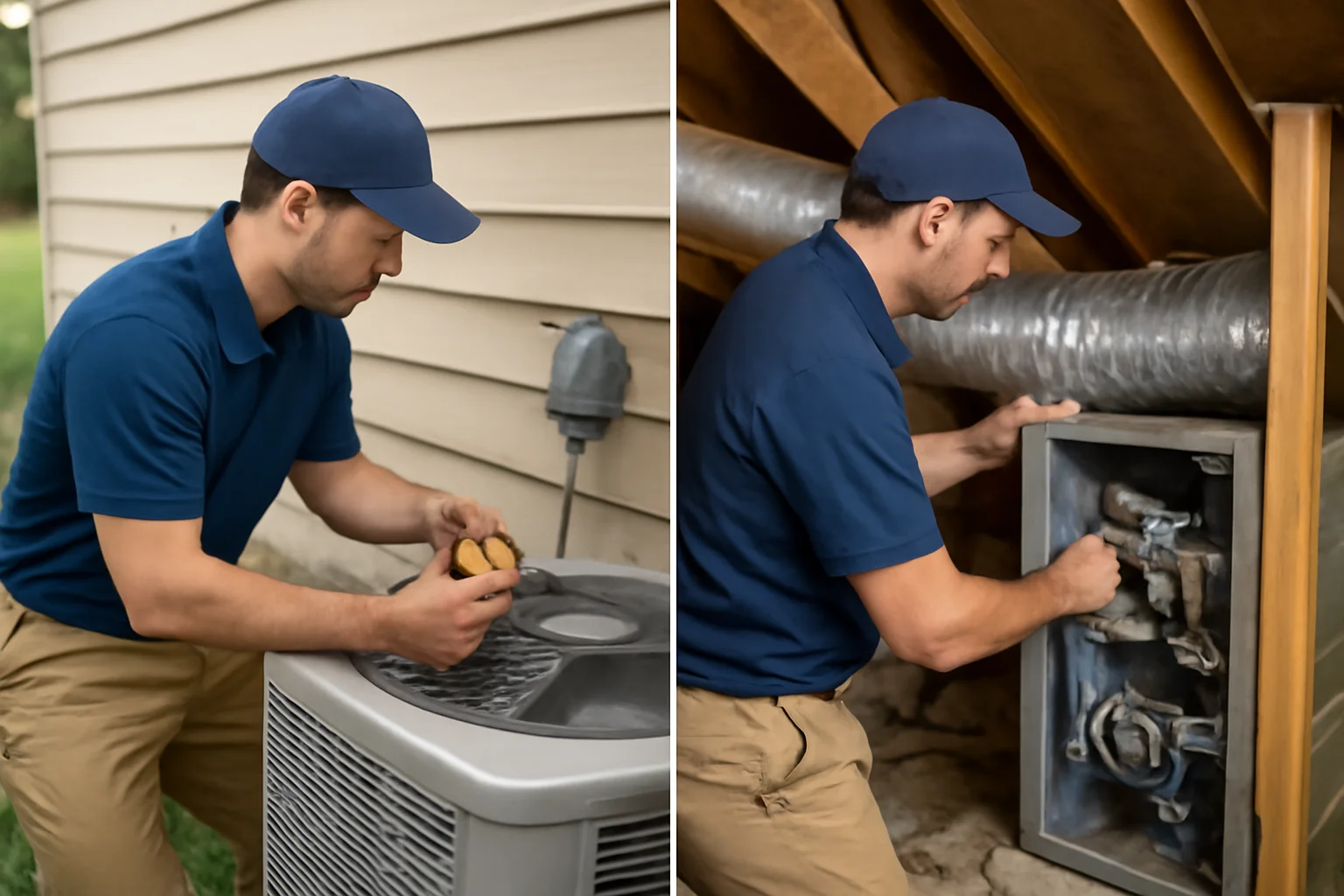
Living near the Gulf means your home has to handle more than just summer temperatures. In Seagrove Beach, the combination of Florida heat, high humidity, and salt air can quietly push your air conditioning system past its comfort zone. Over time, normal wear and tear shows up as reduced cooling, higher energy use, and more frequent air conditioning repair in Seagrove Beach.
This article breaks down how coastal conditions affect HVAC components that matter most during AC repair: the refrigerant system, airflow and ductwork performance, condensate drainage, thermostats, and indoor air quality. You will also find practical maintenance steps and clear signs that it is time for professional service from a local licensed HVAC contractor.
Why Seagrove Beach conditions accelerate HVAC wear and tear
Most air conditioners are designed for years of use, but they still rely on stable conditions. Coastal Florida changes the environment around your outdoor unit and the air moving through your home.
Heat loads that strain cooling capacity
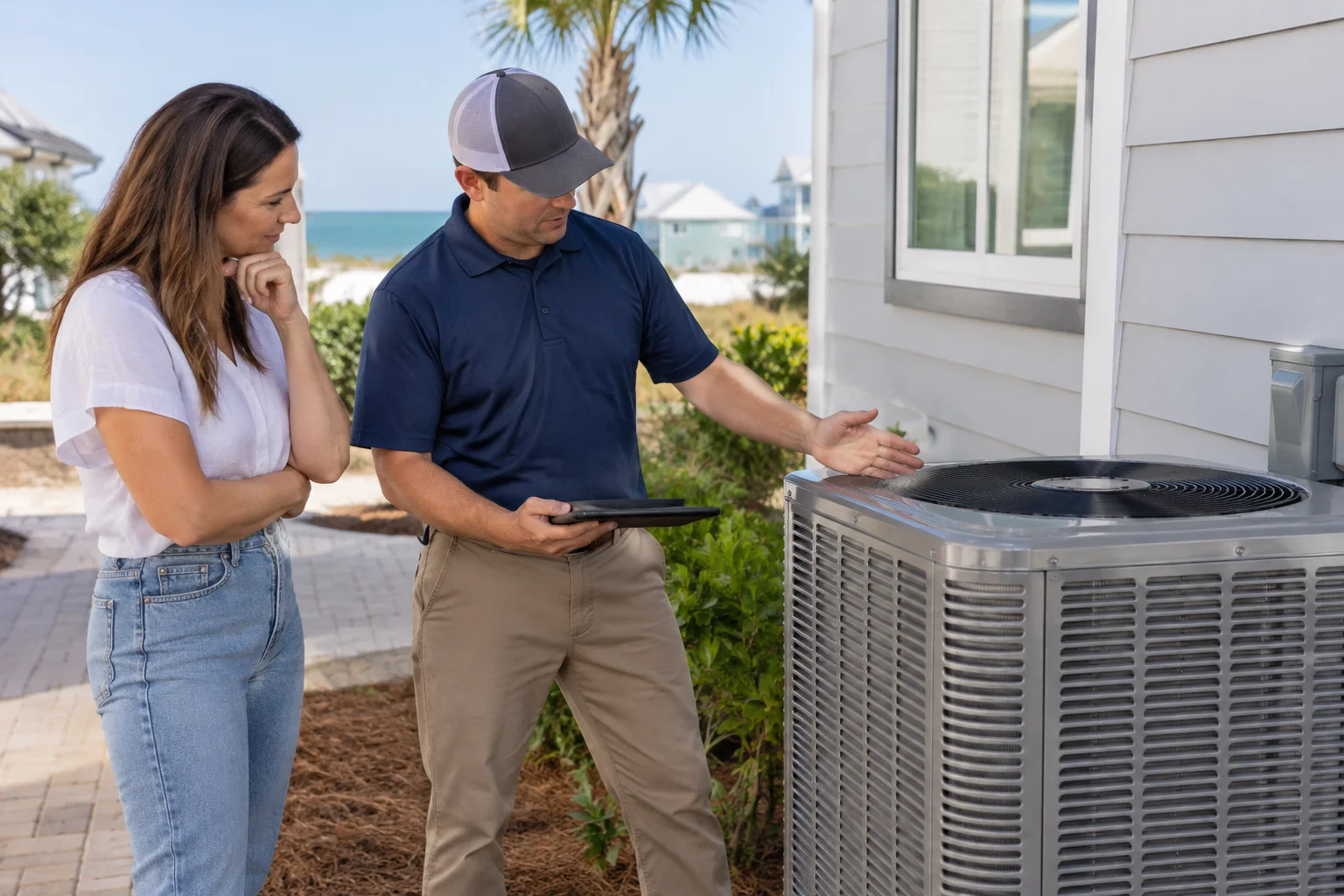
In Seagrove Beach, summer cooling demands often run high. When the outdoor air stays hot and the sun beats on the siding and roof, your system must work longer to reach and hold the indoor temperature you set on the thermostat. Extended run time can increase wear on compressors, fan motors, and electrical controls. It can also magnify issues that would otherwise stay minor, such as slightly restricted airflow or dirty coils.
Humidity that stresses the condensate drainage system
Air conditioning is not only about temperature. It also removes moisture. When humidity is high, the evaporator coil can produce more condensate than usual. If the condensate drainage line or drain pan is partially clogged with algae, debris, or biofilm, water can back up. That can lead to water damage risks and can reduce system efficiency because the evaporator coil does not drain properly.
Salt air and coastal corrosion
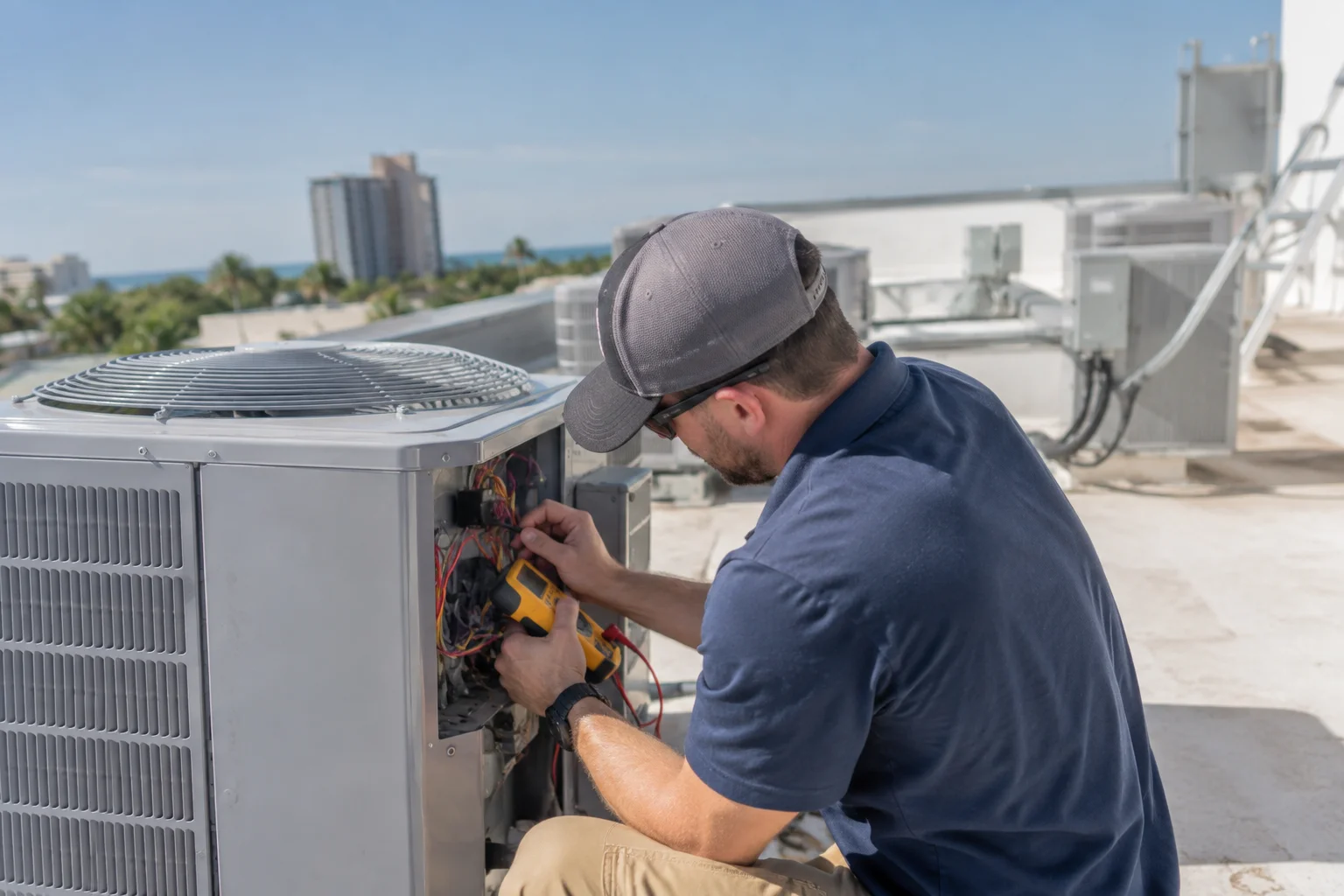
Salt carried by coastal winds can settle on outdoor equipment. Over time, corrosion can affect coil surfaces, fan components, and metal parts. Corrosion does not always “fail” a unit immediately, but it can contribute to degraded performance, harder cleaning requirements, and more frequent repair calls. Even small changes in coil condition can influence heat exchange and airflow.
How wear and tear shows up during AC repair calls
Homeowners often notice problems as symptoms first, then need professional diagnosis. Wear and tear tends to create patterns, especially in coastal climates.
Airflow problems that make cooling feel weak
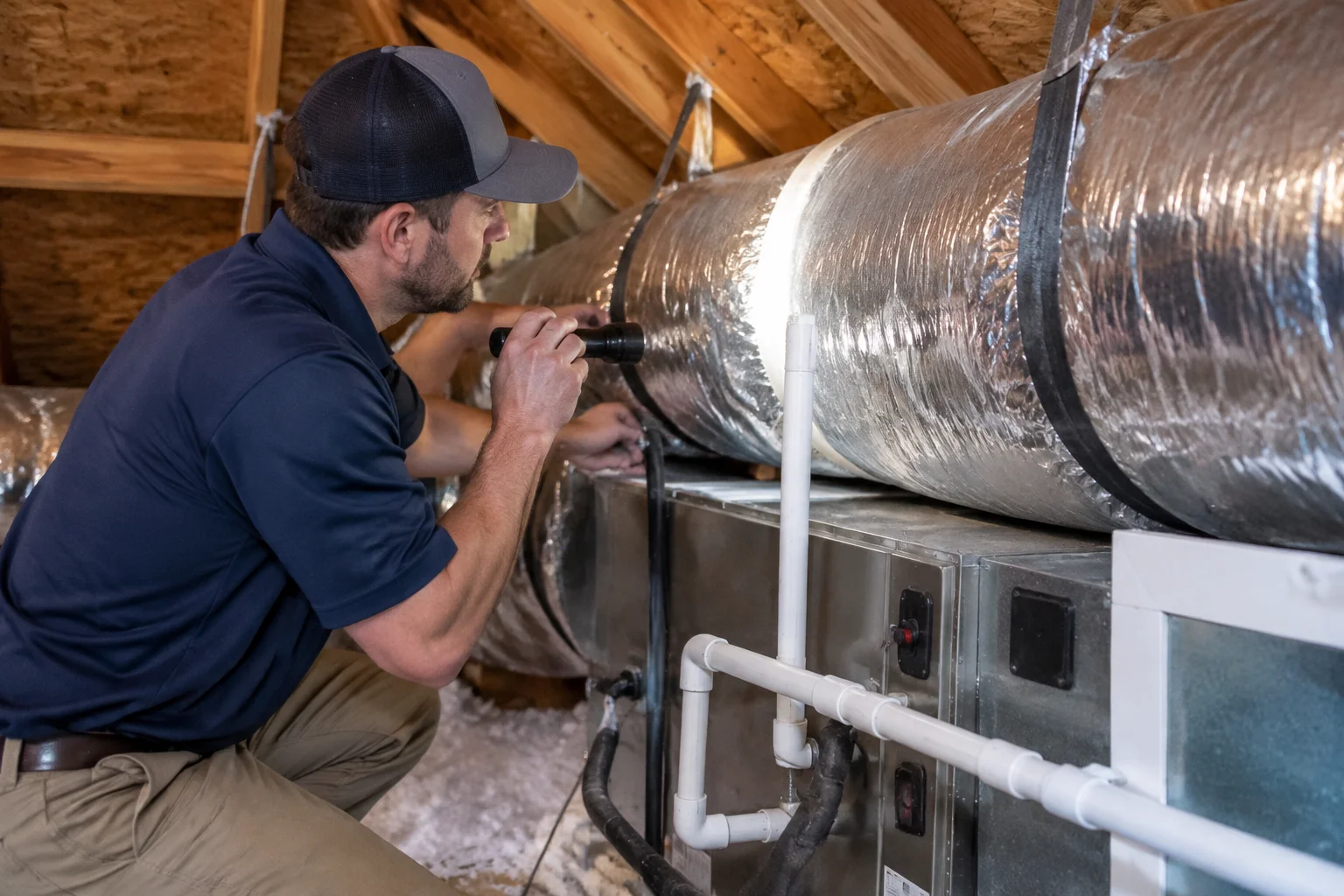
One of the most common ways wear and tear affects an air conditioner is through airflow. Dirty filters, clogged evaporator coils, and ductwork that leaks or has poor distribution can all reduce how much air moves across the system. When airflow is restricted, the indoor coil cannot transfer heat as effectively. That can cause the system to run longer, feel like it is “never quite getting there,” and increase energy use.
In homes where return ducts or supply registers have been adjusted over the years, ductwork can also create pressure imbalances. This matters because the air conditioner depends on stable air movement for safe operation and consistent cooling.
If you are searching for AC repair near me or air conditioner repair near me, ask whether the technician checks airflow and duct performance, not just the thermostat setting. A cooling problem is often a system problem.
Refrigerant system strain and the role of coil performance
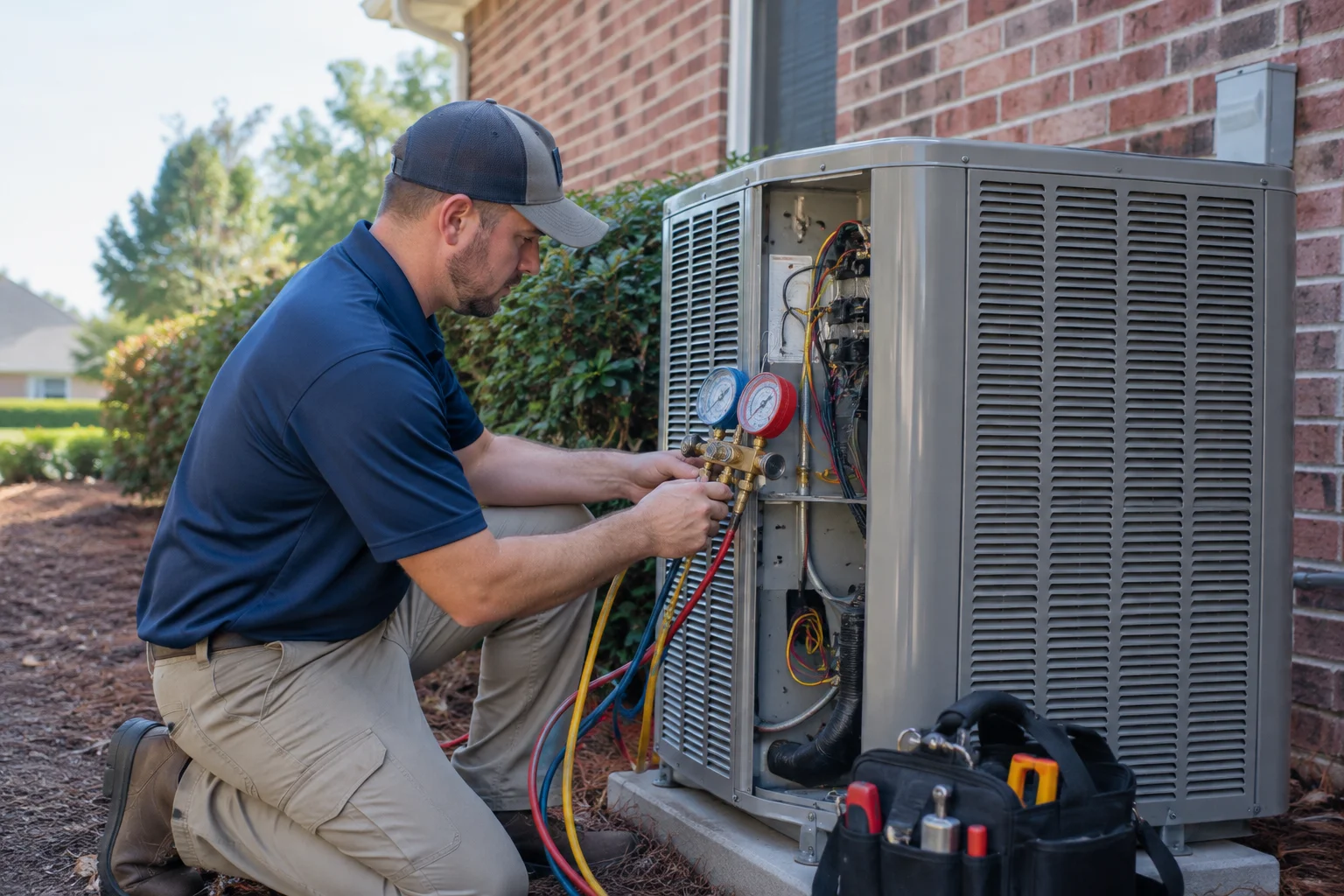
Your air conditioner’s refrigerant system relies on proper heat exchange. Wear and tear can affect the conditions around the refrigerant by changing coil cleanliness and airflow. When coils are dirty or airflow is inconsistent, the system can struggle to move heat where it needs to go.
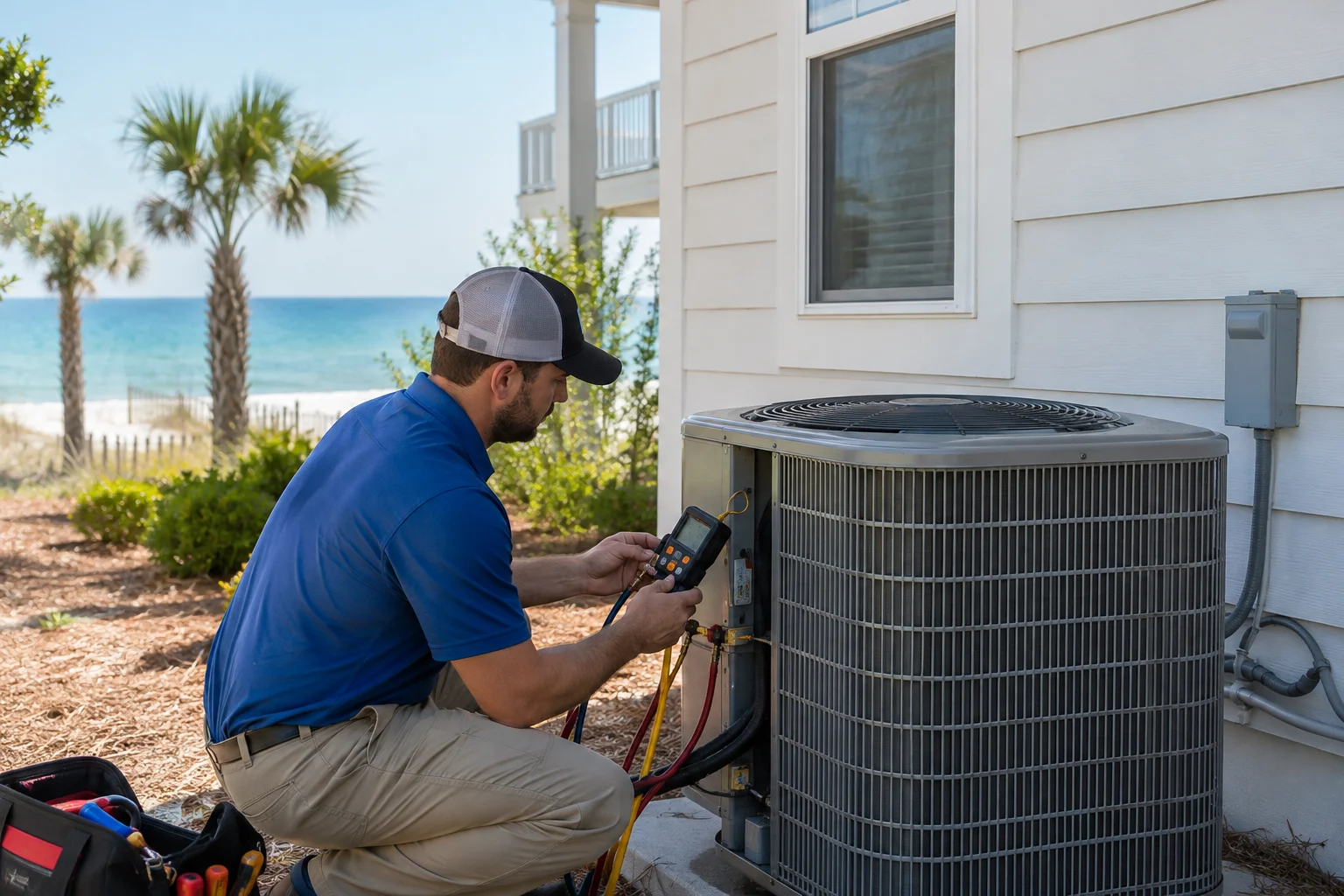
It is important to note that refrigerant issues should be evaluated in person. Homeowners should not attempt refrigerant diagnosis or adjustments on their own. A professional HVAC service technician can check system performance and identify what is contributing to the symptoms, such as airflow restrictions, coil fouling, or other components that affect heat transfer.
Condensate drainage blockages and indoor air quality impacts
As humidity rises, the evaporator coil forms condensate that must drain away. Over time, drainage lines can accumulate buildup. If a drain pan fills or the line does not clear correctly, you may notice:
- Musty odors when the system runs
- Water near the indoor unit
- Reduced dehumidification performance
- Wet insulation or staining in nearby areas
When moisture management is off, indoor air quality can suffer. Mold and microbial growth become more likely, and occupants may experience allergies or respiratory irritation. This is one reason preventive HVAC maintenance matters in a humid coastal environment.
Thermostat behavior that seems like “the AC is broken”
Wear and tear can also show up at the controls. Thermostats can drift out of calibration, have sensor issues, or become less responsive to real indoor conditions. In some cases, wiring connections can loosen due to age and vibration. A thermostat that reads the wrong temperature or humidity can cause the system to cycle incorrectly, leading to comfort issues and additional wear.
If your cooling feels inconsistent, it does not automatically mean the air conditioner is failing. A professional air conditioning inspection can help determine whether the thermostat settings, sensor performance, or system operation is the real cause. If you need thermostat installation near me, it is still best to have the overall system evaluated so the new thermostat is matched to how your HVAC actually performs.
Energy use rises as components age
Wear and tear often shows up as higher utility bills before it shows up as a total breakdown. When airflow decreases, coils get dirty faster, or the system runs longer to maintain comfort, energy use increases. In coastal Florida, that pattern can become more pronounced because the system is already working against heat and humidity.
Many homeowners recognize the issue as “the AC runs all the time.” That can be a sign of:
- Restricted airflow due to dirty filters or coil buildup
- Insufficient duct distribution
- Humidity load that exceeds the system’s comfort goals
- Control or sensor mismatch
Professional service can help you address root causes rather than chasing symptoms.
Why ductwork and indoor air quality get worse over time
Even if the outdoor unit is functioning, your home’s comfort depends on how air moves through the ductwork. Over years, duct leaks can develop, insulation can degrade, and airflow pathways can become blocked by dust and debris. Coastal humidity can also affect how materials age.
When ductwork performance declines, you may see:
- Hot or cold rooms that never stabilize
- Uneven airflow from vents
- More dust settling indoors
- Higher humidity levels because moisture removal is less effective
For homeowners focused on indoor air quality, consider pairing air conditioning service with improvements that reduce contaminants and humidity stress. A Superior Mechanical can help you evaluate options like Air Filtration & Purifiers and Duct Sealing & Aeroseal Services when appropriate.
Heat pump systems in coastal Florida: wear and tear still matters
Some Seagrove Beach homes use heat pumps for comfort. Heat pumps still depend on airflow, coil cleanliness, condensate drainage, and reliable controls. In humid conditions, the indoor coil and drainage components can still be stressed. If you are considering heat pump repair near me, the same coastal factors that affect traditional AC systems apply.
Whether your system is an air conditioner or a heat pump, the repair process should consider the full system, including how air moves, how moisture is managed, and how the refrigerant system performs under real indoor and outdoor loads.
Preventive maintenance that protects your system from coastal stress
Preventive HVAC maintenance near you is not just about keeping equipment clean. In Seagrove Beach, it is about reducing the rate at which wear and tear becomes a repair problem.
What a seasonal AC tune up should cover
A quality AC tune up typically focuses on:
- Checking airflow and verifying air movement through the system
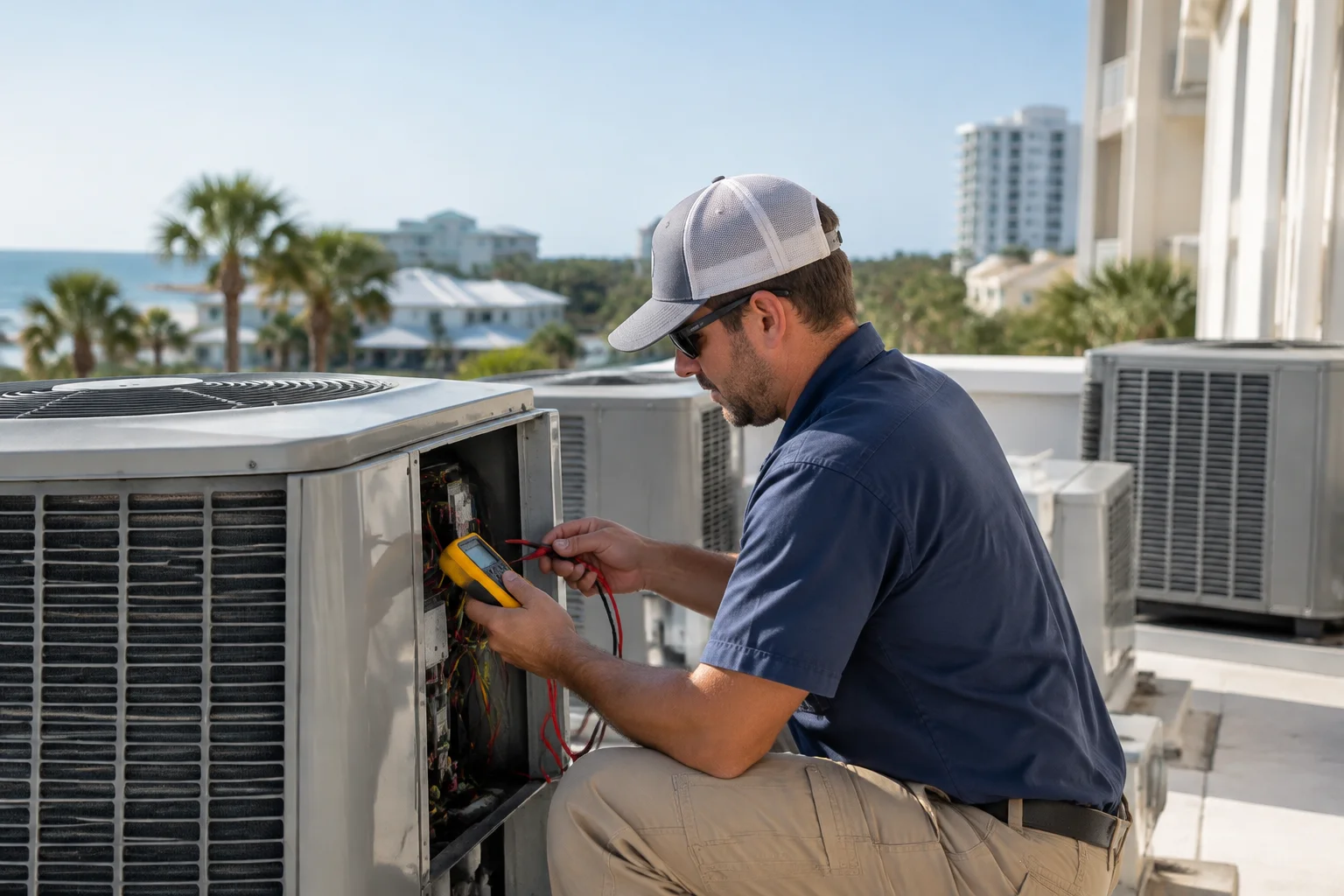
- Inspecting indoor and outdoor coils for dirt buildup and performance issues
- Reviewing condensate drainage operation and clearing minor blockages
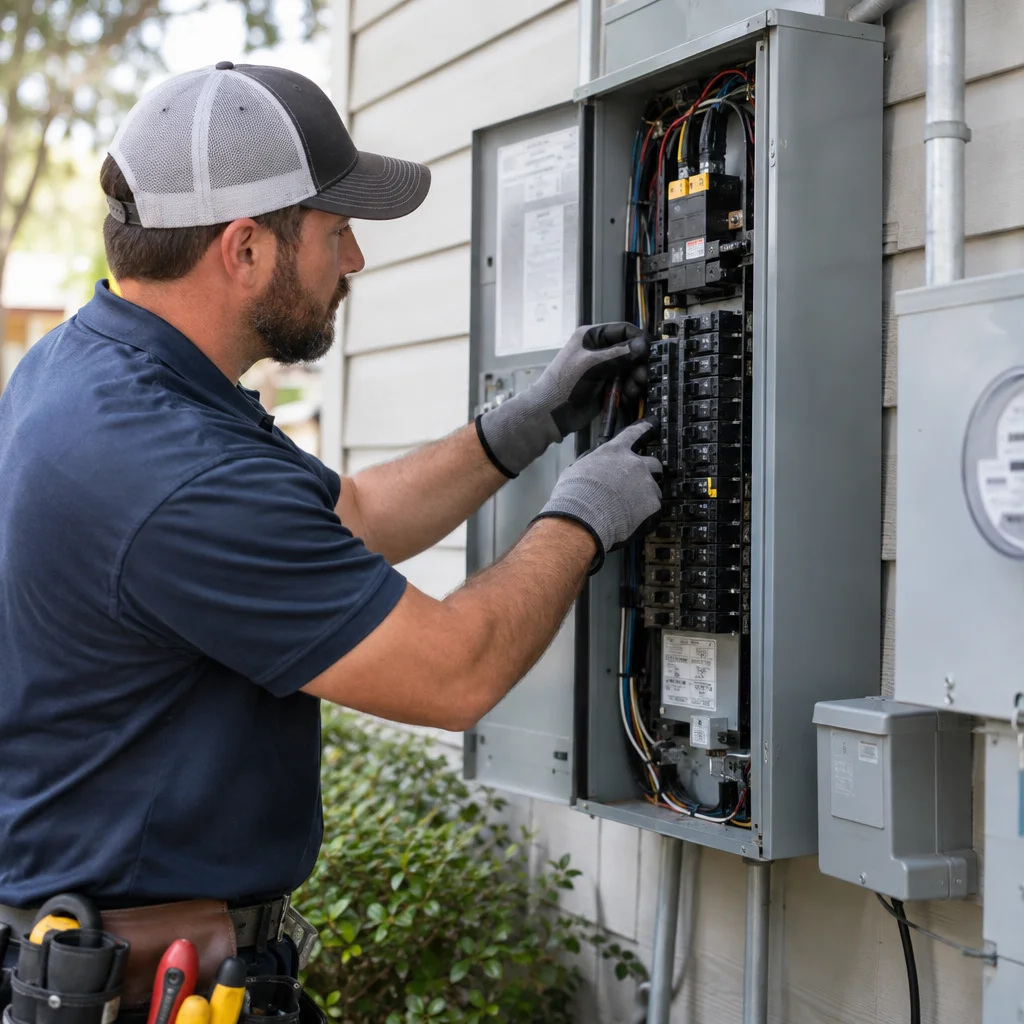
- Inspecting electrical connections and controls for signs of wear
- Testing thermostat operation and confirming the system responds correctly
- Assessing overall system performance so comfort issues do not escalate
Because coastal humidity and salt air can accelerate buildup, routine inspections can help catch problems earlier, before they turn into emergency cooling concerns.
Filter habits that matter more in humid, coastal air
Filters protect the system and help maintain indoor air quality. If filters are neglected, airflow drops and coils can foul faster. That increases energy use and can lead to longer run times. Choose a filter size that matches your equipment and replace it on schedule. If anyone in your household has allergies, you may also want to discuss filtration upgrades with a professional.
Moisture management: dehumidification is part of comfort
When humidity is high, the system works harder to remove moisture. If your current setup struggles to keep indoor humidity comfortable, a whole home dehumidifier can sometimes help. You can explore options like Whole Home Dehumidifiers to reduce humidity load on the AC.
Signs your AC wear and tear is turning into a repair need
Some problems are obvious. Others build slowly. If you notice any of the following, it is a good time to schedule AC repair or an air conditioning inspection rather than waiting for a complete failure.
Cooling that declines during the hottest hours
If the system struggles to maintain temperature when the sun is strongest, airflow, coil cleanliness, or control issues may be involved. A professional can check how the system performs under load.
Higher humidity indoors
When humidity remains high even with the thermostat set correctly, condensate drainage and coil performance may be affected. This can also influence indoor air quality.
Frequent cycling or short cycling
Short cycling can increase wear by starting and stopping the compressor more often than intended. It can also indicate airflow or control problems that need attention.
Unusual noises or vibration
Banging, scraping, grinding, or persistent rattling can point to mechanical wear. Outdoor fan issues are especially common in coastal environments where debris, salt residue, and corrosion can accumulate.
Water issues around the indoor unit
Any sign of leaks, standing water, or wet drywall near the air handler or condensate line should be addressed promptly. Moisture problems can compound quickly in humid climates.
If you are dealing with a true comfort emergency and the system fails during peak heat, emergency cooling matters. For emergency AC repair near me, look for a local HVAC service provider that can assess the situation safely and help you restore cooling as quickly as possible.
Seagrove Beach home types and why local service matters
Seagrove Beach includes a mix of primary residences, vacation rentals, and coastal businesses. Many homes have elevated humidity exposure, frequent occupancy changes, and varying thermostat schedules. Vacation rentals in particular can see heavy use during peak seasons, then sit idle for stretches. That cycling can affect system performance and highlight maintenance gaps.
Local HVAC service matters because a technician familiar with Walton County conditions understands what to inspect first. Coastal wear patterns, common airflow challenges in local duct setups, and humidity-related issues are easier to identify when the service team regularly works in the same climate and housing style. If you want to learn more about the area context, you can visit Seagrove Beach HVAC services pages for additional guidance.
Repair versus replacement: why an in-person evaluation is essential
Homeowners sometimes ask whether the next step should be a repair or system replacement. Wear and tear can make repairs more frequent, but deciding the right path depends on the specific condition of the system.
A professional evaluation can consider factors such as:
- How well the system maintains comfort and humidity control
- Whether airflow and ductwork performance are limiting results
- Coil condition and condensate drainage reliability
- Age and overall condition of key components
It is also important to avoid assuming refrigerant diagnosis or electrical diagnosis is correct without testing. Repairs should be based on what is found in person, not on guesses from symptoms alone.
If you are thinking about new comfort upgrades, it helps to compare options that match how your home is built and how it is used. For new builds, you can also explore New Construction HVAC for guidance on right-sizing and system planning from the start.
Smart steps that reduce the chance of a mid-summer breakdown
When homeowners search for HVAC maintenance near me, they are often trying to avoid the stress of losing cooling during peak heat. A few practical steps can help:
- Change filters on schedule and check them more often during high-humidity months.
- Keep outdoor unit areas clear of debris so airflow is not blocked.
- Watch indoor humidity and comfort, not just temperature.
- Pay attention to unusual noises, water signs, and inconsistent airflow.
- Use a consistent thermostat approach and confirm the system responds correctly.
If you manage a rental property, smarter HVAC management can help keep guests comfortable and reduce emergency calls. You can read more at Keeping Seagrove Beach Rentals Comfortable with Smarter HVAC Management.
For homeowners who want a deeper look at reliability, these guides can help connect maintenance to performance:
- Building Better HVAC Reliability for Seagrove Beach Businesses Starts With the Installation
- A Practical Plan for Cleaner Air and More Reliable HVAC in Seagrove Beach
- How Better Commercial HVAC Repair Helps Seagrove Beach Homes Stay Protected
If you need air conditioning service in Walton County, starting with a local HVAC contractor who can evaluate airflow, humidity control, condensate drainage, and comfort performance is the most reliable path. For direct help with repairs, schedule service through this Seagrove Beach air conditioning repair page and explore Walton County HVAC service coverage as needed.
Find Air Conditioning Repair in Seagrove Beach, FL
If you need Air Conditioning Repair in Seagrove Beach, FL, visit our local service page or contact A Superior Mechanical today.
Map of Seagrove Beach, FL
Frequently Asked Questions
How does salt air in Seagrove Beach affect my air conditioner?
Salt air can accelerate corrosion on outdoor coils, fan components, and other metal parts. Over time, that can reduce heat transfer and contribute to performance problems that show up during AC repair needs.
Why does my AC feel like it cools less during humid days?
High humidity increases the moisture load on your evaporator coil. If airflow is restricted or condensate drainage is not working well, the system may run longer and cool less effectively. A professional inspection can confirm the cause.
Can clogged condensate drainage lead to indoor air quality problems?
Yes. When condensate drainage is restricted, moisture can build up around the indoor unit. That can increase the risk of musty odors and microbial growth, which impacts indoor air quality.
Should I try to diagnose refrigerant issues myself?
No. Refrigerant systems require proper testing and safe handling. If you suspect a refrigerant-related problem, schedule an in-person air conditioning inspection so a licensed HVAC contractor can evaluate performance and identify the real cause.
What maintenance is most important for coastal Florida homes?
Focus on airflow and moisture management. Regular filter changes, seasonal AC tune ups, coil inspections, and condensate drainage checks help reduce wear and tear from Florida heat, humidity, and coastal air.
Related Articles
- Building Better HVAC Reliability for Seagrove Beach Businesses Starts With the Installation
- A Practical Plan for Cleaner Air and More Reliable HVAC in Seagrove Beach
- How Better Commercial HVAC Repair Helps Seagrove Beach Homes Stay Protected
- Keeping Seagrove Beach Rentals Comfortable with Smarter HVAC Management
Photo Gallery