Crestview, Florida has a way of testing commercial HVAC systems. Between hot days, sticky humidity, and coastal salt air that can travel inland, comfort issues can show up fast when equipment is under strain. When an HVAC system is not delivering the right airflow, it affects cooling, indoor air quality, and even how hard the system has to work.
This article explains what can cause problems with commercial HVAC services in Crestview, FL, with a focus on comfort problems and repair planning. If you manage a small office, retail space, restaurant, or multi-tenant building, you will get a practical look at common causes, what to watch for, and how to plan repairs so you can reduce repeat breakdowns.
Why Crestview climate makes commercial HVAC problems more likely
Commercial systems are designed for steady operation, but Florida weather adds stress in multiple ways.
- Humidity loads: Air conditioners and heat pumps must remove moisture to maintain comfort. When humidity is high, airflow and condensate drainage matter as much as temperature control.
- Heat and cycling: In peak summer, systems run longer and cycle more often. That increases wear on fans, motors, refrigerant systems, and controls.
- Salt air and corrosion risk: Even if your building is not directly on the coast, salt air can contribute to corrosion on outdoor components. Corrosion can affect heat transfer and airflow paths over time.
- Ductwork performance: Poorly sealed or undersized ductwork can amplify hot spots, cold spots, and uneven comfort. In commercial spaces, those issues can be harder to mask because occupancy patterns change throughout the day.
When you hire an commercial HVAC services provider in Crestview, the goal should be more than getting the system running again. It should also include a plan for preventing the next comfort problem.
If you are comparing options, it helps to understand how comfort issues often start and why “quick fixes” without planning can lead to repeat repairs.
Comfort problems that often show up first
Many commercial HVAC failures show up as comfort complaints before there is a clear mechanical failure. Common examples include:
- Hot zones or cold zones: One area feels too warm while another feels fine. This can point to ductwork airflow restrictions, supply balance problems, or thermostat location issues.
- Rooms that never fully cool: The system runs, but temperatures do not stabilize. Causes can include airflow problems, refrigerant system issues, or control problems.
- Short cycling: The system turns on and off frequently. That can be tied to airflow, thermostat behavior, or safety controls responding to abnormal conditions.
- Humidity that lingers: Even when the temperature is near target, spaces can feel damp. That can indicate condensate drainage issues, airflow mismatch, or evaporator performance problems.
- Air that feels weak or uneven: Occupants notice airflow is not reaching where it should, which can also affect indoor air quality.
These comfort symptoms are where repair planning begins. A good service plan looks at the building’s airflow needs, system capacity, and how the controls interact with actual conditions in Crestview’s heat and humidity.
Common causes behind comfort issues in commercial HVAC
1) Airflow problems inside ductwork
Ductwork issues are a frequent source of comfort complaints. In commercial buildings, duct performance affects both temperature and moisture removal. Problems can include:
- Loose joints or leaks that reduce airflow to certain areas
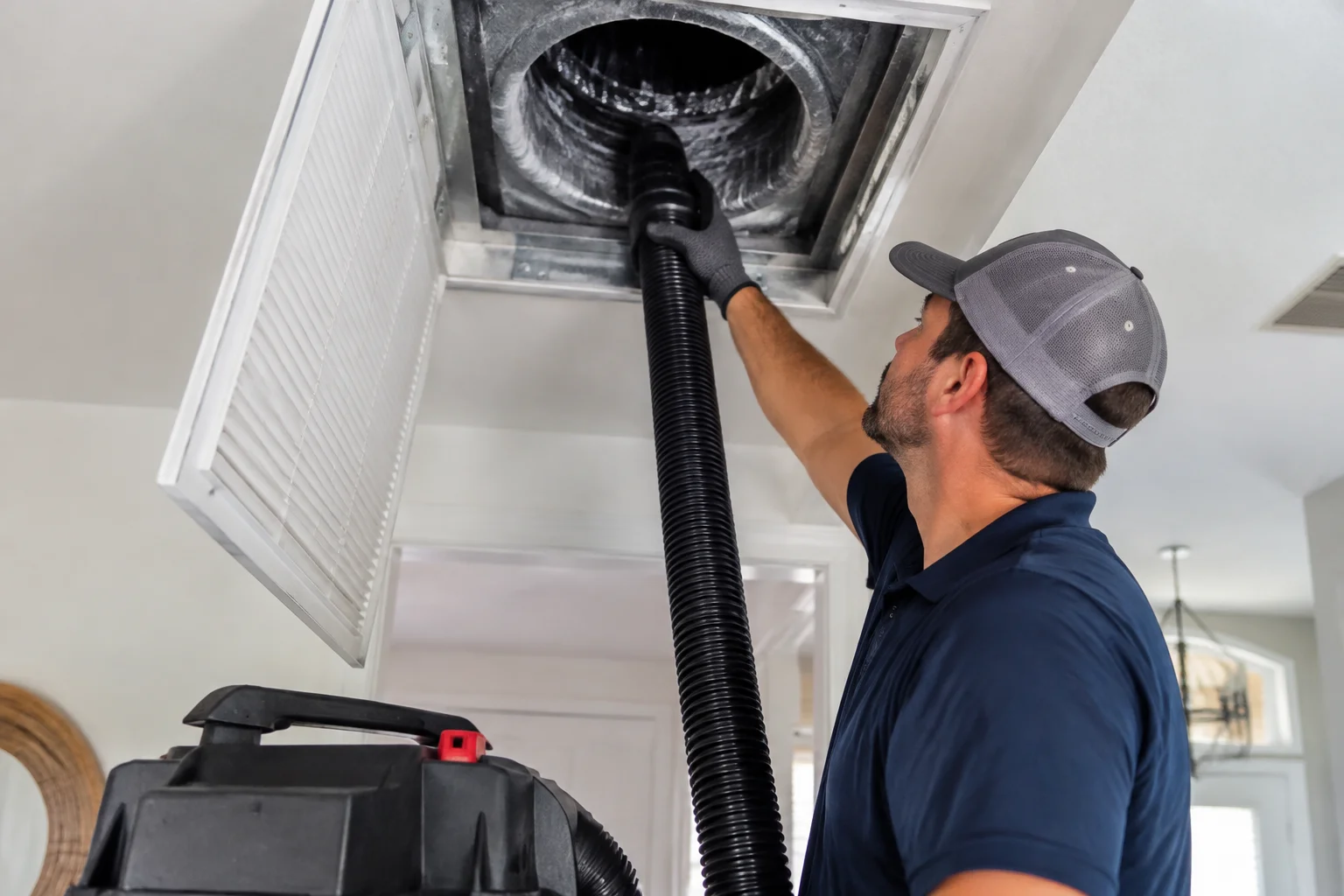
- Restricted ducts from debris, collapsed sections, or poor maintenance history
- Improper balancing after tenant changes
- Insulation gaps that worsen heat gain in hot Florida weather
If you are dealing with uneven comfort, it is worth reviewing ductwork performance. For more detail on why this can be tricky, read Why Duct Inspections Get Complicated in Crestview Homes. While that post focuses on residential systems, the principles about airflow, access, and building realities carry over to commercial spaces.
Airflow issues can also increase energy use because the system has to run longer to reach setpoints.
2) Condensate drainage problems and moisture buildup
In humid climates, condensate drainage is not optional. When condensate removal does not work correctly, moisture can build up around coils and in drain lines. That can contribute to:
- Reduced cooling performance and higher humidity
- Water-related safety concerns and potential equipment shutdown behavior
- Potential indoor air quality problems if moisture encourages microbial growth
Condensate drainage issues can be caused by clogged drain lines, improper slope, blocked drain pans, or drainage components that need cleaning. A professional technician should evaluate the drainage path and verify proper operation.
3) Refrigerant system problems and control interactions
Commercial air conditioning and heat pump systems rely on refrigerant systems to move heat. When refrigerant performance is off, comfort suffers. However, it is important to avoid assumptions based on symptoms alone.
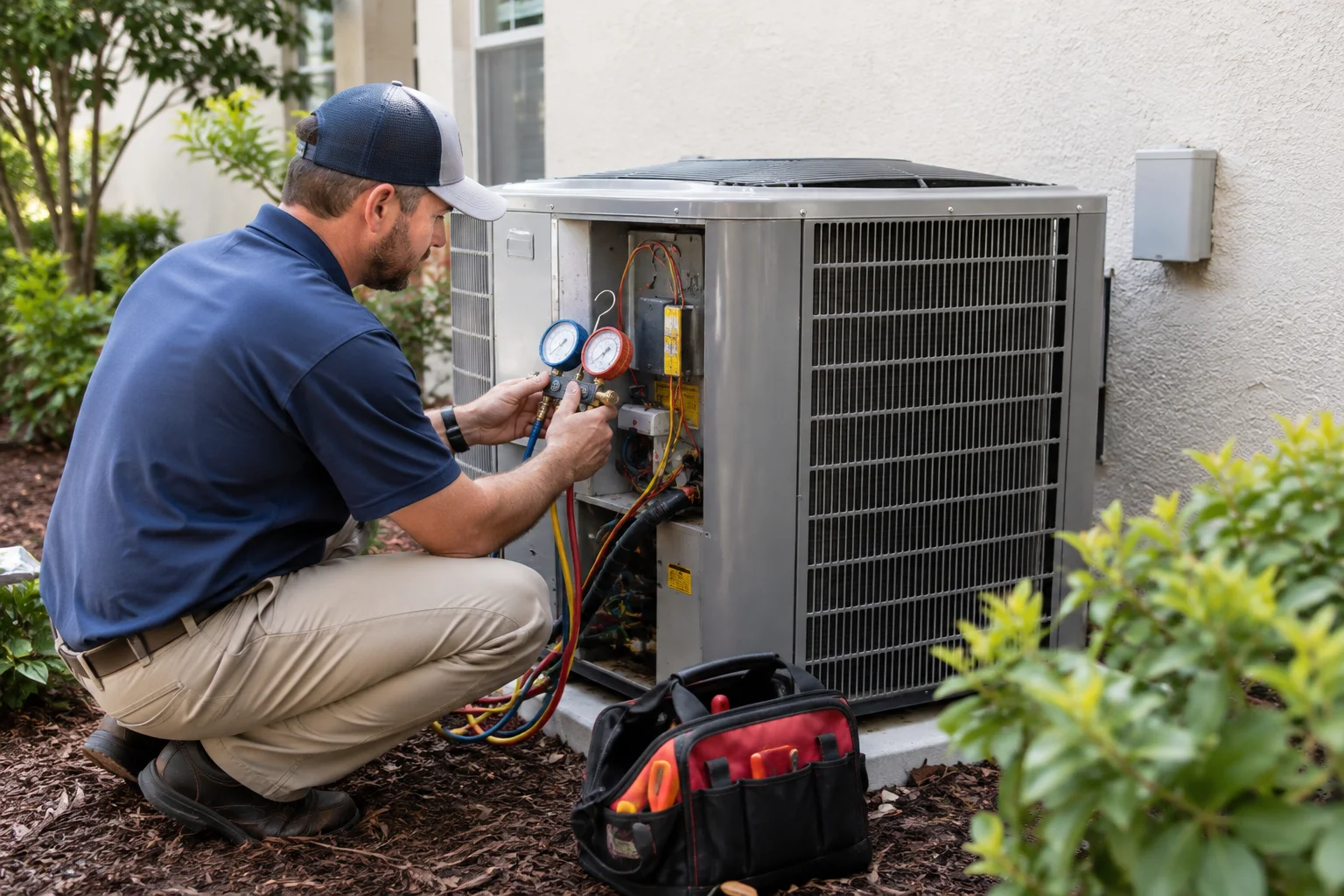
Refrigerant-related concerns can be influenced by factors such as airflow across coils and how the system is controlled. A technician may need to inspect the unit, verify operating conditions, and confirm what is happening before recommending any repair plan.
Homeowners and facility managers should not attempt refrigerant diagnosis or repairs without an on-site professional evaluation. Refrigerant work requires proper handling and accurate troubleshooting.
4) Thermostat setup, scheduling, and sensor placement
Sometimes the HVAC equipment is working, but the control strategy is not matching the building. Thermostat issues can include:
- Incorrect temperature setpoints for the space and occupancy schedule
- Thermostats mounted in locations that do not reflect real comfort conditions
- Bad calibration or settings that do not match how the system is staged
- Conflicts between multiple controls in multi-zone systems
In Crestview, where humidity and heat swing can be dramatic, a thermostat that is “close enough” may still lead to poor humidity control. That can create comfort complaints and drive unnecessary energy use.
5) Dirty components and poor preventive HVAC maintenance
Commercial HVAC maintenance is where many comfort problems are prevented. Over time, dust and debris build up on filters, coils, and air handling components. Dirty components can cause:
- Reduced airflow and higher pressure drop
- Coil efficiency loss that increases runtime
- Moisture management problems that worsen humidity
- Higher energy consumption
If your building has not had consistent air conditioning maintenance, it is common to see comfort complaints become more frequent as the season progresses.
For a Crestview-focused maintenance routine that helps reduce breakdown risk, see Keeping Crestview Cool Starts With Better AC Maintenance Habits.
6) Coastal and environmental wear on outdoor equipment
Outdoor units in the Crestview area may face corrosion and debris exposure. Salt air can contribute to deterioration on coil surfaces and metal parts. Other factors include landscaping debris, pollen, and general dust.
When outdoor sections are not maintained, airflow through the outdoor coil can be reduced. That affects overall system performance and can contribute to comfort issues indoors.
How poor repair planning turns one issue into a bigger problem
Repair planning is not just about parts. It is also about sequencing, verifying results, and documenting what was found. Without that, a repair can “work” temporarily but still leave underlying causes in place.
Here are planning gaps that can lead to repeat problems:
- Fixing a symptom without addressing airflow: A unit might cool for a short time, but if duct airflow is restricted, comfort will drift again.
- Ignoring condensate drainage during humid seasons: Even if temperature improves, humidity problems can persist if condensate drainage is not corrected.
- Skipping control verification: If thermostat settings or sensor behavior are not reviewed, the system can continue to cycle improperly.
- Not checking system operation across multiple conditions: A commercial system can behave differently on mild days versus extreme heat. A plan should consider how the equipment performs throughout the day.
- Failure to document findings: Without notes, the next service visit can become guesswork, increasing downtime and disruption.
A well-run commercial HVAC service visit in Crestview should include clear communication about what was observed, what is likely contributing to comfort issues, and what maintenance steps can reduce the chance of recurrence.
Repair planning that supports comfort and business operations
For facility managers and business owners, HVAC work needs to align with occupancy schedules. A good repair plan considers comfort, indoor air quality, and emergency cooling concerns.
Step 1: Confirm the comfort complaint and the affected zones
Start by mapping where discomfort occurs. Ask:
- Which areas are too warm or too cold?
- When do complaints start, and do they match occupancy hours?
- Is humidity a concern, or is it mainly temperature?
- Do symptoms change after the thermostat schedule kicks in?
This information helps the technician focus on airflow and control behavior rather than guessing.
Step 2: Review the building’s airflow and ductwork realities
Commercial buildings often change over time. Tenant improvements, new partitions, and equipment added to a space can alter airflow. Repair planning should account for how the ductwork supplies air to each zone.
If you are searching for duct repair near me because comfort issues are persistent, look for a contractor that treats airflow as a system problem, not a one-room patch.
For additional context on how airflow inspections can be complicated, see Why Duct Inspections Get Complicated in Crestview Homes.
Step 3: Address moisture management and indoor air quality
In Crestview’s humidity, moisture control supports both comfort and indoor air quality. Repair planning should include condensate drainage evaluation and a focus on maintaining clean airflow paths.
When indoor air quality is inconsistent, occupants may report stale air, odors, or irritation. Those symptoms can overlap with humidity and filtration issues. A professional can help determine what is contributing.
Step 4: Plan repairs around refrigerant system safety and verification
Refrigerant systems require careful handling and verification. Repair planning should include proper troubleshooting and confirmation of operating conditions before any refrigerant-related work is recommended.
If you are considering HVAC replacement near me or major repairs, it should be based on an in-person evaluation of equipment condition, performance, and system design, not just recurring comfort complaints.
Step 5: Align thermostat settings and scheduling with the building
Many comfort problems can be reduced by improving thermostat setup. That might include reviewing schedules, setpoints, sensor placement, and how the system stages during heavy load.
For businesses that run multiple zones, repair planning should also consider whether the control strategy matches each zone’s needs.
Emergency cooling concerns and why timing matters
When commercial HVAC fails during peak heat, the priority becomes safety and maintaining workable indoor conditions. Crestview heat can escalate quickly, especially when a building is occupied.
Emergency cooling concerns can include:
- Sudden loss of cooling in one or more zones
- Repeated shutdowns due to safety controls
- Rapid humidity rise that affects comfort and indoor air quality
Repair planning helps here too. Buildings that maintain preventive HVAC maintenance near me services are more likely to catch developing issues before they become emergencies. A maintenance plan also supports faster response because baseline performance and service history are easier to interpret.
Preventive HVAC maintenance that reduces comfort problems
Preventive maintenance is the most reliable way to reduce comfort swings and repair frequency. In a humid climate like Crestview, maintenance should emphasize cooling performance, airflow, and moisture management.
Look for a plan that includes:
- Filter checks and appropriate filter handling for the building’s needs
- Coil inspection and cleaning where appropriate
- Verification of airflow paths and duct performance concerns
- Condensate drainage inspection to support humidity control
- Thermostat and control verification to match schedules and comfort targets
- Outdoor unit inspection for salt air corrosion risk and airflow restrictions
If you manage multiple buildings or a larger commercial facility, you may also want planning support for system design. For businesses considering advanced configurations, you can explore VRF Multi-Zone Systems to understand how zoning and airflow strategies can affect comfort and maintenance planning.
When system replacement should be discussed, not assumed
Comfort problems can be caused by fixable issues, but sometimes equipment age, repeated failures, or system limitations make replacement part of the conversation. That decision should come from an in-person professional evaluation of current performance, refrigerant system behavior, airflow capacity, and overall equipment condition.
If you are comparing options for air conditioning replacement, ask how the proposed approach will address both temperature and humidity control. For some facilities, matching ductwork and airflow improvements to replacement can be as important as the outdoor equipment itself.
For businesses that use heat pumps, it is also smart to plan for seasonal transitions. Review Heat Pump Services so comfort stays consistent through changing weather.
Working with A Superior Mechanical for commercial HVAC services in Crestview
Commercial HVAC service works best when it treats comfort as a system outcome. That means looking at airflow, condensate drainage, thermostat behavior, and refrigerant system performance as connected pieces, not separate problems.
A Superior Mechanical provides commercial HVAC services in Crestview, FL built for dependable comfort, efficient airflow, and year-round performance across Okaloosa County. If you are searching for HVAC service near me for your business, the right contractor should help you build a repair plan that reduces repeat breakdowns and supports indoor air quality.
You can also browse our service area overview on the Crestview page or learn more about service coverage across Okaloosa County.
If your building has multiple zones or you are planning for upgrades, it can help to coordinate comfort goals with the right system strategy. For a coastal-area perspective on airflow and coastal protection, see Smart HVAC Planning for Rosemary Beach Homes: Comfort, Airflow, and Coastal Protection. The details are different for homes, but the coastal planning mindset is useful.
Key takeaways for comfort and repair planning
- In Crestview humidity, comfort problems often involve airflow and moisture management, not only temperature.
- Condensate drainage and ductwork performance can drive both comfort complaints and indoor air quality issues.
- Thermostats and controls can create comfort problems even when equipment is operating.
- Repair planning should verify results and document findings to prevent repeat issues.
- Preventive HVAC maintenance is the best way to reduce mid-summer breakdown risk and emergency cooling concerns.
Find Commercial HVAC Services in Crestview, FL
If you need Commercial HVAC Services in Crestview, FL, visit our local service page or contact A Superior Mechanical today.
Map of Crestview, FL
Frequently Asked Questions
Why does my commercial AC cool some areas but not others in Crestview?
Uneven cooling is often linked to airflow issues in ductwork, supply balancing problems, or thermostat placement and scheduling. A technician should inspect airflow paths and verify that each zone is receiving the air it needs for both temperature and humidity control.
Can humidity problems mean something is wrong even if the temperature feels close to normal?
Yes. In Crestview’s humidity, a system can reach a temperature setpoint while still failing to remove moisture. Condensate drainage, airflow across coils, and control settings can all affect humidity and indoor air quality.
How do I plan repairs so we do not keep having the same comfort issue?
Ask for a plan that identifies the root cause, not only the symptom. The service visit should include verification of airflow, moisture management, thermostat behavior, and refrigerant system performance through proper on-site evaluation and documentation.
Is it safe for me to try to troubleshoot refrigerant problems or add refrigerant myself?
No. Refrigerant systems require correct troubleshooting, safe handling, and proper verification. Do not attempt refrigerant diagnosis or repairs without an in-person professional evaluation.
What preventive maintenance should a commercial HVAC system receive during the hot season in Crestview?
Preventive work should focus on airflow, coil condition, condensate drainage, thermostat and control verification, and outdoor unit inspection for corrosion and airflow restrictions. Consistent maintenance helps reduce comfort swings, energy use, and emergency cooling concerns.
Related Articles
Photo Gallery