Bluewater Bay businesses rely on steady comfort, even when Florida heat and humidity push the limits. A commercial HVAC system that is installed with the wrong approach can create problems that show up months later, often when you least want them. The good news is that many expensive issues are avoidable when installation is planned around real airflow needs, proper refrigerant system setup, ductwork design, condensate drainage, and indoor air quality goals.
This guide explains what to look for in commercial HVAC installation near Bluewater Bay, FL, why local conditions matter, and how preventive HVAC maintenance helps protect your investment after the job is complete. If you are also dealing with AC repair, air conditioning service, or system replacement planning, this will help you ask better questions before the next decision turns into an emergency.
Why commercial HVAC installation costs can spiral in Bluewater Bay
Commercial HVAC installation in a coastal Florida area is not the same as a basic equipment swap. Bluewater Bay sits in Okaloosa County where the air is often warm, wet, and salty. That combination affects how systems perform, how they manage moisture, and how quickly components can wear out if airflow and drainage are not set up correctly.
When installation is rushed or based on assumptions, the system may run longer, remove less humidity, or struggle to deliver the right temperatures from one zone to another. Those issues can lead to higher energy use, repeated service calls, and premature wear. Over time, the building can also develop indoor air quality complaints, including musty odors, uneven comfort, and clogged filters.
Homeowners and property managers sometimes assume the fix is “more AC repair.” But if the installation plan did not address ductwork, airflow balance, condensate drainage, and thermostat control, the problem will keep returning.
Local climate factors that should shape the installation plan
Heat and humidity load
Florida heat is only part of the story. Humidity drives latent cooling demand, which affects how well an air conditioning system can dehumidify. If the system is oversized without proper airflow and controls, it can cool the air quickly while leaving moisture behind. That can contribute to comfort complaints and indoor air quality issues like dampness and microbial growth potential in the duct system or near coils.
A quality installation accounts for both sensible cooling and humidity removal, not just temperature.
Salt air and corrosion risk
Coastal areas can expose HVAC components to salt-laden air. That makes good installation practices even more important, including proper placement, protection of exposed parts, and careful attention to how surfaces are sealed and maintained. If you are planning a new AC installation near Bluewater Bay, it helps to discuss how the system will be protected in a coastal environment.
Airflow is everything in commercial spaces
Commercial buildings often have complex layouts, higher ceilings, and multiple rooms with different occupancy patterns. If airflow is not designed and tested, you can end up with hot spots, cold zones, and return air problems that overload the system. This is where ductwork design and duct repair considerations become critical. Even a strong air conditioner service unit can struggle if the duct system cannot move air effectively.
For people searching for “duct inspection near me” or “duct repair near me,” the key point is this: ductwork issues can look like equipment problems. Installation should include planning for airflow paths, supply and return balance, and realistic static pressure conditions.
Refrigerant systems: why proper setup matters
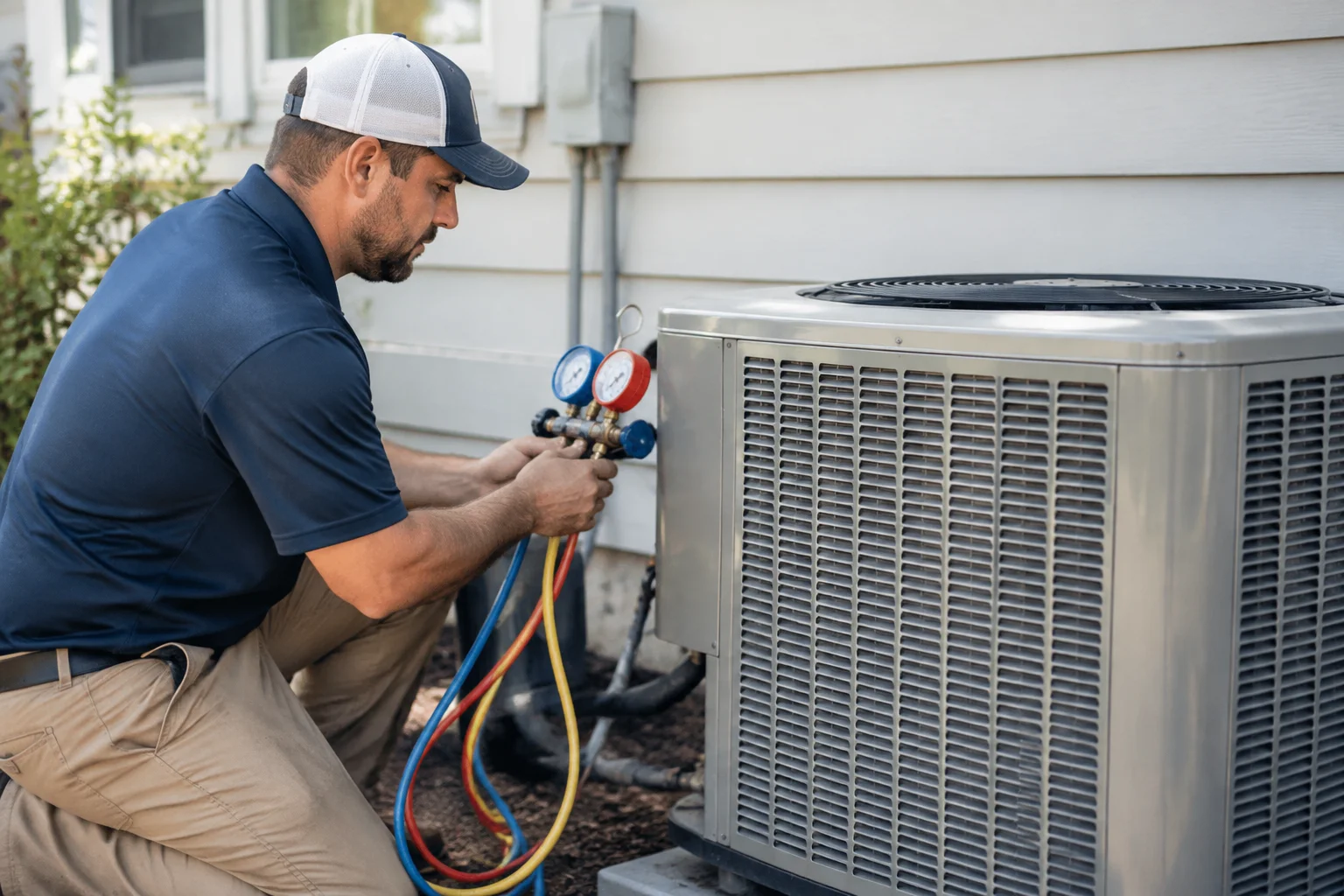
Many commercial HVAC problems trace back to refrigerant system setup and commissioning. Refrigerant systems need to be evaluated as a system, not treated like a checklist. Proper line sizing, connection quality, leak prevention, and charging accuracy all affect performance and reliability.
It is also important to recognize that refrigerant issues can be complex. A “refrigerant diagnosis” should be done by a qualified technician who can evaluate operating conditions on site. If you suspect refrigerant trouble, do not assume the next step is equipment replacement. A licensed HVAC contractor near you should inspect the full system, including airflow, condensate drainage, and thermostat operation, before making recommendations.
Ductwork, returns, and airflow balance: the installation step that gets missed
Ductwork is where many commercial comfort problems begin. In humid Florida conditions, duct performance affects both temperature delivery and moisture movement. If ductwork is undersized, poorly routed, or not sealed well, the system may lose efficiency and struggle to manage humidity.
Common duct-related installation oversights include:
- Supply ducts that do not deliver enough airflow to the spaces that need it most
- Return paths that are too restrictive, causing pressure imbalance
- Leaky duct joints that waste conditioned air
- Insulation issues that increase heat gain and reduce dehumidification effectiveness
- Improper duct placement that creates condensation risk
If you are planning a commercial HVAC service near me request for installation or evaluation, ask whether the contractor will review duct design, inspect existing ductwork condition, and plan for airflow balance. This is also a good time to consider related resources like the details that get missed in commercial HVAC installation in Freeport, FL, which covers frequent mistakes that show up in performance later.
Condensate drainage: small details that prevent big failures
Air conditioning systems remove moisture from the air. That moisture must drain properly through condensate drainage components. Poor installation, incorrect slope, clogged or undersized drain lines, or improper termination can lead to overflow, water damage, and operational shutdowns.
In a humid climate, condensate management is not optional. During installation, condensate drainage should be verified for correct routing, proper termination, and safe disposal. If you have ever experienced water pooling near an indoor unit, a recurring wet smell, or frequent shutoffs, condensate drainage may be part of the story.
When you schedule evaluation for AC repair or air conditioning service, make sure the technician checks condensate drainage as part of the system review. Moisture issues can also connect to indoor air quality complaints, especially in areas where air returns are weak or duct sealing is inadequate.
Thermostats and controls: comfort and energy use start here
Commercial buildings often have schedules, varying occupancy, and different comfort expectations by zone. Thermostats and control strategies influence how often the system runs, how it cycles, and whether it can maintain stable temperatures without overcooling or undercooling.
During installation, the thermostat installation location, sensor accuracy, and control settings should be considered carefully. Incorrect placement can cause short cycling or comfort swings, which can increase energy use and wear on components.
If you are exploring options like new thermostats or updated control systems, ask how the controls will support humidity management and consistent airflow. This matters in Florida, where indoor comfort complaints often involve both temperature and moisture.
Indoor air quality goals should be part of the installation scope
Indoor air quality is not a separate project. It is tied to airflow, filtration, humidity control, and how the system delivers air to occupied spaces. Commercial customers often notice indoor air quality problems as:
- Dust accumulation and frequent filter changes
- Odors that return after service
- Uneven comfort that makes people adjust windows and doors
- Allergy or respiratory complaints linked to seasonal humidity changes
During commercial HVAC installation, discuss filtration and air cleaning options that match your building needs. If you are weighing air filtration upgrades, you may want to review air filtration and purifiers for ideas that can support better indoor air quality.
Also remember that airflow problems can undermine filtration performance. A system that cannot move air properly will not deliver clean air where it is needed.
System replacement and new installation planning for businesses
Some businesses delay planning until the system is already failing. That tends to drive up costs because you lose options. Planning ahead helps you coordinate installation timing, review ductwork condition, and ensure the new refrigerant system and controls are matched to the building.
If you are searching for HVAC replacement near me or new AC installation near me, it helps to ask how the contractor will evaluate existing components. In some cases, the right path is not replacement, but targeted repair and upgrades. In other cases, replacement is the most practical solution. The right decision comes from an in-person assessment.
It is also worth comparing installation approaches for different building types. For example, if your facility uses multiple zones, you may want to explore VRF multi-zone systems and how they can better match comfort needs across spaces.
Heat pump considerations for commercial comfort
Some commercial systems in Florida use heat pumps because they can provide heating and cooling with efficient operation. If your building uses a heat pump or you are considering heat pump services as part of a plan, installation still needs careful attention to airflow and humidity management.
Even when heating load is less dominant than cooling load in Bluewater Bay, humidity and airflow requirements remain critical. A heat pump installation should be evaluated based on how the system handles moisture removal and how controls manage comfort throughout the year.
If the system later needs heat pump repair near me, it is especially helpful when the original installation was done with commissioning and airflow verification, since technicians can more easily identify what changed.
Signs your commercial HVAC installation may be headed toward expensive problems
Not every issue shows up immediately. Some symptoms develop after the building experiences several weeks of Florida humidity. Watch for patterns that can point to installation or commissioning gaps.
Comfort problems that do not match outdoor conditions
If some areas feel consistently hotter or colder regardless of weather, it can indicate ductwork balance issues, return air problems, or airflow restrictions.
Humidity complaints and musty odors
Moisture that lingers, damp smells, or condensation on surfaces can be tied to poor dehumidification performance, condensate drainage problems, or duct insulation and sealing issues.
Short cycling and frequent start-stop behavior
Short cycling can point to thermostat placement and control settings, airflow problems, or improper system commissioning. It can increase energy use and wear out components faster.
Repeated filter clogs and dust buildup
Filters clogging faster than expected can reflect airflow imbalance, inadequate filtration approach, or duct leakage that pulls in unconditioned air.
Water near indoor units or clogged drain indications
If you see water at the unit, notice overflow concerns, or hear drain-related noises, condensate drainage should be checked promptly. This is also where indoor air quality can be affected.
Preventive HVAC maintenance that protects installed systems
Even the best commercial HVAC installation needs ongoing care. In Bluewater Bay, preventive HVAC maintenance helps manage humidity control performance, airflow stability, and system reliability during peak season.
A maintenance plan often includes:
- Filter checks and airflow verification
- Coil and drain inspection for moisture management
- Thermostat and control checks to support stable operation
- Inspection of ductwork connections for leaks or damage when accessible
- Assessment of energy use trends and comfort consistency
When maintenance is delayed, small installation-related issues can become bigger. For example, drainage concerns might worsen slowly until an overflow or shutdown becomes an emergency cooling concern.
If you are also coordinating urgent comfort needs, you can read why Bluewater Bay homes rely on fast emergency HVAC service to understand how emergency response matters during Florida’s hottest stretches.
Emergency cooling concerns: what to do when the system fails
Commercial spaces cannot always pause operations. When an AC system fails during peak heat and humidity, emergency cooling concerns become immediate. While you should always rely on a licensed HVAC contractor for repair, there are a few practical steps you can take while waiting:
- Check thermostat settings and ensure the system is calling for cooling appropriately
- Confirm air handler or indoor unit power status
- Verify that return air pathways are not blocked by storage or temporary partitions
- Look for obvious condensate overflow signs near indoor units
These checks do not replace professional diagnosis. They help prevent avoidable delays while a technician evaluates the system in person.
How to choose the right local HVAC installation partner in Okaloosa County
For homeowners and property managers searching for air conditioner service near me or HVAC installation near me, the contractor matters as much as the equipment. A licensed HVAC contractor near me should be able to explain how the installation will be designed for airflow, humidity control, and condensate drainage. They should also discuss commissioning and how they will verify performance after the work is complete.
Look for a contractor who will:
- Review the building layout and comfort requirements by zone
- Discuss ductwork design, duct inspection, and duct repair needs
- Address condensate drainage routing and moisture control
- Plan thermostat placement and control strategy for stable comfort
- Coordinate indoor air quality considerations like filtration and airflow delivery
- Recommend preventive HVAC maintenance to protect performance
When you are comparing approaches across nearby areas, it can help to read commercial HVAC installation in Laguna Beach, FL and keeping Sandestin buildings comfortable to see how local contractors address similar issues in coastal Florida conditions.
If your building is managed by a property management team, you may also want to explore property management HVAC services for guidance on maintaining comfort across multiple properties.
Planning your commercial HVAC installation around real comfort needs
Commercial HVAC installation in Bluewater Bay is an investment in dependable airflow, humidity control, indoor air quality, and energy use. Costs spike when installation ignores airflow balance, condensate drainage, thermostat control, and ductwork performance. When those details are handled correctly from the start, the system is more likely to deliver consistent comfort and fewer surprise service calls.
If you want a local starting point, review our service details for commercial HVAC installation in Bluewater Bay, FL, and browse our broader coverage in Bluewater Bay and Okaloosa County to see what other HVAC services may fit your building needs.
Find Commercial HVAC Installation in Bluewater Bay, FL
If you need Commercial HVAC Installation in Bluewater Bay, FL, visit our local service page or contact A Superior Mechanical today.
Map of Bluewater Bay, FL
Frequently Asked Questions
What should a commercial HVAC installation include beyond mounting equipment?
A complete installation should address airflow planning, ductwork and return air considerations, condensate drainage setup, thermostat placement and control strategy, and commissioning checks that confirm the system operates as intended for the building layout and humidity needs.
Can humidity issues mean the AC system is the wrong size?
It can, but sizing is only one factor. Humidity performance depends on airflow balance, coil conditions, condensate drainage, and control settings. An in-person evaluation is needed to determine what is driving comfort and indoor air quality complaints.
Is condensate drainage checked during installation?
It should be. Proper condensate drainage routing, slope, and termination are essential in humid Florida conditions. If drainage is overlooked, you can see overflow concerns, water damage risk, and operational disruptions.
If my commercial system has a refrigerant problem, does that automatically mean replacement?
No. Refrigerant system issues require a professional in-person assessment of operating conditions, airflow, and system setup. Replacement may or may not be appropriate depending on what is actually causing the performance problem.
How does preventive HVAC maintenance help after installation?
Preventive maintenance helps protect airflow, humidity control, condensate drainage performance, thermostat operation, and indoor air quality. It also helps catch developing issues before they turn into emergency cooling concerns during peak heat and humidity.
Related Articles
- Why Bluewater Bay Homes Rely on Fast Emergency HVAC Service
- The Details That Get Missed in Commercial HVAC Installation in Freeport, FL
- Commercial HVAC Installation in Laguna Beach, FL: The Issues Local Property Owners Should Not Overlook
- Keeping Sandestin Buildings Comfortable Starts With Smarter Commercial HVAC Installation
Photo Gallery