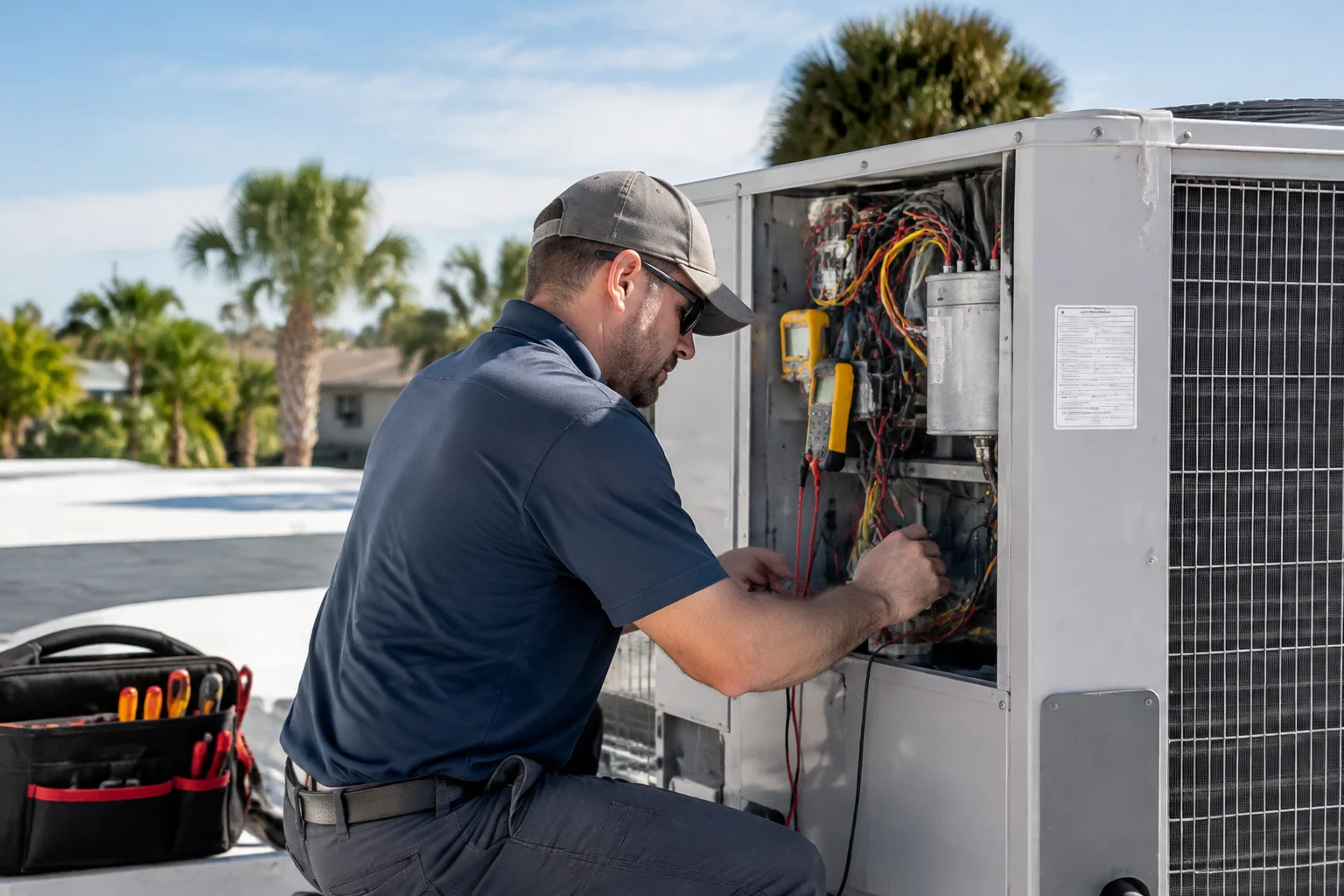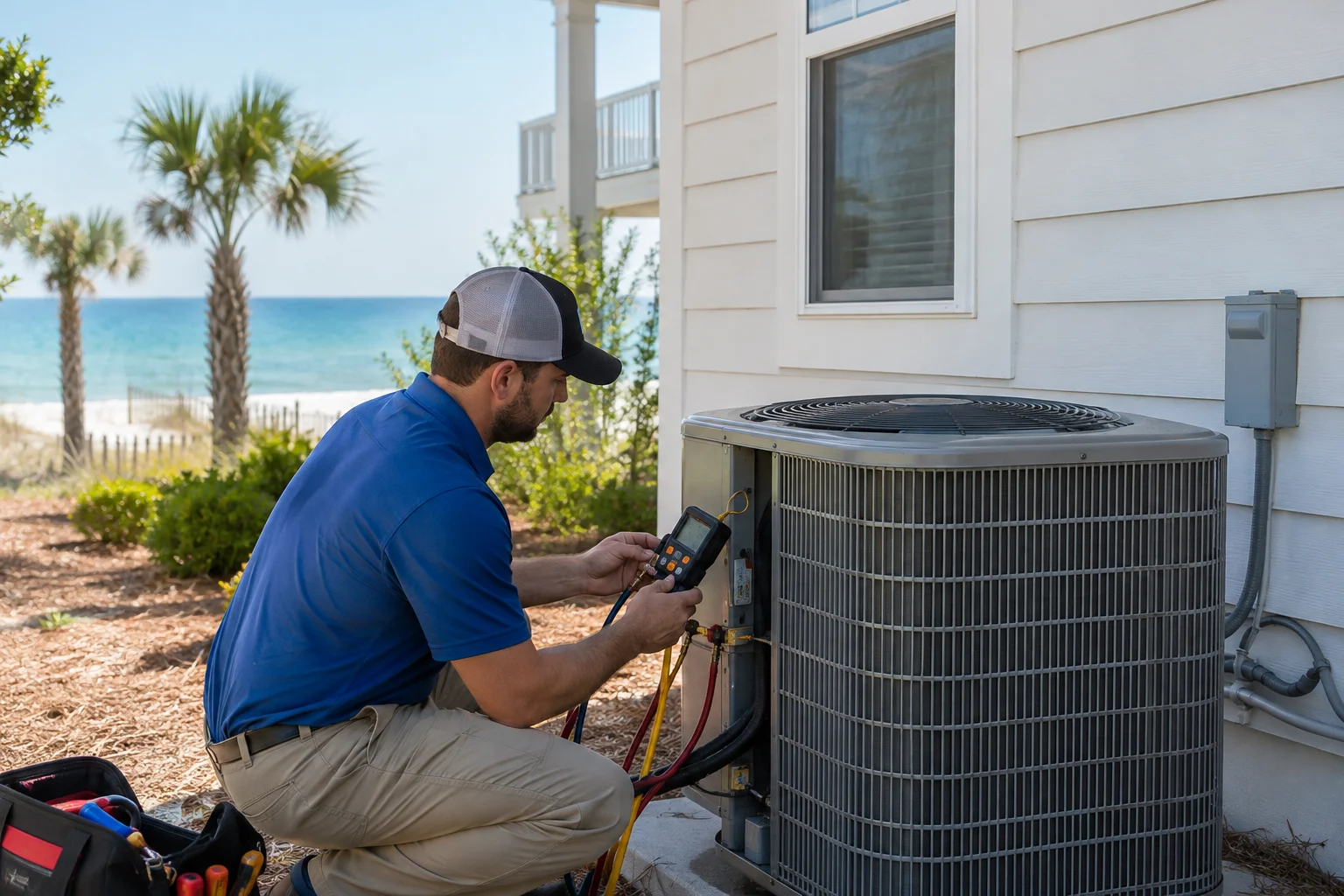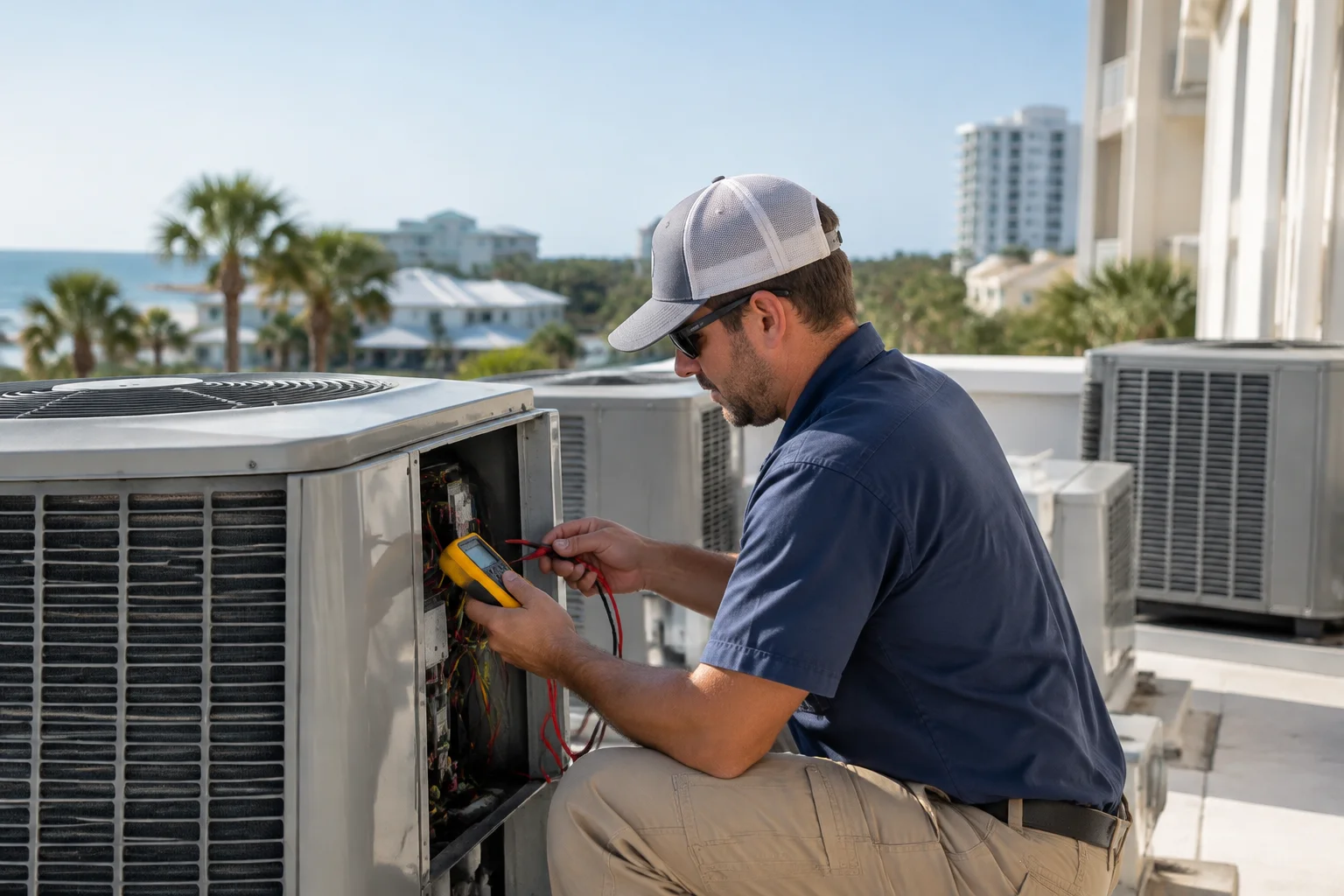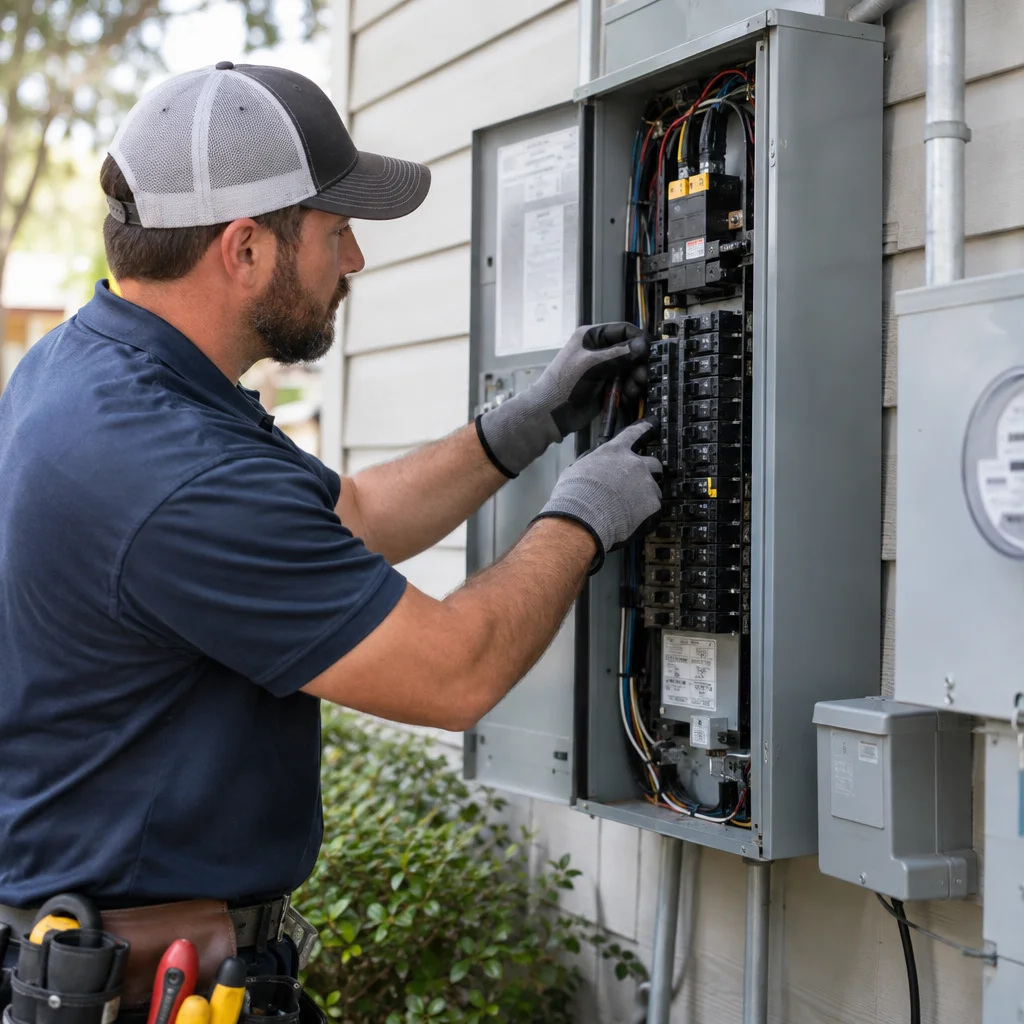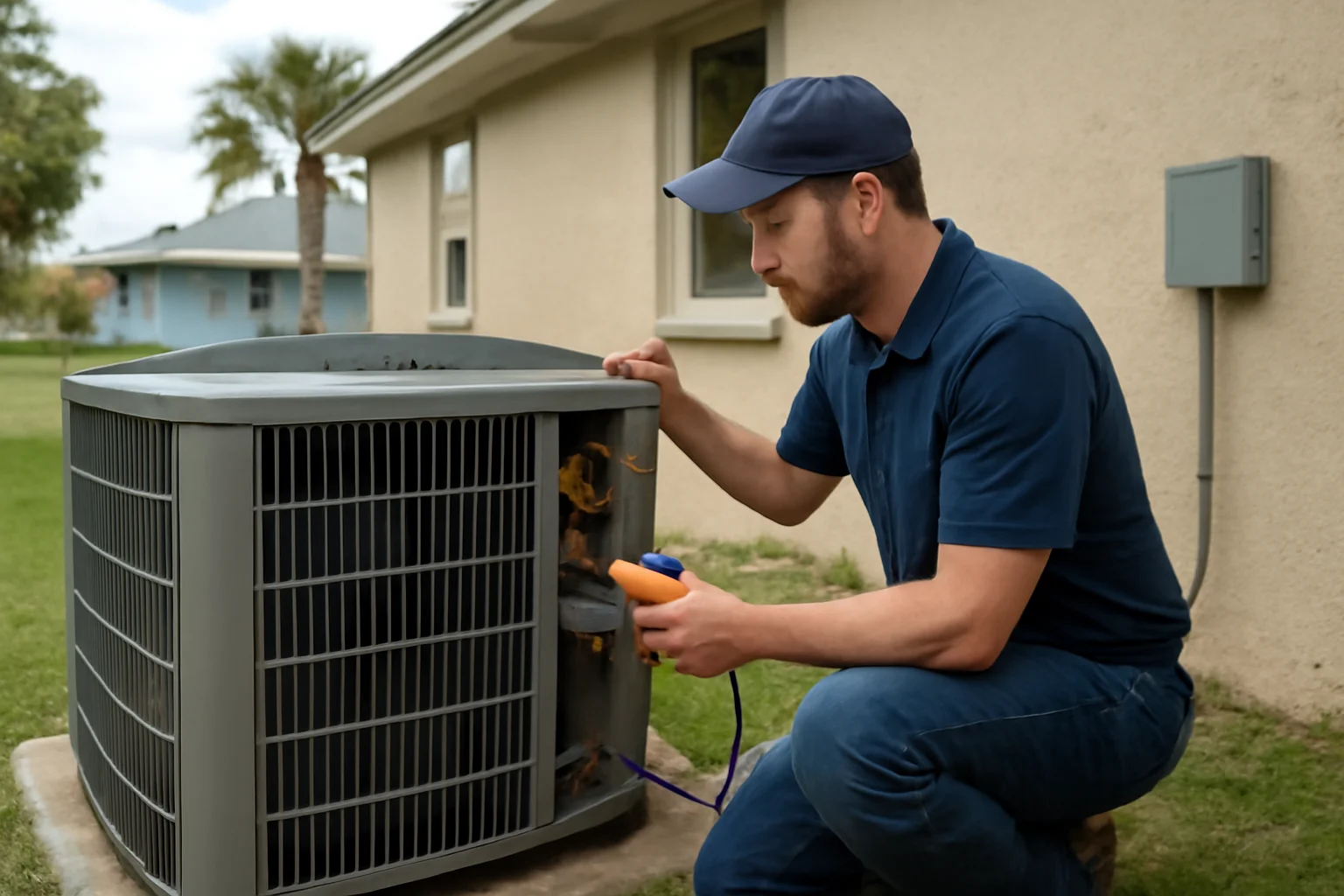
Commercial HVAC systems are built to handle daily demand, but they still get worn down by Florida heat, high humidity, and the constant push for steady airflow. For homeowners who manage rental properties, small commercial spaces, or mixed-use buildings in Lower Grand Lagoon, understanding commercial HVAC repair can be the difference between normal wear and a real emergency cooling situation.
This guide focuses on what you should watch for, common causes of cooling and airflow problems, and how preventive HVAC maintenance helps protect comfort, indoor air quality, and energy use. It also covers how to choose the right local HVAC contractor for commercial HVAC service in the Bay County area.
Why Lower Grand Lagoon weather turns HVAC issues into emergencies
Lower Grand Lagoon sits in a region where summer stretches long and humid, and coastal air can bring salt-laden moisture. Those conditions affect commercial systems in several ways:
- Humidity loads the system. When the air feels sticky, the cooling cycle has to remove more moisture. If the system cannot maintain proper airflow or refrigerant system performance, humidity can climb indoors.
- Salt air accelerates corrosion. Outdoor components and metal surfaces can degrade faster when exposed to coastal moisture.
- Airflow problems become comfort problems quickly. Dirty filters, clogged coils, failing fans, and damaged ductwork can reduce airflow. Reduced airflow can lead to warm zones, higher humidity, and increased strain on the system.
- Condensate drainage can fail. In humid Florida weather, condensate drainage is critical. If a drain line clogs or a condensate pan overflows, you can see water damage, microbial growth risk, and system shutdowns.
When these factors compound, the system may run longer to maintain temperature, short cycle, or struggle to cool during the hottest hours. Those are the moments when emergency cooling concerns show up and business operations get disrupted.
Commercial HVAC repair is not the same as a quick “AC fix”
Commercial systems often serve larger spaces, multiple zones, and higher occupant loads. They may include rooftop units, packaged systems, split systems, heat pumps, and ducted air distribution designed for steady performance. A homeowner might notice the same symptom as a residential issue, like warm air or a thermostat that seems off, but the repair approach needs to match the system type and operating conditions.
For businesses and property managers in the area, it helps to think in terms of:
- Cooling capacity and airflow balance. Cooling needs correct airflow across coils and through ductwork. A problem in one area can look like a problem in another.
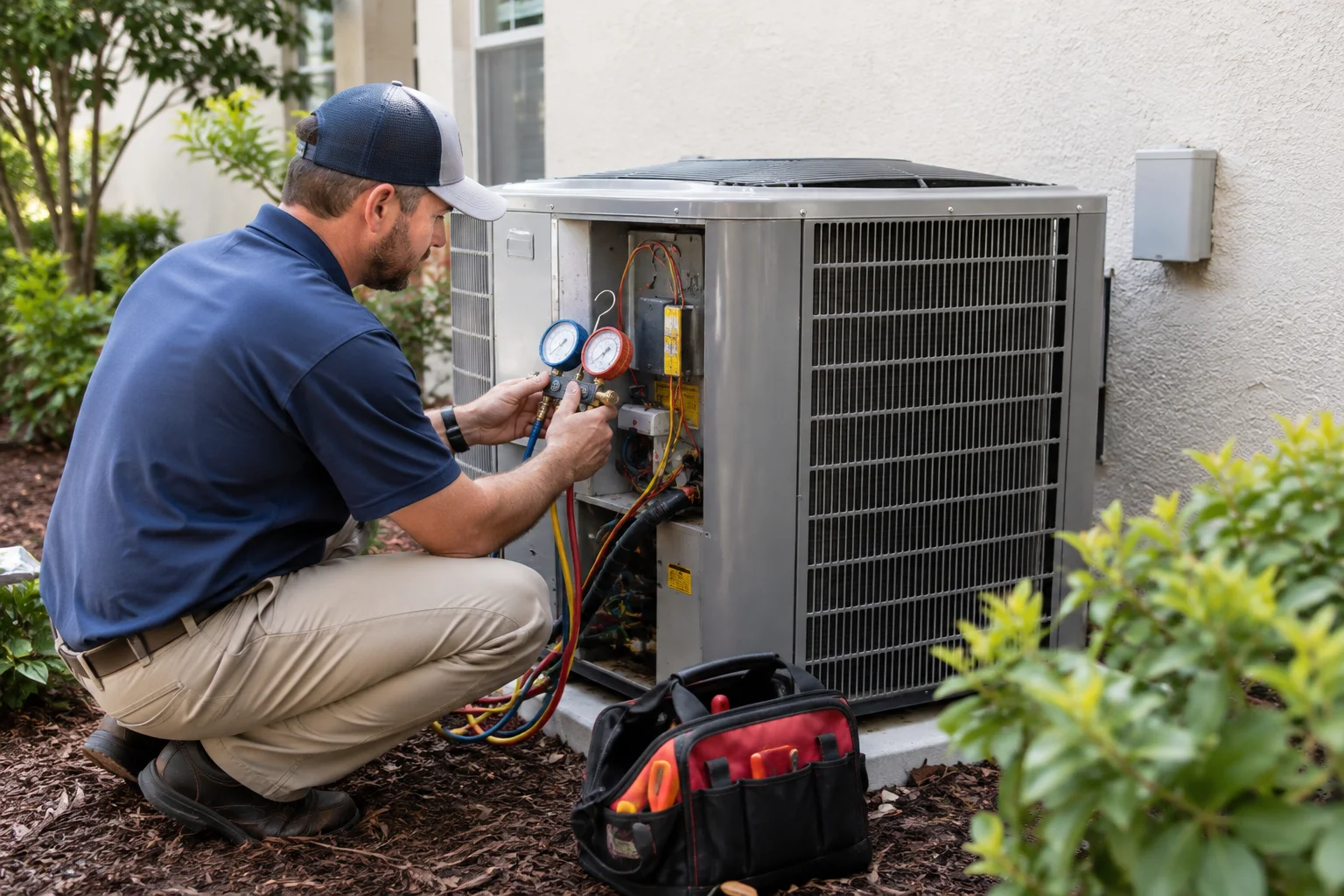
- Refrigerant system performance. Refrigerant systems are designed to operate within specific conditions. A professional should evaluate system operation in person rather than assume the refrigerant is the root cause.
- Controls and thermostat behavior. Thermostats, sensors, and commercial controls interact with schedules and setpoints. Incorrect control signals can cause comfort issues that feel like mechanical failure.
- Moisture management. Proper condensate drainage and coil performance are essential in Florida humidity. Even if temperatures are close, poor moisture removal can harm indoor air quality.
If you are searching for commercial HVAC service near me or HVAC repair near me for a property in Lower Grand Lagoon, prioritize a contractor that treats the system as a whole and understands commercial comfort requirements.
Common signs a commercial system needs repair before it becomes an emergency
Some issues start quietly and escalate during peak heat. Look for these warning signs in your building’s HVAC operation:
Comfort problems that do not match the thermostat setting
If the thermostat shows a setpoint and the display changes normally, but rooms stay warm or swing between cool and warm, it can point to airflow restrictions, coil issues, or control problems. In commercial spaces, uneven airflow can also create hot spots that feel “random” to occupants.
Humidity that keeps rising indoors
When Florida humidity is high, the cooling system should remove moisture. If you notice persistent condensation, foggy windows, musty odors, or sticky indoor air, the system may not be removing moisture effectively. Addressing this early helps protect indoor air quality and reduces the chance of mold risk.
Airflow changes you can feel
Reduced air volume from vents, loud fan operation, or air that feels warmer than expected can indicate problems with fans, ductwork, or coil performance. For property owners, it is also worth paying attention to whether supply and return air paths are clear.
Condensate drainage issues
In humid climates, condensate drainage is a frequent trouble spot. Signs include water pooling near units, wet ceiling tiles, drainage line clogging, or repeated shutdowns related to moisture safety controls.
Short cycling or frequent on-off behavior
When a system turns on and off too often, it can be caused by airflow issues, control problems, or other operating conditions. Short cycling increases wear and can lead to more frequent service calls during the hottest weeks.
Strange noises or unusual odors
Rattling, grinding, or persistent odors can indicate deteriorating components, airflow restrictions, or issues that affect indoor air quality. These are good reasons to schedule a commercial AC repair or air conditioning inspection rather than waiting for a full breakdown.
What typically causes commercial HVAC repair needs in Lower Grand Lagoon
While each building is different, several causes show up repeatedly for commercial HVAC service in Bay County.
Dirty filters and blocked airflow paths
Filters that are overdue on replacement can restrict airflow. Ductwork can also accumulate dust and debris over time. Reduced airflow can cause coils to work inefficiently and can contribute to humidity management problems.
Coil fouling from humidity and airborne contaminants
Cooling coils can collect residue and moisture-related buildup. When coils are not performing as intended, the system may struggle to remove heat and moisture effectively.
Refrigerant system issues that require on-site evaluation
Refrigerant systems are sensitive to operating conditions. Low or imbalanced refrigerant performance can contribute to comfort problems, but the correct diagnosis requires in-person testing and evaluation. Avoid assuming refrigerant is the only issue based on symptoms alone.
Thermostat and control problems
Commercial thermostats, sensors, and control boards influence how the system responds to setpoints and schedules. If control settings are wrong, sensors drift, or schedules do not match occupancy, comfort issues can persist even when the mechanical equipment is running.
Ductwork problems and leakage
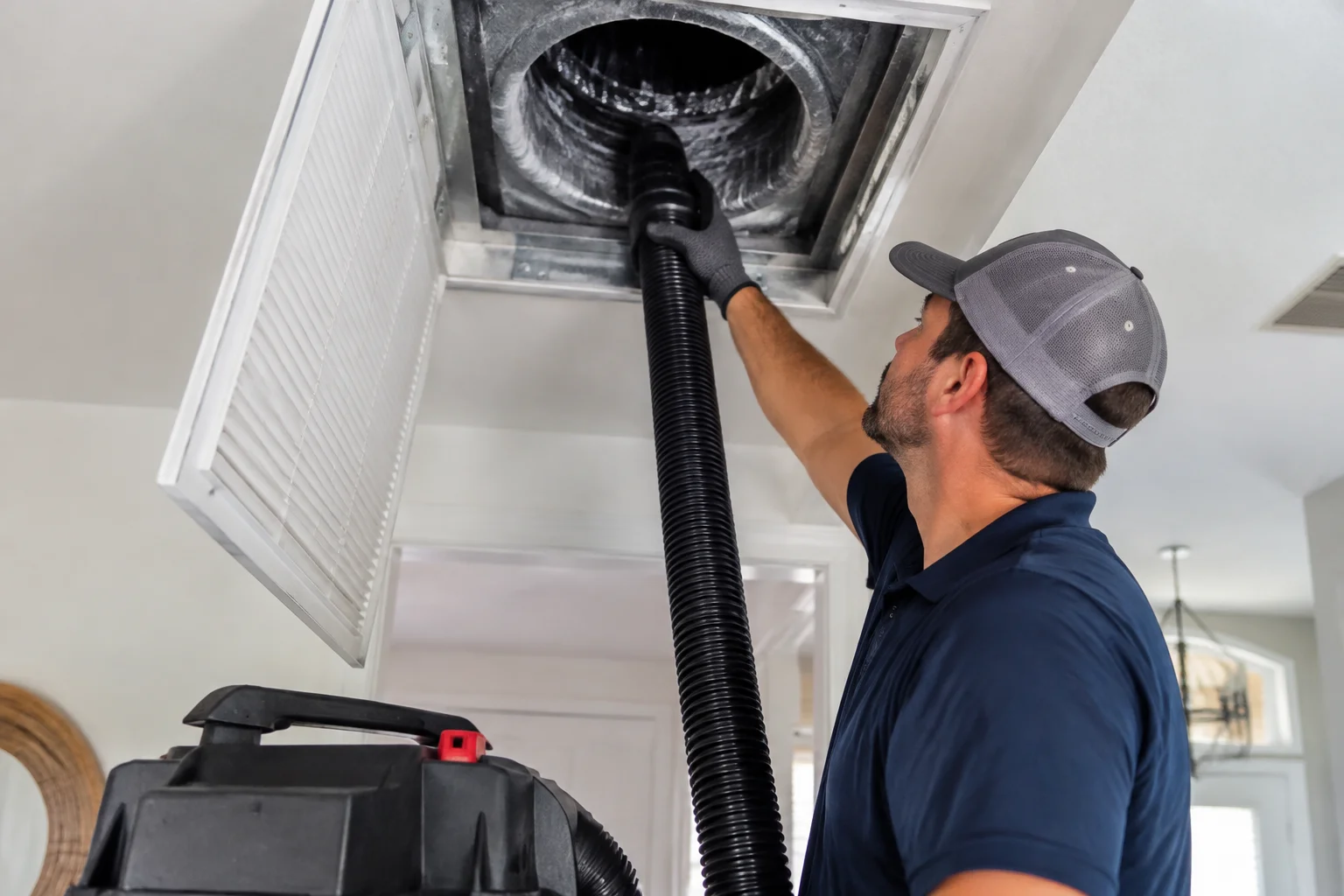
Commercial buildings rely on ductwork and air distribution to deliver consistent airflow. Duct leaks, damaged sections, poor sealing, or improper airflow balance can create warm zones, drafts, and higher energy use. If airflow feels inconsistent across rooms, duct inspection can help identify where the system is losing performance.
If you suspect ductwork is part of the issue, you can explore Ductwork and Aeroseal Services or review Duct Replacement if sections are beyond repair.
Condensate drainage clogs and drainage pan problems
When condensate drainage fails, the system can become less efficient and may trigger safety shutdowns. In Florida’s humidity, drainage maintenance is not optional for long-term reliability.
The role of preventive HVAC maintenance in avoiding emergency cooling
Preventive HVAC maintenance is where many emergencies can be avoided. A well-planned maintenance routine can catch small issues before they turn into major failures during peak demand.
For commercial systems in Lower Grand Lagoon, preventive maintenance typically focuses on:
- Air conditioning inspection and performance checks. Technicians review cooling operation, airflow, and system response under real conditions.
- Coil care and airflow verification. Cleaning and checks help maintain heat transfer and moisture removal.
- Thermostat and control review. Confirming settings, sensor operation, and schedule behavior helps ensure the system runs when it should and maintains comfort.
- Condensate drainage inspection. This matters in humid Florida conditions and helps reduce moisture-related problems.
- Refrigerant system checks as part of a complete evaluation. Technicians should verify system operation through on-site assessment rather than treating refrigerant as a guess.
- Energy use considerations. When systems run inefficiently, energy use rises. Maintenance helps keep performance closer to design intent.
If you are searching for commercial HVAC maintenance near me or AC tune up near me, look for a contractor that offers consistent, documented service and understands the humidity and airflow realities of Bay County.
How indoor air quality connects to commercial HVAC repair
Commercial HVAC systems affect indoor air quality every day, especially in humid climates. When airflow drops or moisture removal is weak, indoor air can feel stale and may increase the risk of odor and microbial growth. That is why indoor air quality is not separate from mechanical performance.
Homeowners managing commercial spaces should pay attention to:
- Musty smells or persistent odors that return after the system runs.
- Condensation on surfaces that suggests the system is not managing humidity properly.
- Ventilation air issues that can occur when ductwork or airflow balance is off.
If you are addressing comfort and air quality together, you may also want to review Indoor Air Quality and Air Scrubbers as part of a broader plan.
When ductwork becomes the hidden cause of HVAC problems
Ductwork issues are a common reason commercial systems struggle to maintain temperature and humidity control. Even when the equipment is operating, poor distribution can create comfort problems that look like equipment failure.
Commercial homeowners should consider duct-related investigation when they notice:
- Hot or cold rooms that never seem to improve
- Airflow that feels weaker in some areas
- Inconsistent comfort across the building
- Dust buildup near vents or signs of leakage
A careful duct inspection near me approach can help determine whether the issue is airflow delivery, duct sealing, or a damaged section that needs repair.
Heat pumps, air conditioning, and control settings in humid Florida
In Lower Grand Lagoon, many commercial systems use air conditioning or heat pump configurations. Humidity management remains important in both cases because cooling performance drives moisture removal.
Homeowners should also consider how thermostats and control settings affect operation. If schedules, setpoints, or occupancy modes are not configured correctly, systems may run too little or too much. Incorrect control behavior can raise energy use and still fail to deliver comfort.
For property managers, the goal is stable operation that matches occupancy patterns. If you are dealing with chronic comfort complaints, an Air Conditioning Inspection can help clarify whether the issue is mechanical, airflow related, or control driven.
Choosing a local HVAC company for commercial repairs
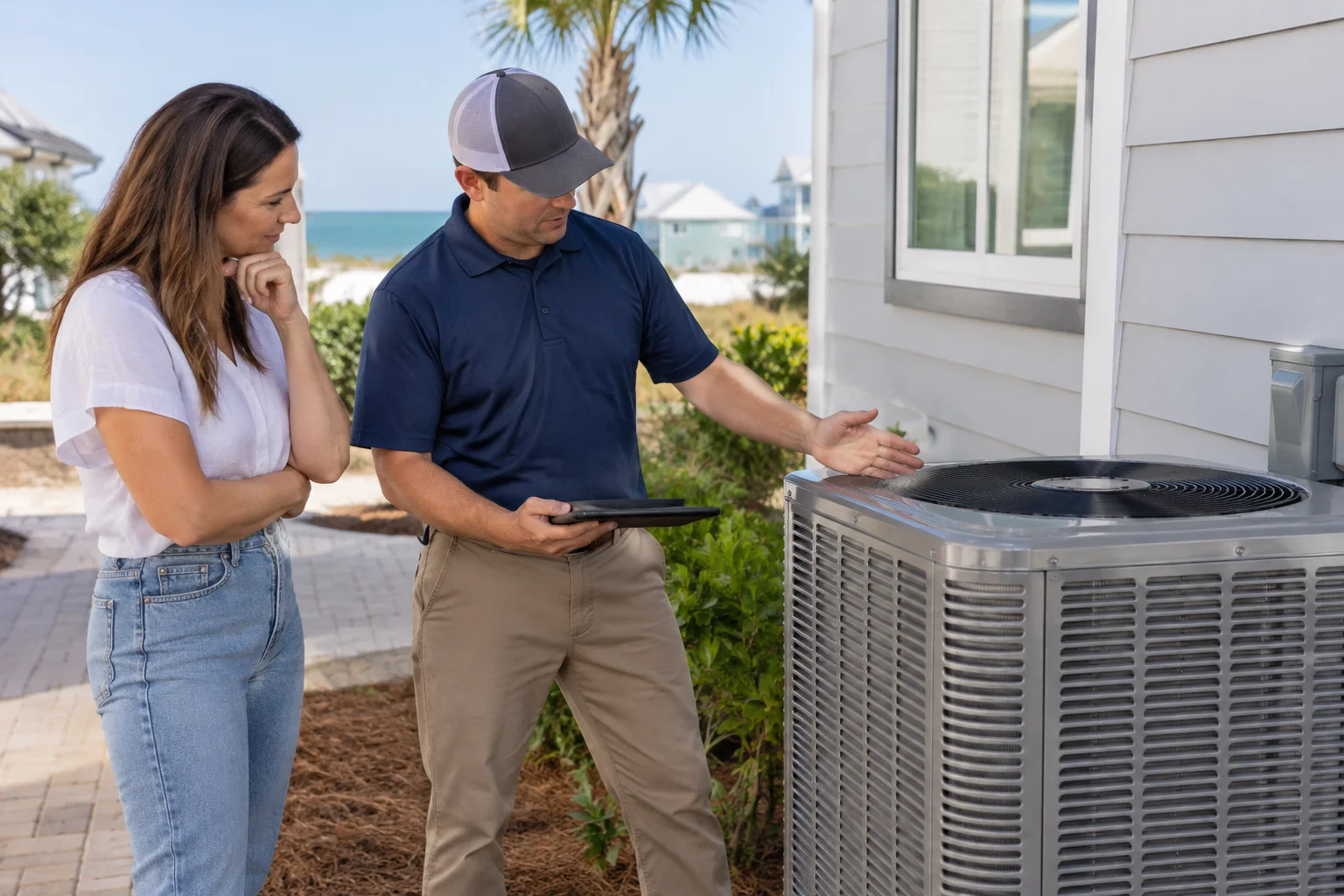
When you search for a licensed HVAC contractor near me or a HVAC company near me, commercial HVAC repair should be treated as a specialized job, not a general service call. A good contractor will:
- Ask about symptoms, comfort complaints, and when issues occur
- Review the building’s system type and how it is used
- Perform an on-site evaluation rather than guessing at refrigerant or electrical causes
- Check airflow, moisture management, and condensate drainage as part of the same troubleshooting path
- Explain what they found and what repair steps address the root cause
If your building needs commercial HVAC repair in Lower Grand Lagoon, you can review the service area page here: /service-areas/bay-county/lower-grand-lagoon/commercial-hvac-repair-lglbc. For broader coverage and local context, visit /service-areas/bay-county/lower-grand-lagoon and, when relevant, /service-areas/bay-county.
Repair vs. replacement: how homeowners can think about HVAC replacement
Sometimes repairs are the right move, and sometimes system replacement is the better long-term path. The decision should be based on an in-person assessment of system condition, performance, and overall operating needs. Homeowners should avoid making replacement decisions based only on one symptom.
When considering HVAC replacement near me, ask the contractor to explain how they evaluate:
- Whether repeated repairs point to a broader performance issue
- How well the system maintains comfort and humidity control
- Whether airflow and ductwork constraints limit performance
- How controls and thermostats align with the building’s usage
Replacement planning is also a good time to think about system sizing and ductwork compatibility, since airflow needs in a commercial building are different from residential homes.
Practical steps you can take now to reduce emergency cooling concerns
You cannot manage every variable, but you can reduce risk and make repairs easier when they are needed.
Keep an eye on comfort and humidity patterns
Track when problems happen. Note whether issues worsen during the hottest afternoons or after heavy rain. Patterns help technicians diagnose airflow, moisture management, and control behavior.
Maintain clear access around equipment
Outdoor units and rooftop equipment need airflow for ventilation. Keep areas clear of debris and ensure condensate drain areas are not blocked.
Use thermostat schedules that match occupancy
For many commercial spaces, schedules are the difference between stable comfort and unnecessary runtime. If schedules do not reflect occupancy changes, systems can struggle to keep up.
Schedule maintenance before the peak season rush
When homeowners search for commercial HVAC maintenance near me, they are often trying to avoid the late-summer scramble. Planning ahead helps reduce the odds of emergency cooling concerns when demand is highest.
Related reading for Lower Grand Lagoon property owners
If you are balancing comfort with budgeting, these guides can help you plan more confidently:
- A Local Homeowner’s Guide to HVAC Financing in Lower Grand Lagoon, FL: Comfort, Airflow, Humidity, and Prevention
- Why Commercial HVAC Repair Matters to Home Comfort in Miramar Beach
- Commercial HVAC Repair in Fort Walton Beach: What Property Owners Should Pay Attention To Before Small Problems Grow
- How Local Weather Affects Commercial HVAC Repair in Destin, FL
When to call for commercial HVAC repair right away
Some situations are not “wait and see.” Call a professional commercial HVAC service when you notice:
- The system cannot maintain cooling during hot hours
- Repeated shutdowns or signs of condensate drainage problems
- Strong musty odors or visible moisture issues
- Major airflow loss, unusual noises, or persistent control failures
- Comfort complaints that affect occupants quickly and consistently
In humid Florida conditions, early repair helps protect indoor air quality and reduces the chance that a small issue becomes a full emergency cooling concern.
Find Commercial HVAC Repair in Lower Grand Lagoon, FL
If you need Commercial HVAC Repair in Lower Grand Lagoon, FL, visit our local service page or contact A Superior Mechanical today.
Map of Lower Grand Lagoon, FL
Frequently Asked Questions
How can I tell if the problem is airflow or the cooling equipment on a commercial HVAC system?
Look for patterns like uneven temperatures, weak vent output, and comfort differences between rooms. A professional can evaluate airflow delivery, ductwork condition, coil performance, and system operation during an on-site inspection rather than guessing from symptoms alone.
Why does humidity seem worse in Lower Grand Lagoon when the AC is running?
In Florida humidity, the cooling system must remove moisture effectively. If airflow is restricted, coils are not performing, or condensate drainage is not managing water properly, indoor humidity can stay high even when the thermostat indicates the system is operating.
Should I attempt to diagnose refrigerant issues myself?
No. Refrigerant system performance requires in-person evaluation and proper testing. Symptoms can overlap with airflow, controls, or coil problems, so a licensed HVAC contractor should assess the system on site before recommending any repair steps.
What does a commercial AC tune up include for humid climates?
Expect a focus on cooling inspection, airflow checks, coil care, control and thermostat review, and condensate drainage inspection. These items help maintain comfort, indoor air quality, and reliable operation through hot, humid weather.
When is it better to repair a commercial system versus plan HVAC replacement?
The right choice depends on the system’s overall condition and performance. An on-site professional evaluation can help determine whether repairs address the root cause or whether ongoing issues suggest the system is no longer operating efficiently or reliably enough for the building’s needs.
Related Articles
- A Local Homeowner’s Guide to HVAC Financing in Lower Grand Lagoon, FL: Comfort, Airflow, Humidity, and Prevention
- Why Commercial HVAC Repair Matters to Home Comfort in Miramar Beach
- Commercial HVAC Repair in Fort Walton Beach: What Property Owners Should Pay Attention To Before Small Problems Grow
- How Local Weather Affects Commercial HVAC Repair in Destin, FL
Photo Gallery