Commercial buildings in Rosemary Beach have to handle more than just hot afternoons. Salt air, high humidity, and long cooling seasons put extra stress on air conditioning systems and heat pumps, especially in offices, retail spaces, restaurants, and vacation rentals. When comfort drops or indoor air quality suffers, it is not only uncomfortable for guests and employees. It can also interrupt operations and increase energy use.
This guide walks homeowners and property managers through common commercial HVAC repair needs in Rosemary Beach, FL, focusing on cooling performance, airflow, humidity control, condensate drainage, and refrigerant system health. You will also find practical prevention steps and clear guidance on when to call a professional local HVAC service like A Superior Mechanical for commercial HVAC repair in Rosemary Beach.
Why Rosemary Beach HVAC systems feel the strain
Rosemary Beach sits in a coastal region where warm air and moisture are the norm. That combination affects almost every part of commercial cooling, from how air moves through ductwork to how condensate drains away. Even well-built buildings can experience performance issues when humidity rises and outdoor conditions stay warm for months.
Common local factors that influence commercial HVAC repair needs include:
- Florida heat load: Long cooling seasons increase run time for air conditioning service and heat pump service.
- Humidity and latent load: Systems can cool air but still fail to remove moisture, leading to clammy indoor conditions.
- Salt air exposure: Coastal air can accelerate corrosion on outdoor units and components, especially around rooftop equipment.
- Airflow sensitivity: Ductwork restrictions, dirty filters, or imbalanced dampers can cause uneven comfort and higher energy use.
- Condensate drainage concerns: When condensate drainage is restricted, indoor humidity can rise and water-related problems can follow.
If your building uses a thermostat schedule to manage occupancy, humidity and airflow problems can also create “short cycling” behavior or temperature swings. That can make the system work harder and may contribute to premature wear.
Cooling problems that show up as comfort complaints
Many commercial HVAC problems start with everyday observations. Staff may report that some rooms feel warmer than others, customers notice stale air, or employees feel uncomfortable near vents or return grilles. These are often symptoms of underlying issues with airflow, humidity control, or refrigerant systems.
1) Air feels cool but the space still feels muggy
That combination is common in Florida humidity. A unit can lower air temperature while failing to remove enough moisture. Possible causes include:
- Airflow restrictions that prevent the coil from doing its job.
- Dirty evaporator components that reduce heat transfer.
- Refrigerant system performance problems that affect how the coil absorbs heat.
- Drain line issues that limit proper condensate drainage.
When moisture removal fails, indoor air quality can suffer. You may see increased dust, odors, or condensation near vents. For businesses, that can affect guest experience and employee comfort.
2) Uneven cooling between zones or floors
Uneven comfort often points to ductwork and airflow problems. In commercial settings, zoning, supply and return balance, and airflow paths matter. If one area is starved for air while another is over-conditioned, you can see:
- Hot spots near supply vents or returns that feel weak.
- Rooms that do not reach setpoints even with the thermostat calling for cooling.
- Inconsistent temperatures that can lead to guest complaints and higher energy use.
Even small airflow blockages can be magnified in coastal environments where outdoor debris and indoor dust accumulate.
3) Short cycling or frequent start and stop
Short cycling can be caused by several conditions. In many cases, it is tied to airflow, thermostat behavior, or system controls. If a unit starts and stops quickly, it may not have enough run time to remove humidity. Over time, this pattern can increase wear on components.
A professional diagnosis should evaluate system operation under real conditions. Homeowners and property managers should avoid guessing at refrigerant levels or control settings without an in-person inspection.
Airflow: the hidden driver of repair needs
In commercial HVAC repair, airflow problems are among the most common reasons cooling performance drops. Airflow affects heat transfer, humidity removal, and energy use. It also influences how well the system stays within safe operating ranges.
Check the basics that often get overlooked
Before calling for service, it helps to understand what typically gets evaluated during an air conditioning inspection. Technicians often look at:
- Filters and filter loading: Dirty filters can restrict airflow and reduce coil performance.
- Supply and return airflow: Weak returns can pull warm, humid air through unintended paths.
- Ductwork restrictions: Duct leakage, collapsed sections, or blocked grilles can create imbalance.
- Fan and blower operation: Performance issues can reduce airflow volume or distribution.
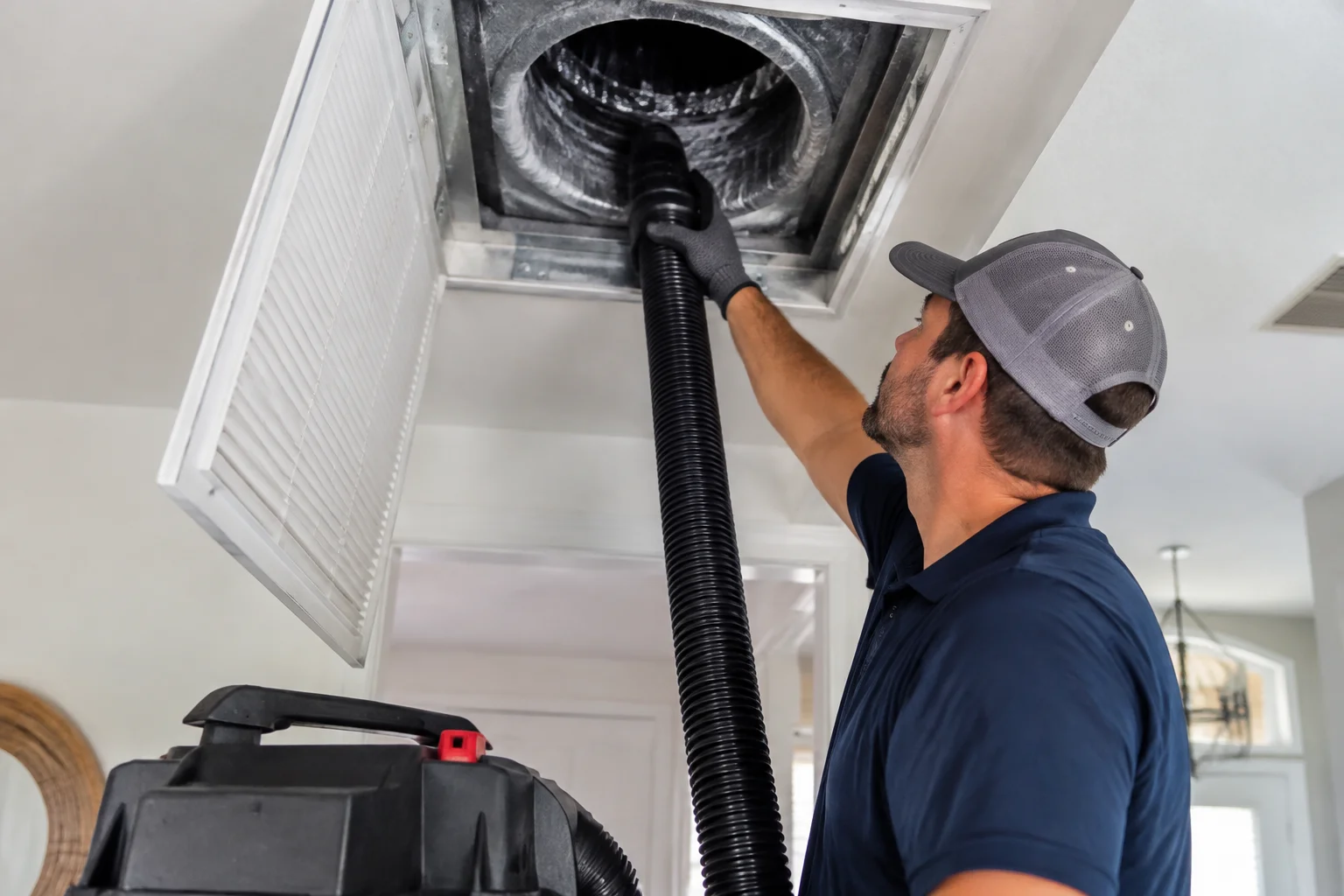
If you are searching for “duct cleaning near me” or “duct inspection near me,” consider that ductwork evaluation is not the same as automatically scheduling cleaning. A technician should confirm whether cleaning is needed and whether airflow problems originate elsewhere, such as filters, coil conditions, or dampers.
Why airflow matters for indoor air quality
Airflow is directly tied to indoor air quality. When air is not moving correctly, ventilation can suffer and humidity can linger. That can contribute to musty odors or a stale feel in lobbies and break rooms.
For commercial buildings that rely on consistent comfort for occupancy, airflow issues can also impact how effectively air is distributed during peak hours.
Humidity control and condensate drainage in coastal buildings
Humidity is a major reason commercial AC repair is so common during summer in Walton County. Even if a system cools, it must also dehumidify to keep indoor conditions comfortable and protect finishes.
Condensate drainage: small blockages can cause big problems
As air passes over cooling coils, moisture condenses and drains through a condensate line. If drainage is restricted, you can see:
- Indoor humidity that stays high.
- Water leakage near equipment or ceiling areas.
- Increased risk of corrosion or biological growth around moisture-prone areas.
Because condensate lines can be affected by debris, algae growth, or improper slope, a professional inspection is important. Routine care is also part of preventive HVAC maintenance, especially for systems serving humid environments.
Whole-home dehumidification may be part of the solution
Some commercial spaces benefit from dedicated humidity control. If your building struggles with moisture even when temperatures are acceptable, ask about options such as whole home dehumidifiers. A technician can help determine whether humidity control should be handled through HVAC adjustments, supplemental equipment, or both.
Refrigerant systems: what homeowners should understand
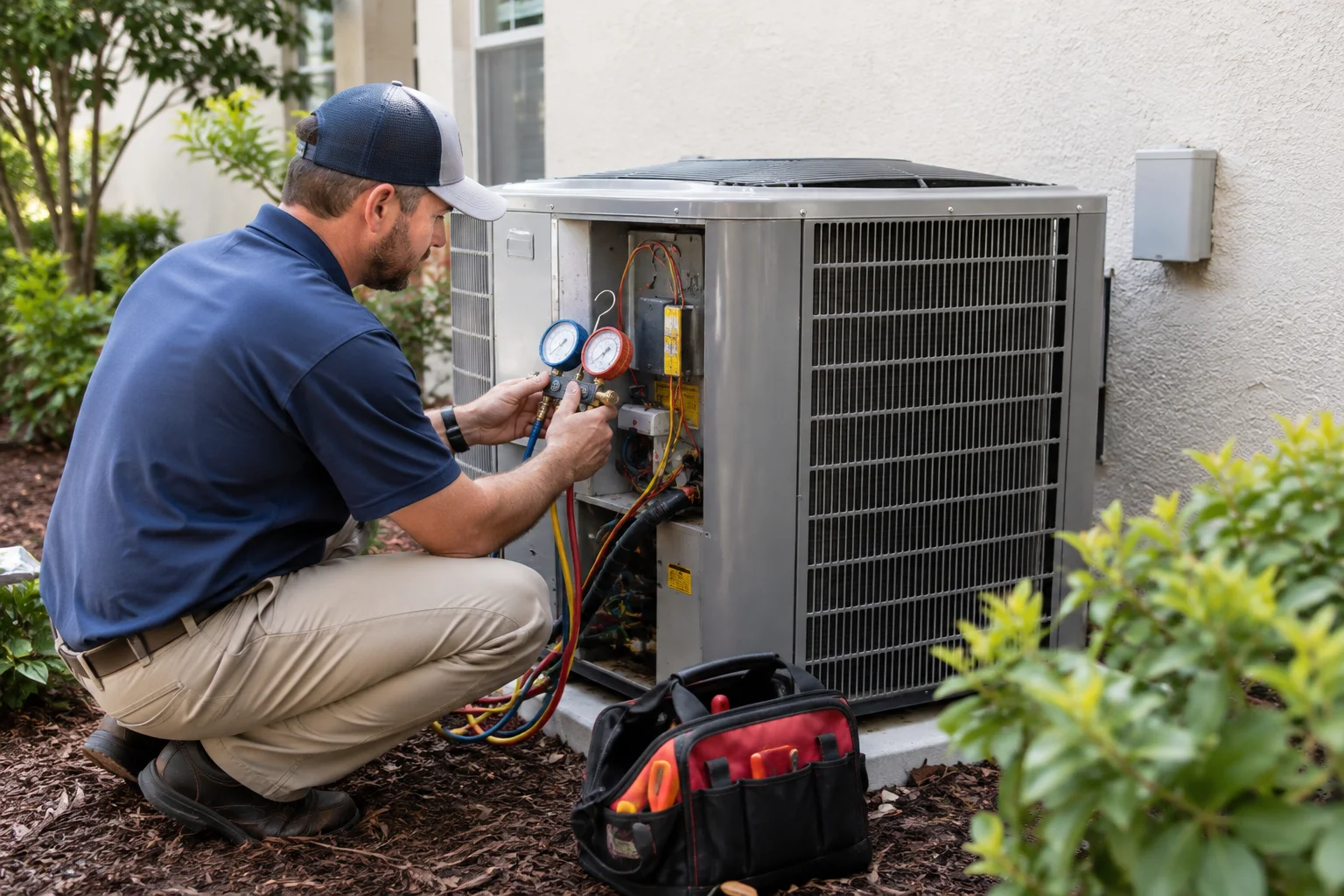
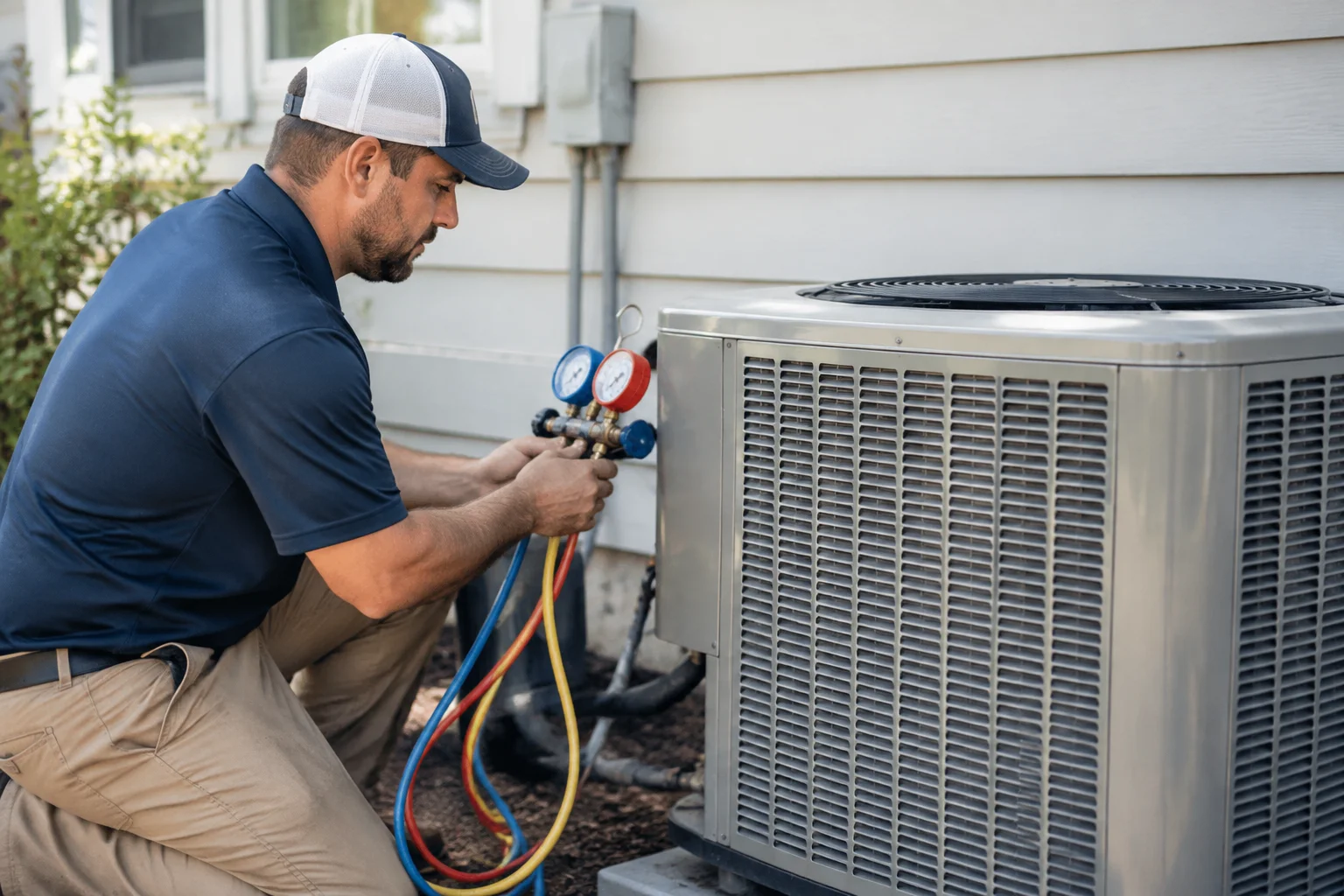
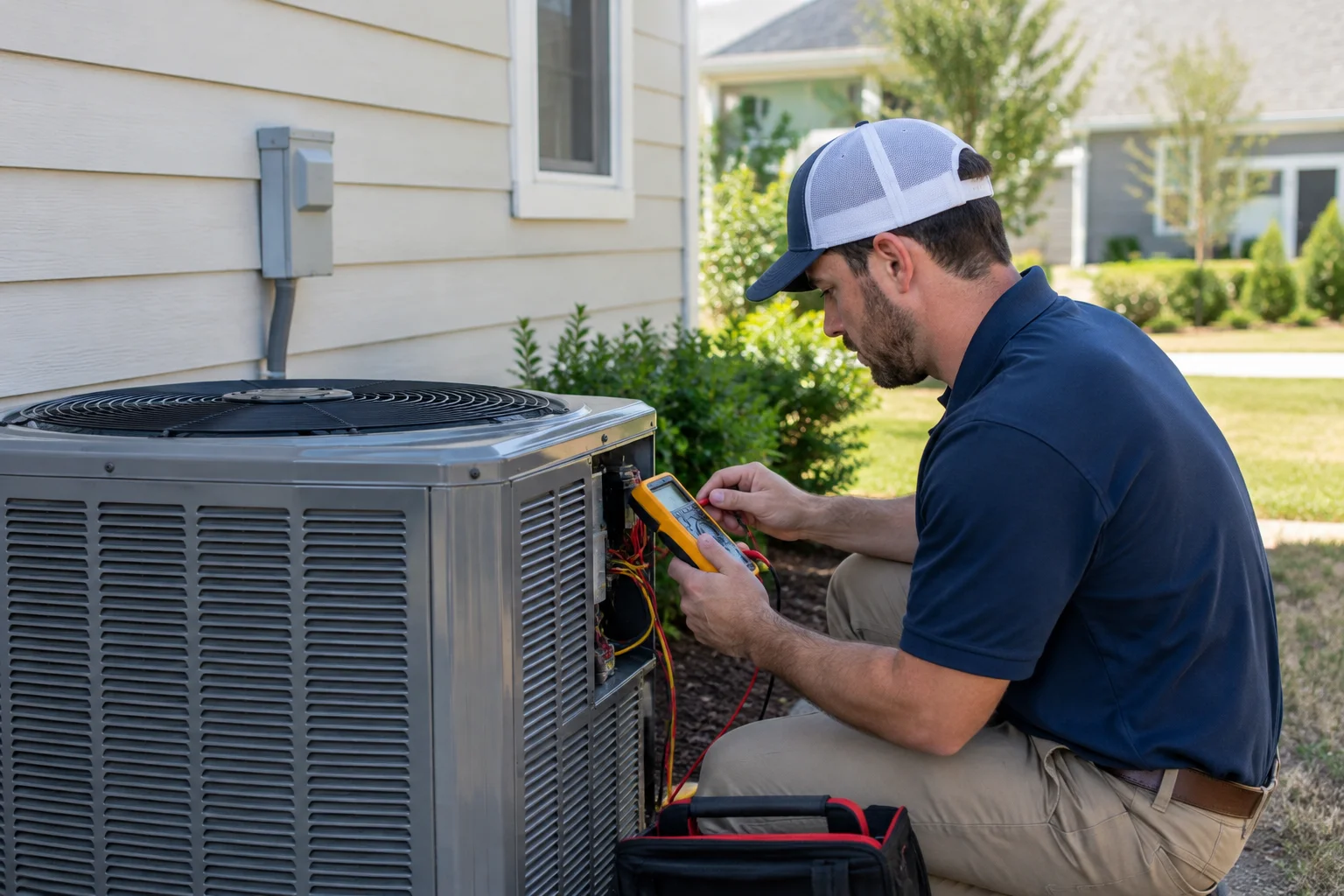
Commercial cooling relies on refrigerant moving through a closed system to absorb and release heat. When refrigerant system performance is off, cooling capacity can drop and coil performance can change. However, refrigerant problems are not something homeowners should try to diagnose or correct themselves.
Common cooling symptoms linked to refrigerant system performance
While only an in-person evaluation can confirm the cause, businesses may notice:
- Air that feels less cool than expected.
- Long run times without reaching setpoints.
- Inconsistent humidity control.
- Coil icing or unusual frost patterns in some cases.
It is important to note that these symptoms can also be caused by airflow restrictions, dirty coils, or control issues. That is why a thorough commercial AC repair process matters.
Why you should not “guess” at refrigerant
Refrigerant work requires trained handling and proper testing. Attempting to add refrigerant or adjust settings without confirming the underlying issue is not appropriate. A licensed HVAC contractor should evaluate system operation and check for root causes, including airflow and component performance.
Thermostats, controls, and scheduling issues
Commercial buildings often use thermostats with schedules that match occupancy. When controls are misconfigured, the system may run at the wrong times, short cycle, or fail to maintain consistent comfort.
Look for thermostat-related comfort problems
- Setpoints that do not match the building’s actual use pattern.
- Schedules that keep cooling running when spaces are vacant, increasing energy use.
- Zones that do not respond correctly to calls for cooling.
- Communication issues with commercial control systems.
Some owners also consider air conditioning inspection or thermostat installation support when comfort complaints persist. If you are searching for “thermostat installation near me,” focus on a contractor that understands commercial systems and how controls interact with airflow and humidity.
Heat pumps in Rosemary Beach: cooling mode still needs attention
Many commercial properties use heat pumps because they can provide heating and cooling. In Rosemary Beach, cooling mode is usually the main demand. Even in a heat pump installation, cooling performance depends on proper airflow, coil condition, and refrigerant system operation.
Heat pump issues can look like AC problems
When a heat pump is not performing well, you may see similar symptoms to traditional air conditioning service calls: insufficient cooling, poor humidity control, or uneven comfort. That is why commercial AC repair and heat pump service should be treated as part of the same comfort system.
If you are comparing options for heat pump installation near me, remember that the best results come from correct sizing, ductwork evaluation, and commissioning. Repair and maintenance history also matter when deciding whether a system can be restored or whether a larger replacement plan is needed.
Preventive HVAC maintenance that actually helps in humid coastal weather
Preventive HVAC maintenance is where many comfort problems can be reduced before they become emergency cooling concerns. In a coastal climate, maintenance helps manage performance degradation caused by dust buildup, moisture exposure, and corrosion risk.
Maintenance priorities for commercial cooling systems
A solid preventive plan typically includes:
- Coil inspection and cleaning: Evaporator and condenser cleanliness affects heat transfer and humidity removal.
- Filter checks: Correct filtration supports airflow and indoor air quality.
- Drain line inspection: Condensate drainage should flow properly to avoid humidity and water issues.
- Airflow verification: Technicians can evaluate distribution and balance across zones.
- Thermostat and control review: Schedules and setpoints should match occupancy patterns.
- Refrigerant system checks: Only as appropriate for the system and based on observed performance, not guesswork.
For owners searching for “HVAC maintenance near me,” the key is choosing a contractor who treats maintenance as a performance service, not a checklist. Pair that with building-specific awareness: high humidity, frequent occupancy changes, and coastal exposure.
If you want to improve comfort and reduce moisture-related complaints, review how your HVAC system interacts with the building’s airflow pathways. This is also where local guidance helps, since Rosemary Beach buildings can vary widely in layout and ductwork design. You can explore related reading like Smart HVAC Planning for Rosemary Beach Homes: Comfort, Airflow, and Coastal Protection for ideas that translate to commercial comfort planning.
When small problems can turn into emergency AC repair
Commercial HVAC failures do not always happen gradually. Sometimes a system fails during peak hours, when indoor temperatures rise quickly and humidity becomes uncomfortable fast.
Red flags that justify emergency cooling support
If you notice any of the following, it is reasonable to seek emergency AC repair near me support from a qualified commercial HVAC repair team:
- The system stops cooling and the building cannot maintain safe comfort for occupants.
- Repeated cycling that prevents stable temperature control.
- Active water leakage or signs of condensate drainage failure.
- Unusual sounds or smells that suggest a developing mechanical or airflow issue.
- Any condition that could risk product storage, equipment operation, or guest comfort depending on your business type.
For restaurants, retail, and mixed-use properties, cooling interruptions can become operational emergencies. A commercial HVAC contractor can help restore comfort while also advising on whether the issue is isolated or part of a larger performance trend.
Choosing a local commercial HVAC contractor in Walton County
When you hire a local HVAC company near me, you are not only buying parts and labor. You are buying experience with the kind of problems that show up in your climate. Coastal humidity and salt air change how equipment ages and how often certain issues return.
What to look for in a licensed HVAC contractor
- Commercial experience: Make sure the company regularly supports commercial AC repair, air conditioning service, and heat pump service.
- Comfort and airflow focus: Ask how they evaluate airflow, ductwork performance, and humidity control.
- Respect for diagnosis: A good technician explains what they are checking and why. They do not jump straight to refrigerant or replacement claims.
- Indoor air quality awareness: They consider filtration, ventilation, and moisture control, not just temperature.
- Preventive maintenance options: They can help you build an HVAC maintenance near me plan that fits your occupancy schedule.
If you want to understand how equipment wear affects indoor air over time, read How HVAC Wear and Tear Changes the Air Inside Rosemary Beach Homes. The same principles apply to commercial buildings, where higher occupancy and longer run times can accelerate performance changes.
Repair planning: balancing uptime, energy use, and long-term comfort
Commercial HVAC repair decisions often involve more than fixing a single symptom. Property owners also think about energy use, indoor air quality, and whether repeated repairs suggest a larger system limitation.
How to prepare for a commercial HVAC service visit
Before the technician arrives, gather useful details:
- When the cooling issue started and whether it is intermittent.
- Any comfort patterns by zone, floor, or room type.
- Thermostat setpoints and schedule changes made recently.
- Any signs of condensate drainage problems, such as moisture near vents or equipment.
- Whether the building has had recent ductwork modifications, renovations, or occupancy changes.
This information helps the technician evaluate airflow, humidity, and system operation in context. If repairs are needed, ask how the fix addresses the root cause and how preventive maintenance can reduce recurrence.
For additional context on commercial repairs nearby, you can also review Commercial HVAC Repair in Fort Walton Beach: What Property Owners Should Pay Attention To Before Small Problems Grow and Why Commercial HVAC Repair Matters to Home Comfort in Miramar Beach.
Service coverage across Rosemary Beach and Walton County
Commercial HVAC repair needs do not stop at city limits. If you manage properties across Walton County, it helps to work with a contractor that understands the region’s climate and building styles. You can explore service details on the Rosemary Beach service page and the broader Walton County service area.
When cooling, airflow, or humidity control issues affect your business, start with an inspection focused on performance. For fast, reliable help, visit /service-areas/walton-county/rosemary-beach/commercial-hvac-repair-rmbfl to learn how A Superior Mechanical supports commercial properties in Rosemary Beach.
Related service options that support better comfort
Commercial HVAC repair is one piece of a comfort strategy. Depending on what your building needs, you may also benefit from:
- Air Conditioning Inspection to identify airflow and cooling performance issues early.
- Heating Services if your heat pump or heating equipment shares the same system components.
- Air Conditioning Installation if a replacement plan becomes necessary after evaluation.
For homeowners managing commercial spaces, these services help keep comfort stable through Florida humidity, reduce indoor air quality issues, and support energy-efficient operation as conditions change.
If you are searching for “commercial AC repair near me” or “air conditioning repair near me” because your business cannot stay comfortable, focus your next step on a professional inspection that evaluates cooling performance, airflow, condensate drainage, and thermostat operation. That is the fastest path to restoring comfort and protecting uptime in Rosemary Beach.
Find Commercial HVAC Repair in Rosemary Beach, FL
If you need Commercial HVAC Repair in Rosemary Beach, FL, visit our local service page or contact A Superior Mechanical today.
Map of Rosemary Beach, FL
Frequently Asked Questions
What is the difference between cooling problems and humidity problems in commercial HVAC?
Cooling problems mean the system cannot lower indoor temperature as expected. Humidity problems mean the system is not removing moisture, so spaces can feel muggy even when temperatures seem close to setpoints. In Florida, both often occur together and can be tied to airflow, condensate drainage, and coil performance.
Can dirty ductwork cause poor cooling and higher humidity?
Yes. Ductwork restrictions, imbalances, and airflow leaks can reduce how much air reaches certain areas. That can lower cooling capacity and prevent proper humidity removal. A technician can evaluate ductwork performance during an air conditioning inspection rather than assuming duct cleaning is always the fix.
Should I try to adjust the thermostat or add refrigerant myself?
No. Thermostat changes can mask the real cause, and refrigerant adjustments require proper testing and qualified handling. A licensed HVAC contractor should inspect system operation in person to confirm the underlying issue before any refrigerant work or major adjustments.
What should I include when I call for commercial HVAC repair in Rosemary Beach?
Share when the issue started, whether it is intermittent, which zones are affected, thermostat setpoints and schedules, any signs of condensate drainage issues, and any recent changes to the building or occupancy. This helps the technician evaluate cooling performance, airflow, humidity control, and controls more efficiently.
Related Articles
- Smart HVAC Planning for Rosemary Beach Homes: Comfort, Airflow, and Coastal Protection
- How HVAC Wear and Tear Changes the Air Inside Rosemary Beach Homes
- Why Commercial HVAC Repair Matters to Home Comfort in Miramar Beach
- Commercial HVAC Repair in Fort Walton Beach: What Property Owners Should Pay Attention To Before Small Problems Grow
Photo Gallery