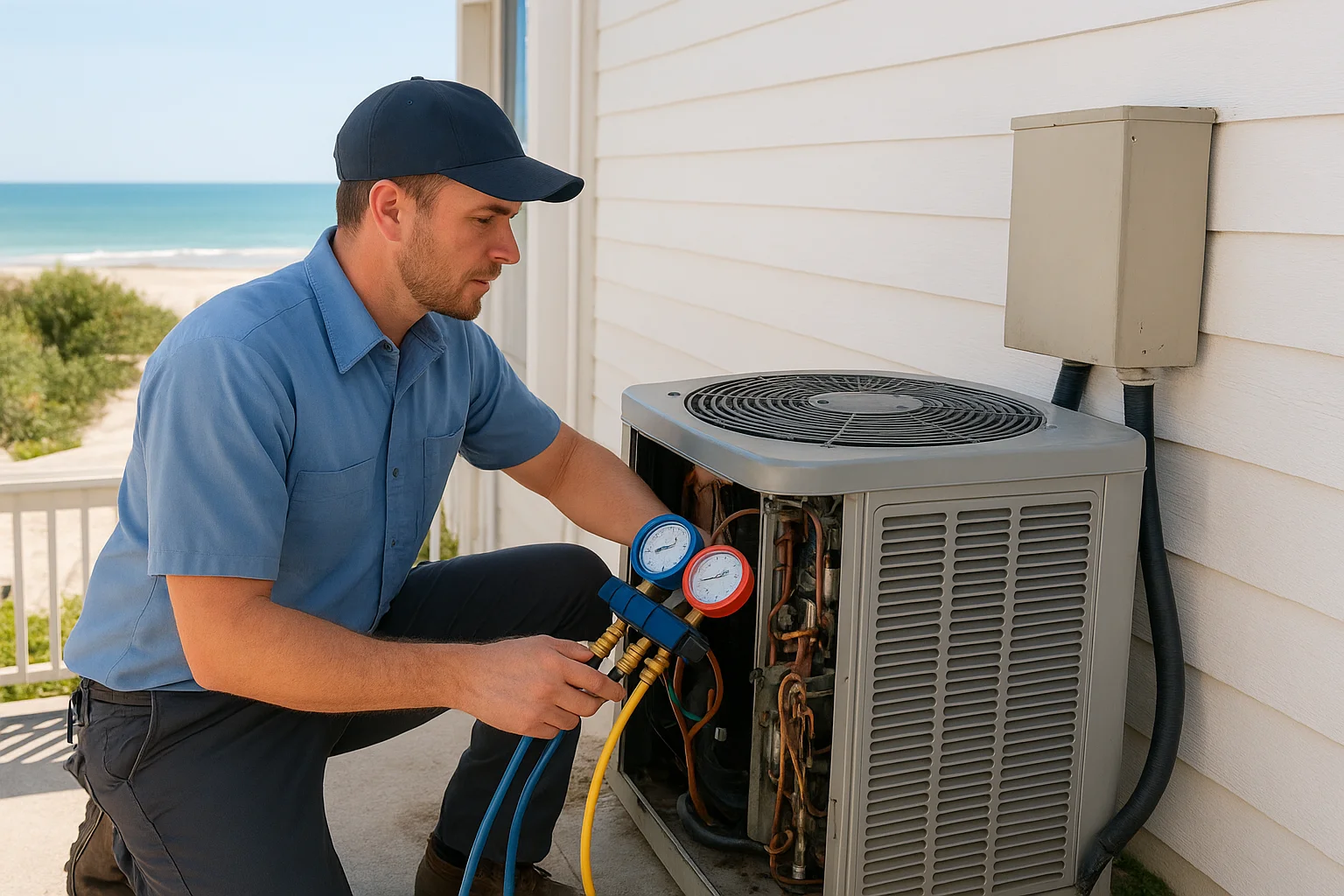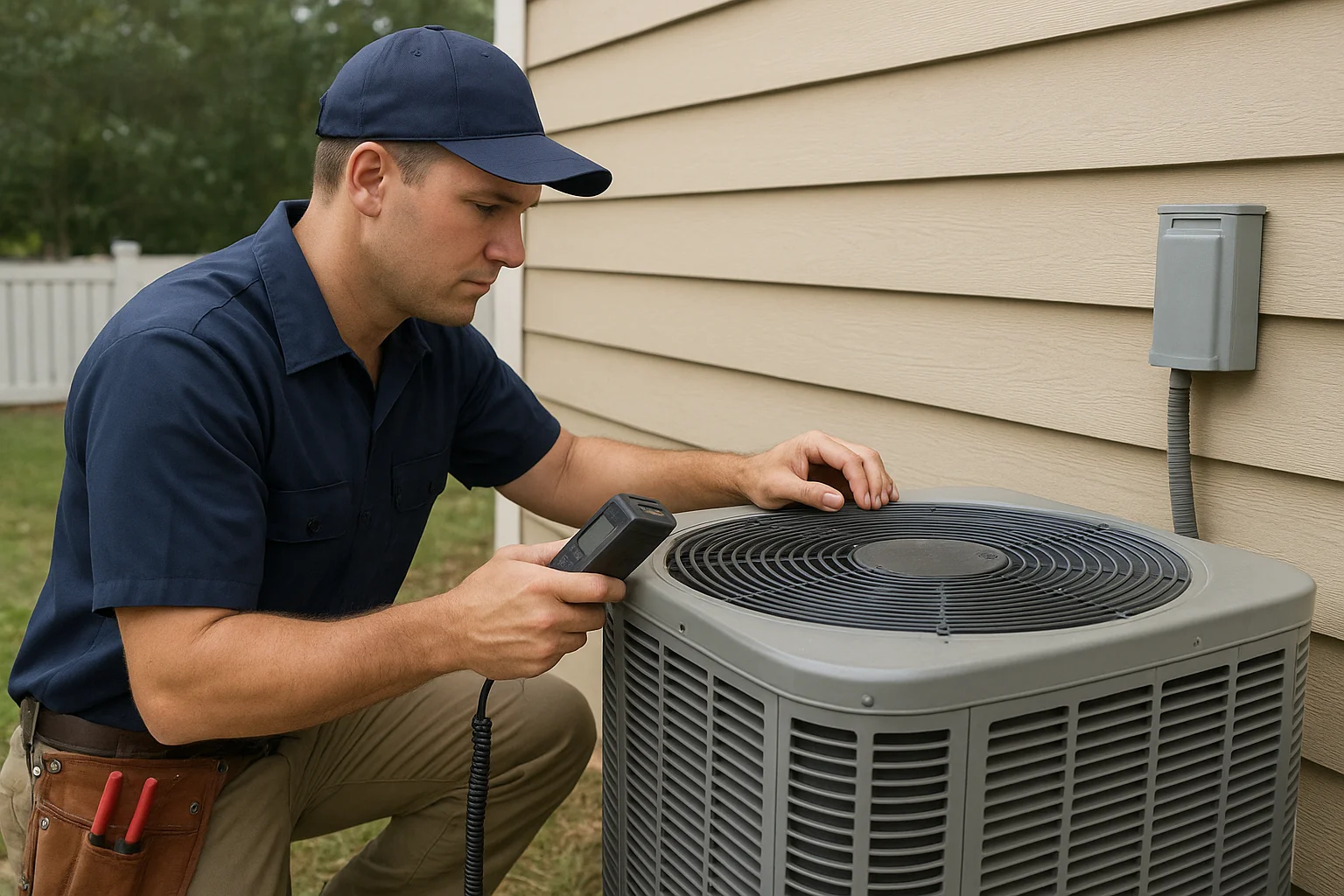
Shalimar runs hot, humid summers and mild winters that still demand steady cooling. For commercial buildings, that means HVAC systems work year round, often in environments that include salt air, heavy humidity loads, and constant occupancy. When something starts to drift out of range, the system can still “run,” but it may be paying the price through higher energy use, poor airflow, refrigerant system stress, and indoor air quality problems.
This guide connects common HVAC warning signs to the kinds of commercial HVAC repair issues they often point to, so homeowners and property managers can address problems early. If you are searching for commercial HVAC repair in Shalimar, FL, the details below can help you describe what you are seeing and understand why preventive HVAC maintenance matters.
Why Shalimar’s climate makes warning signs matter more
In Okaloosa County, the air can stay muggy for long stretches. That humidity increases the load on air conditioning components and can intensify condensate drainage issues. Salt air near the coast can also contribute to corrosion on outdoor units and metal duct components over time. Meanwhile, commercial spaces often have changing occupancy patterns, so airflow demand can fluctuate throughout the day.
When these conditions combine, small issues can become bigger ones. A thermostat that is slightly off, ductwork that is not distributing air evenly, or a condensate line that is partially blocked can all reduce comfort and increase system strain. The result is often a cycle of short cycling, higher energy use, and more frequent repairs.
If you are evaluating options beyond repair, it can also help to understand how weather and airflow affect system lifespan. For more context on local conditions, see How Local Weather Affects Commercial HVAC Repair in Destin, FL.
Warning sign #1: Airflow that feels weak or uneven
Weak airflow is one of the most common commercial HVAC warning signs. In an office, retail store, restaurant, or shared workspace, the problem may show up as rooms that never cool, areas that feel drafty, or supply vents that barely push air.
Possible causes that a professional can evaluate include:
- Ductwork restrictions or leaks: Ducts can develop gaps, disconnected seams, or buildup that reduces airflow.
- Dirty filters or clogged components: When airflow drops, the cooling process becomes less efficient and can stress other parts of the refrigerant system.
- Fan and airflow control issues: Fans and dampers may not be moving the right volume of air.
- Blocked or inefficient airflow paths: Return air problems can reduce circulation and increase indoor air quality concerns.
For homeowners and property managers, this is not a “just open the vents” situation. Airflow affects comfort, humidity control, and energy use. If you notice weak airflow, it is a good time to schedule air conditioning inspection near me or a commercial airflow assessment.
If ductwork is part of the issue, you can also explore Ductwork and consider duct inspection and duct cleaning based on what your system needs. For related reading, check Keeping Shalimar Properties Comfortable Without Surprise HVAC Problems.
Warning sign #2: Humidity that will not stay controlled
In Shalimar, humidity is not just uncomfortable. It can impact comfort and indoor air quality, and it can also affect condensate drainage. If your building feels clammy even when the air conditioner is running, or if you notice condensation on windows or a musty smell, treat it as a warning.
Common contributors include:
- Cooling that is not removing moisture effectively: This can be linked to airflow problems, refrigerant system performance, or thermostat settings and scheduling.
- Condensate drainage issues: A partially blocked condensate drain pan, clogged line, or drainage problems can cause overflow and moisture buildup.
- Air handling imbalance: If return and supply air do not match, humidity control can suffer.
Humidity that persists can also lead to odor complaints and tenant discomfort. Over time, moisture can contribute to microbial growth potential in ductwork and building cavities. A professional inspection can help connect the dots between thermostat behavior, airflow, and condensate drainage.
Warning sign #3: The system short cycles or runs constantly
Short cycling happens when an HVAC system turns on and off more frequently than expected. Running constantly can also be a problem, especially if the building never seems to reach the desired temperature.
These patterns can be caused by:
- Thermostat issues: Incorrect sensor readings, calibration drift, or scheduling problems can cause the system to cycle.
- Airflow restriction: When airflow is reduced, the system may not complete a normal cooling cycle.
- Refrigerant system imbalance symptoms: Cooling performance can change if the refrigerant system is not operating as designed. A technician must evaluate the system in person.
- Outdoor unit airflow problems: Blocked airflow around the outdoor unit can reduce heat removal, especially during humid stretches.
From a cost perspective, short cycling and constant running can increase wear on components and raise energy use. If you are noticing frequent cycling, it is a strong reason to schedule commercial HVAC service rather than waiting for a complete breakdown.
Warning sign #4: Strange sounds, vibrations, or new rattling
Commercial HVAC systems can be noisy, but new sounds are a clue that something has shifted. Rattling, grinding, squealing, or banging can point to mechanical or airflow problems.
Potential causes include:
- Loose panels or debris in the unit: Salt air and coastal dust can contribute to buildup.
- Fan or blower issues: Unusual vibrations can be related to airflow components.
- Air duct resonance: Leaks or loose duct sections can create noise that changes with system speed.
Even if the system still cools, ignoring abnormal sounds can lead to bigger problems. A licensed HVAC contractor near me can inspect the unit and duct connections safely.
Warning sign #5: Higher energy bills without a clear reason
Energy use is often the first “quiet” warning. If utility bills rise and comfort does not improve, the HVAC system may be operating inefficiently. In Shalimar, that can happen when humidity loads are higher, but it can also happen due to mechanical issues.
Common drivers of increased energy use include:
- Reduced airflow: When air distribution is poor, the system must work harder to reach setpoints.
- Dirty coils or clogged components: Coastal air can bring in contaminants that affect heat transfer.
- Thermostat problems: Misconfigured schedules can cause unnecessary run time.
- Refrigerant system performance concerns: If refrigerant is not operating as designed, cooling efficiency can drop. An in-person evaluation is required before any conclusions are made.
Energy use increases can be frustrating for property owners. The most reliable way to pinpoint the cause is a professional commercial HVAC repair visit paired with preventive HVAC maintenance planning.
Warning sign #6: Condensate drainage problems or water near the unit
Condensate drainage is a critical part of air conditioning. When it fails, the building can experience water damage, odor issues, and comfort problems.
Watch for:
- Pooled water near indoor units or in ceiling spaces
- Dripping sounds from condensate lines
- Wet insulation or staining
- Repeated shutdowns or safety-related behavior
Because condensate lines can clog gradually, homeowners may not notice the issue until water appears. A technician can inspect condensate drainage, check for blockages, and confirm the system is draining correctly during operation.
Warning sign #7: Thermostat behavior that does not match comfort
Thermostats are the control center for temperature, scheduling, and sometimes humidity settings in commercial systems. When the thermostat does not align with what occupants feel, it can indicate calibration drift, sensor problems, or control wiring issues that affect system operation.
Examples include:
- The thermostat shows the space is at temperature, but the building feels hot or cold.
- The system keeps running after it should have cycled off.
- Setpoints change and comfort changes unpredictably.
For commercial properties, thermostat reliability also supports indoor air quality. If airflow and run time are inconsistent, humidity and ventilation can be harder to manage. If you are also considering upgrades, explore Heating Control Systems for options that fit how your building operates.
Warning sign #8: Poor indoor air quality complaints
Indoor air quality issues can show up as headaches, irritation, stale odors, or complaints that “the air feels heavy.” In humid climates, poor ventilation and inadequate filtration can worsen the problem.
HVAC warning signs that point to indoor air quality concerns include:
- Frequent odor complaints
- More dust near vents
- Higher humidity or condensation
- Rooms that feel stuffy even when the system is running
Addressing indoor air quality often involves more than changing filters. A professional can evaluate airflow, ductwork condition, and how the system is distributing air. If you are searching for indoor air quality services near me, look for an inspection that considers ventilation, humidity control, and filtration strategy.
How heat pumps and ductless systems can show warning signs too
Some commercial properties use heat pumps or ductless mini split systems to manage comfort efficiently. Even when the equipment type differs, the warning patterns can look similar: airflow issues, humidity control problems, and inconsistent temperatures.
If your building has a ductless system and you notice uneven comfort, higher humidity, or frequent changes in output, a local HVAC contractor can inspect airflow, refrigerant system performance, condensate drainage where applicable, and control settings. If you are exploring upgrades, you can find options at Ductless Mini-Splits, and for related work consider ductless mini split installation near me only after an on-site evaluation.
For properties with heat pumps, warning signs can also show up as reduced heating performance in cooler months or cooling inefficiency during humid periods. If you are searching for heat pump repair near me, prioritize technicians who can inspect the system safely and verify performance in real conditions.
What causes these warnings in commercial HVAC systems?
Most warning signs connect back to a few common categories. When the building is under constant cooling demand, these issues can show up faster.
Ductwork and airflow problems
Duct leaks, poor balancing, damaged duct insulation, and airflow restrictions can reduce comfort and humidity control. That also increases energy use because the system keeps trying to compensate.
Refrigerant system stress and performance changes
When cooling performance changes, the refrigerant system may be involved. It is important not to assume refrigerant issues based on symptoms alone. A professional evaluation is needed to determine what is happening and what repairs are appropriate.
Condensate drainage and moisture buildup
Humidity and condensate drainage are tightly linked in air conditioning. Partial blockages can create water issues and contribute to indoor air quality problems.
Control and thermostat drift
Commercial thermostats can drift out of calibration or be misconfigured. When the control strategy is off, the HVAC system can cycle incorrectly or run longer than necessary.
Environmental exposure in Shalimar
Coastal salt air, airborne contaminants, and humidity can accelerate wear. That is why preventive HVAC maintenance and thorough inspections are especially important in Okaloosa County.
How professional commercial HVAC repair prevents the “small issue” from becoming a shutdown
When a warning sign appears, the goal is to address the underlying cause before the system reaches a failure point. An experienced team will inspect the system in context: airflow, thermostat control, condensate drainage, and performance during operation. This approach reduces guesswork.
For homeowners and property managers in Shalimar, it also matters that the HVAC contractor understands local conditions and commercial building needs, including after-hours cooling concerns. During the hottest stretches, emergency cooling can become a real priority.
If you are deciding between repair options, you can review the service area details on Commercial HVAC Repair in Shalimar, FL and the broader coverage on Okaloosa County HVAC service areas.
Preventive HVAC maintenance that targets the warning signs
Preventive HVAC maintenance is not just a routine checklist. It is a strategy for avoiding costly HVAC repairs by keeping airflow stable, humidity controlled, and system operation consistent.
Schedule air conditioning inspection before peak summer demand
Many comfort failures become noticeable when temperatures and humidity are highest. Scheduling a commercial inspection earlier can help catch issues like airflow restrictions, drainage concerns, and control problems before they become urgent.
Focus on airflow and ductwork health
Air distribution affects comfort and indoor air quality. If you have recurring complaints in specific rooms, consider duct inspection and duct cleaning based on what a technician finds. You can also explore Ductwork to understand how ductwork work fits into overall system performance.
Check condensate drainage during humid weather
Because Shalimar’s humidity can be intense, condensate drainage should be verified during conditions that resemble real operation. This helps prevent water issues and moisture-related indoor air quality concerns.
Verify thermostat schedules and control settings
For commercial buildings, scheduling matters. When comfort complaints spike, it can be due to control programming drift or sensor placement concerns. A professional can help confirm the thermostat is controlling the system as intended.
Plan for system replacement only after a full evaluation
If your system is repeatedly failing or comfort issues persist, HVAC replacement may eventually be the best path. However, replacement is not something to decide from symptoms alone. An in-person evaluation should review performance, condition, and how the system serves your building.
Emergency cooling concerns: what to do when comfort fails right now
Sometimes warning signs are ignored and a commercial system fails during peak heat. If you are facing emergency cooling concerns, focus on safety and immediate steps:
- Confirm the building is ventilating appropriately and that occupants are safe.
- Check basic thermostat settings to ensure the system is calling for cooling.
- Do not attempt refrigerant work or bypass safety controls.
- Contact a licensed HVAC contractor for commercial HVAC service so the system can be evaluated promptly.
For additional context on escalation from minor issues, see Commercial HVAC Repair in Fort Walton Beach: What Property Owners Should Pay Attention To Before Small Problems Grow.
Related services that often pair with commercial HVAC repair
Commercial comfort is a system-wide goal. Repair often connects to other services that improve performance and reduce indoor air quality problems.
- Air conditioning services: Maintenance, repair, and performance checks for cooling systems. Explore Air Conditioning Services.
- Ductwork improvements: If airflow is the root cause, ductwork work may be part of the solution.
- Heating control systems: Control accuracy supports consistent comfort.
- Ductless mini split installation: Useful for targeted zones when ducted airflow is not practical.
If you are comparing options for your property, it can help to review the city overview at Shalimar, FL service area to understand what local service coverage looks like.
When to call a commercial HVAC repair pro in Shalimar
Call a licensed HVAC contractor for commercial HVAC repair when you notice persistent warning signs such as weak airflow, humidity that will not stabilize, condensate drainage issues, frequent short cycling, unusual noises, or indoor air quality complaints. These are the signals that the system may be working outside its normal range and could require more than a simple fix.
Homeowners and property managers can reduce the chance of costly HVAC repairs by treating early warning signs as a maintenance prompt, not a wait-and-see moment. In Shalimar’s heat and humidity, dependable airflow, stable temperature control, and properly managed condensate drainage are the foundation of year round comfort.
Find Commercial HVAC Repair in Shalimar, FL
If you need Commercial HVAC Repair in Shalimar, FL, visit our local service page or contact A Superior Mechanical today.
Map of Shalimar, FL
Frequently Asked Questions
What are the most common commercial HVAC warning signs in Shalimar, FL?
Common warning signs include weak or uneven airflow, humidity that stays high, frequent short cycling, unusual sounds from the indoor or outdoor unit, and condensate drainage issues. In coastal humidity, these problems can show up faster and affect both comfort and indoor air quality.
Can a thermostat problem cause cooling issues and higher energy use?
Yes. If the thermostat schedule is off, a sensor is reading incorrectly, or control settings are not matching how the building is used, the HVAC system may run too long, cycle too frequently, or fail to maintain setpoints. A technician can verify thermostat operation during an on-site inspection.
How do ductwork problems affect commercial air conditioning performance?
Restricted, leaking, or poorly balanced ductwork can reduce airflow and weaken humidity control. That often leads to comfort complaints, higher energy use, and increased strain on the cooling process. Duct inspection and repairs are typically based on what is found during a professional evaluation.
Is it safe to troubleshoot refrigerant or condensate drainage on my own?
No. Refrigerant system issues and condensate drainage problems require trained, on-site inspection. Handling refrigerant or bypassing safety controls can be unsafe. For condensate, a technician can check the drain line and verify proper drainage during operation.
When should a property owner consider HVAC replacement instead of repair?
Replacement is usually considered after an in-person professional evaluation shows the system’s condition or performance issues are recurring or cannot be corrected effectively. Symptoms alone are not enough to decide, because factors like airflow, controls, ductwork, and drainage can be part of the root cause.
Related Articles
- Keeping Shalimar Properties Comfortable Without Surprise HVAC Problems
- Why Commercial HVAC Repair Matters to Home Comfort in Miramar Beach
- Commercial HVAC Repair in Fort Walton Beach: What Property Owners Should Pay Attention To Before Small Problems Grow
- How Local Weather Affects Commercial HVAC Repair in Destin, FL
Photo Gallery