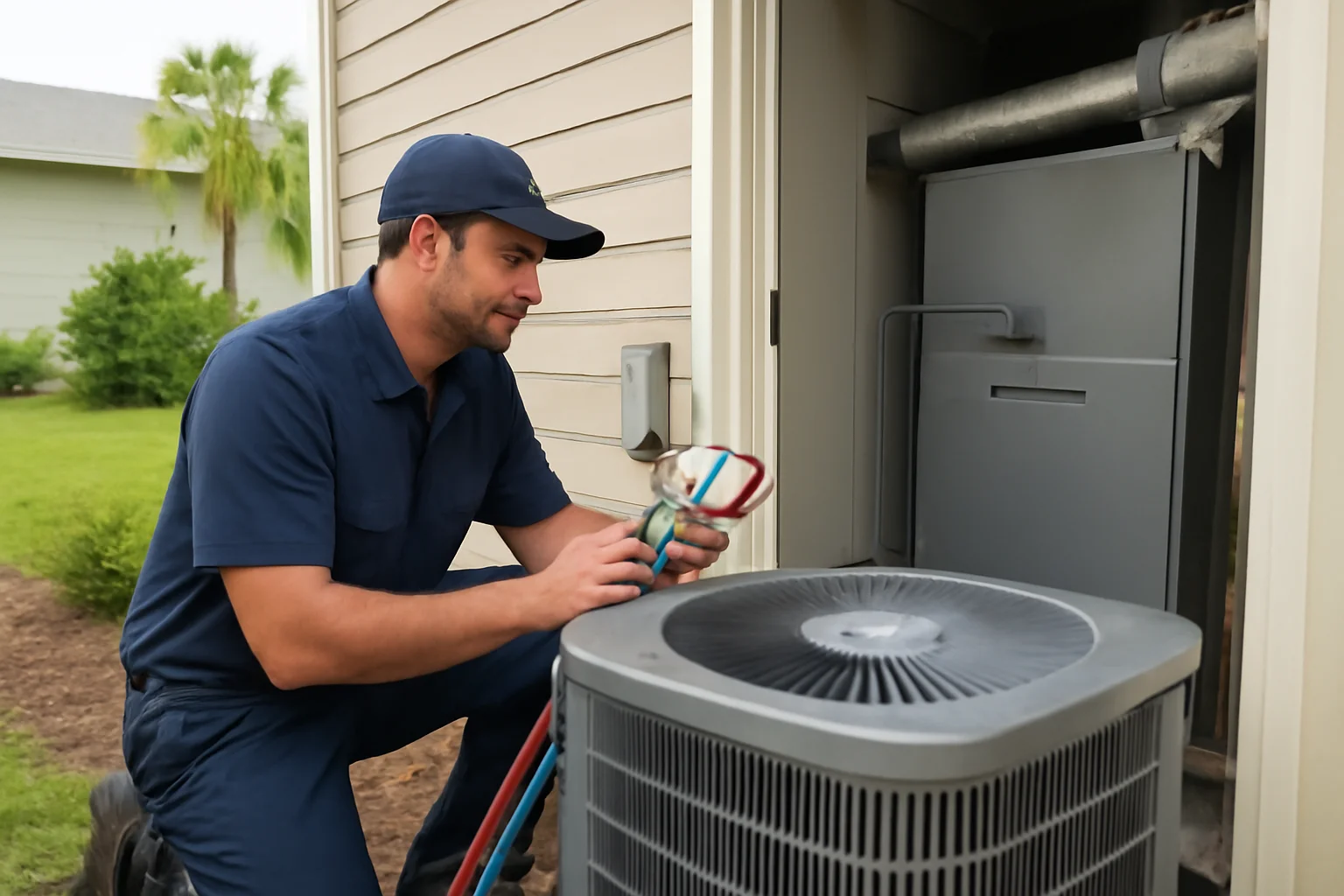
Lower Grand Lagoon feels like a tropical climate most of the year. That means your air conditioner and heat pump are not just cooling. They are also managing humidity, supporting airflow, and keeping indoor air quality comfortable. When something starts to drift out of balance, the system can fail faster than homeowners expect, especially during peak heat or after a humid stretch.
This guide shares practical, homeowner-friendly smart HVAC tips for catching problems early. It also explains why emergency HVAC services in Lower Grand Lagoon, FL are so important when heat and humidity get out of control. If you are dealing with a sudden cooling problem, you can explore emergency HVAC services in Lower Grand Lagoon and HVAC services for the city.
Why humidity and heat create emergency-level HVAC problems in Lower Grand Lagoon
In Bay County, Florida, the combination of high outdoor humidity, warm temperatures, and coastal salt air creates extra strain on residential HVAC systems. Even if your unit still turns on, small issues can reduce dehumidification and airflow. Over time, that can lead to:
- Higher indoor moisture that makes rooms feel hotter than the thermostat setting suggests
- Condensate drainage problems that can cause water leaks or shut down safety controls
- Refrigerant system stress when airflow is restricted or components are failing
- Indoor air quality decline due to poor filtration, dust buildup, or moisture-related growth
When the system cannot cool and dehumidify effectively, you may notice symptoms before it fully stops. Catching those early clues is one of the best ways to avoid emergency cooling concerns later.
Smart HVAC warning signs homeowners should not ignore
Think of your HVAC like a health system. When airflow, temperature control, and moisture removal start to struggle, you may see patterns. Here are common early signs that often lead to HVAC repair near me calls, and sometimes emergency AC repair.
1) The air feels cooler, but the humidity never drops
A common confusion during Florida summers is relying on temperature alone. Your AC should remove moisture while it cools. If you feel air blowing cold-ish but rooms stay sticky, the system may be struggling with airflow, a clogged filter, ductwork issues, or another component problem. This can also contribute to musty odors and higher dust levels.
If you are searching for an air conditioning inspection near me because humidity is not improving, an in-person check can confirm whether airflow and condensate drainage are behaving properly.
2) Condensate drainage looks or smells “off”
Many homeowners never check condensate drainage until something goes wrong. Keep an eye out for:
- Water collecting around the indoor unit, air handler, or drain pan
- Gurgling sounds that may indicate drainage restriction
- Musty smells near vents or the equipment closet
In humid coastal weather, condensate drainage problems can become urgent because the system may protect itself with safety shutdowns. If you see standing water or repeated shutdowns, that is a strong reason to request emergency HVAC services.
3) Your thermostat seems “right,” but comfort keeps slipping
Modern thermostats can be accurate, yet still show the temperature reaching setpoint while comfort does not follow. Possible causes include poor airflow, duct leakage, or a system that is cycling too quickly. Watch for:
- Short cycling, where the system turns on and off frequently
- Uneven cooling across rooms
- Frequent “call for cooling” behavior without sustained comfort
If you are considering thermostat installation near me or troubleshooting a thermostat that seems inconsistent, remember that thermostat issues can overlap with equipment and airflow issues. A professional evaluation helps separate what is actually causing the comfort problem.
4) Airflow feels weak at vents
Restricted airflow is one of the most common pathways to bigger problems. Homeowners often notice:
- Reduced airflow from registers
- Higher than usual air noise or rattling
- Hot air returning through vents when the system should be cooling
Weak airflow can also reduce the system’s ability to remove humidity. If you suspect ductwork or airflow problems, consider options like duct sealing and Aeroseal to help improve air distribution where it matters most.
5) Frosting or ice on refrigerant lines or the outdoor unit
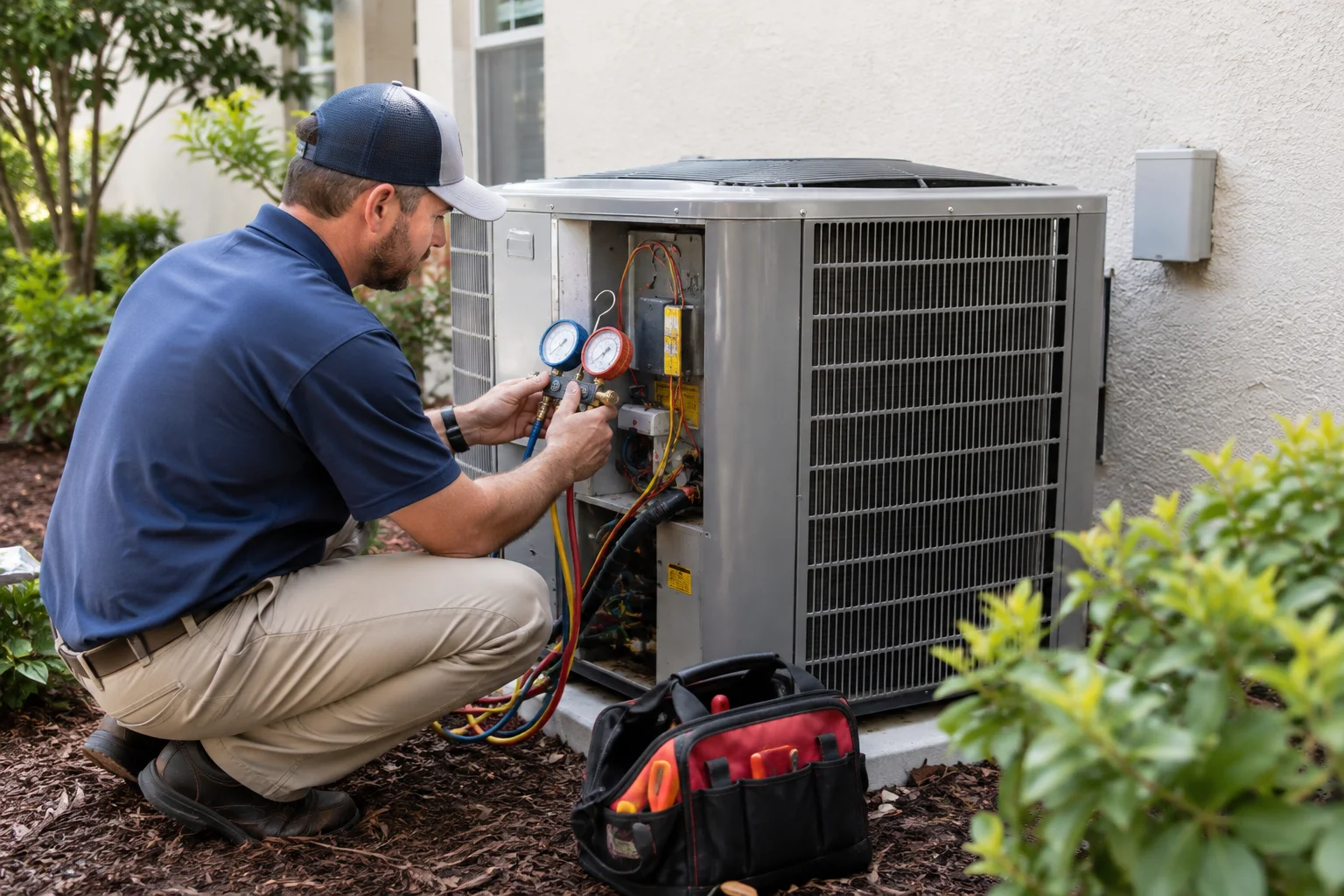
Ice formation is often a sign of airflow restriction, refrigerant system issues, or other component problems. Because ice can escalate quickly in humid heat, treat this as a priority rather than a “wait and see” situation. If you are dealing with ice, you should contact a licensed HVAC contractor for an AC repair near me evaluation as soon as possible.
Professionals can check system performance, airflow, and refrigerant system behavior on site. Homeowners should avoid trying to diagnose refrigerant or electrical conditions themselves.
6) Strange smells or increased dust
Musty odors often point to moisture, while burning smells can indicate a mechanical issue. Increased dust can be a filter problem or a sign that airflow is pulling more particulates through the system. Either way, indoor air quality is affected. If you are looking for duct inspection near me or HVAC help focused on comfort and air quality, start with an air conditioning inspection that includes airflow and filtration considerations.
How Lower Grand Lagoon home features can affect HVAC performance
Local housing styles and coastal conditions can influence how your system behaves. Homeowners in Lower Grand Lagoon often deal with:
- More humidity load due to Florida’s outdoor moisture and frequent summer storms
- Air leakage and uneven airflow in older ductwork or homes with leaky transitions
- Coastal salt air exposure that can accelerate corrosion on outdoor components
- Large temperature swings when windows, sun exposure, and insulation gaps create hot spots
These factors can make early symptoms more noticeable. For example, a small airflow problem might not be obvious in dry climates, but in Florida it can quickly impact humidity control and comfort.
Preventive maintenance that reduces emergency HVAC breakdown risk
Emergency HVAC calls usually happen when multiple small problems stack up. Preventive HVAC maintenance helps keep the system stable. While maintenance is not a guarantee against breakdown, it does reduce the odds of sudden failures and improves system efficiency and indoor comfort.
What to prioritize before the hottest stretches
- Air filter condition: Replace or clean based on manufacturer guidance. A clogged filter restricts airflow and can worsen humidity control.
- Indoor coil and drainage check: Moisture removal depends on proper condensate drainage and clean coil surfaces.
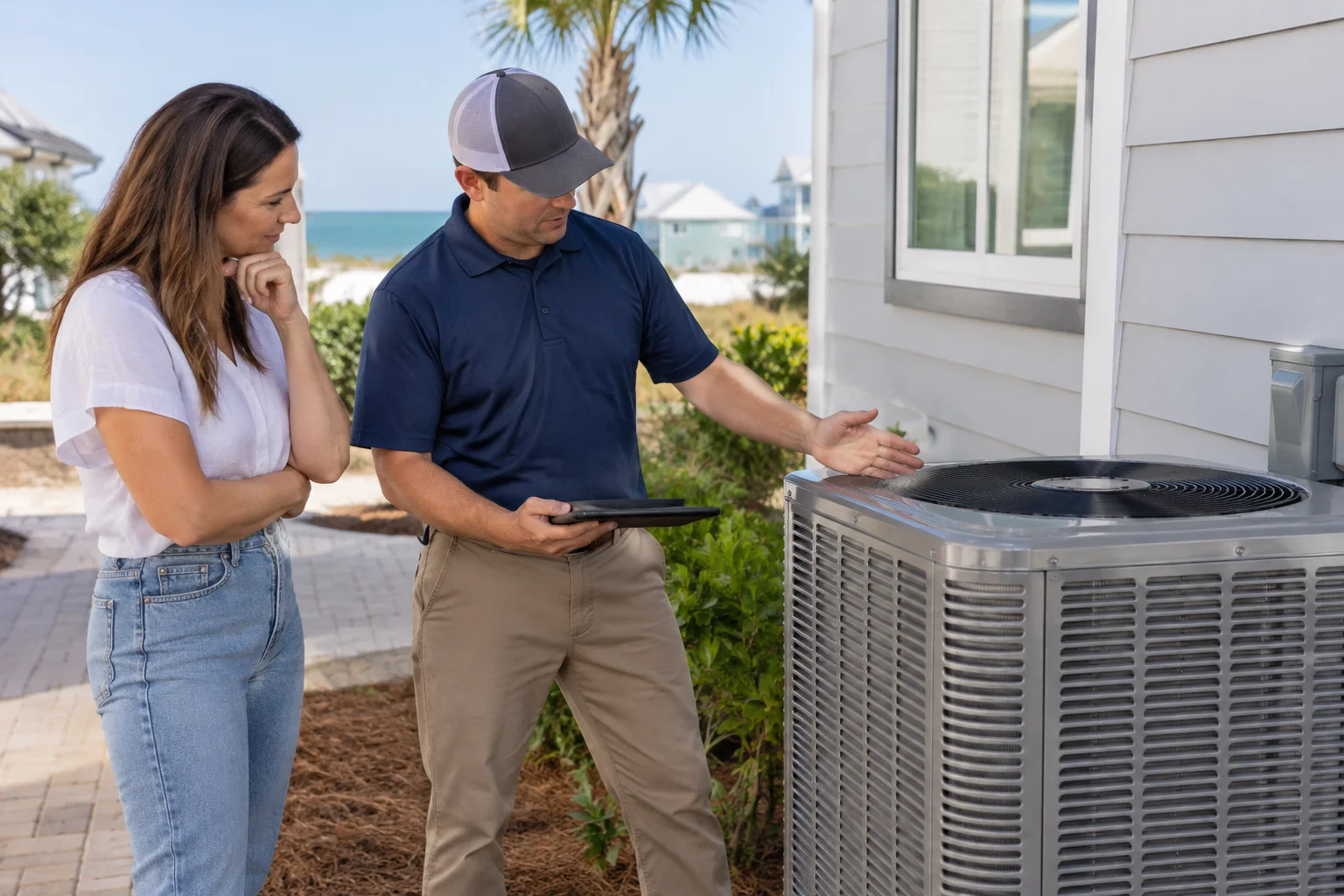
- Outdoor unit inspection: Coastal salt air can contribute to buildup and corrosion, so a professional inspection matters.
- Airflow verification: Proper airflow supports temperature control and dehumidification.
- Thermostat settings review: Confirm schedules and fan settings match your comfort needs.
If you want an approach that supports comfort and humidity control, look at Air Conditioning Maintenance. For homeowners comparing options, it can also help to read about how maintenance ties into humidity-focused comfort strategies, such as why maintenance matters for whole home dehumidifiers.
Preventive steps homeowners can take safely
Homeowners can support the system without attempting technical repairs:
- Keep vents unblocked and avoid closing too many registers, especially in cooling seasons.
- Change filters on schedule and check them during peak humidity.
- Watch for water around the equipment area after heavy rain.
- Keep outdoor unit areas clear of debris and vegetation that can restrict airflow.
For duct-related comfort issues, homeowners often benefit from professional airflow balancing and sealing. If you suspect air leaks, start with a duct-focused service like duct sealing and Aeroseal.
When to treat a problem as an emergency cooling concern
Lower Grand Lagoon summers do not wait for “normal business hours.” If your system is not maintaining safe comfort levels, the situation can become urgent fast, especially for young children, older adults, or anyone sensitive to heat.
Consider emergency HVAC help if you notice any of the following:
- The system stops cooling and indoor temperatures climb rapidly
- Repeated safety shutdowns or signs of water overflow from condensate drainage
- Frosting or ice that keeps returning
- Strong burning smells or unusual electrical-like behavior (do not attempt DIY troubleshooting)
- Major airflow failure where vents blow little to no air
If you are searching for emergency AC repair near me during a heat wave, using local emergency HVAC services helps reduce the time you go without cooling and humidity control.
You can review A Superior Mechanical’s emergency HVAC services for Lower Grand Lagoon and learn more about the broader service coverage on Bay County HVAC services.
Common causes behind early warning signs
Homeowners often want to know what is really behind the symptoms they see. While only an in-person professional evaluation can confirm the cause, these are frequent contributors in Florida homes:
- Restricted airflow from clogged filters, blocked returns, or ductwork leakage
- Drainage issues that limit dehumidification and can trigger safety shutdowns
- Coastal corrosion or buildup on outdoor equipment affecting performance
- Wear on refrigerant system components that can show up as poor cooling or humidity control
- Thermostat or control problems that create confusing “it’s running but not cooling” situations
It is important to avoid DIY attempts to diagnose refrigerant systems or electrical faults. Those are safety-critical areas that require a licensed HVAC contractor and proper tools.
Energy use and comfort: how small problems become expensive
When your AC or heat pump cannot manage humidity and airflow, it often runs longer or cycles inefficiently. That can increase energy use and strain parts over time. In Lower Grand Lagoon, where humidity can force the system to work harder, inefficiency can show up as:
- Higher utility bills during peak summer weeks
- Rooms that feel uncomfortable even with the thermostat turned down
- Short cycling that wears components faster
Energy use is not just about the thermostat setting. It is also about airflow, ductwork condition, condensate drainage, and overall system performance. Professional HVAC maintenance near me can help identify issues that contribute to inefficiency before they become emergencies.
Heat pump and ductwork considerations for coastal Florida homes
Some Lower Grand Lagoon homes use heat pumps, ducted systems, or ductless mini split setups. Emergency cooling concerns can still happen in any configuration, but the symptoms and troubleshooting paths may differ.
Heat pump service: watch for cooling and humidity control issues
If you suspect a heat pump problem, it can show up as weak cooling, poor dehumidification, or unusual cycling behavior. If you are searching for heat pump repair near me, an in-person evaluation is the right next step, especially when humidity is not improving.
Ductwork matters more than most homeowners realize
Even a well-maintained air conditioner can underperform if ductwork is leaking or poorly sealed. This is especially relevant in Florida where humidity and heat loads are consistent. Duct leakage can pull in unconditioned air, reduce effective airflow, and increase the time the system runs.
If you are dealing with hot rooms, uneven cooling, or persistent humidity issues, consider reading how Lower Grand Lagoon homes improve comfort with duct sealing and Aeroseal.
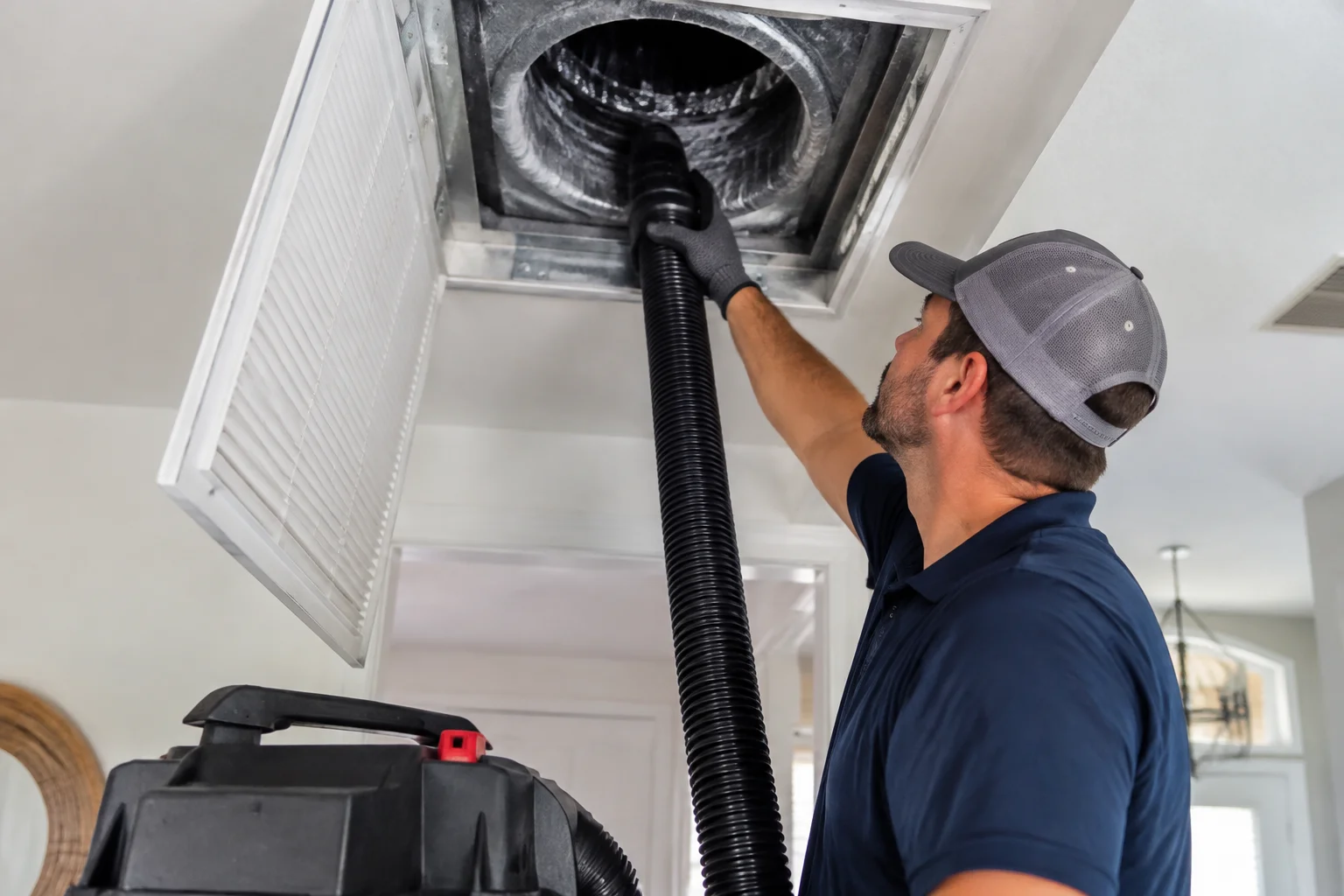
Homeowners also sometimes explore duct cleaning. If you are considering duct cleaning near me, start with an inspection. Duct cleaning is not always the best first step, and it should not replace ductwork evaluation, airflow checks, and filtration improvements.
How to choose the right emergency HVAC service in Lower Grand Lagoon
When you need emergency HVAC services, you want more than a quick restart. You want a licensed HVAC contractor who can evaluate the system safely and focus on restoring comfort and humidity control.
When you contact a local team, ask questions like:
- Will the technician check airflow and condensate drainage as part of the diagnostic process?
- How will they verify the thermostat and control behavior during the repair?
- Can they explain what is likely causing the issue and what to monitor next?
- Will you receive recommendations for preventive HVAC maintenance to reduce repeat emergencies?
If you are deciding between repair and HVAC replacement near me after repeated failures, your technician should base that recommendation on on-site assessment. Do not rely on online guesses about equipment replacement. A professional can help you understand the condition of the system, the airflow and refrigerant system performance, and the cost-effective path forward.
Local planning that helps you avoid emergency situations
Smart planning is part of being prepared in a coastal Florida climate. A few practical steps can reduce stress when heat and humidity spike:
- Know your equipment location so you can notice water, odors, or abnormal sounds quickly.
- Keep a simple home comfort checklist: humidity feel, airflow strength, thermostat behavior, and any water signs.
- Schedule preventive HVAC maintenance before the hottest weeks.
- Document symptoms: when it started, what changed, and whether it is getting worse.
If you want a broader comfort strategy that includes airflow and coastal protection planning, see smart HVAC planning for Rosemary Beach homes. Those principles often carry over to Lower Grand Lagoon due to similar coastal humidity challenges.
Need help right now? Start with emergency cooling priorities
If your system is not cooling and humidity is climbing, your first goal is restoring comfortable indoor air conditions. Emergency HVAC service can help diagnose the issue safely and address the cause, rather than only turning the system back on.
For Lower Grand Lagoon homeowners dealing with emergency cooling concerns, you can contact A Superior Mechanical’s emergency HVAC services. If you are also considering ongoing support, explore Air Conditioning Repair and residential HVAC service in the area.
When heat and humidity are driving the problem, catching HVAC problems early is the best strategy. The next best strategy is having a reliable local team ready to respond when comfort cannot wait.
Find Emergency HVAC Services in Lower Grand Lagoon, FL
If you need Emergency HVAC Services in Lower Grand Lagoon, FL, visit our local service page or contact A Superior Mechanical today.
Map of Lower Grand Lagoon, FL
Frequently Asked Questions
How can I tell if my AC issue is mainly humidity control or airflow?
If the air feels cool but your home stays sticky, humidity control may be struggling. Weak airflow from vents or short cycling can also point to airflow problems. A professional air conditioning inspection can confirm what is actually limiting comfort by checking airflow paths and system performance.
What should I do if I see water near my indoor AC unit?
Water near the indoor unit can indicate condensate drainage trouble. Stop using the system if you see overflow or repeated pooling, and contact emergency HVAC services. Attempting DIY fixes to drain lines without inspection can make the problem worse.
Can a clogged filter cause an emergency AC repair situation?
Yes. A severely restricted filter can reduce airflow, worsen moisture removal, and contribute to coil icing or safety shutdowns. Replacing the filter is a safe step, but if the system still struggles after a filter change, schedule an HVAC repair near me evaluation.
Should I try to diagnose refrigerant problems myself?
No. Refrigerant system issues require in-person evaluation and proper testing by a licensed HVAC contractor. DIY attempts can be unsafe and can delay the correct fix. If cooling performance drops or ice forms, contact a professional promptly.
What maintenance helps prevent emergency cooling concerns in Lower Grand Lagoon?
Preventive HVAC maintenance that includes airflow checks, indoor coil and condensate drainage inspection, and outdoor unit inspection can reduce the chance of sudden breakdowns. Homeowners can also support the system with timely filter changes and keeping vents unblocked.
Related Articles
- A Local Homeowner’s Guide to HVAC Financing in Lower Grand Lagoon, FL: Comfort, Airflow, Humidity, and Prevention
- How Lower Grand Lagoon Homes Stay Comfortable with Better Duct Sealing and Aeroseal
- Smart HVAC Planning for Rosemary Beach Homes: Comfort, Airflow, and Coastal Protection
- Why Better HVAC Maintenance Matters for Whole Home Dehumidifiers in Sandestin
Photo Gallery