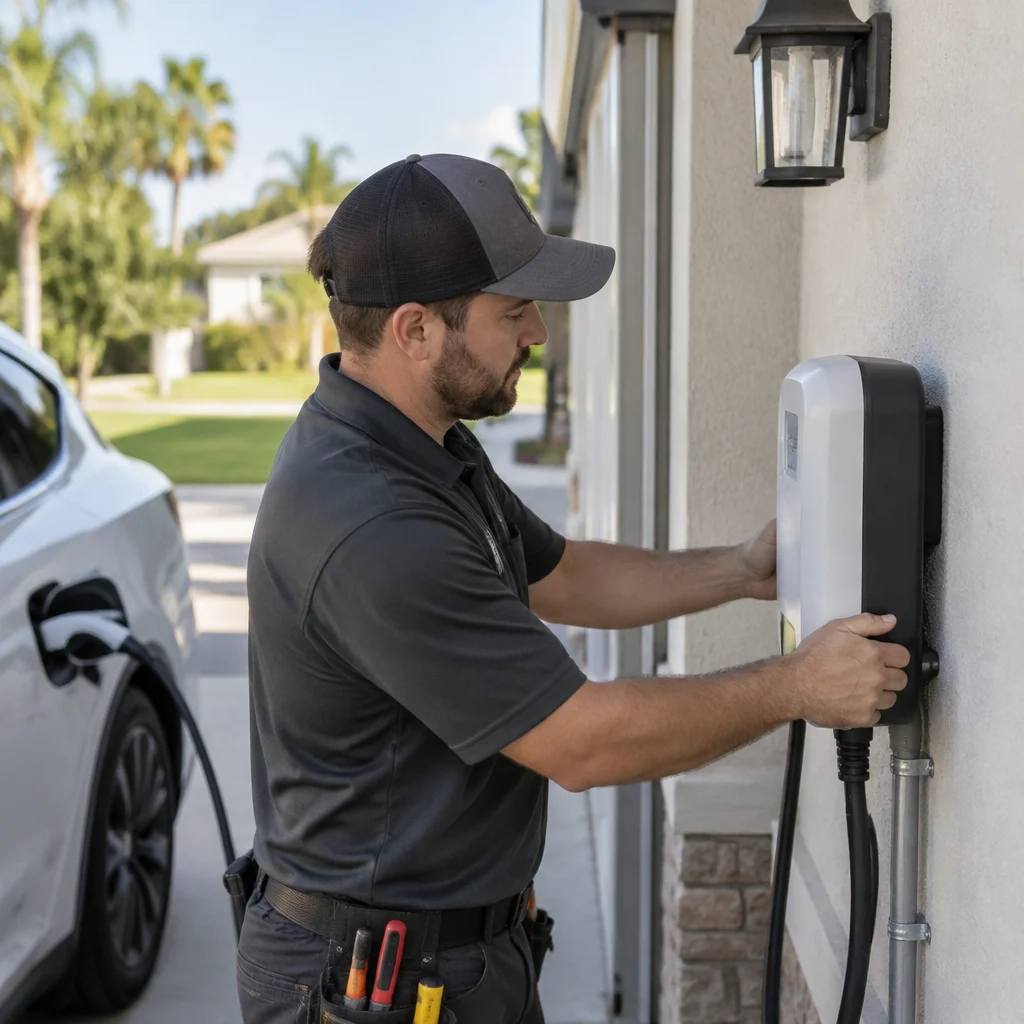
More Bluewater Bay homeowners are making room for electric vehicles, and that change brings new demands to the home’s electrical system. A charger may look simple on the wall, but the electrical work behind it affects safety, charging speed, and long term reliability. In a coastal community like Bluewater Bay, where storms, humidity, salt air, and a mix of older and newer homes all play a role, EV charger installation should be handled with the same care as any major electrical upgrade.
If you are researching EV Charger Installation in Bluewater Bay, FL, it helps to understand how the charger connects to your panel, what kind of circuit it needs, and why the condition of your wiring matters just as much as the charger itself. A properly installed charger can make daily life easier while also reducing strain on your home’s electrical system.
Why EV charging changes the way a home uses power
Most homeowners are used to plugging in a phone, laptop, or small appliance and thinking little about the load. An EV charger is different. Even a Level 2 charger can draw a steady, significant amount of power for hours at a time. That means the panel, breakers, grounding, and branch circuit all need to be ready for a continuous electrical load, not just a short burst of power.
In homes with older service equipment, the addition of an EV charger can expose issues that were easy to ignore before. A panel that already feeds air conditioning, kitchen appliances, lighting, ceiling fans, and outdoor equipment may not have enough spare capacity. In those cases, homeowners searching for local electrical service in Bluewater Bay often need more than a charger mount. They may need a panel evaluation, a dedicated circuit, or even a sub panel installation to support the new load safely.
What a proper charger installation usually involves
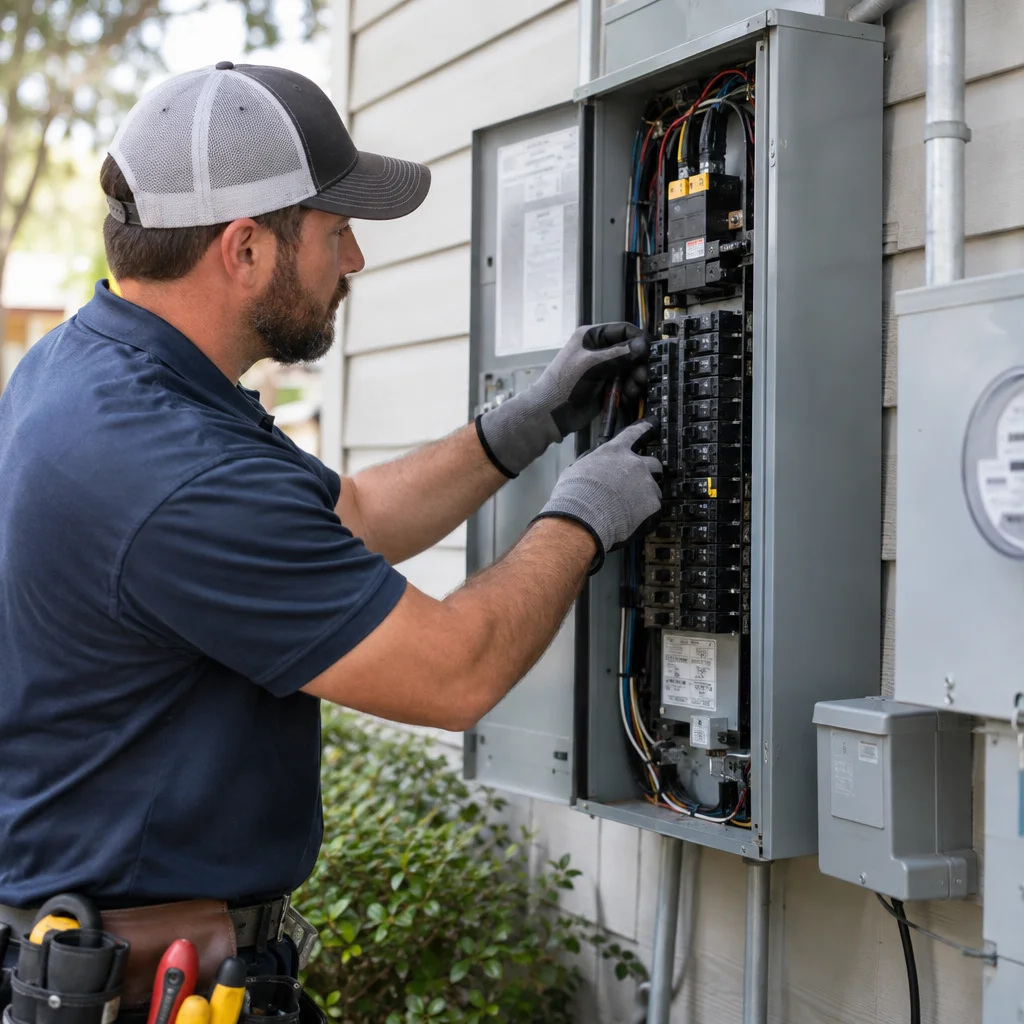
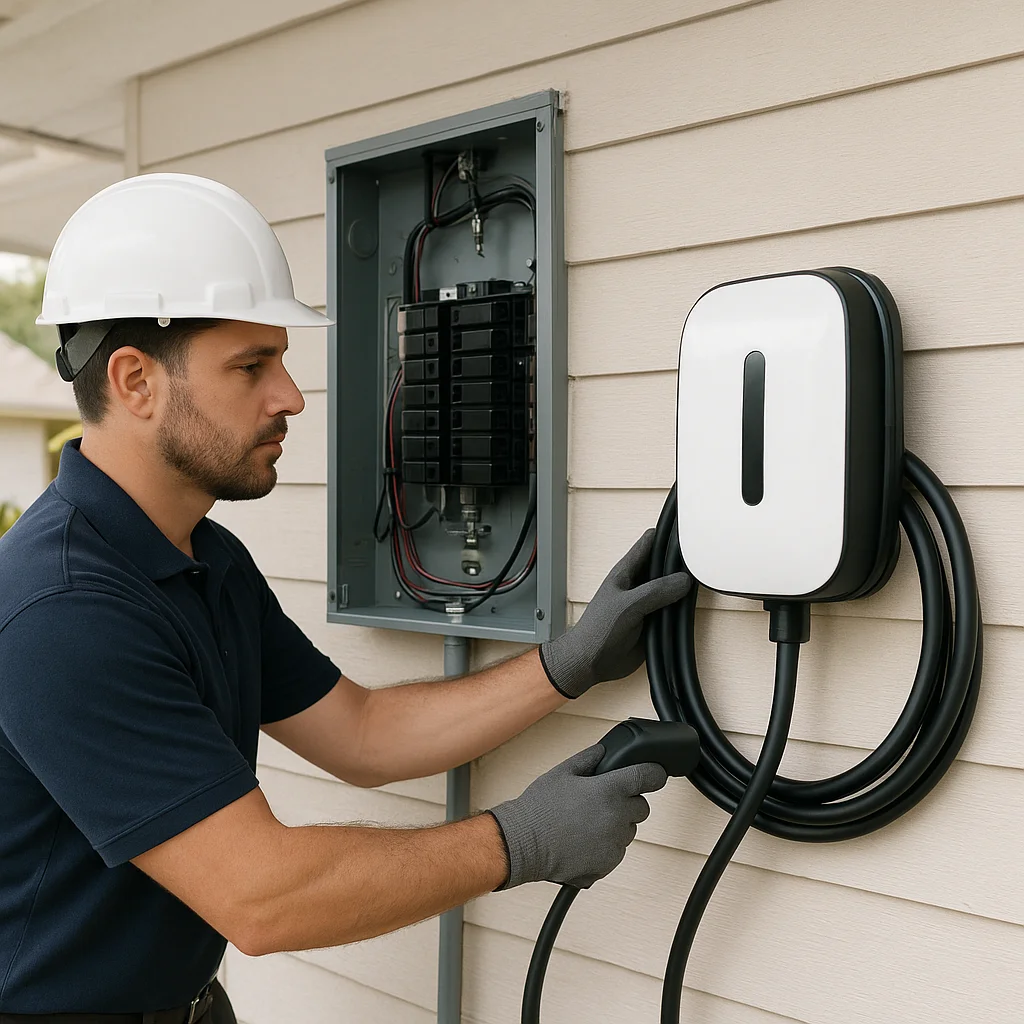
A safe installation starts with a close look at the home’s electrical system. The electrician should check the main panel, available breaker space, service size, grounding, and the condition of the wiring. From there, the right charger location is chosen based on parking layout, cable reach, weather exposure, and convenience.
Most homes need a dedicated circuit for the charger. That circuit should be sized to the charger’s electrical requirements and installed with the right breaker, conductor size, and disconnecting means if required by the equipment or local code. In some homes, the best solution is a direct hardwired charger. In others, a receptacle may be appropriate if the equipment and installation conditions support it.
When Bluewater Bay homeowners ask about electric car charger installation near me, the answer is rarely one size fits all. The right setup depends on the vehicle, charging goals, panel capacity, and whether the home has room for future electrical upgrades.
Level 1 versus Level 2 charging
Level 1 charging uses a standard outlet and is the slowest option. It may work for some drivers, but many homeowners find it too limited for daily use. Level 2 charging uses a 240 volt circuit and can add range much faster. For most households, Level 2 is the practical choice because it supports overnight charging and reduces the chance of waking up to a partially charged vehicle.
That faster charging speed is also why the installation matters so much. A standard outlet that was fine for a lamp or vacuum is not enough for a dedicated EV setup. If the charger is going to run frequently, the circuit, outlet or hardwired connection, and breaker all need to be matched correctly.
Panel capacity, breakers, and the hidden limits homeowners miss
One of the most common surprises during EV charger installation is discovering that the electrical panel is already close to capacity. Bluewater Bay homes vary widely. Some newer builds may have more available space and modern service equipment, while older homes and remodels may still rely on panels that were never designed for today’s power demands.
That is where an electrical inspection near me search can lead to a much better outcome than guessing. A qualified electrician can determine whether the panel has room for a new breaker, whether load calculations support the charger, and whether the system needs upgrades before installation begins. If the panel is outdated, a panel upgrade or device upgrades may be the safest path forward.
Breaker condition matters too. A weak or failing breaker can trip under continuous load, and repeated tripping is not something to ignore. If the charger shares space with other major equipment, the electrician may recommend dedicated circuits for appliances or a service upgrade to keep the home balanced and safe.
Why Bluewater Bay homes need local electrical planning
Bluewater Bay’s coastal climate creates electrical challenges that inland homes do not always face. Salt air can accelerate corrosion on outdoor equipment, humidity can affect connections, and storms can create surge risk. Even when the charger is installed inside a garage, the rest of the home’s system still feels the effects of weather and age.
That is why local service matters. A contractor familiar with Okaloosa County homes understands how to plan for grounding, surge protection, and code compliance in real world conditions. Some homes need extra attention to older wiring, especially if the house has aluminum conductors, mixed electrical updates, or previous remodel work that left the system uneven. If a homeowner is already dealing with old wiring replacement near me or aluminum wiring repair near me concerns, the charger project is a good time to address them.
For homeowners who want broader electrical maintenance, it can also make sense to combine charger work with other upgrades such as lighting and fixtures, outdoor landscape lighting, or device upgrades. That approach can reduce repeat service calls and improve the overall reliability of the home.
Signs the electrical system should be checked before installation
Not every home is ready for an EV charger without some prep work. Warning signs can include lights dimming when large appliances run, breakers that trip without an obvious reason, warm outlets, buzzing at the panel, or a burning smell electrical repair near me situation that needs immediate attention. Any of those symptoms suggest the system should be evaluated before adding more load.
Other concerns include outdated outlets, loose switches, or a charger location that depends on an extension cord or improvised setup. Those shortcuts can create heat buildup and reduce safety. If a homeowner is already searching for outlet repair near me, electrical troubleshooting near me, or light switch installation near me, it may be smart to have the whole electrical system reviewed while planning the charger.
Homes with garages, additions, or converted spaces can also have hidden wiring issues. In those cases, electrical wiring repair near me may be part of the project, especially if the charger route passes through older circuits or areas that have been modified over time.
How code compliance and protection features keep the charger safe
EV charger installation is not just about convenience. It also needs to meet electrical code requirements. That often means proper breaker sizing, correct conductor type, secure mounting, and the right GFCI protection where required. The electrician should also verify grounding and bonding so fault current has a safe path back to the panel.
Surge protection is worth serious consideration in Bluewater Bay. Storm activity and utility disturbances can damage sensitive electronics, including charger controls and the vehicle itself. A whole home surge protector installation near me search often leads homeowners to discover that a surge protection device can help protect more than the charger. It can also shield appliances, lighting, and smart home equipment.
If the charger is installed outdoors or in an exposed area, weather rated equipment and careful sealing become even more important. Coastal moisture and wind driven rain can shorten the life of poorly installed components. Professional work helps prevent corrosion, loose terminations, and future service calls.
Emergency issues homeowners should not ignore
Most EV charger projects are planned, but electrical problems do not always wait for a convenient time. If a panel is overheating, a breaker keeps tripping, or the home loses power to part of the garage or charging area, it may be time to call an emergency electrician near me rather than wait for the next available appointment. The same goes for smoke, sparks, repeated arcing, or a hot outlet near the charging location.
Bluewater Bay homeowners also need to think about storm readiness. If the home depends on an EV for daily transportation, generator planning may be part of the bigger picture. While a portable generator will not usually power an EV charger at full load, generator transfer switch installation near me can help support essential household circuits during outages. That can keep lights, refrigeration, internet, and critical devices running while the utility service is restored.
For homes that already rely on a generator, the electrician should confirm the charging circuit is properly separated from backup loads. That avoids overloads and helps keep the system stable during an outage.
How EV charger installation fits into broader home maintenance
One reason homeowners appreciate a charger project is that it often reveals other maintenance needs before they become expensive. A panel review may uncover loose connections. A circuit check may show aging receptacles or worn breakers. A garage inspection may point to fixture upgrades, ceiling fan installation near me needs, or a better plan for lighting in the charging area.
In some homes, the charger installation also becomes a chance to improve safety in nearby spaces. Bathroom lighting installation near me may not be directly related to EV charging, but it is the same kind of electrical upkeep that makes a home more functional and easier to maintain. Likewise, if the property has a workshop, laundry area, or utility room, appliance circuit installation near me may be worth discussing during the same service visit.
Homeowners who are planning a larger remodel or addition should think about future charging needs early. It is much easier to run the correct wiring, plan the panel space, and size the service properly during construction than to retrofit everything later.
Choosing a local electrician for the job
Searching for a residential electrician near me or licensed electrician near me can turn up plenty of options, but EV charger installation requires more than basic wiring knowledge. The electrician should understand load calculations, panel upgrades, grounding, code compliance, and how to work with the specific charger model. They should also be comfortable explaining whether the home needs a dedicated circuit, a service upgrade, or additional protection before installation begins.
For Bluewater Bay homeowners, local experience matters because the electrical conditions here are shaped by weather, home age, and coastal exposure. A trusted contractor serving Okaloosa County can help homeowners avoid shortcuts and make sure the charger is installed with long term reliability in mind. If the project is part of a larger home service plan, it can be helpful to coordinate it with other work in Okaloosa County so the system is evaluated as a whole rather than piece by piece.
That approach is especially useful for homes that already need breaker repair, surge protection, smoke detector installation, code corrections, or electrical inspections. A charger project can be the right time to correct small issues before they become major repairs.
Practical next steps for homeowners
If you are thinking about installing an EV charger, start with a panel evaluation and a look at your daily charging needs. Decide where the charger should be located, whether the home has enough capacity, and whether the circuit will need to be upgraded or dedicated. If you have an older home, recent remodel, or signs of electrical strain, do not assume the panel can handle the new load without a closer look.
Bluewater Bay homeowners who want a charger installed safely and in line with local code can benefit from professional planning from the start. A Superior Mechanical provides EV charger installation in Bluewater Bay, FL, including Level 2 chargers, panel upgrades, and smart charging solutions designed for local homes and electrical systems. When the work is done right, charging becomes one less thing to worry about and one more part of a home that runs smoothly every day.
For homeowners comparing service options or searching for same day electrician near me help after a breaker problem or charging issue, the best move is to get the system checked before more damage occurs. A charger should make life easier, not put extra stress on the home’s wiring, panel, or safety devices.
Related electrical planning resources can also help homeowners think ahead. If you are updating security, see Smart Electrical Planning for Security System Wiring in Bluewater Bay, FL. If you are improving connectivity, review Keeping Bluewater Bay Homes Ready for Reliable Data Network Cabling. And if your home has broader comfort and system reliability concerns, Why Bluewater Bay Homes Rely on Fast Emergency HVAC Service offers another look at how local maintenance protects daily routines.
Find EV Charger Installation in Bluewater Bay, FL
If you need EV Charger Installation in Bluewater Bay, FL, visit our local service page or contact A Superior Mechanical today.
Map of Bluewater Bay, FL
Frequently Asked Questions
Do I need a panel upgrade for EV charger installation in Bluewater Bay?
Not always, but many homes do need one. A licensed electrician will check panel capacity, breaker space, and load calculations before recommending a charger circuit. Older panels or homes with several large appliances may need an upgrade first.
Can an EV charger be installed in an older Bluewater Bay home?
Yes, but older homes often need extra attention to wiring condition, grounding, and code compliance. If the home has outdated circuits, aluminum wiring, or signs of wear, repairs may be needed before the charger is added.
How long does a Level 2 charger installation usually take?
Many straightforward installations can be completed in a day, but the timeline depends on panel condition, circuit routing, permit needs, and whether additional electrical work is required. Panel upgrades or wiring repairs can extend the project.
Is surge protection important for an EV charger near the coast?
Yes. Bluewater Bay’s storm activity and coastal weather can expose sensitive electronics to power surges. Whole home surge protection can help protect the charger, vehicle electronics, and other connected devices.
What should I do if my breaker trips when I charge my EV?
Stop using the charger and have the circuit inspected. Repeated tripping can point to an undersized breaker, overloaded panel, faulty wiring, or a charger problem. It is a good reason to schedule electrical troubleshooting right away.
Related Articles
Photo Gallery