A freshly washed glass should not need another wipe before you set the table. Yet persistent spots, chalky faucet rings, and showerheads that spray unevenly can make clean surfaces look neglected. In a busy Rosemary Beach kitchen, those small frustrations often arrive alongside cloudy ice, disappointing coffee, or water that tastes different from what the family prefers.
Water softening in Rosemary Beach, FL addresses hardness minerals that contribute to scale and cleaning problems. Taste, odor, and sediment may need different treatment. A Superior Mechanical helps homeowners connect the symptoms they notice with appropriate equipment, rather than expecting one filter to solve every water concern.
What Rosemary Beach homeowners should know about their water
Rosemary Beach's warm, humid coastal climate means frequent showers, laundry after beach visits, and plenty of demand for cold drinking water. Full-time homes and vacation rentals can have very different usage patterns. A house that stays quiet during the week may suddenly need water for several bathrooms, a dishwasher, and consecutive laundry loads.
Florida groundwater can pick up calcium and magnesium as it moves through mineral-bearing formations. However, the hardness at a particular Rosemary Beach address should be measured, not assumed from the ZIP code. The water source, utility treatment, household piping, and existing treatment equipment all influence what reaches the tap. Living near the Gulf does not automatically mean household water contains excessive salt.
Review the current water quality report for your serving utility, then pair that information with testing at the house. A professional familiar with Rosemary Beach homes and service needs can also account for installation space, seasonal occupancy, and realistic peak demand.
Read the clues on glasses, fixtures, and laundry
Spots and scale that keep returning
Hard water spots on dishes and glass often appear when droplets evaporate and leave minerals behind. Shower glass may develop a stubborn haze. Scale buildup around faucets can form white or off-white crusts, while deposits on showerheads can restrict individual spray openings. Dishwasher residue has other possible causes too, including detergent dosage and rinse performance.
Inside the home, scale can accumulate in water heaters and some plumbing components. Heavy deposits on heating surfaces can reduce heat transfer and contribute to appliances wearing out faster. Softening helps limit new hardness scale, but it does not repair a damaged appliance or guarantee that old deposits will disappear.
Soap, skin, and fabric changes
Hardness minerals react with soap, creating residue and making soap harder to lather or rinse well. You may use extra detergent without getting cleaner towels, or notice a film on the tub after bathing. Laundry can feel stiff, and fabrics may look dull when minerals and cleaning products accumulate.
Dry skin or dull hair after bathing can also prompt homeowners to investigate their water. People describing dry skin from hard water may be noticing soap residue, but water hardness is not the only possible cause. Hot showers, products, and skin conditions matter too. Softened water may improve washing comfort without being a medical treatment.
Softening, filtration, and reverse osmosis do different jobs
Water softening targets hardness minerals
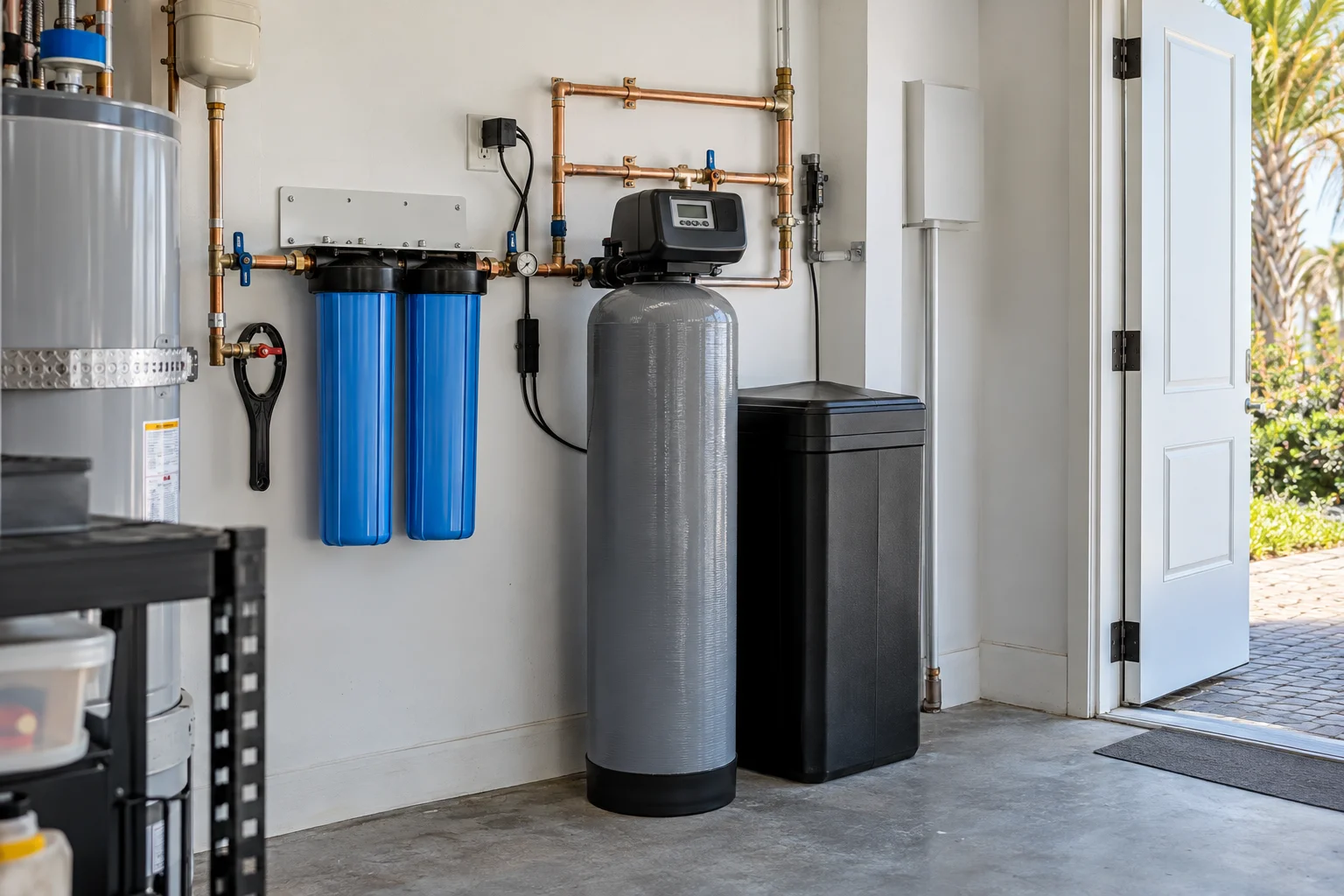
A conventional ion-exchange water softener removes calcium and magnesium by exchanging them for sodium or potassium ions. Its resin periodically regenerates using brine. Properly selected and maintained, the system can reduce mineral spotting, help soap work more effectively, and limit new scale in equipment supplied with softened water.
Softening is not comprehensive purification. It does not reliably remove chlorine, all metals, microorganisms, or every cause of odor. Salt-free scale-control devices also work differently from ion-exchange softeners and generally do not remove hardness minerals. Homeowners comparing systems should ask whether the goal is hardness removal, scale management, or another measurable improvement.
Whole home water filtration treats selected concerns throughout the house
Whole home water filtration can address specific issues before water reaches showers, laundry equipment, and kitchen fixtures. A sediment filter captures particles within its rated range. Suitable activated carbon media can reduce chlorine taste and odor, while chloramine treatment requires appropriate media and contact time. Filter performance depends on the actual contaminant, flow rate, and maintenance.
AO Smith water filtration options and an AO Smith water softener can be evaluated as separate or complementary parts of a treatment plan. Model-specific capacity and certified reduction claims matter more than a brand name alone. A Superior Mechanical's water filtration, reverse osmosis, and water softener services provide a starting point for comparing those approaches.
Reverse osmosis focuses on drinking and cooking water
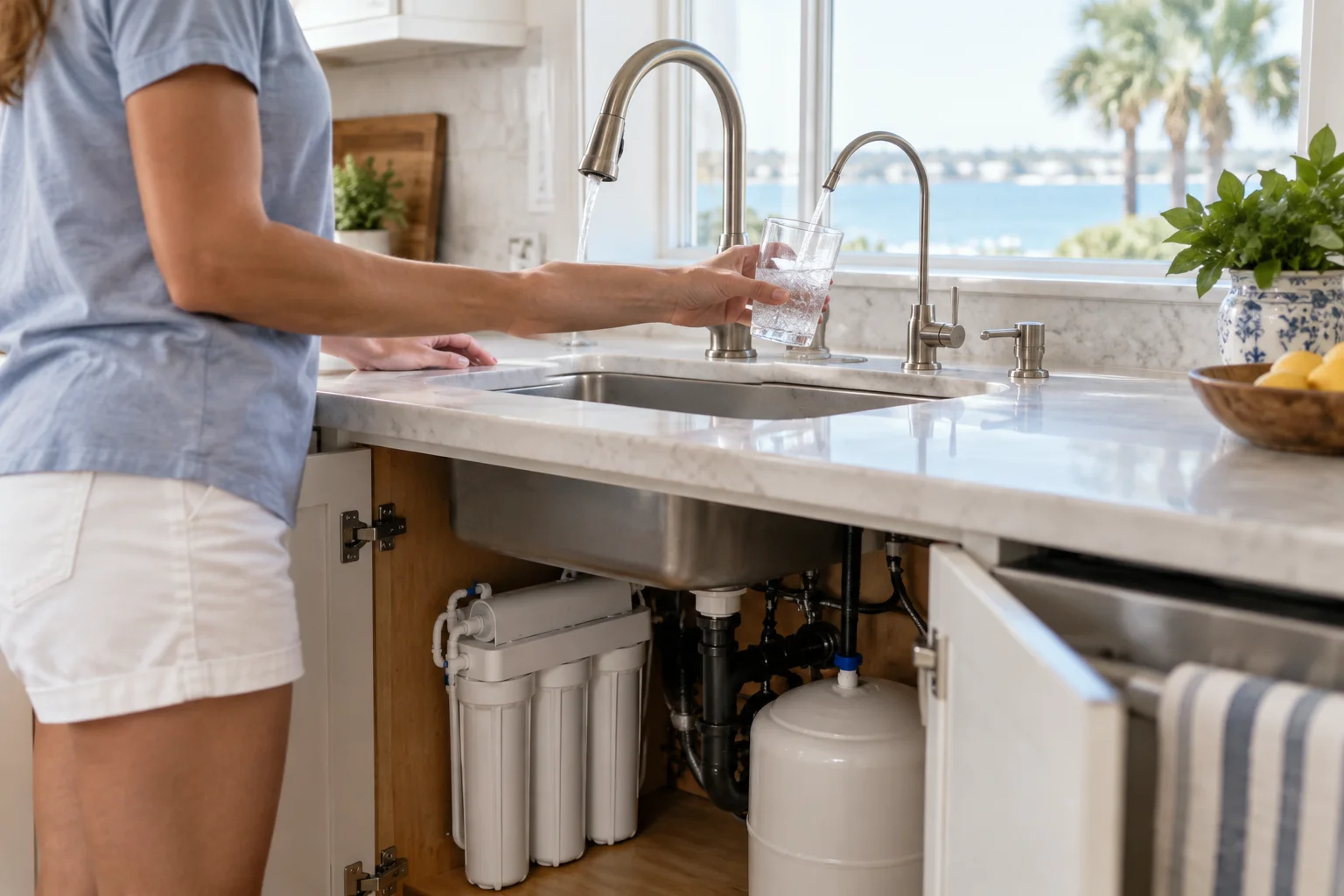
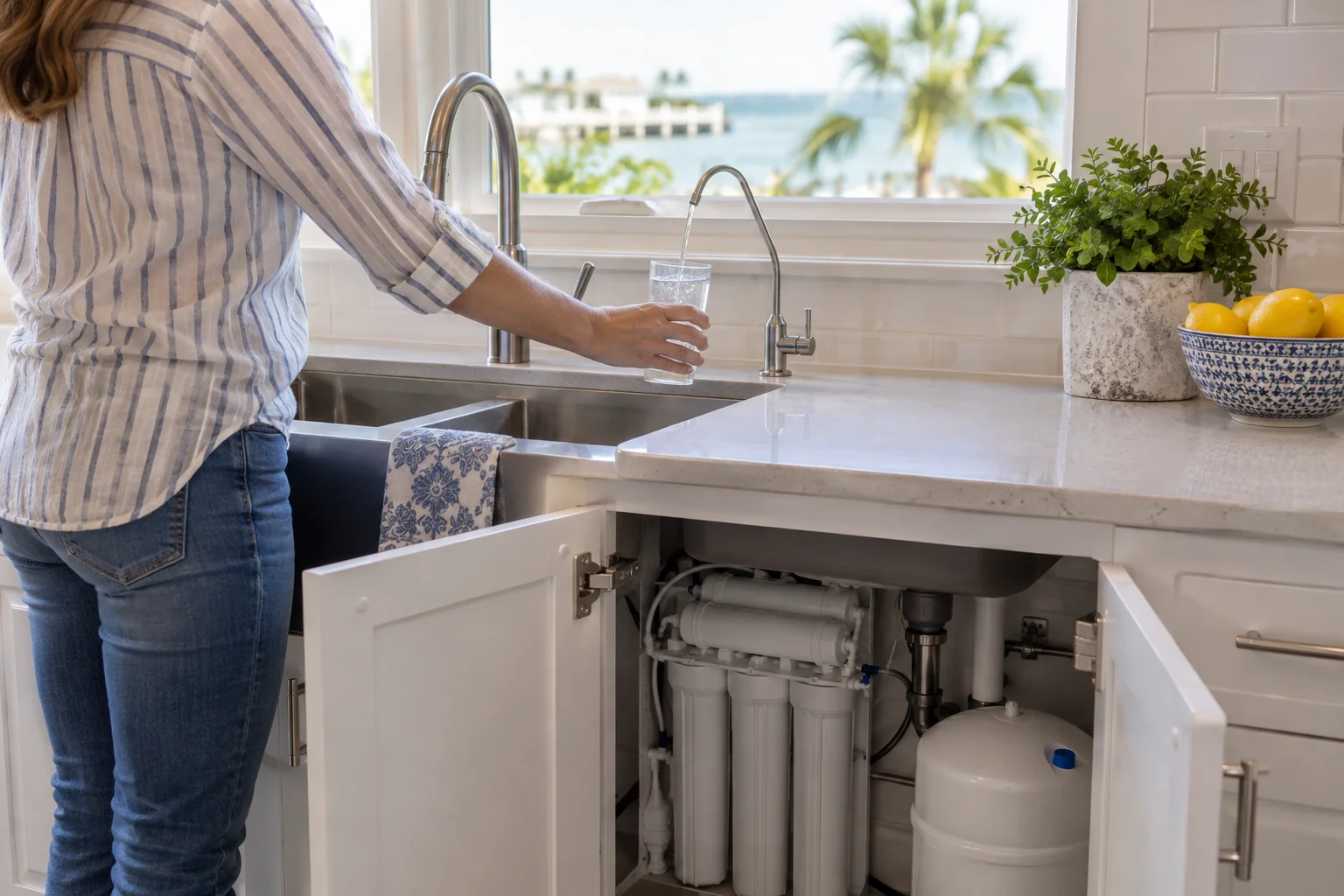
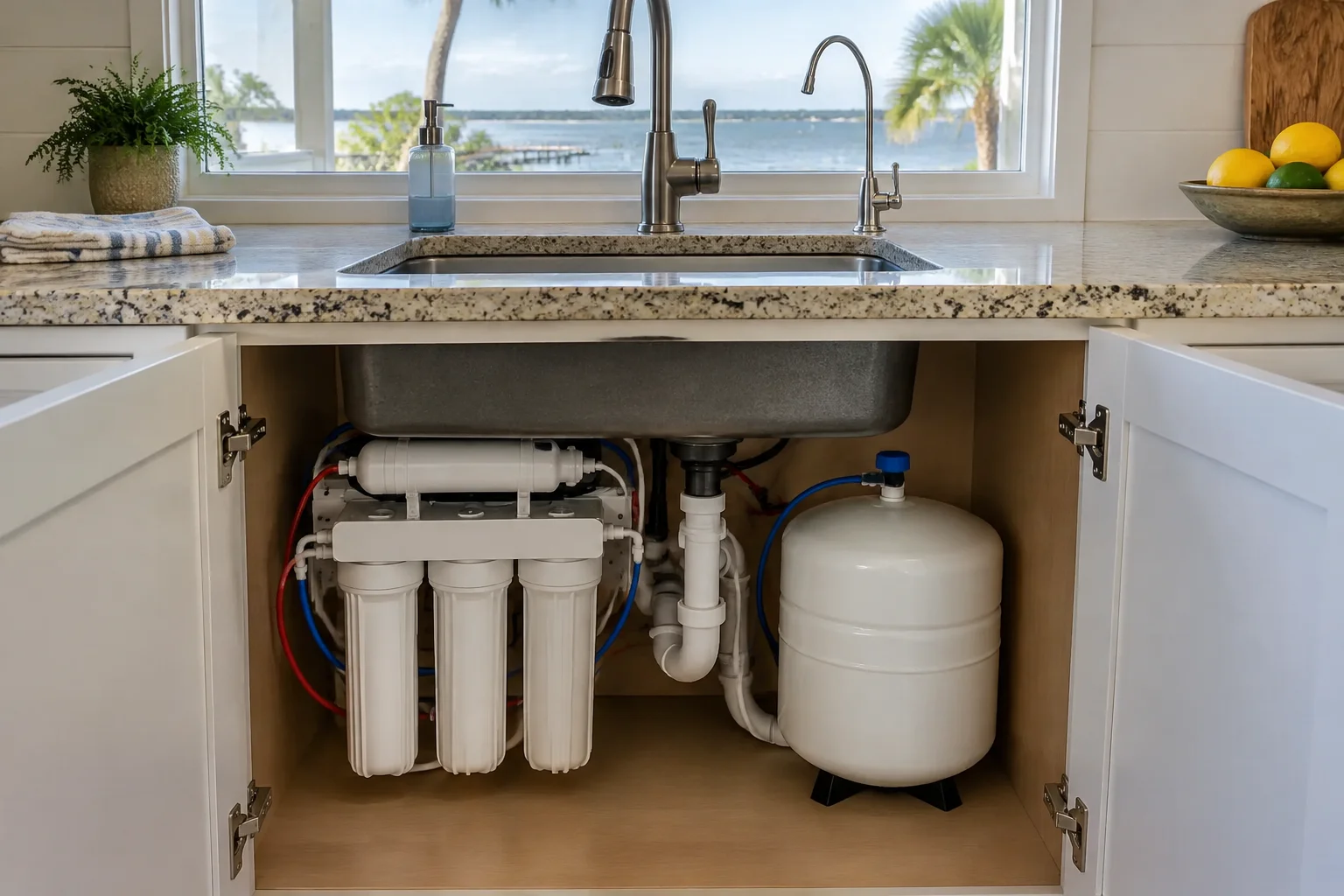
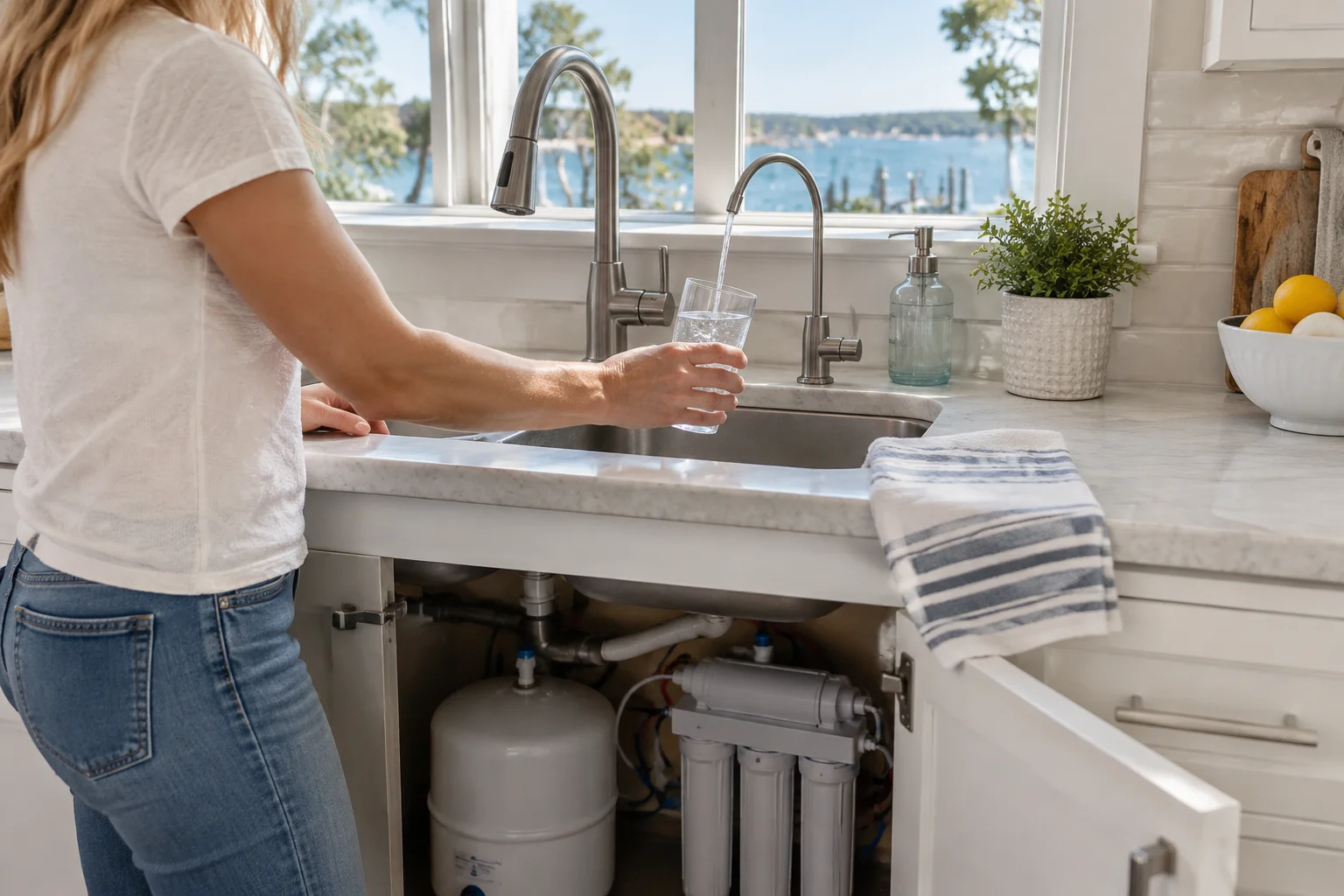
A reverse osmosis system typically serves a dedicated kitchen faucet, using a membrane and supporting filters to reduce many dissolved substances. Depending on the model and its verified capabilities, it can improve drinking water taste and reduce selected contaminants. It is not usually a substitute for softening water supplied to the entire home.
For families comparing reverse osmosis installation near me, practical details matter: available sink-cabinet space, storage or production capacity, wastewater requirements, and refrigerator compatibility. An installer should check whether the system can provide adequate pressure and flow before connecting an ice maker.
Better kitchen water starts with identifying the taste
Think about a typical morning: someone fills a kettle, another person makes coffee, and children ask for water bottles before heading outside. Metallic tasting water, a chlorinated flavor, or an unpleasant odor can affect every one of those routines. Masking the taste with lemon does not identify its cause.
A metallic taste may relate to iron, copper, corrosion, or another issue that needs testing. Chlorine-related tastes may respond to suitable carbon filtration. Poor tasting coffee water can improve when the relevant water problem is treated, although coffee equipment cleanliness and mineral balance also influence flavor. Water used for rice, soup, and pasta deserves the same attention as drinking water.
Cloudy ice cubes are another clue, not a diagnosis. Trapped air, dissolved minerals, and the freezing process can all contribute. Reverse osmosis may improve ice clarity in some situations, but perfectly clear cubes are not guaranteed. Clear water and clear ice do not establish that water is safe.
Homeowners searching for a drinking water filter near me should start with what they want reduced, then compare products tested for that purpose. Better taste is useful, but it should not replace appropriate testing when there is a safety concern.
Sediment, discoloration, and odor need their own investigation
Visible sediment in household water may come from supply work, deteriorating components, or deposits within the home's piping. Brown, yellow, or reddish water can have several causes, including corrosion. Sulfur-like odors may originate in the supply or a water heater. A smell at one sink may even come from the drain rather than the water.
Note whether the issue affects hot water, cold water, one fixture, or the entire house. That information helps narrow the investigation. Persistent or sudden changes deserve professional attention, and utility notices should always be followed. Do not assume a standard softener makes discolored or suspicious water suitable to drink.
If a water change arrives with an active leak or a major pressure loss, prompt service matters. This discussion of addressing urgent plumbing problems in Rosemary Beach explains why waiting can allow property damage to grow. Treatment equipment should follow diagnosis, not conceal an unresolved problem.
Build the system around the household, not just the bathroom count
Effective water softening in Rosemary Beach starts with measured hardness and expected water use. Sizing also considers peak flow, usable resin capacity, regeneration settings, and any iron or manganese that could affect performance. An undersized system may struggle during busy periods, while an oversized or poorly programmed unit can waste resources.
Vacation rentals need particular attention because occupancy fluctuates. A system should accommodate realistic guest demand without relying on visitors to adjust controls or replenish salt. Installation planning also includes an accessible bypass, suitable drainage with required backflow protection, and protection from weather and flooding where equipment placement requires it.
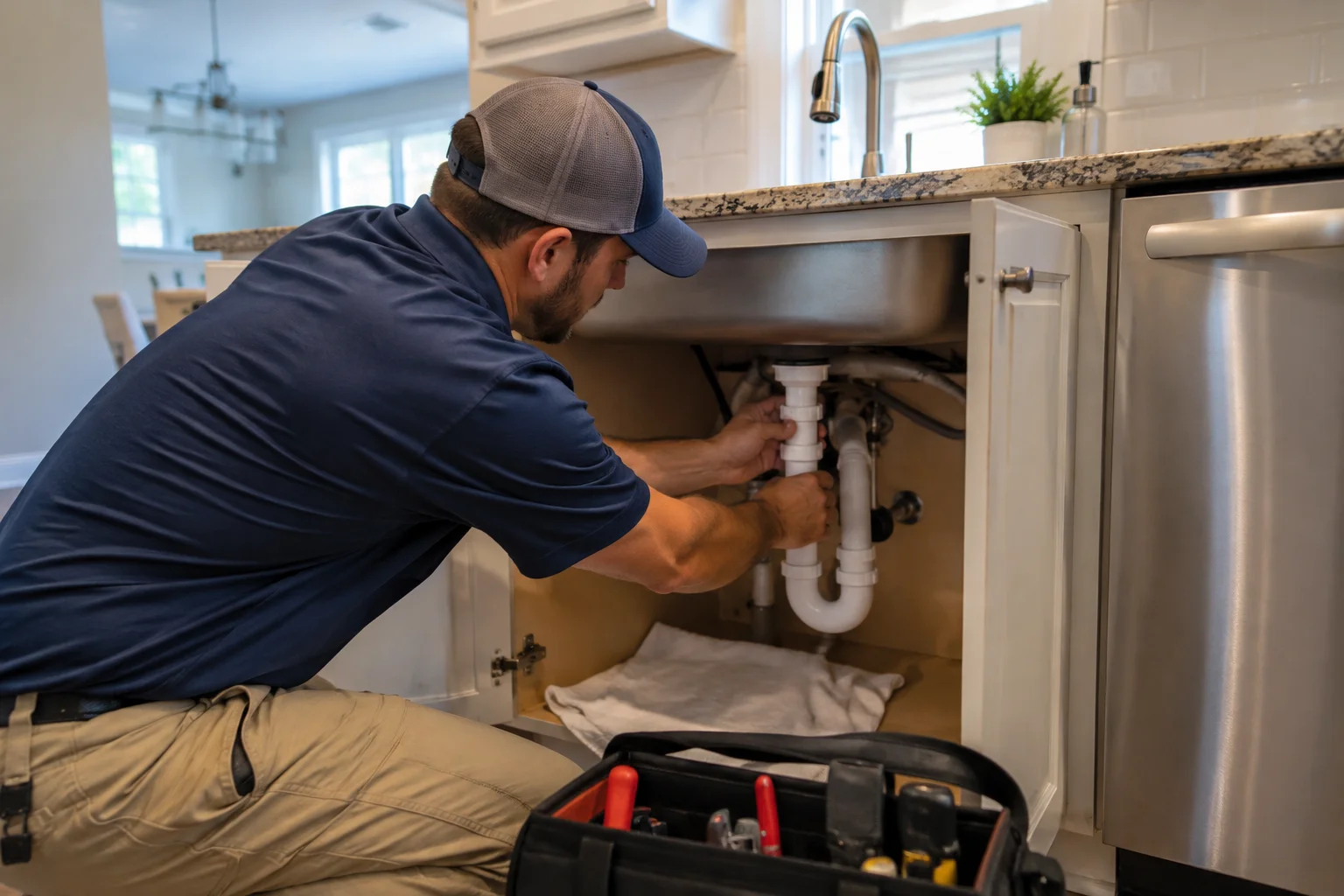
For homeowners comparing water softener installation near me, ask how the proposal addresses testing, sizing, installation requirements, and ongoing service. A low equipment price alone does not show whether the system will meet the home's needs.
The condition of existing piping matters as well. This article on plumbing wear and water softening in nearby Inlet Beach explores why treatment and pipe condition should be considered together. New equipment cannot reverse every consequence of years of mineral buildup or corrosion.
Keep better water consistent with simple maintenance
A softener needs more than occasional attention when spots return. Check the brine tank at the interval recommended for the model and household demand. Use the specified salt, watch for salt bridges, and keep the tank and equipment area clean. Have regeneration settings reviewed when occupancy or water use changes substantially.
Filters and reverse osmosis components have separate maintenance requirements. Replace cartridges according to manufacturer guidance and actual conditions, not only when taste becomes unpleasant. Reduced pressure, breakthrough odors, or declining RO production can indicate a service need. Membrane checks and sanitation should follow the system's instructions.
Periodically test treated-water hardness to confirm that the softener is working. If spots return, check for an open bypass, depleted salt, incorrect programming, or a system fault. Existing deposits can require separate cleaning with products approved for the fixture finish. After softening, adjust soap and detergent amounts according to appliance and product guidance to avoid excess suds.
Get a water treatment plan that matches your Rosemary Beach home
Professional help is worthwhile when scale returns quickly, water quality changes suddenly, or several problems appear together. A useful assessment separates hardness from sediment, taste, odor, and equipment issues. It should explain what each proposed component treats, what it does not treat, and how much upkeep it requires.
If you are searching for water filtration near me, ask about testing, performance ratings, service access, and replacement costs before choosing clean water systems. There is no single configuration that fits every kitchen, rental property, or family.
A Superior Mechanical provides water softening design, installation, maintenance, and AO Smith solutions for homes, vacation rentals, and businesses across Walton County. Request an assessment for your Rosemary Beach property to connect the changes you want, from fewer fixture deposits to better drinking and cooking water, with treatment selected for your actual water conditions.
Find Water Softening in Rosemary Beach, FL
If you need Water Softening in Rosemary Beach, FL, visit our local service page or contact A Superior Mechanical today.
For a broader look at whole-home water filtration, reverse osmosis, and water softener options, visit our water filtration, RO, and water softener page.
Map of Rosemary Beach, FL
Frequently Asked Questions
Will a water softener improve taste and remove odors in my Rosemary Beach home?
A water softener primarily removes calcium and magnesium that cause hardness. It is not a reliable solution for chlorine taste, metallic flavors, sediment, or every odor. Testing can determine whether carbon filtration, reverse osmosis, or another targeted treatment should accompany softening.
How do I know what size water softener my vacation rental needs?
Sizing should account for measured hardness, expected daily water use, peak flow, and maximum realistic guest occupancy. A professional should also review regeneration capacity, installation space, and maintenance access. Bathroom count alone is not enough to select the right system.
Can AO Smith water filtration and reverse osmosis work with a water softener?
Yes. Compatible equipment can form a treatment system in which softening addresses hardness, whole home filtration targets selected particles or chemicals, and reverse osmosis treats kitchen drinking water. The equipment order, model capabilities, pressure requirements, and maintenance schedule should be selected for the home's tested water conditions.
Related Articles
- Why emergency plumbing in Rosemary Beach deserves attention before a small problem becomes a big one
- Less Scale, Fewer Surprises: Water Softening and Plumbing Care in Cinco Bayou
- How Plumbing Wear and Tear Changes the Way Water Softening Works in Inlet Beach
- How Better Water Softening Helps Callaway Homes Protect Plumbing, Fixtures, and Water Heaters
Photo Gallery