30A homes are built for coastal life, but the climate is demanding on HVAC systems. Year-round humidity, salt air, and long stretches of Florida heat can stress refrigerant systems, thermostats, ductwork, and condensate drainage. Geothermal energy systems can be an excellent fit for homeowners who want consistent comfort and efficient energy use, yet they still need the right design, installation, and ongoing HVAC maintenance to stay comfortable and avoid expensive surprises.
This guide breaks down how geothermal energy systems work from an HVAC perspective, what “good airflow and comfort” actually depends on, and which maintenance habits help you prevent problems before they become costly in Walton County and the 30A area. If you are weighing geothermal installation, planning a replacement, or troubleshooting performance, you can start by exploring geothermal energy systems in 30A and the broader 30A service area coverage.
What a geothermal energy system does for comfort in 30A, FL
Geothermal HVAC systems use the earth as a stable heat source and heat sink. Instead of relying only on outdoor air temperatures, a ground-source heat pump system exchanges heat with the ground through a buried loop. That means the system can maintain comfort more steadily when Florida temperatures swing and when summer humidity is high.
From a homeowner’s point of view, the practical benefits often show up as:
More consistent indoor temperatures because the system is not fighting extreme outdoor air swings the same way traditional air-source equipment can.
Better humidity control when the system is properly matched and airflow is managed, which matters in coastal areas where moisture can feel overwhelming.
Quieter operation since the most temperature-exchange work happens away from the home.
However, geothermal is not “set it and forget it.” The comfort outcome depends on the full HVAC system: refrigerant circuits, indoor air handler or fan coil, condensate drainage, thermostat settings, and ductwork performance.
Geothermal heat pumps and airflow: comfort is a ductwork story
Many homeowners first notice comfort issues as airflow complaints. A geothermal system might be operating, but if the air distribution is off, rooms can feel too warm, too cool, or sticky. In 30A homes, that can be made worse by:
Leaky or undersized ductwork that loses supply air before it reaches the living space.
Blocked returns or poor return paths that limit how much air the system can move.
Balancing issues where some rooms receive more airflow than others.
Dirty filters that restrict airflow and force the system to work harder.
Even with a well-designed ground loop, homeowners can still experience poor comfort if ductwork is not inspected and maintained. If you are searching for duct repair near me or want to confirm airflow health, start with duct inspection in 30A. If the issue is distribution and leakage, duct sealing & Aeroseal services can help improve how air gets delivered.
Humidity control depends on airflow, not just the thermostat
In Florida’s humidity, the indoor coil must run in a way that removes moisture from the air. That means airflow must be correct. When airflow is too low, the system may not dehumidify as expected. When airflow is too high, the coil may not extract moisture efficiently.
Homeowners often blame the thermostat or assume the geothermal unit is failing when the real cause is airflow related. This is why a licensed HVAC contractor should evaluate airflow, filter condition, and duct performance alongside refrigerant system operation and condensate drainage.
Condensate drainage and indoor comfort: a coastal issue
During cooling, HVAC systems create condensate. In a geothermal setup with indoor air handling equipment, condensate drainage must be clear and properly routed. If drainage is partially blocked, water can back up and contribute to:
Moisture problems near the air handler
Musty odors that affect indoor air quality
More frequent cycling or other operational strain
In 30A, coastal moisture and humidity can also affect how quickly indoor air quality issues show up. If you notice recurring dampness, water staining, or a persistent “wet basement” smell, do not ignore it. A professional geothermal HVAC service visit should include a close look at condensate drainage and the indoor components that manage moisture.
Refrigerant systems: efficiency and comfort rely on correct operation
Geothermal heat pumps use refrigerant to move heat. The refrigerant system is a closed-loop HVAC technology, but it still requires careful attention to operating conditions. When refrigerant performance is off, comfort can deteriorate through:
Warm rooms or uneven temperature distribution
Cooling that feels weak or struggles during peak Florida heat
Humidity control that does not meet expectations
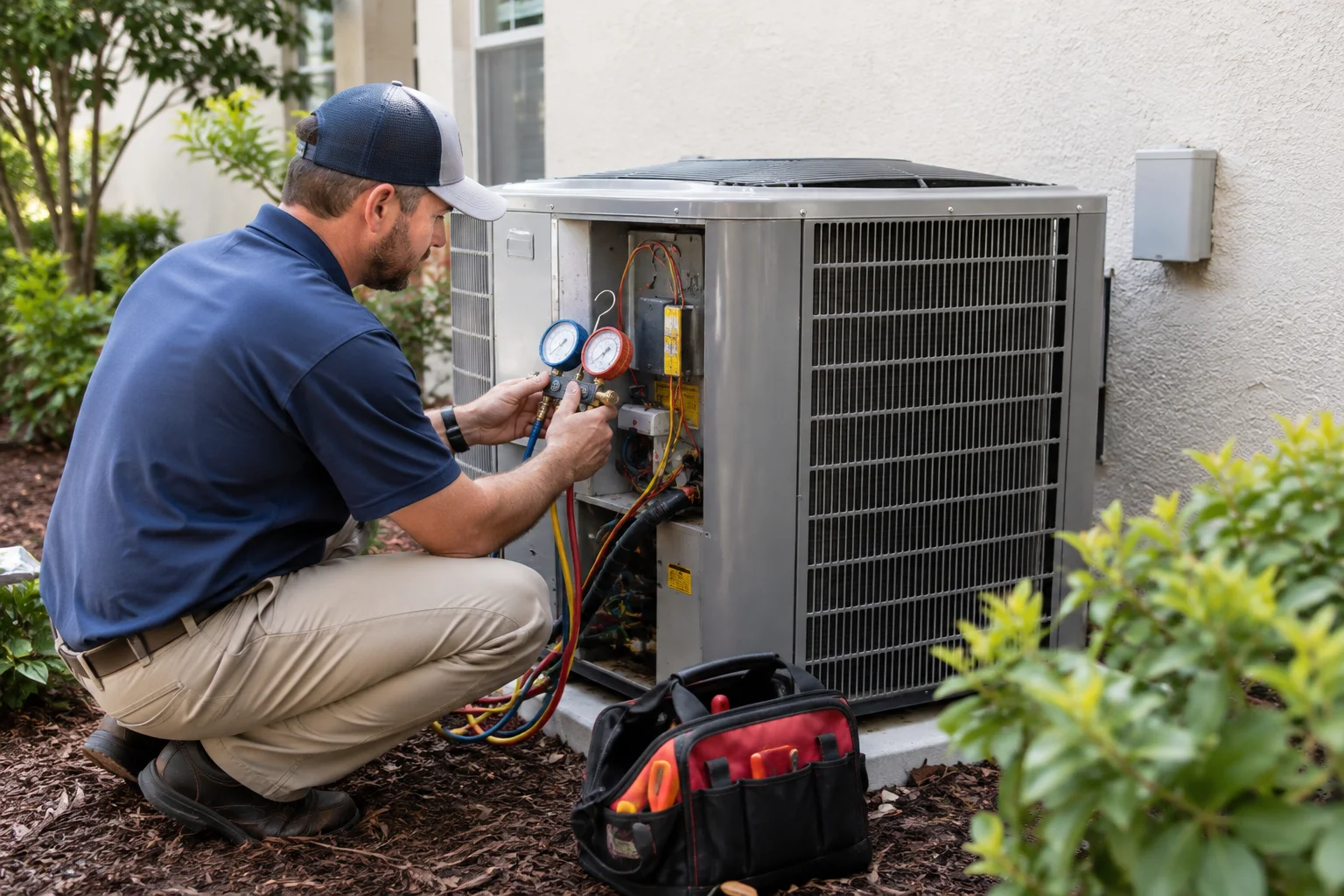
Homeowners should be cautious about DIY refrigerant troubleshooting. Without on-site evaluation and proper testing, it is easy to misinterpret symptoms. A licensed HVAC contractor near me can verify system operation using appropriate diagnostic steps and confirm whether the issue is related to refrigerant performance, airflow, controls, or another component.
Thermostats and controls: the difference between “running” and “comfortable”
Geothermal systems are controlled by thermostats and HVAC controls that manage temperature and, depending on the configuration, humidity-related behavior. In Florida homes, thermostat settings and scheduling can make a big difference in comfort and energy use.
Common control-related issues homeowners notice include:
Short cycling, where the system turns on and off too frequently
Inaccurate temperature readings due to sensor placement
Settings that do not match how the home’s ductwork and airflow actually distribute air
If you are considering thermostat installation near me or need help adjusting settings after a change in comfort, it is worth having a professional review the system. A geothermal HVAC contractor can help you confirm that the thermostat is compatible with the equipment and that the control strategy supports stable comfort during humid 30A summers.
Why geothermal can still get expensive if maintenance is ignored
Geothermal systems are designed for long-term performance, but neglect can still lead to issues that become costly. For many homeowners, the “expensive” part is not only repair bills. It is also the discomfort and emergency cooling concerns that come with mid-summer failures.
In 30A and Walton County, seasonal stress is real. Even when a geothermal system is not directly exposed to the same outdoor conditions as air-source units, indoor airflow restrictions, dirty filters, condensate drainage problems, and control issues can still cause performance problems. When comfort slips during peak heat, homeowners often look for AC repair near me at the worst possible time.
Preventive HVAC maintenance helps reduce the chance of those mid-summer surprises. If you want a deeper look at maintenance planning, read Why Preventive HVAC Service Pays Off for Air Conditioning Repair in 30A, FL.
Common geothermal performance problems homeowners notice in 30A
Below are issues that often show up in the field. These are not DIY diagnoses, but they can help you describe what you are seeing to your HVAC contractor.
1) Uneven temperatures from room to room
If some rooms feel consistently warmer or cooler, the cause is often airflow and duct distribution, return air problems, or balancing issues. A duct inspection can clarify whether ductwork is limiting airflow.
2) Weak cooling or “it runs but doesn’t feel cold”
Florida humidity and heat make cooling performance easy to judge. Weak cooling can come from airflow restrictions, control problems, or refrigerant system performance concerns. The right response is an on-site evaluation, not guessing.
3) Poor dehumidification or sticky indoor air
Sticky air usually points toward airflow and coil moisture removal problems. Condensate drainage and indoor airflow must be checked together to understand what is happening.
4) Strange odors or signs of moisture
Musty odors, visible moisture near the air handler, or recurring dampness can signal condensate drainage issues and indoor air quality concerns. A professional visit can help identify the source.
5) Short cycling or frequent starts
Short cycling can be linked to thermostat settings, airflow, or other control and operating conditions. Proper diagnosis matters because the fix depends on the root cause.
How to prevent comfort problems before they escalate
Preventive care is where homeowners can protect comfort and reduce the likelihood of emergency cooling concerns. In 30A, humidity and salt air can also accelerate wear on HVAC components, especially when systems are not maintained on schedule.
Schedule regular HVAC maintenance for geothermal systems
Ask your HVAC service provider to include geothermal-relevant checks during seasonal maintenance. This typically involves indoor equipment inspection, airflow verification, filter and coil condition checks, and condensate drainage observation. If your system includes specific indoor components, they should be evaluated based on what is installed in your home.
Maintenance planning is also a good time to review how your thermostat is set for your lifestyle, especially if you spend more time at home during certain months.
Keep filters clean and match them to your indoor air needs
Restricted airflow is one of the fastest ways to reduce comfort. In coastal areas, indoor air can carry more airborne contaminants, and homeowners often want stronger filtration or purification strategies.
If you are considering upgrades, explore Air Filtration and Purifiers to help choose an approach that fits your system and indoor air quality goals.
Watch condensate drainage and indoor moisture cues
If you ever see water where it should not be, hear unusual drain sounds, or notice lingering odors after cooling cycles, address it promptly. Small drainage issues can become bigger problems if moisture builds up.
Protect ductwork performance
Even a great geothermal system cannot deliver comfort through poor distribution. If you suspect airflow problems, consider duct sealing or other ductwork improvements. This is also a smart step for homeowners planning system replacement or major HVAC updates.
For homeowners dealing with airflow complaints, it can help to review How 30A Homes Can Stay Ahead of HVAC Emergencies During Seasonal Stress to build a plan before the hottest weeks arrive.
Geothermal installation and replacement: avoid expensive mismatches
Some geothermal problems start long before the first cooling season. They begin with design and sizing decisions, ductwork compatibility, and how the indoor equipment is matched to the home.
When homeowners talk about system replacement, the conversation should include more than the heat pump itself. It should cover:
How the indoor air handler or fan coil will move and distribute air through your ductwork
How condensate drainage will be managed
How the thermostat and controls will be configured for your comfort needs
How indoor air quality goals will be supported through filtration and airflow
For homeowners exploring geothermal energy systems in Walton County, you can review the local service details at /service-areas/walton-county/30a/geothermal-energy-systems-30awcfl and the broader coverage at /service-areas/walton-county.
Where HVAC contractors fit in: why local service matters on 30A
On 30A, the HVAC contractor you choose affects long-term comfort. A licensed HVAC contractor near me should understand the local realities of coastal homes: humidity loads, ductwork constraints, crawl spaces and attics that can trap moisture, and the way homes sit in the area.
Local expertise also helps with practical details like:
Coordinating maintenance for vacation rental schedules and seasonal occupancy
Evaluating comfort complaints tied to airflow and indoor air quality
Planning preventive HVAC maintenance so your system is ready for peak summer demand
If you are also evaluating heating strategy for your home, geothermal systems are paired with heating performance expectations. You can explore Heating Services for additional context on how comfort planning works across seasons in the region.
When to call A Superior Mechanical for geothermal HVAC help
Call a professional for geothermal energy system service when you notice comfort drifting away from what you expect, especially during Florida heat and humidity. Reach out if you see symptoms like uneven temperatures, weak cooling, poor dehumidification, recurring odors, or any signs of moisture linked to condensate drainage.
Homeowners searching for HVAC service near me often want quick help. The best approach is to prevent problems before they become urgent, which is why preventive HVAC maintenance is so valuable. If you are already dealing with performance issues, an on-site evaluation is the right first step. It is not appropriate to assume refrigerant diagnosis, electrical diagnosis, or equipment replacement based on symptoms alone. A qualified technician can check the system safely and determine what is actually driving the comfort problem.
If you want to talk geothermal energy systems in 30A, use our local service page at geothermal energy systems in 30A and browse the broader 30A service area for other HVAC support options.
Questions homeowners ask before committing to geothermal
It is normal to want clarity before making a geothermal decision. A helpful conversation with your local HVAC contractor should cover how your specific home will be comfort-managed. Consider asking about:
How ductwork and airflow will be evaluated and improved if needed
How the system will handle humidity control in 30A summers
How condensate drainage will be installed and maintained
How your thermostat will be configured for comfort and stable operation
What preventive HVAC maintenance schedule makes sense for your household and occupancy patterns
If cost planning is part of your decision process, it can also help to read Keeping HVAC Financing on Track in 30A, FL Homes to think through budgeting while you plan for comfort upgrades.
Find Geothermal Energy Systems in 30A, FL
If you need Geothermal Energy Systems in 30A, FL, visit our local service page or contact A Superior Mechanical today.
Map of 30A, FL
Frequently Asked Questions
How do geothermal energy systems help with airflow and comfort in 30A homes?
Geothermal systems can provide steady heating and cooling, but comfort still depends on indoor airflow, ductwork performance, and correct control settings. If air distribution is restricted or returns are blocked, rooms can feel uneven even when the system is running properly.
Why does my home feel humid even though the geothermal system is cooling?
Sticky indoor air usually points to airflow and moisture removal problems. A technician should check airflow through the duct system, confirm condensate drainage is working correctly, and evaluate whether the system is operating as intended for dehumidification.
What geothermal maintenance matters most for preventing mid-summer breakdowns?
Preventive HVAC maintenance should focus on indoor equipment condition, airflow health, filter and coil cleanliness, and condensate drainage. In 30A, acting early on airflow and moisture issues can reduce emergency cooling concerns during peak Florida heat.
Can I troubleshoot refrigerant or electrical issues myself if cooling seems weak?
No. Refrigerant and electrical-related symptoms can overlap with airflow, control, and drainage issues. An in-person professional evaluation is needed to identify the true cause safely and accurately.
What should I ask an HVAC contractor about before geothermal installation or replacement?
Ask how your ductwork and airflow will be assessed, how the system will manage humidity in 30A’s coastal climate, how condensate drainage will be handled, and how your thermostat and controls will be configured for stable comfort. A good plan addresses the whole HVAC system, not just the heat pump.
Related Articles
Photo Gallery