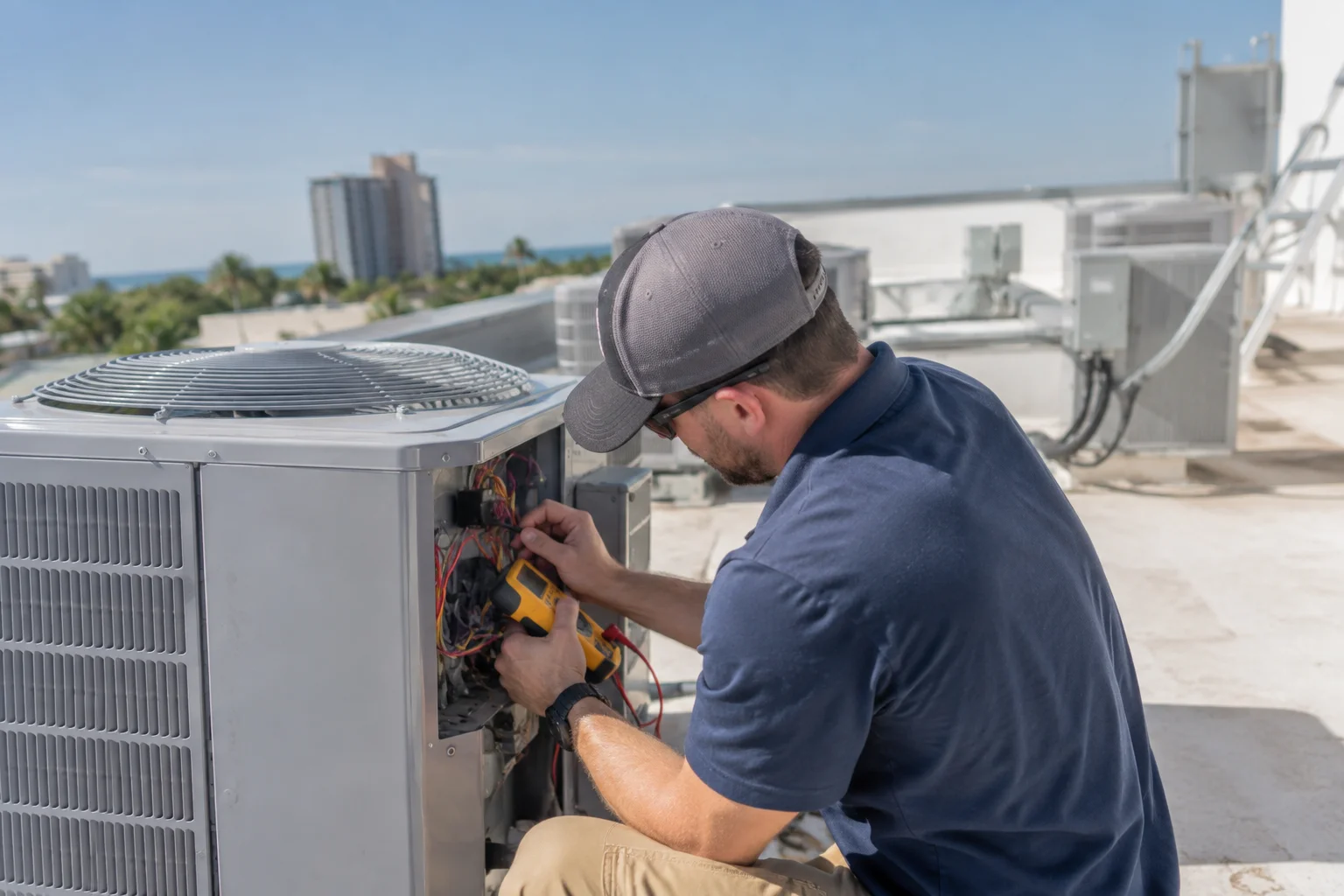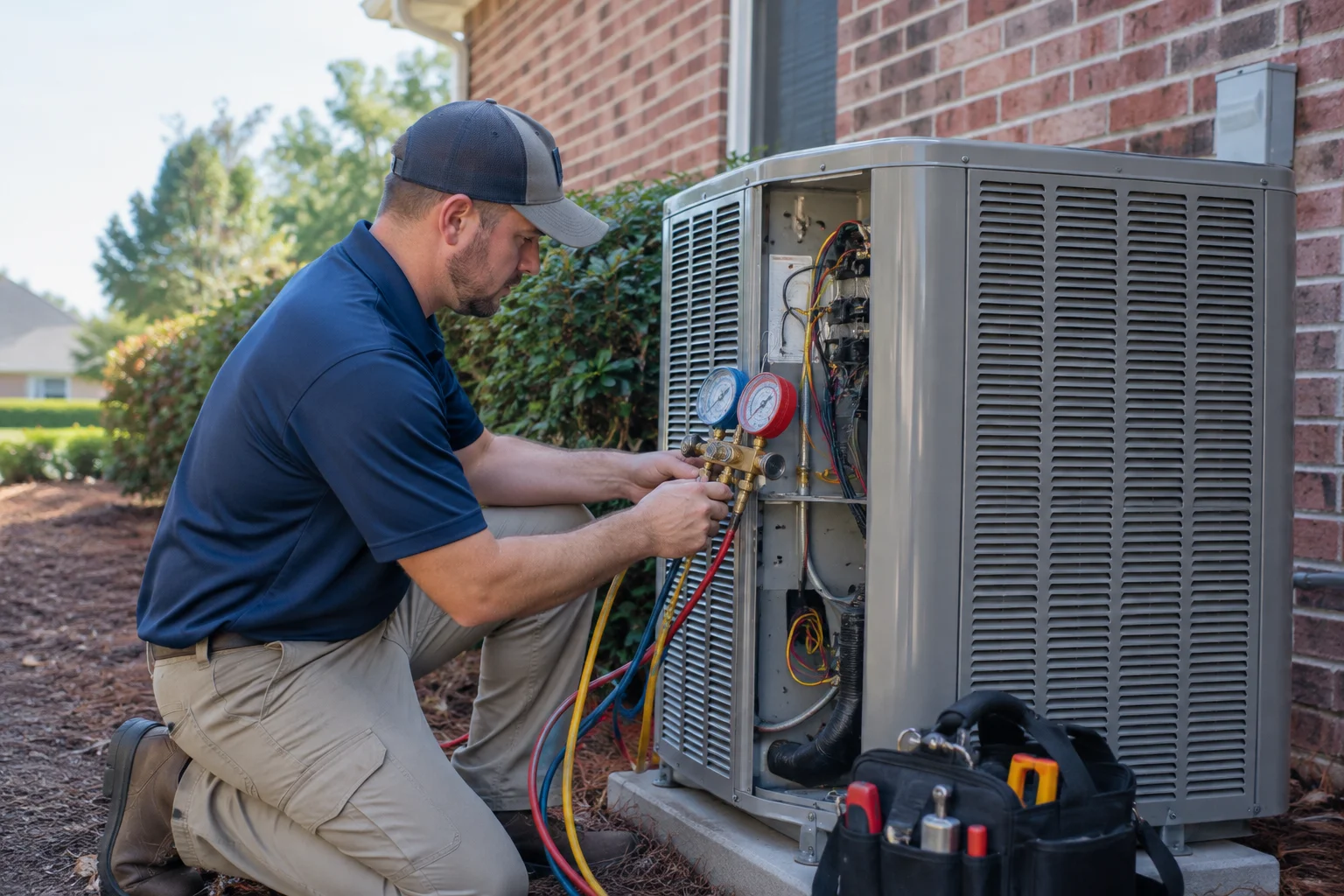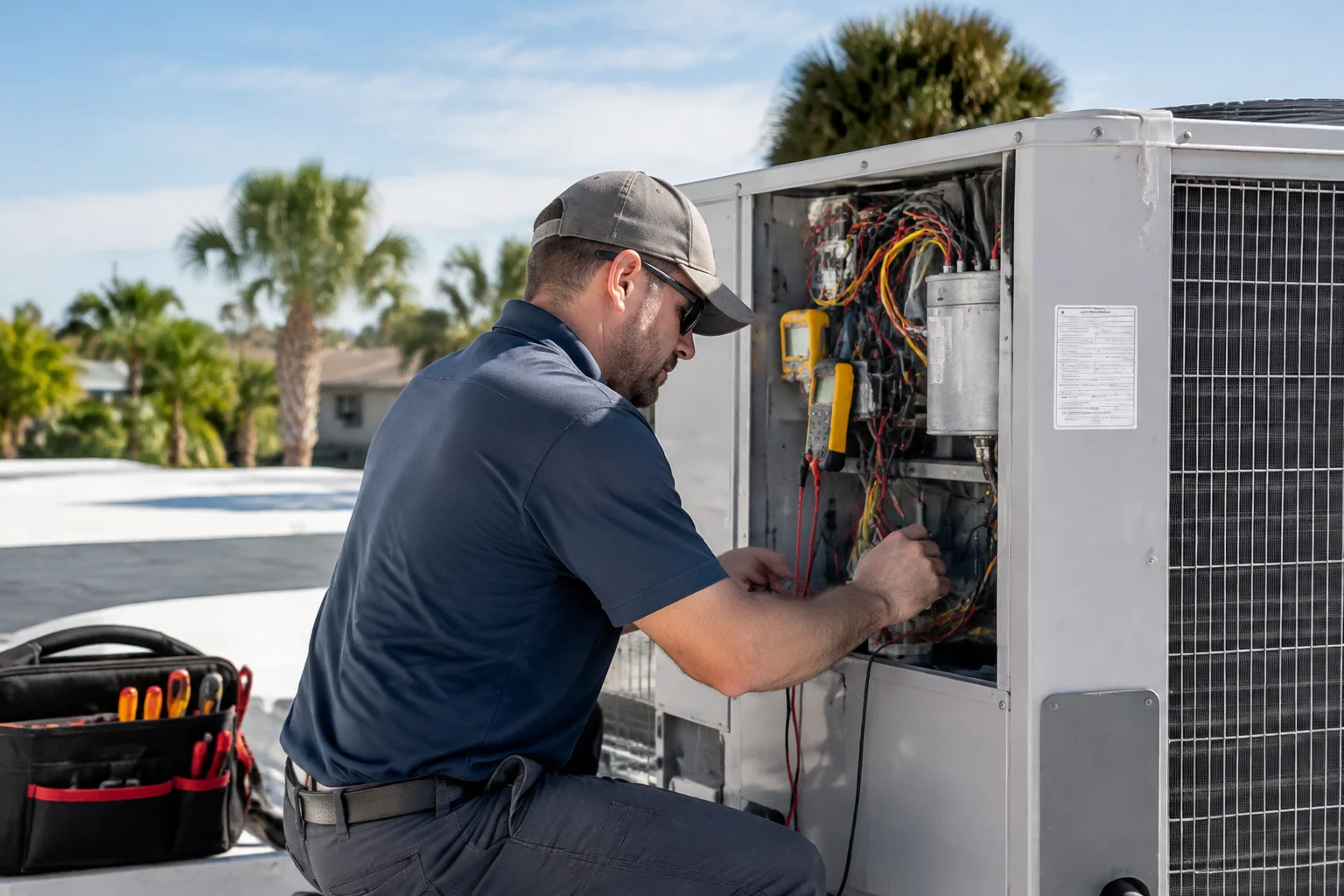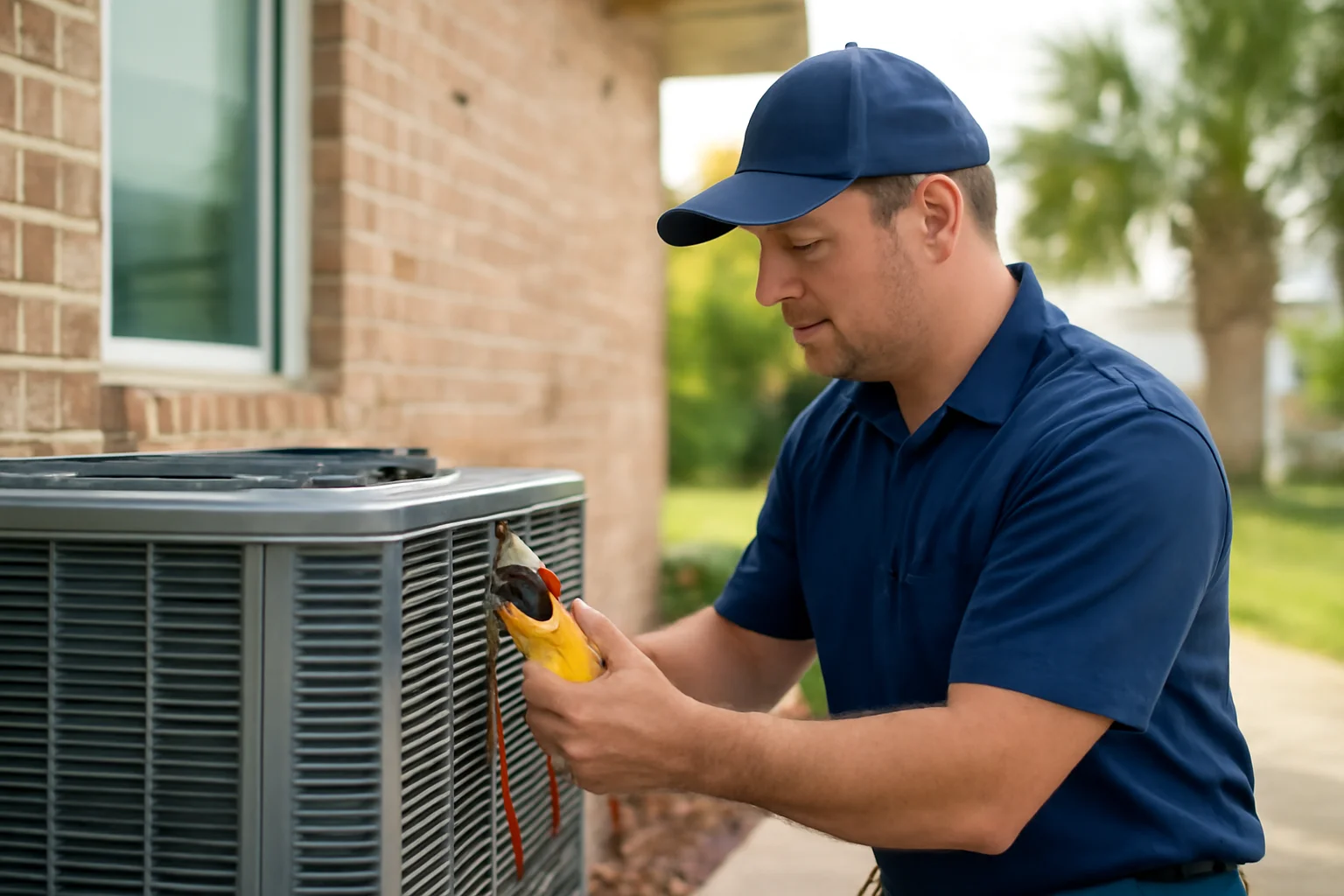
Panama City Beach businesses live with a tough mix of heat, humidity, and coastal salt air. When commercial HVAC equipment falls behind, the results show up fast: rooms feel sticky, temperatures swing, and indoor air quality can suffer. This guide is for homeowners and property managers looking to plan practical commercial HVAC repair in Panama City Beach, FL, with a focus on managing heat and humidity, protecting airflow, and avoiding preventable emergency cooling concerns.
If you are searching for commercial HVAC repair in Panama City Beach, A Superior Mechanical can help you connect comfort complaints to the HVAC systems that actually control temperature, humidity, and air movement.
Why Panama City Beach humidity turns “almost working” HVAC into a comfort problem
Florida humidity is not just uncomfortable. It changes how HVAC systems behave. Many commercial systems are designed to cool and dehumidify together, but that balance depends on correct airflow, stable refrigerant system performance, and proper condensate drainage.
In coastal Bay County, salt air can also contribute to corrosion and buildup on outdoor coils and components. Over time, that can reduce heat transfer, increase run time, and make it harder for the system to remove moisture from the air.
When humidity removal drops, you may notice:
- “Cool but clammy” air, especially in lobbies, break rooms, or hallways
- Windows fogging or condensation on glass
- Musty odors that suggest moisture is lingering
- Uneven comfort where some zones feel warmer while others feel colder
Those comfort symptoms often point to issues like airflow restrictions, ductwork problems, condensate drainage failures, or refrigerant system problems. A professional HVAC contractor can evaluate the whole system instead of chasing a single symptom.
Common commercial HVAC repair issues behind heat and humidity complaints
Commercial buildings are rarely “one unit, one room.” Rooftop units, split systems, and heat pumps may serve multiple spaces, and ductwork distribution can make a small equipment issue feel like a major comfort failure.
Airflow problems that prevent dehumidification
Dehumidification depends on moving the right amount of air across the cooling coil. If airflow is weak, the coil may not operate as intended, and moisture removal can suffer. Common causes include clogged or mismatched filters, blower problems, dirty coils, or ductwork restrictions.
Homeowners searching for air conditioner service near me often discover that the cooling equipment is not the only variable. A duct inspection and airflow check are frequently part of a complete comfort repair plan.
Condensate drainage issues
During cooling, HVAC systems produce condensate. If condensate drainage is slow, blocked, or improperly routed, moisture can back up. That can lead to water leaks, damp odors, and a building that feels humid even when the thermostat says it should be cool.
Condensate drainage concerns can also contribute to corrosion and microbial growth in nearby areas, affecting indoor air quality. Professional evaluation matters because condensate-related repairs require attention to how the system is installed and maintained, not just a quick fix.
Refrigerant system performance concerns
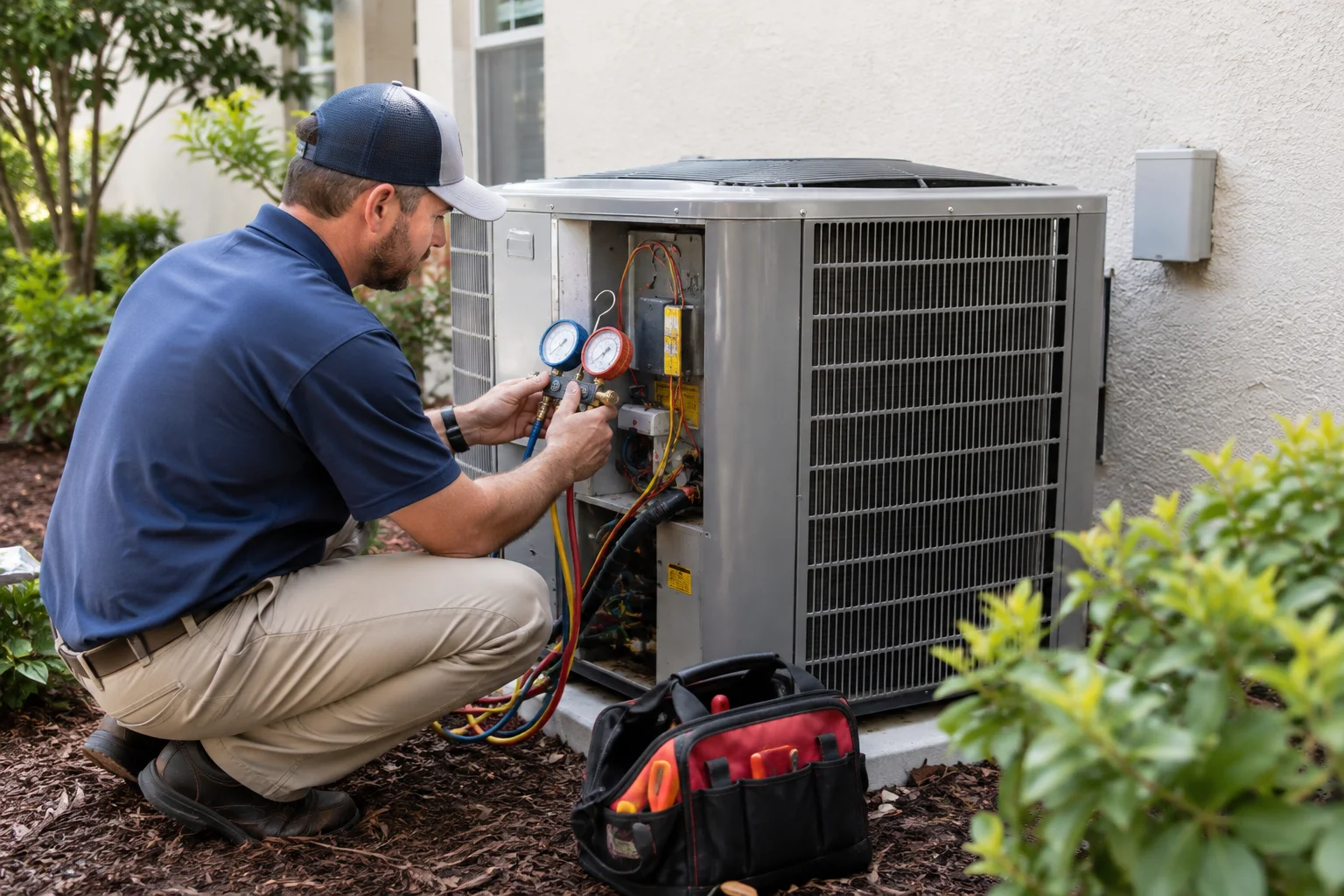
Refrigerant systems control how effectively the system absorbs heat indoors and rejects it outdoors. When performance is off, cooling can feel weak, temperatures can drift, and humidity control can deteriorate.
It is important to note that refrigerant issues must be assessed in person. A contractor should verify system operation, readings, airflow, and component condition before concluding what is wrong. Avoid decisions based solely on a thermostat complaint.
Thermostats and controls that do not match real comfort needs
Commercial thermostats and control strategies are designed around schedules, occupancy, and system operation modes. If settings are wrong, sensors are misreading, or the thermostat is not communicating properly with the HVAC equipment, the system may run when it should not, or it may not run long enough to manage humidity.
Some customers also ask about thermostat installation near me when comfort is inconsistent. In many cases, the thermostat is not the root cause, but updating controls can be part of a broader repair plan after technicians verify system performance.
Ductwork and distribution problems
Ductwork affects both temperature and humidity. Leaky ducts can pull in humid air, and poor balancing can create hot spots that make the building feel uncomfortable even when the equipment is operating.
If you are considering duct cleaning near me, keep in mind that cleaning alone does not fix airflow imbalance, damaged duct sections, or installation issues. A technician may recommend a duct inspection first so the building gets the right repair sequence.
How to recognize “comfort drift” before it becomes emergency cooling
Emergency cooling concerns are common during peak summer stretches in Panama City Beach. A better plan is to track comfort drift early, then schedule repairs while the system still has time to recover.
Look for these early warning signs:
- Cooling takes longer to reach setpoint, or temperatures keep creeping upward
- Humidity remains high even after the system has run for hours
- Rooms feel uneven, with some areas noticeably warmer or colder
- Thermostat cycles rapidly or runs continuously without stable comfort
- Unusual sounds from rooftop units, indoor air handlers, or heat pump systems
- Visible condensation where it should not be, or dampness around air handlers
When these patterns show up, it is time to plan commercial HVAC service. Scheduling repair before the hottest days can reduce the odds of a mid-summer breakdown that disrupts staff and customers.
A practical repair planning checklist for commercial HVAC in Bay County
If you are managing a property and want a clear plan, use this checklist to guide the conversation with your HVAC contractor.
1) Document the comfort issue and the conditions
Write down what occupants report, where it happens, and when it happens. Note whether the problem is tied to:
- Peak afternoon heat
- Rainy days when humidity spikes
- Specific rooms, floors, or orientations
Also record thermostat settings and any recent changes such as new schedules, occupancy shifts, or filter changes.
2) Confirm airflow and airflow paths
Ask the technician to evaluate airflow across the system and through the ductwork. For humidity control, airflow is often the deciding factor.
Technicians may check supply and return paths, verify fan operation, and look for restrictions that reduce effective cooling.
3) Review condensate drainage and moisture signs
Condensate drainage should be verified during cooling operation. If you have noticed water staining, smells, or damp areas, mention them early.
4) Evaluate refrigerant system operation with in-person testing
Refrigerant system problems should not be guessed from a thermostat reading. A qualified HVAC professional can evaluate performance while considering airflow and other variables.
That matters because humidity issues can come from multiple sources. Professional assessment helps avoid unnecessary parts replacement and supports a repair sequence that actually restores comfort.
5) Check controls and thermostat behavior
For buildings with schedules, zoning, or multiple air handling components, controls can affect how well the system dehumidifies. Ask about thermostat operation, sensor placement, and whether the system is running long enough and in the right mode for humidity control.
6) Plan for coastal factors like salt air and coil cleanliness
Outdoor coils and condenser sections can collect salt residue and debris. That buildup reduces heat transfer and can increase energy use. A repair plan should include cleaning and maintenance steps that match the coastal environment of Panama City Beach.
If your building has ongoing comfort issues, it can help to review preventive steps rather than treating each symptom as a standalone event.
Maintenance steps that protect humidity control and energy use
Preventive HVAC maintenance is one of the most practical ways to manage heat and humidity in coastal Florida. Maintenance does not eliminate repairs, but it reduces the chance that small issues grow into comfort failures.
Here are maintenance priorities that often matter most for commercial HVAC service and AC repair in Panama City Beach:
- Filter and airflow management: Correct filter type and condition support proper airflow, which supports dehumidification.
- Coil care: Indoor and outdoor coil cleanliness supports heat transfer and stable performance.
- Condensate drainage checks: Keeping drainage paths clear helps prevent moisture buildup and indoor air quality concerns.
- Thermostat and control verification: Confirm schedules and sensor operation match occupancy needs.
- Indoor air quality considerations: Moisture control and proper ventilation help reduce musty odors and improve comfort.
If you want a maintenance-focused plan, explore A Panama City Beach Homeowner’s Guide to Commercial HVAC Maintenance and Better System Reliability and Commercial HVAC Maintenance.
How ductwork and indoor air quality connect to humidity
Humidity control is not only about cooling. It is also about how air moves through the building. Poor ductwork performance can contribute to:
- Hot spots that feel warmer and more humid
- Air that bypasses intended areas
- Moisture-laden air infiltration if ducts leak
- Uneven distribution that makes thermostat control harder
Indoor air quality can also be affected by moisture. When condensate drainage is not functioning properly or when humidity stays elevated, you can get odors and comfort complaints that do not improve even after temperature is corrected.
For homeowners evaluating ductwork and airflow maintenance, these related reads can help you understand how HVAC condition affects cleaning and system performance: How HVAC Wear and Tear Changes the Way Duct Cleaning Works in Panama City Beach Homes.
Heat pumps, rooftop units, and split systems: repair planning differences
Commercial buildings in Panama City Beach may use different types of HVAC equipment. Repair planning should reflect how each system works.
Rooftop units
Rooftop units are common in commercial settings because they centralize components. Humidity control issues can relate to outdoor coil performance, indoor airflow, and condensate drainage. Salt air can also affect outdoor sections, and rooftop installations can experience unique airflow patterns depending on the roof layout.
Split systems
Split systems separate the indoor and outdoor components. Repair planning often focuses on indoor airflow, coil condition, and how the refrigerant system is performing under local humidity loads.
Heat pumps
Heat pumps can handle heating and cooling, but comfort complaints still often come down to airflow, coil operation, and humidity removal. If the system is struggling in humid conditions, a professional evaluation should consider all interacting factors before concluding what repair is needed.
For specific help with coastal durability and maintenance planning, you may find this useful: Keeping Panama City Beach Properties Comfortable with Commercial HVAC Care That Holds Up to Coastal Weather.
When system replacement should be part of the conversation
Many homeowners search for HVAC replacement near me after repeated repair cycles or when comfort problems persist. Replacement is not automatically the best option, but it should be discussed when:
- The system struggles to maintain temperature and humidity despite repair
- Repairs are becoming frequent and comfort complaints continue
- Energy use is rising because performance is unstable
- Parts are difficult to source or the equipment is aging beyond practical maintenance
A Superior Mechanical can help you evaluate repair versus replacement needs through an in-person assessment. Any decision about replacement should be based on real system performance, not guesses from a single symptom.
Choosing the right local commercial HVAC repair partner matters in Bay County
Coastal conditions are not the same everywhere. A local HVAC company near you should understand how Panama City Beach humidity, salt air, and building layouts affect rooftop units, split systems, heat pumps, and ductwork distribution.
When you contact an HVAC contractor for commercial HVAC repair, look for technicians who focus on system-level comfort: airflow, condensate drainage, refrigerant system performance, thermostat behavior, and indoor air quality outcomes.
You can also review how professional service supports comfort and reliability here: Why Professional HVAC Service Matters for Panama City Beach Air Conditioning.
Related service options for commercial comfort and reliability
Depending on what your building needs, repair may be paired with maintenance or other HVAC services.
- Air Conditioning Maintenance for preventing humidity-control breakdowns
- Commercial HVAC Maintenance for longer-term reliability across equipment types
- Commercial HVAC Installation if replacement becomes the better comfort plan
- Heating System Repair when shoulder-season comfort issues overlap with ventilation and controls
If you want to explore broader service coverage, visit our Panama City Beach service area and services across Bay County.
Questions to ask during a commercial HVAC repair call
To plan repairs effectively, ask questions that connect comfort symptoms to the HVAC system. Good questions include:
- “How is airflow across the cooling coil, and does it support dehumidification?”
- “Can you verify condensate drainage during operation and check for moisture signs?”
- “What control settings or thermostat behavior could be affecting humidity and run time?”
- “Do you recommend duct inspection or balancing if parts of the building are uneven?”
- “What preventive steps should we take to reduce repeat issues during peak coastal humidity?”
These questions help ensure the repair plan addresses the real causes of heat and humidity discomfort, not just the most obvious symptom.
Find Commercial HVAC Repair in Panama City Beach, FL
If you need Commercial HVAC Repair in Panama City Beach, FL, visit our local service page or contact A Superior Mechanical today.
Map of Panama City Beach, FL
Frequently Asked Questions
Why does my commercial space feel cool but still humid?
That “cool but clammy” feeling usually points to reduced dehumidification. In commercial HVAC systems, dehumidification depends on proper airflow across cooling coils, correct condensate drainage, and stable refrigerant system performance. A technician can evaluate the HVAC system in person to determine which part of the chain is not working together.
How do salt air and coastal weather affect commercial HVAC repair in Panama City Beach?
Salt air can contribute to corrosion and buildup, especially on outdoor coils and condenser sections. Over time, that can reduce heat transfer, increase run time, and make humidity control harder. Local service matters because the repair plan should account for coastal conditions and maintenance needs.
Should we clean ducts first or focus on the HVAC equipment?
Duct cleaning can be helpful in some situations, but it is not a substitute for fixing airflow restrictions, leaks, or comfort imbalances. Many homeowners benefit from starting with a duct inspection and airflow evaluation so cleaning and repairs follow the right order.
What role do thermostats and controls play in humidity problems?
Thermostats and controls affect when the system runs, which mode it uses, and how it responds to indoor conditions. If schedules or sensor readings do not match occupancy needs, the system may not run long enough to manage humidity. A professional can verify control behavior as part of a full repair plan.
When should we consider HVAC replacement instead of repeated repairs?
Replacement should be part of the conversation when the system struggles to maintain temperature and humidity despite repairs, when repairs become frequent, or when performance and energy use remain unstable. An in-person evaluation is needed to compare repair options with replacement based on your specific equipment and building comfort goals.
Related Articles
- Why Professional HVAC Service Matters for Panama City Beach Air Conditioning
- How HVAC Wear and Tear Changes the Way Duct Cleaning Works in Panama City Beach Homes
- Keeping Panama City Beach Properties Comfortable with Commercial HVAC Care That Holds Up to Coastal Weather
- A Panama City Beach Homeowner’s Guide to Commercial HVAC Maintenance and Better System Reliability
Photo Gallery